Categories
Science

The Rat Island Saga – Watts Up With That?

Guest Essay by Kip Hansen – 29 March 2021

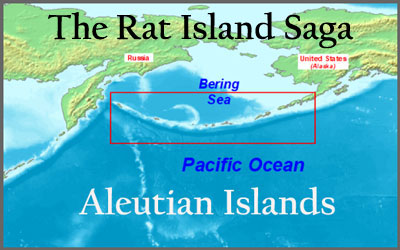
RAT ISLAND, as it used to be known when it was overrun by rats, is a tiny speck way out in the west end of the Alaskan Aleutian Islands – which extend from the southwestern point of mainland Alaska and head out south and west towards the coast of Siberian Russia.

It is a little bit of rock sticking up out the Pacific Ocean to the south of the Bering Strait.  [ This Rat Island is not to be confused with the Rat Island in the Easter Group of the Houtman Abrolhos archipelago 78 km west of Geraldton, Western Australia.]

[ Note: This essay is a long ramble through the history of Rat Island and the efforts of well-intentioned environmentalist intervention there.  Read it when you’ve settled in for the evening with a cup of hot cocoa. ]

Recent science news outlets carried stories like this:  Island Overrun With Rats Completely Recovers in Only 11 Years After Ecosystem Had Been Decimated, based on this recently published study:  Indirect effects of invasive rat removal result in recovery of island rocky intertidal community structure.  In Australia, 9News covered the story here.

“An Alaskan archipelago once dubbed the “Rat Islands” have provided a stunning example of ecological recovery, a new study has said.  The group of islands are on the western edge of the Aleutian archipelago and had been overrun with rats since shipwrecks dating back to the 18th century . . .

The rats, not native to the local system, quickly drove it to the edge of destruction, preying on shore birds and their nests.

However, in 2008, a group of researchers led a conservation effort which removed the rats from one isle [Rat Island] – now renamed Hawadax – in 2008.

Merely 11 years later, the researchers said, the island ecosystem had made a great recovery.

“You don’t often get the opportunity to return to a remote location and collect data after the fact,” study lead author Associate Professor Carolyn Kurle said.  “Sometimes it’s hard to say that a conservation action had any sort of impact, but in this particular case we took a conservation action that was expensive and difficult, and we actually demonstrated that it worked. But we didn’t expect it to be so fast.”

All the reports based on the University of California San Diego Press Release are a Fairy Tale version of actuality.  I hope no one is surprised by that – University Press releases are designed primarily to boost the prestige of the University and thus help to attract further research grants.  In my experience, these press releases do more to distort actual study results than do stories that appear in the mass media. Almost everything in the University Press Release is – ermmm – not exactly true as presented and leaves out a great deal of important information.

The U.S. Fish and Wildlife Service tells this story:

“…Rat Island is a remote island in the Aleutian chain about 1,300 miles west of Anchorage, invasive Norway rats arrived via a 1780’s shipwreck preying on native birds and altering the native vegetation during the ensuing 220 years. The Rat Island restoration is the most recent project in a long campaign to restore otherwise healthy seabird habitat in the Aleutians.”  and  “With the rats gone, restoration partners and the Aleutian Pribilof Island Association agree that an Aleut (Unangan), name was a fitting tribute to the restored island. The U.S. Board on Geographic Names, at its May 10, 2012 meeting, approved the proposal to change the name of Rat Island to Hawadax Island in the Aleutians. Hawadax (pronounced “how AH thaa”) is a return to the original Aleut name, in acknowledgement of the absence of rats—a return the island’s previous ecological state prior to European/Japanese contact. The word ‘Hawadax’ roughly translates to “those two over there” as in “the island over there with two knolls”, referring to two modest hills on the island.” [ source ]

Isn’t it a lovely story?  Our good and brave United States Fish and Wildlife Service, along with a couple of partner NGOs wades into battle against those nasty rats, killing them by the thousands by bombing the island with poisoned bait  [nobody likes those rats anyway] and saving the day for Endangered Birds®. 

Everyone claims credit for getting rid of the filthy rats and “saving the island”…9News says “a group of researchers”,  UCSD says “a coordinated conservation effort”,  each of the  NGO partners claim to have led the effort “Together with Island Conservation and the U.S. Fish and Wildlife Service, The Nature Conservancy led a campaign to restore seabird populations.” says The Nature Conservancy.  “The restoration of the 10-square-mile island was led by Island Conservation,” says Island Conservation.

A better description of what took place is this:

“In 2008, the U.S. Fish and Wildlife Service, in partnership with Island Conservation and The Nature Conservancy, saturated Rat Island with brodifacoum-laced bait.” [ source ] 

Basically, they bombed the island with poisoned grain from an airplane.

“Brodifacoum is a highly lethal … anticoagulant poison. … It is typically used as a rodenticide, but is also used to control larger pests such as possum.  It has one of the highest risks of secondary poisoning to both mammals and birds.”   [ source ]

More on the consequences of indiscriminately saturation-bombing an island with poison later.  In the meantime….all these stories leave out a whole century-long episode of the Rat Island Saga.

The Century of the Fox

You see, in 1984, also in order to “save” the Aleutian Canada Goose,  “Foxes were eradicated from Hawadax Island in 1984” and then, 24 years later,  “rats were eradicated in 2008 using aerially broad-cast rodenticide (25-ppm brodifacoum32).”  [ source ]

“Arctic fox were introduced to most of the Aleutian Islands for the purpose of fur farming by the Russians at the turn of the century. [the turn from  1700s -> 1800s — kh]…. Fox introductions significantly disrupted a relatively simple ecosystem. The food derived from occasional dead marine mammals and a wealth of bird life allowed introduced arctic fox populations to soar, thereby suppressing many bird species and endangering the Aleutian Canada goose. According to Murrie  (1959) the importance of birds in the diet of arctic fox is  evident when one considers 57.8 percent of Aleutian fox prey  throughout the Aleutian Islands is provided by native bird life.  This includes islands with large concentrations of storm-petrels  and auklets such as Kasatochi, Kiska or Amukta islands and islands having smaller bird population such as Rat Island where the  foxes’ diet is 28.8 percent rat and about 40 percent amphipods or beach fleas. [ and 30 % birds and sea mammal carcasses– kh ] On many Aleutian islands including Rat Island, ground nesting species such as the endangered Aleutian Canada goose and several seabird species have been extirpated by the introduction of arctic fox.“  and  “To assure recovery of the endangered Aleutian Canada goose,  islands at various locations in the Aleutian Islands are being cleared of introduced foxes to allow natural pioneering by or transplanting of Aleutian geese.” [ source ]

In many parts of the world, Canada Geese are considered an Invasive Species – yet this smaller (and cuter) Aleutian Canada goose, a sub-species of the Canada Goose,  was one of the first of the birds identified under the Endangered Species Act in 1967.  What endangered the Aleutian Canada Goose?  Rats?  No, the foxes. 

“The principal cause of the decline of the Aleutian Canada goose was predation by arctic fox (Alopex  lagopus). Foxes were introduced to many North Pacific islands for fur farming, principally between 1915 and  1939, but dating back as early as the  1750’s. This introduced predator decimated populations of many species of native birds on the islands. Geese were particularly susceptible to predation not only during egg and chick stages, but also as molting adults became flightless. In addition, suitable wintering habitat is disappearing due to urbanization and changing agricultural practices, particularly in the Central Valley of  California. [ source = USFWS Aleutian Canada Goose Fact Sheet ]

Forbidding the building of cities in the rapidly changing Central Valley of California was an unlikely approach to the problem of the Aleutian Canada Goose in the late 1960s.  Just as unlikely was attempting to force agricultural-practice changes there – “It is California’s most productive agricultural region and one of the most productive in the world, providing more than half of the fruits, vegetables, and nuts grown in the United States.” [ source ]  So, the Fish and Wildlife Service decided to go after the Aleutian Island’s foxes with an eye to their total elimination.  But not all of them, most of the islands were just too big and the terrain too rough to make such an attempt likely to succeed – but Rat Island, at just over 10 square miles (~27 km²), looked doable.

There was a usable abandoned shack leftover from previous human visits and the smaller, semi-detached island (lower right of this aerial photograph) could be reached at low-tide.  The island had no permanent human population and might make a good location to attempt to introduce the Aleutian Canada goose, in hopes that they would form a breeding colony there.  Note that there was no evidence that the Aleutian Canada Goose had ever bred on the island.

The story of the Great Rat Island Fox Hunt (I admit, I am the only one that calls it that –kh) is contained in a document labeled by the Fish and Wildlife Service “Internal Document – Not for Publication”.  “INTRODUCED ARCTIC FOX ERADICATION AT RAT ISLAND, ALEUTIAN ISLANDS, ALASKA,  SUMMER — 1984” by Kim Hanson, Mike Goos, and Fredric G. Deines. 

Here’s the description of the project from this official document:

”OBJECTIVE:  Remove the introduced arctic fox from the fauna of Rat Island to benefit the endangered Aleutian Canada goose.

METHOD OF STUDY:   Two biologists from the FWS ADC [Animal Damage Control] staff in Region 6 came to the Aleutian Islands for 65 days to remove all foxes from Rat Island. They used leg hold traps, M-44 coyote getters, predator calls, rifles and 12 gauge shotguns during their efforts.”

“For the first time, the Alaska Maritime National Wildlife Refuge recruited Animal Damage Control (ADC) personnel stationed in the “Lower 48″ to independently conduct a fox removal effort. Kim Hanson of Colorado and Mike Goos of North Dakota – were selected to perform the task. The effort detailed in this report spanned the period 25 May to 29 July 1984.”

“During the 65 day eradication effort on Rat Island, a total of 175 fox were killed. Of this number, 163 were adults and 12 were pups. The number of pups killed was small because the lactating females were taken before the pups were weaned, therefore, most of the pups starved before they could emerge from the den. According to estimates from placental scars, approximately 450 pups were eliminated in this manner. A special effort was made to accomplish this and it was a key factor in the success of the Rat Island fox removal effort!” [ source ]

In short, Kim  and Mike, both very experienced professional  hunters and trappers specializing in predator control, were armed up, supplied, and dropped off on the island as soon as weather permitted in the spring, with scheduled re-supply by boat,  intending to eliminate all the foxes before the season’s pups emerged from their breeding dens.   And they did.

The whole saga of the hunt, which is well worth reading for those interested in outdoor hunting and adventure stories, is included as an appendix to the report I’ve been quoting above.  It is Kim Hanson’s hunt diary – very readable and absolutely free of today’s apologetic nonsense about the necessary killing of invasive predators.    Here’s a sample:

June 16 (Saturday) -Well, it started out to be a pretty normal day. We loaded the packs and headed for the north end of Sandy Beach to hunt and set traps to Krysi Point. We called [used sound-making devices that approximate various wildlife sounds] the first beach and nothing came so we started to set traps and three fox came around the corner. Mike got two but he only had 10 rounds of ammo left to start with, so I snuck up to where he was and shot the third one. The day went on like that. We called two on one beach and were going to set traps in the middle. I laid my pack and rifle down and Mike said “come here, there’s a sea lion carcass and a fox”. He said, “get your rifle and two bullets”! I stepped up to where he was looking and about 10 yards away, two fox had their heads stuck inside this sea lion carcass. One looked up so I shot and the other one was right behind him, so I got them both with one shot. A few minutes later another one was coming down the hill to the carcass and one was peeking over the top. So I shot the one on top and as he rolled down the hill, the other one ran back up and I shot him and he rolled down right by the first one. On another beach, Mike called three up to about 10 yards, one right after the other. One had been carrying a pup and she put him down and came in to the hurt pup call. We ended up with 25 fox today. Could have had two more but we both ran out of bullets. Got back to cabin about 11 PM. Real tired, knees sore, missed radio check too (I shot 18 fox today and Mike got 7 because I had more bullets).”

A note on ”calling”:  “Fox responded to any reasonable imitation of their bark. A pheasant call might make a good fox call. The most effective call was a Burnham Brothers close range fox call that imitated the yelp of an injured pup.”

At the end of Kim and Mike’s stay, it was assumed (and later confirmed) that Rat Island was now officially Fox Free.

Did the Aleutian Canada Goose return?  No.  Did lots of those bird species return?  Not so much, you see, because with the foxes gone. . . the rats took over (again?) as the apex predator on the island. 

The top half of this illustration is from the paper that prompted our interest in Rat Island and shows how the rats reduced the number of birds thus the birds ate fewer intertidal grazers (snails and such) thus there was less algal cover (seaweed).  The huge recovery being celebrated by Carolyn Kurle et al. is on the right-hand side:  Rats gone, more birds, fewer intertidal grazers, more seaweed.  It is uncertain what the situation of the intertidal zone was during the reign of the foxes – or if it matters in any way at all. 

What is not being celebrated is the return of the Aleutian Canada Goose – which did not return because it was probably never there as far as anyone knows.  For 200 years, either the foxes or the rats (or both) have made Rat Island (now Hawadax Island) unsuitable for the goose and a bit dicey for many other shore birds.  In 1984, when the Great Fox Hunt was staged, there were not any large bird rookeries on Rat Island.  In fact, on a larger, nearby island, ”Amchitka Island was cleared of foxes by 1963, but attempts to reintroduce Aleutian Canada geese there at that time were unsuccessful, at least in part due to predation by a large bald eagle population…”  The focus of our attention today, Rat Island, also had Bald Eagles, which would have eaten the geese had they been there. 

Oh, did I mention the Bald Eagle disaster yet?   No, well then, here goes . . . .

“In 2008, the U.S. Fish and Wildlife Service, in partnership with Island Conservation and The Nature Conservancy, saturated Rat Island with brodifacoum-laced bait. A lot went wrong. Early snow covered and preserved the bait. Bald eagles, off their routine of feasting on distant salmon, ate the poisoned rats. Monitors recovered 422 bird carcasses, including 46 bald eagles and 320 glaucous-winged gulls. Opponents of rodent eradication call the project a “disaster.”

Advocates acknowledge the horrendous by-kill but cite ecological success. Today, the island, again called Hawadax, is rat free. Eagles are essentially recovered; gulls are more than recovered; and an entire ecosystem, including native plants and birds rarely (if ever) seen for 230 years, has been reborn. Surging back have been species including giant song sparrows (found only in the Aleutians), tufted puffins, black oystercatchers, rock sandpipers, Leach’s storm petrels, snow buntings, Pacific reed grass, longawn sedge, and crowberry.” [ source ]

Imagine the general public response if they had been told at the time that the US Fish and Wildlife Service had inadvertently killed 46 Bald Eagles (at least – this number is an after-the-fact body count, many others may have flown away to die at sea or on other nearby islands) in a single project at a single location.  Glaucous-winged gulls however are a very common, very abundant “sea gull” found over a very wide range; still, a pity to have killed 320 of them.

So, a great success – depending on your viewpoint.   This little 10 square mile (27 km2 ) island now has what is assumed to be a pre-rat/pre-fox ecosystem – apparently more desirable to environmentalists than the 200-year-old ecosystem that had developed there since the late 1700s.  The rat-and-fox version of Rat Island had been a haven and breeding area for Bald Eagles and Peregrine Falcons and, of course, foxes and rats.

There is no mention in Kurle et al. of Bald Eagles breeding now on the “New Improved Rat Island”  but there are more gulls and oystercatchers, both of which are plentiful on all the other nearby islands and are classified as Least Concern by the ICUN.  

However, Carolyn Kurle and her associates are thrilled that there is now more kelp in the intertidal zone:  

“…  we found a dramatic shift in invertebrate and algal cover dominating the rocky intertidal community on Hawadax Island after rat eradication. Specifically, 11 years post rat eradication, we found: 1) a significant increase in percent cover of fleshy algae, 2) significant decreases in grazers of fleshy algae (isopods, limpets, and snails), as well as four other invertebrate groups (anemones, mussels, seastars, and sponges), and 3) significant increases in the shorebird predators (Glaucous-winged Gulls and Black Oystercatchers) of these intertidal invertebrates both five and 11 years post-rat eradication. Isopods [link to drawings of isopods] were the only invertebrate that showed a statistically significant decrease in abundance five years post-rat eradication.”

This whole story is typical of the many instances of humans interfering with nature – even if it is to remove invasive rats (a good idea) and introduced foxes (it is a simply a choice – more birds?  more foxes?).

The decades-long justification for the fox and rat eradication was the restoration of the Aleutian Canada Goose.  That did not happen and is unlikely to happen, at least on Rat Island/Hawadax Island.  To successfully to do that, they’d have to eradicate the remaining Bald Eagles….

# # # # #

Author’s Comment:

Humans have transported a lot of life forms from one place to another on the planet over the millennia.  Some of them intentionally and some unintentionally.  Once that takes place, what we call Nature takes over and what happens, happens.  Some of what happens we view as “good” and some we view as “bad” and a lot of it we don’t even notice.

Invasive species have the greatest effects on islands, as you probably already know.  Particularly rats, cats, dogs, pigs, goats, wild sheep and weirdly, the brown tree snake.   Add to those a lot of destructive insects and diseases….   A .pdf booklet of the 100 Worst Invasive species is available here (English)  and here (español).

Human attempts to rectify these intentional and unintentional transplantations almost never succeed in the way they were intended. 

Personally, I think that the two experiments on Rat Island, elimination of the foxes and then the rats are interesting and maybe scientifically important.  I am not surprised that the experiments did not achieve the stated goal: restoration of the Aleutian Canada Goose. 

Address your comments to “Kip…” if speaking to me.

Thanks for reading.

# # # # #

Like this:

Like Loading…

Categories
Entertainment

Get 50% Off Anastasia Beverly Hills & Extra at Ultas 21 Days Of Magnificence

We independently selected these offers and products because we love them and we believe you might like them at these prices. E! has affiliate relationships, so we may receive a commission if you buy something through our links. Items are sold by the retailer, not E !.

Don’t miss out on Ulta great deals. The 21 Days of Beauty Sale runs through April 3, with different discounts on the best-selling items every day.

Today is the only day that 50% of these products from Anastasia Beverly Hills, Dr. Perricone, Mario Badescu, It Cosmetics, Korres, Teami Blends, Jane Iredale and Beekman 1802 can be saved.

Keep scrolling to shop for today’s deals on Ulta.

Categories
Technology

5 suggestions for an moral funding in know-how shares

These days, the people who trade on the stock market want more than just a strong financial return. They are increasingly choosing investments that also have a positive impact on society.

The coronavirus pandemic has shown that even established technology companies can suffer short-term downturns. Apple, a tech giant, was shaken when its Chinese manufacturing centers temporarily closed last year.

In the long term, however, technology stocks remain a first choice for many investors. Historically, they have dominated global stock markets and continue to grow at a remarkable rate.

Even during the downward spiral of the pandemic, tech stocks like Zoom and Microsoft rose in value as an influx of people started working from home. Now the question for many investors is: How can you find profitable investments without encouraging unethical activities?

Growth in technology stocks

Technology stocks make up 24.2% of the 500 largest stocks in the US, according to investment advisors Morningstar. Facebook, Apple, Amazon, Netflix, and Alphabet (owned by Google) dominate the market with a total value of more than $ 4 trillion.

Tech stocks are also taking center stage in Australia. We have seen the rapid rise of Australian-owned companies like Afterpay and Zip that buy now and pay later.

At the same time, the number of Australians switching to ethical pension funds and ethically managed investment programs has increased. The latter allows investors to contribute money (managed by professional fund managers) that is pooled for investments to generate collective profit.

The estimated indirect investments through these programs have increased by 79% over the past six years.

What is ethical investing?

While ethical investing is a broad concept, it can simply be understood that you are using your money on something that will help make the world a better place. This can range from companies that campaign for animal rights to companies that aim to limit the social proliferation of gambling, alcohol or tobacco.

Although Australia does not have a strict definition of ethical investing, many managed funds and super funds apply for accreditation from the Responsible Investment Association Australasia. The “ethical” aspect can be divided into three broad categories:

  1. environment – such as the development of clean technologies or the implementation of climate-neutral production
  2. Social – such as supporting innovative technologies, reducing social damage such as poverty or gambling, promoting gender equality, protecting human and consumer rights or supporting animal welfare
  3. Corporate governance – such as fighting corruption, promoting healthy employee relationships or institutional transparency.

As investors, we need to be very careful about the fine print of the companies in which we invest. For example, the accreditation guidelines require that a managed mutual fund that excludes companies with “significant” fossil fuel commitments may still include a fund that earns a certain amount of fossil fuel revenues.

While the investment manager AMP Capital is accredited, companies can be included that generate up to 10% of their turnover with the distribution and services of fossil fuels.

The terms “ethical”, “sustainable” and “green” are sometimes used interchangeably when it comes to environmentally conscious investing. Shutterstock

5 Tips for Ethical Tech Investing

Many technology stocks work well for ethical investing, and you can choose to invest alone or indirectly through a managed mutual fund. Either way, you should do some basic homework first.

1) Monitor the fund or company to ensure standards are being followed

In order for a company to be listed on the Australian Securities Exchange (ASX), it must be listed. It is therefore required to submit an annual audit report (audited by external auditors) to the Australian Securities and Investments Commission (ASIC) under the Corporations Act 2001.

You can also contact ASIC for more information on an ASX listed company. The equivalent body for American companies is the US Securities and Exchange Commission.

If a company reverses the ethical standards that led to your initial investment, consider withdrawing your investment.

2) Stay up to date on reported ethical violations

Serious news reports are useful in this regard. Amazon, Facebook, and Alphabet are recurring names in reports of unethical technology practices.

While a lot of information about a technology company can be accessed through their own website and sales channels, it is usually embellished and / or handpicked by the company itself. Make sure your information comes from different sources.

3) Think about how employees rate the company and why

Keep in mind that a tech company may be environmentally ethical but will still resort to other issues such as gender pay equality. It is important to listen to employee claims about a company’s internal operations or such insights may not be available.

There are a number of independent websites that report on corporate culture ratings, including Glassdoor.

4) Evaluate the ESG (Environmental, Social and Corporate Governance) score

An advantage of investing in large up medium sized Tech companies are given the opportunity to analyze their ESG score issued by agencies like Refinitiv. This score reflects how well the company adheres to environmental, social and corporate ethical practices Governance related Affairs.

5) Pay attention to keywords

If you’re looking to invest in clean technology, watch out for buzzwords used in company reports. These are terms that appear to be in line with your own ethical investment values ​​at face value without actually delivering them.

For example, “Carbon Net Zero” and “Carbon Neutral” are not the same thing. This is an important distinction to consider when making green investments.The conversation

This article by Angel Zhong, Senior Lecturer in Finance at RMIT University, and Banita Bissoondoyal-Bheenick, Associate Professor and Associate Dean Finance at RMIT University, is republished by The Conversation under a Creative Commons license. Read the original article.

Published on March 29, 2021 – 10:13 UTC

Categories
Sport

U.S. U23s lose to Honduras, fail to qualify for Tokyo Olympics

Jason Kreis and the United States under-23s’ bid to qualify for the Tokyo Olympics ended in failure on Sunday night, as the U.S. slumped to a 2-1 defeat to Honduras in Guadalajara, Mexico.

The U.S. would have qualified with a win on Sunday, but instead misses out on qualifying for the Olympics for the third straight time. Meanwhile, Honduras has secured a fourth consecutive Olympic berth and will be joined by the winner of the second semifinal between Mexico and Canada.

After two wins to start the tournament, the U.S. lost a second consecutive game and goes out at the semifinal stage to Honduras for the second straight qualifying tournament.

WATCH: Futbol Americas on ESPN+
– Stream ESPN FC Daily on ESPN+ (U.S. only)

LIVE BLOG

8:50 PM ET: That will do it for us. A disappointing night but we thank you for following along with us throughout the CONCACAF Olympic qualifying tournament. It wasn’t the result we hoped for in the end, but hopefully there are better days ahead for the USMNT. Good night!

8:35 PM ET: Some quotes from manager Jason Kreis in the aftermath of Sunday’s 2-1 defeat:

Jason Kreis on the struggles in attack of the #USMNT U-23s today, with the second quote especially about the first half. pic.twitter.com/O2ScyWXjB9

— Jeff Carlisle (@JeffreyCarlisle) March 29, 2021

8:20 PM ET: Harsh but true words from some former USMNT players turned pundits:

Unacceptable @ussoccer

A failure to the Nth degree because you had the “warning sign” from October of 2017….and yet here we are.

A proper “footballing nation” doesn’t fail to qualify for an Olympics 3 time running.

— Taylor Twellman (@TaylorTwellman) March 29, 2021

“C” team? Sure. Preseason form? Ok.

Failure? Absolutely. 💯

Deserved win from Honduras 🇭🇳

— herculez gomez (@herculezg) March 29, 2021

Failure…. again.

— Stu Holden (@stuholden) March 29, 2021

8:15 PM ET: Some final takeaways from Jeff Carlisle on what is another very disappointing night for U.S. Soccer:

A case of chickens coming home to roost. The U.S. played one decent game out of four, and Kreis will have to answer for some of his roster choices.

This team showed little in the way of attacking verve save for one 30-minute stretch against Dominican Republic.

Say what you will about the importance of #Tokyo2020, but this is a complete and utter failure. No other way to put it.

— Jeff Carlisle (@JeffreyCarlisle) March 29, 2021

95 MINS: FULL TIME! The U.S. loses 2-1 to Honduras and will miss out on the Olympics for a third consecutive cycle. A massive disappointment to a campaign that started with such promise and high hopes.

94 MINS: Johnny is left open but he can’t control his header. Seemed like Johnny had found a good pocket of space there to do some damage.

94 MINS: Herrera wins a corner for the U.S., its ninth of the game. Is this its last chance of the match?

92 MINS: Honduras goes to the corner and wins a throw, it’ll be happy to keep the ball as far as it can from its goal.

90 MINS: CHANCE! Aaron Herrera picks out Soto at the near post but Honduras block. Corner for the U.S. and the fourth official announces there will be five minutes of added time.

89 MINS: SUB. One final roll of the dice from Jason Kreis as Johnny Cardoso comes on for Lewis.

85 MINS: FIVE MINUTES TO GO AND THE U.S. NEEDS A GOAL to force extra time. Jesus Ferreira fires wide, and the clock keeps ticking. Honduras in no rush to get play moving again as you’d expect.

84 MINS: CHANCE! Tanner Tessmann picks out Jonathan Lewis at the back post but the Colorado Rapids winger gets his feet tangled up and whiffs. Lewis really should have equalized there. Honduras survives a big scare.

82 MINS: Two corners in quick succession for the U.S. and despite two good deliveries from Yueill, no U.S. heads can get on the end of them.

80 MINS: SUB. Double change for Honduras as Douglas Martinez and Jose Pinto come on for the two goal scorers, Obregon and Palma.

75 MINS: Jonathan Lewis looked to have picked Honduras defender Wesly Decas’ pocket but he is whistled for a foul on the defender. Didn’t look to be a lot in it and a bad break for the USYNT. Lewis would have been in 1v1 with the goalkeeper.

73 MINS: SUB. Tessmann is on for Dotson, the ex-Clemson football recruit coming on. Credit to Dotson for giving it a go even when limited by an ankle injury but he was mostly around the periphery this evening.

71 MINS: SUB. Honduras makes a change, as Jonathan Núñez comes on for Rigoberto Rivas. Meanwhile, Tanner Tessmann looks to be preparing to come on for the United States.

69 MINS: Good save from Güity, as the Honduras goalkeeper dives well to his left to deny Yueill an equalizer. Good idea from Yueill and the U.S. has a corner.

67 MINS: Jonathan Lewis takes on a couple of Honduras defenders and is hauled down just outside the box. Free kick for the U.S. and inches away from a penalty. Lewis making things happen since the U.S. went down 2-0.

65 MINS: Dangerous free-kick opportunity for Honduras, as the tricky Rodriguez draws a foul on the edge of the U.S. box. No damage done though, as Palma blazes over.

63 MINS: CHANCE! From a set piece Jonathan Lewis has a header cleared off the line. Ferreira with the initial header to set up Lewis, his first meaningful contribution of the night.

59 MINS: SUB. Norwich City striker Sebastian Soto comes on for Andres Perea. The U.S. now going with two up top as it chases an equalizer.

53 MINS: Taylor Twellman approved of that Yueill strike!

Yueill & Perea are playing in spots that don’t suit their strong suits. Switch them and allow Yueill to get on the ball more deeper since 🇭🇳 is sitting in a mid to low block. #Tokyo2020 #USMNT

— Taylor Twellman (@TaylorTwellman) March 28, 2021

52 MINS: BANGGGGG! Jackson Yueill hits the top corner with a belter from outside the box. Huge moment from the captain and the U.S. suddenly has a lifeline! 2-1 Honduras.

Big one from the captain, let’s keep fighting!! pic.twitter.com/uTpeCRVwGt

— U.S. Soccer YNT (@USYNT) March 28, 2021

51 MINS: Honduras has a chance to put the game to bed on the counter but Jose Reyes scuffs wide from in close. Huge let-off for the U.S., whose Olympic dream could have ended right there.

47 MINS: GOAL Honduras … and the mountain to climb just got a whole lot taller. Disaster strikes for David Ochoa, whose clearance goes off the onrushing Palma to give Honduras a 2-0 lead.

⏱ Min. 46, GOOOOL GOOOOL GOOOOL de #Honduras, @Luispalma217 pone el 2do para la 🇭🇳 H! pic.twitter.com/x26bSKnsAO

— Selección Nacional de Honduras (@FenafuthOrg) March 28, 2021

46 MINS: SUB. The U.S. makes its first change:

46′ | First change for the U.S. as Sebastian Saucedo comes on for Djordje Mihailovic.

🇺🇸 0-1 🇭🇳

— U.S. Soccer YNT (@USYNT) March 28, 2021

7:06 PM ET: Quiet half from Jesus Ferreira …

Poor overall half from the #USMNT U-23s. Jesus Ferreira with two touches the whole half in the attacking third, indicative of the lack of penetration by the US attack.

— Jeff Carlisle (@JeffreyCarlisle) March 28, 2021

HALF-TIME: Honduras 1-0 United States. Honduras is 45 minutes away from qualifying for a fourth consecutive Olympic Games.

45+4 MINS: Honduras goal! It’s Obregon who bundles it over the line after Denil Maldonado brilliantly headed across goal. A beautiful initial long ball from Edwin Rodriguez but U.S. defense caught sleeping just before the break.

⏱ Min. 45+4, GOOOOOOL GOOOOL GOOOOL de @jcobre10 , la manda a guardar al fondo de las redes de @USYNT . pic.twitter.com/cu0sCMTgm5

— Selección Nacional de Honduras (@FenafuthOrg) March 28, 2021

45+3 MINS: Kessler not as lucky this time as he gets a yellow card minutes after escaping the referee’s book. He hauls down Juan Carlos Obregon. That matchup will be one to keep an eye on the rest of the evening.

43 MINS: An end-to-end sequence sees the U.S. have a half-chance in the box. Dotson and Aaron Herrera combine well but Mihailovic lets Herrera’s cross run through and Honduras clears. Los Catrachos attempt to counter but Henry Kessler takes down a Honduras player away from the ball. The referee didn’t spot it though and Kessler avoids what would have been a deserved yellow card.

42 MINS: Hassani Dotson tries to find Ferreira down the right flank but his ball has a bit too much pace on it and goes out for a Honduras throw-in. U.S. completely out of sync thus far.

39 MINS: The U.S. really lacking fluidity so far in midfield as ex-USMNT striker and current ESPN pundit Taylor Twellman points out.

Yueill & Perea are playing in spots that don’t suit their strong suits. Switch them and allow Yueill to get on the ball more deeper since 🇭🇳 is sitting in a mid to low block. #Tokyo2020 #USMNT

— Taylor Twellman (@TaylorTwellman) March 28, 2021

34 MINS: A corner for Honduras but the U.S. clears. This game could really use a goal.

32 MINS: The U.S. wins another free kick in a dangerous area but Honduras deals with it. Most of U.S. chances coming from set-piece opportunities so far.

30 MINS: The U.S. has a second corner but nothing comes from it again. Honduras with the majority of shots so far but nothing truly dangerous so far from either side.

25 minutes gone, not a whole lot in this for either side. Honduras content to shoot from distance, but they’re going to have a hard time beating Ochoa from range. #USMNT U-23s attack having difficulty connecting in the final third.

— Jeff Carlisle (@JeffreyCarlisle) March 28, 2021

29 MINS: Honduras goes short with its corner and Palma has a go at goal. The shot is well-hit and long but Ochoa drops to his knees and corrals it.

27 MINS: Honduras wins its first corner kick of the match but that will have to wait, as the referee signals for a hydration break. With the temperature currently 90 degrees in Guadalajara, don’t be surprised if we see another hydration break later on.

25 MINS: A little flair from the USYNT, as Mihailovic nutmegs a Honduras defender but his ball from Jesus Ferreira is a tad too long. Better from the Stars and Stripes.

21 MINS: Another long-range effort for Honduras, Luis Palma testing Ochoa from distance. The Real Salt Lake keeper has been the busier of the goalkeepers so far, although his three saves have all been of the straightforward variety.

18 MINS: Honduras danger man Edwin Rodríguez has a shot from distance which is comfortably caught by Ochoa in the U.S. goal. As Jeff Carlisle pointed out pregame, controlling Rodriguez will be a big key for the United States defense.

16 MINS: Not to be outdone, Lewis tries to one-up Rosales but also blazes wide. Both teams not shy in the early stages.

14 MINS: A speculative effort from Honduras’ Joseph Rosales soars over as Honduras registers its first shot attempt of the match.

12 MINS: CHANCE! The ball runs through for Jonathan Lewis but he can’t get his boot across it and fires wide. U.S. starting to mount some pressure here.

10 MINS: The subsequent corner is dealt with easily by Honduras. Not the best delivery from Mihailovic.

8 MINS: The U.S. wins a free kick in the Honduras half and Djordje Mihailovic whips in a testing ball after an intricate training ground routine. Honduras keeper Alex Güity does well to punch clear but the U.S. will have the first corner of the match. Güity stays down initially after taking some contact but he will stay in.

5 MINS: The first chance of the game goes to Honduras with David Ochoa called upon to make a save. The flag did go up for offsides but an early scare for the United States.

1 MIN: AND WE ARE UNDERWAY FROM GUADALAJARA!

6:00 PM ET: It won’t be long now as the teams have taken the pitch and are poised for the playing of the national anthems.

5:30 PM ET: With a half-hour until kickoff, let’s check in with our U.S. soccer expert Jeff Carlisle to get his keys to the game:

1. U.S. attackers need to step up. The Americans have been relatively quiet offensively in this tournament and the fact that Jackson Yueill is playing in a more advanced role speaks to the fact that more is needed.

2. Keep Edwin Rodriguez in check. The U.S. defense has gotten better with each game. It’ll need to continue that trend in order to contain Rodriguez, who tends to float around all over the field, though he’ll be without sidekick Kervin Arriaga, who is suspended. Holding mid Andres Perea will need to be aware as well.

3. How effective will Hassani Dotson be? Dotson has been one of the better players for the U.S., but an ankle injury limited his training ahead of this match. Can he reprise his performances from earlier in the tournament? The level of Dotson’s effectiveness could play a decisive role in what figures to be a closely-contested fixture.

5:00 PM ET: And the lineups are out … with Jason Kreis making five changes from the side that lost 1-0 to Mexico on Wednesday night.

Justen Glad, Jesus Ferreira, Sam Vines, Jackson Yueill, and Jonathan Lewis are all drafted into the side, while midfielder Hassani Dotson starts despite initially being an injury question mark. For Honduras, key midfielder Kervin Arriaga misses out through yellow card accumulation.

📝 ALINEACIONES 👥👥@FenafuthOrg 🇭🇳 🆚 🇺🇸 @USYNT

🏅 #CMOQ pic.twitter.com/SMcxBXJmgp

— Concacaf (@Concacaf) March 28, 2021

4:50 PM ET: It’s Matchday, as we are now just over an hour and a half away from kickoff between the U.S. and Honduras in the semifinals of CONCACAF Olympic qualifying! Remember to keep it locked here throughout the evening as we follow along with this pivotal match, with the winner clinching an all-important berth at this summer’s Olympic Games in Tokyo.

Categories
Science

The Hamburg spring arrives later … – What is the matter with it?

Reposted from the NoTricksZone

By P. Gosselin on March 28, 2021

Share that …

The Antarctic sea ice will grow by 2 million square kilometers in 4 years …

It is difficult to support the statement: global warming is global. Some places have warmed over the past 40 years (e.g. the Arctic), but others have not.

Antarctica definitely didn’t go along with the man-made hoax about global warming. (Yes, humans caused some of the warming, but not all – and it’s certainly not catastrophic).

Antarctic sea ice fluctuations

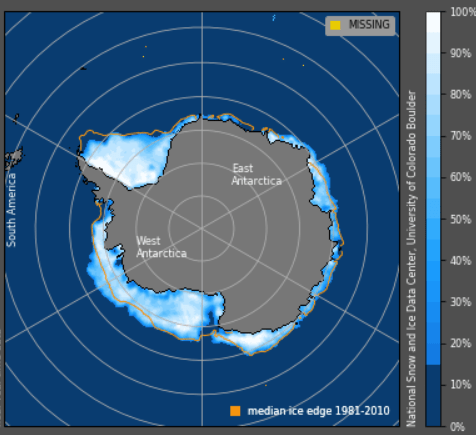
Although the Antarctic sea ice fell to a “record low” in 2017 – after reaching a “record high” in 2015 – the latest data from the National Snow and Ice Data Center shows that the sea ice at the South Pole has come back strongly since then, rising sharply around 500,000 km² above the mean.

Cropped parts of the diagram, source: NSIDC.

On March 26, 2017, the Antarctic sea ice had a size of 3.055 million km². Four years later, the sea ice reached 5.103 million km². That’s a difference of more than 2 million square kilometers, which is an area the size of Saudi Arabia!

No way to ignore natural factors

Why should sea ice grow so fast? If the ice had disappeared, many greenhouse gases would blame it – absurd, of course. And it would be just as absurd to attribute the recent gain to the global slowdown. Obviously, there are a complex set of natural factors at work – factors that climate alarmists have consistently ignored over the past few decades.

Here is the satellite photo of Antarctica from March 26, 2021:

Source: NSIDC

Spring in Hamburg tends a little later

The spring trend in Hamburg is an interesting climate anecdote. According to our friends from Die kalte Sonne here, Hamburg’s forsythia blooms always seem late. Not even what we would expect from “warming”.

By Josef Kowatsch

The perceived beginning of spring in Germany is when the Hamburg forsythia bush blooms in the city center. The location at the Lombard Bridge on the Alster is well suited, as the area has hardly changed in the last 50 years. The phenologist Jens Iska-Holtz dates the flowering date for 2021 to March 25, i.e. 84 days since the beginning of the year. The following graphic has been created over the past 50 years:

Fig. 1: Development of forsythia bloom in Hamburg since 1972. The X-axis shows the years since 1972, the Y-axis the flowering date, measured in days after the beginning of the year, ie from January 1st.

There is no noticeable trend in the flowering dates of the Hamburg forsythia shrub on the Alster. The average is 79 days from the beginning of the year. At 84 days, the start of flowering this year was slightly above average.

Hamburg Spring 11 days later since 1990

Next we consider the new climate reference period 1991 to 2020 as the observation period:

Fig. 2: Development of the forsythia bloom in Hamburg since 1991. Note: rising trend line means delay. At the beginning of the observation 31 years ago, the forsythia tended to flower at the end of February, the flowering date moved back further and further into March. The last bloom in February was 2008.

Cooling off February

What explains the delay in the spring since 1991 in Germany? Global warming? Carbon dioxide?

The month of February is crucial for the forsythia bloom. The corresponding graphic from the Hamburg weather station for February shows only a slight cooling since 1988.

.

Fig. 3: February temperatures in Hamburg since 1988 according to original data from the German Weather Service.

Let’s get to the question of the year since the forsythia bloom has been delayed:

.

Fig. 4: Since 1985, i.e. for 37 years, the forsythia, the DWD’s flagship for the beginning of spring in downtown Hamburg, has shown a slight delay in flowering of 5 to 6 days.

The reason for the rising trend line and thus the delay are probably the warm February months of 1988/89/90 at the beginning of the observation period.

Result: The forsythia flower has been around 37 years – clearly from 36 years – although the shrub is located on a warm island in downtown Hamburg. You will probably look in vain for reports in the media about the delaying trend of the Hamburg spring bloomer.

Those who read The Cold Sun [or NoTricksZone] Blog will therefore know more.

Like this:

To like Loading…

Categories
Health

It’s “harmful” for the EU to experiment with vaccine nationalism: Analyst

The European Union could open a “Pandora’s Box” if it decides to restrict exports of coronavirus vaccines, a political analyst told CNBC last week.

Vaccinations in the 27-person block were hampered by production problems. Anglo-Swedish company AstraZeneca lowered its target for the first quarter from 90 million cans to 30 million cans earlier this year.

The shot, developed in collaboration with Oxford University, is preferred for the launch of vaccines in the European Union.

Officials have already imposed strict rules on export. The EU will check whether the receiving country has the virus under better control than Europe and whether there are any restrictions on vaccines or raw materials before allowing the shots to be sent.

However, some EU countries have concerns about the new rules and want the supply chains to remain open.

There is tremendous political pressure … to experiment with some kind of vaccine nationalism.

James Crabtree

Associate professor in practice

European Commission President Ursula von der Leyen “is really fighting” because other rich countries are doing much better than the EU on vaccinations, said James Crabtree, an associate professor at the Lee Kuan Yew School of Public Policy.

“There is tremendous political pressure … to experiment with some kind of vaccine nationalism,” Crabtree told CNBC’s Street Signs Asia on Friday.

“This is of course very dangerous as the EU is usually one of the most responsible international actors,” he said.

‘Pandora’s Box’

He also warned that other countries could follow the EU’s lead in prioritizing vaccines for local populations.

“When it tries to restrict the flow of vaccine from EU factories, it opens a Pandora’s box where countries like India may begin to do the same,” Crabtree said.

That could be very harmful as new variants of Covid are likely to keep popping up, he added.

EU trade chief Valdis Dombrovskis said it was “highly unfair” to accuse the EU of vaccine nationalism because it is “one of the largest vaccine exporters”.

Data shows that since December the EU has exported 77 million cans of the shots to 33 countries, while 88 million have been shipped to EU countries.

The bloc has also complained that London lacks the same level of reciprocity in the distribution of vaccines.

Heather Conley of the Center for Strategic and International Studies (CSIS) noted that the UK and the EU are working towards a “mutually beneficial relationship”.

Still, leaders in Europe are nervous about their political futures as some countries vote in the coming year or so, said Conley, director of the Europe, Russia and Eurasia program at CSIS.

“The political anger of the heads of state and government and this hysteria about the political future will lead the EU to take action that could ultimately counter its long-term interest in embracing these vaccines very quickly,” she told Friday CNBC’s “Squawk Box Asia”.

“I think the international damage this would do to global vaccine production would be greater than the increased number of vaccines in the EU,” she said.

A doctor administers the Astrazeneca vaccine at a mass coronavirus (COVID-19) drive-through clinic in Milan, Italy on March 15, 2021.

Anadolu Agency | Anadolu Agency | Getty Images

Categories
Entertainment

Grasp P’s son, Hercy Miller, says he selected the state of Tennessee for basketball as a result of he needed to place HBCUs within the highlight

TSR HBCUuuu Know: In case you didn’t know, Master P’s son Hercy Miller is one of the best high school basketball players in the country.

Hercy is one of the most sought-after players – with offerings from powerhouse schools like USC and Missouri – and for all the attention he got, he felt it was important to choose Tennessee State University over some of the major Department I programs are intended to be the HBCUs give a much needed spotlight.

“I’ve always grown up as a leader … I want to make a difference,” Hercy said to Stephen A. Smith after his big reveal, with P by his side. “Most people think HBCUs are medium-sized schools, they can’t. They have a lot of professionals coming out of HBCUs … they just don’t have the spotlight. With me, I want to put all the HBCUs in the area in the spotlight. I just want to see the bigger picture and change the narrative. “

Master P agreed that his son’s decision would change the Black Community and HBCUs.

“It’s so big on the culture that my son is going to HBCU and Tennessee. This will change the narrative. This is about empowering the economy and teaching it and making sure these HBCUs are in the spotlight, ”Master P told ESPN. “I think this is a movement. I think so many kids behind him are going to come to do this now – I’m talking about top athletes like Hercy. “

Master P, Hercy and their family continue the trend of drawing attention to the HBCU sport with their celebrity status. Former NFL star Deion Sanders brought his skills to Jackson State University where he serves as the head coach. Deion’s son announced last November that he would go to his father’s house and play football there.

Would you like updates directly in your text inbox? Hit us at 917-722-8057 or Click here to login!

Categories
Science

The founding father of the DeSmog weblog talks in regards to the “unhealthy actors” who hinder local weather safety measures.

Guest essay by Eric Worrall

James Hoggan, co-founder of De-Smog Blog, seems to believe that people who speak out against climate change are “bad actors”. My question – how does this confrontational approach work for you, James?

Making a one-of-a-kind climate change PR professional

A pioneering public relations expert on climate change describes in his own words his views on how to navigate today’s hyperpolarized public space.

Posted by James Hoggan | Thursday March 25, 2021

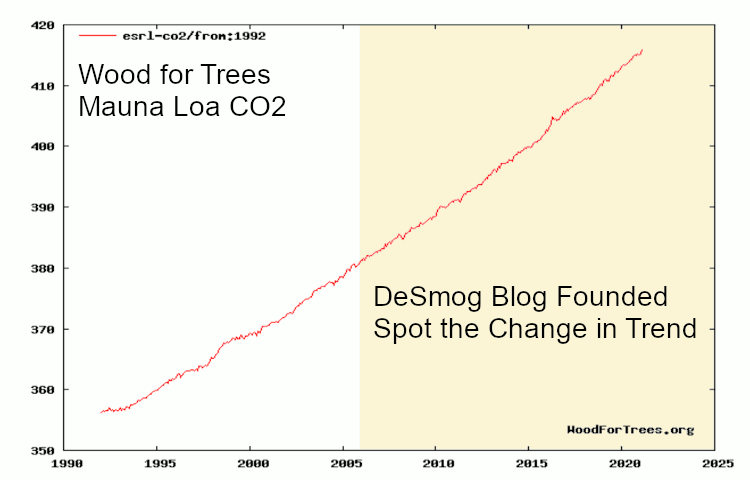
My own journey from the company’s PR consultant to co-founder of a new media website addressing climate change disinformation has been eye opening. We started DeSmogBlog in January 2006 to “remove the PR pollution tarnishing climate science”. We have written about Darth Vader’s public relations campaigns in the US, Canada, Australia and the UK, largely funded by the coal and oil industries. When I found myself in the midst of a violent international dispute over the climate crisis, I realized that the strategies used to mislead people with anti-science propaganda and anti-environmental protection are much more developed and robust than those people use Science and the environment are educated.

Over time, I realized that environmentalists are not crazy or even radical. They very often tell the truth: humans are rapidly destroying the oceans, driving record numbers of species to extinction, and dangerously overheating the climate. Environmental collapse is not just a future risk. It’s in full swing.

The more I got into the war on fact-based reality, the angrier I got. The disinformation was so obvious and shameless. And a lot of that involved ad hominem attacks. But the main source of my anger was the effectiveness of the tactic: at least they worked somewhat. Toxic conversations like this hamper our ability to think together, act in our own interests, and solve the many dangerous environmental problems that haunt everyone on earth.

There is the “climate category” when, in late 2009 and shortly before the Copenhagen climate negotiations, an unknown hacker stole more than 1,000 emails from climate researchers at the University of East Anglia’s climate research unit in Great Britain. The hacked emails were then used to tricking much of the free world media into writing misleading stories suggesting that climate researchers were falsifying data and increasing the possibility that global warming was a hoax.

It’s not just bad actors who pollute and polarize public conversations. Carol Tavris, author of The Best Selling Mistakes Made But Not Mine, told me that once we make a decision, we all see reasons why we are right.

Empathy and evidence must replace disinformation and division. That is a challenge. The science of how to mislead people about science is advanced and muscular. The well-funded propaganda machines fighting environmental regulations know far more about fueling divisions than environmental scientists do about convincing us to support science-based public policies to protect the environment.

Read more: https://yaleclimateconnections.org/2021/03/the-making-of-a-one-of-a-kind-climate-change-pr-professional/

James Hoggan said a positive thing while railing about Climategate and accusing people who spoke out against climate action of being bad actors. “The aim of the argument and public debate should be NOT be it to destroy someone who disagrees with you but brings the truth forward“.

Here’s a truth for you, James. Most contributors who write about WUWT would have no problem cutting carbon emissions as long as it didn’t cost us anything.

You might think you can convince us and our fellow travelers that reducing carbon emissions is worth helping, maybe even making some sacrifices – but how well has this persuasion strategy worked for you since 2006? How much has the efforts of DeSmog Blog and all of your colleagues affected the rise in atmospheric CO2?

If you really want an end to the split, if you seriously believe that if we keep emitting large amounts of CO2, the world is in danger, compromise a little. Most of us are fans of nuclear energy, which happens to be a zero carbon energy technology. Join us, join NASA’s former GISS director James Hansen, join Michael Schellenberger and get on the nuclear car.

France has thus proven that mass-produced nuclear power is affordable. This satisfies most of our objections to not having to pay for it – all that needs to be nuclear to be economical is a favorable regulatory environment. Nuclear energy is carbon-free or very close to it. So if you build nuclear power plants and shut down fossil fuel plants, you can reduce your CO2 emissions on a large scale.

4.8
8th
be right

Item rating

Like this:

To like Loading…

Categories
Sport

“Now that Thomas Tuchel chooses him, everybody will agree” – says Mountgate after England defeated Albania

England Gareth Southgate believes Mason Mount is only now getting the recognition he deserves because Thomas Tuchel is now managing him at Chelsea rather than Frank Lampard.

Southgate is a huge admirer of the 22-year-old and named him in his starting XI for the seventh game in a row for Sunday’s World Cup qualifier against Albania. The midfielder scored England’s second goal in a 2-0 win.

However, his and Lampard’s loyalty to the player has been called into question in some areas, which Southgate believes only changed after the manager’s change at Stamford Bridge.

What did Southgate say?

After managing Mount at Derby and then Chelsea, Lampard was accused of favoritism as he continued to pick the midfielder on his squad.

These allegations followed Mount internationally despite scoring four goals in 15 internationals.

Lampard was fired in January and replaced with the more experienced Tuchel, who continued to select Mount, and Southgate says that should silence its critics for good.

After winning in Tirana on Sunday, Southgate said of Mount, “He’s a great player, but I said that in the fall. I suppose now that Thomas Tuchel chooses him, everyone will agree. If it was Frank, for some reason it doesn’t count.

“He’s an exceptional player. He finds space intelligently, he manipulates the ball very well, he creates opportunities and he can score goals. I thought his performance tonight was excellent. “

Southgate considered the rest of the team effort and added, “I thought Phil Foden was good too. I liked our attacking four. [Declan] Rice and [Kalvin] Phillips read the game well, kicked off well, and quickly won the ball back. We had over 70% possession and were in control of the game. In the end we created more chances and we could have scored more goals. “

The bigger picture

England’s victory in Albania brought two of two World Cup qualifying wins with their upcoming home game against Poland on Wednesday.

Although Mount has been featured in both games so far this international break, he is likely to return to Wembley as the three Lions claim a third consecutive qualifying win.

He then returns to Chelsea, where he has already played 39 games in all competitions. Tuchel’s team is fourth in the Premier League and continues in the Champions League and the FA Cup.

further reading

Categories
Science

African nations take into account the EU CO2 border levy to be “protectionist” – what is the level?

From EURACTIV

By Clara Bauer-Babef | EURACTIV France | translated by Daniel Eck

March 25, 2021 (updated: March 26, 2021)

On behalf of the European Commission, the Director General for Climate Protection Raffaele Mauro Petricione admitted that “the climate policy expectations of an African country are not the same as those of a European country”.

Languages: French

Print comments

Some African countries regard the EU’s planned CO2 border levy as “protectionist”. This was the result of a conference organized by the French government on Tuesday 23 March to examine the challenges posed by the forthcoming EU mechanism. EURACTIV France reports.

According to Youba Sokona, vice-chairman of the Intergovernmental Panel on Climate Change (IPCC), a mechanism to adjust carbon limits would harm “countries with less financial and human capacity”, especially those with low carbon emissions.

On behalf of the European Commission, the Director General for Climate Action, Mauro Petricione, admitted that “what is expected of an African country in terms of climate policy is not the same as that of a European country”.

“This will lead to heated debates,” he admitted.

Timothy Gore of the Institute for European Environmental Policy shared Sokona’s concerns, noting that “it all depends on the scope of action” and the products that will be included.

“These countries are very dependent on aluminum exports, they will be very exposed. The ambiguity of the European discourse is to define a small category of high intensity products. However, we don’t know who will be affected, ”he added.

Poor countries ready to receive funding from the EU carbon frontier levy

The future mechanism for adjusting the carbon limits is part of the “new own resources” for the EU budget and must be used to “fight global warming” around the world, said Green MEP Yannick Jadot on Wednesday (March 3rd). EURACTIV France reports.

Non-European manufacturers are not discriminated against

While agreeing on “the path to achieving the goals of the Paris Agreement and moving towards carbon-free economies as outlined in the recent IPCC report”, Sokona recalled that 80% of African electricity “comes from fossil fuels”.

Petricione called this number “catastrophic” and warned that “Energy in Africa is one of the biggest problems we will face in the future”.

Read the full article here.

Like this:

To like Loading…