Over the past several months as the NFL prepares for the 2023 draft, there have been two things evaluators have agreed on the most: (1), The top four quarterbacks in this draft are not the top four players on the board; (2), Despite that, history will be made if those four quarterbacks are selected 1-2-3-4 (perhaps with the help of another blockbuster trade).
Such is the power of the position. It will be a drastic departure from the 2022 draft when the first quarterback — Kenny Pickett — didn’t come off the board until the Pittsburgh Steelers took him at No. 20 and the fourth quarterback — Matt Corral — didn’t come off the board until the third round with pick No. 94 by the Carolina Panthers.
It has also been a long time since the top cornerbacks on the board are physically bigger than the top receivers, with teams sorting through a bevy of 175- to 185-pound wideouts.
With the 2023 NFL draft (April 27, 8 p.m. ET on ESPN, ABC, ESPN App) nearing, we present a top 100 based on grades, not position. This isn’t a mock draft, just the top 100 players ranked, regardless of position.
Thanks again to all who took the time to chat, answer my pile of questions and put up with this annual project, including some of whom have put up with it for well over three decades.
Note: Best verified or electronically timed 40-yard dash time in parentheses.
Illustration by ESPN
1. Will Anderson Jr., OLB, Alabama, 6-foot-3½. 253 pounds (4.60)
He would have been the best player on the board in the 2022 draft as well. The only two-time unanimous All-American in the storied program’s history with 34.5 career sacks (second only to Derrick Thomas in Crimson Tide history), 62 tackles for loss in 41 career games. His skill set is vast and sets a reliable, firm edge. Rushes with power and explosiveness. Folks really shouldn’t overthink this one.
2. Tyree Wilson, DE, Texas Tech, 6-5⅝, 271 (DNR)
A fractured foot in November ended his final season after transferring from Texas A&M, so the medical staffs around the league will have a lot to say about where he is selected. A bit of a projection and some scouts wanted to see a little more fierceness in his play. But his flashes of dominance, frame (84½-inch wingspan is bigger than all but three offensive linemen at the combine) and lateral quickness to the ball are exactly what defensive coordinators want.
3. Bijan Robinson, RB, Texas, 5-11, 215 (4.41)
Look, I understand all of the data, but if having this running back this high on the board is wrong, I don’t want to be right. Quibble if you must with his blitz pickup, but he has speed, vision, breaks tackles (more than two dozen in one back-to-back game segment this season alone) and plays with body control as well as reliable hands in the passing game. Leave him on the board and somebody else will be ecstatic that you did.
4. Devon Witherspoon, CB, Illinois, 5-11½, 181 (4.43)
Teams will have to decide for themselves why his timed speed at his private pro day this month was better than he shows in games at times. But he understands route concepts, consistently disrupts receivers, finds the ball (14 passes broken up in 2022 alone) and is a more-than-willing tackler in run support.
5. Christian Gonzalez, CB, Oregon, 6-1⅜, 197 (4.38)
The word most often used to describe him by coaches and scouts is “smooth.” With the size-speed-explosiveness combination every defensive coordinator wants, he mirrors receivers with few false steps and averaged just under 30 yards per return on his four interceptions last season.
6. Peter Skoronski, T, Northwestern, 6-4, 313 (5.16)
Some have vehemently argued Skoronski should move to guard as soon as he’s drafted. But I still see a tackle when his footwork in pass protection (he surrendered one sack in ’22) and movement to the second level in the run game are on display. Skoronski was a three-year starter at left tackle for the Wildcats.
7. C.J. Stroud, QB, Ohio State, 6-3, 214 (DNR)
Yep, he’s QB1 — by the split hair of a split hair. An easy thrower to all parts of the field with elite accuracy as the school’s first quarterback to throw for at least six touchdowns in a game three times. NFL folks got a preview of what was to come when he threw to Buckeyes receivers at the school’s pro day. His 348 yards passing and four touchdown throws against Georgia in December were clinical.
8. Bryce Young, QB, Alabama, 5-10⅛ , 204 (DNR)
His composure, decision-making in real time and understanding of trouble spots in coverages are ridiculously good. There is no question he is in control of what an offense is doing. His deep-ball accuracy isn’t quite as good as Stroud’s and some will do plenty of hand-wringing about his size, but if he makes it Job 1 to stay on schedule as a pro — like Drew Brees — he can flourish.
9. Myles Murphy, DE, Clemson, 6-4¾, 268 (4.51)
Murphy is a high-effort player with size and power. His six forced fumbles over the past three seasons are among the best in the Power 5 leagues as he has played from down in a stance as well as a stand-up rusher on the edge. There is a rawness to his game — he needs some counters when his greatest hits are negated by NFL tackles — but anybody who plays this hard this often will succeed.
10. Jahmyr Gibbs, RB, Alabama, 5-9⅛, 199 (4.36)
Gibbs, a transfer from Georgia Tech, has rare acceleration and is adept at altering his tempo to get just the right moment to take the corner. He averaged 6.6 yards per carry for the Crimson Tide last season with 44 receptions. His route running and reliable hands in the passing game make him an intriguing option for a variety of playbooks.
play
1:01
Jahmyr Gibbs’ NFL draft profile
Check out the best highlights that contributed to a stellar college career for Alabama’s Jahmyr Gibbs.
11. Paris Johnson Jr., T, Ohio State, 6-6⅜ , 313 (DNR)
Johnson is going to need time to smooth out his rough edges, but being able to overwhelm pass rushers over and over again is a good starting point. As a pro he will have to play with more power, but his size, smooth footwork and awareness is at the top of this board.
12. Michael Mayer, TE, Notre Dame, 6-4½, 249 (4.70)
There are others in this deep TE class who are faster and more fluid receivers but Mayer might be the best at contested catches and offers a high level of blocking skill at the in-line tight end position.
13. Brian Branch, CB, Alabama, 5-11⅝ , 190 (4.58)
At Alabama Branch largely played a slot corner role in the defense (Nick Saban’s “Star” role) with a full-scale understanding of opponents’ offenses each week. There are no significant holes in his game given he had 90 tackles, 14 tackles for loss, three sacks and seven pass breakups this past season alone.
14. O’Cyrus Torrence, G, Florida, 6-5⅜, 330 (5.31)
Torrence has some technical issues and gets caught leaning on occasion, but he’s powerful, quick to adjust and played without a penalty this past season. He’s a walk-in starter on the interior and showed a glimpse of his play strength against Georgia’s Jalen Carter and in the Senior Bowl practices.
15. Joey Porter Jr., CB, Penn State, 6-2½, 193 (4.46)
Porter’s size, physicality and top-end speed will make him a quicker fit in a defense that plays more press-man, redirecting receivers who challenge him with purpose. He had six pass breakups in a game against Purdue last season and had 19 in his 30 career games.
16. Jalen Carter, DT, Georgia, 6-3, 314 (DNR)
Carter will likely be selected before this spot and has remarkable game footage. But his draft spot remains up in the air as he’s facing charges in connection to a fatal accident of a teammate and an athletic staffer. Some scouts say he has raised other off-the-field questions as he weighed nine pounds more at pro day and looked sluggish in routine position drills.
17. Nolan Smith, OLB, Georgia, 6-2¼, 238 (4.39)
Smith’s 2022 season ended with a torn pectoral muscle in October. There is the usual concern from scouts about a 230-pounder holding up over the long haul at linebacker, but he’s one of the best linebackers in the draft class, a phenomenal leader who plays with leverage and toughness. A thoughtful defensive coordinator will reap the benefits.
18. Broderick Jones, T, Georgia, 6-5⅜, 311 (4.97)
With 19 career starts — 15 this past season for the Bulldogs — Jones’ best football is ahead of him. He plays with the agility of a much smaller player combined with the power befitting his size. And his daily work in practice against the Bulldogs’ defense was better than most tackles faced on any game day.
19. Darnell Wright, T, Tennessee, 6-5⅜, 333 (5.01)
No player on this draft board may have moved up teams’ rankings in this past season more than Wright. A move back to right tackle in ’22 — he played left tackle in 2021 — was fruitful for him and the Vols’ offense. He played 42 games and 2,746 snaps in his career and still needs to refine some things in pass protection, but raw power is clear on a long résumé.
20. Jaxon Smith-Njigba, WR, Ohio State, 6-0⅝, 196 (4.49)
Smith-Njigba played in just three games this past season because of a hamstring injury and all but 92 of his career 1,698 receiving yards came in one season (2021). His routes are clean, he plays with toughness and he wins the ball in contested situations. His draft position will be determined if teams can see him as more than a slot receiver.
play
1:23
Watch the plays that make Jaxon Smith-Njigba a top NFL prospect
Check out some of the plays from WR Jaxon Smith-Njigba’s special time at Ohio State.
21. Luke Musgrave, TE, Oregon State, 6-5 7/8, 253 (4.61)
Musgrave has a limited résumé with the 2020 COVID season and a knee injury that limited him to two games this past season. His high-end Senior Bowl week has carried plenty of weight. Musgrave is a quality route runner who should consistently win matchups in the passing game with a more-than-willing approach as a blocker.
22. Will McDonald IV, DE, Iowa State, 6-3 5/8, 239 (4.69)
McDonald was a four-sport participant in high school. He was a state champion in discus and had a third-place finish in high jump. He has the flexibility in his hips to go with the in-the-moment creativity of the elite pass-rushers and tied the Big 12 record with 34 career sacks.
23. Deonte Banks, CB, Maryland, 6-0 ¼, 197 (4.35)
Banks had two career interceptions in 30 career games, but he may have led the nation in staggered receivers off the line of scrimmage and has pro-ready ability to limit a receiver’s release. He has elite physical traits and competes every snap with a comfort level in a variety of coverage looks.
24. Lukas Van Ness, DE, Iowa, 6-5, 272 (4.58)
Van Ness has easily the highest grade on the board for a player who didn’t start any games for his team over the past two seasons. He had 19.5 tackles for loss and 13.5 sacks over the past two seasons combined, but there’s more in there if he can find consistency. Van Ness also has special teams value — he blocked two punts in one game.
25. Quentin Johnston, WR, TCU, 6-2 ¾, 208 (4.49)
Johnston has a quarterback-friendly catch radius but, with a long stride, will have to run more refined routes as a pro — too often he allowed defenders far less capable to cover him in and out of sluggish breaks. He averaged 19 yards per catch over three seasons.
Editor’s Picks
2 Related
26. Jalin Hyatt, WR, Tennessee, 6-0 1/8, 176 pounds (4.40)
Hyatt will have to prove he has answers for cornerbacks who try to push him around so he can’t enjoy the free releases he had in the Vols’ spread attack. But he has speed, is a savvy route runner and had 15 touchdowns in 2022. Despite weighing 176 pounds, he’s a better, and more willing, blocker on the perimeter than many in this class.
27. Anthony Richardson, QB, Florida, 6-4¼, 244 (4.43)
Most in the league expect Richardson to be selected far ahead of this spot. He can do things most quarterbacks can’t with a power arm and mobility. Richardson had five touchdown runs of at least 45 yards. He may not get enough credit for the pocket awareness and footwork, but he has to repair career-threatening accuracy issues or he will always be a tantalizing passer who doesn’t do enough between the flashes of brilliance.
28. Keion White, OLB, Georgia Tech, 6-4 7/8, 285 (4.79)
White, who transferred from Old Dominion, is a converted tight end and one of the best big men in this draft. There were plenty of times on the game video where he’s shadowing a running back in coverage, then bull rushing a tackle and, finally, winning the edge with speed. An ankle injury limited him early in college career.
29. BJ Ojulari, OLB, LSU, 6-2 3/8, 248 (DNR)
Ojulari didn’t run at the combine and did position drills only at his pro day because of a right hamstring injury. The potential is clear with his flexibility and speed off the edge. But it also raises the question of why he didn’t have a full sack in any game after Oct. 1 last season. Ojulari has shown he can be a quality rusher but needs to find consistency.
30. Dalton Kincaid, TE, Utah, 6-3 5/8, 246 (DNR)
Kincaid, who transferred from San Diego, did not work out at the combine because of a back injury and did not take part in Utah’s pro day. He also dealt with a shoulder injury this past season. In a deep class of tight ends, he may be the best pure receiver in the group: 106 catches, 1,400 yards and 16 touchdowns the past two seasons combined.
play
0:54
Dalton Kincaid’s NFL draft profile
Check out the best highlights that contributed to Utah TE Dalton Kincaid’s college career.
31. Drew Sanders, ILB, Arkansas, 6-4 3/8, 235 (4.58)
Sanders transferred from Alabama and finished his only season with the Razorbacks as an All-American with 103 tackles, 9.5 sacks and 13.5 tackles for loss. He had just three starts before last season, but his versatility and ability outweigh a limited résumé. He also lined up as an edge rusher.
32. Bryan Bresee, DT, Clemson, 6-5 ½, 298 (4.86)
Bresee showed multi-position versatility in his three seasons at Clemson. He did miss time with a torn ACL that limited him to four games in 2021 and a kidney infection that forced him to miss multiple games this past season, but he’s adept at beating blocks as he keeps vision on the ball carrier when he’s on the field.
33. Calijah Kancey, DT, Pittsburgh, 6-1, 281 (4.67)
Kancey has become a star leading up to the draft with his performances at the Senior Bowl and the combine. He had 14.5 sacks and 27.5 tackles for loss in his two seasons as a starter. Scheme will matter for Kancey at the next level, though, because he is slightly undersized to wrestle guards, but he’s proficient and explosive on the interior.
34. Zay Flowers. WR, Boston College, 5-9 ¼, 182 (4.42)
Flowers is fluid on the field and his routes aren’t easy for defenders to mirror because of his technique. He had 12 of his team’s 21 touchdown receptions this past season and finished with at least 789 more receiving yards and 49 receptions than anyone else on the team. He’ll need to clean up his drops as he had two dozen in his career — with nine coming last season.
35. Jordan Addison, WR, USC, 5-11 1/8, 173 (4.54)
Addison transferred from Pitt and some scouts believe he was a more well-rounded player with the Panthers, including winning the Biletnikoff Award there in 2021 with 17 touchdowns. Addison dealt with a lingering ankle injury last season and missed three games overall. He did not work out at the combine, citing a back injury. He’s an impact player once he has the ball, but cornerbacks were able to frustrate him with physicality.
36. Felix Anudike-Uzomah, DE, Kansas State, 6-3 1/8, 255 (DNR)
He did not run at the combine because of a right foot injury and did some position drills at pro day. Any bobbles in technique, and there are a few, are more than outweighed by a savvy and awareness in the pass rush. His improvement last season showed his willingness to work on his game. He finished his career with 20.5 sacks (8.5 last season) and eight forced fumbles.
37. Emmanuel Forbes, CB, Mississippi State, 6-0 ¾, 166 (4.35)
I watched Samari Rolle flourish in an 11-year career with a similar frame, play style and intelligence in coverage. The guy finds the ball and is a closer. He had 14 career interceptions (six of which he returned for a touchdown) and two seasons when he had at least five interceptions.
38. Kelee Ringo, CB, Georgia, 6-1 ¾, 207 (4.36)
The size, speed, physicality and willingness to tackle are all top shelf for Ringo. But he’s drawn a few too many flags at times and surrendered big plays, despite the Bulldogs’ dominance in rushing the passer, because he doesn’t always locate the ball quickly enough. He has four career interceptions and 19 career pass break-ups.
39. Josh Downs, WR, North Carolina, 5-8 ¾, 171 (4.48)
His ability to control tempo in his routes to create space jumps off the film. He has plenty of speed and high production — back-to-back 1,000-yard seasons with eight and 11 touchdowns, respectively. He also averaged 9.8 and 13.3 yards per punt return the last two seasons.
40. John Michael Schmitz, C, Minnesota, 6-3 ½, 301 (5.35)
In a thin group overall at center, he is one of the most pro-ready prospects. He has awareness, composure and is forceful in the running game. His work at the Senior Bowl in pass protection also drew raves. He has an enormous body of work as well with 44 games (33 starts).
play
0:32
John Michael Schmitz’s NFL draft profile
Check out some of the best plays that have made Minnesota’s John Michael Schmitz a top prospect in this year’s NFL draft.
41. Cedric Tillman, WR, Tennessee, 6-3 3/8, 213 (4.54)
An ankle injury limited Tillman to just six games this past season, which is why some have him ranked lower than this. But he is tough and wins contested passes the way an NFL wideout must. In 2021, Tillman had career games — including a 200-yard effort against Georgia and 152 yards against Alabama — that should be on the must-watch list for evaluators.
42. Darnell Washington, TE, Georgia, 6-6 5/8, 264 (4.64)
Washington is a potential mismatch for a defense in multiple phases of the offense — as a blocker in the run game and a receiver in the passing game. He had just two touchdown catches last season, but that was more a factor of the Bulldogs’ embarrassment of riches (including tight end Brock Bowers). There is so much of Washington’s game to unlock.
43. Joe Tippmann, C/G, Wisconsin, 6-6, 313 (DNR)
Tippmann didn’t work out at the combine because of a hamstring injury but did position drills at a private pro day on April 7. He is taller than some evaluators like at center, but he plays with flexibility and moves well. Tippmann has some of the best play strength on the board. His coaches graded him with one sack allowed in 2022.
44. Hendon Hooker, QB, Tennessee, 6-3, 217 (DNR)
Hooker suffered a torn left ACL in late November, which means his rookie year will be impacted. Hooker plays with poise and throws on time. However, he has been largely what scouts call a “half-field” quarterback in the Vols’ spread attack — as in he’ll work progressions on the other side of the field from the primary. But Hooker’s footwork, decision-making and awareness will make him well worth the effort.
45. Will Levis, QB, Kentucky, 6-3 7/8, 229 (DNR)
Levis has elite power in his arm and is physically imposing with toughness in the pocket. However, ultimately the NFL is a game of decision-making and accuracy. Levis’ success will hinge on his willingness to put in the work in those areas with a staff patient enough to do it. If otherwise left unrepaired, those issues will always overpower any arm, even his.
46. Sam LaPorta, TE, Iowa, 6-3 ¼, 245 (4.59)
If it’s April, there must be a Hawkeyes tight end on the draft radar. It’s no small thing that LaPorta’s potential was able to shine through in one of the nation’s most limited passing games. He has positional versatility as a receiver outside, in the slot as well as inline, and that has moved him up the board for several teams.
47. Cody Mauch, T, North Dakota State, 6-5, 302 (5.08)
You might get several different answers about where Mauch will play as a pro — he has been evaluated at all five spots along the offensive line. No matter where he lines up, he’s fierce and closes the deal in the run game. With some time and attention, he is a starter who provides insurance at any other position along the line.
48. Mazi Smith, DT, Michigan, 6-3, 323 (DNR)
Smith didn’t work out at the combine and completed only position drills at his pro day. He is a potential-over-production player with a half sack in 35 career games. But in an NFL where defenses are trying to survive in lighter boxes, he is a quality player who dominated against the run and can dent the pocket inside in the pass rush.
49. Trenton Simpson, ILB, Clemson, 6-2 3/8, 235 (4.43)
Simpson is a bit of a riddle. When he’s comfortable with what he has diagnosed on a play, few, if any, linebackers in the nation come close to his athletic ability. But he also gets shoved out of the play a little too often, and the game video shows too many arm tackle attempts. The team that unlocks more could get a productive starter with rare speed.
50. Antonio Johnson, S, Texas A&M, 6-1 7/8, 198 (4.52)
In a year so light on safeties, Johnson is one of the best prospects at the position. He’s far more comfortable moving toward the line of scrimmage with 14 tackles for loss to go with four forced fumbles in his career, but works well in coverage in the short and intermediate areas.
play
0:33
Antonio Johnson’s NFL draft profile
Check out the best highlights that contributed to a stellar college career for Texas A&M’s Antonio Johnson.
51. Tuli Tuipulotu, DE, USC, 6-3, 266 (DNR)
The Pac 12 Defensive Player of the Year had 13.5 sacks this past season with 22 tackles for loss. He didn’t work out at the combine (hamstring) and didn’t run a 40 at a rainy USC pro day. He is quick off the ball and understands how to get rid of blockers. He has potential in either a 3-4 or a 4-3 front.
52. Tyler Scott, WR, Cincinnati, 5-9 7/8, 177 (4.44)
Fortune could really favor the bold for a team that dives in earlier than this slot. He is a converted running back with enough speed to have been in the Junior Olympics. He’s still learning as a receiver, but his nine receiving touchdowns of at least 20 yards last season to go with four 100-yard games show the progress he has already made.
53. Tucker Kraft, TE, South Dakota State, 6-4 ¾, 254 (4.69)
Kraft suffered an ankle injury that required surgery in his team’s first offensive possession of the 2022 season, so he missed six games. He had nine touchdown catches over his last 24 games played overall and his physicality once he has the ball in his hands will be attractive for any offense that plays two-tight end sets.
54. Dawand Jones, T, Ohio State, 6-8 ¼, 374 (5.35)
His 87 7/8-inch wingspan was the biggest at the combine. That reach combined with his raw power sent plenty of pass-rushers back to the drawing board with grass stains on the back of their jerseys. His footwork does get tangled at times, but players with his profile find success if they work through the rough spots and maintain their conditioning.
55. Jack Campbell, ILB, Iowa, 6-4 5/8, 249 (4.65)
Campbell has a quality multisport profile, having led Cedar Falls (Iowa) High School to back-to-back state basketball titles. He’s tall for the position — he played inside for the Hawkeyes — but he plays with quality eye discipline as he moves efficiently to the ball and is a sure tackler. He has 143 tackles in 2021 and 128 tackles this past season.
56. Steve Avila, G/C, TCU, 6-3 ½, 332 (4.74)
Avila started games at center, right guard, left guard and right tackle in his career as a three-year starter at TCU. He projects as a guard in the NFL and is a safe bet. Given his power/agility combination, he’ll push to play quickly.
57. Isaiah Foskey, DE, Notre Dame, 6-5 1/8, 264 (4.58)
Foskey had back-to-back 11-sack seasons to close out his career. A team captain, he has all he needs to be an impactful, disruptive player on the edge, but there are too many moments when he isn’t. He doesn’t always keep blockers’ hands off him despite a reach advantage. Special teams coaches will notice he blocked four punts in his career, two in one game.
58. Keeanu Benton. DT, Wisconsin, 6-3 ¾, 309 (5.08)
Longtime defensive line coach Jim Washburn once told me “pads high, say goodbye” and Benton is that player. When he plays with quality technique, he is a fierce presence on the inside who repeatedly gets blockers off balance like a future NFL starter should. But when he plays too high, and he does at times, he surrenders far too much ground or gets entangled.
59. Siaki Ika, DT, Baylor, 6-2 7/8, 335 (5.39)
Scouts say Ika needs to improve his technique in how he handles blockers, but some of that deficiency can be attributed to his ability to simply overpower them to this point. He’s quick off the ball, drives his hands through blockers and disrupts flow. If he can play with a little more vision when he discards blockers, he could make far more splash plays — he had just two tackles for loss this past season.
60. DJ Turner II, CB, Michigan, 5-11 ¼, 178 (4.26)
In the nickel defense world the NFL has become, Turner has flexibility in that he can line up outside or inside in the slot. He was the fastest player timed at the scouting combine this year and started 22 games over his last two seasons with the Wolverines. He doesn’t win contested passes as much as some others and occasionally gets pushed off the spot at the top of the route.
play
0:39
DJ Turner’s NFL draft profile
Check out the highlights from Michigan cornerback DJ Turner.
61. JL Skinner, S, Boise State, 6-3 ¾, 209 (DNR)
Skinner had surgery in early March to repair a torn chest muscle he suffered during combine training. He had already participated in Senior Bowl practices before the injury occurred. He’s a willing run defender with the frame, range and ball skills. He has seven career interceptions, four in 2022.
62. Cam Smith, CB, South Carolina, 6-0 ¾, 190 (4.44)
Smith has the length and speed defensive back coaches want, but his game video showed a player far more comfortable in zone and off coverage. He consistently showed the ability to get around the ball in those looks. Smith will have to clean up penalties — he had 10 this past season, six in the team’s first seven games.
63. Anton Harrison, T, Oklahoma, 6-4 3/8, 315 (4.98)
Harrison’s sub-5.0 40-yard dash puts him in an elite offensive lineman club, with those like Broderick Jones. Harrison plays with patience and top-level awareness, but his recovery skills will be tested if he gets off balance early in a play, and defensive ends will test his strength.
64. Clark Phillips III, CB, Utah, 5-9, 184 (4.51)
It sounds basic, but always give the evaluation love to cornerbacks who find the ball. Phillips had four pick-sixes in his career, nine interceptions overall and 21 pass knockdowns. He plays with elite awareness and strength.
65. Luke Schoonmaker, TE, Michigan, 6-5 ¼, 251 (4.63)
There are more refined receivers in a deep class at the position, but Schoonmaker is a quality multitasker who can play in any personnel grouping and offer production as a blocker or pass-catcher. A five-year letterman for the Wolverines, he played 43 career games.
66. Adetomiwa Adebawore, DT, Northwestern, 6-1 5/8, 282 (4.49)
Any time a prospect his size runs a sub-4.5 40-yard dash, it puts him on a short list. Adebawore plays with explosiveness and shows savvy in attacking blockers, but he’s a riddle in terms of production at times. And that’s the rub: He had five sacks in 2022, but two of those came in one game (Maryland).
67. Derick Hall, OLB/DE, Auburn, 6-2 ¾, 254 (4.55)
Hall’s a tough quality leader who was a 200-meter dash state finalist at Gulfport (Mississippi) High School. There were some bobbles when he was asked to drop into coverage because he wasn’t always fluid in those movements. Still, he should have immediate impact as an edge rusher.
68. Devon Achane, RB, Texas A&M, 5-8 ½, 188 (4.32)
Some will push Achane down the board because of his size. However, he plays like he believes he’s a 220-pounder with no hesitation between the tackles and elite speed. He was a member of the Aggies’ All-American 4×100 relay team and has potential as a returner. He averaged 6.4 yards per carry over his three seasons, had two seasons with at least 24 receptions and scored 28 career touchdowns.
69. Matthew Bergeron, T, Syracuse, 6-5 ¼, 318 (DNR)
Bergeron has the length and the athletic ability to play tackle and started 31 games at left tackle, eight at right tackle in his career with the Orangemen. He’s one of the best run-blockers on the board. But his work in pass protection is spotty, especially with his feet, so if a team wants him to play right away, it might be at guard.
70. Zach Charbonnet, RB, UCLA, 6-0 3/8, 214 (4.53)
Charbonnet runs with vision and physicality. He offers three-down potential with 61 receptions over the past two seasons. He runs upright at times and that can be a painful lesson in the league. But when he sees the gap, he isn’t bashful.
play
0:59
Zach Charbonnet’s NFL draft profile
Check out the best highlights that contributed to an awesome college career for UCLA’s RB Zach Charbonnet.
71. Terell Smith, CB, Minnesota, 6-0 ½, 204 (4.41)
Smith is a big corner who played 48 games with elite speed, is smooth in his footwork in a variety of coverages and is one of the best tacklers at the position on the board. He finished with four interceptions in his career and forced one fumble and is an ascending player worth a long look.
72. Tyrique Stevenson, CB, Miami, 6-0 3/8, 198 (4.45)
The defensive coordinators who favor press-man looks will look to Stevenson over others at the position. He’s tough and physical with top-end speed. But the game footage has shown several big plays allowed in zone coverage, and there were some secondary coaches who believe he might get a look at safety.
73. Daiyan Henley, ILB, Washington State, 6-0 7/8, 225 (4.54)
Henley is a transfer from Nevada who made a rare move from wide receiver to linebacker. He caught eight passes as a freshman and nine as a sophomore at Nevada. His 106 tackles this past season were second in the Pac-12 and included 12 tackles for loss. He’s a high-RPM player who will be a core special-teamer right away with plenty of potential at linebacker.
74. Julius Brents, CB, Kansas State, 6-2 ¾, 198 (4.53)
Brents is a transfer from Iowa. As a big-frame cornerback he is expected to move up the board during the pre-draft windup. With the reach of an offensive tackle (82 ⅝-inch wingspan), Brents plays like a 4.4 cornerback who’s a physical tackler with quality awareness overall.
75. Jordan Battle, S, Alabama, 6-1, 209 (4.55)
Despite his lack of impactful hits, Battle has the playing ability of a pro safety — in the secondary he played over 800 snaps for Nick Saban in each of the past three years. He’s smart, plays with toughness and is routinely in the right place at the right time.
What to know for the 2023 NFL draft
Ranks: Kiper | McShay | Positional
Mocks: Kiper | McShay | Miller | Reid
• Biggest needs » | QB landing spots »
• Latest buzz » | Comps to know »
• Scouting reports » | Order » | More »
76. Ji’Ayir Brown, S, Penn State, 5-11 3/8, 203 (4.66)
In 35 career games with the Nittany Lions — he had played two years at Lackawanna College — he forced 12 turnovers (nine interceptions and three forced fumbles). He’s comfortable near the line of scrimmage, in the slot and at deep safety. He’s a physical tackler who quickly deciphers an offense’s intent, but his workout numbers are a concern.
77. Nathaniel (Tank) Dell, WR, Houston, 5-8 3/8, 165 (4.49)
Dell’s speed and explosiveness are evident all over the game video. He’s a touchdown assembly line — he had 28 receiving TDs in 32 career games — with back-to-back 1,000-yard seasons. But like most in an undersized group of receivers on the board, he’s going to have to prove himself.
78. A.T. Perry, WR, Wake Forest, 6-3 ½, 198 (4.47)
His speed, size and ability to play through contact could move him up the board in a year when there is a bevy of smaller receivers. He has 26 touchdown receptions over the past two seasons combined. But he had some drops, especially down the stretch this past season, that have been flagged by some wide receiver coaches.
79. Israel Abanikanda, RB, Pitt, 5-10 1/8, 216 (4.39)
Abanikanda had nine 100-yard games this past season, including 154 yards against Tennessee, 111 yards (on 15 carries) against Miami and 320 yards with six touchdowns against Virginia Tech. He is a physical runner with one-cut explosiveness at the point of attack and has elite speed.
80. Andre Carter II, OLB, Army, 6-6 ½, 256 (4.92)
Personnel evaluators see Carter’s potential to grow as he works full-time in an NFL strength program. He has short-area quickness and has demonstrated a greater variety of ways to get off blocks than most on the board. But he went from 15.5 sacks in 2021 to 3.5 this past season.
play
0:36
Andre Carter II’s NFL draft profile
Check out the highlight’s from linebacker Andre Carter II’s career at Army.
81. Darius Rush, CB, South Carolina, 6-1 7/8, 198 (4.36)
Rush is a former wide receiver who moved to cornerback as a redshirt freshman. His size, speed and savvy are top-of-the-board worthy, but he isn’t as fluid (especially in man coverage) as some corners in this draft. He will need a team that is the right fit.
82. Byron Young, DE, Tennessee, 6-2 3/8, 250 (4.43)
Young did not play football for a year and a half following high school — he worked in a Dollar General store — and his 2020 season at Georgia Military College was canceled due to COVID-19. In two seasons at Tennessee, he has shown vast potential with a rare size-speed combination and a drive to succeed.
83. Nick Herbig, OLB, Wisconsin, 6-2 1/8, 240 (4.65)
Herbig started 31 games for the Badgers and finished with 21 sacks with 36 tackles for loss in those games. He’ll need more strength as a pro, especially at the point of attack in the run game. But his pass-rush skills will translate to the league, especially with teams rushing out of nickel packages so often.
84. Olusegun Oluwatimi, C, Michigan, 6-2 ½, 309 (5.38)
Oluwatimi started 46 consecutive games to end his career — 36 at Virginia and 14 for Michigan this past season. Some favor players with more raw power, but Oluwatimi is sound in pass protection and plays with quality awareness.
85. Tank Bigsby, RB, Auburn, 5-11 5/8, 210 (4.56)
Bigsby was a three-year starter at Auburn who, despite playing behind a line not as productive as other SEC lines, finished his career with a 5.6 yards-per-carry average and three 800-yard rushing seasons. He plays with toughness and runs with quality vision and creativity in crowded areas.
86. Jaquelin Roy, DT, LSU, 6-3 3/8, 305 (5.13)
Roy is still a work in progress — he started in only 13 college games. But he plays with high effort, moves well, and his 12-tackle game (with 1.5 tackles for loss) against Texas A&M this past November was a glimpse of his potential.
87. Jonathan Mingo, WR, Mississippi, 6-1 ¾, 220 (4.46)
In the crowd of 180-pound receivers on this year’s draft board, Mingo’s size and physicality stand out. His routes are precise and he projects to be a tough cover out of the slot in the NFL. He had 51 receptions in 2022 at Ole Miss — a considerable jump from past seasons.
88. Jaelyn Duncan, T, Maryland, 6-5 5/8, 306 (5.10)
Duncan, a four-year starter, is one of the most physically intriguing tackle prospects on the board with rare movement skills. His best work is as good as that of any tackle in this draft, but he will need more strength to hold his ground. There is a good chance his offensive line coach will want to see more finishing power far more often.
89. Rejzohn Wright, CB, Oregon State, 6-1 5/8, 193 (DNR)
Wright did not work out at the combine because of a hand injury and missed pro-day workouts with a knee injury. He has the size-speed combination that defensive backs coaches want because he has shown a comfort level in a variety of coverages. But there are some concerns over committing penalties — he tallied more than 10 in the past two years combined.
90. Zach Harrison, DE, Ohio State, 6-5 ½, 274 (DNR)
Harrison is a quick, big-framed player with the reach to keep blockers away from him. He has flashed top-end ability in the pass rush and is adept at getting the ball out. However, scouts have said they wanted to see more of Harrison’s best work consistently.
play
0:40
Zach Harrison’s NFL draft profile
Check out the best highlights that contributed to a stellar college career for Ohio State’s Zach Harrison.
91. Marvin Mims Jr., WR, Oklahoma, 5-10 7/8, 183 (4.38)
Mims will be asked to work a bigger variety of routes as a pro than he was in college, so there will be a learning curve there. But the routes he does run are precise and sharp as his speed and explosiveness can’t be dismissed — he averaged over 20 yards per catch in two of his three seasons. He has potential as a punt returner as well.
92. Riley Moss, CB, Iowa, 6-0 5/8, 193 (4.47)
Moss played 54 games, starting 40, over five seasons. He has top-tier athleticism, scheme versatility, wins contested passes with explosiveness and had 11 interceptions in his career, including two returned for touchdowns in the same game.
93. Luke Wypler, C/G, Ohio State, 6-2 5/8, 303 (5.14)
Wypler, a two-year starter at center, wins with movement over power, and some of the taller defensive tackles he faced were able to dislodge him too often. But those movement skills leap off the film as a fit for zone-scheme run games. He cleaned up some penalty issues this past season as well.
94. Jartavius Martin, S, Illinois, 5-11, 194 (4.46)
There are some in the league who see Martin as a hybrid nickel cornerback/safety prospect given his physical makeup — his workouts have been among the best on the board, including a 44-inch vertical jump at the combine. He played in 55 games overall, and last season he had 14 pass deflections, three interceptions and two forced fumbles.
95. Kyu Blu Kelly, CB, Stanford, 6-0 ¼, 191 (4.52)
His father, Brian, played 11 seasons in the NFL. Kelly consistently showed quality footwork, but some coaches wonder if he can hold his own down the field in man coverage. Kelly could find a role in a zone-heavy defense.
96. Mike Morris. DE, Michigan, 6-5 1/8, 275 (4.95)
The film for Morris shows a big-framed edge player who disrupts blockers and forces the issue along the line of scrimmage. However, last season was the only one where he started more than four games (11), and his lackluster combine performance has given some pause.
97. Jayden Reed, WR, Michigan State, 5-10 7/8, 191 (4.45)
Reed might be the best multitasker in a large group of receivers on the board, given his ability to line up all over the formation to go with 33 career kickoff returns and 27 career punt returns. He plays with toughness as he consistently wins contested passes with quality play speed.
98. Emil Ekiyor, G, Alabama, 6-2 ½, 314 (DNR)
Ekiyor didn’t work out at the combine and did position drills only at his pro day, but he was a three-year starter, is technically sound and plays with grit. However, he doesn’t physically check all of the boxes for an NFL interior lineman.
99. Henry To’oTo’o, ILB, Alabama, 6-1, 227 (4.62)
To’oTo’o transferred from Tennessee to play his final two seasons for the Crimson Tide. He had at least 94 tackles at Alabama both years, is assignment sound, savvy and knows how to get off blocks. But he is undersized and isn’t always as quick to diagnose plays as some others on the board.
100. Andrew Vorhees, G/T, USC, 6-6, 310 (DNR)
Through the years, No. 100 isn’t always the 100th-best player, but someone who deserves a little more attention. Past No. 100s have included wide receiver Brandon Marshall, linebacker Shaquem Griffin, linebacker Davion Taylor and Malcolm Koonce in 2021.
Vorhees suffered a torn ACL in position drills at the scouting combine, but in the keep-on-grinding department, he showed up the next morning on crutches with a brace on the injured leg and participated in the bench press (he did 38 repetitions of 225 pounds). Some see him as a guard. He played 55 career games, started in all five of his seasons and played with pro-level consistently week after week.
Close, but not quite: Jaylon Jones, CB, Texas A&M; Zacch Pickens, DT, South Carolina; Sydney Brown, S, Illinois; Yasir Abdullah, OLB, Louisville; K.J. Henry, DE, Clemson; DeMarvion Overshown, ILB, Texas; Blake Freeland, T, BYU; Keondre Coburn, DT, Texas; Jayden Reed, WR. Michigan State; Roschon Johnson, RB, Texas; Chase Brown, RB, Illinois; Chandler Zavala, G, North Carolina State; Isaiah McGuire, DE/OLB, Missouri; DeWayne McBride, RB, Alabama-Birmingham; Garrett Williams, CB, Syracuse; Ricky Stromberg, C, Arkansas


 One of the planned modules is the Science Deck. Photo credit: Airbus
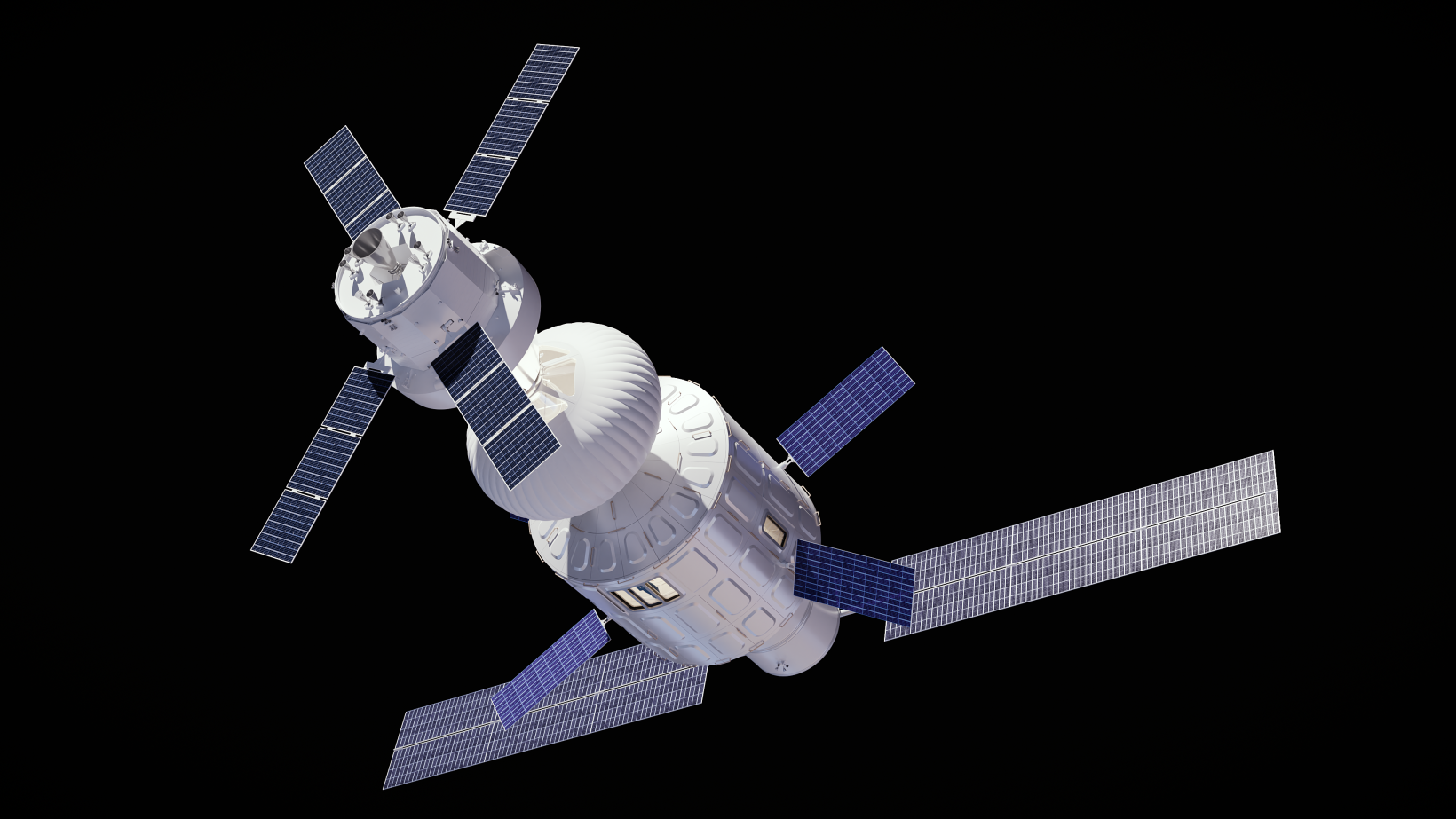 Airbus LOOP coupled with Spartan Space’s inflatable module and a visiting spacecraft. Photo credit: Airbus

