Former NFL cornerback and Super Bowl champion Bashaud Breeland was arrested in Charlotte, North Carolina, after a traffic stop earlier this week and hit with a slew of charges, including possession of a stolen car, guns and drugs, according to a police report obtained by multiple outlets Wednesday.
Breeland, 31, who last played in the NFL in 2021, was booked into Mecklenburg County jail early Tuesday, according to those outlets citing a police report. Breeland was released a few hours later after posting $30,000 bond.
Breeland was pulled over by police Monday driving a Mercedes-Benz SUV, which was found to be reported stolen in Florida, according to the reports. Multiple guns were found, including two AK-47s and two AR-15s, and police discovered 5.45 pounds of marijuana and 62 grams of illegal mushrooms, the reports said.
Jail records show he was charged with possession of a stolen motor vehicle, altering serial numbers, altering a title, possession of marijuana, possession of a Schedule I controlled substance and possession of a stolen firearm.
Breeland started 13 games for the Minnesota Vikings in 2021. He was released by the Vikings in December 2021 and signed to the practice squad of the Arizona Cardinals in January 2022. He earned $12.3 million for his career, per Spotrac.
Breeland won a Super Bowl title with the Kansas City Chiefs at the end of the 2019 season, starting 15 of the 16 games he played during the regular season. He played in and started six postseason games for the Chiefs in 2019 and 2020.
A fourth-round selection by Washington in the 2014 draft, Breeland had 16 interceptions and 86 passes defensed in 107 career games (101 starts) with four teams. He had 439 tackles for his career.
Information from Reuters contributed to this report.
Every weekday the CNBC Investing Club with Jim Cramer holds a “Morning Meeting” livestream at 10:20 a.m. ET. Here’s a recap of Tuesday’s key moments. Stocks sink Eli Lilly surges Palo Alto slumps 1. Stocks sink U.S. stocks tumbled Tuesday after Moody’s downgraded the credit rating on a slew of small and mid-sized banks, sending shares of financials into a tailspin. Economic data released overnight showed a slump in Chinese imports and exports in July, adding to U.S. market worries. The Dow plunged more than 300 points or roughly 1%. The S & P 500 also lost about 1%. The tech-heavy Nasdaq was hit harder, down about 1.3%. Still, the Moody’s cut shouldn’t directly impact our portfolio as the Club invests in larger banks, Wells Fargo (WFC) and Morgan Stanley (MS), instead of the much smaller firms targeted. With additional cash on hand, the intensified Wall Street selloff gave us another reason to buy , picking up some more Coterra Energy (CTRA) shares. 2. Eli Lilly surges Club name Eli Lilly (LLY) skyrocketed more than 16% on hopes for Mounjaro’s use to prevent major cardiovascular events. Already approved for Type-2 diabetes and under review for obesity, Mounjaro could prove to act in a similar way to Novo Nordisk ‘s Wegovy and Ozempic. New data showed those weight loss and diabetes drugs cut the risk of heart attack or stroke by 20%. As for strong earnings, which also helped the stock, Eli Lilly had a great quarter and raised full-year guidance. 3. Palo Alto slumps Palo Alto Networks (PANW) fell another 2.5% amid an ongoing slump for the leading cybersecurity stock. JPMorgan put PANW on a negative catalyst watch. The analysts anticipate that any negative data could place further downside pressure on the Club holding. Still, the analysts maintain their overweight (buy) rating, adding they would be buyers on further weakness, which they see as temporary. We feel the same way as JPMorgan, upgrading our Club rating to a 1 on Monday. Since Friday’s 8% loss on a competitor’s misfortunate, PANW shares have been down Monday and now Tuesday as well. (Jim Cramer’s Charitable Trust is long WFC, MS, LLY, PANW. See here for a full list of the stocks.) As a subscriber to the CNBC Investing Club with Jim Cramer, you will receive a trade alert before Jim makes a trade. Jim waits 45 minutes after sending a trade alert before buying or selling a stock in his charitable trust’s portfolio. If Jim has talked about a stock on CNBC TV, he waits 72 hours after issuing the trade alert before executing the trade. THE ABOVE INVESTING CLUB INFORMATION IS SUBJECT TO OUR TERMS AND CONDITIONS AND PRIVACY POLICY , TOGETHER WITH OUR DISCLAIMER . NO FIDUCIARY OBLIGATION OR DUTY EXISTS, OR IS CREATED, BY VIRTUE OF YOUR RECEIPT OF ANY INFORMATION PROVIDED IN CONNECTION WITH THE INVESTING CLUB. NO SPECIFIC OUTCOME OR PROFIT IS GUARANTEED.
A recent study published in the journal Geology attempts to interpret the patterns of dunes, which are sand mounds frequently formed by aeolian (wind) processes and range in size from small ripples observed on beaches to massive structures observed in the desert. Specifically, the researchers focused on patterns of dune crestlines, which are the top of the dunes. Different dune crestline patterns might appear as mundane features, but their formations are often the result of a myriad of influences, including climate change, surface processes, and atmospheric phenomena.
However, questions pertaining to the processes responsible for the different crestline patterns have baffled scientists. But the findings from this recent study could provide researchers insights into environmental variances not only on Earth, but other dune-harboring planetary worlds in our own solar system. These currently include three of the four terrestrial planets, Venus, Earth, and Mars; smaller bodies such as Jupiter’s volcanic moon, Io; Saturn’s largest moon, Titan; and even dwarf planet Pluto.
“When you look at other planets, all you have is pictures taken from hundreds to thousands of kilometers away from the surface,” said Dr. Mathieu Lapôtre, who is an assistant professor of Earth and planetary sciences in the Stanford Doerr School of Sustainability, and a co-author on the study. “You can see dunes – but that’s it. You don’t have access to the surface. These findings offer a really exciting new tool to decipher the environmental history of these other planets where we have no data.”
Remove All Ads on Universe Today
Join our Patreon for as little as $3!
Get the ad-free experience for life
Dune interactions are defined as when their crestlines are near one another, and it’s these interactions result in the dunes establishing a balance, or equilibrium, with their surrounding environment. Therefore, the researchers hypothesized that a large amount of dune interactions could be interpreted as recent or nearby changes regarding those confined conditions.
For the study, the researchers analyzed changes in specific known environmental conditions, including sand quantity and wind direction, using orbital images of dune field sites numbering 30 and 16 on Earth and Mars, respectively. Examples of Earth dune field sites included Rice Valley, White Sands, the Namib Desert, and the Tengger Desert. Examples of Martian dune field sites included Nili Patera, Kaiser Crater, Rabe Crater, and Hargraves Crater.
Examples of active dune fields within Nili Patera on Mars. Dunes like these were examined for this study in hopes of giving scientists better insights into how their interactions are influenced by a planet’s climate. (Credit: NASA/JPL-Caltech/Univ. of Arizona)
Example of dune activity in Rabe Crater on Mars, one of the locations for this recent study investigating dune interactions. (Credit: NASA/JPL-Caltech/UArizona)
Example of dune activity in Kaiser Crater on Mars, one of the locations for this recent study investigating dune interactions. (Credit: NASA/JPL-Caltech/UArizona)
For Earth, the researchers flattened a dune field in China’s Tengger Desert to establish a baseline prior to analyzing satellite imagery between 2016 and 2022 of how this flat terrain evolved into large dunes as they slowly reached a state of equilibrium with their surrounding environment. This was followed by the team examining how wind conditions in the Namib Desert resulted in increased dune interaction as the dunes migrated throughout a valley whose landscape transitions from unrestricted to restricted then unrestricted afterwards.
“As both sand and winds get funneled into the valley, the dunes feel a change in their boundary conditions, and their pattern needs to adjust,” said Colin Marvin, who is a PhD student in the Department of Earth and Planetary Sciences at Stanford, and lead author of the study. “They move into the portion outside the valley, and they again readjust to their unconfined conditions, and we see a drop in the number of interactions. This trend is exactly what we expected to see.”
Time-lapse images of the Nili Patera dune field on Mars observed between 2007 and 2010. These images indicate dune ripple movement and are an example of what scientists observed in the Namib Desert on Earth for this study. (Credit: NASA)
For Mars, the researchers used orbital imagery to discover similar dune patterns, specifically near the Martian north pole where the researchers observed minor amounts of dune interactions. This was due to the dunes reaching a state of equilibrium with their surrounding environment, resulting in relative spacing from each other and similar characteristics for both appearance and size. However, dunes observed in slightly lower latitudes exhibited greater amounts of interactions due to changing winds and local surface frost. But once these dunes migrate closer to the north pole, their patterns settle out resulting in decreased interactions.
“We have an upper bound on the time that it takes for a given dune to adjust to changes in environmental conditions, and that is the time it takes for a dune to migrate by a distance of one dune length,” said Marvin. “We can use this to diagnose recent changes in environmental conditions on planetary bodies where we don’t have any information other than images taken from orbit or radar for example.”
Dr. Lapôtre noted that gaining insights about dune patterns on Mars could not only help better understand Mars’ recent climate, but also assist in locating subsurface water ice that could be excavated by future astronauts on the Red Planet.
As stated earlier, other planetary bodies besides Earth and Mars possess dunes that could be used to better understand climates on those worlds, with one such world being Saturn’s largest moon, Titan. In addition to its dunes, Titan is the only moon that possesses a thick atmosphere, which makes it a target for astrobiology and the search for life beyond Earth. This large moon was extensively investigated by NASA’s Cassini throughout the 2000s and 2010s with the European Space Agency’s Huygens probe touching down on Titan’s surface in January 2005. This made Huygens the first spacecraft to land on a planetary body in the outer solar system and the first landing on a moon aside from Earth’s Moon. While Huygens only transmitted data and images back to Earth for approximately 90 minutes, it provided scientists with a first-time, up-close look at one of the most intriguing moons in the solar system.
This most recent study has helped scientists lay the foundation for helping us better understand dune interactions on other worlds, but NASA’s upcoming Dragonfly mission to Titan hopes to confirm these findings when it lands on the moon’s surface sometime in the 2030s. With this mission, Dragonfly will become only the second rotorcraft sent to another world—the first being NASA’s Ingenuity helicopter on Mars—and will mark the first powered flight on any moon. During its multi-year science mission, Dragonfly will perform short flights around Titan in hopes of determining its prebiotic chemistry and potential for extraterrestrial life but should also provide scientists an up-close investigation of its dunes, which have thus far only been observed from orbit.
What new discoveries about dune interactions on Earth and other worlds will scientists make in the coming years and decades? Only time will tell, and this is why we science!
While the US and China have dominated the space sector for decades, Europe is carving out a niche for itself: small satellites in low-Earth orbit (LEO).
One of the most promising startups in this space is Germany’s Rocket Factory Augsburg, which has just raised €30m from KKR, an American investment firm.
The cash injection will facilitate RFA’s upcoming launch test at the end of this year and help complete its launch pad at SaxaVord Spaceport in Scotland.
SaxaVord Spaceport is a planned spaceport to be located on the Lamba Ness peninsula on Unst in the Shetland Islands, the most northerly point in the UK.
Catch up on our conference talks
Watch videos of our past talks for free with TNW All Access →
In January 2023, Rocket Factory Augsburg signed a multi-year launch agreement which gives the company exclusive access to the northernmost launch pad of the spaceport.
The startup has also signed an agreement with the French Space Agency to build a dedicated launch pad at the Guiana Space Center (GSC) in French Guiana, with launches commencing in 2025.
The SaxaVord Spaceport is currently under construction. Credit: RFA
“We aim to provide cost-effective access to space and data-generating business models in space for monitoring, connecting, and protecting our planet,” said Stefan Tweraser, CEO at RFA.
Tweraser established RFA in 2018 alongside Jörn Spurmann, Stefan Brieschenk, Hans Steiniger, and Marco Fuchs, as a spin-off of German aerospace firm OHB SE.
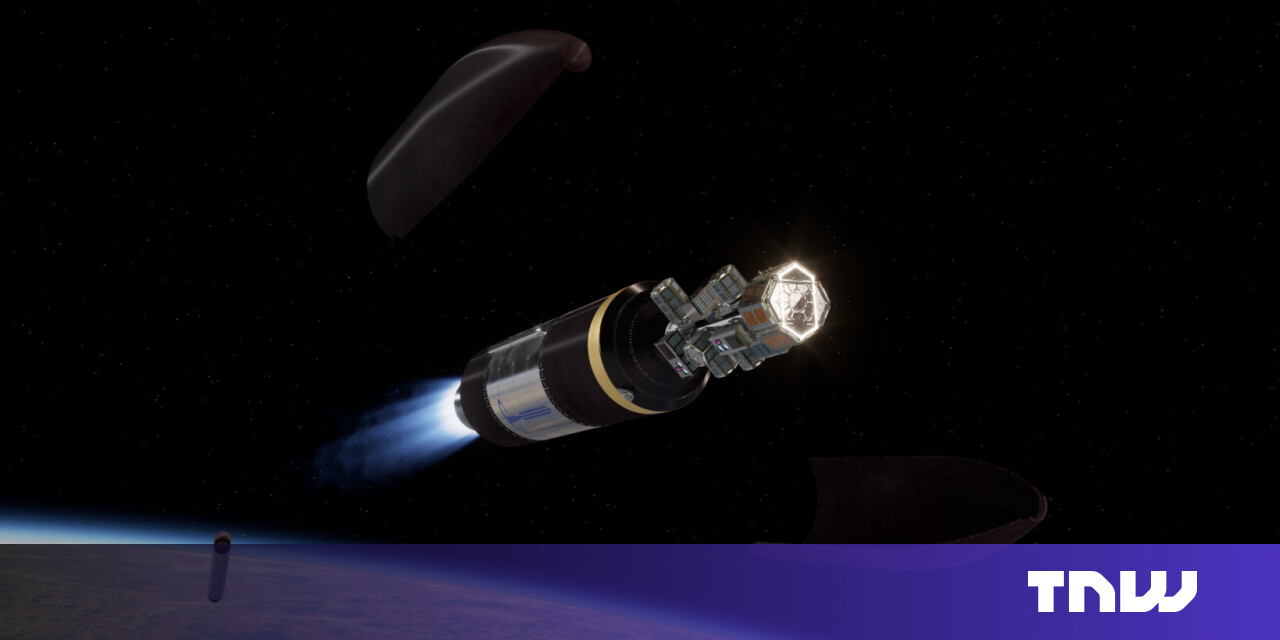
RFA is developing a three-stage launcher called RFA One with a payload capacity of 1,300 kilograms to low Earth orbit. The rocket will stand at 30 metres and 2 metres in diameter, slightly bigger than Rocket Lab’s Electron but less than half the size of a SpaceX Falcon 9.
The company plans to undercut the competition by offering payloads of up to 1,300 kg at a base cost of $3,000 to $4,000 per kg. By 2030, it hopes to launch approximately 50 times per year to dedicated orbits for full satellite constellations.
The company has spent a little over €40mn so far in its quest to become Europe’s first small launch provider. A small-lift launch vehicle is a rocket orbital launch vehicle that is capable of lifting 2,000 kg or less.
Other companies operating in this arena include UK-based Skyrora, which also aims to launch its first rocket from SaxaVord at the end of this year, and PLD Space, a Spanish startup which aims to launch Europe’s first reusable rocket from a site in South Spain. Perhaps Europe’s most promising small launch startup, at least funding-wise, is Isar Aerospace, which has bagged over €300mn to date.
However, because Isar, Skyrora, PLD Space, RFA, or any of the dozen or so European small launch companies haven’t actually attempted an orbital launch yet, it can be difficult to tell who is making real progress and who is not.
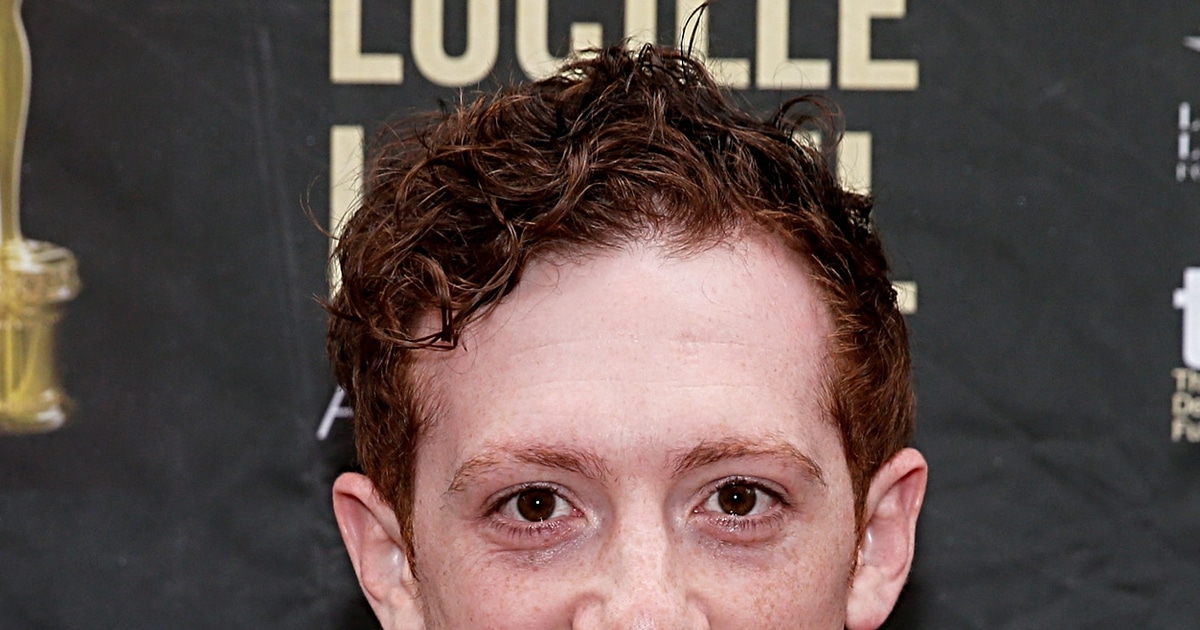
Ethan Slater isn’t returning to a pineapple under the sea, but he is going back to Broadway.
The actor—who is dating his Wicked co-star Ariana Grande—is heading back to the Big Apple to play The Historian/Prince Herbert in the revival of the musical Spamalot, the show announced Aug. 9.
Spamalot—based on the 1975 film Monty Python and the Holy Grail—will open in time for Halloween on Oct. 31, co-starring Michael Urie as Sir Robin, Christopher Fitzgerald as Patsy, James Monroe Inglehart as King Arthur, Leslie Rodriguez Kritzer as the Lady of the Lake, Jimmy Smagula as Sir Bedevere and Nik Walker as Sir Galahad.
As for Ethan—who received a Tony nomination for his performance as SpongeBob SquarePants in the Broadway musical from 2017 to 2018—he spent the first half of this year filming Wicked in London with Ariana.
Ethan, 31, and Ariana, 30, struck up a romance after their respective splits from their spouses Lilly Jay and Dalton Gomez. “They were both separated before they got together,” a source recently told E! News. Another insider added that Ariana and Dalton “remain friends.”
Affordable and efficient portable power is a necessity these days, keeping our electronic devices operational while on the go. But there are literally dozens of options to choose from, making it abundantly difficult to decide which mobile charging solution is best for you. We’ve sorted through countless portable power options and came up with six of the best portable power stations to keep your smartphones, tablets, laptops, and other gadgets functioning while living off the grid.
The best overall: Jackery Explorer 1000
Adam Doud/Digital Trends
Jackery has been a mainstay in the portable power market for several years, and today, the company continues to set the standard. With three AC outlets, two USB-A, and two USB-C plugs, you’ll have plenty of options for keeping your gadgets charged.
The 1002Wh lithium batteries in the Explorer 1000 provide up to eight laptop charges, 50 camera charges, or 100 phone charges. You can recharge the power station using an AC wall outlet, a DC port in your car, or a compatible solar panel. A built-in LCD readout also illustrates the current charge levels and the generator’s depletion and recharge rates. Read the Jackery Explorer 1000 review.
The best for the campsite: EcoFlow Delta
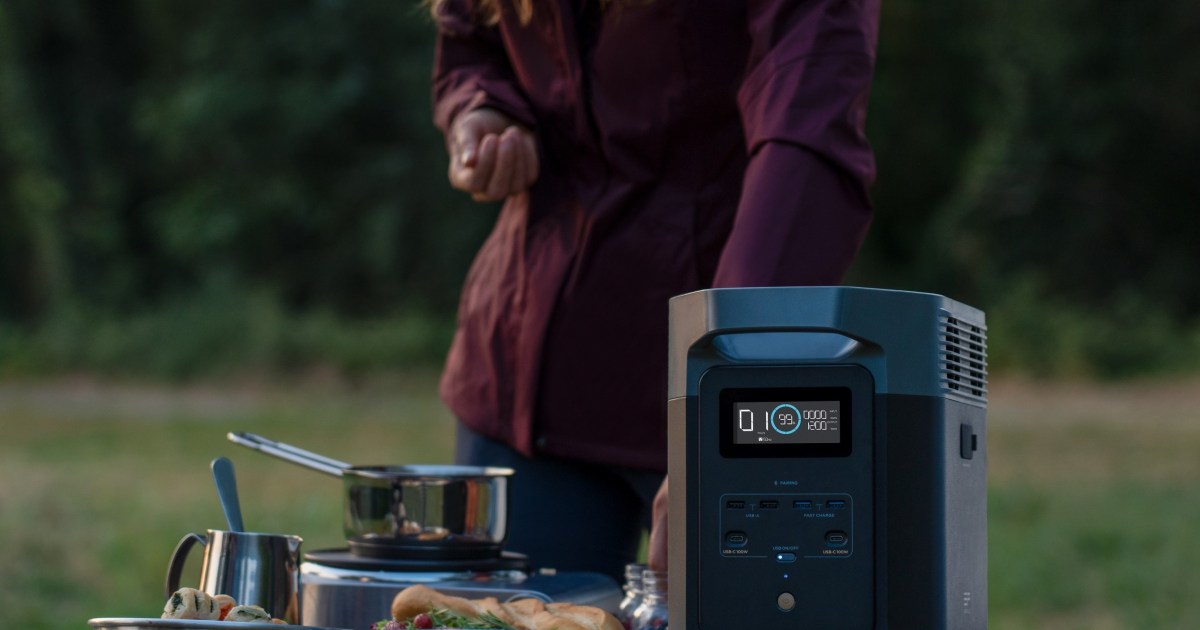
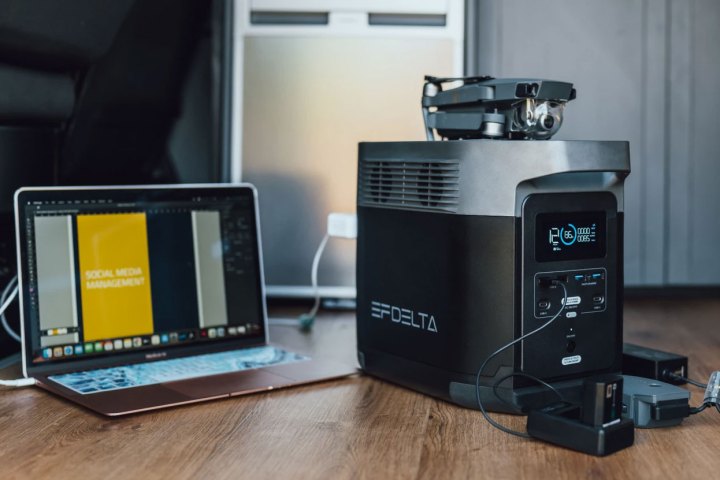
EcoFlow has became one of the most interesting options for use at remote campsites. The EcoFlow Delta offers an incredible 1,260 watt-hours of battery life. When coupled with its 13 different charging ports — including six AC outlets — this portable generator actually provides enough juice to power small appliances such as an LCD TV or mini-fridge. Better yet, the battery charges up from empty to 80% in under an hour.
The EcoFlow Delta comes with a built-in handle, making it easy to carry to and from camp. It even operates in extreme conditions, continuing to function in temperatures ranging from -4 degrees to 140 degrees Fahrenheit. If you need a power station to keep your mobile devices, cameras, drones, and other devices running in the backcountry, the EcoFlow Delta is a great option.
The best for the long haul: Anker 757
Behemoth power stations don’t come cheap, and unlike a laptop or phone, there isn’t exactly a store in the mall you can lug yours to if it starts pouring out smoke. When you’re plunking down more than $1,000 on a gadget and relying upon it in emergencies, you had better have confidence that it’s going to perform for the long haul. For that peace of mind, we recommend the Anker 757.
All the brands we recommend here have solid reputations, but Anker offers something the others don’t: a five-year warranty. That’s a big deal, considering that Jackery and EcoFlow only back theirs for two years. With 1,500 watts of AC power, you’ll be able to power just about anything you’d plug into a household outlet, and 1,229Wh capacity is enough to power a modern, full-size fridge for about a day. Oh, it also looks like it would look at home aboard a space station, which is a refreshing pop of industrial design in a field of samey-samey plastic boxes.
The best for the mobile professional: Goal Zero Sherpa 100AC
Modern road warriors need a different level of portable power than other users. In addition to keeping their smartphones, tablets, and other gadgets charged, they may also need to keep their laptops juiced and ready for work. The Goal Zero Sherpa 100AC is designed exactly for them, not only offering four USB ports but an AC outlet and wireless charging pad as well. Its compact and lightweight design — weighing in at just 2 pounds — makes it easy to tote along just about anywhere.
The Sherpa 100AC is equipped with a high-capacity battery and can also be used to charge camera batteries, drones, and Bluetooth speakers. For the mobile professional, this $300 battery pack is a godsend, keeping a bevy of technology functioning no matter where they’re off to next.
The best for your car: Noco Boost Plus GB40
NOCO
A backup generator for your home is a smart option, but we also recommend carrying a portable power source for your car. The Noco Boost Plus GB40 is a lightweight and compact device that has a variety of functions that come in handy during emergency situations. For example, the device comes with a set of jumper cables and, on a full charge, is capable of jump-starting a whopping 50 vehicles before its internal battery requires a recharge of its own.
The Noco Boost Plus GB40 is IP65 water-resistant and includes a built-in flashlight with up to 100 lumens of illumination. It can even serve as a blinking hazard light to warn approaching traffic of any roadside challenges. The power bank comes equipped with a USB port for keeping a smartphone or tablet juiced up while on the road.
The best for smartphones: Anker PowerCore Speed
Anker
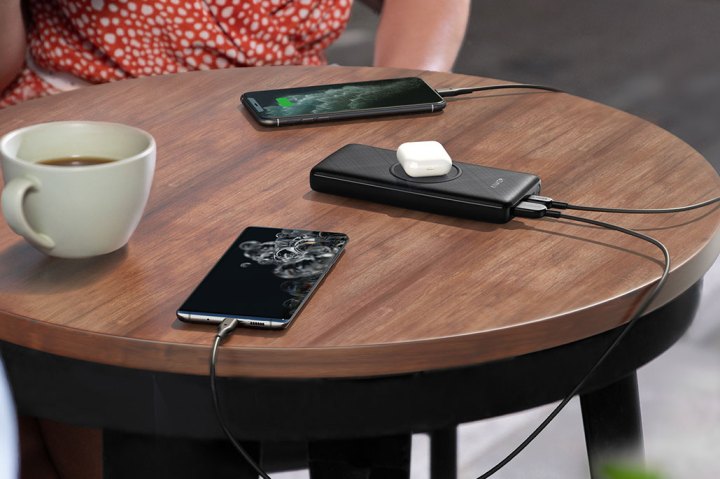
Sometimes we need a power station that’s a bit more portable than the other options on this list. That’s where the Anker PowerCore III 10K Wireless comes into play. Compact and lightweight, this battery pack is equipped with a 10,000mAh battery, which is enough to recharge an iPhone at least twice. With its auto-sensing, surge-protecting circuitry, the PowerCore ensures our mobile devices stay safe while recharging their internal batteries.
The PowerCore III 10K Wireless includes two USB battery ports, both of which support the Qualcomm Quick Charge 3.0 technology. This feature allows devices to safely recharge at a rate nearly four times faster than usual — a handy option when charging on-the-go. The most convenient part of this battery is its Qi wireless charging capability, eliminating extra fiddling with cables. It even has a little built-in stand so you can enjoy a show while your phone is recharging.
A sign asking Ohioans to vote in support of Issue 1 sits above another sign advocating against abortion rights at an event hosted by Created Equal on Thursday, July 20, 2023, in Cincinnati, Ohio.
Patrick Orsagos | AP
Ohio voters on Tuesday resoundingly rejected a Republican-backed attempt to thwart an upcoming referendum that would enshrine abortion rights in the state constitution.
The failed GOP proposal, known as Issue 1, would have raised the minimum threshold of votes needed to amend the state constitution by popular referendum, from a simple majority up to 60% of ballots cast.
The failure of Issue 1 means a constitutional amendment to protect abortion rights will face a 50% threshold to pass when Ohioans vote again in November and therefore has a much better chance of succeeding.
The reproductive rights amendment would basically bar the state from interfering in women’s decisions on abortion, contraception, fertility treatment and miscarriage care.
A poll conducted by USA Today and Suffolk University in July found that 58% of Ohioans support the amendment to enshrine abortion rights in the state constitution.
Beyond Ohio, the vote Tuesday represents a red flag for Republican office holders nationwide, who had hoped that the voter backlash against the end of Roe would be confined to the 2022 ballot box. This vote in reliably Republican Ohio suggests the issue of abortion rights still draws voters to the polls in outsized numbers.
This is good news, however, for Ohio’s senior senator, Democrat Sherrod Brown, who faces a tough reelection battle next year in a state that Donald Trump won by 8 points in 2020
Ohioans United for Reproductive Rights, the coalition that drafted the amendment to protect abortion, is aiming to strike a decisive blow in November that would erase the state’s six week abortionban and block any future effort to restrict reproductive rights in Ohio. The state’s six-week ban is currently on hold due to a court ruling.
The coalition is made up of the Ohio chapter of the American Civil Liberties Union, Planned Parenthood’s state advocacy organization, and numerous other state groups that support reproductive rights.
Ohioans United for Reproductive Rights filed the amendment protecting abortion rights with the state attorney general in February, and received the go-ahead to start collecting signatures in March.
Only then did Republicans in the state legislature move to raise the minimum threshold to pass constitutional changes.
The Ohio General Assembly approved Issue 1 in May and set the August 8 election date. Every Democrat in the state legislature and five Republicans in the state House opposed the effort.
Across the country, activists have increasingly taken the issue of abortion rights directly to voters through state referendums in the wake of the U.S. Supreme Court’s June 2022 decision to overturn Roe v. Wade, which protected the procedure as a constitutional right nationwide for nearly 50 years.
Kansas and Kentucky rejected anti-abortion amendments last year, while voters in California, Michigan and Vermont codified the procedure as a right under their state constitutions.
Republican donor Richard Uihlein, CEO of the packing supply company Uline, has bankrolled Protect Our Constitution, the main political action committee campaigning for Issue 1 in Ohio. Uihlein contributed $4 million to the group as of July.
Reproductive rights groups such as NARAL Pro-Choice slammed the attempt to raise the threshold for constitutional changes to 60% from a simple majority as a transparent “power play” designed to prevent voters from enshrining abortion rights in Ohio.
More than just abortion rights were at stake in Tuesday’s vote. The 60% threshold could have also threatened efforts to raise Ohio’s minimum wage to $15 through a referendum that is expected to be on the ballot in November of 2024.
If approved, the wage hike would go into effect in stages, and reach $15 in 2028.
U.S. men’s national team goalkeeper Matt Turner has completed a transfer from Arsenal to fellow Premier League club Nottingham Forest, it was announced on Wednesday.
Turner departs Arsenal after a single season in which he served as backup to Aaron Ramsdale and made just seven appearances — all in cup competitions.
– Stream on ESPN+: LaLiga, Bundesliga, more (U.S.)
His exit comes amid reports that Arsenal are set to sign Brentford goalkeeper David Raya to provide competition for Ramsdale.
At Forest, who are preparing for their second season back to the Premier League, Turner should have an clearer path to the first team.
Matt Turner enjoyed a busy summer with the USMNT, playing in both the Concacaf Nations League and Gold Cup. Mike Janosz/USSF/Getty Images for USSF
“It feels great to be here. It’s something I’m really looking forward to, it’s a great challenge and a great step in my career,” he told the club’s website.
“When I heard that there was interest to bring me here, it just felt right for my family, it felt right when my agent spoke to me about it and it feels like the right move for me right now.
“The manager and the backroom staff, everything about the club has a little sparkle to it. It’s felt right from the start and I’m happy it’s got done.
“I’m looking forward to making a connection with my teammates, the fans and the city. I’m grateful to be here and can’t wait to get things started.”
However, ESPN has reported that the Midlands club are also close to signing Dean Henderson from Manchester United. Henderson, an England international, spent last season on loan at Forest, making 18 Premier League appearances in goal.
Turner, 29, joined Arsenal from MLS side New England Revolution last summer but was unable to usurp Ramsdale as the club’s No. 1. In his seven appearances — five in the Europa League and two in the FA Cup — Turner kept four clean sheets.
Despite his lack of action at club level, Turner cemented his position as the first-choice goalkeeper for the USMNT. As well as starting all four games as the U.S. reached the round of 16 at the 2022 World Cup, Turner also featured in both the Concacaf Nations League and Gold Cup this summer.
Ed Miliband announced Labour’s new Energy Policy at the Party Conference last year. Its centrepiece is a commitment to totally decarbonise power generation by 2030, to be achieved by doubling onshore wind, trebling solar power and quadrupling offshore wind.
You may recall the computer modelling work done by John Brown a few weeks ago, which used 2022 generation data to assess how much wind power capacity we would need if electrolysis was employed to provide hydrogen to back up the grid.
John and I have used the same model to plug in Labour’s plans for wind and solar. Unsurprisingly, but frighteningly, it shows that Miliband’s numbers simply don’t stack up.
First, a few basic assumptions:
Demand in 2030 is 20% higher than now, factoring in EVs and heat pumps. This figure will, of course, rise dramatically in the following years, but for now we are concentrating only on 2030.
The model is based on BMRS data, which does not include embedded generation, such as small wind and solar farms. Instead these appear as lower demand as far as BMRS is concerned. The model results however are not affected.
We have assumed that, on top of wind and solar, the UK has 10 GW of dispatchable capacity, such as nuclear, biomass and hydro.
There is no electricity generated from hydrogen – there seems to be no way that bulk hydrogen infrastructure – electrolysers, steam reformers, distribution networks and a 50GW fleet of new hydrogen burning power stations – could be ready by 2030.
Equally there is no Carbon Capture power generation available.
There are no electricity imports. (See discussion below)
There is no major expansion of battery storage to the scale needed.
A few basic numbers:
Peak demand is 56.5 GW
Average demand is 35.8 GW, adding up to 314 TWh
Wind, Solar and Others generation are 204, 33 and 88 TWh respectively, giving a total of 325 TWh
You can probably see Labour’s thinking, that there is enough generation to meet demand!
But, as we know, the wind does not always blow, and the sun does not always shine. And this is where the model gets interesting, and not a little scary.
Using 2022 data, the model finds that the power deficit peaks at 41 GW, a 5-minute period when demand is 56 GW and generation 15 GW. It is of course possible to smooth the peaks to a small extent with the help of demand side response and battery storage.
But more critical is the fact that there was a 19-day period last December when there was a rising cumulative power deficit of about 7TWh, at an average of 15.7 GW. Although within this period there were short spells when generation exceeded demand, the net balance remained negative. Put simply, even with smoothing and storage there would not have been enough electricity to go round.
This spell unsurprisingly coincided with the cold snap that month. And as we know too well, we could be facing much colder weather, and over a much longer period than 19 days in years to come. Our model shows that we need at least 7 TWh of storage, but a proper safety reserve would need much more than that.
The model also finds that there would be a shortage of power for 48% of the year, and a surplus for 52%.
As well as the deficit side of the equation, we must not forget that over the year a surplus of 531 TWh builds up, peaking at 44 GW. Without hydrogen infrastructure, most of this will either have to be exported or thrown away.
The model does not allow for imports of electricity. Currently we have 7.4 GW of interconnector capacity, excluding the Irish ones – (If we are short of wind power, it is a pretty good bet Ireland will be as well!). According to DESNZ, this could grow to 17 GW by 2030.
According to our model though, the power deficit would be above 17 GW for more than a tenth of the year, so clearly we cannot simply rely on imports, which in any case would be incredibly risky and make a nonsense of claims of energy security.
For instance, during that 19 day spell in December, there was one 9-hour period when the power deficit averaged 22 GW. Other days were similarly bad.
And just as we will still be critically short of power even with interconnectors, they will not have enough capacity to get rid of all of the surplus electricity produced.
Demand will of course carry on increasing in the years after 2030, as more EVs and heat pumps appear on the scene. Power shortages will therefore become more frequent and larger, even if more wind farms are built.
For more on Net Zero and UK politics go to our ClimateTV section on the subject.
Raven-Symoné is opening up about her experience growing up in the spotlight, even noting that she underwent numerous cosmetic surgeries before turning 18.
Raven-Symoné Acknowledges Having A Seizure During Her First Breast Reduction
During the latest episode of The Best Podcast Ever with Raven and Miranda, the That’s So Raven star discussed the subject with her wife, Miranda Maday. About 21-and-a-half minutes in, Raven-Symoné spoke about sharing the same surgeon as “Kelly Osbourne’s mom,” Sharon Osbourne.
Miranda then remarked that Sharon’s body was “snatched” before Raven proceeded to discuss her surgeries more.
“We went to the same plastic surgeon. I had two breast reductions and lipo before I turned 18. … I never [publicly] shared it.”
Honing in on the fact that she was a minor at the time, the actress confirmed there was “paperwork involved.” Additionally, she acknowledged that her own father had “strongly” suggested that she undergo the breast reduction procedures.
“There was paperwork involved. My dad suggested, strongly, that I should get my breasts reduced.”
#tbt 💜 pic.twitter.com/sCqvA0FeQD
— Raven-Symonè (@ravensymone) March 22, 2018
After noting that the suggestion was meant to keep her from “feel[ing] bad,” Raven-Symoné noted that she added on liposuction to get people to “stop calling [her] fat.” As a result, Raven “got a twofer.” The 37-year-old acknowledged, “It was just a mess, just being that young and the pain of it all.”
She also shared that she “still [has] scar tissue to this day” before revealing she “had a seizure” after waking up from the first surgery. Then, Raven spoke about going back for a second breast reduction.
“I gained weight after and had to go back for [another reduction] because they were still too big for others’ feelings.”
Before concluding her reflection on the experience, the actor shared advice for others to consider.
“If you want something changed in your body, live with it for a little bit longer to see if it changes. And get therapy before that happens.”
Other Stars Have Opened Up About Their Cosmetic Surgery Journeys
As Raven-Symoné dishes on going under the knife as an adolescent, we should note that she’s certainly not the only star who’s recently shared plastic surgery commentary.
As The Shade Room reported, Blac Chyna has committed to reversing many of her past procedures. She also revealed that she got her body done after developing “insecurities” while working as a stripper. Additionally, Kylie Jenner recently expressed regret over getting her breasts done as a young adult.
Meanwhile, SZA declared that “industry pressure” did NOT play a role in her decision to go under the knife. As for Akbar V, she recently gushed over her own plastic surgery journey, noting that she’s “SNATCHEDDDD.”
RELATED: Raven-Symoné And Adrienne Bailon-Houghton Discuss A ‘Cheetah Girls’ Reboot: ‘It Would Smash’