Categories
Entertainment

Actively Black Trend Present 2023 Actively Black Trend Present 2023


ACTIVELY BLACK RETURNS TO NEW YORK FASHION WEEK WITH “THE BLACK MIXTAPE: VOLUME 2” DEBUTING ICONIC COLLABORATIONS CELEBRATING 50 YEARS OF HIP HOP AND BLACK CULTURE

New York, NY – September 6, 2023 – Actively Black, the trailblazing black-owned premium athleisure wear brand, is set to make a powerful statement at New York Fashion Week with the launch of multiple groundbreaking collaboration collections. The eagerly awaited event, titled “The Black Mixtape: Volume 2,” is a dynamic celebration of 50 years of Hip Hop, Black culture, and talent. The fashion show promises to be a transformative cultural experience that starts where the rhythm of the beat began, Africa, to amplify the influence of the music that has shaped generations.

Actively Black is teaming up with The Shade Room, a leading media company that highlights Black culture and news, to livestream “The Black Mixtape: Volume 2” during NYFW on TheShadeRoom.com. This collaboration seeks to break down the exclusivity of Fashion Week by broadening access to a global audience. The show offers a fashion experience like no other, curated meticulously to showcase the rich tapestry of Black culture and its profound impact on the world.

One of the cornerstones of Actively Black’s success has been its meaningful collaborations with iconic figures and cultural touchstones. This year’s show will debut collaborations with Marvel’s Black Panther, the Muhammad Ali Estate, Allen Iverson, Various HBCU’s, the Malcolm X Estate, and the Notorious B.I.G-Biggie Estate among others. The meticulously curated experience will also feature famed Nigerian artist Laolu and Nigerian Olympic Gold Medalist Seun Ogunkoya. Homage is a theme the brand has consistently executed, and this show will be no different as choreographed segments will honor those who led the culture through the past 50 years. “There would be no Actively Black without Fubu so I felt we had to honor the brand and man behind it,” says Smith. Each partnership and segment of the show speaks to Actively Black’s commitment to honoring Black excellence and making a positive impact.

Since its inception in November 2020, Actively Black has experienced explosive growth and garnered widespread recognition. The brand proudly holds a spot in the top 100 fastest-growing brands on Shopify and ranks among the top 10 fastest-growing athleisure brands in the country. It has found favor among athletes, celebrities, and fashion enthusiasts alike being worn by The Obamas, Stephen Curry, Deion Sanders, and others. Born from the vision of Lanny Smith, an ex-pro-athlete who recognized the need for authentic representation and empowerment within the sports and fashion industries, he set his sights on creating just that. Frustrated by the lack of inclusivity from major sportswear brands, he embarked on a journey to create a brand with a mission to uplift and reinvest in the Black community.

“The Black Mixtape: Volume 2” at New York Fashion Week represents a pivotal moment in Actively Black’s journey. It symbolizes the brand’s dedication to celebrating Black culture, promoting diversity and inclusion, and providing a platform for Black talent to shine worldwide. This event underscores Actively Black’s mission to not only create exceptional athleisure wear but also to inspire change and uplift the Black community.

Stay tuned for an unforgettable display of fashion, culture, and creativity as Actively Black debuts its remarkable collaborations at New York Fashion Week. Join us in celebrating 50 years of hip hop and the enduring influence of Black culture on Friday, September 8, 2023, at Sony Hall, 8pm.

For more information, please visit www.activelyblack.com


Categories
Science

The Elites Directing The Vitality Transition Actually Have No Concept What They Are Doing • Watts Up With That?

From the MANHATTAN CONTRARIAN

Francis Menton

We are on our way to Net Zero by 2050. It must be true because everybody says so. The entire $6+ trillion per year federal government is committed to the project, which obviously would not be the case if the whole thing were impossible. Equally fully committed are essentially all of the colleges and universities, where all of the smartest people are to be found. As well as every other elite institution of every kind and sort.

Take the World Economic Forum. If there is a number one elitest among all elite institutions, this has to be it. At their annual confab in Davos, Switzerland, they gather the greatest of geniuses to instruct the very top government and business leaders how to run the world. Would you like to go? It will cost you $52,000 to join the organization, and then an additional $19,000 to attend the conference. Chartering a private jet to get you there will cost a few more thousand. Once there, you can hear the very smartest people imparting their thoughts on the most important topics of the day, like “The Great Reset,” “Emerging Technologies,” “Diversity and Inclusions,” and, of course, “The Net Zero Transition.”

Is it possible that these people are completely incompetent and have no idea what they are doing?

A reader has sent me the very latest from the WEF on how the world is going to get to Net Zero. The piece has a date of September 5, 2023, and is titled “How battery energy storage can power us to Net Zero.” The authors are three people from the World Bank, with the lead author being one Amit Jain, who is the Bank’s Energy Storage Program Lead. This is the guy on the receiving end of tens of billions of dollars of government money to pass out to make the energy transition happen throughout the developing world.

Now, it so happens that energy storage is something I know a little about, and in particular about the problem of trying to store enough energy to make an electrical grid work without full dispatchable backup. See my energy storage Report, dated December 1, 2022, at this link.

So let’s take a look at Jain, et al.’s, take on how battery storage will “power us to Net Zero.” First, some excited happy talk:

Across the globe, power systems are experiencing a period of unprecedented change. Low-cost renewable electricity is spreading and there is a growing urgency to boost power system resilience and enhance digitalization. This requires stockpiling renewable energy on a massive scale, notably in developing countries, which makes energy storage fundamental. . . .

Making energy storage systems mainstream in the developing world will be a game changer. Deploying battery energy storage systems will provide more comprehensive access to electricity while enabling much greater use of renewable energy, ultimately helping the world meet its Net Zero decarbonization targets. International organizations and development institutions are leading the way forward to enable this decarbonization. . . .

So OK Amit, how much storage are we talking about here?

In 2022, approximately 192GW (gigawatts) of solar and 75GW of wind were installed globally. However, only 16GW/35GWh (gigawatts per hour) of new storage systems were deployed. A recent International Energy Agencyanalysis finds that although battery energy storage systems have seen strong growth in recent years, grid-scale storage capacity still needs to be scaled up to reach Net Zero Emissions by 2050. . . . To meet our Net Zero ambitions of 2050, annual additions of grid-scale battery energy storage globally must rise to an average of 80 GW annually between now and 2030.

Holy underwear, Batman! Could this guy really not even know what units he’s talking about? Thinking his readers might not understand the abbreviation “GWh” he helpfully defines it as “gigawatts per hour”! Could he really be this clueless? And he had two co-authors to check him!

And then there’s the statement that to meet the 2050 Net Zero ambition, annual deployments of grid-scale batteries “must rise to an average of 80 GW annually.” Of course he is using the wrong units (and undoubtedly does not know that). But let’s give him the benefit of the doubt, and assume that he is talking about the standard batteries available today, which are 4 hour batteries, meaning that 80 GW would provide 320 GWh of storage. If the world would add that much capacity every year from now to 2050, that would come to 8960 GWh of storage. How have Mr. Jain et al. come to the conclusion that this 8960 GWh of storage will be enough to “meet our Net Zero ambitions of 2050”? The piece contains no quantitative analysis or backup of any kind to support the proposition that this amount of storage would be sufficient.

My own energy storage Report does contain backup and calculations, although only for certain countries rather than for the whole world. For example, for the United States, the figures cited in my Report are that it would take some 233,000 GWh of battery storage to fully back up the electrical grid, assuming current levels and patterns of usage. Since the U.S. is about 4% of world population, we can multiply that figure by 25 to get the storage requirement for the world (assuming that the world electrifies to the U.S. level by 2050). The total would be 5,825,000 GWh. In other words, Jain, et al., are off by a factor of about 650, give or take maybe a few hundred.

But it’s OK, because Jain and his colleagues have no skin in this game. They just babble some happy talk to get their hands on a few hundred billions of money from rich governments, and pass it out to build impressive-looking battery projects that are actually next to useless to provide reliable grid electricity. They can be very confident that no one in their circles will ever check the math to see if the numbers add up. When 2050 rolls around and the whole thing doesn’t work, they will be long retired on generous pensions.

4.8
12
votes

Article Rating

Like this:

Like Loading…

Categories
Health

Supreme Court docket requested to resolve abortion capsule case

Mifepristone, also known as RU-486, is a medication typically used in combination with misoprostol to bring about a medical abortion during pregnancy and manage early miscarriage.

Soumyabrata Roy | Nurphoto | Getty Images

Drug company Danco Laboratories on Friday asked the Supreme Court to review the case challenging the legality of the abortion pill mifepristone.

Danco’s request comes in response to a ruling by the U.S. Court of Appeals for the Fifth Circuit that would impose major restrictions on how the medication is used and distributed to patients.

Danco, which distributes the abortion pill, wants the Supreme Court to reverse the lower court ruling. The drug company said the case is of “indisputable importance” to women’s health as well as the pharmaceutical industry.

“For the women and teenage girls, health care providers, and States that depend on FDA’s actions to ensure safe and effective reproductive health care is available, this case matters tremendously,” Danco’s attorneys wrote in their filing.

“And for the pharmaceutical and biotechnology industry, permitting judicial second-guessing of FDA’s scientific evaluations of data will have a wildly destabilizing effect,” the attorneys wrote.

Danco’s request for the Supreme Court to take up the case comes nearly 15 months after the court’s conservative majority overturned Roe v. Wade, the landmark 1973 decision that protected abortion as a constitutional right. More than a dozen states have banned abortion in the wake of that ruling.

The Supreme Court’s new term starts next month. Four justices have to agree to take up the abortion pill case. The U.S. Department of Justice is also expected to ask the high court to review the case.

Download Danco Laboratories’ filing here.

The appeals court ruling is on hold until the Supreme Court makes a decision about the case. The high court, in April, pressed pause on lower court decisions as litigation about the pill proceeds in response to a request from the Biden administration.

A three-judge panel at the Fifth Circuit ruled that decisions the U.S. Food and Drug Administration took in recent years to make mifepristone more accessible to women failed to address safety concerns.

Should the Supreme Court take the case and uphold the appeals court decision, mifepristone will remain on the market in the U.S., but patients will face more barriers to accessing the medication.

If the high court declines to take the case, the appeals court restrictions will go into effect.

Mifepristone, used in combination with another drug called misoprostol, is the most common method to terminate a pregnancy in the U.S.

CNBC Health & Science

Read CNBC’s latest health coverage:

The appeals court order would end mail delivery of mifepristone and prescriptions via telemedicine appointments. Women would have to see a doctor in person to get a prescription and go to three follow-up visits as they take the course of medication.

The ruling also shortens the time when women can take mifepristone to seven weeks into their pregnancy, down from 10 weeks currently.

The litigation against mifepristone began last November when a group of physicians who oppose abortion called the Alliance for Hippocratic Medicine sued to overturn the FDA’s original approval of the pill, which dates back more than 20 years.

U.S. Judge Matthew Kacsmaryk of the U.S. District Court for the Northern District of Texas issued a sweeping order in April that suspended the FDA approval of mifepristone.

The appeals court dialed back Kacsmaryk’s order and kept the original FDA approval in place as well as the agency’s authorization of a generic form of the pill.

Categories
Technology

UK rejoins EU’s Horizon flagship analysis programme

After months of negotiations, the UK is rejoining Horizon, the EU’s €95.5bn flagship research and innovation programme, prime minister Rishi Sunak announced Thursday.

Although the country’s participation in the programme was part of the Brexit deal, its membership had been blocked for three years following Brussels’ and London’s feud over the trade rules for Northern Ireland — the UK’s only land border with an EU member state, the Republic of Ireland.

But the issue’s resolution in February has now opened the way for the UK’s re-entry into Horizon, which was confirmed on Wednesday, September 6, during a call between Sunak and Commission President Ursula Von der Leyen.

“We have worked with our EU partners to make sure that this is the right deal for the UK, unlocking unparalleled research opportunities, and also the right deal for British taxpayers,” Sunak said.

Catch up on our conference talks

Watch videos of our past talks for free with TNW All Access →

Under the new deal, UK researchers can start applying for grants and bid to take part in Horizon projects, with their full access starting in January 2024. The agreement also includes participation in Copernicus, the European Earth observation satellite programme.

The EUhas also accepted the UK’s demand to opt out of Euratom, Europe’s atomic energy programme, and instead pursue a domestic fusion energy strategy.A

“The EU and UK are key strategic partners, and today’s agreement proves that point.

London will have to contribute €2.6bn on average per year for its participation to both Horizon and Copernicus, but it won’t have to pay for the time of its absence.

The news was welcomed with joy and relief by the UK’s scientific community, which has been long campaigning for regaining access.

Professor Dame Sally Mapstone, president of Universities UK, highlighted the importance of scientific collaboration beyond borders. “Horizon Europe [and its predecessors have] been the basis of scientific collaboration for over 30 years,” she said.

“From early detection of ovarian cancer to developing clean energy networks involving dozens of universities and many industrial partners, Horizon lets us do things that would not be possible without that scale of collaboration.”

Similarly, Dr Diana Beech, CEO at London Higher, noted that universities “now have the certainty and stability needed to continue powering the engine of UK innovation and to build connectivity across the regions” as they seek to make the country “a global science superpower.”

Overall, the UK’s re-entry intro Horizon marks a pivotal moment not only for London and Brussels’ post-divorce relationship, but also for European innovation and scientific progress.

“The EU and UK are key strategic partners and allies, and today’s agreement proves that point,” said Von der Leyen. “We will continue to be at the forefront of global science and research.”

Categories
Sport

Goff and the Lions stun Mahomes and the Chiefs at dwelling

  • Adam Teicher

    Close

    Adam Teicher

    ESPN Staff Writer

    • Covered Chiefs for 20 seasons for Kansas City Star
    • Joined ESPN in 2013
  • Eric Woodyard

    Close

    Eric Woodyard

    ESPN

      Eric Woodyard covers the Detroit Lions for ESPN. He joined ESPN in September 2019 as an NBA reporter dedicated to the Midwest region before switching to his current role in April 2021. The Flint, Mich. native is a graduate of Western Michigan University and has authored/co-authored three books: “Wasted, Ethan’s Talent Search” and “All In: The Kelvin Torbert Story”. He is a proud parent of one son, Ethan. You can follow him on Twitter: @E_Woodyard

Sep 7, 2023, 11:23 PM ET

KANSAS CITY, Mo. — The Detroit Lions marched into Arrowhead Stadium Thursday night and upset the reigning Super Bowl champion Kansas City Chiefs, 21-20 in the NFL season opener.

Detroit Lions

The Lions went toe-to-toe with the reigning Super Bowl champions and came out ending the NFL’s second-longest active winless streak (0-4-1) in season openers. Former Chicago Bears running back David Montgomery put the Lions on top for good with an 8-yard touchdown with 7:11 remaining, giving Detroit its first 1-0 start since 2017.

Promising trend: Amon-Ra St. Brown helped the Lions get off to a quick start with the game’s first touchdown — a 9-yard catch from Jared Goff with 2:46 remaining in the first quarter. Later, he became the first player in Lions’ history to reach 200 receptions in his first three NFL seasons with his fourth catch of the day. He’s proven to be Goff’s most reliable target since he joined the Lions in 2021 and that appears unlikely to change this season.

Buy on a breakout performance: Rookie defensive back Brian Branch scored on a pick-six in the third quarter. After receiving rave reviews from coaches and teammates all summer, the Alabama product became the first Lions player to score a defensive touchdown in his first career game since Louis Delmas in 2009.

QB breakdown: Goff extended his streak of consecutive passes without an interception to 359 on Thursday — the third-longest in NFL history. Goff looked comfortable against the Chiefs, completing passes to seven different receivers including new skill guys wideout Marvin Jones Jr., tight end Sam LaPorta and running back Jahmyr Gibbs

Next game: vs. Seahawks (1 p.m. ET, Sept. 17)

play

0:22

Brian Branch takes INT 50 yards to the house for pick-six

Brian Branch takes off to the end zone untouched as he ties the game for the Lions on the road.

Kansas City Chiefs

Tight end Travis Kelce has 10 days to fully heal his injured knee before the next game. The Chiefs need him to use it wisely. The Chiefs sputtered on offense without him in the opener. Receivers had trouble getting open and dropped several passes, none bigger than the one Kadarius Toney deflected that was intercepted and returned for a touchdown. The result was the Chiefs’ first loss in an opener since 2014.

Under the radar stats that matter: The Chiefs usually won’t be defined by their rushing game, but they’ll need more than they got against the Lions, at least until Kelce returns. Taking away Mahomes’ scrambles, the Chiefs rushed 17 times for 45 yards, a meager outing for an offense in need of a spark without its top receiver.

QB breakdown: Mahomes was without his top receiver in Kelce, so he made do with the receivers he had. He completed passes to 11 different receivers and was at his best on a drive late in the first half. He threw a 25-yard pass to Rashee Rice to get the Chiefs near midfield, then threw 34 yards to Marquez Valdes-Scantling on 3rd-and-17 and 26 yards to Justin Watson. Those plays set up a 4-yard touchdown pass to Blake Bell that put the Chiefs ahead 14-7.

Eye-popping NextGen stat: The Chiefs weren’t perfect with their pass rush without Chris Jones, but they were effective at times. Mike Danna had a third-down sack to end one drive and pressure from George Karlaftis forced an incompletion on another third-down play.

Next game: at Jaguars (1 p.m. ET, Sept. 17)

Categories
Entertainment

Hairspray’s Sarah Francis Jones Goes Into Labor at Beyoncé Present

This baby knows how to get in formation.

After all, Sarah Francis Jones, known for her role in Hairspray, went into labor with her daughter Nola during Beyoncé‘s birthday concert at SoFi Stadium in Los Angeles Sept. 4. 

“I think it was right after the mute challenge,” Jones recalled to KTLA Sept. 5. “Everybody went mute. L.A. did very well… and then I started having contractions.”

Noting that she wasn’t due for a few more days, the actress, who was at the concert with her partner, Marcel Spears, initially chalked the contractions up to Braxton Hicks (which is commonly mistook for labor pains) until realizing it might be time to upgrade from the stands to the hospital.

“I said, ‘Something’s happening,'” Jones continued. “Usually, I like to dance at the concert, and I was like, ‘OK, I need to sit down for a second.'”

However, she and The Neighborhood star stayed put for a little bit longer while Spears timed her contractions, which were coming 20 to 30 minutes apart.

Categories
Science

Did a Comet Airburst Destroy a Native American Group?

In 1908, when an object entered the Earth’s atmosphere above the Podkamennaya Tunguska River, it flattened 80 million trees over nearly 2,200 square kilometers, and sent atmospheric shock waves reverberating around the world. Fortunately, this event was in a remote region and very few people were believed to be killed.

But research published in Nature’s Scientific Reports in 2022 by Tankersly et al. suggested that a similar, but even more powerful comet airburst in the Ohio River Valley may have been the death knell for the Hopewell civilization, some 1,600-1,700 years ago just outside modern day Cincinnati. However, other scientists rejected the arguments.

The Claim

The initial paper points to several lines of evidence for an impact event in the region. The first is that archaeological sites in the area contain a surprising number of meteorites and objects made from meteoritic iron.

Remove All Ads on Universe Today

Join our Patreon for as little as $3!

Get the ad-free experience for life

Other archaeologists have suggested that these objects were prized in the culture and that the members of this civilization would trade for them using a continent-wide network of exchange. Indeed, the Hopewell culture is most famous for its burial practices, which involved interring the dead in massive earthwork mounds and burying them with prized possessions from across the continent. Examples include obsidian traced to the Rockies, shells from Florida, and other goods from distant lands. Specifically, previous authors suggested the meteoric iron may be from the Brenham meteorite in Kansas. However, the authors of this paper reject this as the chemical composition is notably different.

The next clue the authors point to is a widespread presence of minute iron and silicon-rich sand grain-sized particles in the regions surveyed. Particles of similar size and composition are found in other regions known to have experienced airburst or impact events, such as the KT boundary. Interestingly these meteoritic particles always existed in a relatively thin layer at all sites explored. The same layer of soil also tends to have more iridium – a relatively rare element on Earth, but frequently found in asteroids.

Perhaps even more interesting, the archaeological sites also contained a distinct layer of ash. The fire that caused the ash layer was sufficiently hot that it was able to convert the limestone to lime (calcium oxide). The authors describe this as “widespread synchronous fires resulting from a catastrophic cosmic airburst event.”

Following this, the authors propose that their civilization did continue on, and it was in this post-impact era that those who remained gathered the meteoric fragments and used them to make the well-studied items. But, the authors suggest that the impact event was not forgotten, and point to a comet-shaped earthwork as a testament to the event.

Comet-shaped Milford earthwork based on E. G. Squier and E. H. Davis’ 1848 Ancient Monuments of the Mississippi Valley Comprising the Results of Extensive Original Surveys and Explorations (Smithsonian Institution, Washington D.C.).

Lastly, they suggest that this potential impact was an unfortunate result of an increased period of risk in which there was an increased number of comets. To support this, they point to Chinese astronomers who documented 69 “near-earth” comets in the period between 220 and 589 CE, evidently including Halley’s comet, which they state came within 0.09 AU of earth (~35 times the distance of the moon).

The Response

The first response to these claims came from Neuhauser & Neuhauser and attacked several of the lines of evidence of the original authors.

Firstly, the Neuhausers note that the chemical analysis presented by the original authors is not consistent with comets in the first place. Rather, if anything, the material found was more akin to what should be expected from an asteroid.

Next, they criticized the claim that there was any increased period of risk, pointing out that authors of the original paper overstated and may have fundamentally misinterpreted the Chinese source for the comets. Specifically, the Chinese source gives no support for the claim that the comets observed were “near-earth”. Even the claim that Halley’s comet came so close is dubious; an even closer approach in 837 CE makes understanding of prior approaches uncertain, as their predictions would be highly dependent on just how close the comet came that year.

Worse, it’s not entirely established that the 69 comets the authors claimed were truly comets. Ancient astronomers had little understanding of the various types of transient objects, and often used very similar language to describe them, usually referring to any temporary astronomical phenomenon as a “guest star.” Thus, the underlying assumption that this period saw abnormal comet activity is unsubstantiated.

The Neuhausers then take aim at the claim that a comet shaped earthwork is evidence of anything. They note that the original authors failed to discuss the structure in the context of the surrounding structures. Neglecting to consider the wider archaeological context could lead to misinterpretation due to selection bias and pareidolia.

Lastly, they question whether or not there truly was a comet during the purported period that could have been the inspiration and source of a potential airburst. The Neuhausers turn again to the Chinese records, which they suggest are quite complete. They note that Chinese astronomers were quite observant of the sky for their astrological practices, and the period in which the supposed airburst took place was during a turbulent time in which court astrologers would have been especially observant. Yet, no such extraordinarily bright comet appears in their records, nor the records of any other astronomically inclined civilization.

Reply

Tankersly et al. responded to the criticism, conceding that the chemical composition was not indicative of a comet, but maintain that an airburst event occurred as the result of an asteroid progenitor.

However, the authors still lean into the comet shaped earthwork as significant, even though they no longer claim a comet or a cometary fragment as the cause of an airburst.

They also ask why, if meteor fragments were imported, does the iron/silicate rich fragments permeate the area?

Second Response

A second response came last month from Nolan et al. with even harsher criticism, in which they claim that Tankersly et al. “misrepresent primary sources, conflate discrete archaeological contexts, improperly use chronological analyses, insufficiently describe methods, and inaccurately characterize the source of supposed extraterrestrial materials.”

First, Nolan et al. point to the claim that charred surfaces must be due to a cataclysmic astronomical event. They note that the charred areas Tankersly et al. point to were all found within ceremonial mounds in which historians expect there to have been large, ceremonial fires to have been prepared prior to the burials. Thus, the charred layers reported were not a single event, but several individual ones.

Next, the authors note that the claim that the Hopewell civilization declined sharply following the supposed event is false. Rather, the civilization continued but with a “gradual sociopolitical and economic reorganization” that led to the cessation of large earthwork construction.

The authors then demonstrate that Tankersly et al. have misrepresented their own data collection, suggesting that the site of a charred surface also had the higher traces of iridium. Yet Tankersley’s records from the excavations show that these were two separate excavations done at the Jennison-Guard site, but that the former came from the cultural hub of the site, whereas the iridium-enhanced area came from a second excavation 10m away where no artifacts were found and which also lies in a floodplain.

Likewise, Nolan et al. point out that Tankersley et al. conflated distinct archaeological contexts at another site, in which they assume that the age of one of their excavations would be identical to the age of an area nearly a kilometer away explored by other archaeologists without basis.

Nolan et al. then take aim at the claim that the spherules found were extraterrestrial in origin at all, regardless of whether they came from a comet or asteroid. They note that, while the spherules are high in iron and silicon, they are deficient in magnesium and nickel, which are typically found in asteroids. Thus, they conclude, that the spherules are a result of local soil chemistry and not of extraterrestrial origin.

This criticism by Nolan et al. was sufficient that the editors of the paper lost confidence in the original analysis and have retracted the paper.

Like this:

Like Loading…

Categories
Health

British American Tobacco finalizes Russia exit

British American Tobacco has finalized its exit from Russia about 18 months after it pledged to do so in the wake of Moscow’s invasion of Ukraine.

The multinational cigarette maker said in a statement Thursday it agreed “to sell its Russian and Belarusian businesses in compliance with local and international laws.”

Financial terms of the deal were not disclosed, but the transaction is expected to be completed within a month, the company said.

“Upon completion, BAT will no longer have a presence in Russia or Belarus and will receive no financial gain from ongoing sales in these markets,” it added.

Since Russia invaded Ukraine in early 2022, thousands of companies such as Apple, McDonald’s and Coca-Cola pulled out of Russia. However, other global tobacco giants are still doing business in the country, including Japan Tobacco International and Philip Morris International.

London-based BAT is a key player in the global tobacco market with business operations in more than 100 countries. BAT’s top brands include Camel and Newport.

It controlled nearly 25% of Russia’s tobacco market, which is the fourth largest in the world, according to Reuters.

The buyer is a consortium led by members of BAT Russia’s management team, which will wholly own the Russian and Belarusian businesses, BAT said. They will then be known as the ITMS Group.

BAT said the employment of workers in Russia will remain comparable to their existing terms for at least two years after the deal closes.

Categories
Science

Assist For Offshore Wind Sinks as Prices Soar • Watts Up With That?

From CFACT

By David Wojick

Things are looking bad for offshore wind in America (which makes me happy). On one hand, opposition is growing. On the other, the cost crisis is driving prices way up. Whether the offshore US boom will bust remains to be seen, but it is certainly possible. Here’s hoping.

Bad news for the industry is coming in daily, so there is too much to report. Here are just a few samples to give the flavor of the debacle in progress.

In New Jersey, we get this dramatic report of a poll: “Support for Wind Energy Plunges”.

Here is their summary: “A majority of New Jerseyans continue to favor the development of offshore wind energy, but the current level of support is far below the widespread backing it has received in polls over the prior 15 years. The Monmouth University Poll finds that 4 in 10 residents think wind farms could hurt the state’s summer tourism economy, and just under half see a connection between wind energy development and the recent spate of whales washing up on New Jersey beaches. Few see wind energy leading to major job growth in the state.”

The number of New Jersey residents who support offshore wind fell by more than 20 percent since 2019, from 76 percent four years ago to just over half (54 percent) now, and the number of those opposing offshore wind has climbed from 15 percent to 40 percent since 2019.

New Jersey is one of the two states that hold statewide elections in off-years, so theirs is coming in November. Offshore wind has now become an election issue. CFACT has been very active there.

Of course, the developers say we opponents of wind are lying. What else can they say, since they have no real defense? Here is a good example: “Support for Offshore Wind in New Jersey Drops, Industry Points to Effect of Misinformation”.

It is the usual nonsense. We opponents of offshore wind technology are all shills of big oil; these monsters are needed to stop global warming; we don’t understand that the technology is harmless, etc. Pure rhetorical junk.

Further north, the entire Fisherman’s Advisory Board has resigned from the Rhode Island offshore approval decision process. This is a big deal because the Rhode Island Fisherman’s Advisory Board is an integral part of the Rhode Island Ocean Special Area Management Plan (SAMP), which is a State process hailed as the “gold standard for offshore wind development”. Rhode Island is allowed to apply this process to certain offshore wind projects in federal waters that impact Rhode Island residents and industries, most importantly the fishing industry. It falls under the Coastal Zone Management Act through a process called “consistency review”, where a state can have a say in projects in federal waters if they affect the state. In that case, the state can require that the project be held to certain state CZMA standards.

Here is the scathing first paragraph of the “We quit” letter: “We, the undersigned members of the Rhode Island Fisherman’s Advisory Board (FAB), hereby resign and refuse to participate any longer in the Rhode Island Ocean SAMP process. It has become abundantly clear that the Rhode Island CRMC (Coastal Resources Management Council) has made deference to offshore wind developers its top priority regardless of the requirements of the Ocean SAMP, the cost to the environment, or the impacts to Rhode Island’s fishing industry. In staff’s own words, the purpose of the FAB/CRMC review process of offshore wind projects is to move the permits forward. We as members of the FAB thought that the purpose of FAB/CRMC review was to ensure that offshore wind projects conformed to the requirements and restrictions of the Ocean SAMP. We were wrong. The Ocean SAMP process has been reduced to mere political theater, to which we refuse to lend any further credence by our presence.”

For the full letter, see “Fishermen’s Advisory Board Done Playing Role in CRMC’s Political Theater”.

In between Rhode Island and New Jersey, Equinor and BP are seeking a whopping 54% hike in New York offshore wind power payments. The price hike for Empire Wind 1 would be $159.64 per Megawatt-hour  (MWh) from $118.56; for Empire Wind 2, the bump would be $177.84 per MWh from $107.50, and for Beacon Wind, the enhanced price would be $190.82 from $118.00. These are huge increases.

Back in New Jersey, the biggest Atlantic wind developer — Ørsted — is suing Cape May County and Atlantic City for not issuing permits they have vowed not to do. Speaking of Ørsted:

“Orsted (stock price) plunges 20% on risk of $2.3 billion in US impairments”.

https://www.reuters.com/business/energy/denmarks-orsted-anticipates-730-mln-impact-us-portfolio-2023-08-29/?mc_cid=281223b22f&mc_eid=7f17b09564

“Orsted delays 1st New Jersey wind farm until 2026; not ready to ‘walk away’ from project”.

https://apnews.com/article/orsted-offshore-wind-new-jersey-delayed-turbines-cd3080ca747c8e3124e3f9f8db6cfc04

They state that, given huge increases in costs, they can’t make money on the project.  For now, they are not walking away from their numerous US projects but will reconsider long-term plans by the end of the year.

Back in Rhode Island: “Second Revolution Wind Project Rejected by Rhode Island Energy”.

Utility says higher interest rates, increased costs of capital, and supply chain expenses made the project unattractive”.

The utility does not want to pay the increased price. Imagine that!

The wind bubble may be bursting. We need to keep the pressure on (to mix metaphors). That the industry is struggling is now clear to the financial community. When stock prices sink or product prices soar, that triggers various adverse actions.

Here’s hoping for a cascade of grief for offshore wind development. It serves no useful purpose, is environmentally destructive, and costs a growing fortune.

Stay tuned to CFACT as this hopeful drama unfolds.

Author

David Wojick, Ph.D. is an independent analyst working at the intersection of science, technology and policy. For origins see http://www.stemed.info/engineer_tackles_confusion.html For over 100 prior articles for CFACT see http://www.cfact.org/author/david-wojick-ph-d/ Available for confidential research and consulting.

For more on issues with Intermittent Wind and Solar, check out that section of our ClimateTV page.

Like this:

Like Loading…

Categories
Technology

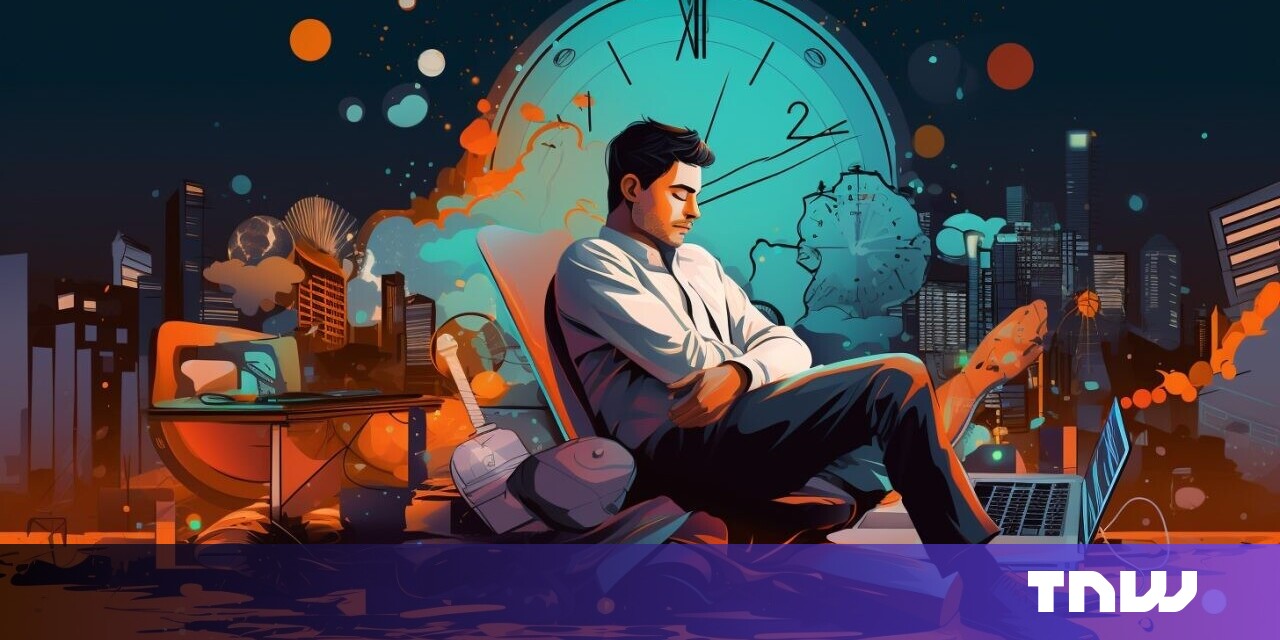
How one can help the psychological well being and wellbeing of distant staff

When COVID-19 hit, suddenly commutes were a thing of the past, and many home offices took the shape of kitchen tables or even stacks of cushions on the bed. While Zoom fashion may have been the height of comfy for some, for many the isolation and lack of separation between work and home was torture, and exacerbated an already escalating crisis of loneliness and mental health. 

Enabled by the digital age and turbocharged by the pandemic, remote working is so much more complex than the Instagram-touted ideal of a ‘digital nomad’ swaying with their laptop in a hammock between palm trees. But it can still offer a host of benefits — for employer and employee alike. 

For instance, rather than being geographically constrained, companies gain access to a global talent pool. Allowing for remote work can also increase the appeal for potential hires, as well as raise retention rates. Furthermore, employers can save costs on office space and utilities. 

Employees, on the other hand, spend less time commuting (which also offers environmental benefits), have more time for family, are free to live where they wish, and gain access to more diverse opportunities.

The <3 of EU tech

The latest rumblings from the EU tech scene, a story from our wise ol’ founder Boris, and some questionable AI art. It’s free, every week, in your inbox. Sign up now!

Furthermore, the World Health Organisation estimates that something like 1.3 billion people across the world suffer from long term mental or physical impairment. As such, remote work is also a question of access to employment and financial inclusivity. 

TNW sat down for a conversation with the originators of a document called the European Charter for Digital Workplace Wellbeing — Filipa Matos, VP Special Ops at Remote, and Ben Marks, impact entrepreneur, founder, and executive director for the #workanywhere campaign. 

“Remote work for many, many of these people equates to access to work, which is a fundamental human right. And that was really the basis for us setting up the ‘work from anywhere’ campaign — to try to ignite that sort of culture change and show that remote work is actually about economic justice,” Marks said. “It’s not just about relatively privileged people avoiding the commute.” 

Going beyond the buzzwords 

But remote and mostly digital work also comes with a specific set of challenges. Blurred boundaries between work and private life, loneliness, and perhaps being overlooked for career advancement due to lack of face-to-face contacts are all things that could contribute to unhealthy stress and potential burnout. 

As such, protecting the wellbeing of remote workers goes far beyond enabling digital nomad visas, and providing stable internet connections. Most organisations tend to heap the responsibility for wellbeing on the individual (“have you tried yoga?”), aided, however unwittingly and well-meaningly, by the social media bombardment of #selfcare. 

“I think we need to be open to understand that this reality is not just about the buzzwords,” Matos stated. “People talk about mental health issues, like it’s something that is trendy, or something that we should all care about, without putting it into practice.”

The European Charter for Digital Workplace Wellbeing

Under the umbrella of the Future Workforce Alliance (FWA) — a multidisciplinary network of policymakers, academics, and public and private stakeholders — Marks and Matos have compiled the European Charter for Digital Workplace Wellbeing. It is a non-binding document that encourages policymakers and corporations to recognise that this growing part of the population exists — and to do better by them. 

The Charter was endorsed and co-signed by 31 Members of the European Parliament earlier this summer. It proposes to set official guidelines and lay down best practices for companies with hybrid or fully remote staff, focusing on four key areas: life beyond work; social connection; privacy and trust; and digital wellness. 

Following the launch of the Charter in June, FWA is now working with stakeholders to determine best practices that can be codified into EU law. 

Life beyond work

The “Life beyond work” segment builds on the “right to disconnect” proposal (not yet enforced across the bloc, but in individual member states such as France and Spain), ensuring that measures such as the right not to engage with work-related communication beyond working hours take the specificities of digital workplaces into account. 

It also calls for practices where remote workers do not suffer in terms of career opportunities compared to their office-based colleagues. Furthermore, it asks that instead of  “work-life balance,” the term should be “life-work balance” in all EU legal and political documentation, to help shift the emphasis. 

Social connection

“Social connection” focuses on access to coworking spaces. Marks highlights Ireland as a policy role model, which runs a national network called Connected Hubs. Launched in May 2021, the government initiative comprises 323 coworking spaces across the country. Ireland has a high proportion of remote workers, with 39.3% of employed people in Eastern and Midland Ireland working from home in 2021 (only the region of Stockholm had a higher proportion, with 40.5%). 

Meanwhile, companies also need to do their part in supporting access to coworking spaces for their remote staff. For instance, Remote offers its employees a stipend so that they can have access to the social wellbeing and professional inspiration that coworking spaces can offer.

“We can just meet with someone, maybe colleagues from our own company, and go to a coworking space for a day or two,” Matos said on this means of combating experiences of loneliness. “That makes a real difference for me because I get to define my needs as an individual.”

Privacy and trust

The pillar of privacy and trust looks to ban or restrict ‘digital leash’ technologies used for worker surveillance. 

“When we trust people, and we focus on the outcomes, and we focus on their expertise, we’re saying, ‘Hey, we’ve hired you. If I hired you, it means that I trust you’. I’m not coming from a place where I don’t trust you to start with, and then you will need to win my trust. [Employers] need to start hiring with trust,” Matos shared. 

Digital wellness 

Under the umbrella term of digital wellness, the signers of the Charter agree to recognise a link between increased technology use and mental health issues, including attention and behaviour problems. 

Furthermore, they will look to establish evidence-based, legal definitions on what constitutes a “healthy relationship with technology in the workplace,” and cross-sector support of tools and practices that moderate technology usage to promote improved health and well-being. 

In the words of Marks, “we created this charter to modernise the approach to workforce wellbeing and to pave the way for the next generation of workers’ rights protections around wellbeing and mental health.”  

You picking up the phone and opening Instagram/X/other distraction-drug-of-choice icon and before you know it, it’s been 15 minutes of instant context switching and you wonder why you feel exhausted? That’s, unfortunately, still on you (and maybe the billions of dollars flung at behavioural algorithms by Big Tech). 

But as someone who worked fully remotely over three years, and watched (remotely) friends and colleagues just roll out of bed and then proceed to have breakfast, lunch, and often even dinner in front of their computer screen, not able to go for a walk because “they will see that I am not online,” it is heartening to know someone is looking out for the rest.