Categories
Entertainment

gamma. Expands To Africa & Unveils Larry Gaaga As VP, GM

Media and technology company gamma. has expanded to Africa and unveiled its newest Vice President and General Manager. As The Shade Room previously reported, gamma. was launched by former Apple executive Larry Jackson in March.

Additionally, the company allows artists and brands to work on projects in “music, films, merchandise, fashion, web3 and other areas,” as per Variety.

RELATED: We Love To See It! French Montana Partners With gamma. & Others To Donate 500 Canoes To Makoko Community In Nigeria

More Details Regarding gamma.’s Expansion & Appointment Of Larry Gaaga

According to Pulse Nigeria, the company features offices in “New York, London, Miami, Nashville, and Dubai.” However, gamma. is now expanding to Africa and stationing its headquarters in Nigeria.

Additionally, gamma. has unveiled Larry Gaaga as the company’s Vice President and “General Manager for West Africa.” Gaaga is reportedly expected to “oversee” the company’s operations “across the entire African continent.”

Furthermore, Gaaga will reportedly provide “strategic direction” and lead “initiatives to develop local talent.” Gaaga’s contributions to the company are expected to ensure talent success on both the domestic and “global stage.”

“gamma.’s mission is to both nurture talent local to Africa and the Middle East into global superstars, as well as to open the continent for Western artists to reach new fans and opportunities,” Sipho Dlamini, gamma.’s President of Africa and Middle East, explained as per THISDAYLIVE. “Larry has the historical background and cultural fluency critical to establishing the relationships and resources necessary for us to succeed.”

The company’s co-founder and CEO, Larry Jackson, credited Gaaga for his “deep understanding of the local music landscapes” and his “relentless passion for nurturing talent as welcomed additions.”

“Larry [has] extensive experience, deep understanding of the local music landscapes, and relentless passion for nurturing talent are welcome additions to the gamma. family,” said Jackson. “He will strengthen our market presence and drive significant growth across Africa and by extension, worldwide.”

Gaaga has since responded to his appointment, as per THISDAYLIVE.

“I am honored and excited to take on the role of Vice President/General Manager of Africa,” Gaaga explained. “This presents a unique opportunity to contribute to the growth of the entertainment industry across the continent, promoting local talent and showcasing the incredible creativity and diversity of our artistes to the world.”

According to the outlet, before Gaaga’s most recent appointment at gamma., he was the Vice President of Def Jam Africa. The outlet reports that there, he “led the label’s A&R division.”

gamma.’s Most Recent Project Alongside French Montana

As The Shade Room previously reported, gamma. most recently partnered with French Montana, Swae Lee, and SALXCO to donate 500 canoes to the Makoko Community in Lagos, Nigeria. The community was reportedly built atop coastal waters in the area. Additionally, the community experienced “critical flood threats” along with “pollution and sewage drainage complications.”

According to an exclusive press release, gamma. and the artists’ donation would “support the livelihood” of over 200,000 people in Makoko. The canoe donations would ultimately assist the “flow of goods and services.” Additionally, it would also help transport families and children to schools.

In addition to the group’s meaningful donation, the community was featured in French Montana and Saw Lee’s latest music video, “Wish U Well.”

In addition to French Montana, gamma. has reportedly worked with artists such as Snoop Dogg and Usher.

RELATED: Apple Veteran Larry Jackson Launches gamma., A $1BN-Backed Media And Music Company Financed By Apple And Eldridge!
Categories
Health

Merck Covid drug linked to virus mutations, research says

A worker holds a bottle of Merck & Co.’s molnupiravir antiviral medication in a warehouse in Shoham, Israel, on Jan. 18, 2022.

Bloomberg | Bloomberg | Getty Images

A new study released Monday said Merck‘s widely used antiviral Covid pill can cause mutations in the virus that occasionally spread to other people, raising questions about whether the drug has the potential to accelerate Covid’s evolution. 

The findings may increase scrutiny about the usefulness of the treatment, molnupiravir, which was one of the first Covid drugs available to doctors worldwide during the pandemic.

Molnupiravir works by causing mutations in Covid’s genetic information, which weakens or destroys the virus and reduces the amount of Covid in the body. However, the study published Monday in the scientific journal Nature found that Covid can sometimes survive treatment with molnupiravir, leading to mutated versions of the virus that have been found to spread to other patients. 

Researchers in the U.S. and U.K. specifically analyzed 15 million Covid genomes to see which mutations had occurred and when. They found that mutations increased in 2022 after molnupiravir was introduced in many countries. 

There is no evidence that molnupiravir, sold under the brand name Lagevrio, has produced more transmissible or severe variants of Covid, according to the study. 

But the findings are important for regulators who continue to assess the risks and benefits of molnupiravir, wrote Theo Sanderson, the lead author of the study and a researcher at the Francis Crick Institute in London, in a post on X. 

A spokesperson for Merck pushed back on the new study, claiming the researchers assumed that the mutations they analyzed were associated with molnupiravir-treated patients “without documented evidence of that transmission.”

“Instead, the authors rely on circumstantial associations between the region from which the sequence was identified and timeframe of sequence collection in countries where molnupiravir is available to draw their conclusion,” the spokesperson said.

The spokesperson added that genomes with the mutations were “uncommon and were associated with sporadic cases.” 

The company in February also disputed an earlier study by the same team of researchers, which suggested that molnupiravir is giving rise to new mutations of the virus in some patients. Based on data at the time, a spokesperson for Merck said it didn’t believe molnupiravir was likely to contribute to Covid mutations.

The new study comes as Covid once again gains a stronger foothold in the U.S., primarily driven by newer strains of the virus.

But the U.S. and other countries appear to be relying less on molnupiravir to fend off Covid this year: Sales of the drug dropped to around $200 million during Merck’s third quarter, down 83% from the more than $1 billion reported during the same period a year ago. 

Merck’s molnupiravir has long been controversial because of its ability to cause genetic mutations. 

The U.S. Food and Drug Administration first approved the drug for emergency use in late 2021. But the FDA recommends against using Lagevrio during pregnancy because non-clinical studies suggest that it may cause fetal harm.

Molnupiravir also isn’t authorized for use in patients under 18 because it may affect bone and cartilage growth.

Categories
Technology

EU on-line piracy on the rise as customers really feel the pinch

With the plethora of legitimate streaming options available today, you’d be forgiven for thinking pirated TV shows were a thing of the past. But a new study by the EU’s Intellectual Property Office (EUIPO) shows that after a multi-year decline, online piracy is on the up. 

The study, based on data from UK piracy tracking firm MUSO, suggests that there was a notable increase in piracy levels over the past two years. 

“The main finding is that the declining trend seen in the earlier studies seems to be reversing, with piracy increasing again, mainly due to increases in piracy of TV content and publications,” the report reads.

While current piracy levels are still nowhere near what they were five years ago, a trend reversal is notable and may suggest that we’re at a pivotal point in time, especially as legal streaming services face slowed growth amid increased competition and an economic downturn.   

TV piracy is booming

Powering the next business revolution

Join the Financial Times & TNW Future of AI Summit on November 15 & 16

The study found that TV shows are by far the most pirated type of content in the EU, accounting for nearly half (48%) of all piracy. Illegal streaming of live events, such as sports games, is also on the rise, while piracy of software and publications also showed a significant increase in 2022. However, piracy of films and music is still decreasing.  

According to the study, streaming has become the most popular method to access illicit TV content, with 58% of piracy in the EU occurring via streaming and 32% through downloading via sites such as Piratebay or Torrentz.

Various countries also differ in the volume and type of content consumed. Piracy is most popular in Estonia and Latvia, while it’s relatively unpopular in Germany and Italy. There are also different preferences for the type of content. In Greece, film piracy makes up 25% of the total piracy volume, for example, while in Poland it’s as low as 5%.  

Why is piracy on the rise again?

In the 2000s, I and pretty much everyone I knew was consuming pirated content.  It was simply the only way for us cash-strapped high schoolers to access the titles we wanted, when we wanted. 

While the online media landscape has changed a lot since then, the EUIPO report shows people are streaming illegal content today for much the same reasons they did 10 or 20 years before — a lack of legal options and high subscription or purchase costs.   

The econometric analysis, which is limited to the movie, TV, and music categories, shows that the number of available legal alternatives reduces piracy. This means that the availability of more legal streaming services correlates to lower piracy numbers.

Meanwhile, the income level of a country also has a significant impact on piracy rates. Low per capita income, a high degree of income inequality, and high youth unemployment are all associated with increased consumption of pirated content.

“Understanding the underlying mechanisms of piracy is essential to adopt effective policies and measures that contribute to reducing it,” remarked Christian Archambeau, EUIPO’s executive director.

As the economic crunch affects everyone’s bottom line and streaming services offer declining bang for their buck, consuming pirated content may become increasingly inviting for years to come. 

Categories
Science

Did the Moon’s Water Come from Earth?

A recent study published in Nature Astronomy examines how processes within the Earth’s magnetic field could be contributing to the formation of water on the surface of the Moon. This study was led by the University of Hawai’i (UH) and comes during an increased interest in finding water ice across the lunar surface, which has previously been confirmed to exist within the permanently shadowed regions (PSRs) of the lunar north and south poles due to the Moon’s small axial tilt of only 1.5 degrees compared to the Earth’s 23.5 degrees. Additionally, better understanding the lunar surface water content could also help scientists gain better insights into the Moon’s formation and evolution, which is currently hypothesized to have formed from a Mars-sized object colliding with the Earth approximately 4.5 billion years ago, or approximately 100 million years after the Earth formed.

The Earth’s magnetic field, which is produced from the planet’s spinning liquid outer core, is responsible for life being able to both exist and thrive on our small, blue world. It does this by shielding us from harmful solar radiation and space weather that could strip away our atmosphere and cause catastrophic damage across the surface, making it inhospitable for life. Unlike our spherically shaped atmosphere, the magnetic field is warped and shaped by the solar wind, which includes a long tail on the night side of the planet comprised of two parts, the plasma sheet and the even farther out magnetotail. While the solar wind has long been attributed to producing water ice on the Moon, it is the plasma sheet and magnetotail that is the focus of this most recent study, as the team analyzed data from when the Moon passes through the Earth’s magnetotail during its month-long orbit.

The various aspects of the Earth’s magnetic field, including the plasma sheet and magnetotail, which were the focus of this study. (Credit: NASA/Goddard/Aaron Kaase)

“This provides a natural laboratory for studying the formation processes of lunar surface water,” said Dr. Shuai Li, who is an assistant researcher in the UH M?noa School of Ocean and Earth Science and Technology, and lead author of the study. “When the Moon is outside of the magnetotail, the lunar surface is bombarded with solar wind. Inside the magnetotail, there are almost no solar wind protons and water formation was expected to drop to nearly zero.” 

For this study, Dr. Li and his team analyzed satellite data obtained between 2008 and 2009 from NASA’s Moon Mineralogy Mapper (also called M3), which was onboard the Indian Space Research Organisation’s Chandrayaan-1 spacecraft. Through this, they discovered large amounts of lunar surface water on the Moon’s nearside occurring at various times as the Moon passes through the Earth’s magnetotail. The reason for the abundance of lunar surface water, despite the Moon not being bombarded by solar wind during its passage through the magnetotail, was due to high energy electrons emanating from the plasma sheet of the magnetic field. The team noted the amount water increases in the Moon’s mid-latitudes as it enters and exits the magnetotail but does not change while the Moon is traversing the center of the magnetotail. It’s important to note the Moon always has one side facing the Earth due to it being tidally locked with our planet.

Map displaying water content across the lunar surface, which was the focus of this study as researchers examined how the Earth’s magnetic field contributes to water on the Moon. As the data indicates, lunar water is primarily concentrated near the lunar poles. (Credit: Li, et al., 2023)

“To my surprise, the remote sensing observations showed that the water formation in Earth’s magnetotail is almost identical to the time when the Moon was outside of the Earth’s magnetotail,” said Dr. Li. “This indicates that, in the magnetotail, there may be additional formation processes or new sources of water not directly associated with the implantation of solar wind protons. In particular, radiation by high energy electrons exhibits similar effects as the solar wind protons.”

This study builds on a 2018 study and 2020 study, both led by Dr. Li, regarding the discovery of water ice in the lunar polar regions and how the lunar surface is rusting due to oxygen within the Earth’s magnetotail, respectively. Going forward, Dr. Li hopes to collaborate with NASA’s Artemis program on a lunar mission designed to track the connection between the Earth’s plasma environment and the amount of surface water content at the lunar poles.

As noted, the current hypothesis is our Moon formed approximately 4.5 billion years ago when a Mars-sized object collided with the Earth. Eventually, it formed into a sphere and spent the next several billion years getting pummeled by impacts and solar radiation, to include the formation of water ice at the poles, also known as the permanently shadowed regions.

What new discoveries will researchers make about formation and evolution of water on the Moon in the coming years and decades? Only time will tell, and this is why we science!

As always, keep doing science & keep looking up!

Like this:

Like Loading…

Categories
Sport

How the Solar beat the Liberty to steal Sport 1 of the WNBA semis

  • Alexa Philippou

    Close

    Alexa Philippou

    ESPN

    • Covers women’s college basketball and the WNBA
    • Previously covered UConn and the WNBA Connecticut Sun for the Hartford Courant
    • Stanford graduate and Baltimore native with further experience at the Dallas Morning News, Seattle Times and Cincinnati Enquirer
  • Michael Voepel

    Close

    Michael Voepel

    ESPN.com

      Michael Voepel covers the WNBA, women’s college basketball, and other college sports for espnW. Voepel began covering women’s basketball in 1984, and has been with ESPN since 1996.

Sep 24, 2023, 07:10 PM ET

NEW YORK — It looked like a certain breakaway basket for Breanna Stewart as she tried to will her New York Liberty back from a double-digit deficit early in the fourth quarter of Sunday’s Game 1 of the WNBA semifinals. After knocking away the ball from the Connecticut Sun’s DeWanna Bonner, Stewart stormed down court with no resistance and scooped up the ball as she approached the basket for an underhand layup.

It could have been a momentum-swinging moment for the Liberty in front of their home crowd at Barclays Center. But in came Sun guard Natisha Hideman — that is, 5-foot-8 guard Natisha Hiedeman — who didn’t care that Stewart is 6-foot-4 with a 7-foot-1 wingspan, or that she’s one of the winningest players in the sport’s history. Hiedeman blocked Stewart’s shot with her extended right hand at the perfect point in the air to send the ball flying out of bounds. Hiedeman’s teammates immediately rushed over to chest bump her for her outstanding effort.

It was just one play in the Sun’s 78-63 win over the Liberty, but it encapsulated so much of what went right for Connecticut — excellent defense, strong guard play and out-toughing a team that, on paper, is more talented. Hiedeman and the Sun, who are appearing in their fifth consecutive semifinals with hopes of clinching the franchise’s first WNBA title, finished out the final eight minutes of the game to snag a coveted road playoff victory and open their best-of-five series with a confidence-instilling, will-asserting performance.

We analyze what else went right for Connecticut, what went wrong for New York and what could change for Game 2 of the New York-Connecticut series.

Coach Sandy Brondello said her second-seeded New York Liberty played its worst game of the season in Sunday’s Game 1 loss, scoring a season-low 63 points and shooting a season-worst 36.3% from the field. AP Photo/Eduardo Munoz Alvarez

How did Connecticut steal Game 1?

Philippou: Connecticut played some of its best defense of the season, which led to New York playing some of its worst offense of the season: The Liberty scored 63 points on 33.8% shooting, both season lows. That the Sun were capable of slowing down New York wasn’t surprising, though they had struggled to do so earlier this season. Connecticut’s 98.8 defensive rating was second-best in the league this season, only behind the Las Vegas Aces.

Editor’s Picks

2 Related

And while the Liberty say their strong offense often derives from strong defense, they didn’t really stay disciplined on that end of the floor, either.

Connecticut found ways to make seemingly every New York player uncomfortable, and limited their productivity from the 3-point line (8-for-27 shooting) and in the paint (22 points, four in the second half).

The Sun didn’t let the Liberty punch them back in the second half, either, instead holding them to just 23 points across the final 20 minutes of the game — stats we’ve rarely seen from New York this summer.

Stewart said her team “didn’t handle [Connecticut’s defense] well,” lacking poise and composure.

play

0:19

Rebecca Allen makes the steal and splashes a pull-up 3-pointer

Rebecca Allen comes up with a steal for the Sun and runs the fastbreak herself for a 3-pointer.

Which player or key stat had the biggest impact on Connecticut’s Game 1 win?

Philippou: Stephanie White put it simply after the game: “We’re gonna go as far as our guards take us.” On Sunday, Connecticut’s guards carried the team offensively, with 12 points apiece from Tiffany Hayes and Hiedeman. And most notably, wing Rebecca Allen had a monster effort with 4-for-6 shooting on 3-pointers, and her defensive versatility manifested itself all over the floor in how she was able to add length and disrupt several different Liberty players.

All three players were stout defensively and helped the Sun win the battle on the glass. For as excellent as DeWanna Bonner and Alyssa Thomas have been this season, Connecticut undoubtedly needs its role players, and specifically its perimeter players, to step up for them to win this series.

The Liberty’s loss didn’t fall onto one player, but Stewart struggled with her shooting efficiency (7-for-25 from the field, 0-for-8 from 3), which has been a factor for the last few weeks, even dating to the end of the regular season. And while she makes an impact in so many areas, and while New York is built so it doesn’t need her to score 30 points for them to win every night, they’ll need her to start hitting more of those shots, especially from 3, to fulfill championship aspirations.

5’8″ VS. 6’4″

Natisha Hiedeman got some major hops to block Stewie 😤 #WNBAPlayoffs pic.twitter.com/In4Kpgafo5

— SportsCenter (@SportsCenter) September 24, 2023

Voepel: Stewart knows how much is on her shoulders. With the four NCAA titles she won for the UConn Huskies and the two WNBA championships with the Seattle Storm, Stewart led the way in each. If Stewart has to narrow her shot selection range a little, she can do that and still be effective.

What adjustments must New York make for Game 2?

Philippou: One common theme that emerged from the Liberty after the game was how they lacked energy and weren’t totally in the right frame of mind. When asked how New York needs to play better in Game 2, Jonquel Jones responded: “More energy, more effort. I don’t know, I just feel like mindset-wise it just wasn’t there today.”

Liberty coach Sandy Brondello agreed, said it was New York’s “worst game of the season” and that her team didn’t have the right energy “at all.” That showed in how the Liberty didn’t stay poised offensively against tough Connecticut defense, but also in how they didn’t assert their will defensively.

The Liberty have had their struggles with consistency this season, but their inability to make a big run to start the second half, or even the fourth quarter, on Sunday felt very uncharacteristic.

Top stories of the week from

Get exclusive access to thousands of premium articles a year from top writers.
• Five trade offers for Jonathan Taylor »
• Successes, failures for 30 MLB teams »
• College football All-transfer team »
More ESPN+ content »

Voepel: The whole game we kept waiting for the Liberty to shift into another gear, and they just couldn’t do it. The Liberty can’t afford that kind of effort in Game 2, and it’s not likely we’ll see that from New York. This team is too good for two dud performances in a row.

The Liberty forced just eight turnovers, which combined with their shooting and rebounding woes makes it clear why they were essentially blown out on their home court. Maybe the best news for the Liberty is they did almost nothing well, and they know just being their normal selves is going to make a big difference.

That said, as good a 3-point shooting team as New York was this season — the best in the WNBA — when you’re struggling as much from behind the arc as the Liberty were on Sunday, you can’t always shoot your way out of it. Odds are we’ll see a better performance from long range in Game 2, but if not, the Liberty need to score in spite of that.

You both picked New York in 4 before the semifinals started. Are you changing your prediction?

Philippou: I initially had the Liberty in 4; now I think it’ll be Liberty in 5. New York will respond after playing some of its worst basketball of the season with a win Tuesday, and will find ways to get its offense clicking again as the series goes on. But the Sun will get a win at Mohegan Sun before Brondello’s squad gets the job done home at Barclays.

Voepel: Yes, this game makes it more likely that the series will go the distance. Still, I’m sticking with New York.

Categories
Entertainment

Taylor Swift Joins Travis Kelce’s Mother at Kansas Metropolis Chiefs Recreation

Last week, a source close to the situation exclusively told E! News that Travis and Taylor “met up once in New York,” adding, “They’ve been texting and talking here and there, but no set plans to see each other again.”

The insider continued, “It’s been very low-key as he’s been in season.”

And Travis himself addressed the rumors Sept. 21 on The Pat McAfee Show. “It’s hilarious how much traction this has actually gotten,” he said. “No one actually knows what’s going on.”

He did, however, add that he invited Taylor to a Chiefs game. “I threw the ball in her court,” he said. “I told her, I’ve seen you rock the stage in Arrowhead, you might have to come see me rock the stage in Arrowhead and see which one’s a little more lit.”

He continued, “So we’ll see what happens in the near future.”

Categories
Health

Over 75,000 Kaiser Permanente employees threaten strike

Thousands of healthcare workers march down Vermont to call for the urgent need for improved working conditions, better support systems and increased investment in the healthcare workforce at Kaiser Permanente Los Angeles Medical Center in Hollywood on Monday, Sept. 4, 2023 in Los Angeles, CA.

Dania Maxwell | Los Angeles Times | Getty Images

More than 75,000 workers at the largest nonprofit health-care provider in the United States threatened Friday to strike if an agreement is not reached to resolve a staffing crisis by the end of next week.

A union coalition warned Kaiser Permanente that its members will walk out for three days in October at hundreds of health facilities across California, Colorado, Oregon, Washington, Virginia and Washington D.C., if a deal is not reached to relieve the issue.

The Coalition of Kaiser Permanente Unions issued the ultimatum after their final bargaining session concluded without an apparent resolution.

The unions said they will go on strike from Oct. 4 to 6 if an agreement is not reached when their current contract expires Sept. 30.

Kaiser Permanente serves nearly 13 million patients. It operates 39 hospitals and more than 600 medical offices across eight states and the District of Columbia.

CNBC Health & Science

Read CNBC’s latest health coverage:

Dave Regan, president of SEIU-United Healthcare Workers West, said that Kaiser has failed to adequately address a staffing crisis that has led to dangerous wait times for patients.

“Kaiser executives refuse to acknowledge how much patient care has deteriorated or how much the frontline healthcare workforce and patients are suffering because of the Kaiser short-staffing crisis,” Regan said in a statement

The Coalition of Kaiser Permanente Unions’ membership includes medical assistants, surgical and lab technicians, pharmacists and administrative staff among other health-care workers. Several unions voted overwhelmingly to authorize strikes at Kaiser last week.

Kaiser has called the unions’ claims misleading and urged employees to resist a call for a strike.

“The Coalition unions are positioned to strike in October. However, for the last 26 years of our historic labor-management partnership, we have reached agreements with the Coalition every time, with no strikes. A strike notice does not mean a strike will happen,” Kaiser said in a statement.

“Our top priority is caring for our members and patients, and we have plans in place to ensure we can continue to provide, high-quality care should a strike actually occur,” Kaiser said. “To be clear, we will continue to bargain in good faith until we reach a fair and equitable agreement that strengthens our position as a best place to work and ensures that the high-quality care our members expect from us remains affordable and easy to access.”

Categories
Science

“A Cleverly Staged Hoax.” …Former German TV Meteorologist Slams “Local weather Hysteria” • Watts Up With That?

From the NoTricksZone

By P Gosselin on 23. September 2023

German meteorologist Thomas Globig. Screenshot AUF1

While the system media conjure up the allegedly impending climate catastrophe from morning to night, Austrian alternative media AUF1 reveals the system behind the propaganda.

Hat-tip: PI here

Five top-class studio guests discuss the question: “Deindustrialization, car bans, CO2 dictatorship: Where is the climate hysteria leading?”

In the process, they reveal what is really behind the climate hysteria: a cleverly staged hoax, behind which lie tangible political and economic interests of the globalists.

Thomas Globig was a meteorologist at Mitteldeutscher Rundfunk (MDR) for 20 years. During the premiere broadcast of the new show “Lagebesprechung AUF1,” the meteorologist expressed his critical views on climate hysteria for the first time on television. In the round, Globig explains how weather is misused it for scaremongering.

“In 1911, there were temperatures of 38 degrees and more in Germany. Nobody called for a heat lockdown then. The high temperatures have always been there,” Globig says.

Today, satellites measure ground temperatures from space. “Of course, the ground temperature is much higher when the sun is beating down on it. Weather stations, on the other hand, are mounted two meters above the ground. As a result, significant deviations are possible.”

CO2 is part of the earth and nature

Historian Dr. Holger Thuß is president of the “European Institute for Climate & Energy” (EIKE), which fundamentally questions the thesis of man-made climate change. He is convinced that nature alone is responsible for global climate change. “CO2 is nothing harmful, but belongs to the earth and to our solar system. When politicians fight against CO2, they are actually fighting against nature.”

“Orchestrated scare tactic”

Economist Dr. Eike Hamer von Valtier is a board member at the Mittelstandsinstitut Niedersachsen (Medium Size Companies Institute, Lower Saxony) and editor of “Wirtschaft aktuell” (Business Today), the renowned information letter on the background of politics and economics.

He sees the climate hysteria as an orchestrated scare tactic, behind which lie tangible power interests of global networks: “As always, it’s about power and money.” The CO2 trick is ultimately intended to create planned economic structures like those in the Soviet Union, which are intended to guarantee the globalist circles total control and thus the retention of power.

AUF1 journalist Kornelia Kirchweger, former press officer at the Austrian Federal Chancellery, tells how state officials there are “brought into line.” A longtime observer of international climate change propaganda, she says politicians today  only live in a bubble: “They don’t care about the people.”

4.2
5
votes

Article Rating

Like this:

Like Loading…

Categories
Technology

meet the AI-generated figures posing as your new on-line pals

The future of influence is here: a digital avatar that captivates millions of adoring fans while offering unparalleled customisation and round-the-clock availability.

Virtual influencers are transforming the way content is created, consumed and marketed online. They represent an electrifying dance between cutting-edge technology and our desire for connection. But, at the same time, they are yet another product being peddled by marketers that want our money.

Upon close inspection, we can see the risks that emerge with these blurred realities.

What are virtual influencers?

While virtual influencers aren’t a particularly new concept – virtual Japanese popstar Kyoko Date has been around since 1996 – recent advances in technology have thrust them into the spotlight.

Also called digital influencers or AI influencers, these digital personalities have a social media presence and interact with the world from a first-person perspective.

AI: How can businesses safely optimise its potential?

Surround yourself with the information, inspiration and people who are sharing their strategies for a world transformed by crisis. Join the Financial Times and TNW at The Global Boardroom, 8-10 November.

They’re created by 3D artists using CGI (computer-generated imagery), motion-capture technology and AI tools. Creators can make them look and act exactly how they want, and their personas are thoughtfully developed to align with a target audience.

There are three main types of virtual influencers: non-humans, animated humans and life-like CGI humans. Each one provides an innovative way to connect with audiences.

Why do virtual influencers exist?

Advancements in AI, the rise of social media and visions of the metaverse (in which the real and virtual worlds are blended into a massive immersive digital experience) are synergistically fuelling the growth of virtual influencers.

Their popularity has prompted marketing agencies to embrace them as a cost-effective promotional strategy.

While real influencers with millions of followers may demand hundreds of thousands of dollars per post, one 2020 estimate suggested virtual influencer Lil Miquela charged a more reasonable £6,550 (currently about A$12,600).

Virtual influencers have clear benefits when it comes to online engagement and marketing. They don’t age, they’re free from (real) scandals and they can be programmed to speak any language. It’s no surprise a number of companies and celebrities have caught onto the trend.

In 2019, supermodel Bella Hadid posed with Lil Miquela in ads for Calvin Klein in what one columnist dubbed a “terrifying glimpse of the future”.

Since then, virtual influencers have become even more popular.
In 2021, Prada introduced a CGI ambassador for its perfume Candy. More recently, Lil Miquela has popped up in a number of high-profile brand campaigns and celebrity interviews. Even rapper Timbaland has said he is considering a collaboration.

The transparency issue

Virtual influencers have a unique cultural dimension. They exist in a murky space between our world and the virtual which we’ve never quite explored. How might they impact us?

One major concern is transparency. Many virtual influencers already present as human-like, and it may become increasingly difficult to distinguish between them and real people. This is particularly problematic in an advertising context.

Virtual influencers often feature alongside real celebrities.

As the market for virtual influencers grows, we’ll need clear guidelines on how this content is used and disclosed.

India has taken the lead on this. In January, its Department of Consumer Affairs made it mandatory for social media influencers, including virtual influencers, to disclose promotional content in accordance with the Consumer Protection Act, 2019.

Similarly, TikTok has updated its community guidelines to say:

Synthetic or manipulated media that shows realistic scenes must be clearly disclosed. This can be done through the use of a sticker or caption, such as ‘synthetic’, ‘fake’, ‘not real’, or ‘altered’.

A Messi way to make money

The emergence of virtual replicas of real people (including deepfakes) has led to new discussions about how a person’s likeness may be used, with or without their consent.

On one hand, celebrity deepfake porn is on the rise. On the other, celebrities are including “simulation rights” in their contracts so their likeness may be used in the future. Take global football star Lionel Messi, who allowed PepsiCo to use a digital version of him to promote Lay’s potato chips.

While this might introduce opportunities for talent expansion, it also raises exploitation risks. People may unwittingly or desperately sell off their digital likeness without consent or adequate compensation.

Will the virtual replace the human?

For now, the relationship between virtual and human influencers seems more poised for coexistence than a total replacement. For now, virtual influencers can’t connect with people the way a real person can (although it’s hard to say how this might change in the future).

As for human content creators, virtual influencers are both inspiration and competition. They’re transforming what it means to be creative and influential online. Whether they like it or not, human creators will need to work with them – or at least alongside them – in whatever ways they can.

Mai Nguyen, Lecturer in Marketing, Griffith University

This article is republished from The Conversation under a Creative Commons license. Read the original article.

Categories
Entertainment

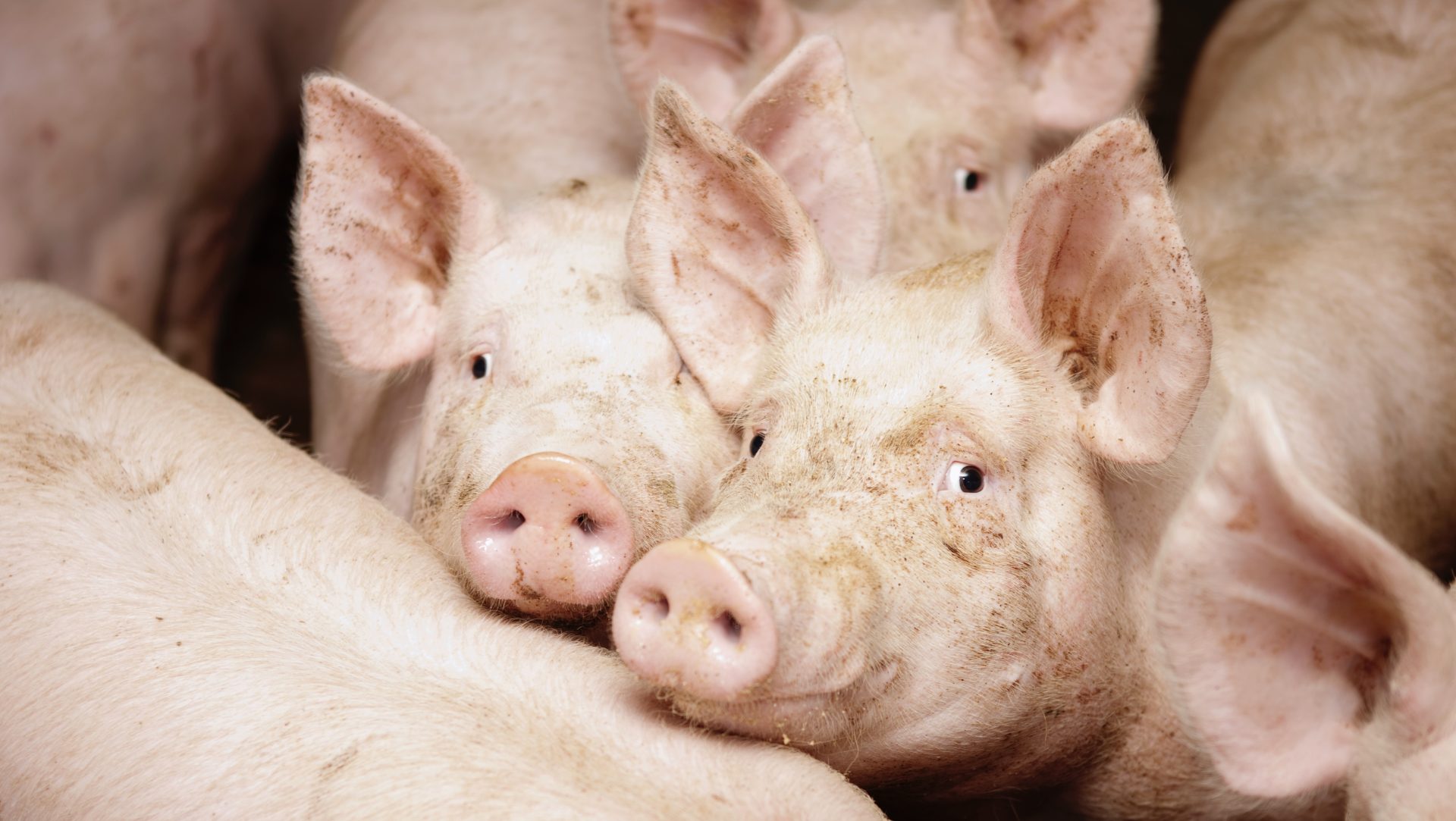
Surgeons Efficiently Transplant Pig Coronary heart Into 58-Yr-Outdated Man

Doctors in Maryland successfully transplanted a pig’s heart into a dying man, making him the second patient to undergo the experimental surgery.

RELATED: Doctors Successfully Transplant Pig Kidney To Human Patient

The Doctors Remain Cautiously Hopeful: “We Don’t Want To Predict Anything”

According to AP News, the procedure went down at the University of Maryland School of Medicine, and Lawrence Faucett, 58, has responded well.

In fact, he’s reported as sitting up and laughing just a couple of days after the surgery, which saved him from heart failure.

Following Faucette’s surgery, xenotransplantation expert Dr. Muhammad Mohiuddin remarked, “It’s just an amazing feeling to see this pig heart work in a human.”

Nonetheless, he said the next few weeks are crucial and acknowledged, “We don’t want to predict anything. We will take every day as a victory and move forward.” 

As for surgeon Dr. Bartley Griffith, he marveled at the feat while calling the successful procedure a “great privilege” that yields “a lot of pressure.”

“You know, I just keep shaking my head — how am I talking to someone who has a pig heart?”

We should add that the pig heart has reportedly undergone ten different genetic modifications to make it better suited for the human immune system.

David Bennett Sr. Previously Underwent The Transplant & Survived For 2 Months

This development follows David Bennett Sr., 57, undergoing the same procedure in Jan. 2022.

According to the University of Maryland School of Medicine, doctors noted that Bennett “experienced strong cardiac function with no obvious signs of acute rejection for nearly seven weeks after the surgery.” He passed away nearly two months after the transplant, though.

AP News reports that surgeons later learned that the swine heart Bennett received showed signs of containing a pig virus called porcine cytomegalovirus.

On top of improved testing to seek out similar viruses, the outlet also notes that David Bennett was much closer to death than Lawrence Faucette.

In a statement recorded before the procedure, Faucette acknowledged the uncertain outcome — though he said he at least has a “chance” with the experimental transplant.

“Nobody knows from this point forward. At least now I have hope and I have a chance.”

His wife, Ann Faucette, reportedly said the family is only “hoping for more time together.”

“We have no expectations other than hoping for more time together. That could be as simple as sitting on the front porch and having coffee together.”

RELATED: Proposed Bill Would Offer Inmates Reduced Sentences In Exchange For Organ Donations