Categories
Science

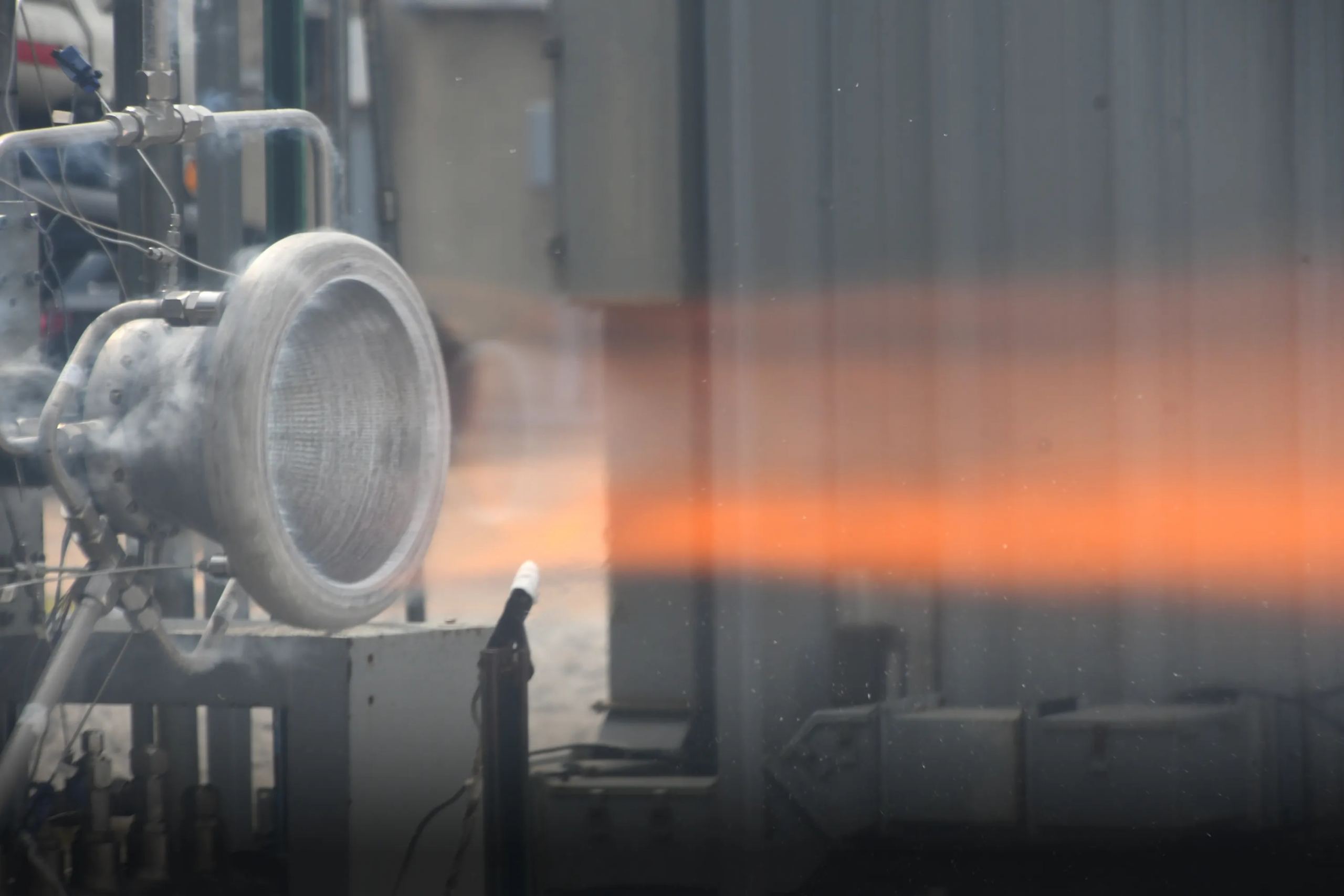
NASA Assessments a 3D Printed Aluminum Rocket Nozzle

When it comes to the current era of space exploration, one of the most important trends is the way new technologies and processes are lowering the cost of sending crews and payloads to space. Beyond the commercial space sector and the development of retrievable and reusable rockets, space agencies are also finding new ways to make space more accessible and affordable. This includes NASA, which recently built and tested an aluminum rocket engine nozzle manufactured using their new Reactive Additive Manufacturing for the Fourth Industrial Revolution (RAMFIRE) process.

Additive manufacturing (AM), otherwise known as 3D printing, has led to a revolution in manufacturing. Unlike traditional machine production, which fashions things from raw materials and throws away what is not used, 3D printing builds made-to-order components from the bottom up. This production process creates virtually no waste and is very rapid, cost-effective, and efficient compared to traditional methods. Whereas it was once confined to modeling and prototyping, the technology’s applications have expanded considerably in recent years – including the aerospace industry.

The aluminum nozzle was developed by NASA’s Announcement of Collaborative Opportunity in partnership with the leading AM company Elementum 3D. Based in Erie, Colorado, Elementum 3D specializes in metal alloy additive manufacturing research, material and print process development, and scaled-production methods. In 2020, the company was selected as part of an Announcement of Collaborative Opportunity to create a weldable type of aluminum that is heat-resistant enough to be used in rocket engines, leading to the aluminum variant known as A6061-RAM2.

Compared to other metals, aluminum has a lower density and can enable high-strength, lightweight components. However, with conventional manufacturing, a rocket nozzle may require a thousand individually joined parts. This makes aluminum impractical since it has a low tolerance to extreme heat and a tendency to crack during welding. The RAMFIRE process, which was funded under NASA’s Space Technology Mission Directorate (STMD), does away with this by producing aluminum components as a single piece, requiring far fewer bonds and significantly reduced manufacturing time. 

In addition, the nozzles are designed with small internal channels that keep the nozzle cool enough to prevent melting. Meanwhile, the RAMFIRE 3D printer and process were developed by another commercial partner, RPM Innovations (RPMI). This South Dakota-based company specializes in Directed Energy Deposition (DED), where layers of powdered alloy are deposited and fused by lasers. When combined with Elementum 3D’s specialized aluminum powder, the resulting process is known as laser powder-directed energy deposition (LP-DED).

Earlier this summer, two RAMFIRE nozzles completed a series of hot-fire tests at the Marshall Space Flight Center’s East Test Area in Huntsville, Alabama. The nozzles performed well using liquid oxygen (LOX) and liquid hydrogen (LH2), as well as LOX and liquid methane fuel configurations, and at pressures exceeding 5690 kilopascals (825 psi) – higher than what is anticipated for launches. The nozzles successfully completed 22 start tests and fired for nearly 10 minutes, demonstrating that they can operate in the most demanding deep-space environments. Paul Gradl, RAMFIRE principal investigator at NASA Marshall, said in a NASA press release:

“Industry partnerships with specialty manufacturing vendors aid in advancing the supply base and help make additive manufacturing more accessible for NASA missions and the broader commercial and aerospace industry. This test series marks a significant milestone for the nozzle. After putting the nozzle through the paces of a demanding hot-fire test series, we’ve demonstrated the nozzle can survive the thermal, structural, and pressure loads for a lunar lander scale engine.”

Liftoff of Terran 1, the first rocket made entirely using 3D-printed parts. Credit: Relativity Space/Michael Baylor

NASA also demonstrated the effectiveness of 3D-printed components in March 2023 when Relativity Space test-launched their Terran 1 rocket from Cape Canaveral Space Force Station in Florida. This test rocket was the first to be made entirely of 3D-printed parts, including nine engines made of an innovative alloy known as Glenn Research Copper (GRCop). These engines were additively manufactured at NASA’s Glenn Research Center under the agency’s Game Changing Development program, and were able to tolerate temperatures approaching 3,315 °C (6,000 °F) – up to 40% higher than traditional copper alloys.

In addition to rocket nozzles and engines, RAMFIRE has also manufactured a 91-centimeter (36-inch) diameter aerospike nozzle incorporating components for cryogenic fuel applications. These innovations are crucial to NASA’s Moon to Mars program, which includes Project Artemis and returning astronauts to the Moon, and the creation of the lunar infrastructure necessary to mount crewed missions to Mars. Intrinsic to this program is the capability of sending larger payloads to the Moon, Mars, and other deep-space destinations.

By manufacturing lightweight rocket components capable of withstanding higher structural loads and extreme temperatures, NASA is one step closer to returning to the Moon (to stay) and placing boots on Martian soil. Said John Vickers, the principal technologist for STMD advanced manufacturing:

“Mass is critical for NASA’s future deep space missions. Projects like this mature additive manufacturing along with advanced materials, and will help evolve new propulsion systems, in-space manufacturing, and infrastructure needed for NASA’s ambitious missions to the Moon, Mars, and beyond.”

Further Reading: NASA

Like this:

Like Loading…

Categories
Sport

Man United, England legend Sir Bobby Charlton dies at 86

Oct 21, 2023, 05:55 PM ET

Manchester United and England legend Sir Bobby Charlton has died at the age of 86, the Premier League club announced Saturday.

Charlton was part of England’s World Cup-winning side in 1966, and two years later scored twice as Manchester United won the European Cup at Wembley.

– Dawson: Dalot’s winner a fitting tribute to Sir Bobby Charlton

A club statement read on Saturday: “Manchester United are in mourning following the passing of Sir Bobby Charlton, one of the greatest and most beloved players in the history of our club.

“Sir Bobby was a hero to millions, not just in Manchester, or the United Kingdom, but wherever football is played around the world.

“He was admired as much for his sportsmanship and integrity as he was for his outstanding qualities as a footballer; Sir Bobby will always be remembered as a giant of the game.

“A graduate of our youth Academy, Sir Bobby played 758 games and scored 249 goals during 17 years as a Manchester United player, winning the European Cup, three league titles and the FA Cup. For England, he won 106 caps and scored 49 goals for England, and won the 1966 World Cup.

Sir Bobby Charlton enjoyed a fantastic playing career with success at Manchester United and England. Matthew Peters/Manchester United via Getty Images

“Following his retirement, he went on to serve the club with distinction as a director for 39 years. His unparalleled record of achievement, character and service will be forever etched in the history of Manchester United and English football; and his legacy will live on through the life-changing work of the Sir Bobby Charlton Foundation.

“The club’s heartfelt sympathies are with his wife Lady Norma, his daughters and grandchildren, and all who loved him.”

After joining United as a schoolboy in 1953, Charlton was a member of the famed academy under manager Sir Matt Busby — with the players becoming affectionately known as the “Busby Babes” — and won three successive FA Youth Cups from 1954 to 1956.

Charlton made his professional debut that same year and won his first league title in the 1956-57 season, scoring 10 goals in 14 First Division appearances.

On Feb. 6, 1958, the club was rocked by the Munich air disaster, which claimed the lives of 23 people, including eight United players. Charlton suffered minor injuries but survived. He then helped the club reach that year’s FA Cup final, only to lose 2-0 against Bolton Wanderers.

It is with a heavy heart that we have learned of the passing of Sir Bobby Charlton.

An integral part of our 1966 FIFA World Cup winning campaign, Sir Bobby won 106 caps and scored 49 times for the #ThreeLions.

A true legend of our game. We will never forget you, Sir Bobby ❤️ pic.twitter.com/Ft9MlutBWm

— England (@England) October 21, 2023

Charlton was an integral part of the rebuilding process that followed the tragedy, and United won the FA Cup in 1963, their first major honour post-Munich, before winning the league two years later.

In 1966-67, United reclaimed the title and became England’s first European champions 12 months on when Charlton captained the side to a 4-1 victory over Benfica.

He retired in 1980 following spells at Preston, at Waterford and in Australia with Newcastle KB United, Perth Azzurri and Blacktown City. Charlton also managed Preston from 1973 to 1975.

A statement from his family read: “It is with great sadness that we share the news that Sir Bobby passed peacefully in the early hours of Saturday morning. He was surrounded by his family.

“His family would like to pass on their thanks to everyone who has contributed to his care and for the many people who have loved and supported him. We would request that the family’s privacy be respected at this time.”

His record of 758 United appearances was broken by Ryan Giggs in 2008, and his club-record goals tally of 249 stood until 2017 when Wayne Rooney surpassed it.

Charlton enjoyed a fantastic relationship with George Best and Denis Law, and the trio were honoured with a statue outside Old Trafford in 2008.

He was also part of England’s greatest success: their sole World Cup victory in 1966. Charlton scored both goals as England beat Portugal 2-1 in the semifinals and helped his country to 4-2 victory over West Germany in the final at Wembley.

Geoff Hurst, who scored a hat trick in that final and who is now the only surviving member of Alf Ramsey’s World Cup-winning side, led the tributes to his former teammate.

“Very sad news today. One of the true Greats Sir Bobby Charlton has passed away,” Hurst wrote on X.

“We will never forget him and nor will all of football. A great colleague and friend, he will be sorely missed by all of the country beyond sport alone.”

Charlton won the Ballon d’Or award that year — one of only four Englishmen to have claimed the honour — and was also part of the 1958, 1962 and 1970 World Cup squads, as well as the Euro 1968 party. In total, he won 106 caps, and his record of 49 international goals was again beaten by Rooney in 2015.

He was awarded a knighthood in 1994. Charlton’s brother Jack was also part of England’s World Cup-winning side.

“Today is not just a sad day for Manchester United and England; it’s a sad day for football and everything that Sir Bobby represented,” said former Man United and England midfielder David Beckham.

Man United beat Sheffield United 2-1 on Saturday, with the players wearing black armbands and observing a minute’s silence before the match.

A book of condolence will be open for fans at Old Trafford on Sunday and United manager Erik ten Hag paid tribute to Charlton.

“The whole world is losing a big personality, a legend, a giant,” Ten Hag said.

“At Manchester United, you always have to win, but I think he set this standard as a Man United player, what he achieved; he’s an example.”

England’s Football Association said a full tribute will be paid to Charlton at Wembley Stadium when England play Malta on Nov. 17.

“The world of football will unite in its sadness at losing an undisputed legend,” England manager Gareth Southgate said.

Reuters contributed to this story.

Categories
Health

Walgreens (WBA) earnings This autumn 2023

A sign displays the types of COVID-19 vaccination doses available at a Walgreens mobile bus clinic on June 25, 2021 in Los Angeles, California.

Mario Tama | Getty Images

Walgreens on Thursday offered soft profit guidance and reported fiscal fourth-quarter earnings that fell short of expectations, as demand for Covid vaccines and tests sinks in the U.S. 

The retail pharmacy giant – squeezed by the transition out of the Covid pandemic, a leadership shake-up, its wobbly push into health-care and recent labor pressure from pharmacy staff – has now underperformed Wall Street’s adjusted earnings expectations for two straight quarters. The last time Walgreens posted a consecutive earnings miss was nearly a decade ago.

Still, Walgreens reported narrower losses and progress in its cost-cutting plans. It also posted sales growth in its health care business, which is now central to the company’s business strategy. Shares of Walgreens closed 7% higher on Thursday. The stock had been down more than 39% for the year heading into the open. 

The quarterly results came two days after Walgreens named health-care industry veteran Tim Wentworth as its new CEO following the abrupt departure of the company’s former top executive, Roz Brewer, last month. Wentworth, who will take over on Oct. 23, is tasked with steering the retail pharmacy giant out of a rough spot. 

“I have worked with Walgreens as a customer partner, competitor investor and family member, and I understand the challenges ahead for us,” Wentworth, the former CEO of Cigna‘s pharmacy benefits management company, said during the earnings call Thursday.

Wentworth also praised the company’s pharmacy staff, sharing a brief story about how an employee at a New York location helped fill his mother’s prescription for critical medications. However, he made no mention of the three-day walkouts that pharmacists and pharmacy technicians held this week to protest chronic understaffing and other poor working conditions.

The company said it expects adjusted earnings per share of $3.20 to $3.50 in the coming fiscal year, which is lower than analysts’ estimate of $3.72. Walgreens expects lower Covid-related sales, along with a higher tax rate and lower sale and leaseback contributions, to offset earnings growth. 

Walgreens also sees revenue for the year at $141 billion to $145 billion. Wall Street analysts estimated sales of more than $144 billion.

“We see a continuation of the challenging trends that impacted us in 2023,” interim CFO Manmohan Mahajan said during an earnings call Thursday, noting that the company is “adopting a prudent approach.”

Mahajan added that Walgreens expects to see a higher level of shrink, or lost inventory, in the upcoming fiscal year, which has been increasing for the company over the last several months and continues to represent a serious systemic issue across the retail industry.

But Interim CEO Ginger Graham noted during the call that the company expects over $1 billion in savings during the next fiscal year due to its ongoing cost-cutting initiative, which involves closing unprofitable stores and using AI to drive supply chain efficiencies, among other efforts.

Here’s what Walgreens reported compared with what Wall Street was expecting, based on a survey of analysts by LSEG, formerly known as Refinitiv:

  • Earnings per share: 67 cents adjusted vs. 69 cents expected
  • Revenue: $35.42 billion vs. $34.78 billion expected

The company reported a net loss of $180 million, or 21 cents per share, for the fiscal fourth quarter. That compares with a net loss of $415 million, or 48 cents per share, during the same period a year ago. Excluding certain items, adjusted earnings per share were 67 cents for the quarter. 

Jim Cramer’s Investing Club shares what investors should listen for in a company’s earnings call

Mahajan said the loss was driven by charges for certain legal and regulatory approvals and settlements, and one-time charges related to Walgreens’ cost-cutting program.

Walgreens booked sales of $35.42 billion in the quarter, which is up roughly 9% from the same period a year ago due to growth in its U.S. retail pharmacy and international business segments. 

Sales in the company’s U.S. health-care division also grew. Walgreens noted in a release that it is “intently focused on accelerating” that segment’s profitability moving forward. 

Walgreens has made significant investments to transform from a major drugstore chain to a large health-care company.

But the pharmacy chain is facing a number of challenges in that transition, including a profit squeeze due to softer consumer spending and declining demand for Covid products as patients emerge from the pandemic. Walgreens is also facing an open revolt among pharmacists and pharmacy technicians demanding better working conditions.

Three segments post sales growth

Walgreens’ U.S. retail pharmacy segment generated $27.66 billion in sales in the fiscal fourth quarter, an increase of 3.7% from the same period last year. Comparable sales at individual locations rose 5.7%. 

Pharmacy sales for the quarter increased 6.4% compared with the fiscal fourth quarter of 2022, with comparable sales up more than 9% due to price inflation in brand medications and mix impacts.

Total prescriptions filled in the quarter, including immunizations, decreased by 0.5% to 297 million. Walgreens cited a weaker respiratory virus season this fall, which is blunting demand for medications and vaccines. 

The company administered roughly 400,000 Covid vaccines in the quarter, down from 2.9 million during the same period last year, according to Mahajan.

Retail sales for the quarter decreased 4.3% compared with the same period a year ago, and comparable retail sales fell 3.3%. 

Mahajan said retail revenue was impacted by a decline in demand for over-the-counter Covid tests, weaker cough, cold and flu sales and softer consumer spending. He added that elevated shrink negatively affected sales for health and wellness and personal care and beauty products.

Meanwhile, the company’s international segment racked up $5.78 billion in sales in the fiscal fourth quarter, which is up more than 12% from the same period a year ago. 

Mahajan said that reflects growth across all international markets, with sales from the company’s U.K. subsidiary, Boots, growing nearly 11%.

Sales in Walgreens’ U.S. health-care segment came in at $1.97 billion, up from $622 million for the same period last year. Its operating loss narrowed to $294 million from $338 million.

Primary-care provider VillageMD, which includes urgent-care provider Summit Health, saw revenue grow by 17%. Walgreens said that reflects “existing clinic growth and clinic footprint expansion” of VillageMD, which has a network of hundreds of full-service doctors offices across the U.S. 

Sales at CareCentrix, which coordinates home care for patients after they’re discharged from the hospital, increased 24% due to additional service offerings and expansion into additional markets. 

The health-care segment took a loss of $30 million in the quarter before interest, tax, depreciation and amortization, compared to a loss of $133 million during the same period a year ago.

Walgreens said that “improvement” was driven by growth at CareCentrix and Shields Health Solutions, a specialty pharmacy company included in the health care segment. 

But John Driscoll, president of the U.S. health-care business, said that the company is “not satisfied with the near-term return on our investments” in the segment.

“We will continue to grow in 2024 but with a renewed focus on more profitable growth,” he said during the earnings call.

– CNBC’s Robert Hum contributed to this article.

Correction: Walgreens’ total prescriptions filled in the quarter, including immunizations, decreased by 0.5% to 297 million. An earlier version misstated a figure.

Categories
Technology

Why AI progress hitting the brakes is extra probably than world domination

There’s a looming global computing capacity crunch that cannot be sustainably addressed the way we’re doing things right now. 

Simply put, between artificial intelligence (AI) models growing exponentially and an ongoing global digital transformation, data centres are running out of space. Their vacancy rates are hitting record-lows and prices are rising in response to demand, which is cause for much unease among tech leaders.  

If this trend continues, at some point, we will reach a juncture where we can no longer accomplish all the things that technology theoretically allows us to do, because our capacity to process data will be constrained. 

Perhaps the biggest worry is that AI’s transformative potential, which we’re only just beginning to tap into, will be throttled by purely physical constraints. This will hinder new discoveries and the development of more advanced machine learning (ML) models, which is bad news for all, except AI apocalypse alarmists

The <3 of EU tech

The latest rumblings from the EU tech scene, a story from our wise ol’ founder Boris, and some questionable AI art. It’s free, every week, in your inbox. Sign up now!

Is there any way to avoid the computing capacity crisis? Since massively scaling back our computational demands isn’t really an option, the only alternative is to significantly boost capacity, which boils down to two available courses of action: build more data centres and develop better digital infrastructure.

But that’s easier said than done — here’s why. 

Why more data centres isn’t the answer

Until now, increasing demand for computing capacity has been, in part, met by building more data centres, with conservative estimates putting real estate taken up by data centres growing at ~40% per year. It’s a figure that you can expect to remain fairly steady, as supply issues, power challenges, and construction delays are severely limiting scaling capacity expansion. 

In other words, today, demand cannot be simply met by ramping up data centre construction. 

Nor should that be something we aspire to. Each of these football-field-sized warehouses gobbles up gargantuan amounts of energy and water, placing severe strain on the environment, both locally and globally. A single data centre can consume as much electricity and water as 50,000 homes and the cloud’s carbon footprint already exceeds that of the aviation industry.

Credit where credit is due — data centres have come a long way in minimising their environmental impact. This is in large part thanks to a fierce sustainability race, which has propelled innovation, particularly as it relates to cooling and energy efficiency. Nowadays, you’ll find data centres in underground mines, in the sea, and using other natural cooling opportunities such as fjord water flows, all to reduce energy and water consumption. 

The trouble is, this isn’t scalable globally, nor is boiling our seas a viable path forward. Erecting more data centres — no matter how efficient — will continue to wreak havoc on local ecosystems and impede national and international sustainability efforts. All while still failing to meet the demand for compute resources. 

Still, two chips are better than one, unless…

Think inside the box

… unless that single chip operates at twice the speed. To avoid the capacity crunch, all hopes rest on improving the digital infrastructure, namely, the chips, the switches, the wires, and other components that can improve data speeds and bandwidth while consuming less energy. 

Let me reiterate — the evolution of AI depends on finding ways to transfer more data, without using more energy. 

Essentially, this means two things. First, the development of more powerful and AI-centric chips. Second, the enhancement of data transfer speeds.

1. Designing custom chips for AI

Existing digital infrastructure isn’t particularly well suited for the efficient development of ML models. General-purpose central processing units (CPUs), which continue to be the primary computing components in data centres, struggle with AI-specific tasks due to their lack of specialisation and computational efficiency. 

When it comes to AI, graphics processing units (GPUs) fare much better thanks to better processing power, higher energy efficiency, and parallelism. That’s why everyone’s snatching them up, which has led to a chip shortage

Yet GPUs inevitably hit the same brick wall. They’re not inherently optimised for AI tasks, leading to energy waste and suboptimal performance in handling the increasingly intricate and data-intensive demands of modern AI applications. 

That’s why companies such as IBM are designing chips tailored to AI’s computational demands that promise to squeeze out the most performance while minimising energy consumption and space.

2. Improving data transfer capacity

No modern AI model operates on a single chip. Instead, to get the most of available resources, you assemble multiple chips into clusters. These clusters often form a part of larger networks, each designed for specific tasks.

Accordingly, the interconnect, or the system facilitating communication between chips, clusters, and networks, becomes a critical component. Unless it can keep up with the speed of the rest of the system, it risks being a bottleneck that hinders performance. 

The challenges for data transfer devices mirror those for chips: they must operate at high speeds, consume minimal energy, and occupy as little physical space as possible. With traditional electrical interconnects fast reaching their limits in terms of bandwidth and energy efficiency, all eyes are on optical computing — and silicon photonics, in particular.

Unlike electrical systems, optical systems use light to transmit information, providing key advantages in the areas that matter — photonic signals can travel at the speed of light and carry a higher density of data. Plus, optical systems consume less power and photonic components can be much smaller than their electrical counterparts, allowing for more compact chip designs. 

The operative words here are “can be.” 

The growing pains of cutting-edge tech

Optical computing, while extremely fast and energy-efficient, currently faces challenges in miniaturisation, compatibility, and cost. 

Optical switches and other components can be bulkier and more complex than their electronic counterparts, leading to challenges in achieving the same level of miniaturisation. As of now, we are yet to find materials that can act as both an effective optical medium and are scalable for high-density computing applications.

Adoption would also be an uphill battle. Data centres are generally optimised for electronic, not photonic, processing, and integrating optical components with existing electronic architectures poses a major challenge. 

Plus, just like any cutting edge technology, optical computing has yet to prove itself in the field. There is a critical lack of research into the long-term reliability of optical components, particularly under the high-load, high-stress conditions typical of data centre environments.

And to top it all off — the specialised materials required in optical components are expensive, making widespread adoption potentially cost-prohibitive, especially for smaller data centres or those with tight budget constraints.

So, are we moving fast enough to avoid the crunch?

Probably not. Definitely not to stop building data centres in the short term. 

If it’s any consolation, know that scientists and engineers are very aware of the problem and working hard to find solutions that won’t destroy the planet by constantly pushing the boundaries and making significant advances in data centre optimisation, chip design, and all facets of optical computing.

My team alone has broken three world records in symbol rate for data centre interconnects using intensity modulation and direct detection approach. 

But there are serious challenges, and it’s essential to address them head-on for modern technologies to realise their full potential. 

Professor Oskars Ozoliņš received his Dr.sc.ing. degree in optical communications from Riga Technical University (Latvia) in 2013 and received a habilitation degree in physics with a specialization in optical communication from KTH Royal Institute of Technology in 2021. He is the author of around 270 international journal publications, conference contributions, invited talks/tutorials/keynotes/lectures, patents, and book chapters. You can follow him on LinkedIn here.

Categories
Entertainment

Get Tan in 1 Hour & Save 54% On St. Tropez Categorical Self-Tanning Mousse

If you need a little more convincing before you decide to shop, check out these rave reviews from happy QVC shoppers. 

St. Tropez Self-Tan Express Bronzing Mousse Duo Reviews

A loyal fan of the tanner said, “I have used this tanning product for several years. It is by far the best self tanner I have found. Follow directions, especially treating skin prior to use. While all other products are increasing in price this is a great buy from QVC. I have zero complaints with this product. Thank you QVC for such a great price going into spring and summer season.”

Another longtime user of the product shared, “Would never use another self tanner. Trust me, I’ve tried them all. St Tropez is the best on the market and QVC price is amazing!”

A QVC shopper reviewed, “I have used every self tanner made and some are good but I finally decided to try St Tropez and I’m very impressed! ZERO odor…perfect color…works exactly as described. Very natural looking and easy to apply.”

“I will forever use this product!!! I’ve been a St Tropez fan for a few years but the mousse is perfection! I never get any streaks and the color is never orange. I’m a fair to light skin tone and it just works. I have sensitive skin and I can use this on my face. Please don’t ever stop making. I wish they’d send extra mitts because my only complaint is that they do shed after a few uses. I’ve bought additional mitts on Amazon,” a customer raved. 

A shopper gushed, “San Tropez mousse is easy to use, no stained hands, no streaking, & I turn a lovely bronze color. It doesn’t get on my clothes & looks natural. I can put it on as many times a week as I want. Usually, I do 1-2 times per week. People always think I’ve been to the beach after using it & no smell. It just fades- not obvious at all. I always buy from Q bc they offer such deals like this one. I’ve been using this for 15-20 yrs. Grateful for Q offering this amazing product & price @ including mitts! Most stores charge extra for those! Love it!”

Another shared, “Watching the product on QVC, I had high hopes. This is a amazing product. Easy to apply, you actually look tan, and it’s great. Thank you for a product worth while!”

“I have Irish white skin. I do tan well, but don’t feel like laying at the pool all day. I used the product yesterday, showered after 2 hours. This morning I have great color.
It is not orange, not smelly, not streaky. I think the key is to use the hand towel they enclosed. This is by far the best tanner I have used,” a fan of the tanner explained.

“I never write reviews, but this product lives up to all the on air positive discussion. A friend and I needed our legs to look better for a Derby event. I used expedited shipping, it arrived in time and worked well. My confidence in my cabi dress was increased due to my lovely tanned legs,” a customer reviewed.

Categories
Science

What Passes for A “Demonstration Mission” Amongst Our Authorities Geniuses • Watts Up With That?

From the MANHATTAN CONTRARIAN

Francis Menton

A couple of days ago, a Substack called Doomberg had a piece titled “False Utopia.” The piece featured a discussion of a post of mine from February 2023 with the title “We Must Demand A Demonstration Project Of A Mainly Renewables-Based Electrical Grid.” My post argued that we should demand a demonstration project of a mainly renewables-based electrical grid that would include all the key elements — generation mainly from solar and wind, plus sufficient back-up or storage to make the whole thing work for the long term without involvement of the evil fossil fuels, plus any other necessary elements to make the whole thing work.

The Doomberg guys called my post “brilliant,” which is very flattering. I would not say it was brilliant, but only that it says obvious things that for some reason few other people are saying. Among the people who will definitely not mention the need for an all-element fossil-fuel-free renewable grid demonstration project are government officials and green energy advocates. The reasons they won’t mention this need could be (1) they are not bright enough to understand the subject, or (2) their understanding is impaired because they are too blinded by religious fervor to “save the planet,” or (3) they are intentionally deceiving the public to make money or fame or career advancement for themselves. Or it could be all three!

Meanwhile though, the government “net zero” or “Green New Deal” (or whatever they are currently called) promotional sites are full of talk of things they call demonstration projects. So are they responding to my demand? The opposite. All of what they call demonstration projects follow a common approach, which is only to attempt to demonstrate various portions of the full system that would be needed to provide reliable 24/7/365 electricity from predominantly wind and solar generation.

Consider for instance the latest news on energy storage. A few days ago on October 13, the Department of Energy announced big new grants and subsidies for a series of what they call “hydrogen hubs.” Here is a report from E&E News Energy Wire. Excerpt:

The Department of Energy on Friday announced seven projects that will receive $7 billion to build landmark hydrogen hubs, delivering a major boost to a nascent U.S. industry. The long-awaited move is a key piece of the Biden administration’s climate agenda. On Friday, the White House said it expects the DOE funding to help cut 25 million metric tons of carbon dioxide annually, roughly equivalent to removing 5.5 million gasoline-powered vehicles from the road each year. “With this historic investment, the Biden-Harris administration is laying the foundation for a new, American-led industry that will propel the global clean energy transition,” said Secretary of Energy Jennifer Granholm.

According to this further piece from Energy Wire on August 21, the Biden Administration has set a goal of having the U.S. produce 10 million metric tons of “green” hydrogen (by electrolysis from water) by 2030. The E&E piece states that the massive funding for “hydrogen hubs” is coming from a part of the Energy Department called the “Office of Clean Energy Demonstrations,” and also cites the Department as calling the hydrogen hubs “demonstrations.” So this must be the demonstration project we are calling for!

Not quite:

DOE envisions the hydrogen hubs as a demonstration of production, storage, transport and consumption.

I guess at least this is intended to be a demonstration of more than just production of the hydrogen. But still, they are clearly leaving out the critical piece of the puzzle, which is the demonstration of how much of this hydrogen, and capacity to make more of it, will be needed, and at what cost, to get the country — or even some small town — through a full year (or two or five) without need for fossil fuel backup. That completely obvious elephant is not part of this multi-billion dollar “demonstration.”

And DOE is not putting all of its energy storage eggs in the hydrogen basket. They separately have another big bucks effort called the “Long Duration Storage Shot” that is throwing bucketsful of cash at various research efforts into batteries. But the battery efforts are even farther removed from any relevant demonstration project. From DOE’s opening webpage describing that initiative (with a date of September 2021):

The U.S. Department of Energy’s (DOE) Energy Earthshots Initiative aims to accelerate breakthroughs of more abundant, affordable, and reliable clean energy solutions within the decade. Achieving the Energy Earthshots will help America tackle the toughest remaining barriers to addressing the climate crisis, and more quickly reach the Biden-Harris Administration’s goal of net-zero carbon emissions by 2050 while creating good-paying union jobs and growing the clean energy economy. . . . The Long Duration Storage Shot establishes a target to reduce the cost of grid-scale energy storage by 90% for systems that deliver 10+ hours of duration within the decade.

On September 22, 2023 the Administration announced some $325 million for “15 projects across 17 states and one tribal nation” to “accelerate the development” of these “long duration” battery technologies. The $325 million may seem rather paltry compared to the $7 billion just thrown at the hydrogen hub thing last week; but don’t worry, they have many billions more to spread around on this over the coming months.

So are these battery technologies, or any one of them, even a potential solution to the problem of making a mostly wind/solar electricity grid work without fossil fuel backup? Again, you will not find any mention at those links, or at other government or advocate sites discussing the issue of how many of these batteries would be necessary and at what cost to actually fully back up a predominantly wind/solar grid and make it into a functional 24/7/365 electricity system. Indeed, you will not find any mention at any such sites of the fundamental problem with all batteries as the means to back up an intermittently-supplied grid, as identified in the big (and otherwise badly flawed) Royal Society energy storage report that came out in September. That problem is that stored energy as the backup mechanism entails engineering requirements that no battery can ever meet. Those include: holding at least several months of average usage, being capable of keeping that energy in storage for years in anticipation of worst-case once every multiple decades wind “droughts,” and being capable of discharging over the course of months if not a full year. The “10+ hours of duration” mentioned as the goal of the Energy Department’s battery program is almost trivial against the real engineering requirements.

Hydrogen, by contrast, has the theoretical capability of meeting all of those engineering requirement. However, there are many elements that don’t currently exist that would be needed to make a fully-functioning wind/solar/hydrogen storage 24/7/365 electricity grid. These include not just the electrolyzers, but also storage for huge amounts of hydrogen (underground caverns?), a full collection of thermal power plants capable of meeting peak demand burning pure hydrogen, and a transport system (pipelines?) to take the hydrogen from the electrolyzers to the storage caverns and then on to the power plants.

I could do a back-of-the-envelope calculation on this to get a rough idea as to cost, which would come to a multiple (not necessarily a huge one, but nonetheless a multiple) of what our current electricity system costs. But I’m not going to do it. The reason I’m not going to do it is that there as an obvious fact that tells you all you need to know, which is that no one in the country is spending their own private money to build out this system. They are all waiting for the government handouts. If this system could be built profitably at a cost competitive with what we have, there would be investors falling all over themselves to build it. When Thomas Edison built his first electricity plant, he did not go to the government for handouts to build it.

Because this is all a fantasy kept alive by government handouts, as soon as the handouts go away or even slow down, the whole thing will dry up and fade away.

Like this:

Like Loading…

Categories
Sport

NFL fines Seahawks security Jamal Adams $50Okay, supply says

  • Brady Henderson, ESPNOct 20, 2023, 03:00 PM ET

    Close

      Brady Henderson is a reporter for NFL Nation at ESPN. Henderson covers the Seattle Seahawks. He joined ESPN in 2017 covering the team for Seattle Sports 710-AM. You can follow him via Twitter @BradyHenderson.

The NFL has fined Seattle Seahawks safety Jamal Adams $50,000 for his actions toward a concussion doctor on the sideline during the team’s Week 6 game against the Cincinnati Bengals, a league source confirmed to ESPN’s Adam Schefter on Friday.

According to CBS Sports, which first reported the fine, the league deemed that Adams “directed verbal remarks and made inappropriate physical conduct” with an unaffiliated neurotrauma consultant (UNC) who was preparing to evaluate Seahawks wide receiver Jake Bobo for a possible concussion late in the third quarter.

CBS Sports reports that the league reviewed unspecified video of the incident before fining Adams. A video recap of Seattle’s loss to Cincinnati, posted on the Seahawks’ YouTube page, briefly shows Adams repeatedly shouting “He good!” as the UNC and Bobo walked past him on their way to the medical tent for evaluation.

Editor’s Picks

The clip does not show any physical contact between Adams and the UNC.

Bobo had taken a hard hit from safety Dax Hill at the end of a 20-yard reception, which drew a penalty for unnecessary roughness. He got up celebrating and was lining up for the next play when officials stopped the game so he could be evaluated. He was cleared and returned to the game.

This marked the second incident in as many games between Adams and a UNC, a role that features an independent physician assigned to each team’s sideline on game days to assist team physicians in evaluating, diagnosing and treating concussions.

Early in the Seahawks’ Monday night win over the New York Giants in Week 4, Adams was seen yelling at the UNC on Seattle’s sideline after he was ruled out with a concussion. Adams issued a public apology after Schefter reported that the NFL was considering disciplining the safety over the outburst, which it ultimately did not.

CBS Sports reported that the NFL did not consider Adams a “repeat offender” and that his $50,000 fine did not take into account the incident from Week 4.

Categories
Health

CVS to tug sure chilly medicines from retailer cabinets

A CVS Pharmacy store is seen in the Manhattan borough of New York City, New York.

Shannon Stapleton | Reuters

CVS is removing some of the most common cough and cold medicines from its store shelves and will no longer sell them, a company spokesperson told CNBC on Thursday. 

The company’s decision comes a month after a panel of advisors to the Food and Drug Administration unanimously determined that the main ingredient used in many popular over-the-counter cold and allergy medications doesn’t actually work to clear up congested noses when taken orally. 

The FDA has not decided whether to ask drug manufacturers and retailers such as CVS to remove products containing oral phenylephrine — a nasal decongestant found in versions of drugs such as NyQuil, Benadryl, Sudafed and Mucinex — from the market. 

However, CVS is voluntarily removing certain cough and cold medicines that contain phenylephrine as the only active ingredient from stores. 

CVS is aware of the determination made by the FDA advisors and will follow directions from the agency to ensure that products sold at the company’s stores comply with laws and regulations, the spokesperson said. They added that CVS stores will continue to offer other oral cough and cold products to meet patient needs. 

Oral products that list phenylephrine as its only active ingredient include Sudafed PE, which is marketed by Johnson & Johnson’s consumer health spinoff Kenvue. Kenvue declined to comment on CVS’s decision. 

The Wall Street Journal first reported on CVS’ decision Thursday.

Pulling oral phenylephrine from the market entirely could affect CVS and other retail pharmacy chains, which rake in revenue from selling over-the-counter cold and allergy pills.

Retail stores in the U.S. sold 242 million bottles of drugs containing phenylephrine last year, up 30% from 2021, according to data compiled by FDA staff. Those bottles generated $1.8 billion in sales last year, the data said.

Without oral phenylephrine, patients will also likely be forced to seek out liquid and spray versions of the drugs or entirely new medications, which were not included in the review by the FDA advisors.

Don’t miss these CNBC PRO stories:

Categories
Entertainment

Lupita Nyong’o Talks Break up With Selema Masekela

Lupita Nyong’o is a single woman! At least, that’s what a recent Instagram upload on Thursday (Oct. 18) seemingly implies. The actress previously shared her romance with Selema Masekela.

“There are much important things on in the world right now, and my thoughts are with those who are deeply suffering. At this moment, it is necessary for me to share a personal truth and publicly dissociate myself from someone I can no longer trust. I find myself in a season of heartbreak because of a love suddenly and devastatingly extinguished by deception,” Lupita wrote in the Instagram caption and carousel post slides.

Lupita offered no additional details about the alleged “deception” or clarity on how long ago she split from Selema — whom she did not name in the upload. The last Instagram upload she shared featuring Selema came in August. It was a birthday post calling him a “sunshine human” and her “amor,” per E! News. It has since been deleted, and the pair do not follow each other on Instagram.

Lupita Nyong’o & Joshua Jackson Enjoy Janelle Monáe Concert With Friends

The Shade Room first noted that the former couple were not connected on the social platform after publishing exclusive images of Lupita Nyong’o. Photographers captured her enjoying the closing show of Janelle Monáe’s tour on Wednesday night.

A source told TSR Lupita reportedly arrived at the YouTube Theater in Inglewood, California, with Joshua Jackson and remained at his side for the entire performance. Over 30 images reviewed by TSR staff show Lupita and Joshua engaging in friendly conversation with each other and friends. None show signs of romantic intimacy, including kissing, hugging, hand-holding, or anything related.

Like Lupita, Joshua is also newly single after his wife of four years, Jodie Turner-Smith, filed for divorce earlier this month. She listed their date of separation as Sept. 13, 2023. The paperwork reportedly revealed that she’s seeking joint physical and legal custody of their three-year-old daughter, Juno.

RELATED: Actors Night Out! Joshua Jackson & Lupita Nyong’o Enjoy Janelle Monáe’s Concert With Friends (Exclusive)

Photo Credit: Splash

Lupita “Tempted To Run Into The Shadows” Amid Her Heartbreak

In today’s Instagram upload, the actress spoke about wanting to hide from public life amid her breakup.

“I am tempted to run into the shadows and hide, only to return to the light when I have regained my strength enough for me to say, ‘Whatever, my life is better this way.’ But I am reminded that the magnitude of the pain I am feeling is equal to the measure of my capacity for love, Lupita Nyong’o wrote.

In her continued paragraph, Lupita said she chose to share in order to be honest with herself and to inspire others experiencing heartbreak.

“And so, I am choosing to face the pain, cultivating the courage to meet my life exactly as it is, and trusting that this too shall pass. The promise, they say, is that a tender heart is what gives birth to fearlessness. I hope it’s true… I share this to keep it [100], and hoping that the knowledge of my experience might be useful to someone else out there experiencing the grip of heartbreak who is poised to try and escape from the pain and miss out on the wisdom that comes from it. #Breakup Let’s face our pain so we don’t spread it.”

RELATED: Keeping It Movin’: Jeezy Releases Statement After Filing To Divorce Jeannie Mai
Categories
Science

Juno Completes its Closest Flyby of Io But

Jupiter’s ocean moons capture most of our attention because of their potential habitability. But Io, Jupiter’s bad-boy volcanic moon, is in a class of its own. There’s nothing else like it in the Solar System, and NASA’s Juno spacecraft captured new images of the volcanic satellite during its closest approach yet.

Io is Jupiter’s third-largest moon and the Solar System’s fourth largest moon. It’s also larger than our Moon. It has the highest density and the strongest gravity of any moon. Io also has the least amount of water of any astronomical object in the Solar System.

Io is the fourth largest moon in the Solar System, but its volcanic activity is what sets it apart. Image Credit: Wikipedia

Those characteristics alone make it interesting. But what really garners Io so much attention, and led Juno to study it more closely, is its volcanic activity. It’s the most geologically active body in the Solar System and boasts over 400 volcanoes, along with widespread lava flows.

Juno’s JunoCam instrument captured new images of Io from its closest approach yet on October 15th, from less than 12,000 km away. Now, citizen scientists have processed these images and shared them with the rest of us. The result is the best images of Io we’ve seen since the Galileo mission ended 20 years ago.

This image comes to us from Kevin Gill, a well-known processor of JunoCam images and other space images. Image Credit: NASA/JPL-Caltech/SwRI/MSSS/Kevin M. Gill

We have NASA’s foresight to thank for these images. When they were planning the Juno mission, they found room for JunoCam. JunoCam is primarily a public engagement instrument, though it does help provide context for the spacecraft’s more rigorous science instruments. The camera was intended to capture images for citizen scientists and other skilled—or amateur—image processors to have fun with.

It’s working as intended.

Navaneeth Krishnan created this IO false-color image from the raw image captured by JunoCam on October 15, 2023. Image Credit: NASA/SwRI/MSSS/Navaneeth Krishnan S © CC BY

Io’s widespread volcanic activity have shaped and reshaped its surface. The surface is restless, inhospitable, even tortured. The lava flows and volcanoes make it appear like a throwback to the Solar System’s early days, when Earth and possibly the Moon and other bodies were magma oceans. And with it’s sulfur-covered plains, comparisons with Hell are unavoidable.

Spacecraft have captured several of Io’s eruptions over the years, and their scale is truly awesome. Some of them reach 400 km (250 miles) high.

These Galileo images show two different episodes of volcanic eruptions and their plumes. The image on the left shows two plumes, one in blue on the moon’s limb, and a more difficult to see one in the center near the terminator line. The image on the right shows another eruption from Pillan Patera in 1997 as the expanding red circle with the dark spot in the center. Image Credit: (L) By NASA’s Galileo spacecraft – Public Domain. (R) NASA/JPL

Just for fun, here’s a Juno infrared image showing the moon’s extensive volcanic activity.

The Juno mission’s infrared view of the Jovian moon Io. Taken on July 5, 2022. All the hotspots are volcanic features. Courtesy NASA/JPL-Caltech/SwRI/ASI/INAF/JIRAM

Juno’s not finished with Io yet. It’s getting progressively closer to the volcanic moon. During Perijoves 57 and 58, on December 3rd and February 24th respectively, it’ll perform two more Io flybys, each one closer than the last.

February 24th’s flyby should be spectacular. It’ll come to within 1500 km (930 miles) of the moon, giving us our most detailed images yet. Though Juno’s main job is to study Jupiter, this close approach to Io should be one of the mission’s highlights.

You could circle the date on your calendar, but that’s probably not necessary. It’ll be difficult to go on the web without seeing the images.

Like this:

Like Loading…