Categories
Science

Even Early Galaxies Grew Hand-in-Hand With Their Supermassive Black Holes

Within almost every galaxy there is a supermassive black hole. This by itself implies some kind of formative connection between the two. We have also observed how gas and dust within a galaxy can drive the growth of galactic black holes, and how the dynamics of black holes can both drive star formation or hinder it depending on how active a black hole is. But one area where astronomers still have little information is how galaxies and their black holes interacted in the early Universe. Did black holes drive the formation of galaxies, or did early galaxies fuel the growth of black holes? A recent study suggests the two evolved hand in hand.

It’s difficult to observe the complex dynamics of black holes and galaxies in the early cosmos, but one way to study them is to compare the mass of a galactic black hole with the mass of all the stars in its galaxy. This can be expressed as a ratio MBH / M* to see how it varies over time. This means measuring this ratio at ever-increasing redshifts, since the greater the redshift, the younger the galaxy.

For this study, the team looked at 61 galaxies with active galactic nuclei (AGNs) as identified by X-ray observations. The luminosity of the AGNs gives us an idea of the black hole’s mass. They then added JWST observations of these galaxies from the COSMOS-Web and PRIMER surveys. From these, they could get the infrared luminosity of the galaxies, which let them determine their total stellar mass.

The mass ratios of this study (red dots) compared to earlier studies. Credit: Tanaka, et al

The galaxies they observed have redshifts between z = 0.7 and z = 2.5, meaning that the galaxies are seen as they were 6 billion to 11 billion years ago. What they found is that galaxies and their black holes grow hand in hand. As the galaxy increases in mass, so does the black hole. The relationship is very roughly linear, though the ratio favors the black hole slightly at higher redshifts. For you math geeks, the team found the ratio varies as MBH / M* = (1 + z)0.37. This means the black holes grow at a slightly slower rate than the galaxies.

Unfortunately, the uncertainty of this result is rather large. It will take more observations, particularly at the higher redshift end, to pin down the relation more precisely. But in the coming years, astronomers should be able to gather this data. This study shows that galaxies and their black holes grow at similar rates across billions of years. Future studies will help us understand the more subtle connections between them.

Reference: Tanaka, Takumi S., et al. “The MBH-M* relation up to z = 2 through decomposition of COSMOS-Web NIRCam images.” arXiv preprint arXiv:2401.13742 (2024).

Like this:

Like Loading…

Categories
Technology

Cyberflashing and epilepsy trolling offenders to face jail in UK

As of today, the UK is criminalising actions such as cyberflashing and — in a world fist — epilepsy-trolling, with offenders potentially facing prison time.

The new offences will come into play as part of the Online Safety Act, a recently introduced bill designed to protect people from illegal or “harmful” online content.

Cyberflashing is the act of sending unwanted sexual photos. Studies have shown that about half of younger women (aged between 18 and 25) have received unsolicited nude images. The percentage is even higher for females under 18, reaching 76%, according to a 2020 research.

Now, cyberflashing offenders who aim to cause distress and humiliation or seek sexual gratification will face up to two years behind bars.

Zach’s Law

Meanwhile, the penalisation of epilepsy-trolling will target criminals who send or show flashing images intending to cause seizures to individuals with epilepsy.

The <3 of EU tech

The latest rumblings from the EU tech scene, a story from our wise ol’ founder Boris, and some questionable AI art. It’s free, every week, in your inbox. Sign up now!

The offence is called “Zach’s law,” named after Zach Eagling, an 11-year old boy who suffers from epilepsy. In 2020, Zach, then eight, was raising money for the Epilepsy Society and uploaded a video of himself on the organisation’s Twitter account, standing up for people with disabilities.

In response, online trolls flooded the charity’s account with images and gifs designed to cause seizures, especially targeting individuals who had reached the one-year episode-free milestone. Many of the victims reported suffering from seizures after the exposure.

To raise awareness and address the issue, Zach and the Epilepsy Society started a campaign and received the support of MPs of all parties, leading to establishment of the offence.

“We are the first country in the world to do this and the Epilepsy Society has already been contacted by victims abroad who hope their governments will follow our example,” said Clare Pelham, Chief Executive at the charity.

The full set of new online offences

The new measures also include the non-consensual sharing of images known as “revenge porn,” threatening messages, as well as the sending of false information aiming at causing physical or psychological harm — especially targeting children.

Notably, these offences will apply directly to individuals, even though the Online Safety Act’s focus is to regulate the online content of social media platforms and tech companies.

In this respect, the act has sparked much controversy, raising concerns over privacy and surveillance. But it sets a high (and crucial) standard when it comes to prosecuting criminals spreading harmful content online.

Categories
Entertainment

Kim Kardashian Shares Painful Crimson Markings on Her Legs From Psoriasis

Kim Kardashian is keeping fans up-to-date on her psoriaris journey. 

The Kardashians star shared an update on her battle with the chronic immune disease by posting photos of a recent flare-up to social media. 

“Not gonna lie this is painful,” Kim captioned a Jan. 30 Instagram Story. “Not sure what my triggers are. I haven’t changed my diet. I’ve tried everything.”

The 43-year-old concluded by writing, “Psoriasis sucks.”

This isn’t the first time Kim has gotten candid about the auto-immune condition, which began after she had her first flare-up at age 25. Back in 2019, the American Horror Story: Delicate actress detailed her history with the auto-immune condition—a diagnosis she shares with her mom Kris Jenner

“One night, I woke up to use the restroom and I physically couldn’t pick up my phone,” Kim recalled of a particularly bad flare-up in an essay published on sister Kourtney Kardashian‘s website Poosh. “I thought it was strange but maybe I just slept on my hands weird and I was so tired, I didn’t need to be checking my phone at that hour anyway. I fell right back asleep.”

Categories
Health

Vertex non-opioid painkiller reveals optimistic late-stage trial outcomes

A sign hangs in front of the world headquarters of Vertex Pharmaceuticals in Boston on Oct. 23, 2019.

Brian Snyder | Reuters

Vertex Pharmaceuticals on Tuesday said its experimental painkiller, which is being tested as an alternative to addictive opioids, significantly decreased post-surgery pain in late-stage trials

The drug, known as VX-548, did not work better than a popular opioid, however.

Still, the trial results bring the biotech company one step closer to developing a drug that can provide strong pain relief without the addictive potential of opioids, which have caused a horrific epidemic in the U.S. Plenty of other similar painkillers never reached the market.

Vertex said it would file for Food and Drug Administration approval of the painkiller for the treatment of moderate-to-severe acute pain by the middle of this year.

Acute pain is usually caused by injury, surgery, illness, trauma or painful medical procedures and is likely to ease with time. Around 80 million patients are prescribed a medicine for their moderate-to-severe acute pain every year in the U.S., Vertex said in a release.

Wall Street analysts have said that the drug, which works by blocking pain signals at its origin before they reach the brain, could become a blockbuster drug if it wins approval from regulators, estimating its annual sales could exceed $1 billion.

“We are very pleased with the results from the VX-548 pivotal program, which demonstrate a compelling and consistent combination of efficacy and safety across multiple acute pain conditions and settings,” Vertex CEO Dr. Reshma Kewalramani said in a release.

Shares of Vertex rose more than 2% on Tuesday following the data release. The company, best known for developing drugs to treat the serious genetic disorder cystic fibrosis, has a market value of about $115 billion.

Last year, the company’s painkiller produced positive results in a mid-stage trial in diabetes patients suffering from a chronic nerve condition. The stock also saw a boost from U.S. approval of the first-ever gene-editing therapy for sickle cell disease from Vertex and its partner CRISPR Therapeutics.

Vertex said Tuesday its painkiller was more effective in reducing the intensity of pain after 48 hours in two late-stage studies on more than 1,000 patients who had abdominoplasties, also known as “tummy tucks,” and roughly another thousand in people who had bunion surgery. Those two procedures are commonly used in studies of people with acute pain.

The company’s painkiller, however, failed to meet the secondary goal in both trials of reducing pain when compared to a combination of the opioid drug hydrocodone, which is frequently abused, and acetaminophen, the basis for popular pain medications like Tylenol.

Jefferies analyst Michael Yee said the drug’s failure to meet that goal is in line with expectations and that overall, the late-stage trial results released Tuesday are positive.

VX-548 was also safe and well-tolerated in the two trials and an additional study examining the safety and tolerability of the drug in people experiencing pain from a variety of conditions. Common side effects included nausea and constipation.

Categories
Sport

Steph Curry, Sabrina Ionescu to compete in All-Star 3-point contest

  • Kendra Andrews, ESPNJan 30, 2024, 02:18 PM ET

NBA all-time 3-point leader Stephen Curry and WNBA single-season 3-point record holder Sabrina Ionescu will compete in a 3-point contest at All-Star Weekend in Indianapolis on Feb. 17.

This is the first time an NBA and WNBA player will go head-to-head in this kind of competition, which the NBA announced Tuesday.

The Warriors’ Curry will shoot from the NBA 3-point line with NBA basketballs while the Liberty’s Ionescu will shoot from the WNBA 3-point line with WNBA basketballs.

Curry hinted at the possibility of the competition on Jan. 25, when he was heard talking to teammate Brandin Podziemski, saying he and Ionescu should compete.

It didn’t take long for Ionescu to take to social media and accept the challenge.

Ionescu won the 2023 WNBA All-Star 3-point shootout, scoring 37 points on 25-of-27 shooting — the most in WNBA or NBA history.

Curry holds the previous record at 31.

Categories
Science

So Many Issues Proceed to Plague the EV Business – Watts Up With That?

By Kristen Walker

January 28, 2024

The fourth quarter of 2023 was not good for Electric Vehicles (EV). Multiple manufacturers decided to curb or halt production. Ford in particular decided to cut their F150 Lightening Truck series in half. Roughly 4,500 auto dealers signed on to a letter petitioning the Biden administration to “tap the breaks” on its aggressive EV push, on account of EVs stacking up on dealer lots.

The new year is already off to a rough start and we’re not even through the first month.

Hertz announced it will be selling off about one third of its EVs, which will amount to roughly 20,000 vehicles. This is a major reversal from their promise just a few years ago to dramatically increase its EV fleet. The money procured from selling them off will be used for the purchase of internal combustion engines (ICE) in order to “meet customer demand.” The car rental company isn’t too keen on the expensive repairs that accompany EV ownership either, which can cost up to twice that of ICE vehicles.

Mid-January saw a severe cold snap surge across many parts of the United States, greatly affecting the Midwest. Many Chicago-area EV owners found themselves unable to charge their vehicles, leaving them stranded. This is because on average an EV’s range can drop 40% and charging takes significantly longer in freezing conditions. Some motorists waited hours in line at charging stations that struggled to even charge vehicles, and long lines meant difficulty finding open charging stations. Other vehicles had to be towed. This can’t be good PR for the EV industry.

And now, a cheating scandal.

The Texas Public Policy Foundation’s fall study examines a rule in which EVs “improperly benefit from an erroneous interpretation by the U.S. Department of Energy of a series of laws” promoting alternative fuel vehicles, but “clearly excluding electric vehicles.” Carmakers can arbitrarily multiply the efficiency of EVs by 6.67, meaning a 2022 Tesla Model Y which tests at the equivalent of about 65 mpg in a laboratory is counted as having a compliance value of 430 mpg.

Environmental groups questioned the legality of the rule; the Wall Street Journal broke the story last week, claiming that such inflated numbers have “no basis in reality or law.”

With current regulations, automakers that don’t meet Corporate Average Fuel Economy (CAFE) standards are required to purchase credits from those whose fleets exceed them. Imagine the credits EVs can earn using a multiplier that boosts efficiency nearly seven times greater than gas-powered cars. It’s in the billions. Tesla alone apparently brought in $554 million from these credits just in 2023’s third quarter, representing a large portion of their overall net income.

The government is exploiting CAFE standards to drive the adoption of EVs.

If we’ve learned anything in these last several months about EVs, it’s that the government needs to quit manipulating the market through its massive subsidization of an unwanted “transition” and forcing consumers to purchase vehicles they don’t want. And now we learn automakers have been finagled into manufacturing EVs.

Blinded by their own climate ambitions, the net-zero crowd doesn’t see the writing on the wall. Nor do they seem to care that taxpayers are picking up the tab, particularly those purchasing ICE vehicles, which are artificially inflated to help companies recoup what they can’t charge EV buyers. Very few would actually pay the amount an EV really costs. Americans are bankrolling roughly $50,000 per EV over a decade, with the amount it takes to produce and keep them running. 

The rapid push toward electrification is all way too much, far too soon. It’s crippling our economy and consumer wallets.

Centrally planned economies never turn out well; why would this be any different?

It’s past time to put consumers first, not the agenda of a select few. Like the letter penned by thousands of auto dealers across the nation said, “Many people just want to make their own choice about what vehicle is right for them.”

Kristen Walker is a policy analyst for the American Consumer Institute, a nonprofit education and research organization. For more information about the Institute, visit www.theamericanconsumer.org or follow us on Twitter @ConsumerPal.

This article was originally published by RealClearEnergy and made available via RealClearWire.

4.9 16 votes

Article Rating

Like this:

Like Loading…

Categories
Technology

Swiss startup believes this forgotten aspect is the important thing to protected nuclear power

Nuclear energy is making a comeback. Across Europe, governments are pouring huge amounts of money into new power plants while startups are busily working on smaller, modular alternatives. 

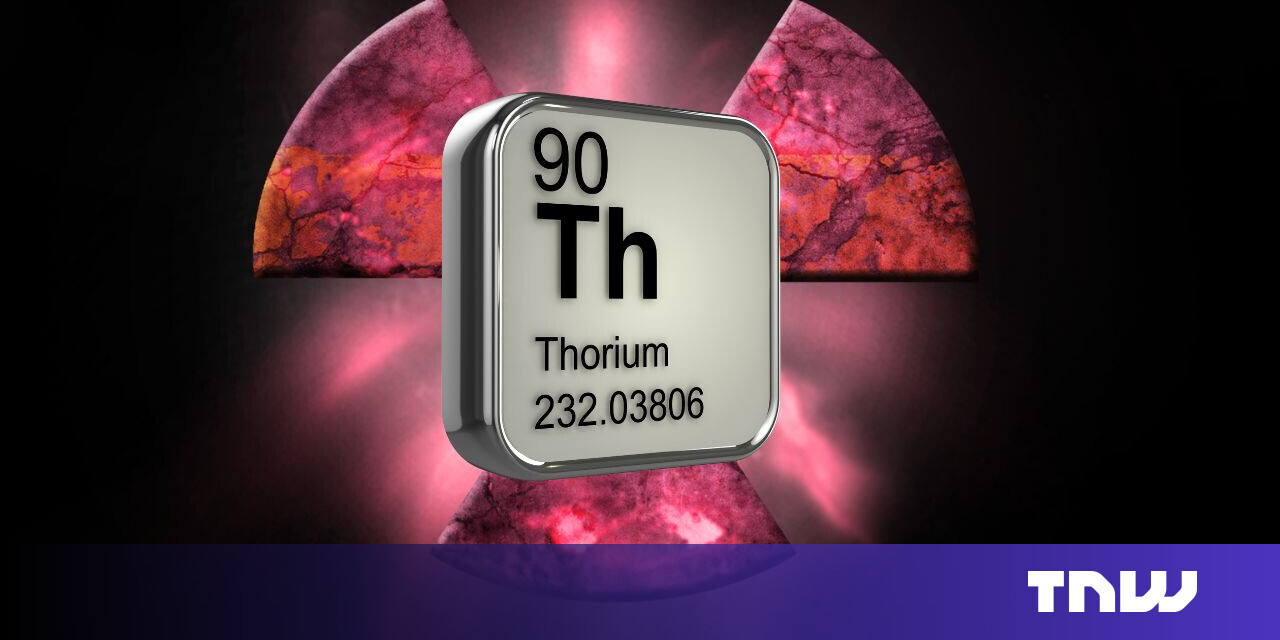
Most of these plants rely on uranium, the radioactive metal that fuelled the atomic age (and contributed to a couple of catastrophic meltdowns). However, Swiss startup Transmutex wants to reinvent nuclear energy using a lesser-known element called thorium. 

Uranium’s forgotten cousin

Thorium is a lead-like metal that is mildly reactive, but four times more abundant than uranium and a lot safer to handle.

However, thorium not a fissile material, meaning it cannot undergo nuclear fission — the splitting of atomic nuclei which releases the energy used for electricity generation. 

The <3 of EU tech

The latest rumblings from the EU tech scene, a story from our wise ol’ founder Boris, and some questionable AI art. It’s free, every week, in your inbox. Sign up now!

In a conventional nuclear power plant, heat is produced when neutrons collide with a fissionable material like uranium. As the atoms split, they release energy and more neutrons, resulting in a chain reaction which makes the nuclear power plant self-sustaining — as more atoms split it creates more heat which splits more atoms.  

However, this process produces a lot of plutonium waste, which takes 300,000 years to decay and is incredibly difficult to store safely. It can also be used to make atomic bombs if it ends up in the wrong hands.  

A computed-generated image of the Transmutex facility, officially known as Subcritical Transmuting Accelerated
Regenerative Technology (START). Credit: Transmutex

Transmutex’s solution is to use thorium instead of uranium and combine it with a particle accelerator, which constantly feeds neutrons into the thorium atoms, creating a fission reaction.

This means that, unlike traditional reactors, the plant is incapable of sustaining a chain reaction. Once the particle accelerator is switched off the flow of neutrons is interrupted and the reactor shuts down immediately. This function would have prevented deadly accidents like the Chernobyl power plant disaster in 1986.  

The radioactive decay time of thorium is just 300 years, compared to 300,000 for uranium. And according to Transmutex, its system would produce much smaller amounts of this hazardous waste. The plant could also reuse existing radioactive waste. 

Powering up 

Despite only having been founded in 2019, Transmutex has a long history. It all began in the 1990s when Nobel Prize-winning physicist Carlo Rubbia, then director at the European Organisation for Nuclear Research (CERN), invited Federico Carminati, a young scientist at the organisation, to participate in the development of a thorium reactor combined with a particle accelerator.  

However, the idea ended up being shelved. The nuclear industry had little interest in the innovation and the problem of storing radioactive waste was not yet as pressing as it is today. 

But times have changed. With the nuclear renaissance in full swing, Carminati, now with a little more experience under his belt, dusted off the old plans, teamed up with entrepreneur Franklin Servan-Schreiber and founded Transmutex. 

The startup, based in Geneva and still working closely with CERN, wants to make nuclear energy safer and more sustainable. 

an computer-generated image of a particle accelerator. Credit: TransmutexAn up-close of Tranmutex’s design for the particle accelerator. The startup pulls significant expertise from CERN — home to the Large Hadron Collider, which became the world’s largest particle accelerator when it switched on in 2008. Credit: Transmutex

“What if it turns out that there is an approach that addresses the fundamental problems of safety cost and long-lived waste that have hindered the traditional nuclear industry? A reactor design that is guaranteed to be safe and can reduce the radiotoxicity of long-lived waste from 300,000 years down to 300 years? This is exactly what the team at Transmutex has developed,” said Albert Wenger, a managing partner at Union Square Ventures.

The US-based VC just co-led a $23mn Series A investment in the Swiss startup. Transmutex will use the fresh funds to expand its team, with its sights set on planning and building its first facility in two to three years.  

The startup said it is currently consulting with “top tier” governmental institutions worldwide to explore the possibility of forming an international coalition to accelerate the development of its first nuclear reactor. 

While thorium reactors, let alone those paired with particle accelerators, are still in their infancy, there’s increased interest in their potential across the world.  

China has already constructed an experimental thorium reactor at Wuwei, on the outskirts of the Gobi Desert. Other countries including  the US, Germany, the Netherlands and the UK have also tested thorium as fuel in other types of nuclear reactions. And in France, researchers at the CNRSA are carrying out studies to develop a so-called Molten Salt Fast Reactor powered by thorium.

Categories
Entertainment

Shannon Sharpe Compares Beyoncé To Taylor Swift (WATCH)

Shannon Sharpe has got the internet fired up after comparing Beyoncé to Taylor Swift.

RELATED: Shannon Sharpe Addresses Criticism Over How He Conducted Katt Williams Interview

Shannon Sharpes Shares His Perspective

On Monday, January 29, a video clip from Sharpe’s latest ‘Nightcap’ podcast episode with Chad “Ochocinco” Johnson was released via YouTube. The 19-minute clip opened with Sharpe explaining that many football fans will be rooting for the San Francisco 49ers at the upcoming Super Bowl LVIII.

Sharpe explained that he believes this because he feels many fans are “tired” of seeing Taylor Swift. To note, the 49ers will face off against the Kansas City Chiefs in the upcoming game. Swift has been publicly dating Chiefs’ tight end Travis Kelce since 2023, per The Shade Room.

Additionally, Sharpe shared that Taylor Swift’s presence at NFL games brings in a “different demographic” and “different set of eyeballs.” This makes her a multi-million dollar asset to the league.

As the conversation continued, Sharpe asked Johnson to share another celebrity who could match Swift’s value. Johnson replied with, “Beyoncé.”

However, Sharpe disagreed.

“Beyoncé — Not like this,” he said. “These eyes — Ocho, these eight — 15-year-old eyeballs —Ocho! I love Beyoncé [but] Beyoncé ain’t moving the needle like this chick, Ocho! No!… She’s the closest thing to moving the needle like Michael Jackson that we’ve seen, this is it!” Sharpe explained.

Watch his explanation below.

Social Media Weighs In With Mixed Reactions

Social media users quickly entered The Shade Room’s comment section to weigh in on Sharpe’s stance. Some users agreed with Sharpe.

Instagram user @chriswilliamsii wrote.

“I love Beyonce ever since I was a kid, but Taylor and Beyonce had a tour at the same time and Taylor outsold Beyoncè outsold Beyonce even though Beyoncè’s tour was sold out everywhere. The truth of the matter is a white America Woman is America’s preference even if she isn’t the most talented!”

While Instagram user @queen_drinab added.

“We hate it 😫but he isn’t wrong”

Instagram user @skyboujee wrote.

“Taylor made them over 300 million in a short time. Ngl I wouldn’t even test out any other needles”

Meanwhile, others wanted Sharpe to put some respect on Beyoncé’s name.

Instagram user @chenemonique wrote.

“Comparing Taylor swift to Beyonce should be a crime because whattttt”

While Instagram user @arben_j11 added.

“I promise u if Beyoncé was boo’d up with a player and came to all the games I promise u the camera would be all over it, if not more”

Instagram user @yourfavewho wrote.

“Beyonce mind her business and still get disrespected 😂”

Stephen A. Smith Previously Caught Heat For Comparing Beyoncé To Another Celeb

As The Shade Room previously reported, fellow broadcaster Stephen A. Smith went viral last January after comparing Beyoncé to Rihanna. At the time, Rihanna was set to headline the Super Bowl LVII halftime show.

When asked if he was excited about the singer’s performance, Smith showed love to Beyoncé while downplaying Rih.

“I don’t want to say that I’m not excited — she’s fantastic. That’s not where I’m going with this. Ladies and gentlemen, she’s a lot of things. She’s spectacular, actually — And congratulations on new momma-hood… There’s one thing she’s not! She ain’t Beyoncé,” he said at the time.

A few days later, Smith apologized to Rihanna publicly.

RELATED: WATCH: Stephen A. Smith Apologizes To Rihanna For Comments About Her Upcoming Super Bowl Halftime Performance
Categories
Health

Johnson & Johnson (JNJ) earnings This fall 2023

The stock trading graph of Johnson & Johnson is seen on a smartphone screen.

Rafael Henrique | SOPA Images | LightRocket | Getty Images

Johnson & Johnson on Tuesday reported fourth-quarter earnings and revenue that narrowly edged out Wall Street’s expectations as sales in the company’s pharmaceutical and medical devices businesses surged.

J&J also provided full-year guidance for 2024, forecasting sales of $87.8 billion to $88.6 billion and adjusted earnings of $10.55 to $10.75 per share.

Here’s what J&J reported for the fourth quarter compared with what Wall Street was expecting, based on a survey of analysts by LSEG, formerly known as Refinitiv:

  • Earnings per share: $2.29 adjusted vs. $2.28 expected
  • Revenue: $21.40 billion vs. $21.01 billion expected

Shares of J&J closed more than 1% lower on Tuesday following the results.

J&J, whose financial results are considered a bellwether for the broader health sector, booked $21.40 billion in total sales for the final three months of 2023, up 7.3% from the same quarter in 2022. 

The pharmaceutical giant reported net income of $4.13 billion, or $1.70 per share during the quarter. That compares with net income of $3.23 billion, or $1.22 per share, for the year-ago period. 

Excluding certain items, adjusted earnings per share were $2.29 for the fourth quarter of 2023.

The results come six months after J&J completed its separation from its consumer health unit Kenvue, the company’s biggest shake-up in its nearly 140-year history.

During an earnings call Tuesday, J&J executives said earnings growth in the first half of the year will benefit from a 191 million share reduction in Kenvue. The third quarter will see a “partial benefit,” they added.

Meanwhile, J&J is zeroing in on its pharmaceutical and medical devices divisions to drive growth. 

Segment results

J&J’s medical devices business generated sales of $7.67 billion, up 13.3% from the fourth quarter of 2022. Wall Street was expecting revenue of $7.50 billion, according to StreetAccount.

J&J said its acquisition of Abiomed, a cardiovascular medical technology company, in December fueled the year-over-year rise.

The company said growth also came from electrophysiological products, which evaluate the heart’s electrical system and help doctors understand the cause of abnormal heart rhythms.

Wound closure products and devices for orthopedic trauma, or serious injuries of the skeletal or muscular system, contributed, along with contact lenses.

J&J is benefiting from a rebound in demand for nonurgent surgeries among older adults, who deferred those procedures during the Covid pandemic. The company expects that high demand to “follow through” in 2024, CFO Joseph Wolk said Tuesday on CNBC’s “Squawk Box.”

Executives added during the company’s earnings call that J&J expects the medical devices business to have “relatively consistent” operational sales growth throughout the year.

The New York Stock Exchange welcomes Johnson & Johnson (NYSE: JNJ) to the podium. To honor the occasion, Joaquin Duato, Chairman and Chief Executive Officer, joined by Lynn Martin, NYSE President, rings The Opening Bell®.

NYSE

Meanwhile, J&J reported $13.72 billion in pharmaceutical sales, marking 4.2% year-over-year growth. Excluding sales of its unpopular Covid vaccine, the pharmaceutical division raked in $13.68 billion. 

It was the third quarter without any U.S. sales from J&J’s Covid vaccine, which brought in $44 million in international revenue.

Wall Street was expecting sales of $13.44 billion for the business segment, according to StreetAccount. The business, also known as “Innovative Medicine,” is focused on developing drugs across different disease areas.

J&J said growth in the division was driven by sales of Darzalex, a biologic for the treatment of multiple myeloma, along with Erleada, a prostate cancer treatment, and other oncology treatments. 

More CNBC health coverage

The company’s blockbuster drug Stelara, which is used to treat several chronic and potentially disabling conditions such as Crohn’s disease, also contributed to growth.

J&J began to lose patent protections on Stelara late last year, which opened up the door for cheaper biosimilar competitors to enter the market. But the company has bought itself more time: J&J has signed settlement agreements with Amgen and other drugmakers to delay the launch of some Stelara copycats to 2025. 

J&J said growth in the pharmaceutical segment was partially offset by a decline in sales of its prostate cancer drug Zytiga and blood cancer drug Imbruvica, which is co-marketed by AbbVie. Both Imbruvica and Stelara will be subject to the first round of Medicare drug price negotiations under the Inflation Reduction Act.

J&J expects its pharmaceutical segment to book slightly stronger sales in the first half of the year compared to the second, largely due to the entrance of Stelara biosimilars in Europe in mid-2024, executives said during the earnings call.

J&J has said it expects sales in its pharmaceutical unit to grow at a compounded annual rate of 5% to 7% between 2025 and 2030. 

The company, which plans to launch at least 20 new therapies by 2030, has also said that over 10 of its products had the potential to generate more than $5 billion in peak year sales, including its newer cancer treatments Talvey and Tecvayli. 

Medicare negotiations

J&J will soon begin price talks with the federal Medicare program over Stelara as well as blood thinner Xarelto.

President Joe Biden’s Inflation Reduction Act, which passed in 2022, empowered Medicare to negotiate down drug prices for the first time in the program’s six-decade history. J&J signed an agreement to participate in the price talks in October, even after it sued the Biden administration to halt the process in July.

The negotiated prices for the drugs will go into effect in 2026.

The fourth-quarter results also come amid investor concern over the thousands of lawsuits claiming that J&J’s talc-based products were contaminated with the carcinogenic asbestos and caused ovarian cancer and several deaths.

Those products, including J&J’s namesake baby powder, now fall under Kenvue. But J&J will assume all talc-related liabilities that arise in the U.S. and Canada.

In 2021, J&J offloaded its talc liabilities into a new subsidiary, LTL Management, which immediately filed for Chapter 11 bankruptcy protection. But a federal bankruptcy judge in July rejected J&J’s second attempt to resolve those lawsuits in bankruptcy. J&J has said LTL Management intends to appeal the decision.


Categories
Science

Environment Strain Adjustments Might Clarify Mars Methane

One ongoing mystery on Mars is the sporadic detection of atmospheric methane. Since 1999 detections have been made by Earth-based observatories, orbital missions, and on the surface by the Curiosity Rover. However, other missions and observatories have not detected methane at all, and even when detected, the abundances appear to fluctuate seasonally or even daily.

So, where does this intermittent methane come from? A group of scientists have proposed an interesting theory: the methane is being sucked out of the ground by changes in pressure in the Martian atmosphere. The researchers simulated how methane moves underground on Mars through networks of underground fractures and found that seasonal changes can force the methane onto the surface for a short time.

In their paper, published in the Journal of Geophysical Research: Planets, the scientists say their simulations predict short-lived methane pulses prior to sunrise for Mars’ upcoming northern summer period, which is a candidate time frame for Curiosity’s next atmospheric sampling campaign.

“Our work suggests several key time windows for Curiosity to collect data,” said John Ortiz, a graduate student at Los Alamos National Laboratory who led the research team. “We think these offer the best chance of constraining the timing of methane fluctuations, and (hopefully) down the line bringing us closer to understanding where it comes from on Mars.”

The presence of methane (CH4) in the Martian atmosphere is of great interest to planetary scientists and exobiologists because it could indicate present or past microbial life. Or, it could also be related to nonbiological processes, such as volcanism or hydrothermal activity.

The problem with detecting methane is that it doesn’t last long. Once released into the atmosphere, it can be quickly destroyed by natural atmospheric processes. Therefore, any methane detected in Mars’ atmosphere means it must have been released recently, which only adds to the intrigue.

On Earth, most methane is produced by living creatures such as microorganisms in sedimentary strata, or in the guts of ruminants (cows, sheep, deer, etc.). For methane produced through abiotic or non-living processes, there is a high likelihood it could have been produced millions or even billions of years ago, lying trapped in underground rock formations.

But still, finding methane on Mars is a big deal because of the potential for biological sources, such as methanogenic microbes.

This graphic is the result of an analysis that gives a percentage chance of the methane originating in each grid square centered on Gale Crater. Image Credit: Giuranna et al. (2019)

In 2004, the Mars Express Orbiter (MEO) detected methane in the Martian atmosphere. In 2013 and 2014 Curiosity detected spikes in methane in the atmosphere at Gale Crater. Interestingly, MEO detected a methane spike again, at the same location that Curiosity did, only one day later.

Ortiz and his team wanted to better understand Mars’ methane levels, and used high-performance computing clusters to simulate how methane travels through networks of underground fractures, and then released into the atmosphere when driven by atmospheric pressure fluctuations. They also modeled how methane is adsorbed onto the pores of rocks, which is a temperature-dependent process that may contribute to the methane level fluctuations.

The team said their simulations predicted methane pulses from the ground surface into the atmosphere just before the Martian sunrise in the planet’s northern summer season, which just recently ended. This corroborates previous rover data suggesting that methane levels fluctuated not only seasonally, but also daily. With these insights, the Curiosity rover team can figure out when and where to look for methane, which could aid in the rover’s main goal, searching for signs of life.

“Understanding Mars’ methane variations has been highlighted by NASA’s Curiosity team as the next key step towards figuring out where it comes from,” Ortiz said. “There are several challenges associated with meeting that goal, and a big one is knowing what time of a given sol (Martian day) is best for Curiosity to perform an atmospheric sampling experiment.”

Paper: “Sub-diurnal methane variations on Mars driven by barometric pumping and planetary boundary layer evolution.” Journal of Geophysical Research: Planets. DOI: 10.1029/2023JE008043
LANL press release

Like this:

Like Loading…