Categories
Sport

Can Ngannou develop into a title contender with a win over Joshua?

  • Mike Coppinger, ESPNJan 7, 2024, 10:55 AM ET

Less than 90 days ago, Francis Ngannou had never stepped through the ropes for a professional boxing match.

We knew Ngannou possessed crushing power, but that was all displayed in the Octagon, where he reigned as UFC heavyweight champion.

The 37-year-old was viewed as little more than a worthy dance partner for a boxing superfight heading into his October meeting with Tyson Fury.

However, Ngannou showed he was far more than that when he dropped the heavyweight boxing champion in Round 3 and even won the fight on one of the three scorecards.

Now, Ngannou has an incredible opportunity to prove the performance was no fluke when he faces former heavyweight champion Anthony Joshua on March 8 in Riyadh, Saudi Arabia.

Truly, what Ngannou is doing is unprecedented: his first two professional boxing matches will take place vs. future Hall of Famers, who are still among the sport’s heavyweight elite.

Joshua looked his best in years when he stopped Otto Wallin in five rounds last month. Can he build upon his resurgent 2023 campaign? Will Ngannou shock the world again? Let’s take an early look at the key storylines for Joshua vs. Ngannou:

Ngannou looks to prove performance vs. Fury was no fluke

Francis Ngannou, above, returns to the boxing ring to face former unified heavyweight champion Anthony Joshua in March. Justin Setterfield/Getty Images

When you break it down, it’s quite stunning how effective Ngannou was against Fury. Fury entered the bout a -1400 favorite, but looked confused at times and unable to find his timing.

Editor’s Picks

2 Related

The Cameroonian showed a keen sense of range control with his jab, pairing that with his power and awkward style to make Fury hesitant to attack. Ngannou also showed the ability to place his punches. His left hook landed on Fury’s temple for the sole knockdown of the bout.

Now, how much of that success was due to Fury? He’s the best heavyweight in the world — a status he’ll look to cement when he meets Oleksandr Usyk on Feb. 17 in Riyadh — but maybe Fury didn’t take Ngannou seriously.

Fury swears he trained hard for 12 weeks to prepare for Ngannou, but his father said otherwise. Even if he did train properly, it’s plausible he underestimated Ngannou.

There’s little chance Joshua will make the same mistake after the way Ngannou boxed. And now there’s 10 rounds of Ngannou boxing tape for Joshua and trainer Ben Davison to study.

Often in combat sports, young fighters find success until opponents and coaches can study their weaknesses. If Ngannou can trouble Joshua — let alone defeat him — there’s no doubt he’s for real.

If Ngannou springs the upset, he’s a title contender. What if he loses?

A Francis Ngannou victory over Anthony Joshua could bring him closer to a title fight. Justin Setterfield/Getty Images

It depends on how he loses. Consensus fan opinion suggested Ngannou deserved the decision against Fury. He also won the fight on one scorecard. And even if he didn’t, flooring “The Gypsy King” was a win in and of itself.

In his second boxing match, more will be expected of Ngannou. If he drops another spirited decision, there’s no doubt he’s a bona fide heavyweight contender.

If he loses a wide decision but is competitive, he’ll still be a contender and, with his name recognition, should find his way to another lucrative boxing match.

But if he’s uncompetitive over 10 rounds or is knocked out early, it could spell the end of Ngannou’s amazing run.

And if he pulls off the shocker and defeats Joshua, then Ngannou will be in line for a crack at the winner of Fury-Usyk and another meaningful bout in the meantime, whether it’s Zhilei Zhang, Deontay Wilder or Joseph Parker.

Speaking of Wilder, wasn’t he supposed to fight Joshua in March?

Deontay Wilder, left, was overmatched by Joseph Parker in a decision loss in Saudi Arabia on Dec. 23. Anadolu via Getty Images)

Indeed he was. Wilder and Joshua even struck a deal ahead of their Dec. 23 doubleheader that featured them in separate bouts.

Wilder, one of the most vaunted punchers in heavyweight history, was a -700 favorite to defeat Parker. Instead, Parker won every round and was the one who threatened to score the KO.

In the main event, Joshua handled business when he fractured the nose of Wallin — who gave Fury all he could handle in 2019 — to remain on the Saudi Arabia card.

The deal was contingent on both Joshua and Wilder winning, so organizers turned to Ngannou following Wilder’s loss.

What does this fight mean for Joshua?

Anthony Joshua, above, is a former unified champion and the current No. 3-ranked heavyweight by ESPN. FAYEZ NURELDINE/AFP via Getty Images

Joshua was all but written off after back-to-back losses to Usyk in 2021 and 2022. There’s no shame in losing to a fighter the likes of Usyk, but boxing is a cruel business, and it wasn’t just those two losses.

Really, Joshua hasn’t looked the same since his shocking 2019 loss to Andy Ruiz Jr. Before that bout, Joshua was a seek-and-destroy fighter with tremendous power. After winning the Olympic gold medal in 2012, he quickly won the heavyweight title and made some quality defenses.

Namely, he rallied from a knockdown to knockout Hall of Famer Wladimir Klitschko in ESPN’s 2017 Fight of the Year and easily outpointed Parker the following year.

Joshua also regained his titles from Ruiz in December 2019, but he did so with a cautious, safety-first boxing approach that left fans wanting more. And over his next few fights, Joshua wasn’t much more aggressive, which was likely the remnants of his TKO loss to Ruiz.

“He knows that he is vulnerable and he knows that he can get hurt and dropped and stopped and lose fights,” Wallin told ESPN ahead of their fight. ” … What made him good was that he was aggressive, good puncher and seeking a stoppage type of guy. But he’s changed a lot and he’s lost some of what made him good.”

But against Wallin, Joshua was once again aggressive. He sought the stoppage and showed off his power. He battered Wallin with his jab, broke his nose and forced him to retire on his stool following Round 5.

It’s little coincidence the performance came in Joshua’s third fight of 2023. Activity is vital in boxing. The win also came in his first fight, with Davison leading his corner.

Now, a confident and rejuvenated Joshua has his chance to prove he’s truly back with a dominant performance vs. Ngannou that should set him up for a future fight with Fury.

Joshua is ESPN’s No. 3 heavyweight behind Fury and Usyk.

Categories
Health

Florida wins first FDA approval to import cheaper medicine from Canada

Pharmacist Thomas Jensen looks over a prescription drug at the Rock Canyon Pharmacy in Provo, Utah, on May 9, 2019.

George Frey | Reuters

The U.S. Food and Drug Administration on Friday approved Florida’s plan to import cheaper prescription drugs from Canada, a first-in-the-nation move that could reduce costs for Americans but faces fierce opposition from the pharmaceutical industry.

The regulator also said it was committed to working with other states seeking to import drugs from Canada. 

The FDA’s approval of Florida’s plan is a significant stride forward in a broader, yearslong effort to rein in drug costs in the U.S. Patients shell out significantly more for medicines than they do in Canada and some other countries.

Drug importation could open up a new and cheaper source of drugs beyond the retail and mail-order pharmacies that Americans typically rely on to fill prescriptions. 

Along with Florida, other states such as Colorado, North Dakota and Vermont have their own drug importation plans in place, which will require FDA approvals. More than five states have asked the agency to greenlight their programs, according to the National Conference of State Legislatures.

But Florida’s newly approved plan will likely face hurdles before it takes effect, including potential lawsuits from the pharmaceutical industry.

Drugmakers have long argued that importation may introduce counterfeit medicines into the U.S. supply chain and harm patients — a concern the FDA previously raised because the agency can’t guarantee the safety of those drugs.

However, the FDA’s Friday approval appears to have guardrails that aim to mitigate potential safety issues. 

Before Florida can distribute Canadian drugs, the state must send the FDA details on the medications it plans to import, ensure that those treatments are not counterfeit or ineffective and relabel those drugs to be consistent with FDA-approved labeling. 

Florida must also submit quarterly reports to the agency about cost savings and potential safety issues, among other obligations. The FDA’s approval allows Florida to import drugs for two years from the date of the first drug shipment. 

“These proposals must demonstrate the programs would result in significant cost savings to consumers without adding risk of exposure to unsafe or ineffective drugs,” FDA Commissioner Robert Califf said in a statement. 

The pharmaceutical industry pushed back on the FDA’s move on Friday. 

Pharmaceutical Research and Manufacturers of America, the industry’s biggest lobbying group, called the FDA’s approval of Florida’s plan “reckless” and said it is considering “all options for preventing this policy from harming patients.”

“Ensuring patients have access to needed medicines is critical, but the importation of unapproved medicines, whether from Canada or elsewhere in the world, poses a serious danger to public health,” Stephen Ubl, CEO of PhRMA, said. “Politicians need to stop getting between Americans and their health care.”

The group sued the FDA in 2020 over a Trump administration plan to import Canadian drugs, but that lawsuit was later dismissed. 

President Joe Biden issued an executive order in July 2021 that included a call for the FDA to work with states on plans for importing drugs from Canada.

Don’t miss these stories from CNBC PRO:

Categories
Entertainment

Cameron Diaz Speaks Out After Being Talked about in Jeffrey Epstein Docs

Cameron Diaz had no connection to late convicted pedophile Jeffrey Epstein despite being mentioned by one of his former accusers of sexual abuse in newly unsealed court documents, the actress’ rep says.

In the documents, as seen on Page Six, Johanna Sjoberg alleged in a deposition that the late financier spoke about his ties to several celebrities, noting that he engaged in “name-dropping.” She was asked if she met Diaz and she responded, “No.”

“Cameron never met Jeffrey Epstein, nor was she ever in the same place as him or had any association with him whatsoever,” the actress’ rep said in a statement to multiple outlets Jan. 5, “regardless of the fact he may or may not have mentioned her name or implied that he knew her.”

The documents were unsealed by a federal judge as part of a settled civil defamation lawsuit that another accuser, Virginia Roberts Guiffre, had filed in 2015 against Epstein confidante Ghislaine Maxwell, alleging she was a victim of sex trafficking and abuse. Maxwell is serving a 20-year prison sentence for recruiting and grooming underage girls to be sexually abused by Epstein.

Categories
Science

E pur si muove • Watts Up With That?

Guest Post by Willis Eschenbach

A few years back, some scientists got together and invented something they call the Living Planet Index, or LPI. It’s supposed to measure how well (or poorly) the species that make up the living world are doing. They say it is a “measure of the state of the world’s biological diversity based on population trends of vertebrate species.” So it’s an index based on the decline of some selected species, which is claimed to represent the decline of the species of the “living world”.

Here’s the big news from their latest report.

The Living Planet Index claims an average 70% decline in the populations of species worldwide since 1970.

YIKES! 70% loss since 1970! EVERYONE PANIC!

But is this true?

Over in the Twitterverse where I’m @weschenbach, I said that based solely on my experience, their claim was nonsense. I’ve spent a lot of the last half-century outdoors in the elements, both on land and on and under the sea, around the planet. I said I would have noticed a 70% reduction in species populations.

Of course, folks who spend their lives behind desks in a city thought I was being ridiculous, and they laughed uproariously. How could I be so certain? Plus of course, there were the claims of “But Willis, those are actual scientists! How can you doubt them?”

So I thought I’d take a look at some real data. Let’s get a sense of the number of the species involved.

There are estimated to be around 8.7 million species on earth. Of these, about 65,000 are vertebrates.

How many of these 8.7 million species are studied by the Living Planet Index? Well, not all of them.

First, no plants, no fungi, no chromista. Next, only vertebrates, and only some of those, specifically fish, mammals, birds, reptiles, and amphibians.

The good news is that the IUCN Red List of Threatened Species, which is the official keeper of data on which species are threatened or not, lists data for 62,493 vertebrates, so it covers pretty much all of the vertebrates.

It also allows us to search based on various criteria, including those used by the LPI listed above.

And when we eliminate the vertebrate species the LPI doesn’t include, we end up with 59,866 species fitting the LPI criteria—mammals, birds, reptiles, fish, and amphibians. Of course, they didn’t look at all of them, only 5,230. But I wanted a larger view of the issues.

The Red List also lets us see if the populations of each species are increasing, stable, or decreasing.

Of the populations of the 30,763 of the LPI-studied mammal etc. species for which the Red List has population data, 53% have stable or increasing populations. So we’re left with 14,565 species with decreasing populations. Call it half to be generous.

Here’s the problem. If around half the species for which we have data are stable or increasing, then even if the rest were all totally extinct, the average decline would only be 50% … far from the 70% they claim.

Oooops …

Next, as a sensitivity analysis, let’s assume every one of the 28,714 species for which we don’t have the population trend is decreasing. Clearly, that’s not possible—some will be increasing or stable. And because the Red List is focused on threatened species, the unknown species will likely be weighted towards stable species. But it’s a sensitivity analysis, so we’ll assume every one of the unmeasured species is decreasing.

With that impossible assumption purely for a sensitivity analysis, it would mean only 27% of the species are stable or increasing.

And the problem still remains. With 27% not decreasing, the only way to get to a 70% decrease in population is if almost every one of the 33,861 theoretically decreasing species is already extinct or on the brink of extinction. Only that impossible situation would give us a 70% average decrease.

Conclusions?

Out of 59,866 species fitting the LPI criteria for which we have population data, just over half are stable or increasing.

Of the 59,866 species, only 8,509 are both decreasing and in some trouble (vulnerable or near threatened or endangered or critically endangered). Here’s the Red List Report:

The endangered and decreasing fish, birds, reptiles, amphibians, and mammals are 0.001% of all species, and there’s no reason to assume that their condition reflects the world situation.

The 70% claim of the LPI is falsified by the Red List data.

As I said, I have investigated this because based solely on my experience, I said I didn’t believe the LPI numbers, and folks laughed at that. And now, having studied the species data, I find that my experience is correct—their claims don’t hold water.

So how did the scientists behind the LPI get it so wrong? Obviously, their selected species are not representative of the whole.

I would suggest that Upton Sinclair had the answer to that. He said:

“It is difficult to get a man to understand something, when his salary depends on his not understanding it.”

The problem is, if the LPI was going up, or just slightly downwards, the scientists behind the LPI would be out of a job. To use George Orwell’s term, that’s doubleplusungood …

And almost inevitably, this leads to an unconscious bias in their choice of species, locations, and studies to include in the LPI. For the LPI, they’ve studied 31,821 populations of 5,230 species. So no overt bias is needed—just picking study A over study B because reasons, choosing population 1 over population 2, selecting species Alpha over species Beta, lather, rinse, repeat, and soon you have a 70% decline since 1970.

Finally, please be clear that I’m not saying that we should ignore population decreases. I’ve been a commercial fisherman for a good deal of my life, and I’d like my grandson to be able to do the same. The only way for that to happen is for us to care for the other life forms with which we share this magical planet. I’m just saying that the LPI is just more unsupported alarmism.

Best to all, and yeah, I’ll continue to trust my experience despite people laughing at it … I’m funny that way.

w.

5
20
votes

Article Rating

Like this:

Like Loading…

Categories
Technology

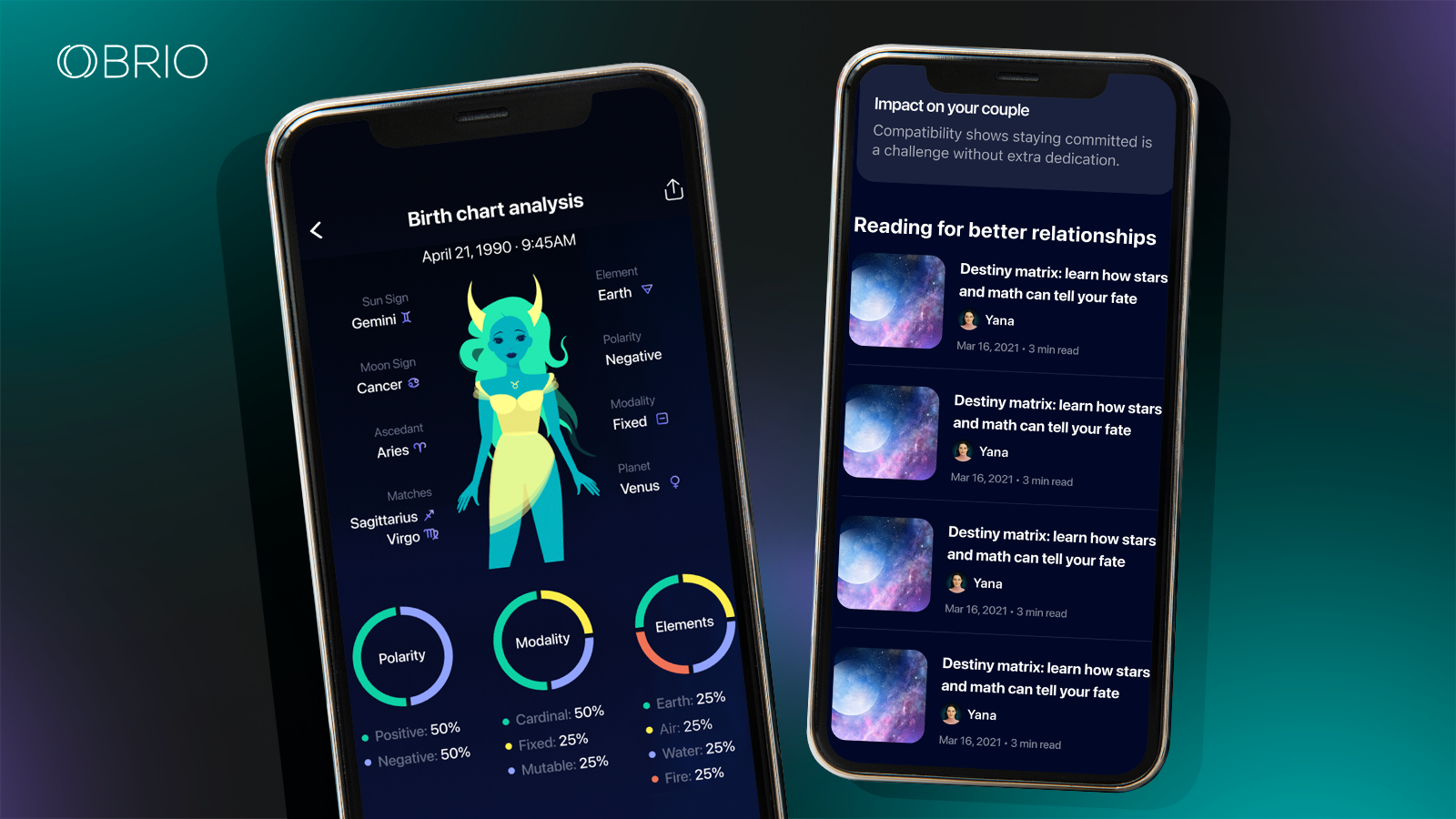
Ukrainian startup behind astrology app Nebula thriving regardless of conflict

Running a tech startup is a challenging endeavour under any circumstances. Imagine doing it under invasion with air raid sirens going off on average twice every 24 hours — and managing to grow 250% in the process. 

This is the story of OBRIO, a Ukrainian startup behind the successful astrology app Nebula. Speaking to TNW from his apartment in Kyiv just before the turn of the year, founder and CEO Alex Fedorov says that running a company during wartime is not exactly something you learn in business school.

Fedorov sees the process as twofold. “There was the initial one when the war first broke out,” he says. “Where you have to set up 24/7 communication channels with the team and stay connected as much as you can, so that you as a leader can support everyone whatever they may need.” 

Because of COVID, the team was already set up for hybrid operations — “at least something good to come out of that,” Fedorov muses. 

Meanwhile, there were other pivots to be made. In terms of business, the focus shifted to longevity and stability (to the extent the latter can be controlled when your neighbour is dropping bombs on you). 

The <3 of EU tech

The latest rumblings from the EU tech scene, a story from our wise ol’ founder Boris, and some questionable AI art. It’s free, every week, in your inbox. Sign up now!

“We stopped all our R&D, because we understood that there was a lot of moral pressure and emotional pressure on our people,” Fedorov explains. “And also money wise — it brings a lot of risk. So we just focused on setting up a stable business.” 

It is a strategy that seems to have paid off. 

The Nebula app

There is much to say and highlight about the resilience of the OBRIO managerial team and employees, but let’s not forget that the company has also built a highly successful product. 

OBRIO’s astrology app Nebula counts 30 million users worldwide, and has earned the coveted title of the #1 lifestyle app on both the Apple App Store and Google Play multiple times in the US, Canada, and Australia. The secret to its success, Fedorov explains, is down to two main components.

“The first is the team. We have a very strong team of professionals, people who love their work and are very motivated, who understand the value of our product, and why we’re doing this. And the second thing is the niche. Our market is a big market. And we still have the potential to grow like four or five times.” 

Human fascination with astrology meets tech

Ever since the dawn of communities and culture, human beings have been fascinated by interpreting the will of the gods, reading the stars, and divining the future. 

Some of the earliest evidence of astrology as a practice dates to the third millennium BCE, so indeed, it is an evergreen topic. In addition, the global astrology market size was valued at $12.8 billion in 2021, and is predicted to reach $22.8 billion by 2030

Nebula essentially has two parts. One will feel familiar to anyone who has downloaded a horoscope app — it provides you with daily affirmations and horoscope predictions according to your birth chart, as well as additional guidance depending on moon phases etc.

Screen shots of two different features of the Nebula appThe startup’s astrology app Nebula now has 30 million users worldwide.

The other is a marketplace for “advisors,” where users can request tarot readings or ask specific questions. Some of the advisors suggested when we tried it out may sound a little like a summer fair fortune teller cliché (Madame Griselda, say) or a yoga apparel marketing persona (for instance, Spiritual Emily). However, Fedorov ensures us that everyone providing services on the app’s marketplace is rigorously vetted.

“We have a very, very thorough process in how we select [advisors],” he says. It’s like a proper hiring process — first we have a test task and an interview. Then we have a second interview, then we have a test period, coupled with a learning system.” 

The app now has over 250 consultants, having hired an additional 70 just in the last few months. This feature Fedorov believes to be the number one thing that makes Nebula stand out among its competitors. 

Relationships number one query on Nebula

So what is the number one cause for people to turn to astrology and/or psychics? Improving relationships, it turns out. In fact, about 98% of the queries on the app are relationship-related. 

Perhaps this says something about how much our happiness is dependent on the quality of our relationships — not our careers or material successes. Indeed, all comprehensive research on the matter, such as that of the Harvard Study of Adult Development, suggests this to be the case. 

Speaking of human relationships, most astrology apps have turned to AI to churn out readings by algorithm. While OBRIO is using AI for marketing and retention tools as well as automating routine processes, it would never substitute its human advisors for machines. 

“In terms of our core product, and in terms of our core value, we will not use AI because we do not believe that AI can equal humans in terms of empathy, understanding, good advice etc.,” Fedorov adds.  

Investing in people

Not just content with surviving the war, OBRIO intends to scale by two and a half times in 2024, and focus on the core product of Nebula’s marketplace for the next two to three years.  

Founded in 2019, the company now employs over 120 people — with 55 having joined the team since 2022 — and has an ARR of $50 million. Beyond Kyiv, OBRIO has also set up an office in Warsaw, Poland. 

In terms of understanding, empathy, and advice, OBRIO is also investing in the well-being of its employees affected by the war, by paying for therapy. 

More of the OBRIO team gathered outside on a lawn OBRIO supports its employees through access to therapy and insisting they take time off. Credit: OBRIO

Furthermore, the company allows for total flexibility in working hours to accommodate for when air raid alarms wake everyone up at 2am and the subsequent dashes to bomb shelters. The startup also pushes people to take time off, and supports them in getting out of the country for vacation.

Supporting Ukraine as a tech startup

Beyond compassion and flexibility, how do you keep morale and spirits high while working under the constant threat of attack? Every month, OBRIO transfers 3% of its first payments to the Genesis for Ukraine charity fund.

Furthermore, the company has declared it will invest part of its profits into rebuilding Ukraine’s hospitals and schools after the end of the war. 

“Our success is tied closely to the success of Ukraine. This motivates me, and this is what motivates our people. And this is how we see our everyday commitment and investment in our job,” Fedorov says, adding that he regards it as the social duty of a successful business to help the country. 

More screen shots from Nebula featuresOBRIO is dedicating a percentage of its profits to Ukrainian charity organisations.

The relationship to astrology differs across the TNW editorial staff — some of us know what signs the planets were in at their time of birth and believe it can be a useful tool that can help one pay attention in everyday life. Others guffaw at the mention and call it mere superstition. 

Wherever you may fall on the spectrum of belief in celestial influence, there is no denying that the resilience of the Ukrainian tech sector since the start of Russia’s full-scale invasion in 2022 is something to admire and marvel at. 

Categories
Sport

Rays commerce Andrew Kittredge to Playing cards, get José Caballero from M’s

  • Jeff Passan, ESPNJan 5, 2024, 07:09 PM ET

    Close

      ESPN MLB insider
      Author of “The Arm: Inside the Billion-Dollar Mystery of the Most Valuable Commodity in Sports”

The Tampa Bay Rays made a pair of trades Friday, acquiring outfielder Richie Palacios from the St. Louis Cardinals in exchange for right-handed reliever Andrew Kittredge and sending outfielder Luke Raley to the Seattle Mariners for infielder José Caballero.

In both trades, the Rays — whose roster-churning abilities have helped them to a 511-359 record since 2018, the second best in the American League and fourth in Major League Baseball — will receive players with six years of team control. Raley has five years of club control, while Kittredge will reach free agency after the 2024 season.

Kittredge, who will be 34 on Opening Day, made the All-Star team in 2021 and underwent Tommy John surgery the following season. In his return last year, he went 2-0 with a 3.09 ERA in 11⅔ innings. Estimated to make around $2.5 million in arbitration this season, Kittredge joins a Cardinals bullpen that has used Ryan Helsley and Giovanny Gallegos in late-inning situations.

Editor’s Picks

2 Related

Palacios, who went to St. Louis from Cleveland in a deal for cash last year, is a 26-year-old left-handed hitter who slashed .258/.307/.516 with six home runs and 16 RBIs in 102 plate appearances last year. With Lars Nootbaar, Jordan Walker, Tommy Edman and Dylan Carlson expected to receive most of the Cardinals’ outfield at-bats this season, Palacios had a narrow path to playing time.

In Tampa Bay, he’ll join the 27-year-old Caballero, who filled in ably at second base for Seattle last year and could see time at shortstop for the Rays as they try to fill the position with Wander Franco being investigated by officials in the Dominican Republic for an alleged relationship with a 14-year-old girl.

Caballero hit .221/.343/.320 with 26 stolen bases in Seattle.

Palacios could get playing time in place of Raley, who hit .249/.333/.490 with 19 home runs in 406 plate appearances for the Rays last season. Tampa Bay’s starting outfield is expected to include star left fielder Randy Arozarena, right fielder Josh Lowe and center fielder Jose Siri, with Jonny Deluca — acquired in Tampa Bay’s trade of Tyler Glasnow to the Los Angeles Dodgers — also in play.

Categories
Health

Eli Lilly weight reduction drug web site might not upend business

Sopa Images | Lightrocket | Getty Images

Eli Lilly is shaking up the pharmaceutical industry with a new website offering telehealth prescriptions and direct home delivery of certain drugs, including its red-hot weight loss treatment Zepbound, to expand patient access. 

The company’s direct-to-consumer push announced Thursday, the first of its kind for a big drugmaker, won’t necessarily upend the pharmaceutical industry and the prescription drug supply chain alone, according to some analysts.

But other drugmakers could follow suit with their own direct-to-consumer models, according to some analysts. That could add more pressure on what many critics call a complex system for distributing, pricing and prescribing drugs in the U.S. — a structure they say has led to higher prices and fewer choices for patients.

“There’s always a possibility for disruption. I think you should never rule out any sort of disruption,” BMO Capital Markets analyst Evan Seigerman told CNBC. “I don’t think that is necessarily happening tomorrow, but I think that you should never assume that things can’t change.”

Lilly’s new platform comes as other companies move to disrupt the drug system in some way, in part as they face more political pressure to cut consumer costs and increase pricing transparency.

Those actions come as lawmakers target drug supply chain middlemen in new legislation and as the Biden administration takes its own steps to rein in prices of medications, such as by giving Medicare the power to negotiate down drug prices for the first time in its six-decade history.

Eli Lilly said its new effort — dubbed LillyDirect — aims to increase access to medicines for chronic diseases, including the highly popular weight loss drugs. 

Those treatments, which have soared in demand over the last year as they help patients shed unwanted pounds, are plagued by supply constraints and concerns about potentially harmful knockoffs. Patients also face long waitlists to meet with obesity medicine specialists who can prescribe the drugs to them, a problem Eli Lilly hopes to address, according to Seigerman.

Eli Lilly’s Zepbound won Food and Drug Administration approval just two months ago, but some analysts say it could garner more than $1 billion in sales in its first year on the market.

LillyDirect won’t significantly disrupt the industry

Eli Lilly’s site eliminates the need for a patient to visit the doctor’s office to get a prescription and, in some cases, for a pharmacy to fill it. 

But some analysts said Eli Lilly’s site alone will not significantly threaten the traditional drug distribution system, which involves a multitiered network of manufacturers, drug wholesalers, pharmacies and pharmacy benefit managers, or PBMs.

“I don’t think PBMs and the whole infrastructure that we have are going anywhere,” Seigerman told CNBC. “I think what [Eli Lilly] really did was identify some friction points in getting these products [weight loss drugs] to patients, and they’re coming up with a way to solve for that.” 

“From my understanding, it’s just that there’s no retail pharmacy where a patient is having to go hunt for that particular [drug] dose, it’s being shipped right to them,” he said of Eli Lilly’s services.

Eli Lilly’s site connects patients with an independent telehealth provider who can prescribe any FDA-approved weight loss drug or other medications for diabetes and migraines. If the prescribed treatment is Eli Lilly’s, the patient can have a third-party online pharmacy deliver it to their door. 

Patients will also receive Eli Lilly’s discounts for drugs if they qualify for the company’s savings-card programs, the company noted in a release. One program allows people with insurance coverage for Zepbound, which costs more than $1,000 per month, to pay as little as $25 out-of-pocket. Meanwhile, those whose insurance does not cover the drug may be able to pay as low as $550.

Some experts view that transparent pricing as a shot across the bow to PBMs, the largest of which are owned by CVS, UnitedHealth Group and Cigna.

Drugmakers have long complained that they give PBMs steep drug discounts in exchange for higher placement on a formulary — an insurance plan’s list of preferred medications — only for those middlemen to not pass along savings to patients. 

But Eli Lilly’s savings-card program and new site won’t cut PBMs out of the equation.

“If you still use your health insurance to get these drugs through [Eli Lilly’s] website, it’s still going to get processed by a PBM,” Jeff Jonas, a Gabelli Funds portfolio manager, told CNBC.

Patients who get drugs such as Zepbound from Eli Lilly’s site can choose to pay with cash to avoid PBMs altogether. But Bernstein analysts said in a Thursday note that they expect the “vast majority” of potential weight loss drug users to get medications through insurance. 

Other drugmakers could follow Eli Lilly

More pharmaceutical companies could adopt a similar approach to Eli Lilly’s.  

Cantor Fitzgerald analyst Louise Chen said drugmakers could benefit the most from using a direct-to-consumer pharmacy model for high-selling drugs.

“Cause of the scale of your effort, it [would] probably make sense for bigger drugs,” Chen wrote in an email to CNBC. “You get more bang for the buck and you are reaching more people.”

But Chen said it may be more difficult for a drugmaker to pursue a direct-to-consumer model with smaller, more specialized drugs, such as treatments for complex, chronic, or rare medical conditions. For example, some drugs require specialized training for administration, such as injecting or infusing a therapy into a patient’s vein through an IV. 

Drugmakers that do adopt a direct-to-consumer approach could add even more pressure on the nation’s traditional drug supply chain after other companies moved to simplify the system in recent months.

That includes CVS Health, which announced plans to overhaul its business model for pricing prescription drugs in December, adopting a model similar to billionaire Mark Cuban’s direct-to-consumer pharmacy, Cost Plus Drugs. Health-care giant Cigna also announced in November that its PBM will offer a pricing model similar to Cuban’s venture.

Cost Plus Drugs aims to drive down the price of medicines broadly by selling them at a set 15% markup over their cost, plus pharmacy fees.

That company is already shaking up the broader health-care industry: CVS suffered a blow over the summer when a major California health insurer, Blue Shield of California, announced it will no longer use the company as its PBM and instead will partner with several other businesses, including Cuban’s firm and Amazon Pharmacy. 

Categories
Science

Hubble Watches an Exoplanet Environment Change Over Three Years

If you want to know more about an exoplanet atmosphere, watch how it changes over time. That’s the mantra of a group of astronomers who just reported on conditions at Tylos, otherwise known as WASP-121 b.

Tylos is a hot Jupiter world. It lies in a tidally locked 30-hour orbit around WASP-121. That means the planet shows the same face toward its star. As a result, one hemisphere is heated to over 3000 K. Such “overheating” affects the weather on Tylos and creates a hotspot on the star-facing side. That high temperature atmosphere makes for some intriguing chemicals there.

Astronomers wanted to track the heat-driven atmospheric changes, according to Quentin Changeat, principal investigator of a team that used three years’ worth of Hubble data to study Tylos. “Studying exoplanets’ weather is vital to understanding the complexity of exoplanet atmospheres, especially in our search for exoplanets with habitable conditions,” he noted, and compared it to studying Earth’s weather. “Weather on Earth is responsible for many aspects of our life, and in fact, the long-term stability of Earth’s climate and its weather is likely the reason why life could emerge in the first place.”

Hubble’s Exoplanet Atmosphere Advantage

The venerable Hubble Space Telescope continues to amass a pretty remarkable archive of exoplanet observations, including peeks at their atmospheres. That allows astronomers to look at how those worlds and their atmospheres change over time. Hubble has observed Tylos several times, and the datasets give a unique look at how its atmosphere behaves.

Changeat’s team combined four sets of archival observations of Tylos made using Hubble’s Wide Field Camera 3 (WFC 3). The combined data set includes a look at the planet transiting in front of its star in June 2016). There’s also a peek at it transiting behind its star in November 2016). Two phase curves measure the amount of light detected from the planet and its star during an orbit. They were taken in March 2018 and February 2019. The team carefully processed the data, which was a lengthy process.

“Our dataset represents a significant amount of observing time for a single planet and is currently the only consistent set of such repeated observations,” explained Changeat. “The information that we extracted from those observations was used to characterize (infer the chemistry, temperature, and clouds) of the atmosphere of WASP-121 b at different times. This provided us with an exquisite picture of the planet, changing in time.”

About Tylos’s Atmosphere

As the team worked with the datasets, they found that the planet’s hotspot was shifting. In addition, the spectral fingerprint of chemicals indicated that something about the planetary atmosphere was changing. That led the team to create computer models to explain the changes they were seeing. The best explanation so far is that there are quasi-periodic weather patterns at Tylos. They resemble massive cyclones. Over time, they arise, rage across the upper atmosphere, and then dissipate. The huge temperature differences between the hotter and cooler regions likely play a role in these patterns.

This video shows the weather patterns in the exoplanet atmosphere of WASP-121 b, also known as Tylos. This video is slowed down to show the patterns in the exoplanet’s atmosphere in more detail. Courtesy: NASA, ESA, Q. Changeat et al., M. Zamani (ESA/Hubble)

In addition, the behavior of the hot spot on Tylos is especially intriguing. Such hot spots are pretty common. They don’t always stay in the same place but instead seem to migrate slightly through the atmosphere. Astronomers see that “offset” position in many exoplanets. The best explanation for that apparent shift could be the presence of upper atmospheric winds or some other disturbance that affects the stability of a hotspot.

Seeing shifts in a hotspot and changes in weather patterns on a world 880 light-years away is a big accomplishment and marks a big step forward in exoplanet observations. “The high resolution of our exoplanet atmosphere simulations allows us to accurately model the weather on ultra-hot planets like WASP-121 b,” explained Jack Skinner, a postdoctoral fellow at the California Institute of Technology and co-leader of the project. “Here we make a significant step forward by combining observational constraints with atmosphere simulations to understand the time-varying weather on these planets.”

Future Work

Observing exoplanets and their atmospheres isn’t a “one shot and you’re done” kind of activity. Light from the star moves through the atmosphere. As it passes through, specific chemicals absorb various wavelengths of light. A spectral study of that light shows “dropouts” where the absorptions happen and those dropouts tell scientists what chemicals exist there. It can also indicate changes in the atmospheric chemistry over time.

A NASA graphic explaining how a telescope can measure an exoplanet atmosphere using spectroscopy. Courtesy: NASA/JPL-Caltech/Lizbeth B. De La Torre.

As this study indicates, “temporal resolution” (i.e. many observations over a longer period) gives astronomers more chances to understand how these worlds change. The additional data are added to models that explain atmospheric evolution. We’ve learned that in studies of our gas giants, for example. Neptune and Uranus showed tantalizing storms in the snapshots taken by the Voyager 2 spacecraft decades ago. Follow-up observations over longer periods from Hubble and the Keck II telescopes (for example), allow planetary scientists to track storms and other atmospheric disturbances. The same is true for studies of Mars and its surface markings. Temporal resolution is a valuable tool.

So, applying the same approach to distant exoplanets will, in the long run, give us insights into changes in their atmospheres. And, it will eventually show us which ones may have life onboard, simply from the evidence of certain chemicals in their blankets of air. Long-term observations by Hubble and, of course, the JWST, will give more evidence of weather patterns on distant worlds. Eventually, they’ll turn up those worlds that can support life, and their atmospheric studies may well tell us what that life is like, how long it’s been there, and what effect it has on its home world.

For More Information

Hubble Observes a Changing Exoplanet Atmosphere
Is the Atmosphere of the Ultra-hot Jupiter WASP-121b Variable?

Like this:

Like Loading…

Categories
Entertainment

Rachel Lindsay Speaks On Bryan Abasolo Divorce

Rachel Lindsay is speaking out days after reports surfaced that her husband of four years, Bryan Abasolo, filed for divorce. As The Shade Room previously reported, Abasolo made the filing on Tuesday, January 2.

RELATED: Husband Of Rachel Lindsay Files For Divorce & Seeks Spousal Support

Rachel Lindsay Opens Up About Her & Bryan Abasolo’s Pending Divorce

The latest episode of Lindsay’s joint podcast with Van Lathan was released on Friday, January 5. About 15 seconds into the episode, Lindsay addressed those who have “reached out” to her following the news of her and Abasolo’s split.

“I didn’t think I would get emotional… First off, I just want to say thank you for people who reached out. I’m still trying to reply to people. You just never know how great your circle is until you see all the people that reach out and love you,” she said.

Lindsay went on to explain that it has been a “difficult time.” Additionally, she said that she needs to “distract” herself from herself.

“Obviously, it’s a difficult time — if you’ve read the headlines… and you’re probably wondering why I would even work,” she continued. “But to be honest with you, I need to distract myself from myself, and the best way to do that is to do something that I love, and I love ‘Higher Learning.’”

Before concluding the matter, Lindsay explained that she was going to try her “best to get through” the episode. However, she would not discuss her divorce because “now is not the time.”

Lindsay added that she will speak on the matter “eventually.” But for now, she is “taking it day by day.”

To listen to Linsday’s sentiments, click here.

More Details Regarding The Estranged Husband’s Filing

As The Shade Room previously reported, Bryan Abasolo filed for divorce from Linsday earlier this week. In his filing, the chiropractor listed their date of separation as Sunday, December 31, 2023.

Additionally, Abasolo attributed their split to irreconcilable differences. He is also requesting spousal support from Lindsay, who is an attorney.

Furthermore, the chiropractor also took to Instagram following reports of his filing. In a post, he explained his “difficult decision” and requested that the public “respect the spaces” of his and Lindsay’s friends and family during this time.

“If you’ve been following me for a while, you know I don’t like to put my personal affairs on social media and like to keep a safe space for our family. Many of you know me as a chiropractor, and also as a husband, my proudest role so far,” he wrote. “After more than 4 years of marriage, Rachel and I have made the difficult decision to part ways and start anew. My parents have been married forever and I’m a family man, but sometimes loving yourself and your partner means you must let go…”

Read Abasolo’s entire post by swiping below.

A Brief Look At The Former Couple’s Union

As The Shade Room previously reported, Lindsay and Abasolo met on season 13 of the competitive reality dating TV series, ‘The Bachelorette,’ in 2017 Lindsay starred as the show’s first Black “Bachelorette” and chose Abasolo as her ultimate love interest.

In 2019, the couple tied the knot.

In November 2023, Lindsay opened up to E! News about their plans to have their first child together. At the time, she shared that the process had been “harder” than they thought.

“It’s something that we want,” Linsday explained. “It’s been harder than I thought it would be. We’re trying. You think, ‘Oh yeah when I’m ready, I’ll make it happen.’ But it’s just been a little bit more difficult for us. But we’re definitely starting the process.”

Additionally, Lindsay opened up about her and Abasolo’s decision to keep their union private and “protect” their marriage.

“… We realized a long time ago that so many people — the more you give them, the more opinions and judgments that they have,” she continued. “And so, we realized we needed to protect ourselves. So, for us, we just post when we want to post. We’re together all the time. We’re just not putting it out there.”

In December of that year, Lindsay reiterated that stance while admitting that her and Abasolo’s romance has its “ups and downs,” per US Weekly.

“I just [was like], ‘I want to keep this for ourselves,’ and, you know, marriage has ups and downs, but you never know when we’re good or when we’re not because we never put it out there,” she said. “I kind of want to keep it that way, so when I want to share something, I do.”

Then, on Sunday, December 31, Lindsay took to Instagram to share a video. In the post’s caption, she referred to 2023 as “one of the hardest years” of her life.

“Definitely one of the hardest years of my life, but choosing to focus on grateful moments and carrying that energy into 2024,” she wrote.

RELATED: Issa Wrap! 6 Celebrity Couples Who Filed For Divorce In 2023
Categories
Technology

This claims to be the ‘world’s most superior pen’ that digitises writing

Dutch startup Nuwa claims to have invented the “world’s most advanced pen” that digitises notes written by hand.

Nuwa plans to launch the device this March. The Groningen-based company today announced a fresh cash injection of €1.5mn to boost the development of the product, which uses an inbuilt camera system, motion sensors, and algorithms to capture text written on paper.

“Just write, and Nuwa Pen digitises,” Marc Tuinier, Nuwa’s CEO, told TNW.

All the notes are then stored on the startup’s app. They can then be organised, shared, and integrated with other apps.

A particularly intriguing feature is Augmented Notes, which extracts rich text items such as dates, to-dos, and phone numbers from the notes. Users can then synchronise the data with, for instance, their calendar, to-do app, or phonebook.

The <3 of EU tech

The latest rumblings from the EU tech scene, a story from our wise ol’ founder Boris, and some questionable AI art. It’s free, every week, in your inbox. Sign up now!

The feature is integrated with over 50 apps, including Google Drive, Trello, and Evernote. Nuwa compares it to a personal assistant that puts you on top of your schedule.

A side view of the Nuwa PenNuwa plans to reinvent the ballpoint pen. Credit: Nuwa

Nuwa is targeting the product at people who still enjoy writing with a pen and pad.

While many rival smartpens only work on screens or digital writing systems, Nuwa promises compatibility with every type of paper. The product also uses regular ink cartridges.

“Neo, Livescribe, and Moleskine use special dotted paper to recognise what the user is writing, so you’ll also be stuck buying their paper,” Tuinier said. “Nuwa Pen can be used on any paper.”

A person writing in a notebook with the Newa PenNuwa promises to capture the spontaneity of manual notetaking. Credit: Nuwa

A key component of the Nuwa system is miniaturisation. The gadget weighs just 28 grams — about as much as a single AA battery — but provides enough power for two hours of continuous writing.

To digitise the text, the system uses three tiny cameras with 2mm x 2mm sensors. All the data is then processed directly on the device.

“Capturing handwriting from these sensors in the pen itself, while a pen is constantly moving, is an extremely difficult task to get right — and we’ve done it,” Tuinier said.

As for the new funding, the source remains somewhat mysterious. Nuwa would only reveal that the investor is a publicly-traded US consumer goods company that’s “interested in exploring digital applications to solve the unmet needs” of customers.

By merging the trusty old ballpoint pen with the digital world, Nuwa hopes that it can solve one of those needs. The device is now available for pre-order.