Categories
Health

Walgreens (WBA) earnings Q1 2024

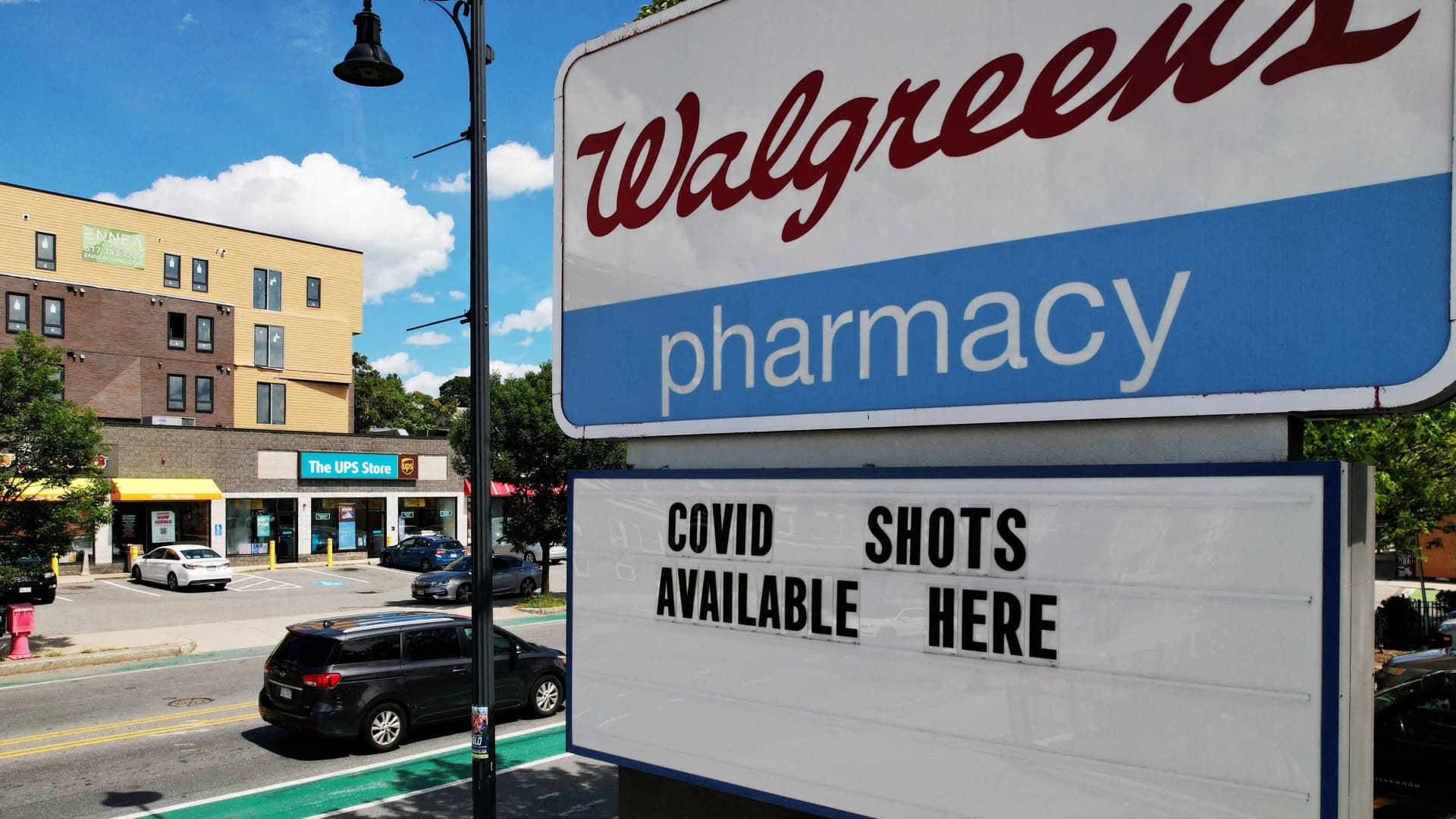
Shares of Walgreens closed 5% lower on Thursday after the company reported fiscal first-quarter adjusted earnings and revenue that topped expectations, but cut its quarterly dividend nearly in half. 

The retail pharmacy giant slashed its dividend to 25 cents per share from 48 cents per share to “strengthen [its] long-term balance sheet and cash position,” CEO Tim Wentworth, who officially took the helm during the quarter, said in a statement. 

Walgreens’ dividend yield is now 3.9%, based on Wednesday’s closing price. That’s down significantly from its prior yield of more than 7%, which made the company the highest-paying dividend stock in the Dow Jones Industrial Average

It also marks the company’s first dividend cut in nearly five decades. The dividend will be payable on March 12.

In an interview with CNBC, Wentworth called the dividend cut an “incredibly important and responsible” decision. 

He added that the majority of investors expected the move and “actually are excited about the fact that we’re going to have additional capital to invest in the core business in a way that stimulates growth again, because that ultimately is going to be the most shareholder-friendly thing we can do.”

The dividend reduction comes as Wentworth, a health-care industry veteran, tries to steer the company out of a rough spot. 

Shares of Walgreens plummeted 30% last year as the company grappled with weakening demand for Covid products, low pharmacy reimbursement rates, increased pressure from online retailers, labor unrest among pharmacy staff in the fall, an uneven push into health care and a challenging macroeconomic environment.

But Thursday’s earnings beat marks a turnaround from October, when Walgreens missed earnings estimates for two straight quarters for the first time in nearly a decade.

Here’s what Walgreens reported for the three-month period ended Nov. 30 compared with what Wall Street was expecting, based on a survey of analysts by LSEG, formerly known as Refinitiv:

  • Earnings per share: 66 cents per share adjusted vs. 61 cents expected
  • Revenue: $36.71 billion vs. $34.86 billion expected

The company reported a net loss of $67 million, or 8 cents per share, for the fiscal first quarter.

That compares with a net loss of $3.7 billion, or $4.31 per share, during the same period a year ago, when Walgreens was ordered to pay a multibillion-dollar settlement for litigation alleging the company helped fuel the nation’s opioid crisis. 

The net loss in the most recent quarter included a $278 million after-tax charge related to Walgreens’ forward sale of shares of drug distributor Cencora, formerly known as AmerisourceBergen. 

Excluding certain items, adjusted earnings per share were 66 cents for the fiscal first quarter. 

Walgreens booked sales of $36.71 billion in the quarter, a roughly 10% jump from the same period a year ago. 

The company said revenue growth in its U.S. retail pharmacy and international business segments, and sales contributions from its U.S. health-care division, drove the increase. Walgreens is making significant investments to transform from a major drugstore chain to a large health-care company. 

Despite the quarterly beats, Walgreens reiterated its fiscal 2024 adjusted earnings guidance of $3.20 to $3.50 per share. 

Executives during an earnings call Thursday highlighted incremental fiscal year 2024 “tailwinds and headwinds in a challenging environment” compared to when it issued its previous outlook.

Walgreens now expects better performance from its pharmacy services unit due to more favorable tax rates. It forecast a full-year adjusted effective tax rate of 15% to 17%, compared to the prior outlook of 19% to 20%.

But executives also expect several hurdles, including lower market growth in prescriptions and lower sale and leaseback contributions. They also expect a pullback in consumer spending to cut into U.S. retail sales in the short term, then improve in the second half of the fiscal year.

The company did not indicate in the earnings release whether it would also maintain its previous revenue guidance of $141 billion to $145 billion. 

During an earnings call on Thursday, executives said the company is on track to achieve $1 billion in cost savings during fiscal 2024 due to its ongoing cost-cutting initiative, which involves closing unprofitable stores, layoffs and using artificial intelligence to drive supply chain efficiencies, among other efforts.

Sales growth across pharmacy and health care

Walgreens’ U.S. retail pharmacy segment generated $28.94 billion in sales in the fiscal first quarter, an increase of more than 6% from the same period last year. Comparable sales at pharmacy locations rose 8.1%. 

That segment operates more than 8,000 drugstores across the U.S., which sell prescription and nonprescription drugs as well as health and wellness, beauty, personal care, and food products. 

A customer prepares to enter a Walgreens store on October 31, 2023 in Los Angeles, California. Pharmacy staff at some CVS and Walgreens locations have organized a three day walkout in multiple states which will last until November 1. 

Mario Tama | Getty Images

Pharmacy sales for the quarter rose 10.7% compared with the fiscal first quarter of 2023, as comparable sales climbed more than 13% due to price inflation in brand medications and “strong execution” in pharmacy services, Walgreens said. 

Total prescriptions filled in the quarter including immunizations totaled 311.6 million, which is flat compared with the same period a year ago. 

Walgreens cited a weaker respiratory virus season this fall, which is blunting demand for medications and vaccines. The company also pointed to Medicaid redeterminations, which are routine reviews each state’s Medicaid agency conducts to determine whether beneficiaries still qualify for coverage. 

Retail sales for the quarter fell 6.1% from the same period a year ago, and comparable retail sales declined 5%. Walgreens pointed to the weaker respiratory season as well as “macroeconomic-driven consumer trends” and Thanksgiving holiday store closures – a first for the company last year — to explain the decrease. 

More CNBC health coverage

Meanwhile, the company’s international segment, which operates more than 3,000 retail stores abroad,  racked up $5.83 billion in sales in the fiscal first quarter. That’s a rise of more than 12% from the same period a year ago. 

The company said sales from Walgreens’ U.K. subsidiary, Boots, grew more than 6%.

Revenue from Walgreens’ U.S. health-care segment came in at $1.93 billion, up from $989 million in the same period last year. 

That increase reflects primary-care provider VillageMD’s acquisition of multi-specialty care provider Summit Health and growth across all businesses in the segment on a pro forma basis.

VillageMD sales grew 14% compared to the same period a year ago due to same-clinic growth and strength in Summit Health, among other factors.

Sales from the segment’s specialty pharmacy company, Shields Health Solutions, grew 27%, driven by recent contract wins with health systems and expansion of existing partnerships.

Specialty pharmacies are designed to deliver medications with unique handling, storage and distribution requirements, often for patients with complex conditions such as cancer and rheumatoid arthritis.

— CNBC’s Bertha Coombs and Robert Hum contributed to this report.

Don’t miss these stories from CNBC PRO:

Clarification: This story was updated to reflect that Summit Health is a multi-specialty care provider.
Categories
Sport

MLB free company reset: Strikes we preferred, ones we did not, what’s subsequent

We’re into 2024, and the new MLB season is just a few months away. In the first half of free agency, we had some splashy moves — you might have heard that Shohei Ohtani signed a $700 million deal? — and plenty of smaller pickups. But plenty of MLB stars are still on the market, and lots of teams still have holes to fill. Which moves did we like? Which left us with more questions than answers? We asked ESPN MLB insiders to weigh in — and make one prediction for the deals still to come.

What’s your favorite move so far?

Editor’s Picks

2 Related

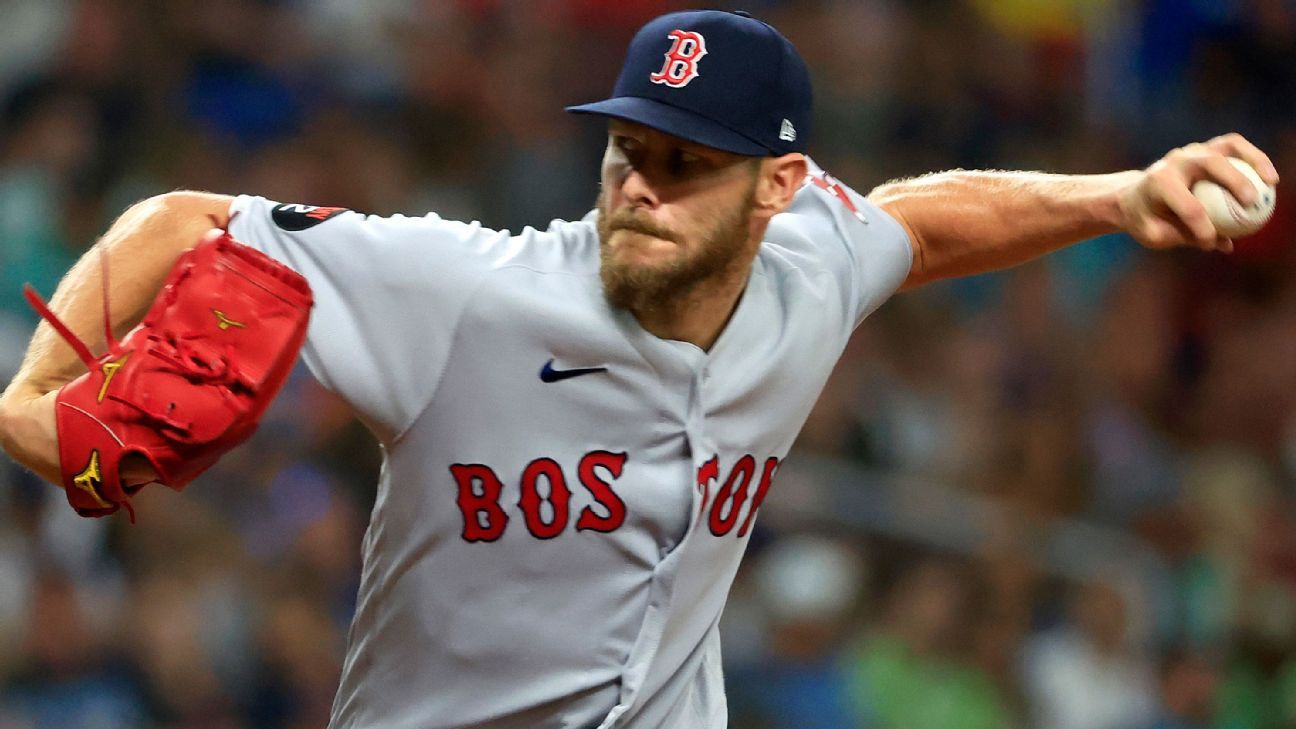
Bradford Doolittle: I should be clear that I’m not thinking of this as the best or most-impactful move. It’s simply the one that I’ve liked the most. And, as someone with a long affinity for life in the middle of the continent, I don’t get really excited when the game’s top players cluster in New York and Los Angeles. So my favorite transaction of the winter was Friday’s trade between Boston and Atlanta, with pitcher Chris Sale headed to the Braves with a briefcase full of cash (that’s how they handle the cash part of trades, right?) for infielder Vaughn Grissom. Even though Grissom isn’t an established big leaguer yet, that’s a real trade between two teams trying to win next season and acquiring players to help them do just that. Yes, money was a big part of the formula for both sides, but there were so many angles through which we could have looked at this player-for-player swap that it was fascinating to mull over. I wish we had a trade like that every week.

Alden Gonzalez: While all the attention — rightly — has been directed at the Los Angeles Dodgers this offseason, I’m going to take this time to celebrate another team in the National League West: the Arizona Diamondbacks — you know, the team that swept the Dodgers out of last year’s NL Division Series? The D-backs are a small-market team that could have easily followed the path of others by using the uncertainty over their regional sports networks (RSN) situation as a reason to cut costs. Instead, they’re capitalizing on an unlikely World Series berth by doubling down on their young core. Eduardo Rodriguez (given $80 million over four years) is a great addition behind Zac Gallen and Merrill Kelly in the rotation. Lourdes Gurriel Jr. (brought back on a three-year, $42 million deal) and Eugenio Suarez (acquired from a Seattle Mariners team that isn’t acting nearly as aggressively as it should) provide two much-needed right-handed power bats to fortify the lineup. They might not be done, either.

Jesse Rogers: Ohtani joining the Dodgers is too easy of an answer. Instead, I’ll pick the Dodgers’ next move, which established them as the modern-day New York Yankees. Adding pitcher Yoshinobu Yamamoto, along with Ohtani, was a boss move, just like the ones George Steinbrenner used to make in New York. Honorable mention goes to the Yankees for adding Juan Soto. GM Brian Cashman has been on a multiyear mission to add a dangerous lefty and after cycling through names like Joey Gallo and Matt Carpenter, he finally landed one who could balance out his lineup. The Yankees enter 2024 with a fighting chance on offense — something they really didn’t possess the past couple of seasons despite having Aaron Judge and his greatness.

David Schoenfield: Yeah, let’s not overthink this: It’s Ohtani and especially the structure of the contract with all the deferred money that then allowed the Dodgers to go out and sign Yamamoto and trade for Tyler Glasnow (and sign him to a big extension). Yeah, I know, that’s one-point-something billion dollars and you can’t dismiss the risk, but it’s two potential aces added and that’s before Ohtani joins the rotation in 2025. On a smaller scale, I love the Boston Red Sox flipping an injury-prone Sale for six years of Grissom, who looks like a potential .300 hitter and leadoff hitter and should slide in nicely as the starting second baseman.

What move made you scratch your head?

Doolittle: The Chicago White Sox signing Erick Fedde. I’m not bagging on the ChiSox here, because they were far from the only team hot on Fedde. And the contract — two years, $15 million — is a bargain even if all he does is pitch just well enough to hold down a back-of-the-rotation slot and chew up some innings. But if Fedde pitches to his career MLB ERA (5.41) and WAR (almost precisely replacement level), then it’s a bad contract — you should be able to pluck any number of pitchers out of the minors and/or off the waiver wire to produce that. What befuddles me is how a guy with a fairly long track record of, well, not succeeding can remake himself in the marketplace because of one (albeit dominant) season in South Korea’s KBO league. I’m rooting for him because it’s a cool story, and what I’m really scratching my head over is my own confusion. If Fedde succeeds, it’ll be a lesson in … something.

Rating the offseason’s marquee moves

Whether it’s a free agent deal that changes the course of a team’s future or a blockbuster trade that has the league buzzing, our experts are ready to weigh in.

MLB free agency grades »

Gonzalez: The reason came into clearer focus in the ensuing weeks, but I was legitimately shocked to learn — on the first night of the winter meetings — that the Mariners had traded Jarred Kelenic to the Braves, using their once-prized outfield prospect mostly to shed the contracts of Evan White and Marco Gonzales. It was an early stunner that set the tone for their offseason (so far, at least). Seattle is an up-and-coming team that needs to fortify the top of its roster in hopes of competing in the AL West with the Texas Rangers, the reigning champions who could be even better this year, and a Houston Astros team that has been to seven consecutive American League Championship Series and returns almost the entirety of its 2023 roster. To do so, the Mariners desperately need impact hitters. So far, they’ve dealt Kelenic and Eugenio Suarez, opted against giving Teoscar Hernandez the qualifying offer and, as far as we know, haven’t really been in on Soto, Ohtani or Jung Hoo Lee. It appears, though president of baseball operations Jerry Dipoto is certainly capable of surprises, that they’ll try to improve on the margins. Their payroll seemingly will stay right around where it finished this past season.

Rogers: My head-scratcher actually involves a team that hasn’t made a single major league move to its roster this offseason: the Chicago Cubs. Perhaps it’s just an issue of timing — there are plenty of players still available and more trades are bound to happen — but the calendar has turned and the Cubs haven’t signed or traded for a single player. Not one. After adding Craig Counsell as their manager, many assumed more action was to come. But the organization has stated that it’s a bit stuck in the middle; a decent prospect base is still a year or so away from producing in a big way. But an 83-win team — in a winnable division — needs corner infielders and a pitcher to just be competitive. The clock is ticking.

Schoenfield: It’s collectively what the Cincinnati Reds have done in signing Jeimer Candelario, Frankie Montas, Nick Martinez and Emilio Pagan for a combined $53 million in 2024 salary. Yes, we criticize small-market teams like the Reds for never spending and here they are, finally signing some free agents — and we’re saying we don’t like the moves. The truth is, I’m just not a big fan of this group. While the four players combined for 5.8 WAR in 2023 (with Montas injured for all but one relief appearance), they combined for just 2.4 WAR in 2022. Candelario is an odd fit for a team that already had infield depth and his batted-ball metrics in 2023 weren’t that good (expected batting average of .236); Pagan is a flyball reliever going to a home run park. If Montas is healthy and finds his 2021 form, maybe he turns into a steal, but I think the Reds are spending $53 million for about three wins in 2024. I hope I’m wrong, because I’d love to see the Reds compete for the NL Central title — but for $53 million you should be getting at least one star player.

What do you expect is the next domino to fall?

Number that will define 2024 for all 30 teams

As a new year arrives, we dig into the stats that will make (or break) the upcoming season.
Key stat for every NL team » | AL teams »

Doolittle: I’ve noticed the same thing as Jesse with the Cubs’ acquisition shutout, and I just can’t see it continuing much longer. So, the next domino is that the Cubs will make a move — any move. I thought hiring Counsell was a genius stroke (if more than a little cold-blooded), writing at the time that “On the first day of free agency, when available players can sign with new teams, the Cubs have already possibly made the highest-impact move of the winter.” There have been some awfully big moves this winter and I’m not sure the statement holds up, but I do know this: When I wrote it, I certainly didn’t expect it to be the Cubs’ only move of the offseason. As of now, the Cubs have neither signed an MLB free agent or traded for an MLB player. Every other team has done at least something. I’m sure president of baseball operations Jed Hoyer and his staff have tried to position themselves for a splash and they have been rumored to be in on some of the biggest names in the market. But the end result is what is: In terms of players, the Cubs own a big, fat zero at the moment. I expect that to change, and soon.

Gonzalez: This is more of a hunch than anything else, but I wouldn’t be surprised to see the free agencies of Blake Snell, Josh Hader and Cody Bellinger drag out a little longer. They’re all searching for big paydays, and I don’t know that that type of money is readily available for them at the moment. On that note, I’ll go with Yariel Rodriguez, the 26-year-old Cuban right-hander who has big stuff and could fit teams as either a starter or a reliever. Our own Enrique Rojas reported on Friday that the Toronto Blue Jays had emerged as favorites to land him. Baseball fans in the United States might not be all too familiar with Rodriguez, but he could end up as a nice value play for whoever lands him. So can another international pitcher — Japanese left-hander Shota Imanaga. ESPN’s Kiley McDaniel had Rodriguez and Imanaga signing four-year contracts valued at $30 million and $68 million, respectively, at the start of the offseason.

Rogers: The easy answer is Imanaga, considering his negotiating window is closing soon. He has about a week to decide where he wants to pitch and when that happens, the pitching market should be on the move. It might take time for the biggest names to find new homes, but pitchers will start coming off the board. Imanaga’s signing should also activate the trade market, allowing teams to make their final pushes for hurlers like Dylan Cease and Shane Bieber.

Schoenfield: Snell, Jordan Montgomery and Bellinger are all represented by Scott Boras and he’s not afraid to ride negotiations out until the start of spring training. Still, it feels like the Giants are still desperate to spend money beyond center fielder Jung Hoo Lee, so I think they’re going to open up the checkbook for Snell. It’s a gamble given Snell’s inconsistent results and durability in his career, but the Giants are in a position where they have to gamble on upside and, as a two-time Cy Young winner, Snell is that guy.

Categories
Science

Homeland Safety Secretary Mayorkas Blames Local weather Change for US Border Failure • Watts Up With That?

Essay by Eric Worrall

Republicans have moved to impeach Homeland Security Secretary Alejandro Mayorkas, as Mayorkas blames climate change and rising authoritarianism for his failure to deliver on illegal migration.

Republicans begin process to IMPEACH Homeland Security Secretary Alejandro Mayorkas for border crisis as he blames an immigration system broken for 30 years and climate change on surge in migration

By KELLY LACO, EXECUTIVE EDITOR OF POLITICS FOR DAILYMAIL.COM

PUBLISHED: 02:22 AEDT, 4 January 2024 | UPDATED: 06:19 AEDT, 4 January 2024

Republicans are taking the first steps to formally impeach Department of Homeland Security Sec. Alejandro Mayorkas for his handling of the ongoing southern border crisis.

DailyMail.com confirmed that the first impeachment hearing into Mayorkas will be held by the House Homeland Security Committee next week on January 10.

It comes after officials revealed over 302,000 people crossed the border illegally in December.

The secretary told MSNBC this morning that he would ‘most certainly’ comply with the committee’s impeachment investigation. 

But he said he’s currently focused on finding ‘solution to problems,’ including by working with senators to come to a bipartisan solution on border security measures. 

In addition, Mayorkas blamed the ongoing crisis on a 30-year broken immigration system – and also climate change. 

He told MSNBC that the challenge of ‘displaced people,’ not only in the U.S., but around the world is due to the ‘effects of climate change, poverty, increasing level of authoritarianism.’

Read more: https://www.dailymail.co.uk/news/article-12922909/republicans-impeach-dhs-alejandro-mayorkas-border-crisis.html

Mayorkas also blamed Texas Governor Greg Abbott for not coordinating with other governors, presumably because Abbott refused to keep all the illegals in Texas, and started shipping them to Democrat run “Sanctuary Cities”. But I find this attack on Abbott bit puzzling, given Mayorkas claims global warming was partly responsible for driving the illegals from their homes. Surely Abbott was just looking out for the climate welfare of the illegals, by shipping them away from the scorching hot Texas climate to cooler Northern sanctuary cities like New York and Chicago. I mean we wouldn’t want the illegals to be forced to relocate again, when accelerated climate change makes Texas uninhabitable.

Do I need a /sarc tag?

Surprisingly, Mayorkas forgot to name Trump in his list of people he blames for the failure of the Biden administration to deter illegal immigration, but I’m sure that oversight will be corrected during the impeachment hearing.

Mayorkas isn’t alone in blaming climate change for his failures, Biden has been blaming climate change for years.

The developing tradition of left wing officials blaming climate change for their failure to deliver would be entertaining, if the failures weren’t so consequential. A few days ago Australia’s emergency minister blamed “climate change” for messing up weather predictions, leading to disastrously late flood warnings for Australians affected by December’s wild weather.

Despite this US and Australian climate posturing absurdity, my all time favourite climate change deflection attempt still goes to Egypt. In 2015, the Mayor of Alexandria blamed climate change for causing the river Nile to flood. Critics pointed out a lot of the problems were caused by drainage issues, and that some of the Alexandria drain maintenance money seemed to have been misappropriated on the mayor’s watch. And I’m pretty sure there is also evidence the River Nile might have flooded at least once or twice before the age of climate alarmism.

Like this:

Like Loading…

Categories
Entertainment

DNA Take a look at Reveals Ukrainian Orphan’s Actual Age

Natalia Grace is feeling vindicated.

In the newly released ID docuseries, The Curious Case of Natalia Grace: Natalia Speaks, the Ukrainian orphan—who was adopted by Michael and Kristine Barnett in 2010—detailed her experience with the Barnetts and the subsequent aftermath of her adoption.

Though the former couple alleged that Natalia—who has spondyloepiphyseal dysplasia congenita, a rare genetic disorder—was not a young girl at the time of her adoption, but rather an adult with dangerous tendencies, Natalia has long maintained that she was truly a child when she began living with the Barnetts.

And in the premiere episode of the docuseries, a DNA test conducted by a medical lab concluded Natalia was around 22 years old as of August 2023, indicating that she would’ve been approximately 9 years old when she moved in with her adoptive parents.

“This one little piece of paper throws every single lie that the Barnetts has said right into the trash with a match,” Natalia said in the first episode of the multi-part series. “This is so big. Because literally, this has been 13 years of just two people lying their butts off. They ruined a kid’s life. They painted [me] as some big monster.”

Categories
Health

Free ChatGPT could incorrectly reply drug questions, examine says

Harun Ozalp | Anadolu | Getty Images

The free version of ChatGPT may provide inaccurate or incomplete responses — or no answer at all — to questions related to medications, which could potentially endanger patients who use OpenAI’s viral chatbot, a new study released Tuesday suggests.

Pharmacists at Long Island University who posed 39 questions to the free ChatGPT in May deemed that only 10 of the chatbot’s responses were “satisfactory” based on criteria they established. ChatGPT’s responses to the 29 other drug-related questions did not directly address the question asked, or were inaccurate, incomplete or both, the study said. 

The study indicates that patients and health-care professionals should be cautious about relying on ChatGPT for drug information and verify any of the responses from the chatbot with trusted sources, according to lead author Sara Grossman, an associate professor of pharmacy practice at LIU. 

For patients, that can be their doctor or a government-based medication information website such as the National Institutes of Health’s MedlinePlus, she said.

An OpenAI spokesperson said the company guides ChatGPT to inform users that they “should not rely on its responses as a substitute for professional medical advice or traditional care.”

The spokesperson also shared a section of OpenAI’s usage policy, which states that the company’s “models are not fine-tuned to provide medical information.” People should never use ChatGPT to provide diagnostic or treatment services for serious medical conditions, the usage policy said.

ChatGPT was widely seen as the fastest-growing consumer internet app of all time following its launch roughly a year ago, which ushered in a breakout year for artificial intelligence. But along the way, the chatbot has also raised concerns about issues including fraud, intellectual property, discrimination and misinformation. 

Several studies have highlighted similar instances of erroneous responses from ChatGPT, and the Federal Trade Commission in July opened an investigation into the chatbot’s accuracy and consumer protections. 

In October, ChatGPT drew around 1.7 billion visits worldwide, according to one analysis. There is no data on how many users ask medical questions of the chatbot.

Notably, the free version of ChatGPT is limited to using data sets through September 2021 — meaning it could lack significant information in the rapidly changing medical landscape. It’s unclear how accurately the paid versions of ChatGPT, which began to use real-time internet browsing earlier this year, can now answer medication-related questions.  

Grossman acknowledged there’s a chance that a paid version of ChatGPT would have produced better study results. But she said that the research focused on the free version of the chatbot to replicate what more of the general population uses and can access. 

She added that the study provided only “one snapshot” of the chatbot’s performance from earlier this year. It’s possible that the free version of ChatGPT has improved and may produce better results if the researchers conducted a similar study now, she added.

Grossman noted that the research, which was presented at the American Society of Health-System Pharmacists’ annual meeting on Tuesday, did not require any funding. ASHP represents pharmacists across the U.S. in a variety of health-care settings.

ChatGPT study results

The study used real questions posed to Long Island University’s College of Pharmacy drug information service from January 2022 to April of this year. 

In May, pharmacists researched and answered 45 questions, which were then reviewed by a second researcher and used as the standard for accuracy against ChatGPT. Researchers excluded six questions because there was no literature available to provide a data-driven response. 

ChatGPT did not directly address 11 questions, according to the study. The chatbot also gave inaccurate responses to 10 questions, and wrong or incomplete answers to another 12. 

For each question, researchers asked ChatGPT to provide references in its response so that the information provided could be verified. However, the chatbot provided references in only eight responses, and each included sources that don’t exist.

One question asked ChatGPT about whether a drug interaction — or when one medication interferes with the effect of another when taken together — exists between Pfizer‘s Covid antiviral pill Paxlovid and the blood-pressure-lowering medication verapamil.

ChatGPT indicated that no interactions had been reported for that combination of drugs. In reality, those medications have the potential to excessively lower blood pressure when taken together.  

“Without knowledge of this interaction, a patient may suffer from an unwanted and preventable side effect,” Grossman said. 

Grossman noted that U.S. regulators first authorized Paxlovid in December 2021. That’s a few months before the September 2021 data cutoff for the free version of ChatGPT, which means the chatbot has access to limited information on the drug. 

Still, Grossman called that a concern. Many Paxlovid users may not know the data is out of date, which leaves them vulnerable to receiving inaccurate information from ChatGPT. 

Another question asked ChatGPT how to convert doses between two different forms of the drug baclofen, which can treat muscle spasms. The first form was intrathecal, or when medication is injected directly into the spine, and the second form was oral. 

Grossman said her team found that there is no established conversion between the two forms of the drug and it differed in the various published cases they examined. She said it is “not a simple question.” 

But ChatGPT provided only one method for the dose conversion in response, which was not supported by evidence, along with an example of how to that conversion. Grossman said the example had a serious error: ChatGPT incorrectly displayed the intrathecal dose in milligrams instead of micrograms

Any health-care professional who follows that example to determine an appropriate dose conversion “would end up with a dose that’s 1,000 times less than it should be,” Grossman said. 

She added that patients who receive a far smaller dose of the medicine than they should be getting could experience a withdrawal effect, which can involve hallucinations and seizures

Categories
Science

Juno Makes its Closest Flyby of Io

NASA’s Juno spacecraft has been getting closer and closer to Jupiter’s volcanic moon Io with each recent orbit. Juno is in its 57th orbit of Jupiter, and on December 30th, Juno came to within 1500 km (930 miles) of Io’s surface. It’s been more than 20 years since a spacecraft came this close.

The Galileo spacecraft travelled over the moon’s south pole in 2001, coming to within 181 km (112 miles.) Galileo showed us a lot about the nature of Io’s surface.

But Juno is a different spacecraft with more modern instruments and cameras that will fly by Io multiple times. One of the mission’s specific goals is to determine if Io has a magma ocean or not. And while the spacecraft’s suite of scientific instruments can shed light on that question, Juno also carries a powerful camera that rides shotgun: Junocam.

Junocam was included with the spacecraft primarily to satisfy us, the interested public around the world. It takes high-resolution visible light images that are available for anyone to process and share. Two other imagers were also busy during the Io flyby. One is the Jovian Infrared Auroral Mapper (JIRAM), which takes images in infrared. The other is the Stellar Reference Unit, which usually takes images of stars for navigation.

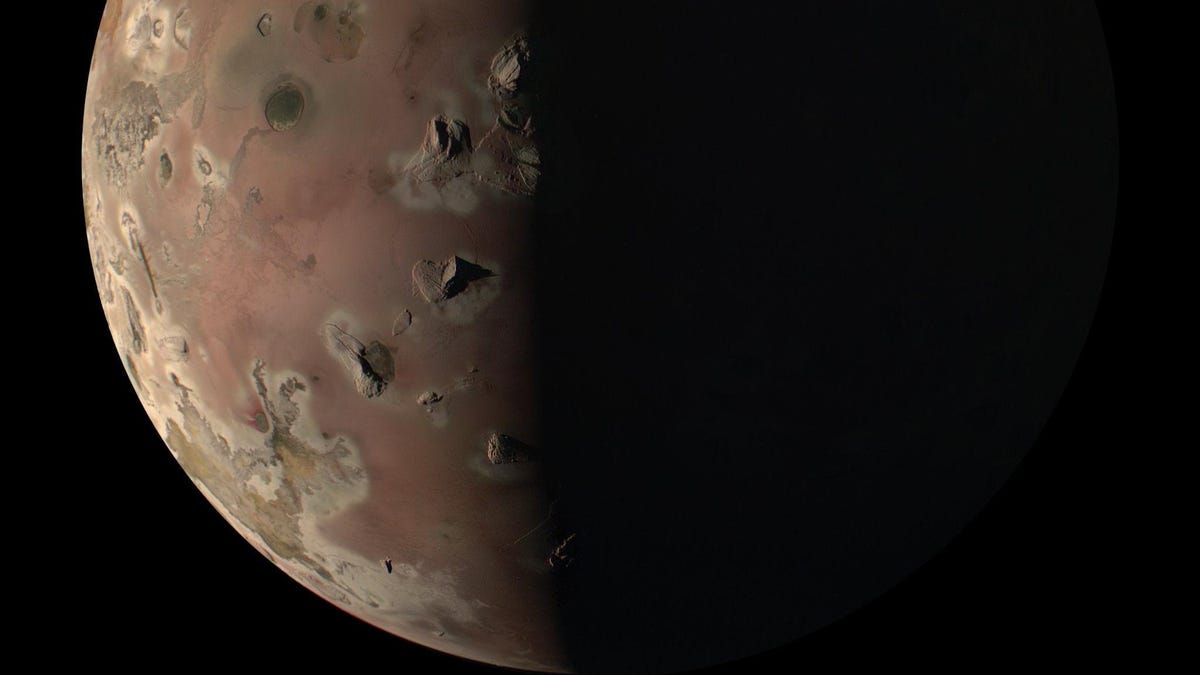
Io’s forbidding surface looks almost inviting in this Junocam image processed by Kevin Gill. But don’t be fooled: Io is a volcanic hellscape. If you’d like a phone wallpaper version of this image, Kevin made one here. Image Credit: NASA / JPL-Caltech / SwRI / MSSS / Kevin Gill

Junocam images get the most attention because NASA makes them available for anyone to process and post. Junocam captured six separate images of the volcanic moon, including black and white and colour. The image below is a composite showing the lit and shadowed sides of Io, processed by Hemant Dara.

A composite image of Io showing the shaded and lit portions. Image Credit: NASA / JPL-Caltech / SwRI / MSSS / Hemant Dara © CC BY

Scientists know that Io is the most volcanic body in the Solar System by far. But they hunger for more detailed knowledge of its interior. Juno’s series of flybys will allow researchers to watch its volcanoes over time, which will help lead to some new understandings.

“By combining data from this flyby with our previous observations, the Juno science team is studying how Io’s volcanoes vary,” said Scott Bolton, Juno’s principal investigator and a scientist at the Southwest Research Institute, in a statement issued before this most recent flyby. “We are looking for how often they erupt, how bright and hot they are, how the shape of the lava flow changes, and how Io’s activity is connected to the flow of charged particles in Jupiter’s magnetosphere.”

Io remains volcanic to this day because of its eccentric orbit around Jupiter. Jupiter’s mass squeezes Io, and the squeezing generates heat that drives its volcanoes. The other Galilean moons add to the effect. The tidal force is so strong that Io’s surface can rise and fall by as much as 100 meters.

Io is about the same size as Earth’s Moon, yet it’s covered in hundreds of active volcanoes. Eruptions can launch lava dozens of kilometres above the moon’s surface. There’s so much volcanic activity on the surface of Io that some lava flows are hundreds of kilometres long. These voluminous eruptions are like the ones that triggered mass extinctions here on Earth.

Juno’s next Io flyby will be on February 3rd. During that visit, Juno will also approach about 1500 km (930 miles) above Io’s surface.

“With our pair of close flybys in December and February, Juno will investigate the source of Io’s massive volcanic activity, whether a magma ocean exists underneath its crust, and the importance of tidal forces from Jupiter, which are relentlessly squeezing this tortured moon,” said Bolton.

Juno is nearing the end of its mission in 2025. One of the hazards that’s bringing its end is Jupiter’s intense radiation. The spacecraft’s orbits are designed to protect it from Jupiter’s radiation, except when it approaches the planet for closer looks. It has to remove itself from the intense radiation to both extend the life of its electronics and allow it to send data back to Earth.

Juno was designed to withstand only 17 orbits of Jupiter but has so far survived 57. With a few more to come, the mission still has lots to teach us about Io and the Jovian system. No doubt we’ll be gifted more stunning images and science as it completes its mission.

“Io is only one of the celestial bodies which continue to come under Juno’s microscope during this extended mission,” said Juno’s acting project manager, Matthew Johnson of NASA’s Jet Propulsion Laboratory in Southern California. “As well as continuously changing our orbit to allow new perspectives of Jupiter and flying low over the nightside of the planet, the spacecraft will also be threading the needle between some of Jupiter’s rings to learn more about their origin and composition.”

Io’s primary mission ended in July 2021, and its current extended mission will end in September 2025. At that time, the spacecraft will be sent plunging to its destruction in Jupiter’s atmosphere, ending its nine-year mission.

But these pictures of Io will always be part of its legacy.

Like this:

Like Loading…

Categories
Sport

Yankees nice/guitarist Bernie Williams to make N.Y. orchestra debut

NEW YORK — Former New York Yankees center fielder Bernie Williams will make his New York Philharmonic debut on April 24 when future music director Gustavo Dudamel leads the orchestra’s spring gala at Lincoln Center’s David Geffen Hall.

Williams, 55, was a five-time All-Star while playing for the Yankees from 1991 to 2006 and won the 1998 American League batting title. He is classically trained guitarist who began playing at age 7, and has released two recordings, in 2003 and 2009. Williams also performed around the world and released a book about the marriage of music and sports. The book, in which Williams said he “bared his soul,” is called “Rhythms of the Game.”

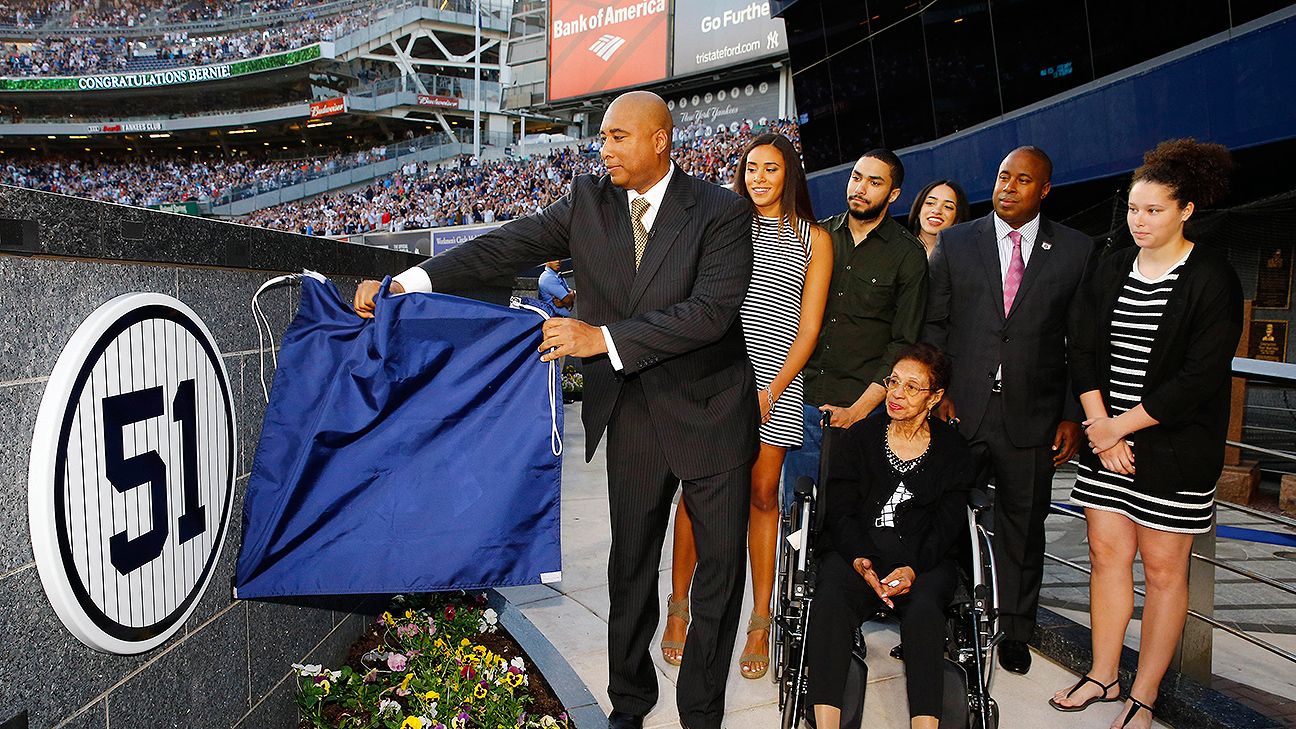
Yankees great Bernie Williams, who has released two guitar recordings, will make his debut at the New York Philharmonic this year. Andy Marlin/USA TODAY Sports/Al Bello/Pool

Dudamel, 42, has been music director of the Los Angeles Philharmonic since 2009, a tenure that will end after 17 seasons when he starts in New York for the 2026-27 season. He will have a rehearsal with the students April 22 and will lead the youth orchestra in a concert April 26 at Fiorello H. LaGuardia High School of Music & Art and Performing Arts. There also will be a rehearsal on the morning of April 24 open to music teachers, families of the youth orchestra and the orchestra’s community partners.

The program is still being planned.

Editor’s Picks

1 Related

Common, a rapper whose actual name is Lonnie Rashid Lynn, will also make his philharmonic debut in a program with soprano Hera Hyesang Park, the orchestra said Wednesday. The philharmonic will perform alongside high school musicians chosen in auditions.

Categories
Technology

Sure, facial verification will exchange passports at UK airports — however not in 2024

Britain is set to test facial verification tech that removes the need for passports, but experts have dashed hopes of a full launch this year.

The project was unveiled this week by Phil Douglas, the director-general of the UK’s Border Force. Douglas told the Times that he aims to install new e-gates at airports that create an “intelligent border.” By integrating enhanced facial verification, the system would make physical travel documents unnecessary.

Trials of the tech are expected to start this year. A full rollout, however, remains a more distant prospect.

Andrew Bud, the CEO at British biometric leader iProov, told TNW that facial verification “is not going to replace passports at UK airports in 2024.” Nonetheless, he’s confident that the switch will “certainly come” later.

TNW Conference 2024 – Calling all Startups to join on June 20-21

Showcase your startup in front of investors, change-makers and potential customers with our curated Startup packages.

Bud speaks from a unique experience with the tech: iProov created the first-ever biometric corridor for train travel, which opened last July at Eurostar’s London terminal.

Building digital borders

iProov’s system replaces border checks with a facial verification checkpoint that you just walk straight past.

Before travel, the passenger downloads the app, authenticates their ID, scans their face, and links their ticket. On arrival at St Pancras Station in London, they stroll through a dedicated lane for the tech, which verifies their entry.

The Eurostar deployment allows multiple people to be verified simultaneously. Credit: iProov

The system lets users skip ticket gates and manual border control in the UK. After baggage inspection and a passport check at the French border, they’re free to board the train.

“It has taught us that a lot of testing and operation at small scale is necessary first,” Bud said. “There are all sorts of practical issues that emerge and need to be sorted before large-scale operation is sensible.”

Reliability is crucial, as recent failures at British e-gates exposed. A technical issue last summer caused chaos at UK borders, four-hour queues at airports, and a “danger to national security,” travel experts warned.

The route to avoid passports

According to Bud, any replacement system will require meticulous design, installation, and operation.

“Real people can do the most unpredictable things — it’s pretty challenging to get right,” he said. “And the security must be very strong, with very dependable liveness detection when people enrol before departure, for example at home on their smartphones.”

Despite the challenges, facial verification is becoming more common at borders. Dubai, for instance, recently launched a biometric system that allows travellers to pass through security without using a passport or ID.

Still, concerns have been raised about the privacy implications. Campaigners fear that biometrics systems used for beneficial purposes can pave the way to more sinister applications. Bud, however, argues that there’s a big difference between the deployments.

“This is not facial recognition for identifying people, in the way the police use it,” he said. “This is facial verification, to which a user has consented, participates in the process and gets personal benefit from. They are very different legally, ethically, and technically.”

Research suggests that most travellers would welcome the tech. According to a 2022 survey by the International Air Transport Association, three-quarters of passengers want to use biometric data instead of passports and boarding passes.

Categories
Entertainment

Blac Chyna Opens Up About Issues From Breast Discount

Angela White, also known as Blac Chyna, is getting candid about undergoing breast reduction surgery in 2023. As The Shade Room previously reported, the mother of two revealed that she was in the process of removing the implants in her chest and buttocks in March.

At the time, White also revealed that she would also be dissolving filler in her face.

RELATED: Blac Chyna Reveals Breast & Butt Reduction

Blac Chyna Opens Up About Her Breast Reduction

On Sunday, December 31, the 35-year-old took to Instagram to share a video with fans. As the White shared a “story time” with fans, viewers could see that she had a bandage around her chest.

White went on to explain that she wanted to reduce her chest size to fit her physical frame better. Then, she recapped the reduction experience for viewers.

“So I went to the doctor, and at the present moment, I had 585 ccs. So my doctor suggested that I go smaller and then smaller just to see how my skin retracts,” White told viewers. “Because if I don’t do it that way, I’d just be left with saggy skin, and I wouldn’t like it because it would look really deformed.”

She explained that her breasts were reduced to 385 ccs. However, “the worst thing that could possibly happen happened.”

“One of my breasts got encapsulated — and once again, this is something that can happen whenever you do surgery. So when I went in there, my left breast had encapsulated to where the muscle had contracted around the implant, and it just was so painful,” White continued. “I was like, ‘You know what, this is just crazy…’ and out of all of the times I had gotten my breasts done, this had never happened.”

White shared that she underwent her latest surgery in late December, reducing her breasts to a final 190 ccs.

“My doctor told me that I needed some type of implant because I don’t do an implant, my breasts are basically just going to be mush,” White explained.


The Mother Of Two Speaks On Upkeep & Cost Of Surgery

As White continued, she stated that this process is something she will have to deal with again “in the next ten years.” Additionally, she explained that the surgeries are “so expensive” and “something you really have to upkeep.”

Despite what lies ahead, Blac Chyna told viewers that she’s very happy with her physical results and is excited to be a part of the itty-bitty-tittie committee.

Before concluding her message to fans, the 35-year-old also shared an update on her leg tattoo removal and resolutions for 2024.

Check out her sentiments below.

A Brief Look Back On Blac Chyna’s Journey In 2023

As The Shade Room previously reported, White opened up about her physical transformation in March. Before the month ended, the mother of two had transparently documented the journey and shared videos of the procedures done on her breast, butt, and face.

RELATED: Blac Chyna Warns Fans Against Face Fillers Amid Second Removal Attempt

Around the same time, White revealed that she had been baptized and quit posting content on OnlyFans, per The Shade Room.

In July, White received her honorary doctorate from the Sacramento Theological Seminary & Bible School.

RELATED: Blac Chyna Gets Emotional After Receiving Honorary Doctorate

Then, in September, White celebrated one year of sobriety weeks before unveiling a new romance with songwriter Derrick Milano, per The Shade Room.

Before the year closed, Chyna also settled a legal battle with rapper Tyga regarding custody of their 11-year-old son, King Cairo.

RELATED: Next Chapter! Angela White and Tyga Reportedly Resolve Custody Dispute
Categories
Science

Torrential Rain, a 120-Plus Yr Report from Kuranda, close to Cairns (Half 1) • Watts Up With That?

From Jennifer Marohasy’s Blog

Jennifer Marohasy

I was born in Darwin, and raised in the Tropics, knowing the sound of monsoon rains on a tin roof – so loud, like a heard of buffalo galloping overhead. Always wondering, as I lay in bed when it would end, whether it would flood.

Caused by deep convection this is also how the Earth cools: driving energy from the Earth-ocean surface where it has accumulated to the upper atmosphere where it can be radiated to space as infra-red emissions. That is also the water cycle, and of course, water vapour is a greenhouse gas. Quite a bit was let off recently with cyclone Jasper and all the flooding.

The rainfall record for Kuranda is more than 120 year long, providing more than 4 weather cycles of information on rainfall in the catchment draining to Cairns, that recently suffered such terrible flooding. Especially the northern beaches, home to both family and friends. I phoned my sister to offer commiserations, and of course, she had to add that it was all so ‘unprecedented – the rainfall’, she added.

I thought I would wait until the rainfall totals were in before making comment. And so it is with this new year that we have the rainfall totals for Kuranda, the longest records that I know of for that catchment, for the Barron River catchment.

Kuranda is a mountain village above Cairns – beside the headwaters of the Barron River. It’s known for the Kuranda Scenic Railway, which winds its way down to Cairns through tropic rainforest dotted with spectacular palm trees growing aside waterfalls that vary from a trickle to a torrent depending, of course, on the rainfall.

As the story goes 1882 was another unprecedented year of heavy rain. It cut the supply routes from the mining towns beyond the mountains to the coastal settlements including Cairns. Legendary bushman Christie Palmerston was tasked to find a reliable supply route for a railway to link the rich mining area to the sea. And so, the Kuranda railway was built opening in 1891, and with an official Australian Bureau of Meteorology rainfall record from 1896.

This record does not extend back to 1882, but we can see that 1911 is the wettest year on record with nearly 5,000 millimeters (4,921) of rain, followed by 1979 (4,657) and most recently, this last December nearly 4,500 mm fell (4,417). It is the case that this December is the wettest on record, with the heaviest rains in 1979 falling in January, and in 1911 it was in April.

It is unfortunate that there is no continuous temperature record for Kuranda, in fact temperatures have never been measured at Kuranda, at least not by the Bureau. They were measured at the Cairns post office from 1890 to 1952, and of course, this record shows cooling of maximum temperatures from 1920 to 1940, as do maximum temperature records from around the world.

Yet, curiously, climate change catastrophists and leading sceptics alike tend to deny this cooling and go on and on, variously about the one degree C increase in temperatures through the twentieth century.

They also like to claim that it is impossible to forecast rainfall, even my colleagues at the IPA. Of course, if you strip every historical temperature record of all meaningful cycles (particularly the cooling from 1920 to 1940) then reliable rainfall forecasting does become impossible.

To be continued.

Kuranda scenic railway winling up the tracks from Freshwater Station to Kuranda

Kuranda scenic railway winling up the tracks from Freshwater Station to Kuranda

Kuranda scenic railway winling up the tracks from Freshwater Station to Kuranda

4.9
16
votes

Article Rating

Like this:

Like Loading…