Categories
Technology

First industrial crew of all-European astronauts launches to ISS

A private space mission launched four European astronauts to the International Space Station on Thursday, in a milestone for a region desperate to boost its space credentials following a series of setbacks.  

A SpaceX Falcon 9 rocket blasted the astronauts into orbit, launching from NASA’s Kennedy Space Center in Florida. The spacecraft is expected to arrive at the ISS in the early hours of January 20.

Spanish astronaut Michael López-Alegría will lead the space crew. Also on board is Walter Villadei of the Italian Air Force, Alper Gezeravcı from Turkey, and Marcus Wandt of Sweden. Gezeravcı is Turkey’s first-ever astronaut.

From left to right: Swedish aviator Marcus Wandt, López-Alegría, a retired NASA astronaut and dual citizen of Spain and the US, Italian Air Force Colonel Walter Villadei and Alper Gezeravcı, a Turkish Air Force veteran. Credit: Axiom Space

Organised by Axiom Space, the mission is the American company’s third crewed venture into low-Earth orbit. The startup is also developing its own space station and building space suits for NASA.

The <3 of EU tech

The latest rumblings from the EU tech scene, a story from our wise ol’ founder Boris, and some questionable AI art. It’s free, every week, in your inbox. Sign up now!

The launch is part of a new era where countries no longer have to build their own rockets and spacecraft to undertake space missions. Now they can simply purchase rides from a commercial company, almost like buying a plane ticket. 

Three of the four astronauts were sponsored by the European Space Agency (ESA) to undertake the mission.The European crew will spend 14 days aboard the ISS, conducting more than 30 experiments, including research on stem cells, biological processes, and other microgravity studies.

Axiom’s launch comes at a pivotal moment for Europe’s space industry, which has suffered a number of setbacks in recent years. With the Ariane 5 rocket officially decommissioned and Italy’s Vega C rocket grounded following launch failure in 2022, Europe is currently without independent access to space satellites. 

This year looks to be more promising though. The Ariane 6 rocket, Ariane 5’s successor, is expected to blast off this summer, while the Vega-C rocket is set to lift off towards the end of the year. The ESA also recently announced a new budget of €7.8bn — the largest amount ever dedicated to European space exploration.  

“This year will look much better,” Josef Aschbacher, the director general of the European Space Agency, said last week at an annual press briefing

Categories
Science

Markers Alongside the Highway to The Dying of Internet Zero – Watts Up With That?

From the MANHATTAN CONTRARIAN

Francis Menton

What will the death of the green energy illusion look like? From time to time (see, for example, here and here) I have described a vision where some state or country runs headlong into a “green energy wall” — an impassable barricade of physical impossibility, characterized by scarcity and blackouts, into which the country crashes suddenly. Among the net zero zealot countries I have identified as the leading candidates for imminently hitting such a wall are Germany and the UK.

But perhaps, instead of a sudden crash, the demise of the green energy illusion will look more like a slow but steady decline, a gradual withering of economic activity and prosperity. In this scenario, high energy prices brought about by energy restrictions drive important industries out of business and, as good jobs disappear and energy prices increase, the people gradually and inexorably get poorer. Recent events in the UK and Germany seem to point in the direction of this type of scenario.

The latest edition of the GWPF’s Net Zero Watch Newsletter has the headline “Net Zero is dying.” (Go here and follow the link for your own copy of the newsletter. Full disclosure — I am on the board of the American affiliate of the GWPF.). Nine linked news articles from the past couple of days all deal with recent instances of industrial decline in the UK and Germany, each one a consequence of energy prices intentionally driven upward in the pursuit of “net zero.”

Several of the pieces cover the impending closure of the Port Talbot steelworks in Wales, with the loss of up to 2,500 jobs. Illustrative is a January 19 piece in the Daily Telegraph by Allison Pearson, headline “Port Talbot has been sacrificed to the angry god of net zero.” Although the Telegraph is behind paywall, the NZW Newsletter has a lengthy excerpt. Here is a part:

The high price of UK energy makes Port Talbot uncompetitive. . . . [N]et zero. That absurd and misanthropic creed . . . calls British workers losing their jobs “progress” while their carbon will now be emitted in India and China. . . . [The UK will now be] the only G7 nation with no first-class steel manufacturing – are they serious? You might almost get the impression the nation was run by a fifth column plotting its downfall.  

In another item in the current Newsletter, GWPF points to its own warnings of what was coming from 2016 and 2021. From 2016:

“As an energy-intensive manufacturer of internationally traded commodities, the steel sector is particularly sensitive to energy costs. It is the first to feel the pain of the UK’s climate policies, but it will not be the last. [Steel] and the energy-intensive sector more broadly can be regarded as a miner’s canary, giving early warning of general economic damage as the costs of climate policies are passed through from energy to all other sectors of the economy.”

And from 2021:

[T]he underlying and fundamental cause [of the ongoing closure of the steel industry in the UK] is the uncompetitiveness of all heavy industry in the UK, and for this government is itself largely to blame. GWPF has long predicted that Britain’s unilateral climate policies were making it all but impossible to operate heavy industry the UK.

Elsewhere in the Newsletter, the focus is Germany. A January 19 piece from the Times of London has the headline “What’s gone wrong with Germany?” Again it’s behind paywall; but the overall picture is a combination of self-inflicted consumer pain and equally self-inflicted industrial decline brought about by senseless mandates and high energy prices from the so-called “energy transition.” Excerpt:

The coalition has been plagued by unforced errors, typified by a hugely unpopular attempt to force homeowners to install heat pumps instead of gas or oil boilers. It has been riddled with public infighting and has presided over the worst economic performance in the G7.

That Times article does not go into detail on the industrial decline. But for some specifics consider this piece from July 13, 2023 from Politico, headline “Rust Belt on the Rhine.” Example:

Chemical giant BASF has been a pillar of German business for more than 150 years, underpinning the country’s industrial rise with a steady stream of innovation that helped make “Made in Germany” the envy of the world. But its latest moonshot — a $10 billion investment in a state-of-the-art complex the company claims will be the gold standard for sustainable production — isn’t going up in Germany. Instead, it’s being erected 9,000 kilometers away in China. . . . [BASF] is scaling back in Germany. In February, the company announced the shutdown of a fertilizer plant in its hometown of Ludwigshafen and other facilities, which led to about 2,600 job cuts. . . . [T]he company lost €130 million in Germany last year.

The explanation? From Politico:

Confronted by a toxic cocktail of high energy costs, worker shortages and reams of red tape, many of Germany’s biggest companies — from giants like Volkswagen and Siemens to a host of lesser-known, smaller ones — are experiencing a rude awakening and scrambling for greener pastures in North America and Asia. 

Politico notes that in the 15 years since the 2008/09 recession, the U.S. economy has grown by some 76%, while the German economy has grown by only 19%. Oh, that is the same period of Germany’s “Energiewende,” which has included forcing electricity prices to go to triple the U.S. level.

For the big picture of the German industrial situation, here is a chart from YCharts.com, showing the trend over the last 5 years:

After you eliminate the steep Covid-induced valley of 2020-21, you are left with a decline that is steady and inexorable.

Frankly, the UK and Germany would be better off hitting a hard wall, which could wake them up in time to potentially turn things around. The current situation of steady ongoing decline is inflicting damage that may well not be reversible. Even if energy prices suddenly come down in the UK by a factor of 3 or more, is anyone going to re-build Port Talbot once it has been dismantled?

Net zero may be dying, but so are the economies of the UK and Germany. I just hope that the U.S. can be rescued in time.

Like this:

Like Loading…

Categories
Sport

Jared Goff finds Josh Reynolds for Detroit Lions landing

  • Eric Woodyard, ESPNJan 21, 2024, 03:52 PM ET

    Close

      Eric Woodyard covers the Detroit Lions for ESPN. He joined ESPN in September 2019 as an NBA reporter dedicated to the Midwest region before switching to his current role in April 2021. The Flint, Mich. native is a graduate of Western Michigan University and has authored/co-authored three books: “Wasted, Ethan’s Talent Search” and “All In: The Kelvin Torbert Story”. He is a proud parent of one son, Ethan. You can follow him on Twitter: @E_Woodyard

DETROIT — The Detroit Lions were the first team in the end zone in their divisional round game against the Tampa Bay Buccaneers on Sunday after Jared Goff found wide receiver Josh Reynolds for a 9-yard touchdown in the second quarter.

Goff connected with Reynolds for a short pass in the back of the end zone to give Detroit a 10-3 edge with 12:33 remaining in the first half.

It was Reynolds’ first career postseason touchdown. Goff was 9-of-10 for 60 yards and the touchdown pass on the Lions’ 14-play scoring drive.

🙌 @JaredGoff16 🎯 @J_Rey_11 🙌#TBvsDET |📺 NBC pic.twitter.com/UfVVVxih8i

— Detroit Lions (@Lions) January 21, 2024

Categories
Entertainment

Aesthetic, Sensible Finds That Will Carry You Pleasure Each Day This 12 months

We independently selected these deals and products because we love them, and we think you might like them at these prices. E! has affiliate relationships, so we may get a commission if you purchase something through our links. Items are sold by the retailer, not E!. Prices are accurate as of publish time.

Here at E! Insider, we think every day should be “Treat Yo’Self” Day. From scoring swoon-worthy deals to tackling daily problems with shopper-loved picks, we fully believe in the power of retail therapy. Of course, with Valentine’s Day coming up just around the corner, this is the perfect excuse — ahem, opportunity — to indulge in a little shopping spree, especially if said spree will bring you joy each and every day of the year.

From avocado hand warmers that will keep you toasty through the rest of winter to an adorable octopus-shaped blackhead scrub stick, internet-viral hand sanitizers, trendy bath mats & so much more, we’ve rounded up the best items on the internet that are equally practical & aesthetic. No matter what 2024 has in store for you, you’ll be ready to carpe diem and live every day with joy (and style).

Categories
Science

Financially Distressed Canadians Ought to Prioritise Local weather Change – Watts Up With That?

Essay by Eric Worrall

According to Windsor Star reporter Nicholas Read, people struggling to house and feed themselves should remember to give some attention to climate change.

Guest column: Improved housing, affordability require habitable planet

Opinion: Caring and doing something about climate change are no longer options for anyone — even to people who legitimately have so much else to worry about.

Published Jan 19, 2024 
By: Nicholas Read

When pollsters ask the public what their top political priorities are, respondents rarely mention what is unquestionably the most pressing priority of the day: climate change.

A Leger poll from late last year showed that the issues concerning Canadians most are inflation (33 per cent chose this as the top issue), housing (16 per cent), and rising interest rates (eight per cent).

But what these voters fail to take into account is that without a habitable planet, improved housing and affordability are moot because they both depend on a healthy world. In the same poll, seven per cent of those surveyed listed climate change as the top issue facing the country.

This failure to connect the dots is infuriating, but also understandable. Put simply, if you’re worried about how to feed your family for the rest of the week, the plight of the polar bear isn’t something you are going to lose sleep over.

Maybe the truth is just too scary to face. In which case we’re in even more more trouble than I realized.

Read more: https://windsorstar.com/opinion/letters/guest-column-improved-housing-affordability-require-habitable-planet

The author claims Quebec is the exception, that people in Quebec care about climate change even when they are in financial trouble. Is this true?

Otherwise I believe what we are seeing once again is the self limiting nature of climate action. Climate concern is a luxury for the financially comfortable. As soon as climate policies stuff up the economy, people focus on real issues.

The author also suggests people might be ignoring climate change because “the truth is too scary to face”. But given more than 30 years of consistently wrong alarmist climate predictions, I think most people are facing up to the truth just fine.

Like this:

Like Loading…

Categories
Technology

A brand new frontier for soccer — and VR

On a cold winter’s night in London, Arsenal captain Martin Odegaard stood alone on the pitch. As football fans flocked into the 60,000-seat stadium, his teammates warmed up for the match by blasting shots against the goal. Odegaard had another plan. The 25-year-old wandered into a deserted patch of grass and began his routine.

Suddenly, one training staff passed the ball towards his feet while another closed him down from behind. In response, Odegaard quickly glanced over his shoulder, checked where the defender was, and turned the other way. 

That was it: check, the shoulder, took a touch. Again and again, he repeated the routine. There was no pass, shot, or trick. It was all about that glance.

They call the technique “scanning.” Odegaard is a master of the craft. In a single game last March, the midfield maestro registered 493 scans — a number experts called “insanely high.” Yet there was a time when he couldn’t manage even one. 

The <3 of EU tech

The latest rumblings from the EU tech scene, a story from our wise ol’ founder Boris, and some questionable AI art. It’s free, every week, in your inbox. Sign up now!

It was 2018, and the Norwegian starlet had broken a bone in his foot. His football was over for the season. So, it seemed, was his scanning. Until he entered virtual reality.

Odegaard was introduced to the tech by a compatriot. An Oslo-based startup called Be Your Best had developed VR software that generates scanning simulations based on real football matches.

The concept tapped into an emerging phenomenon in sports tech: brain training.

“That’s a skill. And it’s going to become more and more important.

With his body incapacitated, Odegaard welcomed the workout for his mind. After strapping on a headset, he entered the first-person perspective of a player on a pitch. With haptic controllers in his hands, he directed his avatar as the match progressed.

As he played, performance metrics tracked three aspects of his scanning: the scan rate (his frequency of scans), scan timing (when he made crucial glances) and critical scans (his last look before receiving the ball). Additional measures assessed his situational awareness and decision-making.

Research suggests it works. One study found that players who train with Be Your Best (BYB) improve their scan frequency and forward passing — the principal route to goals. It’s also surprisingly fun, as I found out for myself.

Odegaard provided a more illustrious endorsement. He also contributed to the product’s development.

The playmaker wanted to test his skills at an even faster speed than elite-level football. Be Your Best fulfilled the request.

“Now that’s something that you can do in the product — play at 120% game speed,” Andreas Olsen, the company’s CEO, tells TNW.

Game intelligence

Had life taken a different turn, Olsen could have been a colleague of Odegaard’s. 

As a child in Norway, he’d been a promising prospect in the renowned academy of Viking Football Club. The youth system has developed numerous stars for the national team, including father-son duo Erik and Kristian Thorstvedt (more on the latter later).

Like Odegaard, Olsen suffered a devastating injury as a teenager. But unlike Odegaard, he decided it was time to end his football dream.

Olsen transitioned to a career as a tech entrepreneur. One day, he got a call from the co-founder of Be Your Best: was he interested in returning to football? 

“I couldn’t say no,” he says.

Profile photo of Be Your Best CEO Andreas OlsenOlsen previously co-founded feat.fm, a web platform for live-streaming home concerts. Credit: BYB

Memories from Olsen’s playing days guide his vision for the product. He wants to allay the anxieties he felt in Viking’s academy.

“How can you decrease that feeling for players? By training players in-game intelligence and their ability to scan. That is a skill. And it’s going to become more and more important.”

Indeed, cognitive performance is attracting surging interest and investment across sports. It’s also ripe for digital disruption.

Digitising cognition

Contemporary sports science has pushed athletes close to their physical capacities. With bodies near their limits, the focus is now shifting to the brain.

Arsenal’s former manager, Arsene Wenger, has promoted the transition. Now the head of global football development at FIFA, the 74-year-old envisions cognitive tech turbocharging talent.

“We have seen from feet to head everything has improved,” Wenger said in 2021. “The physical time dedicated to improve is now limited… I see the next step being technology used to train our brain.”

Arsene Wenger on the touchline of a football pitchDuring his 22 years of coaching Arsenal, Wenger earned a reputation as an innovator. Credit: Ronnie Macdonald

At many leading teams, that next step is already well underway. French club RC Lens recently trialled a sensor-equipped headset system built by Spectre Biotech, a Paris-based startup, that identifies neural biomarkers linked to conditions such as sleep deprivation.

Dutch league leaders PSV have used neurological tests designed by their compatriots at BrainsFirst, which measures football IQ to guide player development.

England’s Liverpool FC have experimented with brain sensors developed by German company neuro1, which analyses a player’s optimal mental state.

Wenger has also closely embraced cognitive tech. When he was coaching Arsenal in 2017, the club tested a VR system built by Dutch tech firm Beyond Sport. 

The system was designed to boost the players’ decision-making, but they suffered from a common side-effect of VR: motion sickness. Still, Wenger was impressed with the results.

“You can put the right-back in his position, and see the exact same vision as he has when he is in the game,” he said. “The vision factor, and the quality of information you get before you get the ball, will certainly be a decisive evolution.”

That use case was recently showcased by Real Madrid star Aurélien Tchouaméni. Last October, the France international tapped BYB to facilitate a move from midfield to defence.

At the very least, the training didn’t hurt. With Tchouaméni starring in a new role as centre-back, Real won 4-0. 

@aurelientchm

Embrace the 🆕 #realmadrid

♬ original sound – Aurelien Tchouameni

Brain scanning

Scanning is another concept that Wenger has embraced. In the 2017/18 season, the Arsenal coach engaged with another Norwegian expert in the field: Professor Geir Jordet.

A football psychologist at the Norwegian School of Sports Sciences, Jordet pioneered the academic study of scanning. He’s studied the concept since the 1990s, written a PhD on the associated skills, and is widely considered the world’s leading authority on scanning. He’s also the co-founder of Be Your Best.

In the research with Arsenal, Jordet’s team found a correlation between scanning frequency and passing accuracy. They also learned that high scanners completed 75% of their forward passes — the typical route to scoring goals. For low scanners, the number dropped to 41%.

Timing is key. Elite players scan between teammates’ touches of the ball. When the ball is touched, it changes direction/pace, so they look at the ball. Between touches (or when the ball moves between players), nothing new happens with the ball, so they look at other events. 8/15 pic.twitter.com/eD4CNj5IBg

— Geir Jordet (@GeirJordet) October 14, 2021

Jordet launched BYN to boost these numbers — and research suggests he’s succeeding. Studies have shown that Be Your Best (BYB) users double their forward pass completion and increase their scan rate by an average of 28%. 

Those factors are particularly beneficial for midfielders, whose games rely on vision, creativity, and interplay. Odegaard and Tchouaméni are two prime examples. Another is Kristian Thorstvedt, the aforementioned Norwegian international.

“As a midfield player, you have to be aware of your surroundings at all times,” Thorstvedt, a playmaker for Sassuolo of Italy’s Serie A, tells TNW on a video call.

“And the more control you have of your surroundings, the easier it is to make the right decisions.”

Thorstvedt’s search for control led him to BYB. He first tried the product as a youth player for Norway, where he now plays alongside Odegaard in midfield. Four years later, he still uses the software to mentally prepare for games or during recovery from injury.

“For me, it’s about making the right decisions…  that’s what I try to develop when I’m using the product,” he says. “It helps you gain so much, not only offensively but defensively as well.”

But could it help lower-level midfielders as well? What about the absolute dregs of the position? I decided to find out.

Playing the game

I’m in an empty London office wearing an Oculus headset and entering some settings. Suddenly, I’m launched onto a digital pitch in a virtual stadium. 

The game begins immediately. Surrounding players/teammates pass and move, while opponents try to steal possession. I roam the field, searching for the right time and place to receive the ball and pass. 

Fine lines would define my success: Move too slow or make the wrong decision and the ball is lost. But react with intelligence and you could create a goal.

I managed this a grand total of once. While scan rate and timing were generously described as “pretty good,” my critical scanning was euphemistically deemed to “need some work.” Safe to say, the 120% speed wasn’t necessary. 

Screenshot of Be Your Best showing graphics of footballers on the pitchUnder the headset, the graphics resemble regular football games. Credit: BYB

BYB didn’t only expose my lack of skills. It also demonstrated how much fun VR football simulations could be. Unfortunately, they’re a long way from a commercial release.

The technical requirements of hyper-realistic sports games are simply too complex for virtual reality. Graphics in headsets remain limited, movements are too restricted, and physical motions don’t naturally convert to handheld haptics — particularly from the feet.

Another daunting barrier is the market size. While video games had an estimated global user penetration rate of 45% in 2023, VR’s was a mere 1.3%. You can also still play football in real life, unlike, say, the most popular VR genre: first-person shooters. 

For now, the costs and complexities of producing realistic football games in VR appear insurmountable. For training tools, however, the obstacles are smaller. Match mechanics are limited, graphics can be fairly rudimentary, and the customers have big budgets for improving their players. 

One group of them provides a particularly attractive target.

Future players

While the likes of Thorstvedt, Tchouaméni, and Odegaard provide glamorous endorsements for BYB, the company’s prime target users are youth players.

The Germany squad that won the recent under-17 World Cup is a prime example. Another is the academy of former Champions League club giant Borussia Dortmund. 

Like Odegaard, sometimes the teams have also contributed to the product. FC Copenhagen, the reigning Danish champions, co-developed a cognitive assessment for the software called BYBCAT. The brain training tool tests and measures game intelligence across 14 different abilities, from working memory to pattern recognition.

FC Copenhagen uses the tool to develop young talent. By identifying cognitive capabilities at an early stage, the club can guide the players’ paths into the first team.

“We have found that central players in our academy have higher rates of scanning and also working memory and pattern recognition; wide players have a tendency to have much better reaction times,” Jes Buster Madsen, a neuroscientist who’s FC Copenhagen’s head of R&D, said last year.

“That allows us to say if that player is supposed to play first team in the next year, he needs to develop the cognitive capacities that are needed in his position, so you can have a way more specialised focus in terms of what to train and how to develop the player.”

It’s an approach that Wenger supports.

“The problem in football is that you learn how to play [the wrong] way round — first execution, then decision making and perception last,” he said in 2019.

“I have lost many top players because their head was on the ball and they were not seeing what was around them… Once a circuit is printed in their brain, we managers find it extremely difficult to change that.”

Changing that circuit is particularly difficult for European clubs. Across the continent, football training methods are deeply entrenched and new ideas met with scepticism. In the US, cognitive training tech is more readily accepted. 

It’s a cultural divide that’s impacted BYB’s business. Currently, the company’s biggest market is the US, which accounts for about 50% of customers.

Still, there are signs that European attitudes are changing. Football is now a global business in a digital era. With split-second decisions winning matches – and millions of euros – the allure of cognitive skills is becoming irresistible.


This story is part of a new TNW monthly series on sports tech.

Categories
Sport

NFL divisional spherical last-minute bets: finest values on props, picks and extra

  • Seth Walder, ESPN AnalyticsJan 20, 2024, 09:00 AM ET

If I’m placing bets on a weekend, I’m not looking at full game spreads or totals. Those are efficient markets that have been bet into all week. Instead, I’m looking for the obscure. It’s my specialty, anyway. It’s what I build statistical models around to try to find an edge. If there’s an advantage to be found now, it’s in small markets.

So come along for the ride and see how we fare diving deep into this weekend’s props.

Let’s start with defense, since that’s where we’ve had success this year.

Odds by ESPN BET.

Sacks

George Karlaftis (KC) under 0.5 sacks (-175)

The biggest factor we’ve talked about in this space all year is that the opposing quarterback is a significant driver in any sack forecasts. And that matters a ton right here: no one — not even Patrick Mahomes — was better at sack avoidance this year than Josh Allen, with a league-low 3.7% sack rate and 12.3% sack-to-pressure rate. Karlaftis may have had 10.5 sacks this season, but he also only had a 10% pass rush win rate at edge — 42nd out of 51 qualifiers at the position. I make the fair price -210.

See also:

Tackles + assists

Nick Bolton (KC) under 9.5 tackles + assists (-110)

play

0:41

Why Tyler Fulghum like Mahomes and the Chiefs vs. the Bills

Tyler Fulghum breaks down why he’s taking Patrick Mahomes to go over his rushing yards and help the Chiefs cover against the Bills.

Last season, Bolton racked up 180 tackles, but he just hasn’t been hitting the same numbers this season. In fact, in nine games played, he went over this line only twice. I project just 7.8 tackles + assists for Bolton this weekend.

Brandon Stephens (BAL) over 3.5 tackles + assists (-120)

Since Week 10, excluding the games C.J. Stroud missed, the Texans have been the fourth-most pass-heavy team over expectation, per NFL Next Gen Stats. It makes sense: their passing offense is much better than their rushing offense. And we can expect an even more pass-heavy approach on Saturday, considering Houston is 9.5-point underdogs. All of this suggests there should be more tackle opportunities for Stephens, a corner who is on the field 99% of the time. I project 5.2 tackles + assists.

See also:

QB interceptions

Brock Purdy under 0.5 interceptions (-130)

I’m pretty surprised at this price, which is tied for the second-cheaper interception under Purdy has had all year. He had two games this year where the under was -200 or shorter! I’m taking the long view on the Packers defense, which is to say I still don’t believe it’s very good – as it hasn’t been for the entire year. And the 49ers are 9.5-point favorites. There’s little reason to think Purdy is as likely to throw a pick as this line suggests. I make the fair price on the under -160.

See also:

Jared Goff under 0.5 interceptions (+110)

Pass completions

Jared Goff under 23.5 completions (-105)

Detroit leans run-heavy in general: they have the sixth-lowest designed pass rate when win probability is between 15-85% and are below average in pass rate over expectation per NFL Next Gen Stats. And they’re solid favorites against the Bucs, which means we’re more likely to get a run-heavy game-script from Detroit. Plus, the Bucs are a blitz-heavy team and league-wide quarterbacks complete a lower percentage of their passes against the blitz (they just generate more yards per completion when they do connect, but that doesn’t matter for us here). My model forecasts 22.9 completions for Goff, so this is only a light lean.

Pass attempts

Editor’s Picks

2 Related

Jordan Love under 35.5 pass attempts (+100)

I know the expected game-script is working against the under here, but this is just a high attempts line. It’s the second-highest he’s had all season (only behind last week’s 36.5, which he came nowhere close to (21) because Green Bay got up big early). Ultimately, we’re playing against the number and my forecast has Love at just 33.7 attempts.

Results

Last week

QB interceptions: 0-1 (-1.0 units)
Pass completions: 1-0 (+1.0 units)
Pass attempts: 0-1 (-1.0 units)
Receptions: 1-0 (+0.7 units)
Sacks: 4-1-3 (+2.2 units)
Tackles: 2-2 (0.7 units)
Overall: 8-5-3 (+1.4 units)

2023 Season

QB interceptions: 19-25 (-2.2 units)
Pass completions: 10-10 (-0.8 units)
Pass attempts: 10-11 (-3.3 units)
Receptions: 11-2 (+7.4 units)
Sacks: 91-61-10 (+23.4 units)
Tackles: 73-63-1 (+8.3 units)
Defensive interceptions: 0-3 (-3.0 units)
D/ST touchdowns: 2-19 (-3.5 units)
Teasers: 2-2 (+0.4 units)
Weekly specials: 0-3 (-3.0 units)
Game props: 0-2 (-2.0 units)
Overall: 218-201-11 (+21.6 units)

Categories
Science

Unsuitable, Harvard, Alarmists’ Media Tales, Not Local weather Change, Are to Blame for Psychological Trauma – Watts Up With That?

By Linnea Lueken

A recent news post at the Harvard School of Public Health “Understanding the mental health consequences of chronic climate change,” claims that climate change, which researchers dub “chronic,” is leading to negative mental health consequences for people around the world. Researchers claim that long-term, gradual changes to the environment are also traumatic. This is false. While natural disasters can traumatize those who survive them, individual weather events can’t be causally linked to climate change, and since environmental changes have always occurred throughout human history, Harvard’s new hypothesis is worthless or empty. In reality, and especially in the Western world, it is frantic and alarmist media coverage that leads to self-reporting of climate change related anxiety.

In answer to a question about gaps in what is known about how climate change impacts mental health, researcher and assistant professor of social and behavioral sciences at Harvard T.H. Chan School of Public Health Christy Denckla said that we “already know a lot about the mental health effects of climate-related disasters like hurricanes and wildfires.”

Indeed, Climate Realism has on several occasions, here, here, and here, for instance, refuted claims that suggest climate change itself, through the impact of natural disasters, is causing anxiety and other mental health problems. The reality in those cases is that while suffering through an extreme weather event, during which lives and property may be lost, definitely can be traumatic, no one would blame that trauma on “climate change” had the media not told them the weather event was caused by it.

In one particularly egregious example, several news outlets back in 2023 reported on a study that analyzed individuals who survived the 2018 wildfire in Paradise, California, and found widespread diagnoses of PTSD, anxiety, and depression. The researchers blamed those mental health problems on climate change. However climate change did not cause the fire in Paradise, poor maintenance of power lines did. Nor has the modest warming of the past century or so caused any statistically significant change in the number or severity of wildfires on Earth. In fact, data from NASA suggests that the amount of land lost to wildfires each year has declined substantially.

The same goes for hurricanes – there is no statistically significant trend in the number or severity of tropical cyclones and hurricanes.

This new research Harvard is reporting on further expands upon these previously debunked claims into even more nebulous territory. In addition to blaming mental health issues on particular weather events, Denckla goes on to explain that “the most urgent research priority is to understand the mechanisms through which slower-moving aspects of climate change such as temperature variability, ecosystem shifts, and changes in precipitation affect mental health.”

She goes on to say that the effects of climate change disproportionately impact particular populations, like “adolescents and children, indigenous communities, displaced migrants, economically marginalized groups, and nations and regions on the frontline of the climate crisis, such as Africa and countries most vulnerable to climate extremes.”

It is true that the poor and people in the third world are more impacted by natural disasters, in large part because they do not have as storm-resilient infrastructure as wealthier parts of the world do, and have less access to good medical care, and the food abundance delivered by modern agricultural systems built on fossil fuels. Meteorological drought, for example, in a small sub-Saharan tribal community without water storage and transport will produce more severe misery and harm than a similar drought would for the people of a developed city like Phoenix, Arizona.

Denckla seems to suggest that modern warming is a novel situation that uniquely impacts human mental health, however history clearly demonstrates that human civilizations have always suffered from natural disasters and slowly changing ecosystems and landscapes. Nature is never in stasis.

What is certain, however, is that climate change alarmism is the overwhelming narrative consensus pushed by mainstream media and activists. Climate Realism responds to disinformation every day from the media, and despite occasionally acknowledging that the “catastrophe” angle taken on climate-related issues is going too far, they continue to double down. It would be surprising if the constant battering by false and inflammatory climate news did not negatively impact the mental health of media besotted adults and children, alike. The ratcheting up of hysterical coverage, misleadingly linking damage from natural disasters to climate change, while harping on the fact no major climate policies are being passed, is leading to depression and anxiety about the future. It would serve the mental health of the general public better if Harvard devoted some resources to an alternative study, about how fearmongering by the media leads to mental health issues, and better still if its scholars began following and promoting the data which shows that no climate crisis is in the offing.

4.5 2 votes

Article Rating

Like this:

Like Loading…

Categories
Entertainment

Madonna Followers Sue Her For Allegedly Delaying Live performance By 2 Hours

Madonna’s alleged lateness to her recent concert has sparked a lawsuit filed by her own fans.

The Queen of Pop is currently on her Celebration Tour. She kicked off its first show in October and is expected to conclude in late April.

Singer Sued By Her Fans

But during her stop at the Barclays Center in Brooklyn, New York, on December 13, the Material Girl reportedly kept her audience waiting for over two hours.

Per TMZ, two concert-goers filed the lawsuit on Thursday (January 18), holding Madonna accountable for “false advertising.”

According to the plaintiffs, Michael Fellows and Jonathan Hadden, the singer violated the agreed-upon terms of ticket sales.

The fans claim they were misled by the concert’s advertised start time of 8.30 p.m., only for Madonna to take the stage well past 10.30 p.m.

Such a delay, they argue, not only disrupted their plans but also devalued the tickets they had purchased.

In court documents obtained by PEOPLE, the two fans contended that this was a “wanton exercise in false advertising, negligent misrepresentation, and unfair and deceptive trade practices.”

They cited that the same incident happened at her other Brooklyn concerts on December 14 and 16.

“Many ticketholders who attended concerts on a weeknight had to get up early to go to work and/or take care of their family responsibilities the next day,” the suit reads.

Had Madonna initially advertised her show to start at 10:30 p.m., the fans stated they wouldn’t have bought tickets to the concert.

The lawsuit also mentioned limited access to public transportation, given that they didn’t leave the venue until around 1 a.m. local time.

It’s Not Madonna’s First Time Being Late

Notably, Madonna has had a history of turning up late for her shows on this particular tour.

Back in October, British fans across the pond slammed the ‘Holiday’ singer for her considerable lateness to the stage.

According to Yahoo News, the O2 Arena, where Madge held her six sold-out shows, had a strict curfew of 10:30 p.m.

But Madonna reportedly performed until 11 p.m. before abruptly stopping the entire show, with four additional songs subsequently cut from her setlist.

Fans took to X, expressing frustration that the “tube” (train service) was only running until 11:30 p.m.

The abrupt ending left many fans feeling let down and dissatisfied, which resulted in a surge of complaints.

It was so disrespectful. The tube ends at 1130 and the O2 has a 1030 curfew,” one person with the username @justbrwsing1 wrote on X. “They knew these things yet she still went on late. She didn’t even apologize.”

Same
It was so disrespectful
The tube ends at 1130 and the O2 has a 1030 curfew. They knew these things yet she still went on late
She didn’t even apologize

— Just Browsing 🇺🇦 🌈 🇺🇸 🇬🇧 (@justbrwsing1) October 16, 2023

Another person, @AO46125430, echoed similar words:

It also sounded absolutely awful, like she was on night 80 not the 2nd night. No energy, I was bored and read the news, until I managed to escape for a nice quiet tube home.”

It also sounded absolutely awful, like she was on night 80 not the 2nd night. No energy, I was bored and read the news, until I managed to escape for a nice quiet tube home.

— A O (@AO46125430) October 16, 2023

A third person chimed in on the discussion, writing:

@Madonna get on stage on time, especially in London with the curfew. You can not be charging 1000s for tickets then doing part of the show. @guyoseary get this under control.”

@Madonna get on stage on time, especially in London with the curfew. You can not be charging 1000s for tickets then doing part of the show. @guyoseary get this under control.

— Craig Hepworth (@VertigoTheatreP) October 15, 2023

The unexpected cutting short of the performance also raised questions about event management’s efficiency. Yahoo News claims she was also late for a show the day prior.

Madonna has yet to publicly address the recent lawsuit filed by her fans.

RELATED: Madonna Reportedly Out Of ICU Following Hospitalization For A ‘Serious Bacterial Infection’
Categories
Health

Boehringer Ingelheim, Terns, Viking could be a part of market

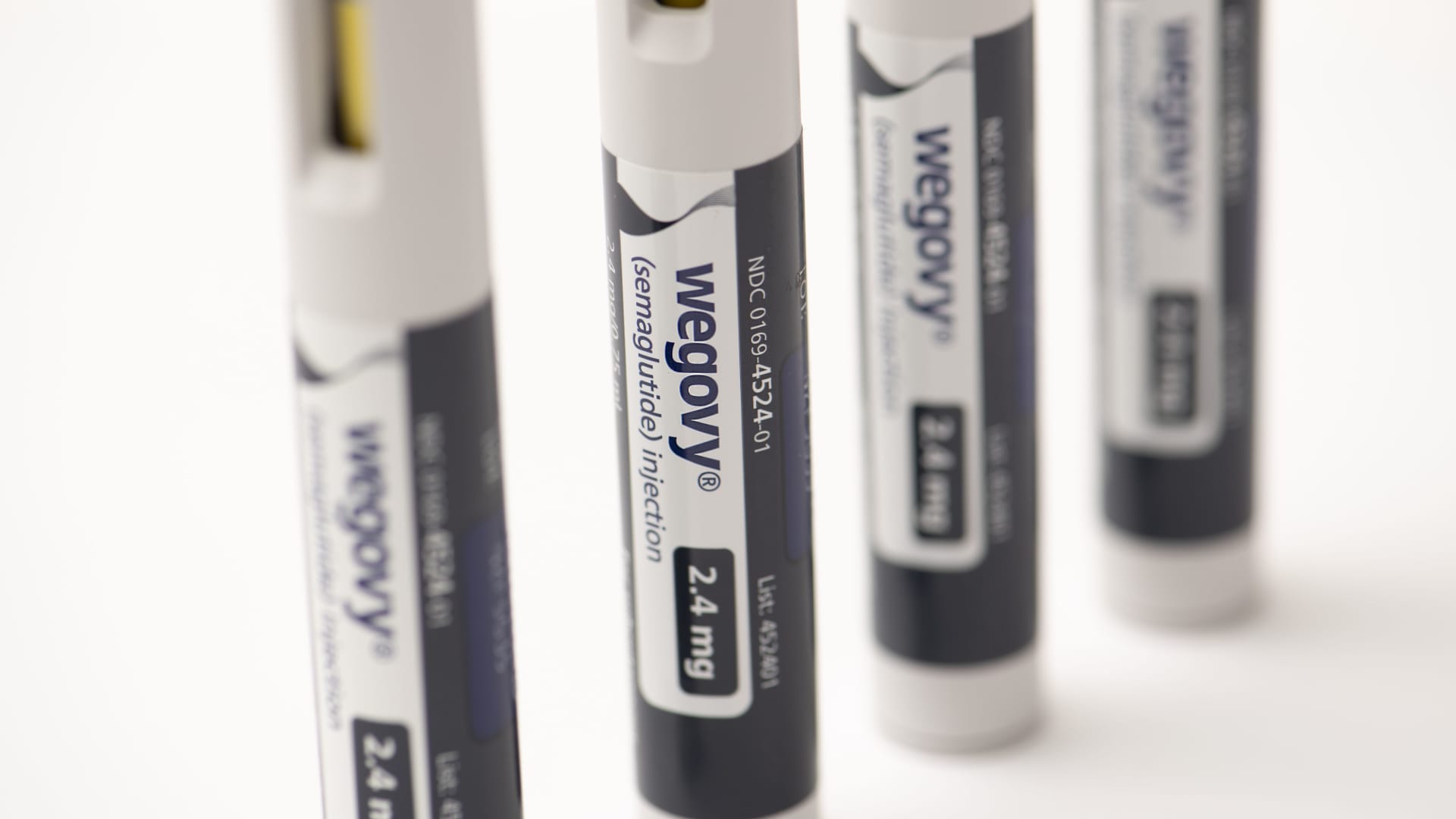
Still life of Wegovy an injectable prescription weight loss medicine that has helped people with obesity. It should be used with a weight loss plan and physical activity. 

Michael Siluk | UCG | Getty Images

Drugmakers have been scrambling to join a two-horse race to lead the market for popular weight loss drugs, which could be worth tens of billions in less than a decade.

Demand is only expected to grow, leaving room in the segment for lesser-known weight loss drug hopefuls such as the privately held German drugmaker Boehringer Ingelheim and smaller public companies such as Terns Pharmaceuticals, Viking Therapeutics and Structure Therapeutics.

The next entrants into the booming market have a key window of opportunity in the coming years: Goldman Sachs analysts expect 15 million U.S. adults to be on obesity medications by 2030.

During the JPMorgan Healthcare Conference in San Francisco last week, attendees flocked to hear Novo Nordisk and Eli Lilly – the two dominant players in the weight loss drug space – speak about what to expect this year from their blockbuster weight loss drugs. Demand for those treatments soared, and they slipped into shortages over the last year, as they helped patients shed significant weight over time.

Other large drugmakers such as Pfizer — which has a widely followed but so far ill-fated weight loss drug program — Amgen, Roche and AstraZeneca also outlined their strategies for joining the market. 

But other companies with weight loss drug ambitions have garnered less attention throughout the recent weight loss drug industry gold rush. They may soon compete with the larger players.

Here are some of the lesser-known businesses angling to enter the market.

Boehringer Ingelheim

Boehringer Ingelheim is developing a weight loss drug with Danish biotech firm Zealand Pharma. That company has been working on obesity treatments for nearly a decade. 

Their experimental drug works by targeting two gut hormones: GLP-1 to suppress appetite, and glucagon to increase energy expenditure. Some popular weight loss drugs such as Novo Nordisk’s Wegovy only target GLP-1. 

Boehringer Ingelheim in August said it was moving the drug, called survodutide, into a late-stage study, bringing it one step closer to potential Food and Drug Administration approval. A mid-stage trial found patients who are overweight or have obesity lost up to 19% of their weight after 46 weeks of treatment with the drug. 

That weight loss could be closer to 20% to 25% in a phase three trial, Zealand Pharma said ahead of the JPMorgan Healthcare Conference last week. It’s unclear when that product could win approval. 

Terns Pharmaceuticals

Smaller drugmakers are developing their own weight loss drugs. They could eventually enter the market through a buyout or partnerships with large pharmaceutical companies. 

Those companies include Terns Pharmaceuticals, which is much earlier in the development process than Boehringer Ingelheim is. 

The company is conducting an early-stage trial examining its oral weight loss drug, which works by targeting GLP-1, in patients who are overweight or obese. Oral drugs will likely be easier for patients to take and for companies to manufacture compared to the existing weight loss injections.

Terns Pharmaceuticals expects to release initial 28-day data from that trial in the second half of 2024, the company’s head of research and development, Erin Quirk, said during the conference. 

Quirk acknowledged that it may be difficult for Terns to set its pill apart from other weight loss drugs. But she added that “even if it’s not the best…analysts are out there predicting that this could be $100 billion market. If you get a 1% piece of that, that’s a $1 billion drug, right?”

Small biotech companies make moves

Other small drugmakers trying to enter the space include Viking Therapeutics, which is developing drugs that target GLP-1 and another hormone called GIP. Those are the same hormones that Eli Lilly’s weight loss and diabetes drugs, Zepbound and Mounjaro, target.

Viking Therapeutics expects to release mid-stage trial data on its weight loss injection in the first half of the year. An early-stage study on that drug showed that it caused up to 7.8% weight loss after 28 days.

The company is also slated to release phase one trial data on an oral version of its weight loss drug during the first quarter of the year. 

Structure Therapeutics is similarly developing an obesity pill, which missed Wall Street’s expectations for weight loss in a mid-stage trial last month. 

The oral drug helped obese patients lose roughly 5% of their weight compared to patients who received a placebo after eight weeks. Before that data was published, Jefferies analyst Roger Song had said he was expecting 6% to 7% weight loss relative to a placebo. 

Structure said it expects full 12-week results on patients with obesity in the second quarter of this year. The company plans to launch a larger mid-stage study in the second half of 2024 and a late-stage trial in 2026. 

Altimmune is also developing an experimental obesity injection called pemvidutide, which targets GLP-1 and glucagon. Altimmune’s stock has jumped nearly 250% since Nov. 30, when the company released mid-stage trial data showing that its drug caused 15.6% weight loss on average after 48 weeks.

Potential players down the line

Some large drugmakers signaled that they could eventually move to enter the weight loss drug market. 

That includes French company Sanofi, whose own GLP-1 drug failed a mid-stage trial almost half a decade ago. In the coming years, the company could look at potential “next-generation” weight loss drugs that could have advantages over the existing treatments, such as fewer side effects, executives told industry news publication Endpoint News at the JPMorgan Healthcare conference.

“There’s a lot of determination in companies, including ours to say, the first wave is going to be this, what’s the second wave going to be?” said Sanofi CEO Paul Hudson. 

Meanwhile, Bayer‘s pharmaceuticals head Stefan Oelrich said in an interview during the conference that the company is hesitant to enter the obesity market on its own, but it may partner with other companies.