Categories
Technology

This startup is bioengineering tissue into human vein implants

Norwegian startup ClexBio is bioengineering human veins to implant inside a patient’s body.

Together with CSEM, a Swiss R&D centre, the company has built a prototype bioreactor to grow the veins.

Pre-clinical tests in animal models are already underway. Based on the early results, the team is confident that the implants don’t trigger an immune response in patients. Instead, they turn into functional tissue that integrates with the body.

If further tests prove successful, the implants could treat severe chronic venous insufficiency, a painful condition caused when veins have problems moving blood to the heart.

TNW Conference 2024 – Group ticket offer

Save up to 40% with our Group offer and join Europe’s leading tech festival in June!

But veins are just the start of the company’s ambitions. ClexBio envisions bioengineering producing various medical treatments.

“In the future, we believe tissue therapeutic solutions will provide a cure for many of the chronic conditions that are debilitating for our society today,” Armend Håti, the startup’s CEO and co-founder, told TNW.

Bioengineering body parts

The new tech aims to scale bioengineering. Credit: ClexBio

At the core of ClexBio’s tech is the VivoSet platform, which can cultivate tissues into real human anatomies, such as veins.

To produce them in a scalable fashion, the startup developed the bioreactor.

Inside the machine, the veins mature over a few weeks in a sterile environment. Automated media circulation provides the tissue with oxygen and nutrients.

“Using a closed system to generate the vein grafts reduces the risk of contamination, ensures product quality and safety, and facilitates regulatory compliance,” Håti said.

“This is a vital prerequisite for our ability to conduct in-human studies and scale up commercially in a GMP [Good Manufacturing Practices] setting in the future.” 

As the veins mature, the system forms them into a graft. ClexBio said they can then be implanted into patients “off the shelf.”

Before that happens, the tech will have to pass an array of tests and clear regulatory reviews. But Håti is already imagining the real-world impact.

“We are truly excited about the paradigm shift this may usher in for human surgery and the treatment of damaged tissues,” he said.

“We are moving away from a world of synthetic implants and stepping into the world of bioengineering.”

Categories
Health

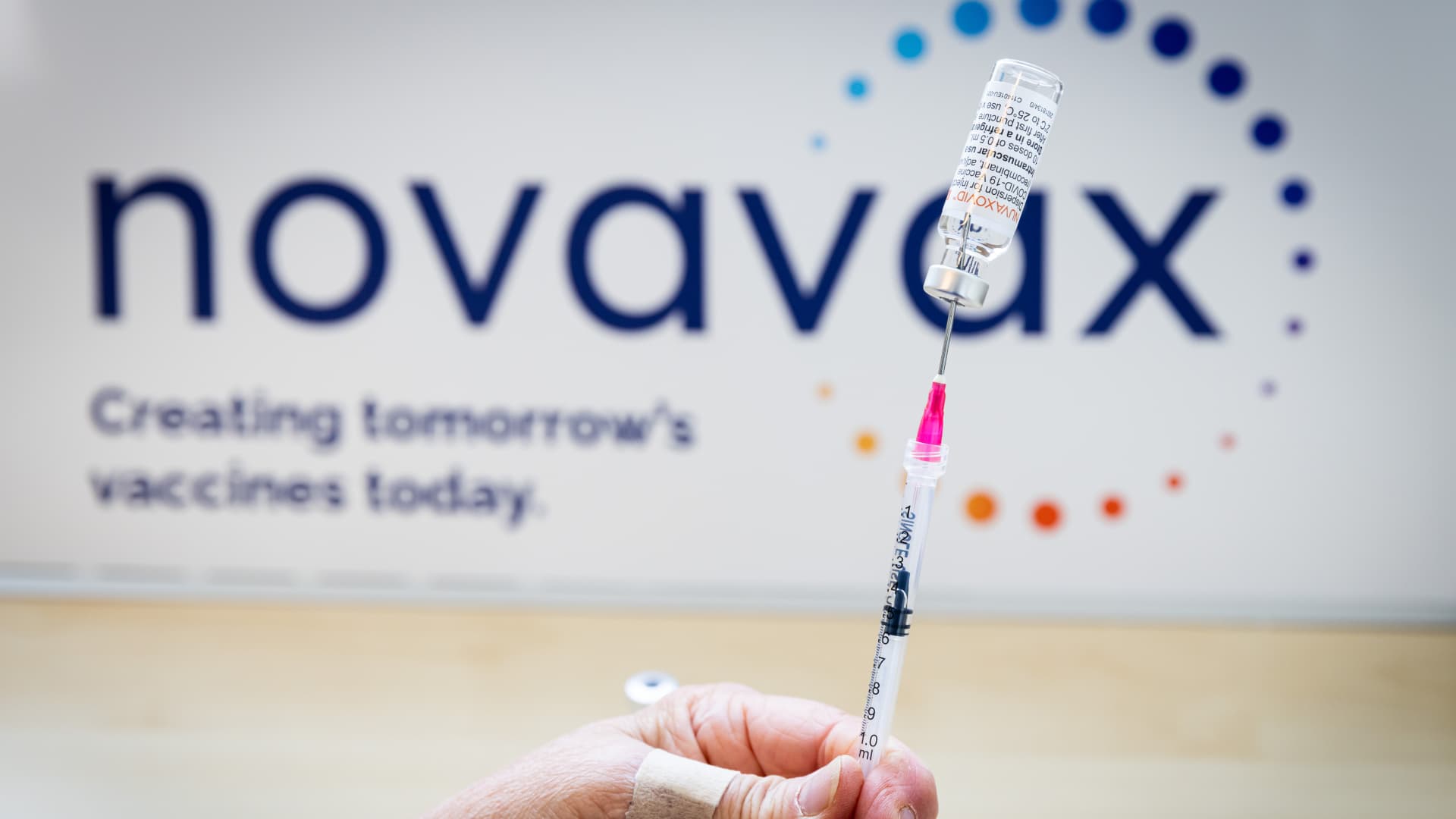
Novavax to settle Gavi arbitration over canceled Covid shot buy

A health worker prepares a dose of the Novavax vaccine as the Dutch Health Service Organization starts with the Novavax vaccination program on March 21, 2022 in The Hague, Netherlands.

Patrick Van Katwijk | Getty Images

Shares of Novavax closed more than 20% higher on Thursday after the company said it will settle a bitter arbitration dispute with Gavi, a nongovernmental global vaccine organization, over a canceled Covid vaccine purchase agreement. 

Novavax could pay up to $475 million to the organization, but the total amount may be less if Gavi decides to order more shots from the cash-strapped company over the next five years.

Still, the settlement eliminates what some analysts considered one of the biggest uncertainties around the Covid shot maker, which is cutting costs amid doubts about its ability to remain in business and plummeting demand for Covid products worldwide.

In 2022, Novavax terminated a purchase agreement with Geneva-based Gavi. The company cited Gavi’s failure to procure the 350 million vaccine doses it agreed to buy in May 2021 on behalf of the COVAX Facility, a global program that aims to distribute Covid vaccines more equitably in lower-income countries.   

Gavi sought a refund for the $700 million it spent on advance payments for Novavax’s shots. Novavax has said those payments were nonrefundable. 

Under the settlement, Novavax has paid an initial $75 million to Gavi and will make deferred payments of $80 million each year through Dec. 31, 2028. Those annual payments would be due in quarterly installments. 

More CNBC health coverage

But Novavax’s payments could be offset by an annual $80 million “vaccine credit” option under the settlement, which Gavi can use to order any of the company’s Gavi-funded shots for low and lower-middle income countries.

For example, if Gavi decides to order $50 million worth of shots from Novavax in 2025, the company would only have to pay the organization $30 million that year. 

Novavax said it is also offering a vaccine credit of up to $225 million that Gavi can use to order additional vaccine doses throughout the five-year settlement window “should there be additional demand.” 

The terms of the settlement could bode well for Novavax’s business. Analysts had previously told CNBC that Novavax could “be in trouble” if the arbitration forced it to pay the full $700 million to Gavi in 2023. 

“Gavi welcomes this agreement, which allows us to maintain focus on our core programmatic goals, including providing access to COVID-19 vaccines for vulnerable people in lower income countries,” Gavi CEO David Marlow said in a release Thursday. 

Don’t miss these stories from CNBC PRO:

Categories
Science

Why Local weather Scientists have been Duped into Believing Rising CO2 will Hurt Coral and Mollusks – Watts Up With That?

Jim Steele

Coral build reefs by producing limestone, or calcium carbonate. The great diversity of shell building mollusks, like clams and oysters, also build their shells out of calcium carbonate.  So, scientists assumed that these organisms just pulled carbonate ions from the surrounding sea water and joined it with abundant calcium ions to make reefs and shells, a process referred to as “calcification”. Thus, many scientists then expressed their heart-felt concerns that more CO2 will reduce the ocean’s carbonate ions and thus stress coral reef building and mollusk shell building.

Indeed, the increasing absorption of human produced carbon dioxide by the oceans can very slightly lower pH. In other words, more CO2 increases the oceans’ concentration of H+ ions. It is also unassailable science that when CO2 enters the water, it interacts with water molecules to produce both H+ ions and bicarbonate ions.  However, those H+ ions can then interact with carbonate ions and convert them to also form bicarbonate ions and reduce the pool of available carbonate ions. So, NOAA and hundreds of internet websites falsely told the world that “Ocean acidification slows the rate at which coral reefs generate calcium carbonate, thus slowing the growth of coral skeletons.”

However, climate scientists were apparently very ignorant regards the physiology of reef building and shell making.  In order for charged ions to pass through an organism’s lipid membranes and enter its calcification chambers, a specialized channel or transporter is required. But for over a decade now, the search for carbonate transporters has failed to find any such transporters in any of these organisms. However, abundant bicarbonate transporters (green rectangles) have been found and deemed important for making reefs and shells.

From an evolutionary perspective, using the more abundant bi-carbonate ions is extremely logical. The higher amounts of carbon dioxide in the ancient atmosphere would lower ocean pH when mollusks and coral first evolved millions of years ago. That argues using scarcer carbonate ions would be very risky but using much more abundant bi-carbonate ions would supply the stability to evolve. Furthermore, all those organisms had long had the ability to absorb bicarbonate ions and transform it internally into carbonate ions for shell making and reef building by simply pumping out hydrogen ions. When CO2 enters the oceans, over 90% of it converts to bicarbonate ions whether the oceans’ pH is acidic at pH 6 or basic at pH 9. In contrast, carbonate ions virtually do not exist when ocean pH approaches pH 6. (Graphic A.)

The world can only hope that NOAA and all those alarmist websites will soon admit that improved science has revealed the error of their ways, and  they will now come clean and tell the public that CO2 has not threatened reef builders and shell builders. In fact, they should report that more CO2 generates more bicarbonate ions which are the building blocks of shells and reefs.

4.6
8
votes

Article Rating

Like this:

Like Loading…

Categories
Sport

Steelers launch beginning heart Mason Cole, save $5M

  • Brooke Pryor, ESPN Staff WriterFeb 23, 2024, 04:51 PM ET

    Close

    • Previously covered the Kansas City Chiefs for the Kansas City Star and Oklahoma University for the Oklahoman.

PITTSBURGH — The Steelers are on the hunt for a new starting center.

The team announced the release of Mason Cole, who started 34 games in Pittsburgh after being acquired in free agency two seasons ago.

The move clears nearly $5 million in cap space, giving the Steelers even more flexibility with the $30 million increase in cap space announced by the league earlier Friday afternoon.

Editor’s Picks

1 Related

Cole, who will be 28 next month, had one year left on a three-year, $15.7 million contract signed in 2022. Though Cole, a 2018 third-round pick by the Arizona Cardinals, was a leader on the offensive line and in the locker room, he was inconsistent in his snaps throughout the season, prompting the Steelers to search for an upgrade at the position.

The team has the No. 20 pick in April’s draft and closely evaluated offensive linemen at the Senior Bowl earlier this month.

Categories
Entertainment

The 2004 SAG Awards Are a Crucial Dose of Nostalgia

Then there was the traditional heartfelt moment at the top of the award show when actors shared an anecdote from their lives.

“When I was 11 years old, my teachers told me I wasn’t mature enough and that I would never be successful as an actor,” Evan Rachel Wood explained. “But here I am at the SAG Awards. My name is Evan Rachel Wood, and I’m still an actor.”

Others took a lighter approach.

“In 1978, I got my SAG card, and since then, I’ve been asked to give it back on six separate occasions,” Everyone Loves Raymond’s Brad Garrett joked. “I’m Brad Garrett, and I don’t belong here.”

So, while we wait to find out who leaves a lasting impression at the 2024 SAG Awards—streaming on Netflix Feb. 24 at 8 p.m. ET—enjoy this heavy dose of nostalgia from the 2004 show…

Categories
Science

A New Area Telescope will Map the Universe and Assist Defend the Earth from Asteroids

Can we secure our place in the Solar System? Not in any absolute sense because nature can be very unpredictable. But we can make the effort to safeguard our civilization by cataloguing potentially dangerous asteroids. An upcoming space telescope will help.

NASA’s SPHEREx (Spectro-Photometer for the History of the Universe, Epoch of Reionization, and Ices Explorer) mission will launch no later than April 2025. The orbiting telescope will conduct a two-year all-sky survey in optical and infrared light. The main focus of the mission is to gather data on more than 300 million galaxies and 100 million stars in the Milky Way. But SPHEREx will also add to our knowledge of Potentially Hazardous Objects (PHOs).

A new paper examines SPHEREx’s capabilities and how the mission can contribute to Planetary Defense (PD.) Its title is “Planetary Defense Use of the SPHEREx Solar System Object Catalog.” It’s currently in pre-print, and the lead author is Carey Lisse from the Space Exploration Sector at the Johns Hopkins University Applied Physics Laboratory.

SPHEREx “provides a unique space-based opportunity to detect, spectrally categorize, and catalogue
hundreds of thousands of solar system objects at NEOWISE sensitivities,” the authors write. NEOWISE is NASA’s successful asteroid-finding mission that just reached ten years of operation and has found over 3,000 NEOs (Near-Earth Objects). “By leveraging SPHEREx data, scientists and decision-makers can enhance our ability to track and characterize PHOs, ultimately contributing to the protection of our planet,” the authors of the new paper explain.

Among the many calamities that have struck life on Earth, asteroid impacts are the most dramatic. About 66 million years ago, an asteroid struck Earth and wiped out the dinosaurs. That asteroid was about 10 km in diameter and wreaked havoc on Earth’s biosphere at the time. The odds of another asteroid strike are never zero, and less massive impactors could still alter civilization forever. It could cause unimaginable suffering and strife.

While some researchers are working on ways to destroy or deflect PHOs, others are working on cataloguing as many of them as they can. This is where SPHEREx comes in.

SPHEREx will follow the same type of orbit that NEOWISE does. It’s called a sun-synchronous polar orbit, and it means that the observatory will collect data from both the leading and trailing directions. That will allow SPHEREx to cover the range of latitudes in the entire sky every six months and to cover the ecliptic poles in each orbit.

This figure from the paper shows how SPHEREx will map the sky in infrared (left.) “Utilizing a sun-synchronous NEOWISE-like polar orbit, objects in the sky at ~90 deg elongation will be observed in each great circle,” the authors explain. “The Earth’s motion around the Sun advances the great circle’s longitude ~1 deg/day, taking data in both the leading/trailing (forward/ behind) directions means that the entire sky’s range of longitudes is covered in 6 months, with the ecliptic poles observed every orbit.” The panel on the right shows the Solar System objects SPHEREx will observe, excluding the Sun, Mercury, Venus, and the innermost Near-Earth Asteroids. Image Credit: Lisse et al. 2024

SPHEREx was built to address three main science goals: Measuring the Anisotropy of Cosmic Inflation,
Determining the History of Galaxy Formation, and Surveying Ices in Molecular Clouds. Detecting PHOs is its side hustle. But its powerful infrared capabilities mean it’ll do more than just detect them.

At the 10-second mark, this video shows how SPHEREx will orbit and how it will map the sky. NASA/JPL

When it comes to asteroid detection, we’re in a race against time. The pace may be slow, but it’s still a race and one we can win. Time may be on our side.

PHOs are defined as objects that come with 0.05 AU of Earth and have a magnitude of 22 or less. These objects are close enough to pose an impact risk and large enough to be catastrophic if they do strike Earth. Magnitude 22 corresponds to an object with an albedo of 0.14 and a size of about 140 meters. Though much, much less massive than the dinosaur-killing Chicxulub impactor, these objects can still cause widespread damage.

Scientists predict that one of the impactors should strike Earth every few ten thousand years. As a result, Congress instructed NASA to detect 90% of these NEOs. NASA’s made lots of progress, and with the commissioning of the Legacy Survey of Space and Time, they’ll likely reach the 90% goal in less than a decade.

NASA’s “Eyes on Asteroids” site maps the known Near-Earth asteroids (NEAs) and shows the population of these objects. Some are parent bodies of meteorites found on Earth. Courtesy NASA.

But SPHEREx will do more than detect PHOs, NEOs and NEAs. It will reveal crucial information that will allow us to prepare for their approach. “Accurate spectral categorization of NEOs is a key factor in assessing the threat from a potential impactor as well as developing effective mitigation strategies,” the researchers explain. “Succinctly, whether the impactor is made of rock, metal, or an icy organic mix is critical to know before one attempts to terminate the hazard (“know thy impactor”), and this determination is typically made using near-infrared spectrophotometry.”

The observatory will acquire millions of exposures of the sky, and they’ll be in 102 visual and infrared wavelengths. Some wavelengths will span the same range as NEOWISE but in 40 discrete channels rather than NEOWISE’s two channels. SPHEREx’s observations will also feature an additional 62 spectral channels beyond NEOWISE’s coverage. What does that add up to?

“SPHEREx measurements will be uniquely useful for spectral typing, quick object compositional characterization, population context, size/albedo determination, and temporal trending of objects in the
current epoch,” the authors explain. Spectral type, rotation states, albedo, and size are key factors in building up our planetary defence against asteroids and comets.

SPHEREx is an important step in safeguarding our home in the Solar System as best we can. Nature can throw a lot of powerful, vexing curveballs, and NASA’s efforts to detect them is foundational to developing ways to protect Earth.

SPHEREx will do more than find PHOs, and by characterizing them, its data could be the key to effective mitigation.

Like this:

Like Loading…

Categories
Health

Sickle cell illness gene therapies Casgevy Lyfgenia insurance coverage value points

Blood sample of patient positive
tested for sickle cell.

Kitsawet Saethao | Istock | Getty Images

The approval of two gene therapies to treat sickle cell disease has given hope to patients who suffer from the debilitating disease, which overwhelmingly affects Black people and people of color.

Health officials now face a challenge in finding a way to provide equitable access to the costly treatments.

The crippling episodes of pain from the genetic blood disorder make life unpredictable for patients like Michael Goodwin. Sickle cell has forced him to leave his job and at times taken him away from his family.

“I can be in the hospital 20 days out of the month sometimes,” said the 36-year-old Goodwin. “I’ve been in hospital a lot more as I’ve gotten older, which hurts me, because I have a son now and I’m married.”

Still, he’s hesitant to try the new one-time gene therapies because they require months of intensive medical preparation, including chemotherapy, to prepare patients’ bone marrow stem cells for extraction and gene editing.

Goodwin also worries about the cost. Vertex Pharmaceuticals‘ gene therapy Casgevy lists for $2.2 million, while Bluebird Bio‘s treatment Lyfgenia lists for $3.1 million.

“I do have insurance, but … I already have medical bills,” he said.

The therapies were cheered as a long-awaited breakthrough to treat the disease when they were approved in December. But the hurdles toward ensuring equitable access, and the lack of infrastructure in place to administer the nascent treatments, have raised questions about just how many people will benefit from them.

Goodwin’s hesitancy to pursue treatment is no surprise to Dr. Julie Kanter, director of the Adult Sickle Clinic at the University of Alabama at Birmingham.

“My guess is even if we opened the gates today to everybody getting this therapy, at most only 10% of those individuals affected by sickle cell would want this therapy,” said Kanter, who also serves as the president of the National Alliance of Sickle Cell Centers. “And even that would be too much for us to manage right this second.”

More than 100,000 Americans have sickle cell disease, according to Centers for Disease Control and Prevention estimates, and between 50% and 60% of them covered are covered by the federal and state insurance program Medicaid.

Kanter said it will take time to ramp up capacity and to set up facilities across the country to treat patients at scale.

“We really hope that having the National Alliance of Sickle Cell Centers will allow us to strengthen our centers to generally care better for people living with this disease, which we haven’t been able to do before because the cost is a problem,” she said.

High cost brings a new payment model

As they figure out how to ramp up treatment capacity, state and federal officials are grappling with how to provide access to the costly new treatments for the thousands of patients covered by the Medicaid safety net program.

“It’s giving us an opportunity to respond to folks with medical conditions for which there have not been very satisfying treatments. But I think the immediate consideration is the cost is very high. And state budgets simply cannot manage that on their own,” said Kate McEvoy, executive director of the National Association of Medicaid Directors.

A University of Washington analysis found that at a price of $2 million or less, the one-time gene therapy treatments would provide an acceptable value, offsetting the lifetime medical and quality-of-life costs for acute sickle cell patients. Many who suffer from the disease require multiple hospitalizations and blood transfusions, which can leave them unable to work.

But the researchers concluded that a lower price closer to $1 million would help ensure greater access.

The Biden administration is launching negotiations in the coming weeks with Vertex and Bluebird Bio to obtain discounts for state Medicaid plans, with payments linked to patient health outcomes. It is part of the Centers for Medicare & Medicaid Services’ Cell and Gene Therapy Access Model, which aims to make new high-priced treatments easier to obtain. Approval of the sickle cell treatments prompted the administration to begin implementing the new payment demonstration program one year early, starting in January 2025.

“There are probably about 100 therapies in the pipeline at the FDA in an advanced stage of application … so this is a real-time priority in terms of developing strategies that are going to undergird Medicaid programs capacity to cover the treatments,” said McEvoy.

The direct talks with the sickle cell drugmakers come as large pharmaceutical firms like Merck, Eli Lilly and others are suing the Biden administration over the Inflation Reduction Act Medicare price negotiations, which got underway in February. Those talks could see sharply lower price offers on the first 10 drugs selected for negotiation.

But on Vertex’s quarterly earnings call this month, executives expressed confidence about the negotiation process in this case. They said discussions with individual state Medicaid agencies will help ensure wide access and address long-standing inequities of care in the sickle cell disease community.

“We’re not waiting for the demo before we secure access for patients who are covered by Medicaid,” Steve Arbuckle, Vertex executive vice president and chief operating officer, told analysts. “If you look at the profile of Casgevy, it is so incredibly strong that really we’re talking about an outcomes-based agreement which is looking at whether a very, very small number of patients may not respond.”

Employers are taking note

Private employer health plans are also grappling with how to pay for an increasing number of novel treatments with seven-figure price tags, said Morgan Health CEO Dan Mendelson, whose firm focuses on workplace health programs.

“Many employers look at cell and gene therapies, see the costs, and are carving them out of their benefits. They know the therapies are valuable,” Mendelson said. But for smaller companies, “one case could exceed the cost of insuring an entire population in the course of a year and the employer doesn’t even know if the employee is going to stick around.”

Morgan Health is exploring new risk-sharing payment models that could help small- and medium-sized businesses cover the rising costs of specialty treatments coming onto the market.

Goodwin is covered under his wife’s employer health insurance. He hasn’t explored what kind of coverage her plan will provide for the new sickle cell treatments, because he’s still not sure whether they’re right for him.

“If they could guarantee me the outcome — that I wouldn’t have sickle cell … I would do it in a heartbeat. In a heartbeat,” he said.

In addition to discussions over payments, Vertex and Bluebird Bio are taking steps to educate doctors and patient communities about the benefits of their new treatments.

Vertex expects its first commercial patient to begin treatment in the coming weeks. Bluebird said it anticipated its first patient would start Lyfgenia in the first quarter.

Categories
Technology

7 fast-growing scaleups with unicorn potential — meet them at TNW 2024

While there are many innovative companies heading to TNW Conference 2024 this year, we’ve created a short list of 7 of the hottest scaleups to check out. Though they cover a range of different industries, they all have one thing in common: unicorn potential.

Through our Shining Stars competition, expert judges analysed and assessed each nominee to see which of the bunch is on track to becoming the next revolutionary unicorn, achieving rapid growth, and making a sustainable impact in their sector.

From growth monster to disruptive innovator, here are our picks:

A ‘vision’ for the future

Three companies stood out for their ability to bring cutting-edge technology to the masses.

TNW Conference 2024 – Group ticket offer

Save up to 40% with our Group offer and join Europe’s leading tech festival in June!

Vision Platform AI is making computer vision accessible by providing a no-code platform to create custom projects, without the need for technical skills. This technology can help revolutionise processes across a wide array industries and applications.

For example, the food and beverage industry can leverage it to speed up quality control and inspection, packaging verification, process optimization, inventory management, and food safety compliance. Meanwhile, the construction industry can deploy computer vision to enhance safety and ensure compliance on large construction sites.

While VR and AR technology have been around for a while, they have yet to become mainstream. Two companies on the list are changing that by bringing enhanced tech and user-friendly platforms, at a lower cost.

Tekle Holographics’ system creates fully immersive 3D visuals for a wide range of applications, from construction to the medical field to consumer gaming. What’s really game-changing about their approach is that other systems take up to 72 hours to process and convert images, while Tekle Holographics takes just 20 minutes.

Meanwhile, Fectar’s platform provides an easy-to-use VR & AR creation studio for individuals and small businesses. Newbies can start by using their 3D templates (no coding skills required), while the more advanced users can create animated interactive 3D environments.

Building a sustainable future

While our technology is bringing exciting new possibilities to our professional and personal lives, we can’t ignore the fact that our machines’ hunger for computing power is also heating up.

Deep Green, a data centre company on a mission to repurpose heat capture for good, introduced an innovative new idea. By teaming up with public pools they can both keep their data centres cool and provide free heating. The company aims to contribute free heat to 1500 public swimming pools in the UK in five years, with 300MW of networked, decentralised edge data centres. This will both save millions in energy bills and help maintain public access to community services.

The explosion of the space tech industry in recent years has helped to reinvigorate dreams of space exploration by increasing competition and innovation. Now national space agencies are seeking out commercial partners to help them find new solutions that are both cost-effective and sustainable.

ReOrbit’s software-first approach to designing satellites is disrupting the space industry. The company develops microsatellite platforms that are reusable, scalable, and modular with the flexibility to adapt to a wide variety of weight scales, enabling space organisations to conduct their satellite launch missions at a lower cost. Most importantly, the reusability and flexibility in design allow for longer-term use making it a more sustainable option compared to one-use systems.

Paving the way for future unicorns

At TNW, we love ideas aimed at bolstering the growth and health of the overall tech community.

Last year’s economic crunch made it a dismal year for many startups looking to raise funds. Not to mention the fact that fundraising takes time and effort away from busy founders, without the guarantee of success.

Uncapped is helping disrupt the system by offering founders alternative routes to finance the growth of their business, without having to give away ownership. The company provides no-security and no-equity investments from $100k – $10 million that can be issued in less time, and with a flexible payment system. This allows entrepreneurs in a bind to quickly access capital without the need for personal guarantees, credit checks, warrants, or equity.

Procurement is another cumbersome process that takes time and resources away from employees who often need to spend hours filling out purchase orders and learning how to use complicated management systems.

Pivot seeks to provide a solution to this ever-clunky process. As opposed to the lengthy integration required by market dominators Oracle NetSuite and Coupa, the platform integrates into existing financial stacks and can be used without the need for coding or training. Employees can then adjust the system to their needs, for instance by creating a purchase order workflow.

If you want to learn more about our Shining Star scaleups, meet them in person at TNW Conference 2024!

One of the themes of this year’s TNW Conference is Venture: Show Me The Money. If you want to go deeper into what it takes to get your startup funded, discover the next company to back, or simply experience the event (and say hi to our editorial team), we’ve got something special for our loyal readers. Use the code TNWXMEDIA at checkout to get 30% off your business pass, investor pass or startup packages (Bootstrap & Scaleup).

Categories
Sport

T.J. Oshie departs Capitals’ win with noncontact damage

Feb 22, 2024, 11:06 PM ET

Washington Capitals right wing T.J. Oshie left with a noncontact injury in the third period of a 5-3 win at the Tampa Bay Lightning on Thursday night.

Oshie went down to the ice after making a move near the offensive blue line. He crawled along the boards to the bench and needed assistance back to the locker room.

Capitals coach Spencer Carbery said there is a “fairly high” level of concern about Oshie’s injury.

“We’ll evaluate more [Friday], but it’s never a good sign when you see a player leaving the ice like that,” Carbery said.

On social media after the game, Oshie posted: “I’ll be back. Thanks for the love caps fans. #NoBadDays”

The Capitals (26-21-8) moved within five points of the Lightning (30-23-5) for the final playoff spot in the Eastern Conference.

The Associated Press contributed to this report.

Categories
Entertainment

Megan Thee Stallion ‘Imply Women’ Cameo Edited Over Lohan Joke

Reports suggest that the ‘Mean Girls’ reboot, now available on streaming platforms, has shortened Megan Thee Stallion‘s cameo.

As you’ll probably know, the comedy, released in January, made some not-so-positive headlines over a line where Meg appears to make a slight dig at Lindsay Lohan.

“Fire Crotch” Line Removed From ‘Mean Girls’ Digital Release

The Daily Mail claims that LiLo, the star of the original version in 2004, also made a surprise cameo in the movie and reportedly received a payment of $500,000.

However, the actress had no knowledge that writers included a joke about her, especially after she agreed to appear in the motion picture.

In the scene in question, Meg appears in a TikTok video as a photo of Cady Heron, formerly played by Lohan, pops up next to her.

“OK, so somebody sent me this look and I was like, ‘Hot girls, we are going back red, Y2K fire crotch is back,’” the ‘Body’ rapper said.

The flick, which eagle-eyed fans have been watching on platforms such as Prime Video, noticed that Meg’s cameo no longer includes the “fire crotch” remark.

The digital version of #MeanGirls has altered Megan The Stallion’s controversial “fire crotch” line after Lindsay Lohan was allegedly hurt by the joke.

The line now ends at “We are going back red” and jumps to her laughing, cutting out “Y2K fire crotch is back.” pic.twitter.com/LDytcHj1SL

— Kristen Maldonado (@kaymaldo) February 21, 2024

Instead, there’s a slight cut that then jumps to Megan saying, “Somebody sent me this look and I’m like, ‘Okay, you know what? Hot girls, we are going back red!’”

A rep for Lohan previously claimed that the ‘Herbie’ star didn’t find it amusing, but rather hurtful, according to Variety.

Socialite Brandon Davis infamously attached the phrase to LiLo, giving her the derogatory nickname during a night out in 2006 with Paris and Nicky Hilton.

Megan Has Not Commented On The Situation

Meg hasn’t addressed the controversy that erupted when Lohan’s team openly shared that the actress was displeased by the scene.

But the decision to take the line out would clearly indicate that producers were looking to rectify the mistake they made by including the joke to begin with.

Outside of her cameo, Meg played a huge part in the film’s success.

She teamed up with Reneé Rapp, who stars as Regina George, for the soundtrack single, “Not My Fault,” which was accompanied by a Mean Girls-inspired music video.

The pair promoted the track in a joint performance on Saturday Night Live, where Megan also got to meet the OG Regina George — Rachel McAdams.

Now that they have revised the digital release, everyone can return to enjoying the film without having to hear the “fire crotch” line that haunted Lohan throughout the ’00s.

Roomies, do you think the line was uncalled for or would you have been okay with it?

RELATED: Back To Da Money! Megan Thee Stallion Reveals What She Has In The Pipeline For The Hotties