Categories
Science

Specious Species – Watts Up With That?

Note by Kip Hansen — 22 February 2024 — 1600 words/8 minutes

We are constantly bombarded by news about “species” – Endangered Species, Threatened Species, Vanishing Species, Loss of Species such as “Researchers estimate that the current rate of species loss varies between 100 and 10,000 times the background extinction rate” [ source:  Britannica Feb 15, 2024 ].   Let me clarify that:  Britannica says that the Earth is losing species at a rate of 100 to 50,000 species per year

How can such an impossibly wide range even be considered an “estimate”?  Easy!  There is no agreed upon scientific definition of what a species is – so there can be no count either of existing species nor of species loss or extinction, in the present or in the past. 

There are ‘equally good’ estimates of the number of existing species:  8.7 million.  “That is a new, estimated total number of species on Earth—the most precise calculation ever offered—with 6.5 million species found on land and 2.2 million dwelling in the ocean depths.” [ source ] 

or

“As of 2021, we have identified and describedapproximately 2.13 million species.“ “Estimates suggest that around 20% of described species may be undiscovered synonyms [the same species under a different name]. Adjusting for this, the actual number of described species might be closer to 1.7 million.”  Taking into account estimates of undiscovered or undescribed species: “The true number of species remains elusive.  Estimates vary widely:  5 to 10 million eukaryotes (excluding viruses and bacteria).   Numbers exceeding 100 million or as low as 3 million.”    [ source ]  

So, here’s the summary of exert knowledge:

Number of Species

8.7 million or maybe 2.13 million or maybe 1.7 million or maybe 100 million or maybe 3 million.

Of which we are reportedly losing between 100 to 50,000 per year.

Carl Zimmer, science writer for the New York Times, gives another view of the species issue in a recent piece “What Is a Species, Anyway? — Some of the best known species on Earth may not be what they seem”.

He touches on the number-of-species issue giving:  “So far, researchers have named about 2.3 million species, but there are millions — perhaps even billions — left to be discovered.”  So, to the above summary we might have to add “or maybe billions.”

Zimmer goes on to explain:

“As if this quest isn’t hard enough, biologists cannot agree on what a species is. A 2021 survey found that practicing biologists used 16 different approaches to categorizing species. Any two of the scientists picked at random were overwhelmingly likely to use different ones.

“Everyone uses the term, but no one knows what it is,” said Michal Grabowski, a biologist at the University of Lodz in Poland.

The debate over species is more than an academic pastime. In the current extinction crisis, scientists urgently need to take stock of the world’s biological diversity.” [ NY Times as above ]

[Note:  I have touched on the species problem several times here at WUWT: for instance   “The Gray, Gray World of Wolves”  and  “Darwin — We’ve Got a Problem” ]

Zimmer is not kidding about the 16 major categories of opinions that biologists hold about the definition of what constitutes a species.  In Current Biology, Sean Stankowski and Mark Ravinet, wrote “Quantifying the use of species concepts” in which they describe the “species problem” this way:

“Dozens of species concepts are currently recognized, but we lack a concrete understanding of how much researchers actually disagree and the factors that cause them to think differently. To address this, we used a survey to quantify the species problem for the first time. The results indicate that the disagreement is extensive: two randomly chosen respondents will most likely disagree on the nature of species.”

Here is their chart (see the .pdf file for a better look):

Why do we even think about “what is a species?”  As we started out, the world is agog about species, loss of, discovery of, rediscovery of and extinction of.

Governments, national and international, have been passing laws and signing treaties dealing with the protection of species deemed threatened by or endangered by extinction.  These treaties and laws require governments to protect and save these species.

How can we determine what to save if we don’t even know what we are talking about?

In the United States, we have the famous (or infamous, opinions vary) Endangered Species Act (ESA).  It is available, in all its glory, in a .pdf file available here.   Hey, there’s a law and any lawyer (even a poor one) will tell you that laws are required to have clear-cut definitions of terms used in that law – least they be deemed “ambiguous” and in danger of being invalidated by the courts.

So, surely, the ESA defines species, right?  Let’s see…. Section 3. Definitions  — that should have it.  Here are the pertinent points of Section 3:

(16) The term “species” includes any subspecies of fish or wildlife or plants, and any distinct population segment of any species of vertebrate fish or wildlife which interbreeds when mature.

(6) The term “endangered species” means any species which is in danger of extinction throughout all or a significant portion of its range other than a species of the Class Insecta determined by the Secretary to constitute a pest whose protection under the provisions of this Act would present an overwhelming and overriding risk to man.

(20) The term “threatened species” means any species which is likely to become an endangered species within the foreseeable future throughout all or a significant portion of its range.

Wait a minute!  Surely there is a definition of “species” other than the fact that it is meant include “any subspecies of fish or wildlife or plants, and any distinct population segment of any species of vertebrate fish or wildlife which interbreeds when mature.”   We get a fine definition of “a subspecies or a distinct population” but not the primary definition of a species.

Does it matter?  Don’t all those taxonomists and biologists agree, at least generally, that a species is a population “which interbreeds when mature.”

Nope again, that is just the high-school version (ask any A-non-I chat) of what it a species is.  And, in the eyes of biologists, it only includes two of the 16 major divisions of species concepts according to Stankowski and  Ravinet :

Biological Species Concept I (BSCI) (Mayr 1942, 1995) Species are a group of interbreeding natural populations that are reproductively isolated from other such groups

Biological Species Concept II (BSCII) (Coyne & Orr 2004) Species are groups of interbreeding natural populations that are substantially but not necessarily completely reproductively isolated from other such groups

Note that it does not include the basic Darwinian definition, which is:

Darwinian Species Concept (DSC) (Jolly 2014) A species is an evolutionary lineage, or lineage segment, that is phenotypically distinguishable from all other such units and is usefully distinguished in scientific discourse.

There are 13 others, found  in Stankowski’s Supplemental Materials,  for those wishing to disappear down the species rabbit hole.

I suggest reading Carl Zimmer’s piece in the NY Times (this link should be good even if you don’t subscribe to the Times) to see what all the fuss is about.  The Mass Extinction types are worried about what will happen if they spend their time trying to figure out what a species really is:

“Thomas Wells, a botanist at the University of Oxford, is concerned that debates about the nature of species are slowing down the work of discovering new ones. Taxonomy is traditionally a slow process, especially for plants. It can take decades for a new species of plant to be formally named in a scientific publication after it is first discovered. That sluggish pace is unacceptable, he said, when three out of four undescribed species of plants are already threatened with extinction.”  [ from NY Times – Zimmer ]

How Wells can know, absent a solid working definition of “species” how many of the millions, or perhaps billions, of not-yet discovered and not-yet described “somethings we might decide to call species” are “already threatened with extinction” is a mystery to me.   I might even call that opinion unscientific.

Accounts of the  misuse of the U.S.’s ESA are widely known – like protecting the Red Wolf which is a hybrid of the Gray Wolf and Coyote as a “species” by breeding captured animals that appeared to be Red Wolves to supplement the existing but shrinking population, rejecting those with too much wolf or too much coyote genes.  This has been going on for 50 years.   More importantly, the ESA is widely used by radical environmental groups to block development projects (like pipelines) to which they object for other unrelated reasons (see the Prebles Meadow Jumping Mouse).  Readers can supply local examples.

Bottom Lines:

1.  The “Species Problem” is still going strong and is unlikely to be resolved anytime soon.

2.  That means that there will be those who take advantage of the ambiguity of species definitions to use the Endangered Species Act – ESA –  (in the U.S.) and its international counterparts to forward other agendas.

3.  The U.S. ESA is intentionally so broad that it could be conceivably be stretched to demanding protection of anthropogenically created sub-populations of rare animals and plants.  

4.  We need pragmatic reform of the U.S. ESA and re-evaluation of international treaties concerning endangered animals and plants.

# # # # #

Author’s Comment:

We have had good coverage here at WUWT of the species problem and the so-called 6th Mass Extinction event from several authors including the Willis and Jim Steele.

Dr. Susan Crockford covered the Polar Bear portion of the Zimmer/NY Times article at “NY Times pushes an implausible story of polar bear evolution and what makes a species” which has just been re-posted here.

The Endangered Species Act is a well-meaning but poorly written and perversely implemented piece of legislation and is desperate for reform.   It lacks any boundaries for biological significance and pragmatic application.

Specious means:   “superficially plausible, but actually wrong.”

Thanks for reading.

# # # # #

Like this:

Like Loading…

Categories
Health

Moderna (MRNA) earnings This fall 2023

Nikos Pekiaridis | Nurphoto | Getty Images

Moderna on Thursday posted a surprise quarterly profit, boosted by deferred revenue and cost cuts, even as the company saw slumping sales from its Covid vaccine, its only marketable product.

The results cap a rocky year for the biotech company and other Covid vaccine makers, which all saw revenue plunge as the world continued to emerge from pandemic and relied less on protective shots and treatments.

Here’s what Moderna reported for the fourth quarter compared with what Wall Street was expecting, based on a survey of analysts by LSEG, formerly known as Refinitiv:

  • Earnings per share: 55 cents. That may not be comparable to a loss of 97 cents expected by analysts.  
  • Revenue: $2.81 billion vs. $2.50 billion

Moderna posted net income of $217 million, or 55 cents per share, for the fourth quarter. That compares with net income of $1.47 billion, or $3.61 per share, reported for the year-ago period.

The biotech company booked fourth-quarter sales of $2.81 billion, with revenue from its Covid shot dropping 43% from the same period a year ago. That decline was primarily driven by lower vaccine volume, but was partially offset by a higher average selling price of the jab, according to Moderna.

Notably, the company said it recorded $600 million in deferred revenue during the quarter related to the company’s work with Gavi, a nongovernmental global vaccine organization that coordinated a global shot distribution program. 

But Moderna CFO Jamey Mock told CNBC in an interview that the deferred revenue is “kind of a nonevent” and isn’t “really the best way to beat earnings.” 

He noted that Moderna is more excited about its lower-than-expected cost of sales, which he called one of the main reasons why the company’s earnings came in above what some analysts were expecting. 

Cost of sales were $929 million for the fourth quarter and $4.69 billion for the full year. That includes charges related to the company’s efforts to scale back manufacturing of its Covid shot and write-downs of unused doses of the vaccine. 

In November, Moderna said it had expected cost of sales to come in at $5 billion for the year. 

“We started to see some fruits of productivity in the fourth quarter, and so that’s what we’re happy about,” Mock said, adding that the deferred revenue from Gavi is “just pure accounting.”

Still, the deferred revenue boosted Moderna’s full-year Covid vaccine sales to $6.7 billion, an amount the company first unveiled in January. It booked $18 billion in revenue in 2022 and expects sales from the shot to drop even further in 2024. 

The company noted that the vaccine won 48% of the U.S. Covid vaccine market share last year. That’s up from the 37% it captured in 2022. 

Moderna reiterated its full-year 2024 sales guidance of roughly $4 billion. That forecast includes revenue from its vaccine against respiratory syncytial virus, or RSV, which could win U.S. Food and Drug Administration approval on May 12.

The RSV shot will have a competitive advantage because it’s the only one that comes in a pre-filled syringe, making it easier for pharmacists to administer, CEO Stephane Bancel said Thursday on CNBC’s “Squawk Box.”

“There is so much more to Moderna than Covid, and that’s what we’re excited about,” Bancel said.

More CNBC health coverage

The company will continue to reduce expenses in 2024, Mock noted, including a projected $4.5 billion in full-year research and development expenses, down from $4.8 billion in 2023. 

“We’re going to increase our discipline as well,” Mock said. 

Moderna has said it expects to return to sales growth in 2025 and to break even by 2026, with the launch of new products. The company lost $4.7 billion for the full year 2023, compared with a profit of $8.4
billion the year prior.

Moderna currently has 45 products in development, nine of which are in late-stage trials. They include Moderna’s combination shot targeting Covid and the flu, which could win approval as early as 2025.

The pipeline also includes Moderna’s personalized cancer vaccine, a highly anticipated shot being developed with Merck to target different tumor types in combination with the blockbuster immunotherapy Keytruda. 

Don’t miss these stories from CNBC PRO:

Categories
Technology

Dutch EV charging startup raises €27.5M to develop European community

Amsterdam-based Fastned has raised more than €24mn in new bonds to grow its fast charging network across Europe. Investors have also extended €3.5mn from earlier bonds, bringing the total funding to over €27.5mn.

Founded in 2012, the startup provides over 280 fast charging stations across several European countries, including the Netherlands, Belgium, Germany, and France. In January last year, it announced an expansion to Spain as well.

Drivers can add up to 300km of range in about 15 minutes, depending on the EV type. Notably, Fastned provides electricity using renewable energy from solar and wind power.

Fastned offers both a subscription and pay-on-the-go service. In the Netherlands, paying on the go costs €0.69 per kWh — on the lower end of fast charging pricing, which varies between €0.65 and €0.90.

TNW Conference 2024 – Group ticket offer

Save up to 40% with our Group offer and join Europe’s leading tech festival in June!

“Accelerating the building pace of infrastructure for electric mobility is crucial given the expected exponential growth of the number of electric vehicles in the coming years,” said co-founder and CEO Michiel Langezaal.

The environmental imperative to switch to electric mobility provides a beneficial opportunity for companies operating in the EV charging space, as adequate charging infrastructure is key to enabling the EU’s ban on petrol and diesel vehicles in 2035.

In the meantime, the number of electric cars on the road is increasing. In 2023, EV registrations in Europe exceeded 2 million units for the first time in a single year.

Categories
Science

Can We Survive in Area? It May Depend upon How Our Intestine Microbiome Adapts

For over a century, people have dreamed of the day when humanity (as a species) would venture into space. In recent decades, that dream has moved much closer to realization, thanks to the rise of the commercial space industry (NewSpace), renewed interest in space exploration, and long-term plans to establish habitats in Low Earth Orbit (LEO), on the lunar surface, and Mars. Based on the progression, it is clear that going to space exploration will not be reserved for astronauts and government space agencies for much longer.

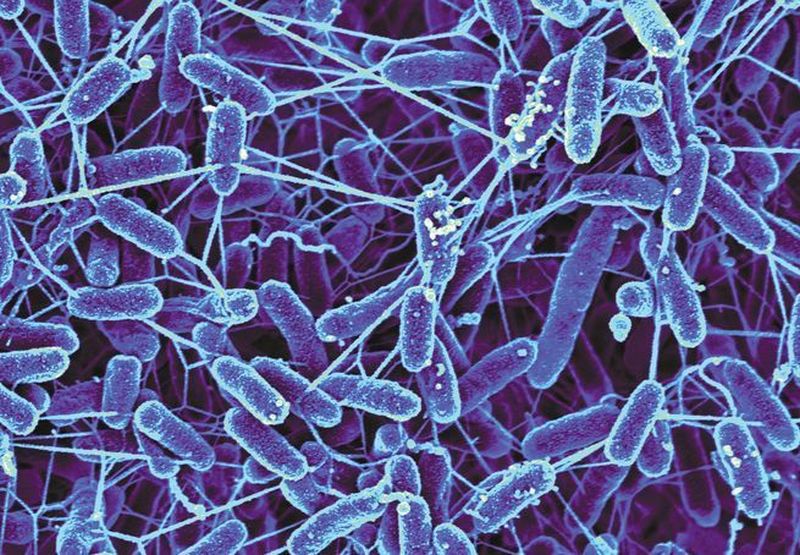
But before the “Great Migration” can begin, there are a lot of questions that need to be addressed. Namely, how will prolonged exposure to microgravity and space radiation affect human health? These include the well-studied aspects of muscle and bone density loss and how time in space can impact our organ function and cardiovascular and psychological health. In a recent study, an international team of scientists considered an often-overlooked aspect of human health: our microbiome. In short, how will time in space affect our gut bacteria, which is crucial to our well-being?

The team consisted of biomedical researchers from the Ionizing and Non-ionizing Radiation Protection Research Center (INIRPRC) at the Shiraz University of Medical Sciences (SUMS), the Lebanese International University, the International University of Beirut, the MVLS College at The University of Glasgow, the Center for Applied Mathematics and Bioinformatics (CAMB) at Gulf University in Kuwait, the Nuclear Physics Institute (NPI) of the Czech Academy of Sciences (CAS), and the Technische Universität Wien Atominstitut in Vienna. The paper that describes their findings recently appeared in Frontiers of Microbiology.

Artist’s impression of the Space Launch System (SLS) taking off. Credit: NASA

A microbiome is the collection of all microbes that live on and within our bodies, including bacteria, fungi, viruses, and their respective genes. These microbes are key to how our body interacts with the surrounding environment since they can affect how we respond to the presence of foreign bodies and substances. In particular, some microbes alter foreign bodies in ways that make them more harmful, while others act as a buffer that mitigates the effects of toxins. As they note in their study, the microbiota of astronauts will encounter elevated stress from microgravity and space radiation, including Galactic Cosmic Rays (GCR).

Cosmic rays are a high-energy form of radiation that consists primarily of protons and atomic nuclei stripped of their electrons that have been accelerated to close to the speed of light. When these rays are generated from elements heavier than hydrogen or helium, their high-energy nuclei components are known as HZE ions, which are particularly hazardous. When these impact our atmosphere or protective shielding aboard spacecraft or the International Space Station (ISS), they result in showers of secondary particles.

While Earth’s protective magnetosphere and atmosphere prevent most of these particles from reaching the surface, astronauts in space are exposed to them regularly. As the authors noted, previous research has shown how this exposure could potentially enhance astronaut resilience to radiation, a process known as radio-adaptation. However, they also noted that the extent to which astronauts adapted varied from one astronaut to the next, with some experiencing adverse biological effects before embarking on a deep space mission.

For this reason, they recommend conducting further research to determine the risks associated with the space environment, as it mostly consists of protons, which astronauts will be exposed to before encountering HZE particles. Third, NASA’s Multi-Mission Model suggests that an astronaut’s first mission can be an adapting dose. However, the team notes that current research suggests that a second spaceflight does not necessarily increase the chances of genetic abnormalities as much as expected. This could mean that the body may have a natural radio-adaptive defense mechanism.

Making medical diagnoses aboard the International Space Station can be a tricky business Credit: NASA

In terms of recommendations, the team lauded the ISS as the ideal environment for testing the human microbiome response to space radiation and microgravity. They also address the shortage of research in this area and how the long-term effects of radiation on microbiomes and environmental bacteria are poorly understood:

“The International Space Station (ISS) is a unique and controlled system to study the interplay between the human microbiome and the microbiome of their habitats. The ISS is a hermetically sealed closed system, yet it harbors many microorganisms… In this context, NASA scientists did not consider that adaptation is not limited to astronauts and radiation exposure to bacteria inside an astronaut’s body or that bacteria inside the space station could induce resistance not only to high levels of DNA damage caused by HZEs but also to other bacterial activity-threatening factors such as antibiotics.”

Increased resistance to antibiotics could be life-threatening for astronauts, who face risks of injury and infection during long-duration missions. Furthermore, they emphasize how space travel and prolonged exposure to microgravity can weaken the immune system, reducing astronauts’ natural resistance to microbes – especially those with high levels of resistance to radiation, heat, UV, and desiccation, and can therefore survive in a space environment. As they summarize it:

“In a competition between astronauts and their microbiomes to adapt to the harsh space environment, microorganisms may emerge as the winners because they can evolve and adapt more quickly than humans by rapid acquisition of microbial genes. Microorganisms have a much shorter generation time, enabling them to produce many more offspring, each with unique genetic mutations that can help them survive in the space environment.”

Flight Engineer Anne McClain in the cupola holding biomedical gear for MARROW. Credit: NASA

For this reason, the research team stresses that additional research is needed to estimate the magnitude of adaptation in microorganisms before missions are mounted. This could be crucial for identifying potential risks and developing mitigation strategies, novel therapies, and interventions. They also recommend that astronauts undergo regular cytogenetic tests to measure their adaptive response and that only those who show a high adaptive response to low doses of radiation be selected for missions where they would be exposed to higher doses.

They also acknowledge that studying astronaut microbiomes in space presents several challenges. These include the difficulty of conducting experiments in the microgravity environment, which can affect the growth and behavior of microorganisms, making it challenging to obtain accurate and reliable data. There’s also the potential hazard of spreading pathogens in a closed environment with recycled air systems. However, this is research that needs to be conducted before crewed deep-space exploration can be realized, as it has the potential to identify potential pathogens and develop strategies to prevent their spread during missions.

Further Reading: Frontiers in Microbiology

Like this:

Like Loading…

Categories
Entertainment

Why Scott Hamilton Will not Bear Remedy for third Mind Tumor

Scott Hamilton is giving fans an update about on his health.

The Olympic figure skater, who won a gold medal at the 1984 games, shared that a pituitary tumor in his brain has returned for a third time—and he won’t be seeking treatment.

“When they gave me the diagnosis, they said, ‘It’s back,'” the 65-year-old told People in an interview published Feb. 21. “And so they brought in this guy, a really young, talented surgeon, and he said, ‘We could do the surgery again. It’d be complicated, but we’ve got really talented people here that we could bring in, and I know we could pull it off if that’s an option for you.'”

However, the World Figure Skating Championship winner—who had the surgery in 2004 and 2010—already knew that he didn’t want to go through it again.

“All I felt was just, don’t worry about this. Just go home and get strong,” he said. “They go, ‘Well, what do you want to do?’ And I said, ‘I think I’m going to go home and get strong.'”

Categories
Sport

Justin Fields needs to stick with Bears, however ‘it is a enterprise’

  • Courtney Cronin, ESPN Staff WriterFeb 21, 2024, 02:56 PM ET

    Close

      Courtney Cronin joined ESPN in 2017, originally covering the Minnesota Vikings before switching to the Chicago Bears in 2022. Courtney is a frequent panelist on Around the Horn and host of Best Week Ever on ESPN Radio. She also co-hosts The Chicago Bears Podcast on ESPN 1000. She previously worked at the San Jose Mercury News as a multimedia sports journalist.

CHICAGO — Quarterback Justin Fields said his decision to unfollow the Chicago Bears on Instagram is nothing more than him needing a break from social media this offseason.

Appearing on the “St. Brown Brothers” podcast, Fields cleared the air about not following the Bears and the NFL’s account after it was discovered Monday that the quarterback no longer followed his team on Instagram.

“Why do people take social media so serious?” Fields said. “I still mess with the Bears, this and that. I’m just trying to take a little break. I unfollowed the Bears and the NFL. I’m not just trying to have football on my timeline.

“It’s something that I don’t want to see on my timeline. I’m about to go on vacation. I don’t want to see no football. And guess what? [The social media discourse is] either keep Fields, we want Fields. It’s either draft Caleb [Williams]. I’m tired of hearing the talk. I just want it to be over.”

Editor’s Picks

2 Related

The Bears own the No. 1 pick in April’s draft and face a monumental decision at quarterback. Fields, 24, just completed his third season in Chicago and has been the subject of intense debate for months as to whether the Bears should stick with the quarterback and build around him or use the draft’s top pick on a rookie quarterback, with USC’s Williams, the consensus top prospect, at the center of the discussion.

Bears general manager Ryan Poles has acknowledged that the franchise is considering all options at quarterback in 2024. “I did think Justin got better,” Poles said in January. “I think he can lead this team. But at the same time, there’s a unique situation where I have to look, and our staff has to look, at everything, and that’s exactly what we’re going to do.”

When asked by Detroit Lions wide receiver Amon-Ra St. Brown whether he wants to stay in Chicago, Fields repeated his desire to play for the Bears.

“Yeah, of course. Of course I want to stay,” Fields said. “I can’t see myself playing in another place. But if it was up to me, I would want to stay in Chicago. I love the city. The city’s lit. The fans there are great, and the people. It’s a business. I ain’t got no control over it; whatever happens, happens. I think the biggest thing with all this going on right now, I just want it to be over. Like, just let me know if I’m getting traded, let me know if I’m staying, this and that.”

Fields, who is from Georgia, was also asked about his thoughts on the Atlanta Falcons, a team that also has a quarterback decision to make this offseason and has been linked to the Bears quarterback as a possible trade destination.

“Atlanta would be tough,” Fields said. “The only con of going back home is just people hit my phone [up] crazy wanting tickets to the game. But I think they’ve got a lot of playmakers on the team: of course Bijan [Robinson]; they’ve got my boy Kyle [Pitts]; and then, of course, Drake [London], too. They probably need one more receiver, but they’ve definitely got some guys over there, and their defense was good this year, too.”

Categories
Health

Medical doctors really feel burned out however inspired by potential of AI, survey says

Suriyapong Thongsawang | Moment | Getty Images

Doctors in the U.S. are struggling to contend with burnout, staffing shortages and overwhelming administrative workloads, but many are optimistic that artificial intelligence could help to ease these problems, a new survey found. 

More than 90% of physicians report feeling burned out on a “regular basis,” according to the survey, commissioned by Athenahealth, which offers cloud-based health-care tools. The survey found that excessive administrative tasks such as paperwork are the driving force behind this burnout, with 64% of doctors saying they feel overwhelmed by clerical requirements. 

More than 60% of respondents said they have considered leaving the medical field, the report said. 

Athenahealth released the results of the survey Wednesday.

To keep up with workloads, physicians are spending an average of 15 hours per week working outside their normal hours, in what many in the industry refer to as “pajama time,” the survey said. 

Nearly 60% of doctors in the survey said they feel they do not have enough in-person time with their patients, and more than 75% reported feeling overwhelmed by patients’ “excessive communication demands,” such as frequent texting, calling and emailing outside scheduled visits. 

Doctors are also noticing the challenges that their employers are facing, the survey found. 

Around 78% of physicians said poor staff retention and shortages are affecting their organizations, according to the survey. Additionally, fewer than 40% of doctors feel confident that their employer is “on solid financial footing.” 

Despite these obstacles, 83% of doctors in the survey said they believed AI could help. Physicians think the technology could eventually streamline administrative work, improve the accuracy of diagnoses, identify patterns and anomalies in patient data and more, the survey said.

Many doctors said their biggest concern about AI is that it could lead to a loss of human touch in health care, and around 70% said they are concerned about the technology’s use during at least one part of the diagnosis process, the survey said. 

Even so, twice as many survey participants said AI would eventually be part of the solution, compared with those who said AI is part of the problem, according to the news release. 

The study said AI optimists — survey participants who indicated that AI is part of the solution — also tend to feel more positive about the broader use of technology in health care. Nearly 80% of that group said they think tech helps them manage their patient workload, for instance.  

“In order for physicians to fully benefit from technology as a care enhancement tool, they need to experience more advantages and fewer added complexities or burdens,” Dr. Nele Jessel, chief medical officer of Athenahealth, said in the release. “If we get this right, we’ll be using the technology to reduce administrative work and increase efficiencies in ways that allow physicians to refocus on their patients.”

While AI is unlikely to solve health-care problems overnight, the survey found that the technology is giving some doctors hope for the future. Around 37% of the AI optimists believe the field is ultimately heading in the right direction, according to the survey.

In the study, 1,003 doctors were surveyed between Oct. 23 and Nov. 8. The survey was conducted online by market research firm The Harris Poll on behalf of Athenahealth, whose sponsorship of the study was not revealed to the survey participants, the release said. Only 5% of respondents said they use Athenahealth’s technology, the release said.

Don’t miss these stories from CNBC PRO:

Categories
Science

Planning for Local weather Blackouts – Watts Up With That?

From CFACT

David Wojick

We are awash in urgent warnings that the electric power grid is increasingly prone to failure.

Some of these warnings have come from people who actually oversee the grid, including the Federal Energy Regulatory Commission, The North American Electric Reliability Corporation, and various Regional Transmission Operators (RTOs). My fellow skeptics have also been vocal on this growing threat of disaster.

The reason is painfully clear. States and utilities are recklessly shutting down their reliable power plants, especially coal-fired and nuclear. They claim to be replacing these with wind and solar generators, but they only work intermittently, so they are completely unreliable.

Rather than complaining about this madness, or in addition to that, it is time to prepare for the inevitable result. We must plan for blackouts.

Everyone talks about blackouts, but I have not seen a detailed analysis of the various ways these might occur in any given region. I suspect there are several different basic ways, each calling for a different planning approach. So here are some starter thoughts.

First of all, there are deliberate rolling blackouts versus uncontrolled blackouts. RTOs and utilities may well have internal plans, or perhaps rules, for running rolling blackouts.                                                                                                                   If so, it would be very helpful to know what these are. For example, emergency service groups at all levels of government could have rolling blackout warning systems and response plans.

Uncontrolled blackouts may be unpredictable, but they can still be planned for to some degree. I live way out in the country, and we get blackouts several times a year, so we have a well-prepared routine for dealing with them if they do not last too long. Towns, cities, and counties should do likewise.

Of special importance are the size and duration of blackouts, as both features deeply affect planning. Should we expect a lot more small blackouts or just a few more big ones? How about really big ones, a few of which have occurred in the past?

It also matters how hot or cold it is, especially for large, long-lived blackouts. Severe cold is really dangerous.

The 2021 Texas blackout disaster killed hundreds of people, and the East Coast almost went that way around Christmas 2022. It turns out extreme cold can mess up the natural gas supply system for gas-fired power plants, so this, too, needs to be planned for.

The first question is how much failure analysis can already be done using existing computer models. The RTOs and utilities do a lot of modeling. For example, they already can determine what system upgrades will be needed before a new large generating facility can be connected to the grid. The wind and solar people complain about this because it sometimes makes their remote projects very expensive.

If the utilities can do that kind of detailed analysis, they ought to be able to see where things are likely to break and what that might do to the system. I am reminded of The Wichita Lineman song line saying: “If it snows that stretch down south will never stand the strain”.

It may be that they are already doing this sort of failure analysis; they just don’t want to tell us about it, lest it worry us. But given all the warnings, we clearly need to worry and take steps to address that worry.

It also may be true that they cannot do the kinds of failure analysis I am describing. The growing threat is new, after all, so the software simply may not exist. If this is true, then given the huge amounts of potential damage, including deaths, we should be developing that software as fast as possible.

Not knowing the near-term impact of the so-called “energy transition” on reliability is a true public health emergency. We may be flying blind into the wall of impossibility.

Vague warnings are not good enough. It is time for all levels of Government to plan for blackouts.

Note: An earlier version of this article appeared in the spring edition of Range Magazine.

http://www.rangemagazine.com/ For the cowboy in all of us.

Like this:

Like Loading…

Categories
Entertainment

Monica Speaks Out After Social Media Says She Had BBL Surgical procedure

Monica is setting the record straight for all social media users who seem to believe she underwent BBL surgery.

RELATED: Let It GO! Monica Wants Folks To Stop Mentioning C-Murder To Her (Exclusive)

Here’s What Prompted The Social Media Speculation

Over the weekend, a TikTok user with the username @simplyvee247 took to social media to upload footage from a Monica concert. In the clip, the singer could be seen sporting a green full-length bodysuit as she sang her hit song, ‘U Should’ve Known Better,’ to the crowd.

Additionally, the TikTok user captioned the clip with, “That bbl done took Monica voice away.”

Check it out below.

@simplyvee247

#monica #musicfestival #atlanta #fypシ゚viral

♬ original sound – simplyVee247

To date, the TikTok video has gone viral, garnering over 1.5 million views. Additionally, social media users seemed to believe that Monica’s backside appeared more voluptuous than usual.

One TikTok user, DarrenSok, wrote, “Oh Monica. You never had to enhance anything. You were perfect as is…” While another TikTok user, Faren, added, “Now why she go & do that?!”

TikTok user Naisha Gaitor wrote, “the caption broke me down… cause you might be right.”

Furthermore, TikTok user R added, “Stuff like this just makes me realize nobody is truly happy with their body! Even when it’s clear they naturally look great and should be very confident in that. She looks great but did not need this.”

Over on X, formerly known as Twitter, users shared their reactions to the viral video as well.

If monica got a bbl I don’t like it bc her ass sittin higher than jesus. Its givin d relly where the money reside booty pic.twitter.com/yaObA4WDTE

— Margaret Gilbert (@IneededDaBree) February 18, 2024

Not Monica on my TL w/ a bbl reveal 😭

— Erika Flow (@flow_witMe) February 17, 2024

Monica got a bbl? 👁️ https://t.co/filnFDG7wU

— 👑 WILL (@iLL_Will91) February 17, 2024

Monica Sets The Record Straight

Then, on Monday, February 19, Monica took to Instagram Live and, while streaming with her fans, addressed the viral footage and speculation.

“Oh, yall got jokes. Y’all got jokes… Let me tell you something — my health is far too to be playing like that. And then, why they ain’t get this part?” the singer explained, pointing to her stomach. “Why they leave that? Like, I don’t understand.”

The singer explained that, for her, a “BBL would mean bought by Linda.” She then proceeded to grab a pair of Spanx underwear that featured butt pads and showed them to her fans.

“I don’t even wear lash extensions. I still wear strips that I can rip off and roll on,” she continued, seemingly implying that she wouldn’t undergo a more permanent procedure like a BBL. “Like d**n, I done kept it real with y’all so long, y’all forgot? Like what in the world?”

Before concluding the matter, Monica explained that if she undergoes any procedure, she’ll be the “first” to inform her fans.

Watch the singer’s full sentiments below.

One Rapper Recently Got Candid About Undergoing BBL Surgery

Although Monica won’t be spilling the tea on any BBL-related secrets anytime soon, Latto opened up about her surgery last year. As The Shade Room previously reported, Latto got candid on the matter in June 2023.

“I got a BBL in 2020. I also got 360 lipo. That’s on my stomach, back, sides, and whole torso,” she explained during an interview with Cosmopolitan. “But then you’ve got to maintain it. So I just hired a trainer…”

Latto explained that she initially considered going back for surgery but instead went with a trainer and has now developed a routine to maintain her results.

“I tweeted the other day that I was almost going to get a round two of surgery, and then I was like, let me just get a trainer instead. If you look on my Instagram, you’ll see I’ve always worked out—before and after the surgery. But I will leave early or not push myself as hard. Having a trainer holds you accountable,” she told the outlet.

RELATED: Latto Talks “Maintaining” Her Body After Undergoing A “BBL” And “360 Lipo”

Categories
Sport

NCAA Girls’s Bracketology – 2024 girls’s faculty basketball projections

RULES

ESPN’s Bracketology efforts are focused on projecting the NCAA tournament field just as we expect the NCAA Division I basketball committee to select the field in March. ESPN bracketologist Charlie Creme uses the same data points favored by the committee, including strength of schedule and other season-long indicators, including the NET and team-sheet data similar to what is available to the NCAA, in his projections of the field. Visit the NCAA’s website for a fuller understanding of NCAA selection criteria.

64-Team Bracket

The 64-team bracket is the standard version of the NCAA tournament field that has been in place since 1994. If the 2021 field is comprised of 64 teams, there will be some key differences to past years, however.

The primary adjustment from a normal year is, of course, the playing of the entire NCAA tournament at a single site. This eliminates the need for geographical considerations in seeding. Additionally, there will be at least one fewer automatic qualifier this season, as the Ivy League’s decision to forgo the 2020-21 season reduces the number of AQ entries to 31 for this season.

48-Team Bracket

In this projection, a condensed selection process would reduce the field by eight at-large teams and eight automatic qualifiers (the latter of which still receive a revenue unit). The top four seeds in each region would receive a bye into the second round, with four first-round games per region – 5 vs. 12, 6 vs. 11, 7 vs. 10 and 8 vs. 9.

16-Team Bracket

In this projection, the committee selects and seeds the 16 best available teams. There are no automatic qualifiers, although all non-competing conference champions receive the designated revenue unit.

To maintain some sense of national balance, conference participation is capped at four teams. And no region shall have more than one team from the same conference.