The Federal Trade Commission on Wednesday said it is examining the role that drug wholesalers and companies that purchase medicines for U.S. health-care providers play in shortages of generic drugs, which account for the majority of Americans’ prescriptions.
The move follows an unprecedented shortfall of crucial medicine ranging from injectable cancer therapies to generics, or cheaper versions of brand-name medicines, over the last year, which has forced hospitals and patients to ration drugs. Problems from manufacturing quality control to demand surges can drive supply issues.
But the Biden administration is zeroing in on other players in the drug supply chain to uncover the “root causes and potential solutions” to ongoing shortages.
In a joint request for information, the FTC and the Department of Health and Human Services are seeking public comment on the contracting practices, market concentration and compensation of two types of middlemen. They are group purchasing organizations, which broker drug purchases for hospitals and other health-care providers, and drug wholesalers, which buy medicines from manufacturers and distribute them to providers.
More CNBC health coverage
The request for information will examine whether those middlemen have misused their market power to cut the prices of generic drugs to the point that manufacturers can’t profit and have to stop production, and rival suppliers are discouraged from competing in the generic drug market.
“The FTC is interested in looking at this market because on one side of the market, you have patients that are desperate for the right drug and would pay a very high price for that drug if they could. And on the other side of the market, you have manufacturers that can’t get more than a few dollars per dose of that same drug,” Doug Farrar, director of the FTC’s Office of Public Affairs, told CNBC.
“So that negative outcome for patients is what caused the FTC to want to study this market,” he added.
The FTC and HHS did not name specific companies. But Vizient, Premier and HealthTrust are among the biggest group purchasing organizations for hospitals, while Cencora, Cardinal Health and McKesson are responsible for roughly 90% of prescription drug distribution in the U.S..
The public will have 60 days to submit comments at Regulations.gov, the FTC said.
Group purchasing organizations and wholesalers have gotten limited attention on Capitol Hill, even as reining in high drug costs has become a key priority among lawmakers in both chambers.
As part of the effort to cut the cost of medications, lawmakershave sought greater transparency from pharmacy benefit managers, which negotiate drug discounts on behalf of insurance companies and other payors, about their business practices.
PBMs contend that manufacturers are responsible for high drug prices, while drugmakers say rebates and fees collected by those middlemen force them to increase list prices for products.
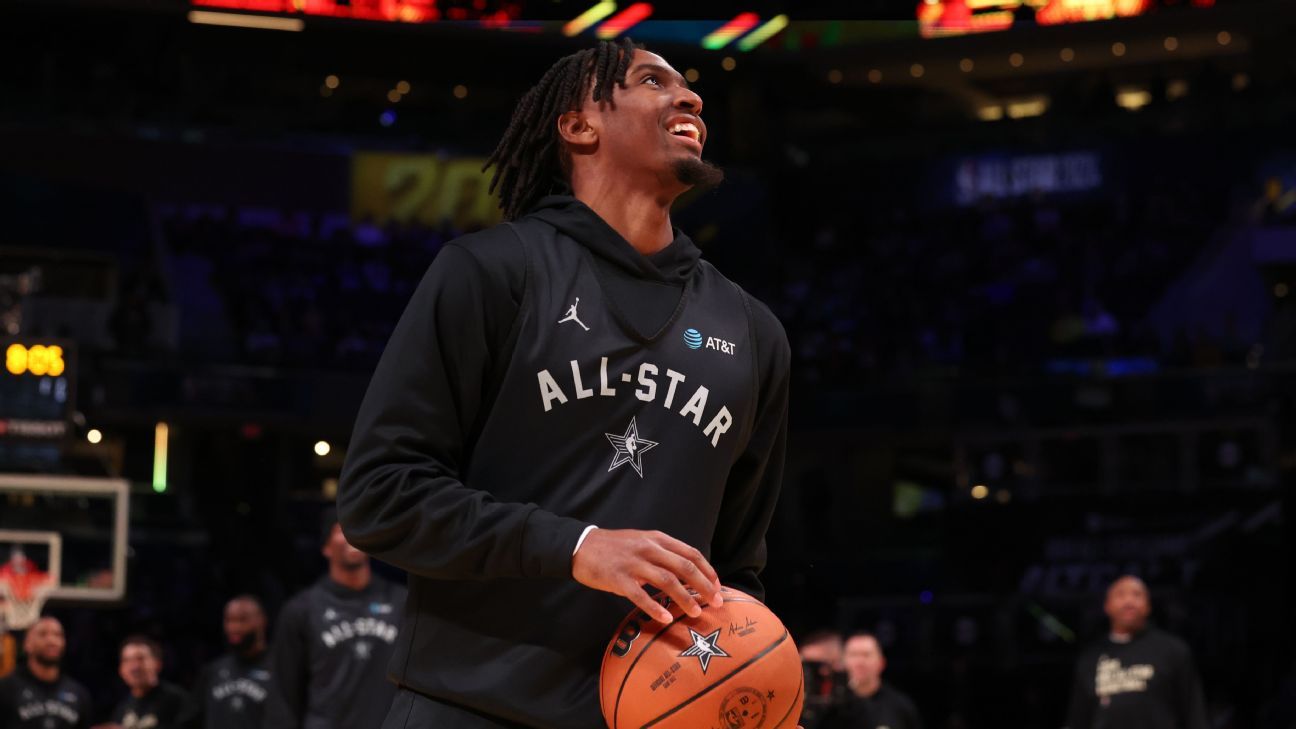
The 2024 NBA All-Star Weekend is underway with a jam-packed slate in Indianapolis.
Editor’s Picks
1 Related
On Saturday, Team Top Picks, Team Pacers and Team All-Stars will start the day’s action in the skills challenge. Reigning 3-point contest winner Damian Lillard is back to defend his title against a field that includes 2022 champion Karl-Anthony Towns. McClung, the 2023 slam dunk contest winner, will also look to repeat against Jaylen Brown, Jaime Jaquez Jr. and Jacob Toppin.
Following the traditional 3-point contest, Stephen Curry and Sabrina Ionescu will go head to head in a special edition of the long-range competition.
The weekend will conclude with the marquee event Sunday: the 73rd NBA All-Star Game. Unlike last year, which used a playground draft format that included team captains making their selections before the game, a traditional East vs. West matchup will be played for the first time since 2017.
Last year, Jayson Tatum was named MVP after dropping 55 points, the most ever in an All-Star Game. He’s back again as a starter and hopes to lead the Eastern Conference to a win alongside Giannis Antetokounmpo and Tyrese Haliburton. The Western Conference starting lineup is headlined by LeBron James, Kevin Durant and Nikola Jokic.
Here are the top moments from the NBA’s midseason showcase:
The digital advertising landscape in Europe is undergoing a significant transformation, driven by antitrust cases against tech giants, new regulations like the Digital Services Act and Digital Markets Act, and the rise of emerging players. This change promises to regulate competition concerns, manage consumer protection, and handle the responsibilities of digital platforms in the advertising ecosystem.
European antitrust actions: a regulatory landscape
In 2023, the European Union introduced two landmark regulations, the Digital Services Act (DSA) and the Digital Markets Act (DMA), reshaping the online world. The DSA empowers users to flag illegal content and demand greater transparency from tech giants, such as Amazon, Apple, Meta, Google, and Zalando.
The DSA has been in effect since August 25, 2023, giving users time to gain a newfound confidence in navigating the online world. Starting today, February 17, all online services and digital platforms that offer services in the EU must be fully compliant with the DSA.
At the same time, the DMA targets the market power and behaviour of large digital platforms, including online marketplaces, search engines, and social network services, and forces them to be more transparent about data handling and algorithms.
TNW Conference 2024 – Group ticket offer
Save up to 40% with our Group offer and join Europe’s leading tech festival in June!
Implementing the DSA and the DMA marks a significant shift in the digital landscape: consumersrepresent a long-awaited step towards a more user-centric experience, while businesses face the challenge of adapting their practices to align with new regulations.
Impact on digital advertising players in Europe
The antitrust investigations against Google, Amazon, and Meta have exposed a fundamental issue in the digital landscape: the monopolised power of businesses stifled competition and harmed consumers. Their dominant positions have enabled them to manipulate markets, favour their products, and suppress innovation. The DMA has emerged as a beacon of hope for a fairer and more competitive digital landscape in response to these concerns.
In the short term, the DMA will disrupt the established operations of tech giants that have long enjoyed a position of dominance, shaping the digital experience for billions of users. Yet, the DMA introduced a new era of accountability and transparency, forcing companies to rethink their practices and prioritise user interests. This could result in changes to their business models, such as ensuring interoperability between different messaging platforms and allowing users more freedom in choosing their preferred apps and services.
Amazon’s case serves as a prime example of this dynamic. The company is currently contesting an antitrust lawsuit filed by the U.S. FTC, alleging that it abused its market power to harm consumers and competitors. The legal challenges faced by tech giants like Amazon may allow them to implement changes that align with the DMA’s principles, even before the full impact of the regulation is felt. The DMA could also lead to a more competitive advertising market in the long term, with a broader range of players offering innovative solutions to advertisers and users.
Interestingly, introducing the DMA presents opportunities for startups to enter the digital advertising market and challenge the dominance of established players. For instance, they can differentiate themselves by providing a fresh perspective on user experience, introducing innovative solutions, and focusing on niche markets, often overlooked by more prominent players with broader market ambitions.
Future of digital advertising in Europe
Despite facing several challenges, the digital advertising market in Europe is projected to grow by 6.38% from 2023 to 2028, resulting in a market volume of $161.2 billion in 2028. To thrive in this evolving landscape, European advertisers and platforms should prioritise compliance with new regulations, embrace innovation, and foster strategic partnerships, as it can open doors to new markets, enhance distribution capabilities, and gain access to valuable insights.
While the GDPR and DSA are undoubtedly shaping the advertising landscape, emphasising user privacy and transparency, we must consider whether EU businesses should continue relying solely on giants like Google and Meta for advertising needs. We should foster a competitive ecosystem where local players can thrive, offering fair pricing and transparent advertising practices that align with the new regulatory landscape.
This would benefit both advertisers and consumers: advertisers could achieve better value for their money, while consumers would have greater control over their privacy. So, it is now up to regulators, advertisers, and platforms to seize this opportunity and build a thriving ecosystem that works for all stakeholders.
Moreover, the rise of emerging competitors poses a threat to established tech giants like Google and Meta. This situation underscores why advertisers and platforms must invest in innovation, develop novel user engagement strategies, embrace cutting-edge technologies, and utilise advanced data analysis methods to stay competitive. For instance, subsets of AI like deep learning, computer vision, neural networks, large language models, and reinforcement learning are expected to drive creativity in digital advertising.
Collaboration in the digital marketing space
Collaboration is a key to unlocking new opportunities and resources. Advertisers and platforms can benefit from partnerships with tech giants, other advertisers, or startups, expanding their reach and expertise. Collaborative marketing can gain new customers and leads, increase engagement on content, social media, and new digital products, raise brand awareness, and drive conversions and revenue.
While the DSA and DMA pose challenges and require practice changes, they offer opportunities for emerging players. Digital advertising players must adapt by ensuring compliance, embracing innovation, and fostering strategic partnerships to stay competitive and thrive in the market.
Vitaly Gerko is the CBDO of the Adtech video platform Viqeo.
One of the themes of this year’s TNW Conference is Pixels and Profit. If you want to dive deeper into how MarTech is shaping the future of customer engagement, brand experiences, and creative design, or simply experience the event (and say hi to our editorial team), we’ve got something special for our loyal readers. Use the code TNWXMEDIA at checkout to get 30% off your business pass, investor pass or startup packages (Bootstrap & Scaleup).
A team of scientists is looking to dump chemicals into waters off the coast of Massachusetts this summer to research whether doing so could be an effective counter to ocean acidification and climate change, according to The Wall Street Journal.
The project would see researchers from the Woods Hole Oceanographic Institution (WHOI) pour approximately 6,000 gallons of sodium hydroxide — a component of lye — into waters ten miles away from Martha’s Vineyard, Massachusetts, in August 2024, according to the WSJ. The research project, estimated to cost about $10 million in total, will receive taxpayer funds from the National Oceanic and Atmospheric Administration (NOAA) provided the Environmental Protection Agency (EPA) signs off on releasing the chemicals.
The underlying concept is to see if the basic sodium hydroxide can reduce the acidity of ocean waters and make those waters more efficient repositories of carbon dioxide, according to the WSJ. Sodium hydroxide is a common ingredient in soaps and cleaning solutions, and it can be harmful to humans in high concentrations, according to the Tennessee Department of Health. (RELATED: Eco-Activists, Climate Scientists Quietly Met To Discuss Tinkering With The Sun)
Scientists Think They’ve Found A New Remedy For Climate Change https://t.co/OEPJDhVfXW
— Daily Caller (@DailyCaller) May 17, 2022
“When you have heartburn, you eat a Tums that dissolves and makes the liquid in your stomach less acidic,” Adam Subhas, a WHOI scientist who is poised to serve as the project’s main investigator, told the WSJ. “By analogy, we’re adding this alkaline material to seawater, and it is letting the ocean take up more CO2 without provoking more ocean acidification. Everything that we’re seeing so far is that it is environmentally safe.”
NOAA will provide some of the funding for the project, which is also being supported financially by private donors and two philanthropic organizations, according to the WSJ. Neither NOAA nor WHOI immediately responded to requests for comment, which included inquiries about the identities of the organizations and donors backing the project.
“EPA will follow the permitting process as described in the Marine Protection, Research, and Sanctuaries Act regulations before reaching a final determination to approve or deny the permit application,” a spokesperson for the agency told the Daily Caller News Foundation. “Once EPA receives a complete permit application, the agency will provide notice to the public and will invite public comment on the permit application and EPA tentative determination on whether to issue a permit.”
WHOI’s intention to test the efficacy of tinkering with ocean chemistry reflects a wider emergent trend of climate scientists pushing so-called “geoengineering” projects, according to the WSJ. The basic idea of geoengineering is altering some physical or chemical aspect of an environmental system in order to counteract climate change.
How do marine scientists find love among the all test tubes and dive gear?@Capenewsdotnet tracked down three happy couples at #WHOI who share the secret to their (marine) chemistry: https://t.co/rZU1rrjz6h pic.twitter.com/ZKNBeVkzYd
— Woods Hole Oceanographic Institution (WHOI) (@WHOI) February 14, 2024
Other geoengineering projects that are being considered or funded by the government, private sector or major donors include systems that shoot particles 60,000 feet into the air to reflect sunlight and cool the atmosphere, and another project that aims to enlarge and brighten clouds to increase reflectivity, according to the WSJ.
All content created by the Daily Caller News Foundation, an independent and nonpartisan newswire service, is available without charge to any legitimate news publisher that can provide a large audience. All republished articles must include our logo, our reporter’s byline and their DCNF affiliation. For any questions about our guidelines or partnering with us, please contact licensing@dailycallernewsfoundation.org.
Crikey, it’s over for Robert Irwin and Rorie Buckey.
The son of late Crocodile Hunter star Steve Irwin and the influencer, who is Heath Ledger‘s niece, have broken up after nearly two years of dating.
“We wanted to share that we have decided to go our separate ways,” Robert, 20, and Rorie, 19, shared in a joint statement on Instagram Story Feb. 16, “but profoundly appreciate all of the time spent together and wish one another all the very best into the future.”
They continued, “We wish to express gratitude and respect we have for one another as we continue our journeys on different paths.”
Robert was first romantically linked to Rorie in November 2022, when the pair were photographed together on a beach in Queensland, Australia. A month later, Rorie was seen celebrating Robert’s 19th birthday alongside his mom, Terri Irwin, at his family’s Australia Zoo.
The pair took their relationship to the next level in July 2023, making their red carpet debut as a couple at the Australian premiere of Mission: Impossible – Dead Reckoning Part One. Clad in matching black ensembles, Robert and Rorie—whose mom Kate Ledger is Heath’s sister—were inseparable as they posed for photos.
Many U.S. companies are grappling with health insurance coverage issues for workers when it comes to GLP-1 drugs for weight loss.
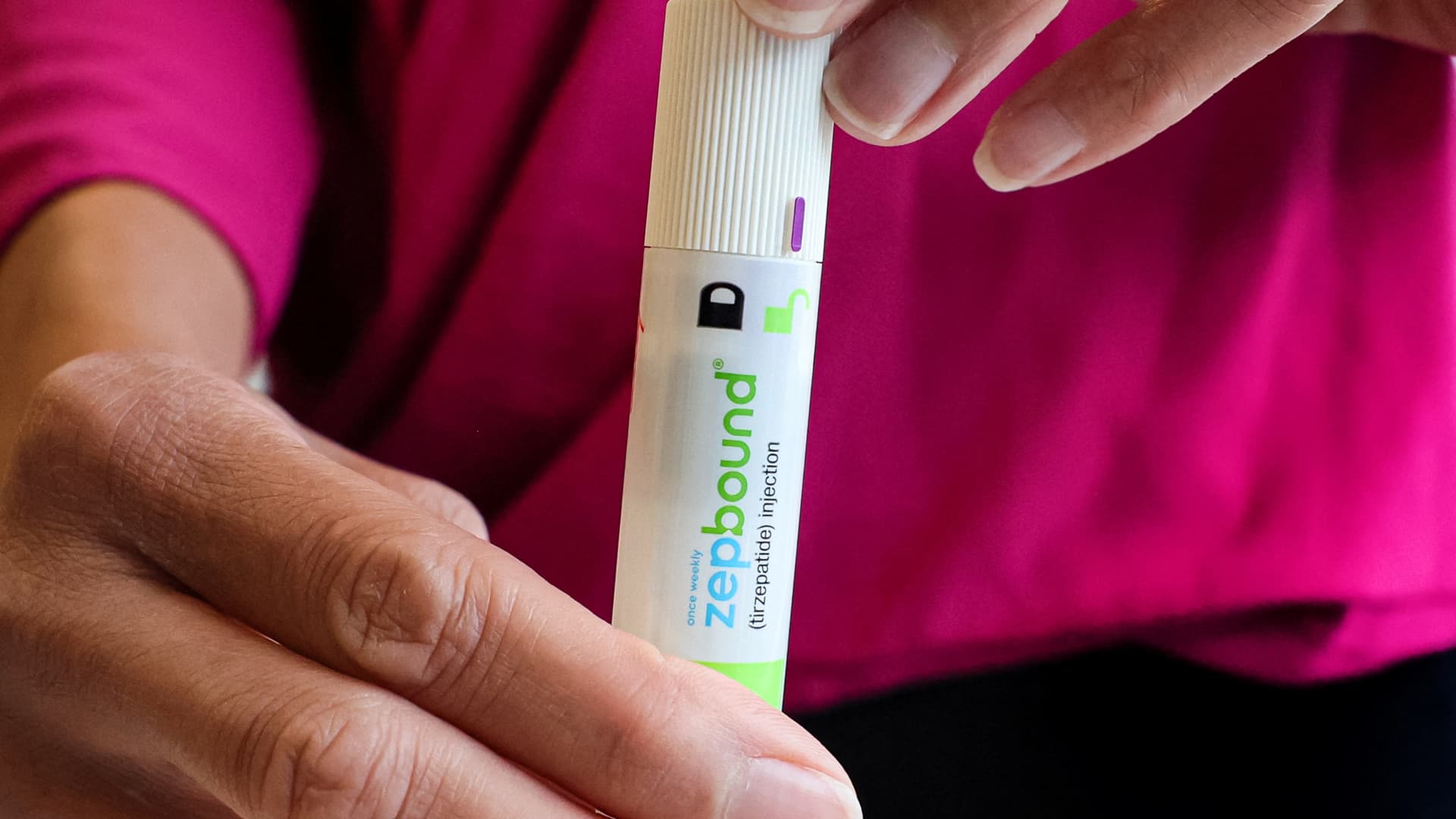
Despite the hefty price tag — typically between $1,000 to $1,500 a month — consumers are clamoring for drugs like Novo Nordisk‘s Wegovy and Eli Lilly‘s Zepbound. This class of drugs, historically used to treat diabetes, has gained broader appeal, and while some employers are providing coverage, often with limitations, others are struggling to determine how to cover them without breaking the bank.
An October survey of 205 companies by the International Foundation of Employee Benefit Plans found 76% of respondents provided GLP-1 drug coverage for diabetes, versus only 27% that provided coverage for weight loss. But 13% of plan sponsors indicated they were considering coverage for weight loss.
“Right now, there’s still a lot of questions among employers,” said Julie Stich, vice president of content at the International Foundation of Employee Benefit Plans. In addition to high costs, companies don’t have long-term data on effectiveness and potential side effects to support coverage, and some are just biding their time until more of this information exists.
Still, many benefits experts say it’s a matter of when, not if, more employers will cover GLP-1 drugs.
Certainly, prescription volumes of GLP-1 weight loss drugs are soaring. Novo Nordisk recently became Europe’s largest publicly traded company due to investor enthusiasm about the obesity market, and it just made a major acquisition in a bid to increase manufacturing capacity of GLP-1 treatments due to demand, buying drug manufacturer Catalent for $16.5 billion to increase the supply of Wegovy and diabetes shot Ozempic.
Meanwhile, Eli Lilly’s recent results were buoyed by the launch of Zepbound, which won approval from U.S. regulators in early November and raked in $175.8 million in sales for the fourth quarter. Wall Street’s most optimistic assessment sees a drug that can post more than a billion dollars in sales in its first year on the market and eventually become the biggest drug of all time.
Here’s what employers and employees need to know about the changing landscape for weight-loss drugs and health insurance coverage.
Annual cost is the elephant in room at $18,000 per employee
At least 70% of the top 18 commercial health plans Tufts Medical Center tracks in its specialty drug database cover GLP-1 drugs for obesity, with varying limitations. But the largest companies in the U.S. are generally self-insured, so they’re the ones calling the shots when it comes to coverage — and for them, cost is a major issue.
States can decide whether to cover weight-loss drugs under Medicaid, which means coverage can vary, according to a report from KFF. The state of North Carolina recently made the decision to stop coverage of obesity drugs for state employees.
Medicare doesn’t cover weight-loss medications, with the exception of patients with Type 2 diabetes. Notably, 76% of older adults think Medicare should cover prescription medication for weight management, according to recent findings from the National Poll on Healthy Aging.
At $1,500 a month, employers could be paying $18,000 a year for just one employee’s supply of weight-loss drugs, said Greg Stancil, a senior account executive at Scott Benefit Services. If you’ve got, say, 56 employees on the drug, that’s over $1 million a year. That’s a cost that “just didn’t exist in 2022, now they have this potential long-term expense they’re trying to figure out what to do with,” Stancil said.
“The balancing act is maintaining a robust benefits package so they can recruit and retain employees, but also managing the cost of that package to keep costs down for employees and the employer,” Stancil said. “Every employer would love to cover everything to make everybody happy, but somebody’s got to pay for it.”
Employers already covering weight-loss drugs say it’s worth it
Ninety-nine percent of companies already covering GLP-1s say they plan to continue covering them, according to a survey by Accolade, a personalized health-care company. Among other things, these employers cite higher employee satisfaction and wellbeing, increased engagement in other wellbeing programs and improvement in other health conditions as reasons for covering.
“HR benefit leaders recognize this is something employees want because a lot of people do want to lose weight,” said James Wantuck, associate chief medical officer at Accolade.
BMI, obesity and questions in plan design
There are obvious benefits to losing weight and associated health benefits, but there are other health-care and cost concerns employers have to factor in.
What might the utilization be within the company? Who should be covered? Should there be limitations such as someone who has an obesity diagnosis, or BMI over a certain limit?
A majority of companies (79%) that cover these drugs do require insured members to jump over some hurdles before coverage is approved, according to the survey by the International Foundation of Employee Benefits Plans. This includes requiring prior authorization; using step therapy (32%), which requires the use of other lower cost medications first; and specific eligibility requirements (16%). The survey also found that companies allowed to select multiple cost-controls, if applicable, also use annual and lifetime maximums. Fourteen percent of respondents who cover these drugs said they had no cost-control mechanisms in place.
Potential long-term costs to employers is an issue, and an especially hard calculation since no one really knows how long people will need to stay on the drugs for long-term effectiveness, while going off the drugs is associated with gaining weight back.
Employers are “really struggling to determine the cost versus benefit,” Stich said.
Even though GLP-1 drugs are high-priced, they currently represent only 6.9% of annual claims, according to data from the International Foundation of Employee Benefit Plans.
How consumers can try to save in the meantime
Consumers whose companies don’t cover the drugs are in a tough position. Many will be forced to pay out of pocket, or lose out, said Brian O’Connell, an analyst who covers the insurance marketplace for InsuranceQuotes.com. “It really depends on your bank account. If you’re making $45,000 a year, have a mortgage and a child in college, there are limited options,” O’Connell said.
First, employees should find out from their employer what the benefits actually are, Wantuck said. In some cases, these drugs may be covered, but restrictions or requirements may apply, such as a BMI threshold to qualify, or the employee may have to participate in an exercise or dietary program.
Consumers with commercial insurance may be able to get assistance through the manufacturer if they are eligible for savings programs. The websites for Wegovy and Zepbound do lay out terms for discount manufacturer programs that may apply. For example, with Wegovy you must have a prescription and can’t be enrolled in a plan where the drug is covered. Consumers should read the restrictions carefully.
Novo Nordisk says approximately 50 million adult Americans have coverage for anti-obesity medicines — 40 million through commercial insurance and 10 million through Medicaid — and approximately 80% of U.S. Wegovy patients with commercial coverage pay $25/month or less. For commercially insured patients who do not have insurance coverage, or pay cash for their prescriptions (but are not government beneficiaries), Novo Nordisk and Eli Lilly cite potentially significant savings off the full retail price: as much as $500, according to Novo Nordisk, and up to 50%, according to Eli Lilly, though monthly and annual caps on discounts apply.
“For consumers, it never hurts to look for manufacturer coupons or discounts and apply for them,” wrote Krutika Amin, associate director at health care policy, research and news organization KFF, in an email. “The answer may be no in certain cases but in other situations patients could stand to save several hundred dollars.”
Amin added that as more manufacturers enter the GLP-1 market, manufacturers may be offering competing discounts to try to get patients to pick their drug. “The market is still new but as demand stabilizes and there is more competition in the GLP-1 market, manufacturers may change prices to stay competitive. So even if the answer was no last time, it might be worth keeping an eye out,” she wrote.
Looking overseas, which some U.S. consumers do when it comes to high-priced drugs, is less likely to help out in this case, at least right now. While recent KFF research indicates that even with coupons and discounts, prices in the U.S. are higher than in other large, wealthy countries, Amin said that as countries have faced shortages for people using these drugs for diabetes it may not be possible to get these drugs abroad.
Meanwhile, benefits consultants expect the coverage problem will eventually resolve itself, given the need and long-term benefits these drugs may be able to provide.
“It’s a matter of time before most companies will be covering these drugs in some fashion,” Wantuck said. “There’s a lot of evidence that they help people lose weight and prevent really serious illnesses like stroke and heart attack. It’s going to be harder and harder not to cover these drugs because the benefits seem to be so great.”
Ryan McGee, ESPN Senior WriterFeb 16, 2024, 12:10 PM ET
Close
Senior writer for ESPN The Magazine and ESPN.com
2-time Sports Emmy winner
2010, 2014 NMPA Writer of the Year
NASCAR’s Super Bowl takes place Sunday with the season-opening Daytona 500. Mike Ehrmann/Getty Images
DAYTONA, Fla. — Your attention please, my friends and readers who are hard-core NFL devotees and are still in recovery from last weekend. You know who I’m talking about. The folks who wear their favorite QB’s jersey all season, hunkered down in the recliner every Sunday with eye black smeared onto their face and a pair of 25-year-old underwear on, because that’s what they had on when their team won that one big game back that one time so many years ago. Last weekend they spent football’s biggest day answering an endless flurry of queries from relatives who hadn’t watched a down all fall, if ever, like, “Hey, that yellow handkerchief that guy keeps throwing on the field, what does that mean?”
Well, that’s exactly what we lifelong NASCAR fans will be subjected to Sunday when the Daytona 500 roars beneath the green flag to begin its 66th edition. It’s the Super Bowl of stock car racing, only it takes places at the beginning of the season instead as the grand finale. With February snow on the ground, no football to watch and the lure of the sheer over-the-top, turned-up-to-11 spectacle of it all, Daytona inevitably draws the eyeballs of millions of folks who watch NASCAR only once a year. Asking stuff of their obviously locked-in friends like, “Hey, that yellow flag that guy keeps waving over the racetrack, what does that mean?”
It is with that struggle in mind that we present our annual act of service for both sides of the stock car racing coin. A Daytona 500 cheat sheet that NASCAR newbies can memorize to impress that one friend with the “Raise Hell Praise Dale” tattoo, and also something that said Earnhardt follower can print and hand to their lost pal like a 200 mph FAQ.
You’re welcome, America. Enjoy the Great American Race.
Five favorites to win the Daytona 500
During the latest episode of his always entertaining (sometimes too entertaining for NASCAR brass) “Actions Detrimental” podcast, Denny Hamlin was asked for his pick to win the Daytona 500. He replied: “I’m not saying me. I know I’m going to win.” Cocky? Yes, always, but his Daytona confidence is well-founded. After all, he is a three-time winner of NASCAR’s biggest race, one of only six drivers to win three or more, and the other five on that list are already in the NASCAR Hall of Fame. If he wins again, he’ll move into a tie for second with Cale Yarborough, trailing only Richard Petty’s seven victories. Hamlin’s confidence is also well backed. Every single major handicapper has the Joe Gibbs Racing No. 11 installed as the favorite.
Editor’s Picks
2 Related
So, who is showing up as their second-best pick to click? The guy Hamlin mentioned on that same podcast. “If I don’t [win], I have a bold prediction: Kyle Busch wins his first Daytona 500.”
I strolled the Daytona garage Thursday evening asking for favorites from those who will be competing Sunday. The names mentioned most were Hamlin and Busch; defending Cup Series champ Ryan Blaney, who has finished second in this race twice and was eighth one year ago; Blaney’s Penske teammate Joey Logano, who won the 2015 Daytona 500 and will start first Sunday (although that might be a bad thing, more on that later); and their former teammate-turned-driver/owner Brad Keselowski. All three of those would-be favorites drive Fords. That’s not a coincidence.
The next five to keep an eye on
Kyle Larson is widely regarded as perhaps the fastest of the fast these days. In the past three seasons, he has won 17 races (that’s a lot), as well as a Cup Series title in 2021 and a runner-up finish behind Blaney last fall. For what it’s worth, he doesn’t buy into that pre-Daytona hype and points to his career Daytona 500 numbers, with a paltry two top-10s and zero top-5s in 10 tries. But still, his rivals and the wiseguys have him on their short lists and he was the strongest car in his Duel 150 on Thursday night before surrendering the lead late in the race.
Riding door-to-door with Larson in that second group is fellow 2023 title contender William Byron, who won a series-best six races one year ago and finished eighth at Daytona in the 400-mile August race. Who won that race? Chris Buescher, earning his first career victory, but he also finished fourth in last year’s Daytona 500, his third top-5 in the big race.
Another 500 favorite, according to the odds and the paddock chatter, is Byron and Larson’s Hendrick Motorsport teammate Chase Elliott, son of two-time Daytona 500 winner Bill Elliott. The issue is that the perpetual fan-voted Most Popular Driver is suffering a bit of confidence crisis after a 2023 season in which he missed multiple races, earned zero wins and failed to make the postseason cut.
Finally, the last of our second five-pack is Bubba Wallace. The driver of the 23XI Racing No. 23 has made six Daytona 500 starts and finished second twice; he was a contender one year ago before a late crash; and the first of his two career Cup Series wins came at Daytona’s cousin racetrack, Talladega Superspeedway, in 2021.
Five Daytona dark horses
OK, you really want to impress your racing-obsessed friends? When someone mentions a dark horse, reply, “Actually, there are 16 Dark Horses in the field because of the new Fords.” It’s true. Ford has rolled out a brand-new style of its race car for 2024 and nicknamed it the Dark Horse Mustang.
When it comes to actual, could-they-win long shot picks, though, keep your eyes on Tyler Reddick, who started way back in 19th in Thursday night’s first Duel 150 and diced his way past Larson to seize the win (no doubt making 23XI bosses Hamlin and Michael Jordan very happy). He was followed closely by wunderkind Carson Hocevar, who just turned 20 a few weeks ago — and was racing in the Truck series one year ago — but finished fourth in his qualifying race.
Austin Dillon will start the race 33rd but has won at Daytona twice, including the 2018 Daytona 500 (and he drives Dale Earnhardt’s legendary No. 3 car). Ricky Stenhouse Jr. has always been smooth at superspeedways and is the defending race champion.
Michael McDowell also shocked the world by winning the 2021 Daytona 500. He looked like the strongest car in his Duel before wisely getting out of the fray, because after qualifying second on Wednesday night, he will start on the front row alongside Logano.
And finally, a bonus pick: Martin Truex Jr., who has never been great at Daytona — three top-5 finishes in 37 Daytona oval starts — but, like Busch, has sentiment on his side. What does that mean? Keep reading.
Five legends who have somehow never won the Daytona 500
Truex: 34 career wins; 0-for-19 in Daytona 500; best finish: 2nd, 2016 Busch: 63 career wins; 0-for-18 in Daytona 500; best finish: 2nd, 2019 Keselowski: 35 career wins; 0-for-14 in Daytona 500; best finish: 3rd, 2014 Larson: 23 career wins; 0-for-10 in Daytona 500; best finish: 7th, 2016 and 2019 Elliott: 18 career wins; 0-for-8 in Daytona 500; best finish: 2nd, 2021
Is this the year Brad Keselowski breaks his 0-for-14 duck at the Daytona 500? Jeff Robinson/Icon Sportswire via Getty Images
Everyone you see listed above will have a Lightning Lane to the NASCAR Hall of Fame, but unless they figure out how to win the sport’s most prestigious event, they will also look at the stats on their plaque and go “Damn it!”
To Hamlin’s point with his pick, Busch especially is overdue, having checked off every accomplishment possible except for winning this race. Last year he was in the lead at the end of 500 miles, but a late caution sent the event into overtime, where he wrecked and finished 19th after getting caught up in the crash we call the Big One. Actually, it was the fourth Big One, but it got him.
We write this every year because every year it remains true: These frustrated greats are in great Daytona 500 company. Terry Labonte was 0-for-32, Ricky Rudd was 0-for-29 and Mark Martin was 0-for-29, while Bobby Labonte, Rusty Wallace and Tony Stewart ended their careers a combined 0-for-64.
Wait, Jimmie Johnson is in the Daytona 500?
Speaking of racers in the NASCAR Hall of Fame, Johnson was inducted into the Hall just one month ago. So, that means he’s retired, right? No. Not in this world.
Yes, he is retired from full-time driving, but he has moved into full-time team ownership, his second season at the helm of what used to be Richard Petty’s team, now known as Legacy Motor Club. This will be the first of nine planned races for the two-time Daytona 500 winner and his first in a ride other than a Chevy as Legacy MC has switched to Toyotas this year in the hopes that it will be higher up the priority ladder of that manufacturer’s much less crowded roster of teams.
On Thursday night, he nearly literally drove the wheels off that Toyota as he fought to make the field for the race with no safety net of points or provisionals like the ones he enjoyed during his unparalleled career with Hendrick Motorsports, holding off old pal J.J. Yeley in a two-car fight for the final starting spot from their Duel 150.
“I have never felt pressure like that,” Johnson confessed Thursday, explaining his still-new world view as a team owner. “I was literally driving down the backstretch thinking about the people I was letting down. ‘I’m going to miss the Daytona 500, and I’m going to have to be shaking hands and visiting with people while the race is going on?'” He won’t. But man, it was close.
Five things you can shout out to make you seem really dialed in to Daytona
• “It’s the Petty family’s 75th anniversary in NASCAR!” Speaking of Richard Petty, last year NASCAR celebrated its 75th anniversary, and now it’s Petty’s turn. The Petty family, led by Richard and his son/racer/TV analyst Kyle, will spend this whole year commemorating their 75th year in NASCAR, a relationship that began in the very first race of what we now know as the Cup Series, a dirt track date in Charlotte when 11-year-old Richard sat in the grandstands and watched his father, Lee, wreck the car he had borrowed from a neighbor. A decade later, Lee won the inaugural Daytona 500, and Richard went on to add a record seven trophies.
From Petty Enterprises to Richard Petty Motorsports to Legacy MC, The King has been a mainstay in the NASCAR garage. Now he will be celebrated as he should be, at racetracks all season long via massive sculptures of his legendary cowboy hat, adorned with Petty family moments at each track.
From looking up to the Pettys, to having them as part of my journey. Proud to celebrate #Petty75. pic.twitter.com/fzOzxPdBQk
— Erik Jones (@Erik_Jones) February 15, 2024
• “That’s awesome that Joey Logano won the pole position. It’s a shame he probably won’t win the race.” This one will likely make your in-the-know NASCAR friends scoff and roll their eyes. After all, as we told you earlier, Logano is a future first-ballot NASCAR Hall of Famer who has won 32 races, including the 2015 Daytona 500.
Once he topped pole qualifying Wednesday night, though, history was immediately against him. The last time the No. 1 starter also wound up the No. 1 finisher was Dale Jarrett … in 2000! Logano was 9 years old.
• “Only 10 laps to go? There’s about to be a giant crash. Trust me.” Remember when we mentioned those four Big Ones in last year’s Daytona 500? Well, three of them happened with under 17 laps remaining in the race and the last two were unleashed in OT.
In the past eight Daytona 500s, there have been four last-lap passes for the lead. Before that, there had been only nine in 57 events. And over the past seven 500s, an average of 31 cars have been involved in crashes, including 30 one year ago. There are only 40 cars in the race. So, yeah, don’t stop watching just because you think the race is nearly over, because chances are it isn’t.
• “Can you smell what the Rock is cooking?!” Dwayne “The Rock” Johnson will be in the house for the Daytona 500. I intend to remind him that seven years ago John Cena drove the pace car and had what is considered the most entertaining celebrity prerace news conference ever seen at Daytona. Then we’ll see what happens.
This year’s honorary pace car driver is newly crowned Miss America Madison Marsh, who is also an active duty Air Force lieutenant, and the grand marshal is DJ Khaled. If we do indeed have all those crashes at the end, someone absolutely has to give him a microphone and let him keep saying, “Another one!”
I’m thrilled that Dwayne Johnson will be at the #DAYTONA500. But…will my friend @JamieLittleTV smack The Rock in the face with her ponytail like she did to @JohnCena in 2016? pic.twitter.com/GGasvfqcKl
— Ryan McGee (@ESPNMcGee) February 16, 2024
• “Did you know that one driver in this race is actually a Jedi?” No, it’s not Kaz Grala, who will start 26th and has a name that totally sounds like he learned how to race from Yoda and Mace Windu. It’s Blaney, who, on Thursday night walked away from a Mustafar-type situation as his Ford caught fire, then on Friday dropped in our official ESPN Star Wars podcast “Never Tell Me the Odds” to talk to me, Clinton Yates and Arda Öcal about his lifelong obsession with all things in a galaxy far, far away.
You can listen to it here. It’s worth downloading just to hear him tell the story of the time he met Daisy Ridley, aka Rey, when he was younger and very single and totally choked.
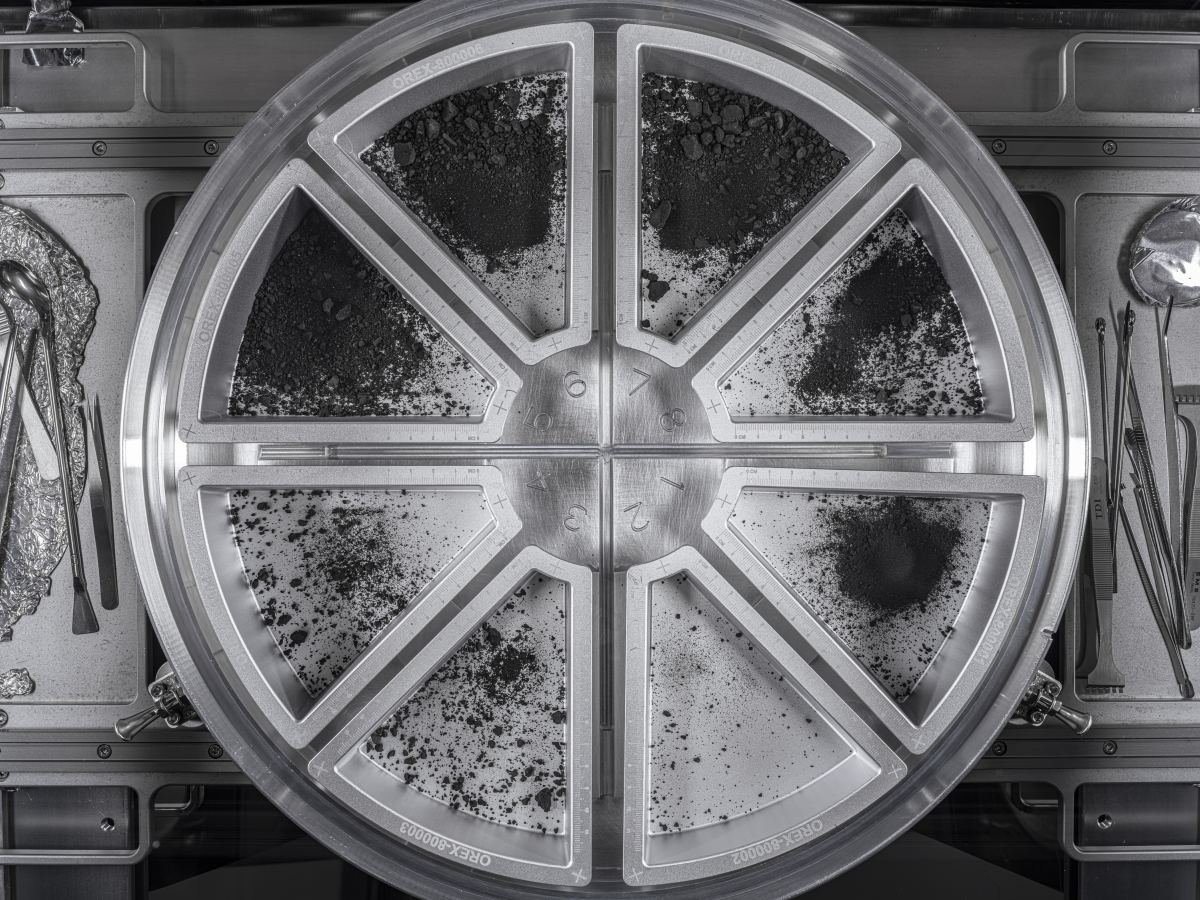
After several months of meticulous, careful work, NASA has the final total for their haul of asteroidal material from the OSIRIS-REx mission to Bennu. The highly successful mission successfully collected 121.6 grams, or almost 4.3 ounces, of rock and dust. It won’t be long before scientists get their hands on these samples and start analyzing them.
These samples have been a long time coming. The OSIRIS-REx (Origins, Spectral Interpretation, Resource Identification, and Security-Regolith Explorer) was approved by NASA back in 2011 and launched in September 2016. It reached its target, the carbonaceous Apollo group asteroid 101955 Bennu, in December 2018. After spending months studying the asteroid and reconnoitring for a suitable sampling location, it selected one in December 2019. After two sampling rehearsals, the spacecraft gathered its sample on October 20th, 2020.
In September 2023, the sample finally returned to Earth.
There was some serendipity in the way the final total was reached. Some of it hitched a ride outside of the main sample container. There was some drama, too, as stubborn bolts on the TAGSAM head resisted removal and delayed access to the sample contained inside. Personnel from NASA’s Astromaterials Research and Exploration Science (ARES) had to design, build, and test new tools that they used to finally open the TAGSAM head and access the sample.
For OSIRIS-REx to be successful, it had to collect at least 60 grams of material. With a final total that is double that, it should open up more research opportunities and allow more of the material to be held untouched for future research. NASA says they will preserve 70% of the sample for the future, including for future generations.
OSIRIS-REx astromaterials processors, from left, Rachel Funk, Julia Plummer, and Jannatul Ferdous, prepare to lift the top plate of the Touch-and-Go Sample Acquisition Mechanism (TAGSAM) head and pour the final portion of asteroid rocks and dust into sample trays below. Credit: NASA/Robert Markowitz
The next step is for the material to be put into containers and sent to researchers. More than 200 researchers around the world will receive samples. Many of the samples will find their way to scientists at NASA and institutions in the US, while others will go to researchers at institutions associated with the Canadian Space Agency, JAXA, and other partner nations. Canada will receive 4% of the sample, the first time that Canada’s scientific community will have direct access to a returned asteroid sample.
Asteroid Bennu was chosen because it’s close to Earth and has been observed extensively. It’s a carbonaceous asteroid, which make up about 75% of asteroids. But it’s also a sub-type of carbonaceous asteroids called a B-type. These are much more uncommon than other carbonaceous asteroids, and scientists think they’re very primitive and contain volatiles that date back to the early Solar System. Researchers around the world have been eagerly waiting for these samples.
Bennu is a natural time capsule that holds clues to how the Solar System formed, including Earth. It’s also a rubble pile asteroid, and OSIRIS-REx showed that Bennu has over 200 boulders on its surface that are larger than 10 meters. Some of these boulders have veins of carbonate minerals that predate the formation of the asteroid.
Bennu’s boulder-strewn surface. Bennu is a rubble pile asteroid that was likely part of a much larger parent body at one time in the distant past. Image Credit: NASA/University of Arizona.
The “O” in OSIRIS-REx stands for Origins, and that’s one of the things scientists hope to learn more about from Bennu. Will the sample contain any organic compounds that could’ve played a role in the appearance of life? If so, that supports the panspermia theory.
Laboratory testing will also show how accurate the spacecraft’s instruments were by comparing the samples to what the instruments told us from orbit around the asteroid. This is invaluable feedback for future missions.
But the main scientific value in the Bennu sample concerns what the samples will tell us about the asteroid’s origins. Scientists think that Bennu broke off from a much larger parent body before migrating to the inner Solar System. It could hold clues to that journey and how it changed over time. Astronomers suspect that Bennu is actually older than the Solar System itself. It could hold important clues to the gas and dust in the solar nebula that eventually formed the Sun and all the planets.
We already have some early results from the Bennu sample. Initial observations showed that the asteroid contains carbon and water. Carbon wasn’t unexpected since the asteroid is a carbonaceous one. Neither was water surprising since scientists have long thought that asteroids were one of the main ways that Earth got its water.
While the OSIRIS-REx sampling mission is over, the spacecraft is still going. It’s in its extended mission now, called OSIRIS-APEX (Origins, Spectral Interpretation, Resource Identification and Security – Apophis Explorer.) Its target is the asteroid Apophis, which will have a close encounter with Earth in 2029. The mission will study how the close encounter affects the asteroid, including its orbit and trajectory, and any surface changes that Earth’s gravity might trigger, like landslides.
These are images of the asteroid Apophis captured in 2012. Apophis was considered at risk of impacting Earth, but now astronomers are confident it will pass by. (NASA / JPL-Caltech)
The OSIRIS-REx mission is an impressive display of human ingenuity and cooperation. Once scientists get their hands on the samples, we can expect a stream of fascinating results. Who knows which of our ideas about the Solar System will be confirmed and which ones will be discarded? No matter what we learn, it’s guaranteed to be interesting.
Tags on chips and a global registry of their locations can reduce the risks of AI espionage by hostile nations, experts say.
The proposals were made in a new report on AI safety, which calls for a stronger regulation of hardware.
Three Cambridge University institutes co-led the study paper, alongside OpenAI and the GovAI research community. They fear that governments are overlooking the dangers of compute, which could trigger disasters.
Without tighter protections, they warn that AI could turbocharge mass surveillance, information warfare, international instability, and even human extinction.
The <3 of EU tech
The latest rumblings from the EU tech scene, a story from our wise ol’ founder Boris, and some questionable AI art. It’s free, every week, in your inbox. Sign up now!
Governments are well aware of these dangers, but their safeguards largely concentrate on software. The Cambridge team advocates a change of priorities.
Haydn Belfield, a co-lead author of the report, noted that data and algorithms “are intangible and difficult to control.” Hardware, by contrast, is detectable, excludable, and quantifiable. It’s also produced via an extremely concentrated supply chain.
These characteristics make compute a good lever for regulation.
“Computing hardware is visible, quantifiable, and its physical nature means restrictions can be imposed in a way that might soon be nearly impossible with more virtual elements of AI,” Belfield said in a statement.
New guardrails for AI chips
Governments have attempted to curb the AI power of rival states by imposing export controls on semiconductors.
These measures have received a mixed response. Supporters say they’re effective in the short-term, but critics argue they cause economic harm and ultimately rally opponents.
The report present several alternative restrictions. One is adding a unique identifier to each chip, which would mitigate espionage and chip smuggling.
To reinforce these tags, an international registry could track the flow of chips destined for AI supercomputers.
All chip producers and sellers would be required to report every transfer and the compute under control by each state and corporation. Regular audits would ensure that the records remain accurate.
“Governments already track many economic transactions, so it makes sense to increase monitoring of a commodity as rare and powerful as an advanced AI chip,” Belfield said.
Alongside the tags and registry, the report suggests “compute caps” to restrict AI chips and “smart switches” to terminate dangerous use.
These proposals arrive amid a boom in the chip market. In the last few days alone, Nvidia surpassed Amazon in market capitalisation, while shares in semiconductor designer Arm soared by over 50%.
Any radical safety measures may, therefore, have a harder time gaining support from companies than governments.
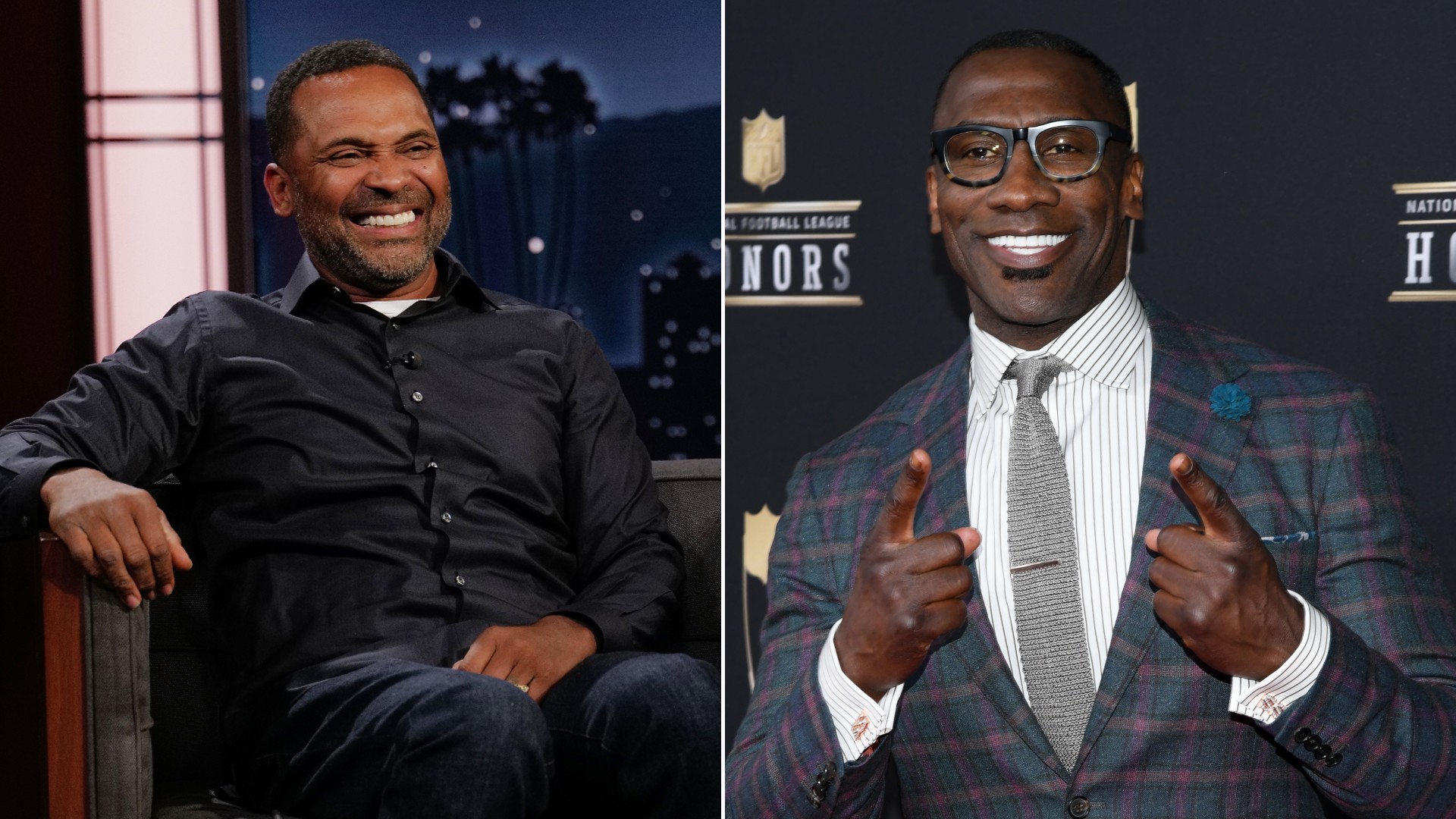
In a surprising turn of events, Mike Epps and Shannon Sharpe have squashed their beef after their social media fallout earlier this week.
The former NFL star-turned-podcaster took to Instagram on Thursday (February 15), sharing a surprise post of him and Epps posing for a photo together.
Shannon Says “We Are Good” As He Poses With Mike Epps In New IG Photos
Sharpe attached a string of photos to the carousel post, indicating that he and the comedian could put their differences aside.
“As promised. No video required. No audio required. Just a picture for proof. We are good,” he wrote in the caption.
Their meet-up, as mentioned, was not recorded for Sharpe’s ‘Club Shay Shay’ podcast, which is ironic since their feud started over Epps wanting to clear his name on the show.
As previously revealed, Sharpe was not happy upon hearing that the 53-year-old had “lied” about him reaching out to the ‘Next Friday’ actor for a chat on ‘Club Shay Shay.’
Epps made the remark during a recent stand-up gig and went on to bring Sharpe’s sexuality into question by suggesting he was gay.
“Shannon Sharpe called me trying to do an interview,” Epps quipped. “I said, ‘No, Madea. I ain’t doing no interview, so you can sit across from me and look at my balls when I’m sitting down.”
Omg Mike Epps calls Shannon Sharpe🏳️🌈 pic.twitter.com/WLcoE9XoDP
— 💍𝒮𝓊𝑔𝒶🫶🏾 ❄️December’s 12/18 Coldest☃️ (@SagittariusN2U) February 10, 2024
Additionally, Epps also expressed his thoughts on the viral interview that Sharpe conducted with Katt Williams last month, saying that it looked like the former Denver Broncos player was ready to sexually assault his guest.
“I thought he was going to attack Katt,” Epps went on to say. “The (show) is called Shay Shay. The (guy’s) telling you. Put a wig on that (guy) and tell me if that ain’t…Madea’s sister.”
Some fans had perceived that he made the comments as nothing more than an innocent joke.
Shannon Implied He Was Ready To Put The Paws On Mike
But Sharpe clearly showed no amusement as he responded to Epps on his ‘Nightcap’ podcast on Sunday (February 11).
“Now when I see you, I’m going to see if you really about that,” he said. “Say my name again. … I got something for your (expletive).
“Mention my name again, and I’mma pull the DMs,” Sharpe said. “I won’t let you lie on my name.”
On Monday (February 12), things escalated when Sharpe told his fans that he would attend the NBA All-Star Weekend in Indianapolis later in the week.
RELATED: Shannon Sharpe Addresses Criticism Over How He Conducted Katt Williams Interview: “I Never Said I Was A Journalist”
Coincidentally, Epps happened to be there too, so Sharpe took it upon himself to say he wanted to meet Epps in person to see if he maintained the same energy to his face.
“So many people talk crazy about you,” Epps responded in an Instagram post shortly after. “But now you want to fight me?”
“I DM’d you to get on the show because you brought my name up when you were sitting there with Katt and you were trying to get him to talk crazy about me, but he didn’t.”
Epps doubled down on his words, saying he felt Sharpe shared a strong resemblance to Madea when he watched his interview with Williams.
Mike Continued To Joke About Shannon’s Looks Amid Their Feud
And if that wasn’t enough, he even compared the Chicago native to Big Freedia.
“You did look like Madea sitting there. You was looking zesty. I’m not saying you gay. You looked like Big Freedia sitting there,” he added. “You need to take those tight… shirts off with the muscles.”
Fortunately, the two have managed to squash their beef.
It remains to be seen whether Sharpe will sit down for an interview with Epps in the near future.
The latter previously said he wanted to appear on the show to clear his name against the allegations made against him by Williams.
RELATED: Social Media Weighs In After Shannon Sharpe Compares Beyoncé To Taylor Swift (Video)