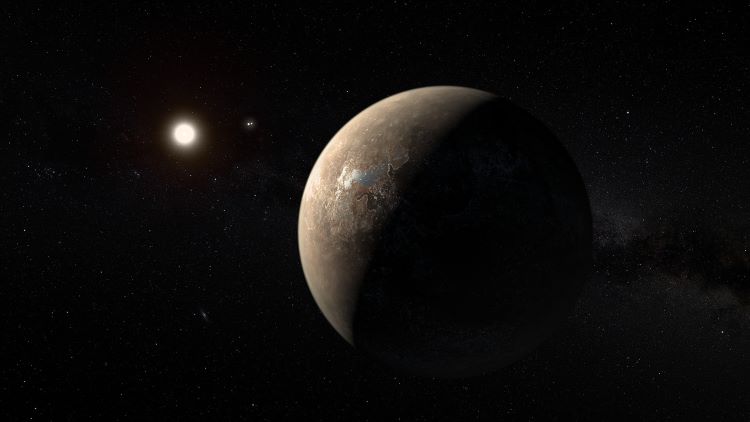
How can machine learning help astronomers find Earth-like exoplanets? This is what a study recently accepted by Astronomy & Astrophysics seeks to clarify. A team of international researchers investigated how a novel neural network-based algorithm could be used to detect Earth-like exoplanets using data from the radial velocity (RV) detection method. This study could help astronomers develop more efficient methods to detect Earth-like exoplanets, which are traditionally difficult to identify in RV data due to the intense stellar activity of the parent star.
The study states: “Machine learning is one of the most efficient and successful tools for processing large amounts of data in the scientific field. Many machine learning-based algorithms have been proposed to reduce stellar activity and better detect planets with low mass and/or long orbital periods. These algorithms can be divided into two categories: supervised learning and unsupervised learning. The advantage of supervised learning is that the proposed model contains a large number of variables and is able to make relatively accurate predictions based on the training data.”
For the study, the researchers applied their algorithm to three stars to determine its ability to identify exoplanets in the stellar activity data: our Sun, Alpha Centauri B (HD 128621), and Tau ceti (HD 10700), with Alpha Centauri B being about 4.3 light-years from Earth and Tau ceti being about 12 light-years from Earth. After plugging simulated planetary signals into the algorithm, the researchers found that their algorithm was successful in identifying simulated exoplanets with potential orbital periods ranging from 10 to 550 days for our Sun, 10 to 300 days for Alpha Centauri B, and 10 to 350 days for Tau ceti. It's important to note that Alpha Centauri B currently has several potential but unconfirmed exoplanet detections, while Tau ceti's system currently has eight exoplanets listed as “unconfirmed.”
Furthermore, the algorithm identified that these results are consistent with Alpha Centauri B and Tau ceti potentially possessing exoplanets that are about four times the size of Earth and are also located in the habitable zones of these stars. After the researchers fed more stellar activity data into the algorithm, they found that the algorithm successfully identified a simulated exoplanet that is about 2.2 times the size of Earth and orbits at the same distance from our Sun as Earth.
The study's conclusions state: “In this paper, we developed a neural network to efficiently mitigate stellar activity at the spectral level and improve the detection of low-mass planets on timescales ranging from a few days to a few hundred days, corresponding to the habitable zone of Sun-like stars.”
While the study focused on searching for Earth-like exoplanets in the RV data, the researchers point out that additional data, including transit time, phase, and space-based photometry, could be used to identify Earth-like exoplanets. They stress that this is possible with the European Space Agency's PLATO space telescope mission, which is currently under development and scheduled for launch in 2026. After launch, it will be stationed at the Sun-Earth L2 Lagrange point on the opposite side of Earth from the Sun, where it will use the transit method to search for exoplanets in up to a million stars, with a focus on terrestrial (rocky) exoplanets.
PLATO mission discussed around 9:00 am
This study comes as the number of exoplanets confirmed by NASA has reached 5,632 at the time of this writing, including 201 terrestrial exoplanets, and it provides ample opportunity for the upcoming PLATO mission to discover many more terrestrial exoplanets in our Milky Way galaxy.
How will machine learning help astronomers discover Earth-like exoplanets in the coming years and decades? Only time will tell, and that's why we do science!
And as always, keep doing science and keep looking up!
The FDA has approved Moderna's RSV vaccine for older adults.
Politeness: Modern
The Food and Drug Administration approved on Friday Modern Respiratory syncytial virus vaccine for adults ages 60 and older, the company's second product ever to hit the U.S. market.
The decision is a victory for Moderna, which urgently needs another source of revenue amid falling demand for its Covid vaccine, its only commercially available product.
The approval of Moderna's vaccine is based on an advanced-stage study of older adults, who are more vulnerable to severe cases of RSV. The virus kills between 6,000 and 10,000 seniors each year and leads to 60,000 to 160,000 hospitalizations, according to data from the Centers for Disease Control and Prevention.
Moderna's vaccine is marketed under the brand name mRESVIA. It is the first messenger RNA vaccine approved for a disease other than Covid. The company's vaccine is also the only RSV vaccine available in a prefilled syringe, making it easier to administer to patients.
A CDC advisory panel will vote in June on recommendations for the use and targeting of the Moderna vaccine. The company expects a recommendation equivalent to that for existing RSV vaccines from GSK And PfizerModerna executives said during a conference call on May 1.
A positive recommendation from the CDC would allow Moderna's vaccine to compete against GSK and Pfizer, which launched their respective vaccines in the U.S. last fall. Pfizer's vaccine has lagged GSK's so far, but both vaccines have generated hundreds of millions in sales so far.
Moderna's full-year 2024 revenue forecast of around $4 billion includes revenue from its RSV vaccine.
The approval shows how versatile Moderna's messenger RNA platform is beyond treating Covid. The biotech company is using this technology to fight a number of different diseases, including RSV, cancer and a highly contagious gastrointestinal virus called norovirus.
“The FDA approval of our second product, mRESVIA, builds on the strength and versatility of our mRNA platform,” Moderna CEO Stéphane Bancel said in a press release. “With mRESVIA, we continue to make a difference for patients by addressing global public health threats related to infectious diseases.”
The biotech company currently has more than 40 products in development, several of which are in advanced testing phases. This includes its combination vaccine against Covid and flu, which could be approved as early as 2025.
More health reports from CNBC
Moderna is also developing, among other things, a standalone flu vaccine, a personalized cancer vaccine together with Merck, and vaccines against latent viruses.
Moderna says it expects sales growth again in 2025 and expects to break even in 2026 thanks to the introduction of new products.
Investors have high hopes for the long-term potential of Moderna's mRNA product pipeline: The company's shares have risen more than 60% this year after falling nearly 45% in 2023.
Data from vaccine studies
The FDA was originally scheduled to make a decision on Moderna's vaccine on May 12, but the agency delayed approval, citing internal “administrative constraints.”
A Phase 3 trial of about 37,000 people showed that Moderna's vaccine was 83.7 percent effective at preventing at least two symptoms of RSV after about three months. New data from that trial in February showed that the vaccine's effectiveness dropped to 63 percent after 8.6 months.
At the time, these results raised concerns among investors that the vaccine's effectiveness would wane faster than vaccines from GSK and Pfizer. Moderna said in a statement that comparisons were not possible without head-to-head studies of the vaccines.
The company added that its study had different study populations, geographic locations and case definitions for RSV, among other things.
No significant safety concerns were identified among patients who received the shot as part of the study. Most side effects were mild to moderate and included pain at the injection site, fatigue, headache, muscle aches and joint pain.
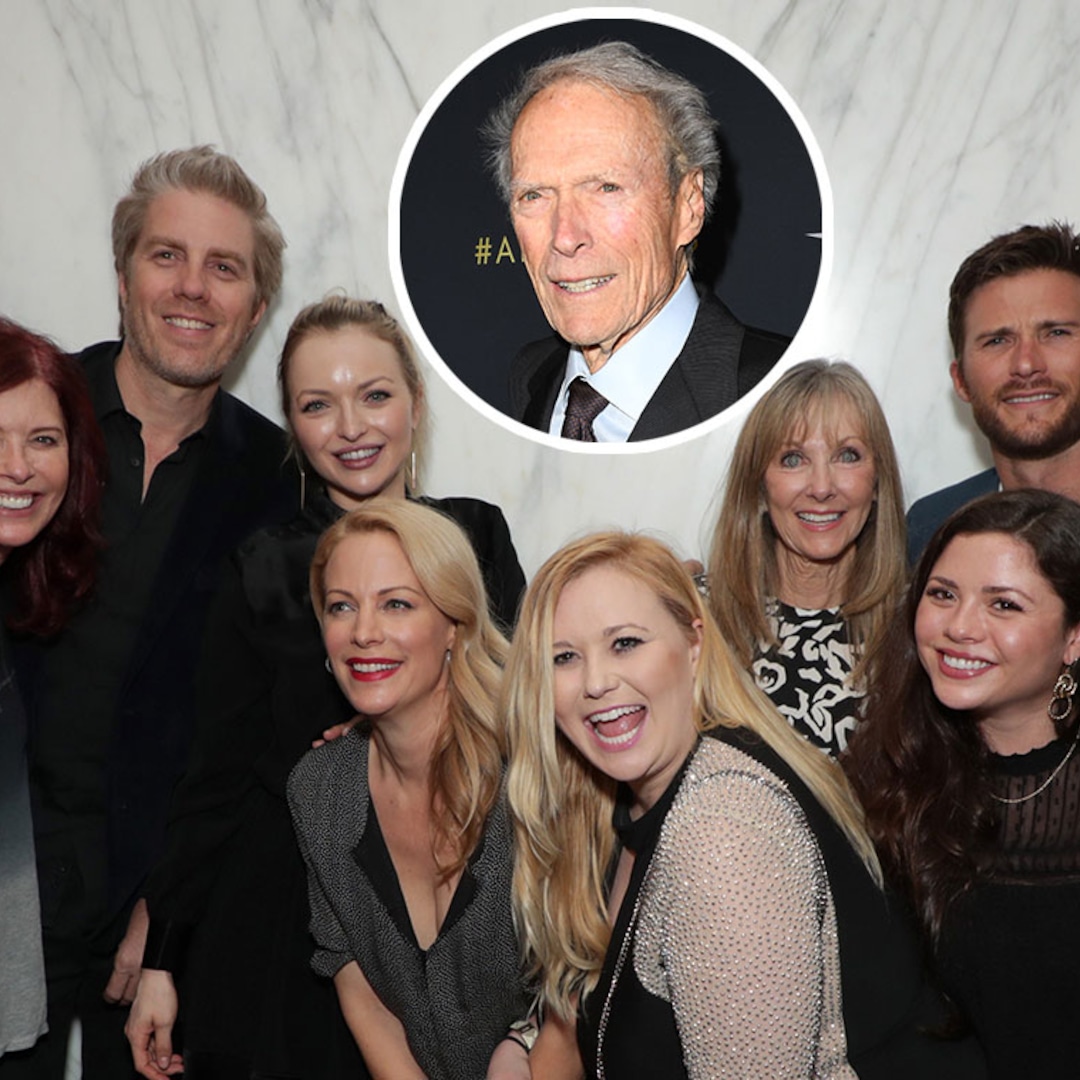
While Clint Eastwood To us ordinary people he may be one of the biggest names in Hollywood, but to his children he is just dad.
“I wish them the same thing that every parent wishes,” the 2016 Oscar winner told the Los Angeles Times. “That they have a good life, a healthy life.”
He also has quite a few children – eight, to be exact: Clint is the father of Laurie Murray70; Kimber Eastwood59; Kyle Eastwood56; Alison Eastwood52; Scott Eastwood38; Kathryn Eastwood36; Francesca Eastwood30, and Morgan Eastwood27.
In fact, you may recognize some of them from his films – Clint has worked with his sons and daughters on films such as “The Mule,” “Flags of Our Fathers,” “Gran Torino,” “Million Dollar Baby” and “Tightrope.”
“It's been such a joy growing up in this business and having experiences I would never have had if he wasn't who he is,” Alison added to the outlet. “I cherish those. It's always difficult not to live in someone's shadow, but as long as you do your own thing and find your own voice, you can fight through it.”
We were commissioned by Marty Rowland and the American Journal of Economics and Sociology (AJES) to write a literature review supporting the position of skeptics (also called “deniers”) regarding dangerous man-made climate change. Our article was fully peer-reviewed and presents what we believe to be the most compelling argument. Unfortunately, the article is pay-per-view, but the submitted version, which includes all the changes suggested by the reviewers, can be downloaded here.
When we planned the article, we called it the “Yes, But” paper. This meant: Yes, most scientists believe that human-caused CO2 is driving climate change and could be dangerous, but what about…? Other articles in this special climate issue of AJES explore other views on possible human-caused climate change and its potential dangers.
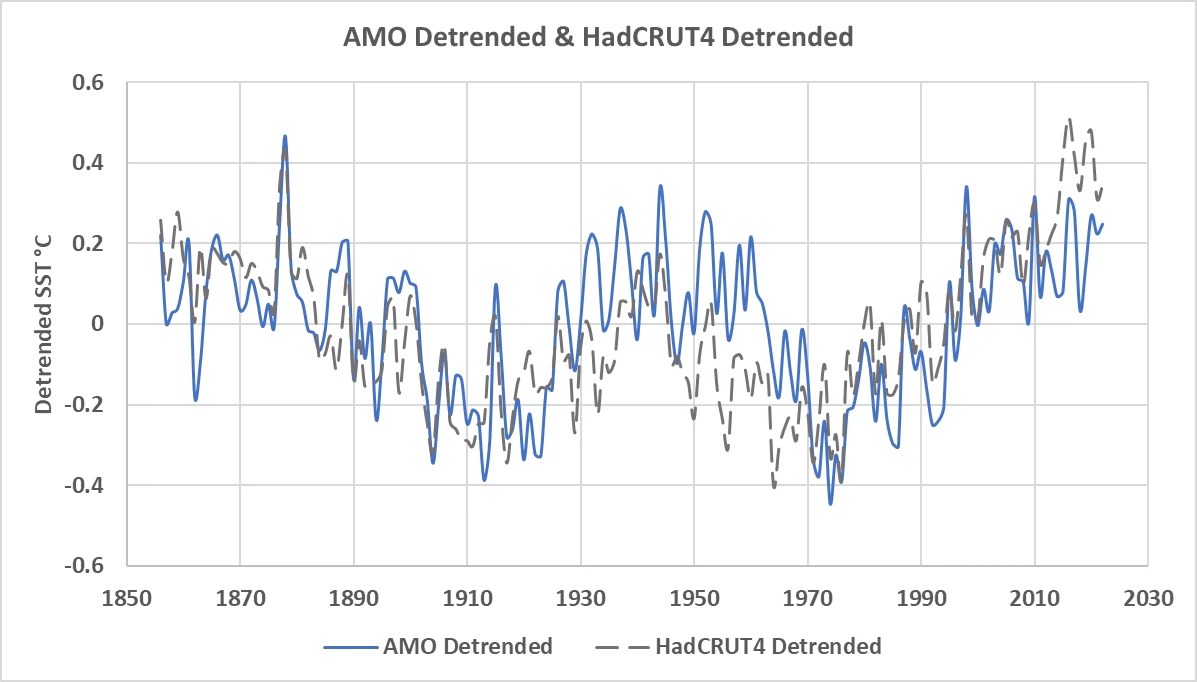
The image chosen for this post, also shown below, is part of Figure 2 from the article. It shows the Atlantic Multidecadal Oscillation (AMO) index compared to the detrended global average surface temperature record HadCRUT4 index. The similarity is obvious. The AMO is the detrended record of North Atlantic surface temperature. The AMO has been traced back to 1567 AD and is clearly a natural oscillation. The fact that it is seen in HadCRUT4 shows that at least some of the recent climate change is natural. This and other problems with the IPCC AR6 conclusions are discussed in the article.
Figure 1. Detrended North Atlantic sea surface temperatures (AMO) compared to detrended global average surface temperatures in HadCRUT4.
The argument that human greenhouse gas emissions (mainly carbon dioxide) control the climate, as claimed in the IPCC Sixth Assessment Report (AR6), or that the resulting climate change is dangerous, is very weak. See the IPCC AR6 Working Group II (WGII) quote below.
“Human-induced climate change … has caused widespread negative impacts and associated losses and damages to nature and people that exceed natural climate variability. … The increase in weather and climate extremes has led to some irreversible impacts as natural and human-induced systems are stressed beyond their adaptive capacity (high confidence).”
How do we show that this claim is weak? There are many ways. The AR6 WGI and WGII reports define climate change as global warming since 1750 or 1850. The period before these dates is generally referred to as the “pre-industrial period.” The Little Ice Age, a term rarely used in AR6, spans from about 1300 to 1850. It was a very cold and miserable time for humanity, with many well-documented weather extremes in the historical record throughout the Northern Hemisphere. It was also a time of frequent famines and pandemics. We show that today's climate is arguably better than it was then, not worse.
Nevertheless, the IPCC claims that extreme weather events are worse today than in the past. However, observations do not support this claim. Some extreme weather events, such as the land area suffering from extreme drought, are decreasing rather than increasing. Globally, the frequency of hurricanes shows no significant trend.
Observations show that neither extreme weather events nor global warming are increasing damage or endangering humanity today. Mitigating climate change, according to AR6, means limiting the use of fossil fuels, even though they are still plentiful and inexpensive. Since the current climate is arguably better than the pre-industrial climate and we are not seeing an increase in extreme weather events or climate-related mortality, we conclude that we can adapt to future changes. Unless a threat is identified, there is no reason to stop using fossil fuels.
Gray, ST, Graumlich, LJ, Betancourt, JL, & Pederson, GT (2004). A tree-ring-based reconstruction of the Atlantic Multidecadal Oscillation since 1567 AD. Geophys. Res. Lett., 31. doi:10.1029/2004GL019932
May, A., & Crok, M. (2024, May 29). Carbon dioxide and a warming climate are not problems. American Journal of Economics and Sociology, 1-15. doi:10.1111/ajes.12579
You can download further references here.
(Gray, Graumlich, Betancourt & Pederson, 2004) ↑
(IPCC, 2022, p. 9) ↑
The observations used to characterize the pre-industrial period are from 1850-1900, as these are the earliest global measurements available. (IPCC, 2021, p. 5, footnote 9) ↑
(IPCC, 2021, p. 295, footnote c) ↑
(Lomborg, 2020) ↑
(Lomborg, 2020) and (IPCC, 2013, p. 216) ↑
(Crok & May, The IPCC's Frozen Climate Views, An Analysis of AR6, 2023, pp. 140-161) and (Scafetta N., 2024) ↑
(IPCC, 2022b, pp. v, 6-13) and (Scafetta N. , 2024) ↑
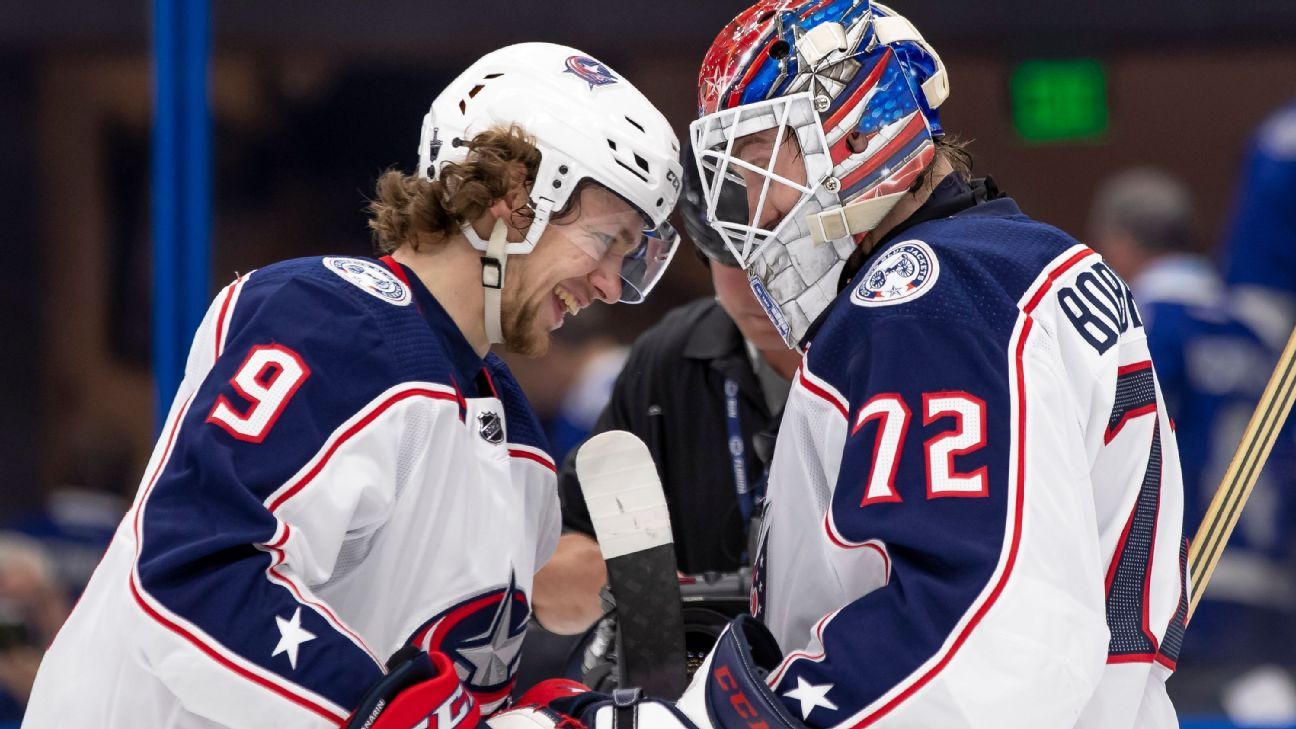
It was July 2019. The two had been teammates with the Columbus Blue Jackets, becoming close friends when Panarin was traded there from the Chicago Blackhawks in 2017. Their families are friends. Panarin is the godfather to Bobrovsky’s daughter. They take silly photos together. They celebrate holidays and vacation together — this particular dance party was in Capri.
Their dancing was extremely spirited, with both NHL players kicking their legs over their heads toward the night sky on the deck of a boat. It’s the kind of dance one expects in a moment of offseason catharsis, like when two friends sign free agent contracts worth a combined $151.5 million. The ink was still drying on Panarin’s seven-year, $81.5 million deal with the New York Rangers and Bobrovsky’s seven-year, $70 million contract with the Florida Panthers.
It’s now May 2024. Panarin and Bobrovsky aren’t speaking. There’s no animosity between the close friends, but the battle lines have been drawn: The Rangers and Panthers are playing in the Eastern Conference finals. Panarin is trying to score against his best friend in hockey, and Bobrovsky is tasked with preventing it.
At stake is a chance to play for the Stanley Cup, which Bobrovsky did last season with Florida but Panarin has yet to do in his nine-year NHL career. They are rivals now. They’ll be friends again when it’s over.
Editor’s Picks
2 Related
“I like how he looks at his life, how he looks at himself. Not only about hockey, but what he’s going to do after that,” Bobrovsky has said of Panarin.
“He’s an unbelievable guy, a great human,” Panarin said of Bobrovsky, via NHL.com. “We can talk about everything all day and we can say anything to each other. We can talk about good things and the not good things, and it doesn’t matter. It’s a very honest relationship.”
They are two of the most impactful players of the past decade in the NHL. Bobrovsky has more wins (354) than any other goalie since 2012-13, when he won his first Vezina Trophy. He won his second Vezina in 2016-17, the same year he was a finalist for the Hart Trophy as league MVP.
Panarin is fifth in points (781) since entering the league with the Blackhawks in 2015-16, the same season he won the Calder Trophy as rookie of the year. He’s sixth in points-per-game average (1.16) during that span. Only Nikita Kucherov is ahead of him in both categories among wingers.
In 2019, Bobrovsky and Panarin changed the trajectory of three franchises. They walked away from the Blue Jackets as free agents, and Columbus has made the playoffs just once since then. Bobrovsky solidified the Panthers’ goaltending, earning a third career Vezina nomination this season. Panarin helped the Rangers transition from a retool to reaching the top of the league this season.
As one NHL source put it: “If they don’t sign either one of those two, the Panthers and Rangers are not fighting to get into the Stanley Cup Final right now.”
As long as their teams aren’t playing, Artemi Panarin and Sergei Bobrovsky are great friends going back to their time in Columbus. Andrew Bershaw/Icon Sportswire via Getty Images
AS FREE AGENCY drama often does, the Panarin and Bobrovsky saga started for the Blue Jackets a year before their contracts were up.
Reports were that Bobrovsky and Columbus were far apart on a new, long-term contract. But they were talking, which was more than could be said for Panarin and the team. He was pushing off talks.
The uncertainty of his future in the market had teams sending general manager Jarmo Kekalainen trade proposals, although few were designed to help Columbus in the present. But even if the Blue Jackets thought about moving Panarin, there was another complication: The NHL echo chamber was reverberating with talk that Panarin wanted to be a New York Ranger.
There were other teams he was considering — the New York Islanders and Panthers among them — but the Rangers were his team of choice, and that undoubtedly impacted the offers coming in for him.
Stanley Cup playoffs 2024
There are just four teams left vying for the Stanley Cup. Check out our coverage, with TV times, the latest news, results and more. • Playoff Central • Subscribe to ESPN+ • Stream the NHL on ESPN
Columbus fans wanted him to stay. Some even resorted to bribery: High Bank Distillery created a billboard proclaiming that Panarin would get free vodka for life should he remain with the Blue Jackets.
“I feel really good after that. I say it’s harder for me to keep talking about my free agency because I see how people want me to stay in Columbus,” he said of the billboard. “But it’s my life.”
In February, there was another wrinkle: Panarin fired agent Daniel Milstein and hired Paul Theofanous, the agent for Bobrovsky. At a media availability in Las Vegas, Panarin declared he was testing free agency that summer.
“It’s one life, and I want to test free agency,” he said, according to the Columbus Dispatch. “[They] have a chance [to sign me], but we’ll see what happens in the summer. I want to still [consider] this season and help the team win the Stanley Cup.”
The agent switch immediately sparked speculation that the two could become a “package deal” in free agency, handing a leading scorer and a franchise goaltender to some lucky team — luck in this case equating to geography and cap space, theoretically.
Hockey fans had seen this before: In 2003, star wingers and former Anaheim teammates Paul Kariya and Teemu Selanne were reunited as a package deal in Colorado, as both players were clients of agent Don Baizley.
There was some speculation that Bobrovsky and Panarin would sign with the same team in free agency as a “package deal.” Brett Holmes/Icon Sportswire
The Blue Jackets opted not to trade either player at the deadline — Bobrovsky had a no-trade clause, Panarin did not — as Columbus was still in a playoff race.
“If they want to go and test the free agency, they’re going to want to have their best years. And that’s the best for us and the best for them,” Kekalainen said at the time. “You’re damned if you do and damned if you don’t. We’ll have a great team next year, no matter what happens.”
They’d both have great years ahead of new contracts. Panarin had 87 points in 79 games, a new career high. Bobrovsky had a .913 save percentage and an NHL-best nine shutouts. They saved their best for last, both playing a major role in the Blue Jackets’ first-round sweep of the Tampa Bay Lightning, a 128-point juggernaut and one of the best regular-season teams in NHL history.
Bobrovsky had a .931 save percentage in securing his first postseason series win. Panarin had five points in four games, outscoring every player on the Lightning in the historic upset.
The Blue Jackets would be eliminated in the following round by the Boston Bruins, officially signaling the start of an offseason of uncertainty.
At this point, it was widely assumed that Panarin was gone. Kekalainen’s big swing to keep him was an eight-year contract, which no other suitor could offer, worth more than $11 million annually. One source said the Jackets might have gone even higher to keep Panarin.
But the Blue Jackets always hoped they could hang on to Bobrovsky, logically surmising that the market for an over-30 goaltender seeking a long-term, big-money contract would be limited.
The buzz term surrounding his contract ask was “Carey Price money,” referencing the eight-year, $84 million deal with a full no-movement clause that the goaltender signed with the Montreal Canadiens in July 2017 — a contract the Habs are still paying, even as Price hasn’t played since 2021-22.
NHL Draft Coverage on ESPN
The 2024 NHL draft will take place June 28-29 in Las Vegas. Get caught up on everything you need to know about the top prospects with draft preview content from Rachel Doerrie:
• Latest mock draft • Draft prospect rankings • Draft order • More NHL coverage
The Jackets were offering deals with a shorter term, hoping his desired contract wouldn’t materialize elsewhere. But there was, in fact, a market for Bobrovsky.
Among the most aggressive suitors for Bobrovsky were the New York Islanders. They had Ilya Sorokin eventually on the way from the KHL. Bobrovsky could have given them an elevated version of the Russian goalie tandem they eventually had with Sorokin and Semyon Varlamov.
The “package deal” rumors persisted. The NHL salary cap — then set at $81.5 million — was the primary deterrent.
“No way you can actually do that in this environment without one of the players getting shortchanged,” one NHL source said.
But teams were trying. The Islanders had $20 million in cap space at the start of free agency. Getting both Russian players would have impacted several other bits of business — re-signing Anders Lee, an eventual extension for Mathew Barzal — but it was doable for GM Lou Lamoriello, someone known for his audacity in roster building.
The Colorado Avalanche were also interested in a package deal. Their goalie coach, Jussi Parkkila, worked with Bobrovsky at St. Petersburg SKA in the KHL, and the two remained friends. They liked Bobrovsky, but they coveted Panarin. The Avalanche were offering a four-year contract that would have made Panarin the highest-paid player in the NHL, according to one source. But even with the flexibility of Nathan MacKinnon’s cap-friendly contract at the time, they couldn’t find a way to sign both under the salary cap.
The real problem with the “package deal” is that one part of the package had aspirations to sign with one team in particular: The New York Rangers.
And the feeling was mutual.
ON FEB. 18, 2018, the Rangers’ website posted a new article titled “A Message from Glen Sather and Jeff Gorton About Our Team.”
It would be known henceforth as “The Letter.” It stated that the franchise “didn’t reach our ultimate goal of bringing the Stanley Cup back to New York.” That the Rangers would seek to get younger and more skillful; and in the process, “this may mean we lose some familiar faces, guys we all care about and respect.”
Much like how no one in “Casablanca” ever utters the phrase “play it again, Sam,” at no point does “The Letter” use the word “rebuild.” It wasn’t something the team referenced. When John Davidson left the Blue Jackets in May 2019 to rejoin the Rangers as team president, he preferred to use the term “build” when describing their plans.
They were building fast. In April 2019, the Rangers acquired the rights to defenseman Adam Fox from the Carolina Hurricanes for two draft picks. A native of Jericho, New York, Fox informed the Hurricanes he wouldn’t sign with them. It was widely speculated that Fox would eventually sign with the Rangers as an NCAA free agent anyway. He wanted to be a Ranger, and he was a Ranger.
In June 2019, the Rangers traded a first-round pick and defenseman Neal Pionk to the Winnipeg Jets for 25-year-old defenseman Jacob Trouba, who told the Jets he wasn’t signing with them. He pushed for a trade to New York so his fiancée, Kelly Tyson, could advance in her medical career. He wanted to be a Ranger, and he was a Ranger.
They drafted Finnish forward Kaapo Kakko second overall in the 2019 draft. They had goalie Igor Shesterkin and defenseman K’Andre Miller in their system.
“These are pieces that fit a puzzle, and we’re trying to get that puzzle completed the proper way as quickly as possible,” Davidson said.
The Rangers used the No. 2 overall pick in 2019 on Kaapo Kakko, believing he would be a key piece in their build back to contention. Jonathan Hayward/The Canadian Press via AP
The Rangers were on the right track back to contention. The question was whether their velocity synced with Panarin’s availability as a free agent. There were debates internally about whether the Rangers were ready to add a star, such as Panarin, at a considerable commitment to the salary cap.
Signing him would impact things in the short term — the Rangers bought out the contract of defenseman Kevin Shattenkirk that August to create more room — and in the long term. The Athletic reported at the time that Panarin’s signing meant forward Chris Kreider “will be dealt before he hits unrestricted free agency next July 1st.”
Ultimately, it was decided that even if the “build” wasn’t at a point where adding Panarin would make them a championship contender, the Rangers couldn’t afford to wait to be ready. What if a player of Panarin’s caliber wasn’t available then? What if there weren’t similar options on whom the Rangers could spend their money? Panarin was only 27 that summer; what if the big free agent prize was 31 years old when the Rangers were ready to do business?
“When these young players pop, he’s still going to be in his prime,” rationalized Davidson, who was president of the Blue Jackets when they acquired Panarin.
Top stories of the week from
Get exclusive access to thousands of premium articles a year from top writers. • Mock draft: Who goes No. 1 to Guardians? » • Why Bronny stayed in NBA draft, what’s next? » • NFL: Contract deals and who will get paid » More ESPN+ content »
Panarin signed a seven-year, $81.5 million deal with the Rangers as free agency opened. His average annual value of $11,642,857 was the second highest in the NHL behind Edmonton Oilers star Connor McDavid ($12.5 million) but the highest for a winger, surpassing his former teammate Patrick Kane of the Blackhawks ($10.5 million).
Those incredible numbers aside, Panarin left money on the table to sign with the Rangers.
“I don’t think those [other] teams did anything wrong,” one NHL executive told ESPN. “I think he just wanted to be a Ranger.”
On July 2, Panarin took part in a now-iconic photoshoot on Seventh Avenue, holding his No. 10 jersey in front of the Madison Square Garden marquee that welcomed him to New York.
“There was a moment where I just sat down for 10 minutes and really thought about it,” he said regarding free agency. “My heart told me that New York would be the better place for me.”
His friend Bobrovsky felt the same way about South Florida.
THE PANTHERS OFFERED Panarin the same ballpark numbers as the Rangers. They thought they had a chance at him, what with his former Blackhawks coach Joel Quenneville behind the bench — Panarin credits him with coining his “Bread Man” nickname — and the state tax benefits from playing in Florida. But ultimately, they figured he was New York-bound.
They believed Bobrovsky was more aligned with their needs and remained focused on him.
“They had some good offensive pieces. If you had to pick one or the other, they didn’t have a goaltender,” an NHL source said. “They decided on Bob, and it paid off.”
Star goalie Roberto Luongo retired at 40 years old in June 2019. Thanks to NHL cap recapture rules, the Panthers saw salary cap savings of roughly $3.5 million annually; while the Vancouver Canucks, who originally signed Luongo to a 12-year, $64 million back-diving contract in 2009, were on the hook for more.
The other shoe to drop was goalie James Reimer. His contract wasn’t buyout friendly, so the Panthers traded him the Hurricanes for goalie Scott Darling, whom they then bought out.
It was obvious GM Dale Tallon was clearing the decks for a run at Bobrovsky, and nearly gave him the “Carey Price money” he was looking for: seven years, $70 million and a full no-movement clause as free agency opened.
“Sergei is an elite starting goaltender who has consistently proven to be one of the best in the NHL,” Tallon said.
Bobrovsky was all smiles after signing a seven-year, $70 million contract in free agency. Associated Press
Florida was praised for making a big bet on a long-term goaltending solution. ESPN gave the signing a B-plus at the time.
The contract made Bobrovsky the second-highest-paid goalie in the league in average annual value and base salary. It also put an enormous weight on his shoulders as he started with the Panthers in 2019-20. Bobrovsky had a .900 save percentage, a 3.23 goals-against average and a 23-10-6 record for Florida that season. Quenneville and his Panthers teammates spoke up to support Bobrovsky.
“Sometimes there are ups and downs, but you have to keep your focus,” Bobrovsky said at the time.
The following season, Bobrovsky saw an old acquaintance join the team: Bill Zito, assistant GM in Columbus, was named the new general manager in Florida in 2020. He called Bobrovsky before being announced, leaning on the goaltender for information and insight about his new team.
Zito also found himself having to defend Bobrovsky in light of his contract and results. “I’m not worried about him at all. He’s a really intuitive guy, really bright. He’ll figure it out. And he wants to win,” Zito told ESPN at the time.
That patience was eventually rewarded. By his third season, Bobrovsky’s save percentage ticked up to .913, and he led the NHL with 39 wins. He regressed in the 2022-23 regular season, but no one remembers that.
What they remember is “Playoff Bob” facing a playoff-high 639 shots, making a playoff-high 585 saves, posting a .915 save percentage and orchestrating the Panthers’ shocking first-round upset of Boston and their run to the Stanley Cup Final. That included a 63-save performance in a four-overtime game against the Hurricanes that lasted five hours and 44 minutes.
Bobrovsky backstopped the Panthers to a sweep of the Hurricanes in last year’s Eastern Conference finals. Bruce Bennett/Getty Images
Since Paul Maurice took over the Panthers as head coach last season, he has witnessed Bobrovsky being more than just a franchise goalie he rolls out for playoff starts.
“Sometimes your goaltender is separate from your team, right? Nobody talks to them because they do that weird goaltender stuff,” he said. “But Bob is part of the fun and might be a driver of it in some ways. Because that’s not his natural state, because he’s a very intense man. So he has fun in the morning skates and everyone knows that ‘Bob’s good.’ I think he just enjoys the performance aspect of it.”
His performance this postseason is much different than in the Panthers’ Stanley Cup Final run last season. Bobrovsky went from facing 32.9 shots on goal per game on average in 2023 to 23.8 shots on goal in 2024, as the Panthers’ defense improved. It hasn’t always been perfect for him, but Maurice said he trusts his goalie to manage the change in volume.
“I feel that a guy that doesn’t have the experience that Bob has would’ve a difficult time doing what Sergei’s been able to do,” he said.
WHILE BOBROVSKY TOOK a little time to find his groove in South Florida, Panarin was a hit on Broadway from opening night, when he had a goal and an assist in the Rangers’ win over Winnipeg.
Panarin tallied 95 points with 32 goals in 69 games in the 2019-20 season, making him a Hart Trophy finalist for the first time in the COVID-19-truncated campaign. His points-per-60-minutes rate climbed in his second season in New York.
When deciding whether the timing was right to sign Panarin, Rangers executives had quietly targeted the 2021-22 season as the point at which they expected the franchise to turn the corner to contention again. He scored 96 points that regular season and 16 points in 20 playoff games to help the Rangers back to the 16-team tournament for the first time since 2017 and the conference finals for the first time since 2015.
While Panarin was solid in 2022-23 with 92 points to lead the team, he wasn’t a happy player with the Rangers. Sources said he didn’t mesh with coach Gerard Gallant, who was let go after New York was upset in the playoffs by the New Jersey Devils. That series was also a nadir for Panarin, as he posted two assists in seven games.
“It’s mental, and I feel terrible,” he said after the season.
He took the defeat personally, recommitted himself to training in the offseason and shaved off his trademark locks in a symbolic vibe shift. The results: a new career high in goals (49) and points (120) in leading the Rangers to the Presidents’ Trophy with the league’s best regular-season record.
“I know this is a benchmark year for him, but his statistics over the last 7-8 years are incredible. There’s consistency that goes with that. This isn’t a fluke year — it’s just a really good one,” said coach Peter Laviolette, who replaced Gallant. “He’s been an elite player offensively, and this year has obviously been his best.”
Panarin hasn’t scored since Game 3 against the Hurricanes, but has found other ways to impact the contests. Joshua Sarner/Icon Sportswire via Getty Images
As the Rangers and Panthers return to Madison Square Garden for Game 5 on Thursday night, all eyes are on Panarin and Bobrovsky again. The Rangers winger hasn’t scored a goal since Game 3 against the Hurricanes in the second round, although he has collected four assists in seven games since then.
Bobrovsky continues to battle, stopping 21 of 23 shots in Game 4 after giving up five goals in an overtime loss in Game 3. His save percentage for the playoffs is .904, but he has been there when they’ve needed him, posting a playoff-leading .862 save percentage on high-danger chances.
One of them will play for the Stanley Cup. One will not.
After it’s over, when their lines of communication are no longer on mute, they’ll reconnect to talk about it.
Two rivals. Two former teammates. Two friends who have made indelible marks on their respective franchises since that fateful summer of 2019.
From semiconductors to chocolate, you will be surprised how many Products are already manufactured with the help of AI.
And it is precisely in the factory hall that the Swiss startup EthonAI wants to gain a foothold in this emerging market.
“The manufacturing industry is at a critical point and companies that fail to adapt to AI risk being left behind,” says CEO Julian Senoner, who co-founded EthonAI after completing his doctorate in AI systems at ETH Zurich.
The up-and-coming company uses AI to detect problems in production lines. The idea is to help factories reduce the number of defective products that are ultimately thrown away.
The <3 of EU technology
The latest gossip from the EU tech scene, a story from our wise old founder Boris and questionable AI art. Free in your inbox every week. Sign up now!
EthonAI uses a so-called Manufacturing Analytics System (MAS) to do this. The program uses AI algorithms to sift through huge data sets collected by sensors placed at multiple locations along the production line.
The system then displays key data on a dashboard in a format that is easy for factory managers to read.
The university spin-off today secured $16 million to expand its technology. The funding round was led by European venture capital firm Index Ventures, which has previously backed companies such as Meta, Slack and Dropbox.
EhtonAI’s customers already include several major manufacturers, including the German energy giant Siemens and the pharmaceutical company Roche.
The startup's software even runs in three factories of one of the world's most popular chocolate brands: Lindt & Sprüngli. For example, AI helps production managers fine-tune machine temperatures or product shapes to prevent quality degradation before it occurs.
Modern factories are full of sensors that measure everything from the temperature of a boiler to the vibration of an engine. “But data is only valuable if you can process it, understand it and use it to make decisions,” says Katharina Wilhelm, partner at Index Ventures.
Artificial intelligence for cancer prevention has gained momentum.
However, most of these new programs are not covered by Medicare or private health insurance, creating headwinds for companies looking to increase adoption and for patients who could benefit from the new technology.
“Traditionally, with medical devices, it takes up to seven years after a product is approved by the FDA to get reimbursed, so that's quite a challenge,” said Brittany Berry-Pusey, CEO of AI screening startup Avenda Health.
As AI capabilities continue to grow, the Food and Drug Administration has approved 882 AI and machine learning-enabled devices and programs. Nearly 600 of these are approved AI applications for radiology in the past five years. Most do not yet have billing codes that would enable reimbursement and prevent patients from having to pay out of pocket.
While some tools have shown promise in improving diagnosis and treatment of cancer patients, more data may be needed to determine whether they are more effective than traditional screening before major insurers are willing to cover their costs.
A medical robot from the French start-up SquareMind, which is designed to facilitate cancer screening using artificial intelligence, will be presented on May 22, 2024 at the Vivatech technology start-up and innovation fair in the Porte de Versailles exhibition center in Paris.
Julien De Rosa | Afp | Getty Images
One of Avenda’s products illustrates the complex process that must take place before insurers cover AI tools.
The company's Unfold AI platform for prostate cancer can help urologists find more cancer cells than traditional MRI screenings and can help determine the best treatment to reduce the risk of side effects such as incontinence and impotence from prostate cancer surgery.
The FDA approved the medical decision support program last year. Just as importantly, the American Medical Association has assigned it an interim billing code—which most AI radiology products have not yet received.
Avenda is now trying to get Medicare and insurers to cover the costs, which in many cases can take years.
“If there is no payment, it means patients have to pay out of pocket, which can be challenging … especially for our patients. This is an older patient population,” Berry-Pusey said.
Hurdles to reimbursement
The American Medical Association, the professional medical organization that assigns the Current Procedural Terminology codes that enable reimbursement, issued guidelines for setting AI-CPT codes last fall. The group said different medical specialties should help set the standards for use in their fields.
The lack of reimbursement is hindering the rollout of new AI programs for cancer screening, especially in smaller hospitals and doctor's offices, said Dr. William Thorwarth, CEO of the American College of Radiology, which represents thousands of professionals in the field. But in a letter to a congressional committee studying the use of AI in health care, he cautioned against moving too quickly.
Thorwarth wrote that reimbursement for AI costs is complex and establishing billing codes for each approved AI tool is “problematic.” He added that it is “unclear” whether the AI platforms currently covered “provide value to patients or the healthcare system.”
Medicare and private health insurers have expressed similar caution. A spokesperson for the Centers for Medicare & Medicaid Services told CNBC that the agency considers CPT codes when making reimbursements and “continually evaluates opportunities to safely and responsibly deploy new, innovative strategies and technologies, including artificial intelligence.”
Some of this caution may stem from previous experience with computer-assisted mammography in the late 1990s. Doctors have since said it led to false positives and unnecessary biopsies.
Dr. Rodrigo Cerda, chief medical officer of Independence Blue Cross, said the effectiveness of the latest programs has not yet been determined.
““The evidence is not yet quite sufficient to say that it clearly provides a positive benefit to our members and does not pose other risks that could lead to false-positive results or exacerbate the false-negative results,” Cerda said.
Patients have to pay out of their own pocket
Without reimbursement by insurance, radiology providers RadNet has started charging patients for its proprietary AI screening tool, Enhanced Breast Cancer Detection, which launched in 2022. RadNet has released data suggesting the tool helps improve cancer detection.
The company recently reduced the price of the test from $59 to $40. It said its revenue from AI in digital healthcare more than doubled year-on-year in the first quarter and patient adoptionAI screening increased from around 25% to 39% of mammography patients.
RadNet executives compare the AI screening process to the radiology industry's experience with digital breast tomosynthesis, known as 3D mammography. The FDA approved the procedure in 2011 and women were initially offered screening for a co-payment. However, by the end of the decade, it was largely covered by health insurance.
“The question is, can we finally [insurers] to advocate for it? And I think the acceptance and value creation in finding more cancers will ultimatelyconvincethem,” said Dr. Greg Sorensen, RadNet's chief scientific officer.
Sorensen said RadNet has recruited an employer in New Jersey that will now cover the cost of breast cancer screenings for its employees.
The company will alsowill soon launch an AI-powered prostate MRI screening for $250. But that price could pose a major hurdle to adoption — and access for patients who can't afford it.
Concerns about access
Josh Trachtenberg, a neurology professor at UCLA, was willing to pay for AI prostate cancer screening because he believed it would make a huge difference to his own treatment.
Trachtenburg says when he was diagnosed with prostate cancerLast year, several doctors told him that his prostate would need to be removed, a procedure that would have caused incontinence and impotence problems.
He turned to a urologist at UCLA School of Medicine who used Avenda Health's AI program Unfold. The program was able to more accurately measure the extent of his tumor, allowing doctors to get to the cancer cells during surgery while preserving healthy tissue.
Trachtenberg fears that patients who cannot afford the additional costs of certain AI tools will pay the price with worse outcomes.
“I think most men who are not teaching in medical school are just put through the meat grinder because it's covered by insurance and that's the standard procedure,” he said.
Berry-Pusey of Avenda Health fears that patients may be denied access to new technologies altogether because uncertainty about reimbursement could hinder funding for innovation.
“As a startup, we are always looking for investors, so making sure there is a clear path to more revenue is important for our survival,” she said.
Despite the payment hurdles, investors are backing developers of AI in healthcare. Alex Morgan, partner at Khosla Ventures, is optimistic about the sector and recently participated in a large funding round for an AI company in radiology.
“If you just have a human do a set of tasks and then turn on AI, you're not going to get efficiency gains,” Morgan said, adding that the key to getting paid is “delivering differentiated, high-performance results.”
He said that in the end, technology that improves the quality of care and patient outcomes will prevail.
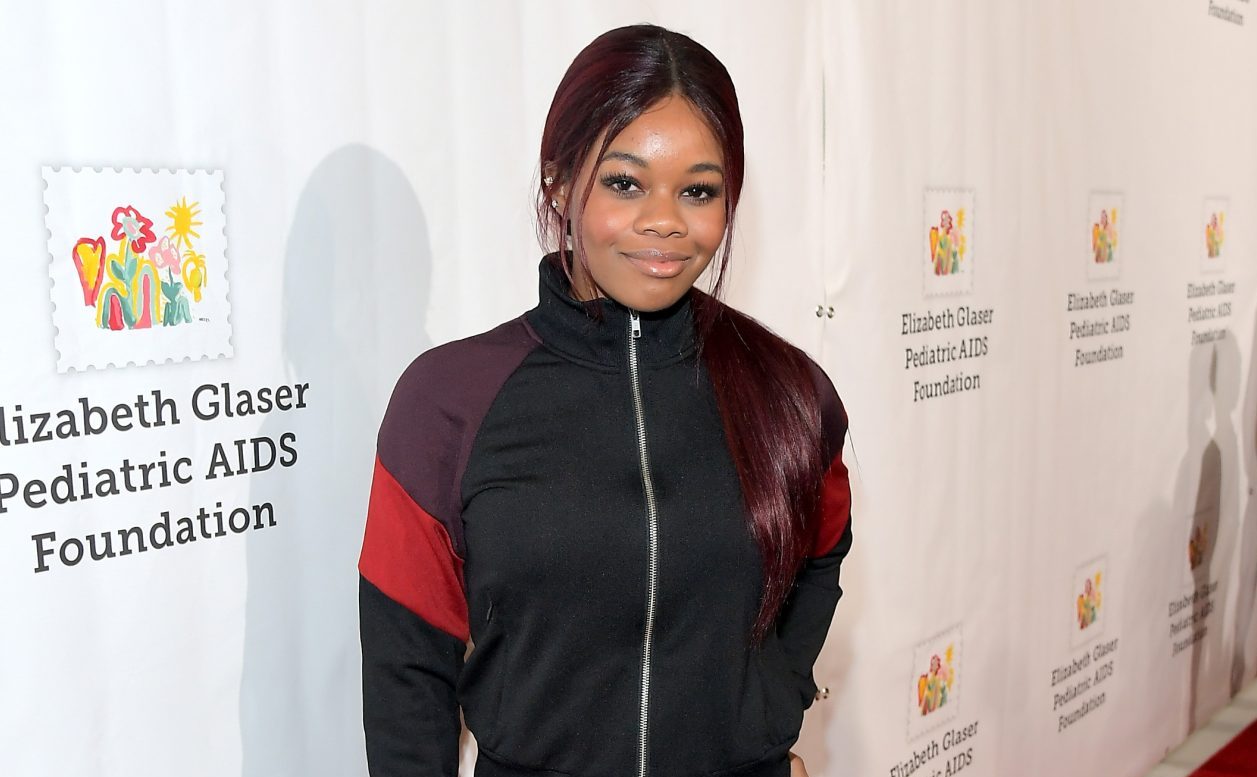
Three-time Olympic champion Gabby Douglas has withdrawn from the U.S. Gymnastics Championships. Douglas will not compete in Fort Worth, Texas, this weekend due to an ankle injury.
RELATED: Gabby Douglas talks about her hair journey and shows off her progress
Gabby Douglas withdraws from US Championships
Douglas' unfortunate injury ends her bid for the 2024 Paris Olympic team. Gabby returned to competition this spring after a nearly eight-year absence and hopes to make the U.S. team for the Paris Games this summer.
Despite the circumstances, the gymnast told ESPN that she was proud of what she had accomplished during her 18-month comeback.
“I love this sport and love pushing my limits. I hope to show both my colleagues and the next generation of gymnasts that age is just a number and that you can achieve anything if you work hard for it,” Douglas told ESPN.
According to EPSN, Gabby is the first black gymnast to win the Olympic all-around title at the 2012 London Games and helped the U.S. win back-to-back team gold medals in London and Rio in 2016.
Gabby officially announced her comeback in early February of this year. She later returned to competition in April at the American Classic in Katy, Texas, where she qualified for the U.S. Championships.
Social media reactions to Gabby’s injury
Following the announcement of Gabby's retirement, the Olympic gold medalist's roomies showed their affection in the comments section of The Shade Room. Several social media users shared their disappointment at the news and sent her well wishes for a speedy recovery.
Instagram user @thislittleliteofmine wrote: “I don't feel like she had enough support from the athletes/her peers. They all suck up to Simone and forget that Gabby ran so Simone could run.
Instagram user @vibe.lino wrote: “Does that mean she’s not competing in the Olympics?”
While Instagram user @_diorsax_ wrote, “I pray she gets better.”
Then Instagram user @aprnbeauty wrote: “Oh man Gabby, I know she wanted this so badly! I was rooting for her! She was the best in her time, your legacy can never be erased young lady!!! Get well soon.”
Instagram user @moneyluvsme____ wrote: “She has nothing to prove!”
Instagram user @loulouceesay wrote: “That's sad. I was hoping to see her again. Maybe next year.”
Instagram user @_tysunraveling wrote: “I pray for her healing, peace and success!!”
Finally, Instagram user @congoqueen08 wrote: “We keep cheering you on.”
Gabby looks to the future
The U.S. Championships would have been Gabby's last chance to earn an invitation to the Olympic Trials in Minneapolis in June, but she plans to continue training for the 2028 Olympics in Los Angeles. She will also reunite with her longtime representative, Lowell Taub of Range Sports.
“I have proven to myself and the sport that my skills remain at an elite level. My plan is to continue training for the 2028 Olympic Games in LA. It would be a great honor to represent the USA at the Olympic Games in their own country,” Gabby said in a statement.
RELATED: Gabby Douglas breaks down over 'hurtful' comments from critics
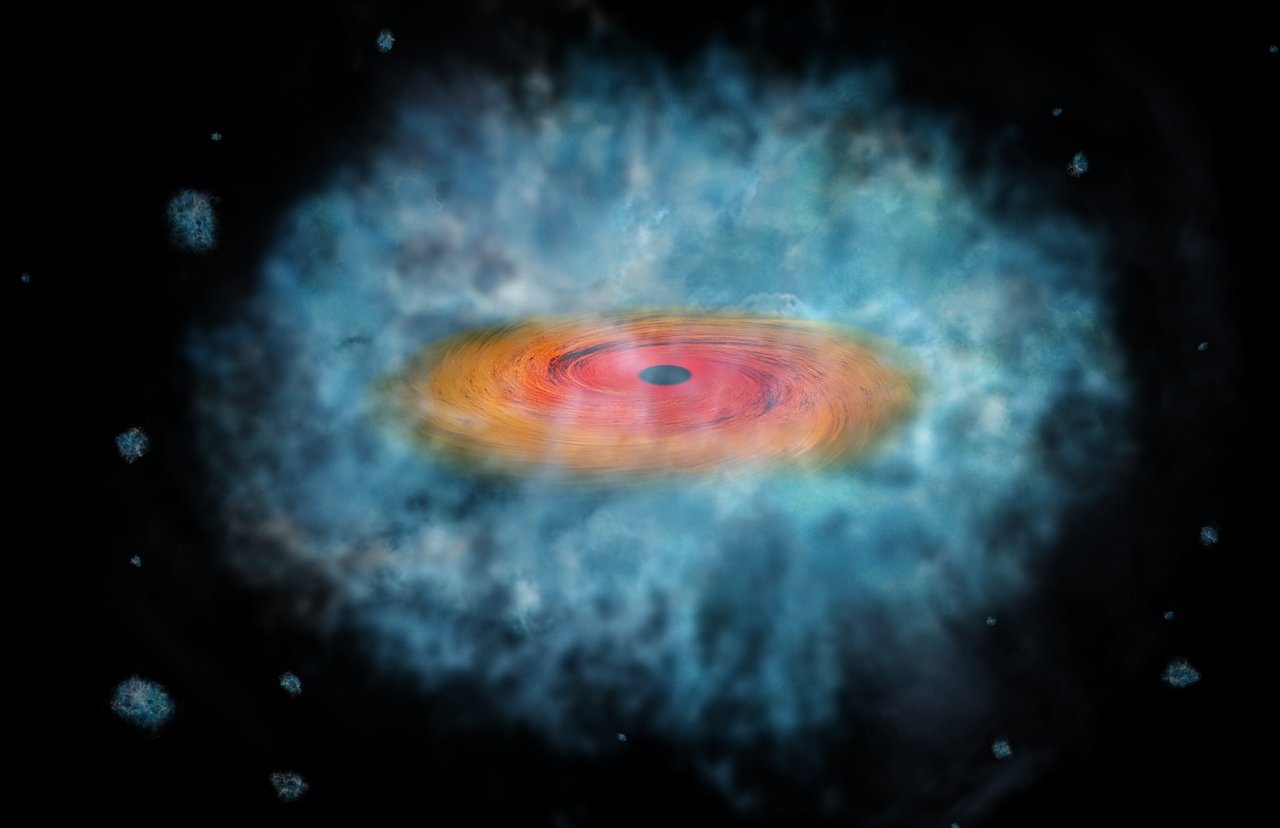
The life cycle of a star is usually described as being born in huge clouds of gas and dust, and then ending up as either a planetary nebula or a supernova explosion. However, over the past 70 years, a number of massive stars seem to simply disappear! According to models of stellar evolution, they should explode as supernovas, but instead they seem to just disappear. A team of researchers has studied the behavior of the star VFTS 243 – a main sequence star with a black hole companion – and now believe that, like the others, it simply collapsed and imploded into a black hole!
During the lifetime of a star, the inward-pulling force of gravity is balanced by the outward-pushing thermonuclear force (the result of fusion in the core). Once the core is rich in iron, as is the case in massive stars about eight times as massive as the Sun, the fusion process stops, as does the thermonuclear force. With the end of the force, the core collapses, the outer layers fall onto the core and bounce back out in a massive explosion called a supernova. The actual mechanism of the explosion and the formation of the compact object left behind by the core is still the subject of much debate.
The supernova process is one of the most powerful explosions in the universe. As the star collapses, a shock wave is created that can trigger fusion in the outer shell of the predecessor star. The reactions can create new elements that are heavier than iron. In a recently published paper by an international team of astronomers led by Alejandro Vigna-Gómez of the Max Planck Institute for Astrophysics in Germany, the team has shed new light on the process. They showed that a star can be so massive that its enormous gravity can be so strong that even a supernova explosion cannot take place.
The Fred Lawrence Whipple Observatory's 48-inch telescope captured this visible-light image of the Pinwheel Galaxy (Messier 101) in June 2023. The location of supernova 2023ixf is circled. The observatory, located on Mount Hopkins in Arizona, is operated by the Center for Astrophysics | Harvard & Smithsonian. Hiramatsu et al. 2023/Sebastian Gomez (STScI)
The team's discovery appears to be related to the concept of vanishing stars. In recent years, it has become clear that some stars simply appear to disappear from view without going through the planetary nebula phase or ending up as a supernova. The discovery of supermassive stars that collapse completely without a supernova now provides a good explanation for the phenomenon.
The team came to this conclusion while studying an object called VFTS 243, a binary star system that contains a star estimated to be 25 times more massive than the Sun and a black hole 10 times more massive than the Sun. Both objects orbit a common center of mass for 10.4 days and are located in the Tarantula Nebula in the Large Magellanic Cloud – 160,000 light-years away. The binary star system is not the first of its kind to be discovered; such systems have been known for decades.
30 Doradus, also known as the Tarantula Nebula, is a region in the Large Magellanic Cloud. Streamlines show the magnetic field morphology from the SOFIA HAWC+ polarization maps, superimposed on a composite image taken by the European Southern Observatory's Very Large Telescope and the Visible and Infrared Survey Telescope for Astronomy. Image credits: Background: ESO, M.-R. Cioni/VISTA Magellanic Cloud Survey. Acknowledgements: Cambridge Astronomical Survey Unit. Streamlines: NASA/SOFIA
Studying the system revealed that the orbit was nearly circular. Since one of the stars had collapsed into a black hole, the nearly circular orbit and the lack of any evidence of an explosion suggest a star that completely collapsed. The complete collapse meant that all of the star's matter collapsed into the black hole, and no material escaped as a supernova. So could the team have finally uncovered the mechanism by which massive stars disappear? It certainly looks like it, but more observations of binary star systems with stars and black holes are needed to confirm this.
Source: Constraints on neutrino natal kicks from the black hole binary system VFTS 243
The heavyweight championship rematch between Tyson Fury and Oleksandr Usyk will take place on December 21 in Riyadh, Saudi Arabia, Saudi General Entertainment Authority Chairman Turki Alalshikh announced on Wednesday.
Usyk became undisputed heavyweight champion of the world when he defeated Fury on points in their first highly anticipated fight earlier this month. A judge scored the fight 114-113 for Fury, but it was overruled by 114-113 and 115-112 for the Ukrainian.
Editor's Favorites
2 relatives
Usyk is the first unified heavyweight world champion since Lennox Lewis defeated Evander Holyfield in a rematch in Las Vegas in 1999. For Fury, meanwhile, it was the first defeat of his professional career.
The pair had signed a two-fight deal that included a rematch on October 12, but Alalshikh's announcement confirms that date has been pushed back to late 2024.
Alalshikh said in a post on Twitter: “The rematch between undisputed champion Oleksandr Usyk and champion Tyson Fury is now scheduled for December 21, 2024 during the Riyadh season… The world will once again see a historic fight… Our commitment to boxing fans continues… We hope you enjoy it.”
Fury said after their first fight in the ring that he would try to improve his record in the rematch.
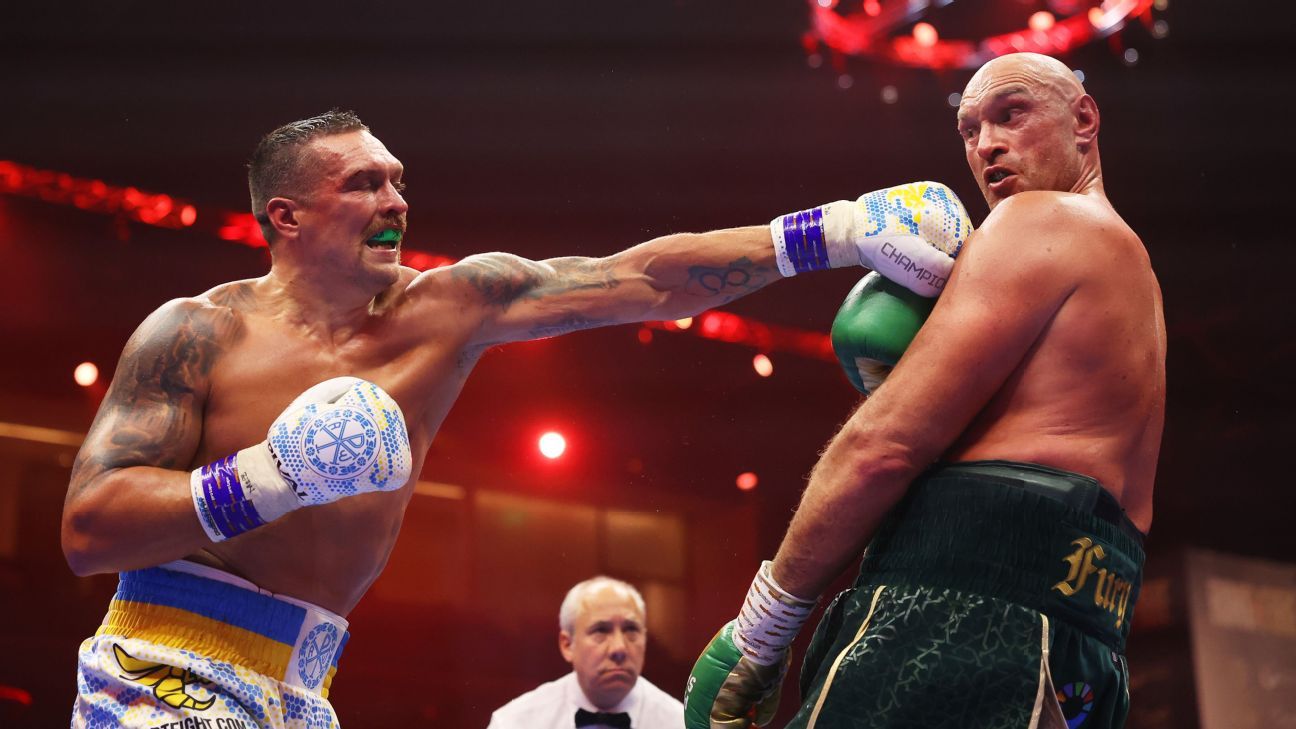
Tyson Fury suffered his first career loss to Oleksandr Usyk earlier this month. Richard Pelham/Getty Images
“I think I won the fight but I'm not going to sit here and cry and make excuses,” Fury said. “I think he won some rounds but I won most of them. What can you do? We both put up a good fight, the best we could do. … People are on the side of the country that's at war. But make no mistake, I won that fight … and I'm coming back. We have a rematch clause.”
The fight was particularly brutal. Fury took 14 unanswered punches in round 9, resulting in the eighth knockdown of his career. Usyk appeared at the post-fight press conference with four stitches in his right eye and severe swelling around both eyes.
Both fighters also had to endure long training camps after the actual fight on February 17 had to be postponed because Fury sustained a cut during sparring that required eleven stitches above his right eye.
Jose Mohan, president of the Middle East Boxing Commission, told ESPN on Wednesday that Usyk had been suspended for medical reasons until July 2, while Fury had been given a week's rest.
“Both are currently both [medically] suspended because the fight took such a toll on them,” Fury's promoter Frank Warren told ESPN on Tuesday. “It's a tough fight. These guys put up an epic, epic fight.”
Information from ESPN's Michael Coppinger contributed to this report.