Bobbi Radford showed up at the CVS MinuteClinic in Batavia, Ohio, last Thanksgiving because she was experiencing pain in her arm.
“I waited an hour and then I was told to go to the [emergency room].,” Radford said. After telling the staff member her medical history of congestive heart failure, she was instructed to go to the emergency room. But Radford says after she did that, the emergency room discovered she had tennis elbow.
“It was a waste of time and I still had to go to my GP,” Radford said.
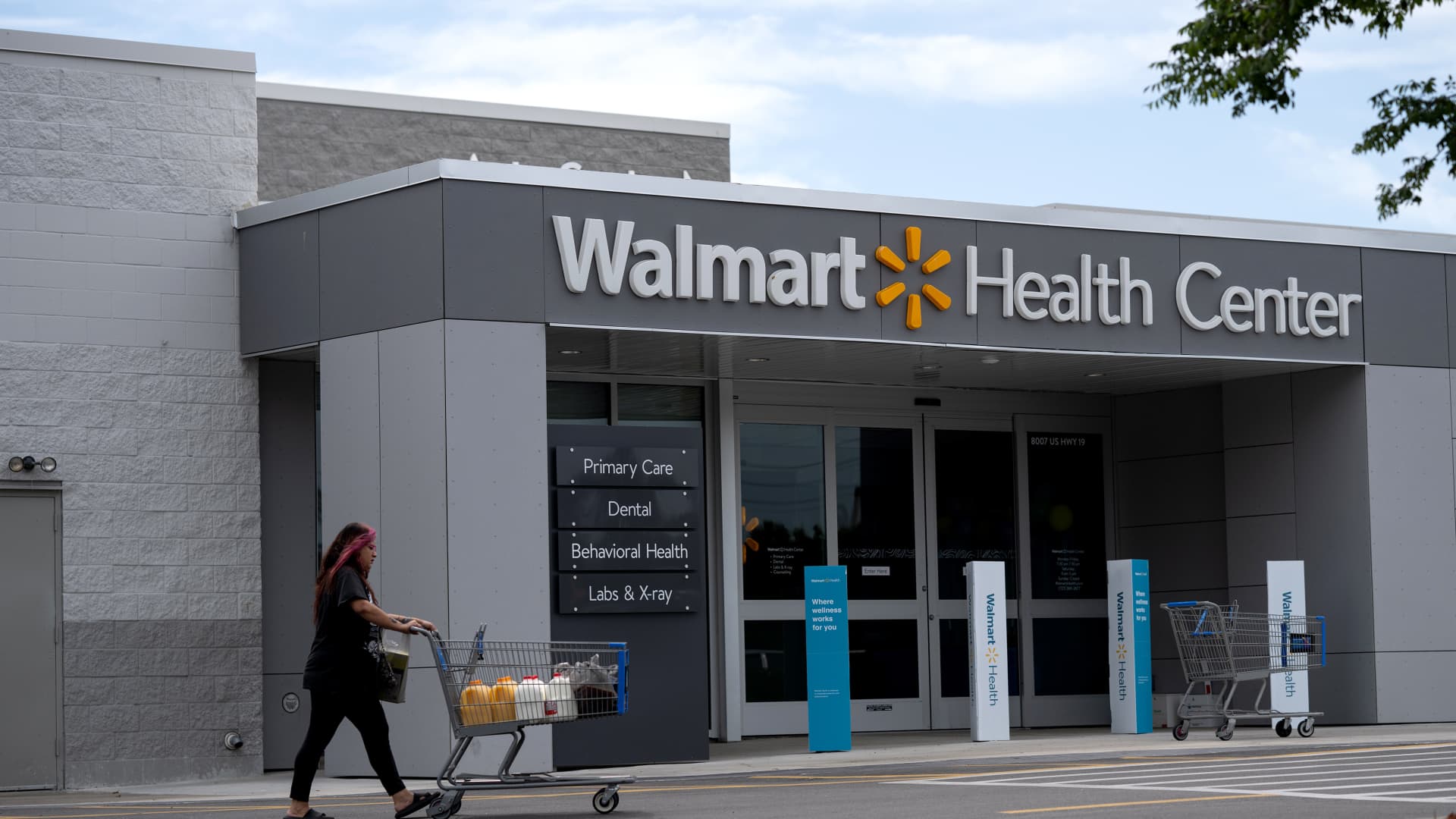
Despite their initial promise of convenience and accessibility, in-store clinics have not proven to be the golden goose many retailers initially envisioned. That's why Walmart recently announced it would close its 51 full-service stores. Another symptom of the weakening market is Walgreens, which has announced the closure of 160 VillageMD stores (Walgreens owns a 53% stake in VillageMD, which also operates freestanding clinics). CVS' MinuteClinic, the largest in-store clinic with over 1,100 locations, has announced dozens of clinic closures this year in Southern California and New England.
Not all patient experiences are negative. Karla Lemon of Conway, South Carolina, says she uses CVS' MinuteClinic for vaccinations or sinus infections. “I've had pretty good experiences with them,” Lemon said.
Yet the business experience in the retail health clinic space has been largely disappointing. That's not a big surprise to Timothy Hoff, a professor of health systems management at Northeastern University. Hoff has researched retail health clinics and the type of primary care they provide, and says margins can be slim to nonexistent and that many other challenges have hindered their success. What was not long ago considered the “2.0” version of primary care is now taking a back seat as in-store clinics close.
“1.0 was the rise of urgent care centers. These were places 20 or 30 years ago that gave people alternatives to primary care doctors,” Hoff said. But about 15 years ago, Hoff said, those spaces began moving into high-traffic stores like grocery stores and department stores, with health care trying to reach people where they were. But this brought challenges that many retailers and even some providers were unfamiliar with.
“Some of these organizations have grown that part of their business too quickly and haven't realized the cost model of maintaining these clinics,” Hoff said. Insurance reimbursements for these clinics are low, but costs have increased significantly. “I just don't think it's worth it for a lot of places to have a lot of these clinics. Some of these large organizations are downsizing and pulling out,” Hoff added.
Retail clinics rely on selling large quantities. “If you can't pump through a lot of patients, it doesn't work,” Hoff said. The staffing situation was also a problem. “Ultimately, it was more expensive to operate than expected, and combined with the lack of staff, it just didn't work.”
There's also the issue of cross-selling. Many retail chains use clinics as loss-leaders to steer customers toward other products and services they sell: They lure customers into the clinic in the hopes that they'll buy other things. But that model hasn't worked. If someone is sick enough to seek treatment, they probably won't be in the mood to buy a pint of ice cream or socks while they're away. Likewise, “people who come in to shop aren't necessarily going to hop into the clinic,” Hoff said.
A Retail Reality Check for MinuteClinic
Colleen Sanders, a Washington, D.C., nurse who now works in health education, worked at MinuteClinic for two years. She pointed to margin and staffing issues she experienced.
“Healthcare is a business in the United States. Even though we look at the huge billions of dollars that are being generated, that doesn't mean there are going to be huge profit margins. I think retailers have realized they're not going to make millions and millions of dollars,” Sanders said. “The profit margins are slim.”
Labor costs further squeezed already slim margins. When Sanders worked at MinuteClinic, she had to do everything herself, from checking in patients to billing and cleaning the clinic at the end of the day. The support staff was inadequately trained at best, she said. “That was the model to make sure they could do it so they didn't have to hire additional staff. But with that much work, you need support staff to give the professionals time to focus on patient care, because that's where you can bill insurance and generate revenue.”
The 15 minutes she was allowed to treat a patient was often simply not enough for the complex conditions patients were suffering from. For some patients, treatment simply wasn't fast enough: Sanders recalled a 7-year-old she was treating commenting that the treatment took more than a minute. Ultimately, the “want it now” culture of Americans is not a good fit for medicine, and that is precisely what the clinic closures indicate. “The pace at which we want to achieve health care is not congruent with actually providing the level of service we should be providing, coupled with the cost of support staff,” Sanders said. “If we wanted to curb retail health care, we would use registered nurses instead of physician assistants, but that would be too expensive.”
CVS declined to comment directly on the closures, but a spokesperson described the latest strategy as a combination of healthcare options – a mix of virtual, in-store and at-home services – that offers a “more convenient experience.”
Walmart and the problem of quantity and price
In 2019, Walmart announced a bold initiative to open 4,000 health centers in its stores by 2029. But those plans ended with the recent closure of the 51 centers it opened.
“Primary health care is a low-margin business,” said Arielle Trzcinski, a senior healthcare analyst at research firm Forrester. “Compared to what you see in traditional retail, healthcare is a fundamentally different business,” Trzcinski said, citing the challenges of dealing with insurance companies and the administrative burdens that come with that.
Retailers cannot recoup their money by offering primary care as a loss leader in the same way as other healthcare organizations.
“Primary care is a feeder for patients who need more urgent services like surgery or specialists. Hospitals make money on the back end and Walmart or Walgreens didn't have that,” Trzcinski said. CVS is doing better because its merger with health insurer Aetna now allows it to sell other services, including mental health.
“Walmart ultimately thought they were solving an important problem,” Trzcinski said, but added that Walmart never really put all of its marketing muscle into the effort or built relationships with other employers to create a path to the clinic. “They wanted to make health care more affordable and more convenient for their customers. But to do that, you need volume. … To make it work, you need volume or a different pricing structure, and Walmart ended up having neither one nor the other properly calibrated.”
A missed opportunity for rural America
According to Sanders, the limitations of the business model have even undermined one of the great promises of the retail clinic concept: providing health care to rural areas.
“Walmart tried to go into rural areas where there were few vendors and fill a community need. I think that's a great idea because everyone knows where the local Walmart is. But it's a real challenge to get vendors to go and work in rural areas. The quality of life and the things that people can do in a small town are not as attractive as in urban centers, so they pay vendors a premium to work there,” Sanders said, and that's another factor that cuts into revenue.
Retail will continue to experiment with this model.
Dollar General, for example, has tried a workaround by offering mobile clinics that visit some of its rural locations and provide a range of minor medical services.
Another way for Amazon to make money is with the recent launch of One Medical, which charges existing Prime members a subscription fee of nine dollars per month.
“You get your money whether you use the service or not, and it's a good price if you need the treatment,” said Virgil Brantz, CEO of Washington-based fintech healthcare platform MacroHealth. The treatment is virtual, but you can also just show up if you're near a One Medical facility. Unlike most models that make money when patients come, “Amazon makes more money when you don't show up. So this retail model is a little different,” Brantz said.
In-store health centers can be profitable and viable, and retailers are experimenting with phased approaches tailored to the local market. Walgreens recently announced the opening of a handful of in-store health centers in Connecticut to be operated by Hartford HealthCare. The clinics will be called “Hartford HealthCare at Walgreens.” Patients can go beyond the typical services of smaller clinics and take advantage of Hartford's larger network of specialists and treatment options.
And in Phoenix, a Walgreens branch near the Arizona State University campus has a “Be Well Health Clinic” that specializes exclusively in sexual health issues.
“The common thread is that this is a locally based partnership with a local provider with the shared goal of providing convenience and access,” a Walgreens spokesperson said.
Meanwhile, Atlanta-based Little Clinics, owned by Kroger, is shifting its service offerings to focus on geriatric care.
Walmart and Kroger did not respond to requests for comment.
This is all part of what Hoff calls “Healthcare 3.0”: a progressive disruption and evolution of primary care based on market and customer needs, including the involvement of physician offices. New models will emerge, and not every model will work.
““Every few years, there are a number of outsiders who try to make changes in health care, for better or for worse,” Brantz said. Inevitably, they “run into the wall of reality, which shows how complex health care can be.”
Clarification: Walgreens owned a 63% stake in VillageMD, but last year it reduced its stake to 53% in a restructuring. The story has been updated to reflect this.