Categories
Health

FDA approves Merck’s pneumococcal vaccine for adults

Enlarge iconOutward pointing arrows

The new pneumococcal vaccine from Merck.

Courtesy of Merck

The Food and Drug Administration approved on Monday MerckThe vaccine manufacturer's new vaccine is designed to protect adults against pneumococcal bacteria, which can cause serious illness and a lung infection called pneumonia, the drugmaker said.

Merck's vaccine, called Capvaxive, specifically protects against 21 strains of these bacteria and prevents a severe form of pneumococcal disease that can spread to other parts of the body and lead to pneumonia. It is the first pneumococcal conjugate vaccine specifically developed for adults and is designed to provide more comprehensive protection than vaccines currently on the market, the pharmaceutical company said.

Healthy adults can develop pneumococcal disease, but older patients and those with chronic or immunocompromised conditions are at higher risk for the disease, particularly the more severe or so-called “invasive” form.

Invasive pneumococcal disease can lead to meningitis, an infection that causes inflammation in the area around the brain and spinal cord, as well as an infection in the bloodstream called bacteremia.

“If you have chronic lung disease or even asthma, you're at a higher risk of getting pneumococcus and then being hospitalized and losing your job,” said Heather Platt, head of Merck's product development team for the newly approved vaccine, in an interview with CNBC. “These are things that have a real impact on the quality of life of adults and children.”

About 150,000 adults in the U.S. are hospitalized with pneumococcal pneumonia each year, Platt said.. The mortality rate for the more severe form of the disease is highest in adults over 50, Merck said in a press release in December.

Even after FDA approval, the company's single-dose vaccine will not yet reach patients. An advisory panel at the U.S. Centers for Disease Control and Prevention (CDC) will meet on June 27 to discuss who is eligible for the shot.

Platt said Merck will support the committee's decision and is ready to provide the vaccine by late summer.

Merck’s competitive advantage

Some analysts see Capvaxive as a key growth driver for Merck, which is preparing to offset losses from its successful cancer drug Keytruda, which will lose its exclusivity in the U.S. in 2028.

The market for pneumococcal conjugate vaccines is currently worth around $7 billion and could grow to over $10 billion in the next few years, according to a note published in November by analysts at Cantor Fitzgerald.

Merck's newly approved vaccine could increase its competitive advantage in this field, which includes drug manufacturers PfizerMerck currently markets two pneumococcal vaccines, but neither is specifically designed for adults. For example, the company's existing vaccine, Vaxneuvance, is approved in the U.S. for patients as young as 6 weeks of age.

Pfizer's pneumococcal vaccine Prevnar 20 is currently the market leader in adults, but Merck expects its new vaccine to capture the largest market share in adults, Platt said.

“We expect rapid adoption of Capvaxive,” she said, adding that the company was confident the vaccine data would “resonate strongly” with physicians and policymakers.

Merck's pneumococcal vaccine protects against eight strains of bacteria not included in any other approved vaccine against the disease. These eight strains account for about 30% of cases of invasive pneumococcal disease in patients ages 65 and older, according to a Merck press release, citing CDC data from 2018 to 2021.

The 21 strains included in Merck's vaccine are responsible for about 85% of cases of invasive pneumococcal disease in adults ages 65 and older, Merck said, citing CDC data. Meanwhile, Pfizer's Prevnar targets strains that are responsible for only about 51% of cases in that age group, according to the same CDC data.

The FDA's approval is based in part on Merck's late-stage STRIDE-3 trial, which compared the vaccine to Pfizer's Prevnar 20 in adults 18 years of age and older who had not previously received pneumococcal vaccination.

Correction: This story has been updated to reflect that 150,000 adults in the United States are hospitalized with pneumococcal pneumonia each year.

Categories
Sport

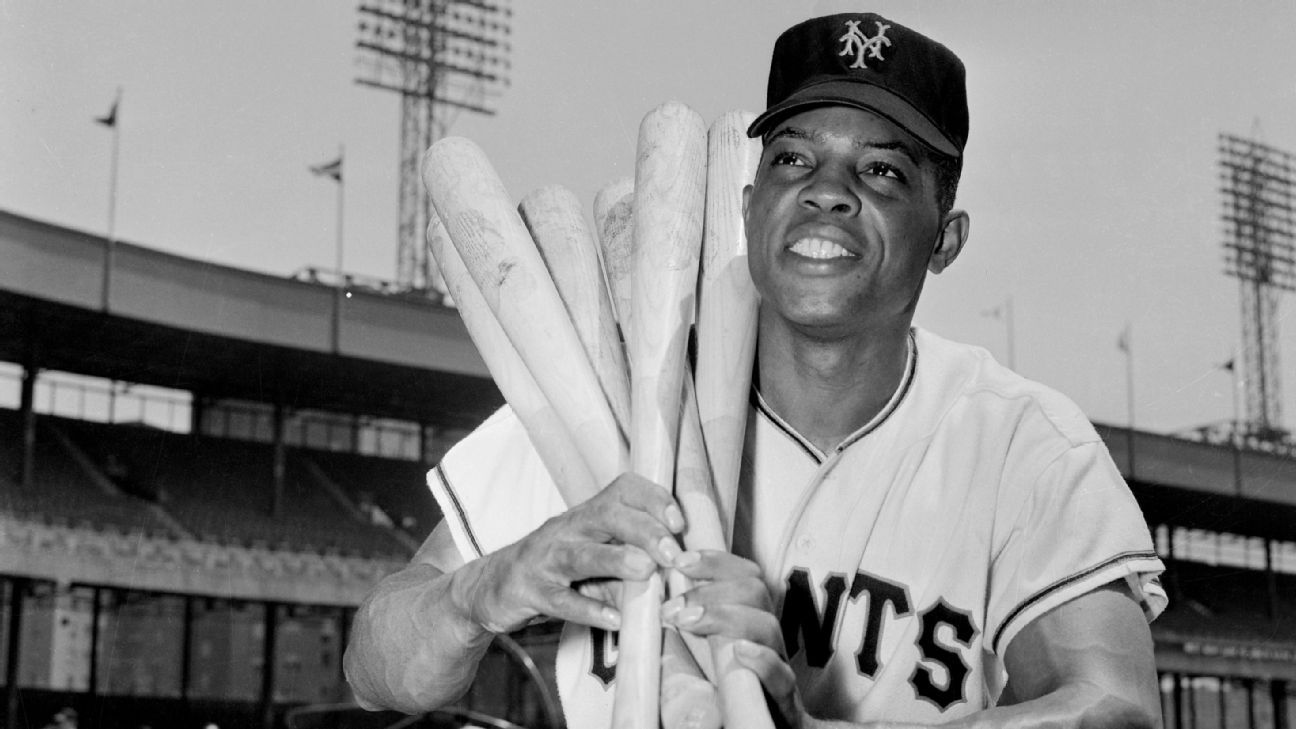
Legendary outfielder Willie Mays, “Say Hey Child,” dies at age 93

June 18, 2024, 9:03 p.m. ET

Willie Mays, whose unmatched skills made him the greatest center fielder of all time, died Tuesday afternoon in the Bay Area. He was 93 years old.

“My father passed away peacefully surrounded by his loved ones,” Michael Mays said in a statement from the San Francisco Giants. “I want to thank you all from the bottom of my heart for the unwavering love you showed him over the years. You were his lifeblood.”

The “Say Hey Kid” left a lasting mark on the sport. His name is constantly found in the famous baseball record books and his defensive strength – epitomized by “The Catch” in the first game of the 1954 World Series – is unmatched.

In total, during his 20-plus-year career (1951-73), most of which were with his beloved Giants, he made 24 All-Star teams, won the National League MVP award twice, and received 12 Gold Gloves. He is the sixth all-time leading home run player (660), seventh in runs scored (2,068), 12th in RBIs (1,909), and 13th in hits (3,293).

“Today we lost a true legend,” Giants chairman Greg Johnson said in a statement. “In the pantheon of baseball greats, Willie Mays stands out for his combination of tremendous talent, sharp mind, showmanship and boundless joy. A 24-time All-Star, the Say Hey Kid is the ultimate Forever Giant.”

“He had a profound impact not only on the sport of baseball, but on the fabric of America. He was an inspiration and a hero who will be remembered forever and sorely missed.”

Barry Bonds, another Giants legend and Mays' godson, ranks just five spots ahead of him on the all-time home run list. In a message shared on social media, he said Mays “made me who I am today.”

Mays' death came two days before the Giants were to play the St. Louis Cardinals at Rickwood Field in Birmingham, Alabama, in a game honoring Mays and the Negro Leagues as a whole. It was announced Monday that Mays would not be able to participate.

Mays, who was born on May 6, 1931 and grew up in Alabama, began his professional career in 1948 at the age of 17 with the Birmingham Black Barons and helped the team win the Negro League World Series that season.

MLB has partnered with the city of Birmingham and the nonprofit group Friends of Rickwood to renovate the 10,800-seat ballpark, which, at 114 years old, is the oldest professional baseball stadium in the United States.

“Thursday's game at historic Rickwood Field was meant to be a celebration for Willie Mays and his colleagues,” MLB Commissioner Rob Manfred said in a statement. “With sadness in our hearts, it will now also serve as a national memorial to an American who will forever remain on the short list of the most influential figures our great game has ever known.”

The Giants played the Cubs in Chicago on Tuesday night; the 36,292 spectators at Wrigley Field stood for a moment of silence for Mays when his death was announced on the left-field video board in the sixth inning.

Giants manager Bob Melvin said he learned of May's death shortly before the game began. Most of his players did not learn of it until after the game had begun.

“It's a heavy heart not only for the Bay Area and New York, where he started, but for the entire baseball world,” Melvin said. “He is one of the true icons of the game.”

Editor's Favorites

2 relatives

Melvin, 62, of Palo Alto, California, said he grew up watching Mays play at Candlestick Park.

“I loved baseball because of Willie Mays,” Melvin said. “That meant so much to me.”

Melvin said the Giants would have loved for him to be able to watch Thursday's game at Rickwood Field.

“If possible, there is added value in going there,” he said.

Giants starter Logan Webb said he learned of May's death during the Cubs' announcement as he took the mound to pitch the sixth inning.

“It was hard at first. I took my hat off, looked at the scoreboard and just thought about him,” Webb said. “I looked at the referee and thought, 'I think you need to stop the clock.' I had to take a moment to think about it and be proud of the jersey and hat I was wearing and know that Willie was doing the same thing.”

Webb said the team will play Thursday's game in honor of Mays. Right fielder Mike Yastrzemski also spoke about his interactions with Mays, recalling how the Hall of Famer insisted he play center field when he was first called up to the team.

“He said he didn't see much of the game, but he could see that,” Yastrzemski said. “It was pretty cool.”

Mays excelled at baseball, football and basketball as a high school student, but his love of baseball trumped all other sports. Since he was still in school while playing for the Black Barons, he only played with the club on weekends; during school holidays he traveled with Birmingham.

The New York Giants caught wind of Mays and purchased his contract from Birmingham in 1950. Mays had no trouble adjusting, posting a .353 batting average in 81 games with Trenton that season. In 1951, Mays broke through with the Triple-A Minneapolis Millers, posting a .477 batting average in 35 games before the Giants recalled him in May.

There will never be another like Willie Mays 🧡 pic.twitter.com/I95JW1buJF

— SFGiants (@SFGiants) June 19, 2024

At age 20, Mays was the 10th black player in major league history. After failing to bat a single hit in his first three games, Mays' first career hit with the Giants was a home run off Hall of Famer Warren Spahn in the first inning of the Giants' 4-1 loss to the Braves on May 28, 1951. Mays was also there when the Giants' Bobby Thomson hit his home run against the Dodgers on October 3, 1951, that won him the NL pennant and became famous as “The Shot That Went Around the World.”

The Korean War interrupted Mays' career in 1952. He played 34 games for the Giants (batting average .236) before being drafted by the U.S. Army. Assigned to Fort Eustis in Virginia, Mays kept his skills sharp by playing regularly. Mays also missed the entire 1953 season because of his military service; he did not return to the Giants until the spring of 1954.

But the break from professional baseball had no effect on him. That season, Mays won the first of his two NL MVP awards, leading the league with a .345 batting average and hitting 41 home runs and 110 RBIs. Mays won his other NL MVP in 1965.

“I fell in love with baseball quite simply because of Willie,” said Giants President and CEO Larry Baer. “My childhood was marked by visits to Candlestick with my father and watching Willie guard center field with grace and supreme athleticism. Working with Willie for the past 30 years and experiencing firsthand his zest for life and his unbridled passion for giving to young players and kids has been one of the joys of my life.”

During Game 1 of the 1954 World Series against Cleveland at the Polo Grounds, Mays made one of the most famous plays in baseball history. With the score tied 2-2 and two runners on base in the top of the eighth inning, Cleveland's Vic Wertz hit a 2-1 pitch to deep center. Mays sprinted toward the wall with his back to Wertz. He caught a basket on the run, turned around, and threw the ball into the infield. Mays' catch and quick relay throw prevented either runner from scoring; the Giants won the game 5-2 in 10 innings.

Willie Mays Biography

• Born on May 6, 1931
• 6th all time in HR (660)
• 2nd player with 600 home runs in his career (Babe Ruth)
• One of 3 players with 600 home runs and 300 stolen bases (Barry Bonds, Alex Rodriguez)
• 2-time NL MVP (1954, 1965)
• 24-time All-Star (T-2nd most voted player of all time, Hank Aaron)
• 12-time Gold Glove winner (T-1st by an OF, Roberto Clemente)
• 1951 NL Rookie of the Year
• Won the 1954 World Series with the New York Giants
• Inducted into the Baseball Hall of Fame in 1979 (1st ballot)
• Nickname “The Say Hey Kid”

– ESPN stats and information

Today the piece is known simply as “The Catch.”

“It was not a lucky catch,” Mays noted years later.

On May 11, 1972, Mays was traded by the Giants to the New York Mets in exchange for pitcher Charlie Williams and $50,000. After the 1973 season – when Mays helped the Mets win the NL championship – Mays retired. He was inducted into the Baseball Hall of Fame in 1979.

In a statement from the MLB Players Association, general manager Tony Clark said Mays “played the game with a seriousness, joy and constant smile that resonated with fans everywhere.”

“He will be remembered for his integrity, commitment to excellence and a greatness that transcended generations,” Clark said.

In his 22-year career, Mays led the NL in home runs four times, and when he finished his career, his 660 home runs ranked third-most in major league history. Today, he ranks sixth behind Bonds, Hank Aaron, Ruth, Alex Rodriguez and Albert Pujols. He also finished his career with 3,283 hits (12th all-time) and 1,903 RBIs (12th all-time).

“His incredible accomplishments and statistics cannot begin to describe the awe that one feels watching Willie Mays dominate the game in every way imaginable,” Manfred said in his statement. “We will never forget this true giant on and off the field. On behalf of Major League Baseball, I extend my deepest condolences to Willie's family, his friends in our game, Giants fans everywhere and his countless admirers around the world.”

With the exception of 1951, when he wore number 14, Mays wore number 24 for his entire career. Mays' legacy is still felt in San Francisco. The Giants' ballpark is located at 24 Willie Mays Plaza, complete with a statue of Mays. The city of San Francisco also celebrates every May 24 as Willie Mays Day.

ESPN's Jesse Rogers and The Associated Press contributed to this report.

Categories
Science

Floating Wind Insanity in Maine – What’s Going On With It?

By David Wojick

The government of Maine has really big plans for floating wind turbines, a floating net-zero fantasy to be exact. Since floating wind is the next big green trend, it's worth taking a closer look at this ruinous vision.

Floating wind turbines are a fad, not an established technology. They have yet to be built on a large scale or tested in a hurricane. The world's largest grid-connected system is a tiny 50 MW system and has just been connected to the grid off Scotland.

The cost of floating wind turbines is inevitably much higher than stationary wind turbines. A stationary wind tower sits on a simple monopile, while a floating tower sits on a huge, complex structure called a floater. We're talking massive 500-foot towers with 500-ton turbines on top and 300-foot rotor blades catching the wind.

The buoyancy device has to be large enough to prevent this huge tower from falling over. It has to be even larger to contain enough air to float. It also has to be anchored to the seabed in a way that requires many different mooring lines.

The small floating generator systems cost about three times the cost of fixed wind turbines per MW, but the large and hurricane-proof generators could cost even more. Over a hundred designs have been proposed, showing how immature floating wind technology is.

This brings us to Maine's floating green dream, a costly nightmare for its people. Maine is a small state in terms of electricity consumption, with an average power generation of just about 1,500 MW. But in an act of madness, they passed a law saying they will buy 3,000 MW of floating wind power. Fixed wind power is not an option because the Gulf of Maine is too deep.

How do they justify buying so many floating wind turbines? Simple: It's a net-zero fantasy. They have a 115-page “Maine Offshore Wind Roadmap” that explains it.

First, they shut down all existing combustion generators, which burn primarily gas or wood. Maine is 90% forest, so there's a lot of wood. Then they electrified all other forms of combustion. For example, 60% of homes are heated with heating oil, so they switched to heat pumps or something else that works in really cold weather. Of course, all cars and trucks are electric.

The projected cost of the 3,000 MW of floating wind turbines is enormous. If I estimate the reported figure to be three times that of the fixed wind turbines, I arrive at a rough estimate of $50 billion for construction and an equal amount for financing and profit, for a total cost of around $100 billion. It could be much more once large-scale and hurricane-proof technologies are developed, if that ever happens.

Apparently the astronomical costs do not play a role, because they are never mentioned. Neither in the law, nor in the roadmap, nor in various accompanying technical documents. Although jobs are often mentioned, they are part of the costs. But then there are the much higher costs of the energy transition, without which wind energy simply cannot be used.

It's clear that the floating wind turbine development may never come to fruition, which brings us back to the present day where things really get crazy. The state of Maine has begun construction on a massive new port specifically for this floating wind power fantasy. I'm not making this up.

With constant wind power, the onshore plant is merely a shunting yard where the individual parts are stored until they are transported by ship to the sea for assembly. There are only four major parts: monopile, tower, turbine and rotor blade set.

Floating wind turbines are completely different, as the huge floating structure is built in the harbor. The tower, turbines and rotor blades are also mounted on the floating structure there. The entire assembly is then towed to the site and anchored to the seabed with eight or more mooring lines.

So it's a highly specialised shipyard, a floater factory, not a port. It requires one or more dry docks in which to build the huge floaters, as well as lots of specialist equipment, particularly cranes. Reports say steel floats for a 15 MW turbine could typically weigh 3500 to 4500 tonnes, while concrete floats would weigh between 17,000 and 22,000 tonnes.

The final configuration is completely unknown until the design of the float is completed. Also, keep in mind that this shipyard may only be in operation for the few years needed to build 3,000 MW of floating wind generators.

The current estimated cost for this yard/port is just under a billion dollars, but could easily be higher depending on the complexity of the design. The cost of a unique new system usually increases significantly once construction is actually completed.

Starting this multi-billion dollar port project now is just stupid. It is very likely that the required energy transition will not happen. Electricity will be very expensive, perhaps four to five times as much as it is today. And we have no idea what the technology will look like, assuming it can work in the stormy waters off Maine.

The people of Maine are unlikely to accept these onerous conditions, nor should they. This whole crazy project needs to be reconsidered.

4.5
10
Voices

Article rating

Like this:

How Is loading…

Categories
Entertainment

Jayson Tatum shares pattern standing along with his son and Ella Mai

In less than 24 hours, NBA players Jayson Tatum has managed to secure three viral moments! First, there is his championship victory with his team Boston Celtics. Second, there is the reaction of his son Deuce to this victory and third, there is the pregnancy speculation surrounding his alleged girlfriend, Ella May.

But don't just stop there! Keep scrolling, roommates, so we can reveal everything about all three!

As The Shade Room previously reported, the forward and his teammates made history last night. The Boston Celtics sent the Mavericks to Dallas after winning the game 106-88 with an 18-point margin.

The W means the Celtics now have the most championship wins in the NBA, snatching the title from the Los Angeles Lakers. In his Instagram story on Tuesday, Jayson revealed that his new nickname, if you see him, is “Champ.”

How Jayson Tatum's son stole the championship show

As players, family members and fans flocked to the field to celebrate the Boston Celtics’ victory, Tatum’s son Devil Joined in.

Cameras caught the heartwarming moment as the six-year-old congratulated his daddy with a big smile and hugged him while rolling in tears of joy! Jayson responded by throwing his boy into the air as confetti fell from the ceiling. They hugged for a few seconds before the dad set his mini-me on the floor.

This isn't the first time Deuce has been recognized for supporting his father. In fact, the six-year-old is a regular on the sidelines, often wearing Celtics green or a miniature version of his father's No. 0 jersey.

Watch the beautiful moment at 1:50 below.

https://www.youtube.com/watch?v=85rTJEOxNFc

In further proof of father-son love, Jayson Tatum and his father hugged each other long and hard on the court.

Dad again? That's why Ella Mai is also trendy among NBA players

Speaking of sons and fathers, let's move on to Jayson Tatum's number three trending reason. After winning the championship, the NBA player and his team seem to have gone out to celebrate, and singer Ella Mai was there to join them.

Cameras caught her in the middle of a club wearing a Jayson Tatum jersey and sporting what appeared to be a round belly. The footage immediately sparked pregnancy rumors. Given the jersey and their frequent sightings together since 2020, fans set their eyes on Jayson.

Despite the chatter online, Ella and Jayson have denied the pregnancy rumors online. Keep in mind that privacy has been a concern for the alleged couple for some time now.

Neither of them has ever confirmed their romantic relationship. In fact, she told the hosts of “The Breakfast Club” in 2022 that she is “not someone you talk about [her] dating life.”

It's unclear how close Ella is to Jayson's family. But it looks like Deuce is no stranger to the singer. According to PEOPLE, he and Daddy Tatum attended Mai's show in Boston during her “Heart On My Sleeve” tour in 2023.

@sydneye.denham

#heartonmysleevetour #ellamai #deucetatum

♬ Original sound – Sydney E. Denham

So, will there be Big Brother 2024? We'll have to wait and see!

RELATED: Okay! Ashanti Shows Off Her Engagement Ring and Reveals How Nelly Proposed to Her (WATCH)

What do you think, roommates?

Categories
Health

Increasingly more US employers are adopting GLP-1 weight reduction measures

Do you think a friend or colleague should receive this newsletter? Share this link with them so they can subscribe.

The injectable weight loss drug Wegovy at the New City Halstead Pharmacy in Chicago on April 24, 2024.

Scott Olson |

Good morning! A survey found that more and more U.S. employers are covering the cost of a much-discussed class of weight-loss drugs called GLP-1.

About one-third of employer health plans in the United States reported that they cover GLP-1 drugs, such as Novo Nordisk's Ozempic and Wegovy for both diabetes and weight loss, up 26% from last year.

The share of GLP-1 weight-loss drugs in total annual employer spending on medical benefits also increased, accounting for nearly 9% in 2024, up from about 7% the year before.

This is according to a survey published on Thursday by the nonprofit organization International Foundation of Employee Benefit Plans, which has more than 33,000 companies and public institutions as members. The survey was conducted in May among nearly 300 employer health insurance plans in the United States.

The increase in coverage is a win for patients who, without insurance and other discounts, often struggle to afford the high monthly cost of $1,000 for these drugs. It is also good news for the manufacturers of these treatments, Novo Nordisk and Eli Lillywho are committed to improving insurance coverage for medicines and patient access overall.

Of particular note, most employee health plans and other insurers do not cover weight-loss drugs, including GLP-1 drugs such as Novo Nordisk's Wegovy and Eli Lilly's Zepbound. Nor does the federal Medicare program cover weight-loss treatments unless they are approved and prescribed for another condition.

GLP-1 diabetes drugs, such as Eli Lilly's Ozempic and Mounjaro, are often covered by plans.

Both weight-loss and diabetes treatment drugs are gaining popularity in the U.S.—and attracting increasing interest from investors—because they help people lose dramatic amounts of weight over time. They work by mimicking one or more hormones produced in the gut to suppress a person's appetite and regulate their blood sugar.

About 57 percent of employer-sponsored health plans said they only cover diabetes medications, up from 49 percent in 2023, the survey found.

But a significant proportion – about 19% – said they were considering whether to cover the costs of weight loss.

“The new survey data show that over the past six months, GLP-1 coverage for both weight loss and diabetes has increased,” said Julie Stich, vice president of content at the International Foundation of Employee Benefit Plans, in a press release.

Stich said new regulatory approvals and clinical trials, as well as increasing demand for GLP-1 drugs in the U.S., have contributed to broader coverage.

For example, Novo Nordisk's Wegovy is now approved in the USA because it drastically reduces the risk of serious heart complications.

Insurance industry experts previously told CNBC that the approval would not automatically lead to widespread coverage of the weight-loss drug by health insurers. At the very least, some insurers would take note of Wegovy's new use and consider covering the treatment the next time they update their drug lists, these experts said.

Novo Nordisk and Eli Lilly are also conducting a number of studies of their GLP-1 drugs in a variety of patients, including those with chronic kidney disease, sleep apnea and a certain type of fatty liver disease.

However, there is no doubt that these drugs can place a burden on any health insurance company’s budget.

According to the survey, around 85 percent of employers who comply with GLP-1 obligations rely “heavily” on requirements aimed at controlling costs.

These include certain eligibility requirements, such as requiring employees to have a certain BMI (body mass index) to be covered, and “step therapy,” which requires insureds to try other, less expensive medications or weight loss products before using a GLP-1.

Other insurance companies are now eliminating coverage for weight-loss drugs. Blue Cross Blue Shield of Michigan, the state's largest insurance company, announced that it will begin eliminating coverage for several weight-loss drugs next year.

But there is a bigger problem, even as employer coverage improves: Novo Nordisk and Eli Lilly are struggling to produce enough drugs to meet demand. That is another aspect of the GLP-1 story that we will continue to monitor.

Feel free to send tips, suggestions, story ideas and data to Annika at annikakim.constantino@nbcuni.com.

Latest technology in healthcare

Around 25% of venture capital investments in healthcare go to companies that use AI, a report says

Hands, tablet and doctor with body hologram, overlay and DNA research for medical innovation on app. Medical professional, nurse and mobile touchscreen for tapping on anatomy studies or 3D holographic UX in clinic

Jacob Wackerhausen | Istock |

Healthcare companies exploring new uses for artificial intelligence are having great success with venture capitalists.

One in four healthcare investment dollars goes to companies that use artificial intelligence, and business activity in artificial intelligence for healthcare has grown twice as fast as AI business activity in the overall technology industry, according to a recent report from Silicon Valley Bank, now a division of First Citizens Bank.

According to the report, venture capitalists invested $7.2 billion in AI in healthcare last year, and this year the number is expected to reach $11.1 billion.

About 60 percent of the funding is for administrative AI applications in healthcare, the report says. Office work such as paperwork is a major burden on the healthcare sector and contributes to physician burnout and staff shortages.

More than 90% of physicians report feeling burned out on a regular basis, and 64% of those doctors said overwhelming administrative workloads are a primary reason, according to a survey conducted by Athenahealth in February. Doctors spend an average of 15 hours per week outside of their normal work hours completing administrative tasks, the survey found.

In other words, administrative burden is a major problem for the healthcare sector. Venture capitalists are particularly interested in it because this sector is generally subject to less regulatory scrutiny than clinical decision support or patient-centered solutions, the SVB report says.

While healthcare AI companies are expected to raise more funding this year than last year, SVB says access to high-quality data and sufficient computing power to train models could be barriers to adoption.

This is especially true for AI-powered patient diagnostic tools, which account for 52% of total investment in clinical solutions, according to the report. There is currently a “significant gap” in access to the computing power and data required to train a model that can accurately diagnose a patient.

“Companies that can access data, partner with doctors and hospitals to leverage patient data, and collaborate with large technology companies are better equipped to deploy AI at scale,” the report said.

Feel free to send tips, suggestions, story ideas and data to Ashley at ashley.capoot@nbcuni.com.

Categories
Technology

How the advertising and marketing and communication methods of startups within the US and Europe are altering

If I had to use one word to describe the growth of the European technology industry in recent years, it would be “disruptive”. Although it sounds like a cliché, I chose this word for many reasons.

From a positive perspective, European technology has disrupted many key sectors in the early 2020s, most notably life sciences, energy transition and DeepTech – which are themselves quite “disruptive” industries, with the aim of creating a positive impact on the world. It is worth noting that while DeepTech is an area of ​​significant opportunities for Europe, it also faces challenges, largely due to a lack of government funding in certain countries.

Younger venture-backed companies are also starting to “disrupt” the funding landscape by narrowing the gap between US and European tech. Europe’s digital startup ecosystem has grown twice as fast as the US over the past seven years, and the annual number of new tech founders entering the market has surpassed North America’s over the past five years. After rapid growth in 2020-2021 and a decline in funding from 2022-2024, we are now entering a “normalization phase” that will be characterized by more stable growth and larger rounds.

The European tech industry itself has also been “rocked” by a number of significant challenges, including a global economic downturn. This has led to rising inflation and interest rates, while venture capital funding has declined, meaning start-ups and scale-ups have had to do more with less. While many companies stripped back to the essentials during this period, those that prioritized strategic, lean marketing and communications activities and focused squarely on results and ROI are now better equipped to position themselves for growth.

The <3 of EU technology

The latest gossip from the EU tech scene, a story from our wise old founder Boris and questionable AI art. Free in your inbox every week. Sign up now!

In this article, I will first reveal some insights and learnings from conversations I recently had with some of Europe's fastest growing companies and some exciting US brands at the top of their markets. I will then explain how marketing and communications can give European tech companies a competitive edge in a highly competitive market with potentially limited budgets.

Insights into the European market

Over the past few months, I've seen a significant shift in the demands brands are making of us when they turn to us for marketing and communications support. They increasingly want more messaging, audience insights and strategic advice to prepare for a recovering market.

Brands recognize that the world has changed significantly and continues to change significantly year on year, so they need to reevaluate who their audiences are, what they want and how to reach them in meaningful ways.

In line with industry data, we are also seeing a rise in exciting activity from Eastern Europe, particularly Estonia and Lithuania. We have worked on numerous large integrated campaigns for Estonian organisations over the last year and have seen how these brands balance the opportunity of being the world's first digital nation with the challenges of funding and recruitment. Lithuania is also growing its international presence and it was interesting to see their stand at London Tech Week where they touted the benefits of working for Lithuanian tech companies.

Lessons from the USA

Compared to Europe, the lion's share of global financing continues to flow to the US and we can see how it is being invested to stimulate growth in a still difficult market situation.

Implementing technologies to reduce silos and improve productivity and ROI across the business is a common thread. In marketing and communications, this means tools and platforms that support better campaign management, reporting and analytics. AI is also becoming a key part of many brands' investment strategies.

While lead generation and sales are top priorities for U.S. companies, there is also significant investment in communications to support reputation and crisis management. Because the U.S. has a litigation-focused culture, issue management is made more proactive to prevent crises before they happen. Big tech brands also seem to be dealing with new crises on a daily basis, so midsize and smaller companies are taking note to ensure they are prepared for whatever comes their way. This also means that Chief Communication Officers in the U.S. are often the right-hand man to their CEO and even sit on boards of directors.

As European technology companies continue to develop, these trends could spread across the continent.

How European technology companies should use marketing and communication today

MarComms encompasses various strategies and services aimed at effectively communicating a company’s marketing messages to its target audience and motivating that audience to take a desired action – be it purchasing a product or investing in a company.

According to a survey of a sample of our FINITE community of B2B marketers, while 85% of B2B brands have higher lead generation goals in 2024 than in 2023, the majority are operating with the same or lower marketing budget. This reflects the attitude of some companies who, faced with challenges, are wondering if their money might be better spent on R&D, staffing, or simply keeping operations up and running. In reality, MarComms should be considered the power source behind those lights.

With rapid digitization, MarComms has become a precise, data-driven tool that helps companies achieve their business goals, from revenue growth to increasing ROI. Modern MarComms has broken down silos with a unified team and supporting tech stack, working as one to deliver results like these:

  • Use communications, SEO, thought leadership and brand marketing to raise awareness and build trust in solutions.
  • Nurture existing prospects with paid advertising, social media and email marketing.
  • Use attractive sales offers, website content and reviews to generate conversions.

Every part of this approach is insight-based, so companies know what they're saying resonates with their audience, and it's easily measurable to improve performance.

In parallel with the sales funnel, MarComms also supports crisis preparation and management. When leaders are extremely busy, they need to know that their company is fully prepared if something goes wrong, such as a cyberattack or an internal problem.

Dive deeper at the TNW Conference with Bloom & Wild and Breggz

Want to learn more about the topics covered in this article? I will be giving two sessions at the Next Web Conference in Amsterdam and would love to see you there.

On the first day (June 20th) at 4pm I will be interviewing Xander de Buisonjé, co-founder of the “world's first truly wireless, custom-built in-ear computer” Breggz. In our Q&A “From Pitch Perfect to Sustainable Growth” we will talk about how startups can go from a great first impression to sustainable audience growth. Xander is a famous musician himself and even Stevie Wonder was impressed by the quality of Breggz, so I can't wait to hear the thinking behind the company's bold strategy.

On day two (June 21) at 11:50 am, I'm excited to speak to Aron Gelbard, co-founder and CEO of Bloom & Wild, Europe's leading D2C flower platform, about the brand's growth trajectory. Bloom & Wild is a leader in using data to improve the customer experience and has grown recently through M&A activity, so Aron will no doubt share key insights with us in our conversation.

See you at the TNW Conference 2024!

Categories
Science

The Nice Purple Spot in all probability originated within the early 19th century

Jupiter's Great Red Spot (GRS) is one of the most distinctive features of our solar system. It is a powerful storm that astronomers have been observing since the 17th century, but its date of origin and duration are disputed. Have we been observing the same phenomenon all this time?

The GRS is a gigantic anticyclonic (anti-clockwise rotating) storm that is larger than the Earth. Its wind speeds exceed 400 km/h. It is a symbol that humanity has observed since at least the 19th century, possibly earlier. Its history and formation are a mystery.

The first observations are believed to have taken place in 1632, when a German Abbott observed Jupiter with his telescope. Thirty-two years later, another observer reported seeing the GRS moving from east to west. Then, in 1665, Giovanni Cassini examined Jupiter with a telescope and noticed the presence of a storm at the same latitude as the GRS. Cassini and other astronomers observed it continuously until 1713, and he named it the Permanent Spot.

Unfortunately, astronomers lost track of the location. For 118 years, no one saw the GRS until astronomer S. Schwabe spotted a clear structure that was roughly oval and located at the same latitude as the GRS. Some believe that this observation was the first observation of the current GRS and that the storm formed again at the same latitude. But the details fade the further back we look in time. There are also questions about the earlier storm and its relationship to the current GRS.

New research in Geophysical Research Letters combined historical records with computer simulations from the GRS to understand this chimeric meteorological phenomenon. The title of the study is “The Origin of Jupiter's Great Red Spot” and the lead author is Agustín Sánchez-Lavega. Sánchez-Lavega is a professor of physics at the University of the Basque Country in Bilbao, Spain. He is also head of the Planetary Sciences Group and the Applied Physics Department at the university.

“Jupiter’s Great Red Spot (GRS) is the largest and longest-lived vortex known of any planet in the Solar System, but its lifetime is controversial and its formation mechanism remains hidden,” the authors write in their article.

The researchers started with historical sources from the mid-17th century, shortly after the invention of the telescope. They analyzed the size, structure and motion of both the PS and the GRS. But this is not an easy task. “The appearance of the GRS and its hollow has been highly variable throughout the history of Jupiter observations due to changes in size, albedo and contrast with the surrounding clouds,” they write.

This research image compares the Permanent Spot (PS) and the current GRS. a, b, and c are drawings by Cassini from 1677, 1690, and 1691, respectively. d is a current image of the GRS from 2023. Image credit: Sánchez-Lavega et al. 2024.

“From the measurements of size and motion, we concluded that it is highly unlikely that the current GRS is the PS observed by GD Cassini. The PS probably disappeared sometime between the mid-18th and 19th centuries. In this case, we can say that the lifetime of the Red Spot now exceeds at least 190 years,” said lead author Sánchez-Lavega. The GRS was 39,000 km long in 1879 and has since shrunk to 14,000 km. It has also become more rounded.

Four views of Jupiter and its GRS. a is a drawing of the Permanent Spot by G. D. Cassini dated 19 January 1672. b is a drawing by S. Swabe dated 10 May 1851. It shows the GRS region as a clear oval with boundaries marked by its trough (drawn by a red dashed line). c is a photograph by AA Common dated 1879. d is a photograph taken by Observatory Lick with a yellow filter dated 14 October 1890. Each image is an astronomical picture of Jupiter with south above and east below. Image credit: Sánchez-Lavega et al. 2024.

The historical record is valuable, but today we have other tools at our disposal. Space telescopes and space probes have studied the GRS in ways that would have been unimaginable for Cassini and others. NASA's Voyager 1 captured our first detailed image of the GRS in 1979, when it was just 9 million kilometers from Jupiter.

Jupiter's Great Red Spot, taken by Voyager 1 in 1979. The complex wave patterns had never been seen before this image. Image credit: From NASA – http://photojournal.jpl.nasa.gov/catalog/PIA00014, Public Domain, https://commons.wikimedia.org/w/index.php?curid=86812

Since Voyager's image, both the Galileo and Juno spacecraft have taken images of the GRS. Juno in particular has given us more detailed images and data of Jupiter and the GRS. It has taken pictures of the planet from just 8,000 km above the surface. Juno takes raw images of the planet with its Junocam, and NASA invites anyone to edit the images, resulting in artistic images of the GRS like the one below.

A different view of Jupiter and its GRS. Image credit: NASA / SwRI / MSSS / Navaneeth Krishnan S © CC BY

Juno also measured the depth of the GRS, something that was not possible in previous attempts. Recently, “various instruments on board the Juno mission in orbit around Jupiter showed that the GRS is flat and thin compared to its horizontal extent, as it is about 500 km long vertically,” explained Sánchez-Lavega.

In Jupiter's atmosphere, winds blow in opposite directions at different latitudes. North of the GRS, the winds blow in a westerly direction and reach speeds of 180 km/h. South of the GRS, the winds blow in the opposite direction at speeds of 150 km/h. These winds create a strong wind shear that promotes the vortex.

In their supercomputer simulations, the researchers examined various forces that could produce the GRS under these circumstances. They considered the outbreak of a gigantic superstorm, such as those that occur on Saturn, albeit rarely. They also examined the phenomenon of smaller vortices generated by the wind shear that coalesced to form the GRS. Both produced anticyclonic storms, but their shapes and other properties did not match the current GRS.

“From these simulations, we conclude that the superstorm and fusion mechanisms, although they produce a single anticyclone, probably did not form the GRS,” the researchers write in their article.

The authors also point out that if any of these phenomena had happened, we should have seen them. “We also believe that if any of these unusual phenomena occurred, it or its consequences in the atmosphere must have been observed and reported by the astronomers of the time,” said Sánchez-Lavega.

However, other simulations proved more accurate at reproducing the GRS. Jupiter's winds are known for their instabilities, called the South Tropical Disturbance (STrD). When researchers ran supercomputer simulations of the STrD, they produced an anticyclonic storm very similar to the GRS. The STrD captured the various winds in the region and trapped them in an elongated envelope, like the GRS. “We therefore propose that the GRS arose from a long cell that resulted from the STrD and acquired coherence and compactness as it shrank,” the authors write.

These research images show how the GRS was formed. a is a drawing of the STrD by TER Phillips in 1931-1932. The red arrows indicate the flow direction with longitude marked. b and c are maps created from images from the New Horizons spacecraft. The yellow arrows mark position-velocity changes in the STrD. The STrD caught winds and created a long cell that produced the Great Red Spot. Image credit: Sánchez-Lavega et al. 2024.

The simulations show that the GRS spins faster over time as it shrinks and becomes more coherent and compact, until the elongated cell becomes more similar to the current GRS. Since this is what the GRS looks like now, the researchers settled on this explanation.

This process probably began in the mid-19th century, when the GRS was much larger than it is today. This suggests that the GRS is only about 150 years old.

Like this:

How Is loading…

Categories
Sport

Switch Discuss: Juventus' Chiesa on FC Bayern Munich's shortlist

June 17, 2024, 7:10 p.m. ET

The summer transfer window for the Premier League is open and will soon be opening across Europe. There are plenty of transfers planned and rumours doing the rounds. Transfer Talk brings you the latest rumours, comings and goings and of course done deals!

TOP STORY: Juve open to offers for Chiesa, Bayern interested

Juventus is open to offers for wingers Federico Chiesa this summer, reports Fabrizio Romano.

No progress has been made in talks over a new contract and it is said that the 26-year-old will discuss his future with his representatives when he returns from the UEFA European Championship with Italy.

Chiesa begins the final year of his contract with the Bianconeri at the end of the month, having made 37 appearances in all competitions for the Serie A side last season.

According to Florian Plettenberg of Sky Sports Germany, Bayern Munich is one of the clubs keeping an eye on him and the Bundesliga club have put him on their shortlist. It is believed that an offer of between €30 million and €40 million would be needed to reach an agreement on the transfer fee.

Chiesa was a standout player for Italy as the team earned a 2-1 win over Albania in their opening game of the European Championship on Saturday.

Federico Chiesa of Juventus could leave Juventus this summer. The winger is reportedly set to join Bayern Munich. (Photo by Image Photo Agency/Getty Images)

Paper gossip

– Manchester United are considering a player swap offer that would lead to Aaron Wan-Bissaka included as part of a deal to sign the Crystal Palace centre-back Marc Guéhireports Team Talk. The Red Devils reportedly see the 23-year-old as an alternative to Jarrad Branthwaite, Since Everton's transfer fee is still uncertain. Palace had previously demanded a transfer fee of around £50 million for Guehi.

– Left-back at AC Milan and the French national team Theo Hernandez will look to leave the San Siro if an agreement is not reached over a new contract, reports Calciomercato. Talks over an extension are believed to have been ongoing throughout the season as the 26-year-old is considered a key player for the Rossoneri, and it is reported that they would only consider offers in the region of €90 million to part with him.

Editor's Favorites

2 relatives

– Barcelona lag behind in the race for Everton's defensive midfielder Amadou Onanareports Mundo Deportivo. Although the Blaugrana believe the 22-year-old is an ideal option for the pivot role, they are not optimistic they can agree on a fee. Previous reports suggested the Toffees would demand at least £50 million to agree to a deal. Arsenal, Bayern Munich and Manchester United are said to be among the teams interested in him.

– An agreement has been reached between Aston Villa and the Juventus winger on personal terms. Samuel Iling Juniorreports Nicolo Schira. The Villans have considered a move for the 20-year-old England youth international as part of the deal, which Douglas Luiz go in the other direction. There are also talks about a transfer for the USMNT and Bianconeri midfielder Weston McKennie.

– A move to Manchester United's centre-back Victor Lindelof Fenerbahce are currently considering their offer, the Daily Mail reports. Manager Jose Mourinho is reportedly open to a reunion with the 29-year-old, who is transferable this summer, as the Red Devils look to make room for reinforcements in the squad. The Swedish international has made a total of 259 appearances for the Premier League side.

Categories
Entertainment

Russell Crowe criticizes Dakota Johnson's criticism of “Madame Internet”

Russell Crowe is involved in a Madame Web debate.

The Gladiator actor – who has starred in a DC film as well as Marvel productions backed by Disney and Sony – recently reflected on Dakota Johnson's comments, Madame Web lost some of its artistic value because it felt to her as if it had been “created by committee.”

“I don't want to comment on what anyone else has said or what their experiences have been,” Russell said of Dakota's comments in an interview with GQ UK published on June 13. “But… you're telling me you signed on to do a Marvel movie, and some damn cartoon character universe, and you didn't get enough pathos?”

He continued: “It's a gigantic machine, and they make movies of a certain size. These are jobs. You know: this is your role, play the role. If you expect this to be a life-changing event, then I think you're here for the wrong reasons.”

However, the 60-year-old also admitted that the process of filming a superhero movie with many CGI effects brings its own difficulties.

Categories
Health

Eli Lilly CFO Anat Ashkenazi on assembly rising demand for GLP-1

A pharmacist holds boxes of Eli Lilly & Co.'s Mounjaro brand drug tirzepatide at a pharmacy in Provo, Utah, Monday, November 27, 2023.

George Frey | Bloomberg |

The rapidly increasing demand for a class of weight loss and diabetes drugs has Eli Lilly to new heights last year. But the pharmaceutical company has much more plans to use this hard-won success, outgoing CFO Anat Ashkenazi told CNBC.

Ashkenazi becomes new CFO of alphabet on July 31, was critical in managing the unexpected surge in sales and the wave of investor optimism stemming from Eli Lilly's diabetes injection Mounjaro and recently launched obesity drug Zepbound. Ashkenazi took over as CFO at Eli Lilly in 2021 after working at the pharmaceutical giant for about two decades. She was named to CNBC's inaugural Changemakers list earlier this year.

“You have to really study the business well and know it inside and out and understand the industry,” she said in an interview with CNBC before announcing her departure. “Only by understanding the entire system can we navigate it well and add value… That's my role as CFO.”

Her tenure was not without challenges: Eli Lilly and rival Novo Nordisk Both struggled to produce large enough quantities of their drugs to meet unprecedented demand, leading to a nationwide shortage of those drugs.

The weekly injections belong to a class of drugs called GLP-1 agonists, which mimic certain hormones produced in the gut to suppress appetite and regulate blood sugar. Some analysts predict the market for these drugs will be worth $100 billion by the end of the decade.

Eli Lilly's sales boom has enabled the company to invest heavily in expanding production, which will ultimately put more medicines into the hands of patients, Ashkenazi said.

“As we start selling products and generate the revenue and cash flow associated with that sale,” the company wants to “direct that cash flow back into the business to invest in those manufacturing facilities,” she said.

Eli Lilly doesn't expect to be able to keep up with demand this year, and perhaps not even in 2025, Ashkenazi said at a conference in March. But the pharmaceutical giant has made encouraging progress so far.

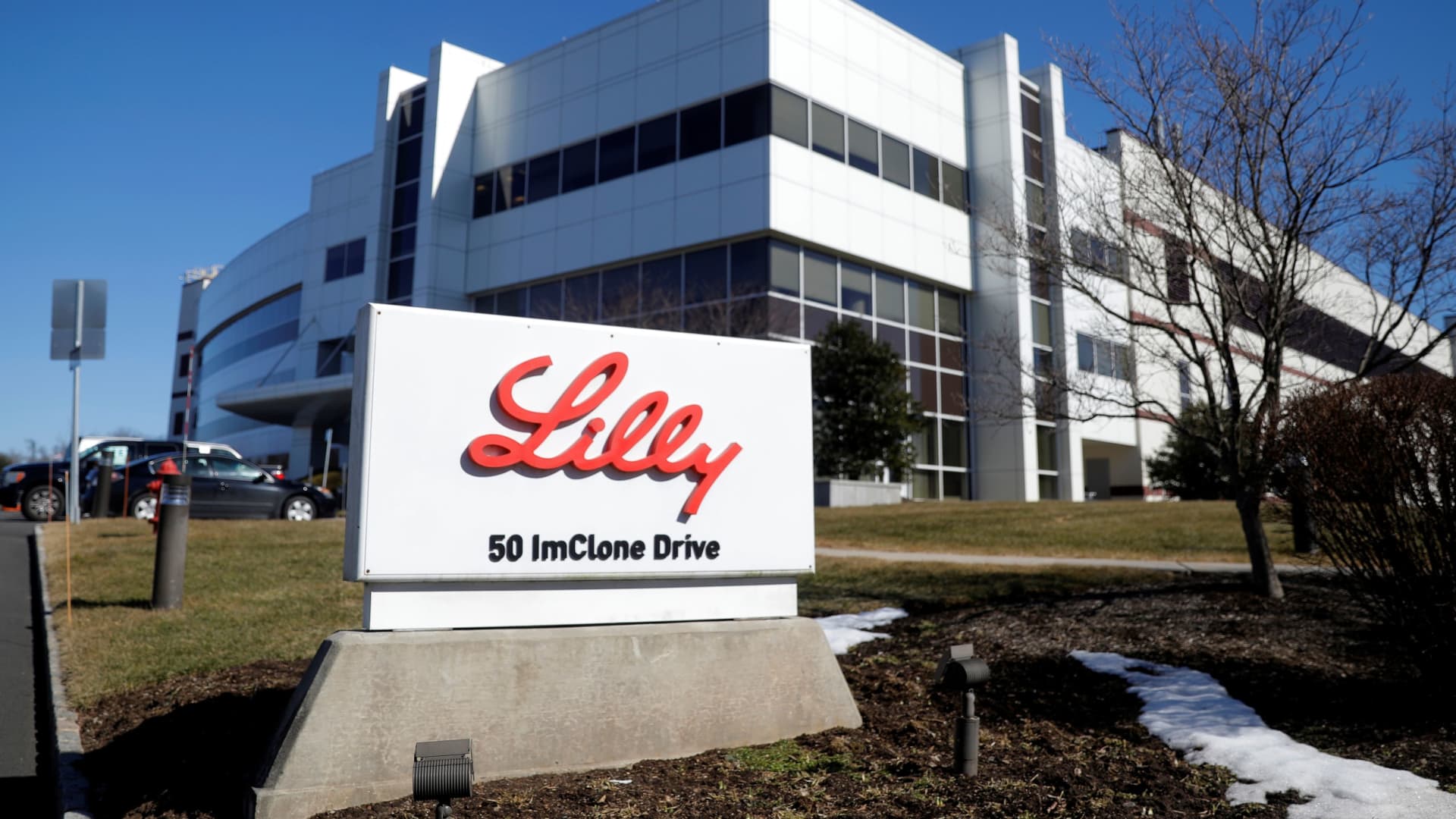
An Eli Lilly and Company drug manufacturing facility is pictured in Branchburg, New Jersey, March 5, 2021.

Fresh Mike | Reuters

Ashkenazi said Eli Lilly has several manufacturing sites under construction or “ramping up,” including two in North Carolina, two in Indiana, one in Ireland and one in Germany. The company also recently acquired a seventh site from Nexus Pharmaceuticals. Eli Lilly also announced late last month that it would invest an additional $5.3 billion in its Lebanon, Indiana, manufacturing facility.

These facilities complement the company's “existing, very large” manufacturing presence in the U.S. and Europe, Ashkenazi said. Since 2020, Eli Lilly has spent more than $18 billion to build, expand and purchase manufacturing facilities in those regions, the company said in May.

Ashkenazi noted that Eli Lilly is also addressing another barrier to patient access: limited insurance coverage for weight-loss drugs in the U.S.

Some employers and other health insurers are still hesitant to cover GLP-1 weight loss drugs because they are too expensive and could put a significant strain on their budget. Insurers also have other questions, such as how long patients actually take the treatments.

However, Ashkenazi said Zepbound's coverage by U.S. private insurers is improving. As of April 1, private coverage is about 67%. Eli Lilly is working to provide access to the remaining patients, she noted.

“It’s not enough to have a highly effective, safe drug that can really transform people’s healthcare – you also have to make it accessible,” Ashkenazi said.

She also hopes that reimbursement for weight-loss drugs will eventually be expanded for patients enrolled in the government's Medicare program as Eli Lilly and other pharmaceutical companies demonstrate their ability to treat a wide range of obesity-related diseases.

Eli Lilly is studying tirzepatide, the active ingredient in Zepbound and Mounjaro, in patients with obesity and fatty liver disease, obstructive sleep apnea, chronic kidney disease and heart failure, as well as other health conditions.

Under new guidelines issued in March, Medicare Part D plans can cover obesity treatments that receive regulatory approval for an additional health benefit. Medicare prescription drug plans, administered by private insurers and known as Part D, currently cannot cover these drugs for weight loss alone.

A bigger problem, according to Ashkenazi, is the long-standing misconception that obesity is a “lifestyle choice” and not a chronic disease.

Eli Lilly is trying to change that.

“Our goal is to make sure that society, the health care system and the patients themselves actually recognize and understand that this is a chronic disease … and therefore should be treated as such,” Ashkenazi said.