Categories
Entertainment

Sean Kingston and his mom charged in fraud case, face 20 years in jail

Sean Kingston and his mother, Janice Turnerhave been charged with allegedly defrauding companies of more than a million dollars. If convicted, they reportedly face up to 20 years in prison.

RELATED: Uh-oh! Sean Kingston reacts after his Florida home was reportedly raided by authorities

Sean Kingston and his mother charged with wire fraud

The 61-year-old mother and her 34-year-old son were charged with five counts of wire fraud and conspiracy to commit fraud. According to the Associated Press, a grand jury in Miami issued the indictment earlier this month. The two appeared in court for the first time on Friday (July 19).

Kingston and Turner allegedly lived up to the reputation of the alleged 305 fraudster. Officials claim they hatched a plan to steal jewelry, luxury whips and other expensive goods from several stores.

Prosecutors hope to prove that Sean and Janice purchased luxury items under the false impression that they were sending the money via wire transfer. Eventually, the companies discovered that the payments were allegedly unsuccessful and that they also failed to return the items after they missed payments. In this allegedly costly scam, the family members stole more than $1 million worth of assets.

Sean Kingston and Janice Turner, for example, allegedly fled in a Cadillac Escalade worth $160,000. They also stole more than $480,000 worth of jewelry. The car dealer and the jeweler were left with their hands raised. In addition, according to prosecutors, the couple is said to have defrauded banks – $100,000 at First Republic Bank and more than $200,000 at Bank of America. A bed maker is also said to be owed $86,000 for custom services. All of this is said to have happened between October and March.

Details of the arrest of the mother-son duo

Sean Kingston was arrested on May 23. Officers tackled the “Beautiful Girls” singer in Fort Irwin, California, just hours after the Broward Sheriff's Office raided his rented Fort Lauderdale home. Turner was also arrested the same day.

If convicted on all six counts, Sean and Janice could spend up to 20 years behind bars in the Sunshine State. Kingston's attorney Robert Rosenblatt has reportedly left the AP, but previously told the newspaper they were “confident” the case would lead to “a successful resolution.”

RELATED: Safaree Samuels thanks Sean Kingston for holding him during one of his 'lowest times' years ago

What do you think, roommates?

Categories
Health

Ozempic can cut back dementia danger and nicotine consumption

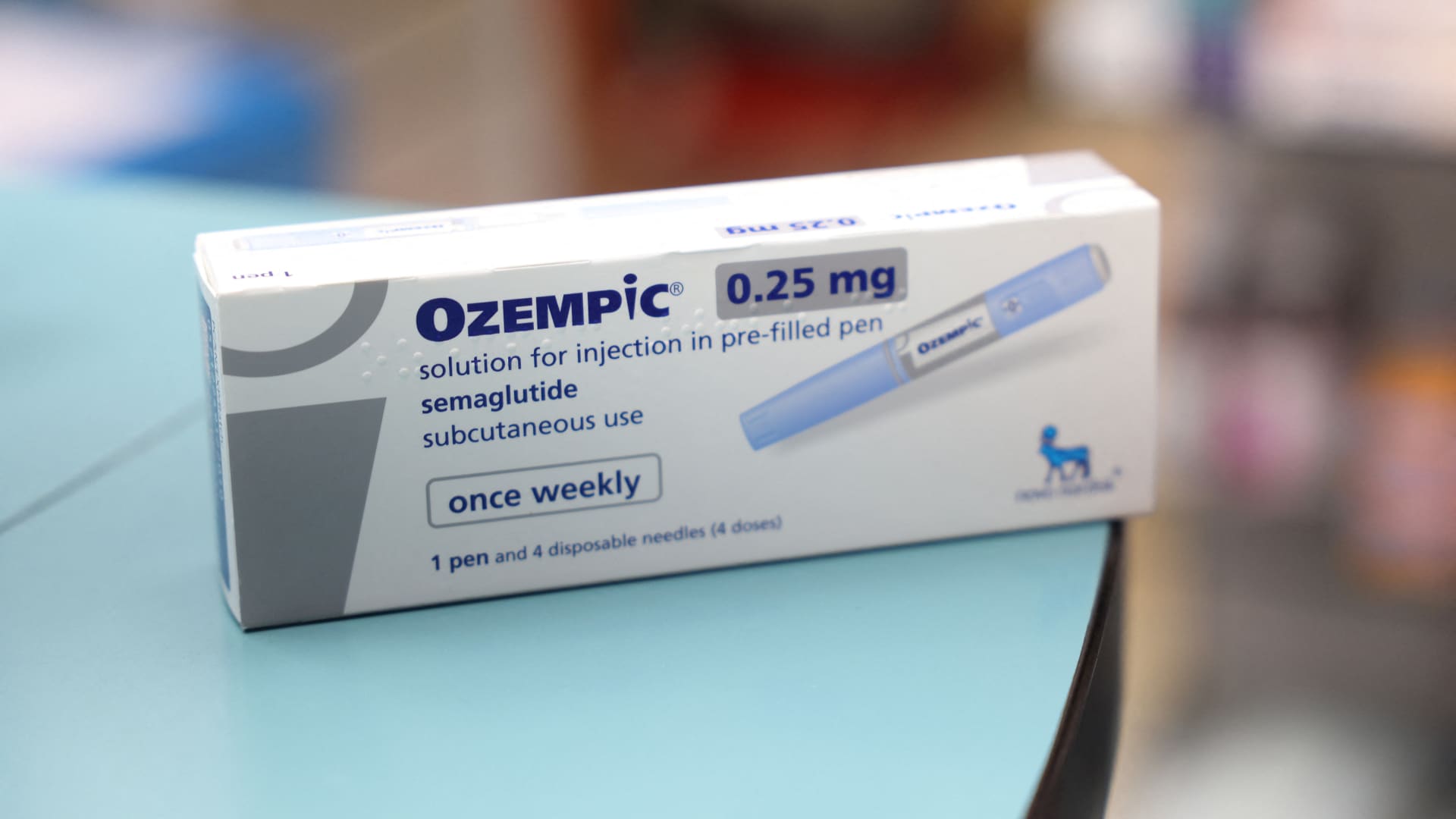
A box of Ozempic by Novo Nordisk is seen in a pharmacy in London, United Kingdom on March 8, 2024.

Hollie Adams | Reuters

Do you think a friend or colleague should receive this newsletter? Share this link with them so they can subscribe.

Good morning! Novo NordiskChina's successful diabetes drug Ozempic may have more to offer than just regulating blood sugar and promoting weight loss.

This is according to a new analysis from the University of Oxford published last week, which found that Ozempic can reduce the risk of dementia and a range of other mental health problems compared to other existing treatments for patients with diabetes. In addition, the researchers found that Ozempic reduced nicotine dependence in these patients.

These findings add to the long list of potential health benefits of Ozempic and other hugely popular GLP-1 treatments, such as Novo Nordisk's weight-loss injectable Wegovy and drugs from competitor Eli Lilly.

Large clinical trials have already shown that semaglutide, the active ingredient in Ozempic and Wegovy, can reduce the risk of serious cardiovascular complications and kidney disease. Other studies are studying GLP-1 in patients with sleep apnea and fatty liver disease, as well as other conditions, and whether the drugs can curb addictive behaviors such as alcohol consumption and even gambling.

Now let's take a look at the data from the new analysis, published Thursday in the Lancet's journal eClinicalMedicine.

The study relied on medical records of more than 100,000 U.S. diabetes patients, including more than 20,000 who were prescribed semaglutide between December 2017 and May 2021.

The researchers compared semaglutide with three other diabetes treatments: Merck's Januvia or sitagliptin; PfizerGlucotrol or glipizide; and Eli Lilly and Jardiance or empagliflozin from Boehringer Ingelheim. They compared the risks of 22 neurological and psychiatric outcomes within one year of treatment with the various diabetes medications.

Overall, according to the researchers, Ozempic was associated with a lower risk of cognitive problems and nicotine dependence.

Subscribe to Healthy Returns to receive investment news on healthcare innovations.

After one year, patients taking Ozempic had a 48% lower risk of developing dementia than patients taking Januvia. The risk in Ozempic patients was also 37% lower than in patients taking Glucotrol and 9% lower than in patients taking Jardiance.

In particular, previous studies have shown that patients with diabetes are at higher risk of developing dementia.

Patients taking Ozempic also had an 18% reduction in nicotine dependence compared to patients taking Januvia. Nicotine dependence was also 28% lower in Ozempic patients compared to patients taking Glucotrol and 23% lower in patients taking Jardiance.

“Our findings suggest that the use of semaglutide could extend beyond the treatment of diabetes and may offer unexpected benefits in the treatment and prevention of cognitive decline and substance abuse,” Dr. Riccardo De Giorgi, clinical lecturer at the University of Oxford and lead author of the study, said in a statement.

However, the authors stressed that the analysis was an observational study and the results would need to be reproduced in a controlled trial in which patients are randomly assigned to take Ozempic and the other drugs, said Dr. Max Taquet, another clinical lecturer at Oxford and lead study author.

We will continue to monitor future research in this area, so stay tuned for our coverage.

Feel free to send tips, suggestions, story ideas and data to Annika at annikakim.constantino@nbcuni.com.

Latest technology in healthcare

UnitedHealth Group beats earnings forecast, predicts greater damage from Change Healthcare cyberattack

Omar Marques | Light rocket | Getty Images

UnitedHealth GroupThe problems with cyber attacks are not over yet.

The healthcare giant reported second-quarter results on Tuesday that beat analysts' estimates on revenue and profit, but raised its forecast on the expected per-share impact of the cyberattack on Change Healthcare.

UnitedHealth reported revenue of $98.86 billion for the quarter, narrowly beating the $98.84 billion expected by analysts, according to LSEG. The company's adjusted earnings per share for the period were $6.80, while Wall Street had expected $6.66 per share.

UnitedHealth reiterated its adjusted full-year earnings guidance of $27.50 to $28; however, it reported an estimated impact of the business disruption of 60 cents to 70 cents per share, up from 30 cents to 40 cents per share last quarter. UnitedHealth said the impact of the business disruption includes lost revenue and “the cost of maintaining full operational readiness” of Change Healthcare's affected services.

UnitedHealth shares rose about 3% on Tuesday morning.

Change Healthcare, a subsidiary of UnitedHealth, offers payment and revenue cycle management tools. According to the company's website, it processes over 15 billion billing transactions annually and one in three patient records passes through its systems.

In February, UnitedHealth discovered that a cybercriminal had hacked part of Change Healthcare's IT network. The company isolated and disconnected the affected systems “immediately after discovering” the threat, according to a filing with the U.S. Securities and Exchange Commission (SEC).

The disruption had serious consequences for the entire U.S. health care system, as many doctors were temporarily unable to fill prescriptions or get paid for their services, and some providers had to dip thousands of dollars into their personal savings to make ends meet.

In May, UnitedHealth CEO Andrew Witty announced that the company had paid attackers a $22 million ransom to prevent them from releasing patients' personal health information. He estimated that the breach could affect up to a third of all Americans.

UnitedHealth announced Tuesday that it had restored “the majority” of Change Healthcare's services, according to its earnings release. The company also said it had provided more than $9 billion in advances to providers in need, the release said.

You can read UnitedHealth’s full earnings report here.

Feel free to send tips, suggestions, story ideas and data to Ashley at ashley.capoot@nbcuni.com.

Categories
Science

Lunar infrastructure may very well be protected by autonomous development of a rock wall

Lunar exploration equipment on any future lunar base is at risk from debris hurled at it by future lunar landers. This danger isn't just theoretical—Surveyor III was an Apollo-era lander that was damaged by Apollo 12's landing rocket and returned to Earth for closer study. Many ideas have been put forward to limit this risk, and we've reported on many of them, from building landing platforms out of molten regolith to 3D printing a blast shield from available materials. But a new paper by researchers in Switzerland proposes a much simpler idea—why not just build a blast wall by piling a bunch of rocks on top of each other?

On the moon, this task is not as easy as it sounds. You would need an autonomous excavator to examine the rocks, collect them, and stack them on top of each other so they don't fall over. Depending on the size of the rocks, this task could be successfully accomplished by a toddler, but for a robot it remained science fiction until recently.

In another paper, some of the same co-authors described an autonomous boulder stacking robot for use in construction projects on Earth. In it, they demonstrated a control algorithm that could successfully stack a rock face of medium-sized boulders completely autonomously. Applying this algorithm to construction projects on the Moon seemed like the next logical step.

Video of autonomous boulder stacking method being used on Earth.
Source: ETH Zurich YouTube channel

But first, an excavator would need to ensure there are enough boulders to effectively build the wall. In the paper, the authors use data from the Lunar Reconnaissance Orbiter to examine the distribution of boulders at two possible landing sites—the Shackleton-Henson Connecting Ridge and the Aristarchus Plateau. They also extrapolate the size of smaller boulders based on the limits of LRO's resolution and the distribution law for boulder sizes. Final confirmation came in the form of rock abundance data from another instrument on LRO. Their final estimates agreed that there should be enough loose material for an autonomous excavator to successfully build a blast wall from locally sourced boulders.

Calculating the amount of material needed to build the blast shield was actually a precursor to confirming that there were enough boulders. It was also necessary for another important calculation – to understand how much energy this process would consume compared to alternative solutions such as machined stone walls or microwave-heated landing platforms. According to the author's calculations, stacking existing rocks is two to three times less energy-intensive than alternatives.

But that's not to say there aren't hurdles to overcome. The most obvious is the lack of an autonomous excavator that can be used on the Moon. The excavator used in the experiments on Earth was prohibitively large, and developing a system for use on the lunar surface is notoriously difficult due to radiation and electrostatically charged dust particles. These electrostatically charged particles could also be a problem, but more modeling is needed to understand whether lunar chunks would be affected by significant dust accumulations.

Fraser discusses the need for our return to the Moon.

The idea itself is still relatively new and has a lot to offer given its advantages and the proof-of-concept demonstration already performed on Earth. While there are currently no plans to build an autonomously constructed rock wall, there is a good possibility that the idea, or something similar, will be taken up as part of the Artemis mission's infrastructure. At the very least, the Artemis mission designers will have plenty of potential solutions to this problem, regardless of their choice.

Learn more:
Walther et al. – Autonomous construction of lunar infrastructure with in-situ boulders
UT – NASA wants to build landing sites on the moon
UT – What is the best way to build landing pads on the moon?
UT – A practical attachment could make building the moon child’s play

Cover image:
Drawing of an autonomous excavator stacking boulders for a rock wall on site.
Source: Walther et al.

Like this:

How Is loading…

Categories
Technology

Nice Britain grants first European approval for classy meat – for animal feed

The sale of cultured meat is now permitted in Europe – but don't get the fine china out just yet. The first dishes are reserved exclusively for pets.

Our furry friends can now legally eat farmed chickens from Meatly, a London-based startup.

The company announced on Monday that British regulators had approved the sale of Product.

From With the green light, the UK becomes the first European country to commercialise lab-grown meat.

“It’s the beginning of a viable and sustainable alternative to traditional dog food,” Owen Ensor, CEO and founder of Meatly, told TNW.

This sustainability comes from moving the farm into the laboratory.

Meatly's model

Meat production consumes enormous natural resources and leaves a significant carbon footprint.

Meatly plans to soften these blows to our planet. The startup first takes cells from a single chicken egg. Only one sample is needed for the entire production.

The extracts are then cultured in large containers where temperature and pH are controlled. Nutrients are added to ensure the cells grow big and strong.

Eventually it is used to make pet food that resembles the products on supermarket shelves.

A similar process has been used by several European startups, from Bluu Seafood from Germany to Meatable from the Netherlands. But their Delicacies typically target the human appetite.

Meatly has good reasons to focus on our four-legged friends. One of them is the impact on sustainability: it is estimated that pets consume 20% of the world's meat and fish.

Another advantage of Meatly’s model is the route to market.

In Europe, it is difficult to approve meat from cultured products for human consumption and sale. The thinking goes that there are fewer regulatory hurdles for animal feed. But will their owners buy the products?

Commercialization of cultured meat

We asked TNW senior editor Linnea Ahlgren, the owner of a Cavapoo puppy, if she would buy cultured pet food.

“When choosing between cultured meat and meat from a slaughterhouse, the decision is a no-brainer as long as the former is considered safe,” she said.

“Our dog does incredibly well on insect-based food, but for breeds that can't tolerate it, or for cats that absolutely need the taurine in meat to be healthy, it could be a good option.”

Meatly is currently refining this option. The startup plans to launch samples of commercially available pet food this year, with mass production set to begin within three years.

Although size and cost hurdles still need to be overcome, optimism is growing at Ensor.

“We look forward to seeing innovators grow in this space and helping to bring cultured meat to the masses,” he said. “And not just for our four-legged friends!”

Categories
Health

How properly can AI chatbots imitate docs in a therapy scenario?

Dr. Scott Gottlieb is a physician and served as the 23rd head of the U.S. Food and Drug Administration. He is a CNBC contributor and serves on the boards of Pfizer and several other health and technology startups. He is also a partner at venture capital firm New Enterprise Associates. Shani Benezra is a senior research fellow at the American Enterprise Institute and a former associate producer on CBS News' Face the Nation.

Many consumers and healthcare professionals use chatbots based on rich language models to answer medical questions and choose treatment options. We wanted to find out if there are major differences between the leading platforms in terms of their clinical suitability.

To obtain medical licensure in the United States, aspiring physicians must successfully complete three steps of the U.S. Medical Licensing Examination, with the third and final step generally considered the most difficult. Candidates must answer about 60% of the questions correctly, and in the past the average passing score has been about 75%.

When we subjected the most important large language models to the same Level 3 test, they performed significantly better, achieving scores that significantly exceeded those of many clinicians.

However, there were some significant differences between the models.

Typically taken after the first year of residency, the USMLE Step 3 test tests whether medical graduates can apply their knowledge of clinical sciences to the independent practice of medicine. It assesses a new physician's ability to manage patient care across a broad range of medical disciplines and includes both multiple-choice questions and computer-based case simulations.

We isolated 50 questions from the 2023 USMLE Step 3 sample test to assess the clinical competency of five different leading large language models by feeding the same set of questions to each of these platforms — ChatGPT, Claude, Google Twins, Grok and Lama.

Other studies have tested the medical performance of these models, but to our knowledge, this is the first time these five leading platforms have been compared head-to-head. These results may provide some insight for consumers and providers about where to turn.

This is how they performed:

  • ChatGPT-4o (OpenAI) – 49/50 questions correct (98%)
  • Claude 3.5 (anthropic) – 45/50 (90%)
  • Gemini Advanced (Google) – 43/50 (86%)
  • Grok (xAI) – 42/50 (84%)
  • HuggingChat (Lama) – 33/50 (66%)

In our experiment, OpenAI's ChatGPT-4o emerged as the top performer, achieving a score of 98%. It provided detailed medical analysis using language reminiscent of a doctor. It not only provided answers with detailed reasoning, but also contextualized its decision-making process and explained why alternative answers were less appropriate.

Anthropic's Claude came in second with 90%. The answers were more human, the language was simpler, and the bulleted structure was easier for patients to understand. Gemini, which scored 86%, didn't provide as thorough answers as ChatGPT or Claude, making the reasoning harder to understand, but the answers were succinct and straightforward.

Grok, the chatbot from Elon Musk's xAI, scored a respectable 84%, but did not provide descriptive reasoning during our analysis, making it difficult to understand how it arrived at its answers. While HuggingChat – an open-source website developed by Metas Llama – performed the worst at 66%, but still provided good justifications for the questions it answered correctly and provided accurate answers and links to sources.

One question that most models got wrong involved a 75-year-old woman with a hypothetical heart condition. The question was what the most appropriate next step in her investigation would be. Claude was the only model that got the answer right.

Another notable question involved a 20-year-old male patient who was experiencing symptoms of a sexually transmitted infection. Clinicians were asked which of five options was the appropriate next step in his investigation. ChatGPT correctly identified that the patient should be scheduled for an HIV serology test in three months, but the model went further and recommended a follow-up visit in one week to ensure that the patient's symptoms had resolved and that antibiotics were covering his strain of infection. For us, the response underscored the model's ability to think more comprehensively, beyond the binary choices of the investigation.

These models were not designed for medical reasoning; they are consumer technology products designed for tasks such as language translation and content creation. Despite their non-medical origins, they have shown a surprising suitability for clinical reasoning.

Newer platforms are being developed specifically to solve medical problems. Google recently introduced Med-Gemini, an improved version of its earlier Gemini models, tailored for medical applications and equipped with web-based search capabilities to improve clinical reasoning.

As these models continue to evolve, they will become increasingly better at analyzing complex medical data, diagnosing diseases, and recommending treatments. They could offer a level of precision and consistency that human users sometimes struggle to achieve due to fatigue and errors. And they pave the way to a future where care portals are no longer controlled by doctors, but by machines.

Categories
Entertainment

Kim Kardashian reacts to Ivanka Trump's Taylor Swift cake

Once again, the Keeping Up With the Kardashians star was criticized for her nude selfie, but this time it came from Pink. In a subtle undertone, the singer tweeted in 2016: “Cheers to all the women around the world who use their minds, their strength, their work ethic, their talent and the 'magic' that they were born with and that only they possess. It may never get you as much 'attention' or money as using your body, your sex, your tits and asses, but women like you don't need that kind of 'attention.'”

Kim later wrote a candid message on her app, saying: “Seriously, I never understand why people get so upset about what other people do with their lives. I don't do drugs, I barely drink, I've never committed a crime – and yet I'm a bad role model when it comes to being proud of my body?”

Categories
Sport

Jaguars sue Amit Patel, a former worker who stole funds

  • Xuan Thai, senior editor at ESPNJuly 18, 2024, 6:01 p.m. ET

    Close

      Xuan Thai is a senior writer and producer in ESPN's investigative and enterprise division. She was previously deputy bureau chief for the southern region of NBC News.

The Jacksonville Jaguars sued their former employee, who stole $22 million from the team, for $66.6 million in damages in a Florida state court on Thursday.

Amit Patel, who oversaw the team's virtual credit card program, pleaded guilty in federal court in December to stealing more than $22 million from the team over a 3.5-year period to pay off gambling debts and finance a life of luxury. In Thursday's plea, the team said Patel stole the bulk of that money, $20 million, in just eight months.

In the lawsuit, the team alleges fraudulent misrepresentation, breach of fiduciary duty and civil theft. The claims are based largely on Patel's admissions in federal court.

Patel's attorney Alex King did not immediately respond to ESPN's request for comment.

Editor's Favorites

2 relatives

According to Negin Kordbacheh, a Florida-based attorney specializing in business law, if the Jaguars prevail in court, the team would have more leeway to recover the stolen funds from Patel and would no longer be reliant on the federal government to act on its behalf. The team could seize assets that Patel acquired legally. In Florida, plaintiffs can sue for up to three times the actual damages.

“[A] “A civil lawsuit gives the victim control over the process,” Kordbacheh said. “There is also the possibility of asset recovery. You can garnish wages, confiscate assets, etc. These are obviously very important tools to ensure the victim receives full compensation.”

According to court documents, Patel wired $20 million of the funds to FanDuel, where he had a VIP host, and $1 million to DraftKings. ESPN previously reported that Patel was a high-volume, high-stakes daily fantasy sports player known for racking up large losses. Patel has said he suffers from a gambling addiction.

According to the filing, Patel's scheme was uncovered in February 2023 after he placed a sports bet in Kansas, violating both state law and NFL gambling policies.

He also transferred $5 million from his FanDuel and DraftKings accounts to his PayPal and other personal accounts, prosecutors said, and used the money to make a series of purchases to live a “life of luxury,” including buying Tiger Woods' 1996 putter and spending $78,800 to rent private jets.

As ESPN previously reported, the Jaguars have asked FanDuel to refund some or all of the $20 million. The Jaguars declined to comment on the status of those talks.

Patel is currently serving a six-and-a-half-year sentence at Williamsburg Federal Penitentiary in South Carolina.

According to Kordbacheh, the Jaguars have a high chance of success with their civil lawsuit against Patel because the burden of proof is lower than in a criminal case in which Patel has already pleaded guilty.

Categories
Science

Roger Hallam will get 5 years in jail, different Simply Cease Oil co-conspirators get 4 years – what's occurring with that?

Five protesters from the Just Stop Oil organisation, including one of its co-founders, were sentenced to prison for conspiring to organise protests that led to the blockade of the M25 motorway.

Roger Hallam, an environmental activist and founding member of the group, agreed to disrupt traffic by having protesters climb onto gantries above the highway for four consecutive days in November 2022.

In addition to the 58-year-old, Daniel Shaw (38), Louise Lancaster (58), Lucia Whittaker De Abreu (35) and Cressida Gethin (22) were also present when they were sentenced at Southwark Crown Court on Thursday.

Hallam was sentenced to five years in prison, while the other four defendants each received four years in prison.

https://www.dailymail.co.uk/news/article-13648263/Just-Stop-Oil-founder-Roger-Hallam-jailed-five-years-four-activists-four-years-plots-block-M25- Autobahnsäge-50-000-Stunden-Fahrzeugverzögerung.html

Apparently a Sun journalist recorded one of their planning meetings and handed it over to the police.

Judge Christopher Hehir said the Zoom call showed “the level of detail with which the disruption was planned and the sophistication with which it was carried out” and provided “compelling evidence” of the existence of a conspiracy.

The whining on the Just Stop Oil account about X is an entertaining read.

🚨 BREAKING NEWS: THE WHOLE TRUTH: FIVE JAILED FOR 4-5 YEARS

⛓️ Lucia, Cressie, Louise and Daniel were sentenced today to four years in prison, Roger to five years.

➡️ Stop locking up those who speak the truth. Sign the petition — https://t.co/HNoTTj4sle pic.twitter.com/S6TewxuyNv

— Just Stop Oil (@JustStop_Oil) July 18, 2024

⛓️ To give you an idea of ​​how horrific and brutal these prison sentences are for #JustStopOil activists:

Average prison sentence for violent crimes = 1.7 years.

Average prison sentence for JSO activists: 4.3 years. pic.twitter.com/FMHOe8KKGd

— Leftie Stats 🍉🏳️‍⚧️ (@LeftieStats) July 18, 2024

Roger Hallam gives a shockingly funny account of the events.

I have just been sentenced to 5 years in prison.

The longest period for non-violent action ever.

The crime'?

I'm giving a talk about how civil disobedience is an effective, fact-based method to stop the elite from putting so much carbon into the atmosphere that it will lead to our extinction.

I have… pic.twitter.com/U2dHaDQkGf

— Roger Hallam (@RogerHallamCS21) July 18, 2024

H/T Strativarius, Fraizer, J-Boles

Like this:

How Is loading…

Discover more from Watts Up With That?

Subscribe to receive the latest posts via email.

Categories
Technology

Wondershare Filmora: Exploring Era Z and Influencer Tradition

Wondershare Filmora

It's often said that younger generations are sometimes difficult to understand in their attitudes to life and motivations. When it comes to modern influencer culture, content creation, and new, emerging technologies like AI, that's actually true. But thanks to a just-released documentary from Wondershare Filmora – titled “Gen Z in Action” – we may have finally cracked the code. Okay, forgive my dry humor. My generation is just as unusual for older folks. The real focus here is on Wondershare's documentary.

Shot in Vancouver, British Columbia, the film features in-depth interviews with over a dozen Gen Z content creators who have found success in their fields, including music, photography, and even cosplay. It dives deep into the lives of these creators, showcasing and celebrating their dedication to their craft and personal innovations, and exploring the unique challenges they face in today's hyper-digital landscape.

Perhaps even more interestingly, it also explores topics such as content creation, digital nativeness and influencer culture through the lens of emerging AI solutions. For example, what impact is technology having on these practices? How will AI shape the future of the generation that is “exploring, defining and creating a new era for society?”

The evolving power of creativity

Featured Image “Wondershare Filmora Gen Z in Action”Wondershare Filmora

Christy, Vice President of Wondershare, is excited about the project and explains why it is such a pivotal moment for content creators and influencers around the world. “We believe in the power of creativity and the importance of empowering the next generation with creative tools.”

“Giving voice to these voices is a huge motivator for the Wondershare team.”[This documentary] not only highlights the incredible talents and innovations of Generation Z creators, but also challenges the misconceptions often associated with them.”

In particular, everyone will get an insight into their lives, creative processes and experiences, “to share their stories and inspire others to recognize the potential and drive this generation brings into the AI ​​age.”

Of course, Wondershare has also released a white paper with the same title: “Gen Z in Action,” based on a survey of nearly 1,000 Gen Zers. It delves even deeper into their world, with the same goals and ideals – highlighting Gen Z’s creativity, hard work, and passion for digital technologies.

Learn more

Celebrate Generation Z and modern influencer culture

Gabby Fearfiction Influencer from Wondershares Gen Z in ActionWondershare Filmora

To learn everything about this generation, you'll have to read the white paper and look at the documentation. But there are certainly some unique insights. For example:

  • While Generation Z still values ​​traditional education, they place greater emphasis on practical skills and entrepreneurial ventures, and for good reason.
  • You have excellent knowledge of creative software and digital skills, including Office Suite, video editing, social media and more.
  • Generation Z prioritizes investments that improve their education and skills.
  • You have a great passion for content creation. And why wouldn't you? These days, content creation is everywhere.
  • Generation Z tends to trust YouTubers and influencers and values ​​their recommendations delivered through live streams, live content and recorded content.
  • Generation Z in particular has quickly adapted to the new world of AI-driven assistance and uses it as a tool to increase productivity and creativity in content creation, communication and data analysis.

Generation Z deconstructed in action

To celebrate VidCon's 15th anniversary and 19 years of content creation on YouTube, Wondershare's documentary “Gen Z in Action” explores the lives of some of today's most influential content creators. It features interviews with nearly a dozen Gen Z creators in a variety of disciplines, including photography, cosplay, and music.

Featured creators include cosplayer Fearfiction (Gabby), Mathew V Music, and Maxwell Grover, an aspiring photographer.

Rather, it is an unadulterated look at the common and widespread digital disposition of Generation Z, including how they are navigating today's landscape and using their experiences and skills to make a real difference in modern society.

It's interesting, to say the least. Just try it yourself.

Learn more


Categories
Health

A smartphone-free childhood? A worldwide motion is rising

Photo: Jaromir Chalabala/Getty

LONDON — With growing evidence linking smartphone use to mental health problems in children, a grassroots organization in the U.K. is supporting parents who don't give their children the devices.

Smartphone Free Childhood, founded in February by Daisy Greenwell and Clare Fernyhough, set up several local group chats for parents across the UK and grew to over 60,000 members within a few weeks, according to its website.

Interest in the movement is driven by concerns about the normalisation of children's use of smartphones. According to Ofcom, a government-approved regulator of communications services in the UK, 97% of children in the UK own a mobile phone by the age of 12.

In the US, 42% of children now owned a smartphone by the age of 10, and that number rose to 91% by the age of 14, according to a 2021 report by Common Sense, which surveyed 1,306 young people in the US between the ages of eight and 18.

In an increasingly online world, parents give their children smartphones for a variety of reasons, including entertainment, tracking their location and keeping in touch with them when they leave the house. But studies and experts point out that this opens the door to social media and potential mental health damage.

The goal of the SFC is to bring together parents who do not give their children smartphones to alleviate the peer pressure and isolation they may feel.

Due to its success, the company expanded internationally and established offices in the USA, Australia, the United Arab Emirates, Brazil, Canada, South Africa and numerous other countries.

Just days after the SFC campaign was launched, the British government – ​​then led by the Conservative Party – issued new guidelines banning the use of smartphones in schools and during recess.

In some places in the USA – such as Los Angeles and the states of Florida and Indiana – mobile phones are banned in schools.

Other independent organizations are being formed around the world, including “Wait Until 8th” based in Austin, “Unplugged” in Canada, “No Es Momento” in Mexico and the “Heads Up Alliance” in Australia.

However, some academics and scientists remain unconvinced that there is a link between smartphones and poor mental health. Psychology professor Christopher Ferguson told NBC News earlier this year that society tends to react negatively to new technologies and their potential dangers, from televisions to video games and, more recently, AI.

Increased psychological problems?

According to a study published last year by Sapien Labs, the earlier young people acquired a smartphone, the worse their mental health deteriorated.

The study used data from 27,969 18- to 24-year-olds collected between January and April 2023 in 41 countries, including North America, Europe, Latin America, Oceania, South Asia and Africa.

About 74 percent of female respondents who received their first smartphone at age six reported feeling anxious or faced problems, according to the study. However, this proportion dropped to 61 percent among those who received their first smartphone at age 10 and 52 percent among those who received their first smartphone at age 15.

Among male respondents, the percentage feeling depressed or distressed decreased from 42% among those who got their first smartphone at age six to 36% among those who got their first smartphone at age 18.

Young people who purchased their first smartphone at an older age reported better psychological well-being, including fewer problems with suicidal thoughts and feelings of aggression, as well as fewer problems with detachment from reality.

These findings are mobilizing parents to take action, says Zach Rausch, a scholar at New York University's Stern School of Business and lead researcher for Jonathon Haidt's New York Times bestseller “The Anxious Generation.”

“The mass migration to a phone-based childhood has really hurt young people,” Rausch said in an interview with CNBC Make It.

“The research has gotten stronger and the evidence of harm has gotten stronger every year,” he added. “The lid has been taken off and parents are seeing other parents talking about it. So we're seeing a wave of parents coming together.”

The combination of smartphones and social media is particularly deadly for young people, says Rausch.

The UK Millennium Cohort Study, which follows the lives of around 19,000 young people born in the UK between 2000 and 2002, found a high correlation between social media use and depressive symptoms, including low self-esteem, online harassment and negative body image.

“When smartphones and social media really came together, a whole new way of interacting emerged,” Rausch said.

“So now you have social media in your pocket on your smartphone that is designed to maximize the time you spend on your phone… it's built in a way that is addictive and tries to keep you hooked.”

In recent years, Metathe parent company of social media platforms Instagram and Facebook, has come under criticism from lawmakers and parents for exposing children and teens to harmful content on its platforms, including multiple allegations of child sexual exploitation.

In turn, Meta CEO Mark Zuckerberg urged lawmakers to enact more policies and regulations to combat harmful online content. Amid mounting pressure, the tech giant announced in January 2024 that it would limit the type of content that teen users of Instagram and Facebook can see, including self-harm, eating disorders and nudity.

Some technology companies are trying to create kid-friendly smartphone and social media experiences. Google introduced YouTube Kids in 2015, a separate YouTube-like app with kid-friendly content and parental controls.

iPhone manufacturer Apple recently launched a new website promoting the Apple Watch for kids who are too young for smartphones. The device will be controlled via parents' iPhones so they can stay in touch with their children.