Categories
Entertainment

Social media reacts to Moneybagg Yo's birthday message to Ari

Moneybag, yo came with a sweet birthday message for his sweetheart Ari Fletcherbut his choice of words has led to mixed feelings!

RELATED: Are you all OK? Ari Fletcher sends Moneybagg Yo a harsh message after he tweeted THIS

Moneybagg sends Ari Fletcher happy birthday

Moneybagg Yo took a moment to wish her a happy birthday, which she celebrates on July 12th.

To celebrate Ari's special day, Moneybagg uploaded photos to Instagram. He simply captioned the series: “Happy BaggDay Queen @therealkylesister DaDa love you 🍾🎉💐 #LōfYaWife

Ari celebrated her birthday with a luxurious vacation in Greece. She continued to keep her fans updated on the trip by sharing content on Instagram and TikTok.

Moneybagg seemed to make it just in time for Ari's day by joining her on vacation. The Memphis musician shared short snippets of the festivities on his Instagram story and posted a video of him and Ari on a luxury yacht.

Social media reactions to the couple

Although Moneybagg supported Ari and came out to cheer her on her birthday, social media users were not thrilled with his Instagram post. Several social media users claimed the message was too short, while others had mixed feelings about him referring to himself as “DaDa.”

Instagram user @tastelessly wrote, Every year the heels get smaller.”

Instagram user @_.ravyn__ wrote: Dada???!!😂 you know what, let me mind my broke business.”

While Instagram user @pisces4lifeatl wrote: Unpopular opinion about this app… calling a man daddy is weird to me 😂”

Then Instagram user @chinx_ wrote: They've been together for like 5 years now. Why are you still mad?! Lmaooo”

Instagram user @ashley.brionne wrote: I call my husband dad. I think that's cute 😂”

Another Instagram user @_lifewithlasha wrote:You were never a man's baby and it shows. But it's ok 🫶🏽😂”

And finally Instagram user @stillnotyomommasinsta wrote: “Daddy is one thing. DaDa is crazy, especially if you don't have kids. I call my husband Papa, but we have kids, that's his name in the house…”

The latest on Ari and Moneybagg's relationship

Ari and Moneybagg have always been a hot topic on social media.

They recently trended online after Ari posted a saucy message on X (formerly Twitter) that caused fans to question the status of their relationship.

On June 24, Bagg wrote a message on X that read: “Be careful of the people in your life who are looking for a reason to argue with you.”

The post garnered over three million views, and Ari caught a glimpse of the short message. However, just a few hours later, Ari appeared to repost the message in her own words. “You don't really want to play this game, do you? I'm going to finish this bitch,” she wrote.

Despite the subliminal messages, everything seems to be fine between Ari and Moneybagg as they sail off the coast of Greece to celebrate her birthday.

RELATED: Phew! Ari Fletcher swaps photos with one of Moneybagg Yo's kids' moms after sharing THIS photo

What do you think, roommates?

Categories
Technology

Can Ariane 6 make Europe’s spacetech startups world market leaders?

When Ariane 6 suffered a breakdown during its maiden flight, the mishap seemed strangely inevitable.

Almost half of all rockets fail on the first launch. After a difficult development and four years of delay, Ariane 6 seemed to be a hot candidate for this list.

The launch vehicle was commissioned to pave Europe's way into space. Since the Ariane 5 was decommissioned last July, the continent has had no independent access to space.

Thierry Breton, EU Commissioner for the Internal Market, described the problem as an “unprecedented crisis”. A failure of the launch on Tuesday would have made the situation even worse.

TNW Conference 2025 – Back to NDSM on June 19-20, 2025 – Save the date!

Having concluded our incredible 2024 edition, we are excited to announce our return to Amsterdam NDSM in 2025. Register now!

Fortunately, the setback was only minor.

Ariane 6 launched successfully and deployed research satellites into orbit. The problem occurred late in the flight when the last components of the rocket failed to leave orbit. Nevertheless, the mission was declared a success.

“It was a historic moment,” said Lucía Linares, head of the European (ESA), Head of Space Transport Strategy. “It's good for Europe. And it's good for the world too.”

The first commercial launch of Ariane 6 is now scheduled for December. Another six are planned for next year and eight more for 2026.

Stéphane Israël, CEO of rocket operator Arianespace, said the glitch would have “no consequences for future launches.”

His words brought welcome relief to the European space industry. The sector offers great opportunities but urgently needs new launch infrastructure.

The need for Ariane 6

Mark Boggett, CEO of investment firm Seraphim Space, waited with bated breath for the launch. He believes Ariane 6 can give a major boost to space technology.

“Improved access will undoubtedly accelerate the pace of innovation and deployment of new space technologies in Europe,” he tells TNW.

Boggett has big ambitions. He wants to use his company's investments to turn European startups into global industry leaders.

That plan had been stalled by the long delays to Ariane 6. While they waited, the companies relied on launch services in other regions – particularly SpaceX’s service in the US.

This bottleneck can now be eliminated by the rocket. European space travel is no longer exclusively dependent on foreign suppliers and has a path to strategic autonomy.

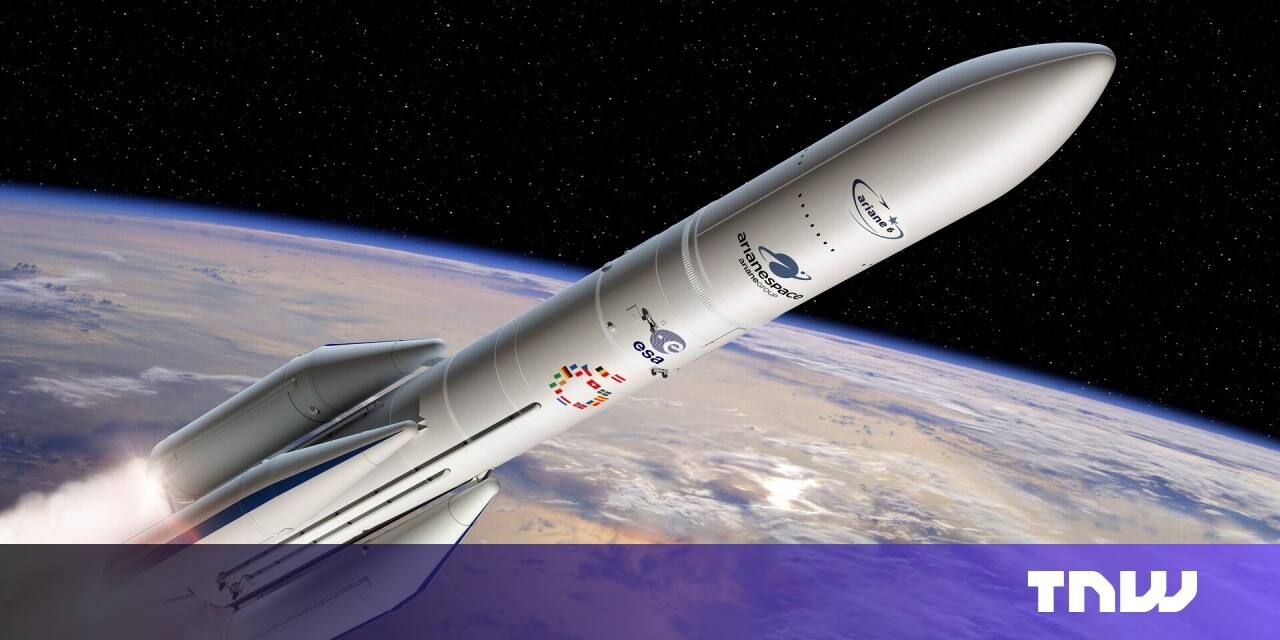
Ariane 6 was launched on Tuesday from the European spaceport in French Guiana. Photo credit: ESA/S.Corvaja and M.PédoussautPhoto from the first launch of Ariane 6

The new rocket can attract new orders from domestic and international customers. Ariane 6 can also reduce costs and waiting times for start-ups that want to deploy payloads. As long as the service proves to be reliable and affordable.

The first commercial launches cannot come soon enough. A new space race is underway and Europe is in danger of being left behind.

Hopes and fears for European space technology

The cosmos becomes fertile ground for business growth. McKinsey and the World Economic Forum expect the global space economy to grow from $630 billion last year to $1.8 trillion in 2035. “New Space is a growth market for several decades,” says Boggett.

The crisis in the European launch vehicle market is making access to this market more difficult. In 2023, the continent conducted only three successful orbital launches – the lowest number since 2004. The United States, on the other hand, recorded 109 successful launches – more than ever before by a single country.

“The US dominates commercial space launches, driven by private companies like SpaceX, which has revolutionised the industry with reusable rockets, significantly reduced costs and increased launch frequency,” Jarkko Antila, CEO of the Finnish satellite startup Image spacesays TNW.

Although the USA is the market leader, Chinese missiles are also enjoying increasing success. Last year the country carried out 66 launches.

China has also proven to be a lucrative location for financing space technologies, with the country leading the world in private investment this year, according to a new study by Seraphim, with the total amount raised to $1.7 billion, surpassing the US figure of $1.6 billion.

Last quarter, Chinese companies secured the two largest funding rounds in the world. The largest funding round went to start-up Space Pioneer, which raised $208 million. Satellite manufacturer Minospace came in second with $138 million.

In Europe, financing has not grown at the same pace. In 2021, the continent's investment exceeded that of all of Asia. But these positions have now reversed.

Asia has also quickly overtaken Europe in terms of the number of spacetech agreements. In the last quarter of this year, 150 contracts were signed on the continent, while 149 contracts were signed in Asia.

Startups hope Ariane 6 is triggering a new boom in investments in Europe. Current trends suggest that their wishes will come true.

Preparations for the launch

Boggett expects Ariane 6 to boost Europe's space economy. “The proximity to the launch sites allows for more integrated testing and iteration of new technologies,” he says.

European companies can also reduce their transport and logistics costs. In addition, the launch capacity can strengthen cooperation between launch providers, satellite start-ups and research institutions.

With the funding landscape recovering in general, startups are ready to seize the opportunities.

According to new data from Seraphim, the space industry has just experienced four consecutive quarters of investment recovery. Last quarter, a whopping $2.4 billion was invested and transaction volume reached an all-time high.

Europe's largest investments were a $100 million capital increase for British spacecraft builder Aalto and a $93 million financing round for ICEYE. a Finnish manufacturer of microsatellites.

A growing group of venture capitalists is contributing to the cash pool. Among them is Alpine Space Ventures, which is planning major investments in Europe. Just today, the company launched a new fund worth 170 million euros (185 million dollars).

Public investment is also increasing. ESA's budget for 2024 has grown to a record 7.79 billion euros (8.49 billion dollars) – 10 percent more than last year.

But any hopes that Ariane 6 could outshine the US rocket giants seem misplaced. Antila of Kuva Space warns that the disposable system cannot compete with SpaceX's reusable rockets.

“Although the European Space Agency and Arianespace developed Ariane 6 for low-cost launches, it is not fully reusable and can primarily only be used at the Guiana Space Centre in French Guiana,” he says.

Nevertheless, the rocket could give new impetus to European space technology. Boggett is convinced that the vehicle will have a big impact.

“I have no doubt that the availability of local launch capabilities will further promote innovation and accelerate the development of the European space sector,” he says.

The first commercial flights will give a taste of the potential. At the very least, they will open up a new path into space for European startups.

Categories
Sport

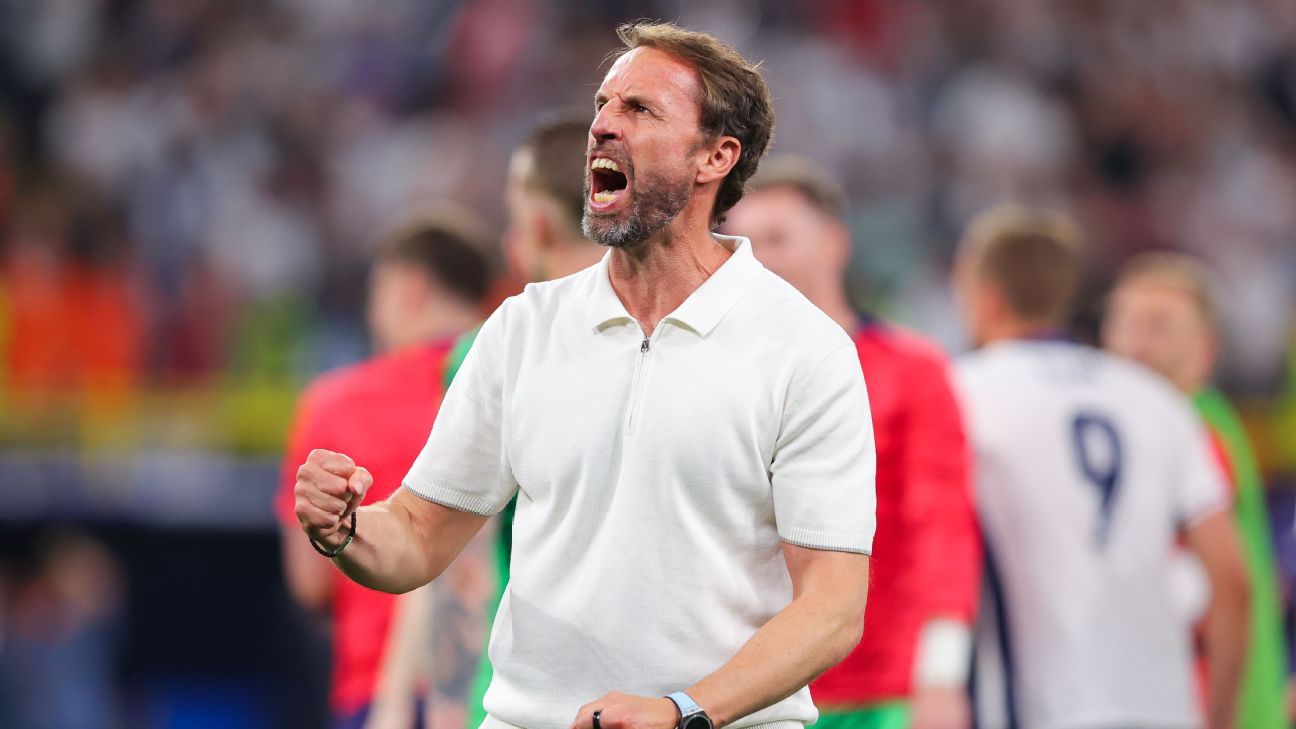
Sources: FA desires Southgate to remain in England, whatever the remaining end result

Sources told ESPN from the Football Association (FA) that Gareth Southgate will remain as England manager regardless of the outcome of the 2024 European Championship final against Spain on Sunday.

Southgate's current contract expires in December and the 53-year-old has repeatedly stressed that he will not think about his position until after the end of the tournament.

England were seconds away from being knocked out by Slovakia in the round of 16 when Jude Bellingham scored a spectacular equaliser for the hosts in the 95th minute. After the group stage draw with Slovenia, Southgate was pelted with beer mugs.

Editor's Favorites

2 relatives

Given the sentiment shown towards him, it seemed increasingly likely that Southgate would resign, but England's dramatic run to the final in Germany may now prompt him to have a change of heart.

Sources have told ESPN that the English Football Association has always wanted Southgate to lead England to the 2026 World Cup in the United States, Canada and Mexico. To do so, he would have to sign a new contract, which would mean a decade at the helm after he replaced Sam Allardyce as England manager in 2016.

The FA was impressed by Southgate's efforts to lead England to a major final on foreign soil for the first time and to back-to-back European Championship finals after losing to Italy on penalties at Wembley three years ago.

By reaching the semi-finals, final, quarter-finals and final of his four tournaments, Southgate has now achieved more knockout victories than all other English managers combined since 1966.

On the eve of the tournament, FA chief executive Mark Bullingham said: “I think incredibly highly of Gareth. I think he has done a phenomenal job.”

“I think he has changed the fortunes of our team. That's not just off the field, and you can see it in the culture, but also in the performances on the field.”

“Since 1966 he has won about half of our knockout games. That's a yardstick we really use. That's why we value him enormously.”

Southgate is open to returning to club management one day and was one of the options Manchester United considered before they decided to keep Erik ten Hag for next season.

Categories
Health

Pharmaceutical corporations are racing to develop slimming drugs

Aykut Karahan | Istock | Getty Images

Do you think a friend or colleague should receive this newsletter? Share this link with them so they can subscribe.

Hello! Several pharmaceutical manufacturers are rushing to capitalize on one of the next big innovations in the booming weight-loss drug market: effective, convenient and potentially affordable anti-obesity pills.

Most of the weight-loss and diabetes drugs available today are weekly injections, such as Novo Nordisk's Wegovy and Ozempic and Eli Lilly's Zepbound and Mounjaro. They are among the drugs called GLP-1 agonists, which have skyrocketed in popularity in the last year.

Now those competitors and other pharmaceutical companies like Pfizer are hoping to develop oral weight-loss and diabetes drugs that are more convenient for patients to take and easier to manufacture on a large scale. This development could help ease the supply shortages that plague existing injectable treatments in the United States.

In addition, tablets are generally cheaper than injections. However, it is unclear whether this is also the case for oral obesity medications.

Novo Nordisk offers a low-dose oral version of semaglutide, the active ingredient in Wegovy and Ozempic, for $968.52 a month before insurance and other discounts. The pill is marketed as Rybelsus and is approved for treating diabetes. The current injections all have list prices of around $1,000 a month.

Pfizer indicated on Thursday that it remains in the race to develop an obesity pill after a series of setbacks last year. The company said it would subject a once-daily version of its oral weight-loss drug danugliprone to further trials to determine the ideal dosage.

Pfizer disappointed investors last year after the company pulled a twice-daily version of danugliprone and a second oral obesity drug called lotigliprone.

But Pfizer's once-daily danugliprone is still in early development, and it's unclear whether the pharmaceutical giant will commit to conducting late-stage trials of danugliprone, which is required before it can seek regulatory approval.

Future release | Getty Images

Further ahead in the race are Eli Lilly and Novo Nordisk.

Eli Lilly is developing an oral GLP-1 called orforglipron that helped patients in a mid-stage trial lose up to 14.7 percent of their weight after 36 weeks, compared with 2.3 percent for those taking a placebo. Eli Lilly has previously said it expects results from late-stage trials of orforglipron in 2025.

Meanwhile, last year Novo Nordisk released the results of a Phase 3 trial of its high-dose version of oral semaglutide, which is intended for weight management. The pill helped patients lose an average of about 15 percent of their body weight after 68 weeks.

The company announced at the time that it planned to apply for approval from the US Food and Drug Administration in 2023. However, Novo Nordisk has not provided any information on whether this has already happened.

Novo Nordisk also presented data in March on another experimental weight-loss pill called Amycretin, which in an early-stage trial helped people lose 13.1% of their weight after 12 weeks. Results from a mid-stage trial are not expected until 2026.

Amycretin suppresses appetite by targeting the same gut hormone that Wegovy mimics, GLP-1. But amycretin also targets a pancreatic hormone called amylin, which affects hunger.

Here are some of the other pharmaceutical companies developing oral drugs for obesity, diabetes, or both:

Feel free to send tips, suggestions, story ideas and data to Annika at annikakim.constantino@nbcuni.com.

Latest technology in healthcare

According to the report, financing of digital health shows “moderate momentum” this year

Things are looking up for the digital healthcare sector – at least a little.

Digital health startups in the U.S. raised $5.7 billion in 266 deals in the first half of 2024, according to a report from Rock Health on Monday. If this pace continues, the number of deals and funding amounts could surpass the totals of 2019 and 2023. Digital health startups raised $8.2 billion in 420 deals in 2019 and $10.7 billion in 498 deals last year, the report said.

The “pandemic-related funding cycle” of 2020-2022 remains difficult to navigate, according to Rock Health. Investors flocked to healthcare companies then, and funding peaked at $29.2 billion in 2021.

According to Rock Health, Series A activity was particularly strong in the first half of 2024, although seed rounds and Series B checks were also popular. Seed, Series A and Series B funding accounted for nearly 85% of all marked raises during this period, the report said.

The company refers to rounds without a public title (such as Series A) as “unmarked rounds.” Startups often conduct unmarked rounds to avoid valuation discounts and gain traction in difficult markets, although they often can’t avert difficult conversations forever.

According to Rock Health, the overall share of unlabeled digital health deals peaked at 55% in the fourth quarter of 2023 and fell to 47% and 33% in the first and second quarters of this year, respectively.

“This decline may mark the beginning of our return to a more 'normal' rhythm of marked salary increases,” the report said.

Many Healthy Returns readers can probably guess what's next: Artificial intelligence attracted investors to many early-stage digital health companies in the first half of this year. Almost 40% of all digital health companies that have raised Series A funding rounds use AI, and 34% of the sector's total funding went to companies that use the technology in some form.

The ground may also be thawing in the digital health IPO market, which has been devoid of IPOs for nearly two years. Healthcare payment software provider Waystar and precision medicine company Tempus AI went public in June, while pregnancy monitoring company Nuvo went public via SPAC in May.

According to Rock Health, this exit activity reflects the slight increase in IPOs in the broader markets.

In summary, “Early-stage reviews are increasing, the proportion of unmarked transactions is decreasing, and the digital healthcare IPO market is showing signs of life,” the report said.

We have to wait and see what the rest of the year brings.

Feel free to send tips, suggestions, story ideas and data to Ashley at ashley.capoot@nbcuni.com.

Don't miss these insights from CNBC PRO

Categories
Science

Regardless of skepticism, financial advantages will drive local weather safety – what’s occurring with that?

Essay by Eric Worrall

According to anthropology professor Ron Barrett, you don't have to believe in climate protection to benefit from renewable energy. But the professor has overlooked an important point.

Can humanity tackle climate change without believing in it? Medical history suggests it can

Published: 10 July 2024, 10.14pm AEST
Ron Barrett
Professor of Anthropology, Macalester College

Strange as it may sound, the early germ theorists could tell us a lot about today's attitudes toward climate change.

While researching a new book on the history of emerging infections, I found many similarities between the early debates about the existence of microbes and the current debates about the existence of global warming.

This was the case in the last decades of the 19th century, when aseptic surgeons nevertheless adopted the antiseptic techniques of Joseph Lister.

In response to these allegations, Lister stated:

“If any one supposes that the septic material is not of the nature of living organisms, but is a so-called chemical ferment, without vitality… such an idea, however unfounded in my opinion, and not supported by any scientific evidence, is, from a practical point of view, equivalent to a germ theory, since it inculcates exactly the same methods of antiseptic treatment.”

Lister was more interested in saving lives than in winning arguments. As long as surgeons used his methods, he was not concerned with their justification. When it came to preventing infections, behavior, not belief, counted.

Republicans are more likely to emphasize the economic benefits of renewable energy than Democrats, who tend to cite global warming as their driving concern.

The economic benefits may explain why “red” states generate the largest share of America's wind energy and why three of those states are among the country's top five solar energy producers. Their deployment is linked to the geography of the wind and solar belts, where farmers see good returns on electricity generation and a stable source of income that cushions the price fluctuations of weather-sensitive crops. Livelihood is a powerful motivator.

Read more: https://theconversation.com/can-humanity-address-climate-change-without-believing-it-medical-history-suggests-it-is-possible-230936

I fully understand why people who don't believe in the climate crisis still respond to economic incentives.

A decade ago, Anthony Watts discussed why he installed solar panels on his own home.

The problem with Professor Ron Barrett's theory of why people exploiting market-distorting subsidies are pushing for the adoption of renewable energy is that it is in no way a solution to the world's energy problems.

In the absence of affordable, long-term energy storage, all renewable energy systems must be backed up by a dual, on-demand energy system that can be activated immediately when the renewables fail—which often happens. The cost of maintaining two parallel systems—the fake renewable system and the on-demand system that produces power on the days or weeks when the renewables don't work—drives up energy bills in states and countries that have embraced renewables.

In Australia, the threat that the next government will cut subsidies for renewable energy and invest in nuclear power instead seems to have dampened investment enthusiasm. Renewable energy cannot compete with real energy, not even nuclear power.

The farce of farmers filling their fields with renewable energy will only continue as long as taxpayer subsidies make it profitable. Once the subsidies dry up, so will the profits and the number of new plants.

The great surgeon Joseph Lister is one of my heroes. There is a great documentary about Lister that I watched many years ago as a child (unfortunately I can't find the link) that details how Lister campaigned tirelessly and got everyone in the hospital to wash their hands and perform antiseptic and aseptic surgery after realising the damage that was being done by the transmission of contaminated material between patients.

5
10
Voices

Article rating

Like this:

How Is loading…

Categories
Entertainment

Nicolas Cage's son Weston arrested for assault with a lethal weapon

Nicholas CageThe son faces further legal problems.

Weston Coppola Cagethe eldest son of the Knights Templar star, was arrested on July 10 for assault with a deadly weapon, according to Los Angeles Police Department records obtained by E! News.

The 33-year-old, whose mother is the Oscar winner’s ex, Christina Fulton— was arrested in the California city's 77th Precinct, an LAPD spokesperson told People. The warrant was related to an incident that occurred earlier this year. Authorities did not confirm details of the incident that led to Weston's arrest.

Weston, who married Hila Cage Coppola in 2018 – was taken into custody around 7 a.m. local time and booked into the 77th Street Jail about an hour later, records show. He then posted $150,000 bail and was released at 9:50 a.m.

This is not the first time that Weston—who shares sons Lucian And Sorin with ex Danielle Cage— has been embroiled in legal controversy of late. Authorities told TMZ back in April that they were investigating an argument between Weston and his mother for “possible physical assault.” Christina later released a statement describing what she said happened during the apparent altercation.

Categories
Technology

Navy AI startup Helsing receives 450 million euros to defend NATO from Russia

Military AI startup Helsing has raised a whopping €450 million and is valued at €5 billion. The German company said the war chest will fund the security of NATO's eastern flank.

Founded in 2021, Helsing has quickly become one of Europe's leading defense technology providers and is now also one of the continent's most valuable AI startups.

This rapid increase coincided with growing concerns about the threat posed to Europe by Russia.

Since the start of the full-scale invasion of Ukraine in 2022, defense budgets have skyrocketed across the region. Helsing offers an interesting target for the funds.

The

The latest gossip from the EU tech scene, a story from our wise old founder Boris and questionable AI art. Free in your inbox every week. Sign up now!

The company develops AI software for weapons, vehicles and military strategies. Its technology has been integrated into battlefield simulations, electronic warfare for fighter jets and drones in Ukraine. The startup has even ventured into space, improving satellite signal intelligence and jamming.

With the new funds, Helsing plans to further improve its AI. The company is committed to focusing on Protecting European sovereignty – especially along the NATO border with Russia.

The three Helsing founders Niklas Köhler, Torsten Reil and Gundbert Scherf described the renewed investment as urgent.

“European security is at a crossroads and Helsing will play a significant role in giving democratic societies the ability to deter and defend. But speed is of the essence,” they said.

“This new round of financing will enable us to further increase the pace and invest in large-scale R&D and capabilities across all areas.”

The Series C capital raise was led by VC firm General Catalyst. Elad Gil, Accel, Saab, Lightspeed, Plural and Greenoak also participated.

Jeannette zu Fürstenberg, MD and Head of Europe at General catalysttold TNW that Helsing is one of their largest AI investments on the continent.

The startup is “evolving into a vertical leader in the defense AI category,” she said, “with best-in-class AI technology developed by European talent.”

Categories
Sport

USA basketball group – Crucial insights from the pleasant win towards Canada

July 10, 2024, 1:25 a.m. ET

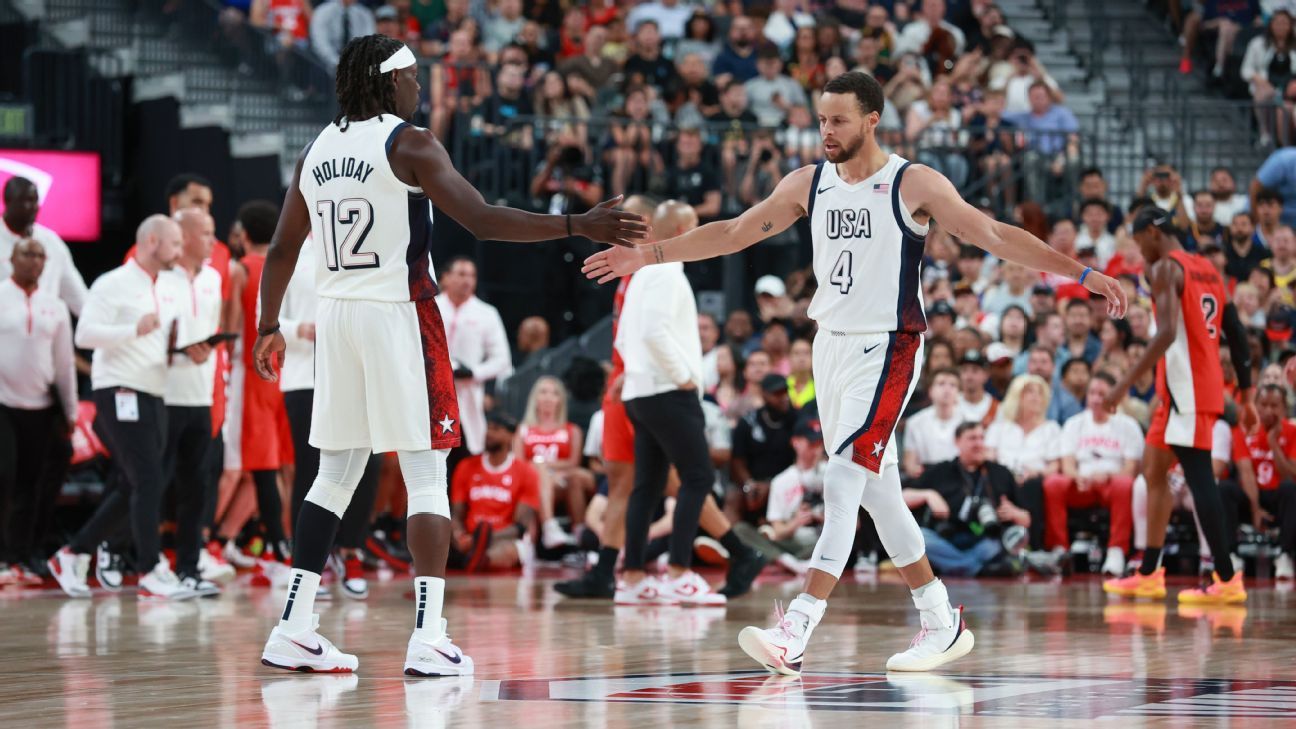
On the way to its fifth consecutive Olympic gold medal, the U.S. men's basketball team began its exhibition schedule Wednesday night with an 86-72 victory over Canada in Las Vegas.

On the day that guard Derrick White replaced forward Kawhi Leonard on the 12-man roster, the U.S. team faced a talented Canadian team that is expected to win a medal at the 2024 Olympic Games in Paris.

After a slow start – including missing their first six shots – the Americans came out on top in the second quarter while the Canadians were sluggish on the court. Team USA outscored Canada 16-2 in the second quarter and went into halftime with a 41-33 lead.

Despite a run by Canada after halftime, the USA was able to extend its lead by the end of the third and fourth quarters. Four Americans scored in double figures, with Anthony Edwards leading the way with 13 points. Anthony Davis had a double-double with 11 points and 10 rebounds. RJ Barrett led Team Canada with 12 points.

Team USA will now turn its attention to Australia on Monday when the teams meet in an exhibition match in Abu Dhabi.

What were the most important lessons learned from the victory over Canada?

play

0:16

Steph throws a lob to LeBron for an alley-oop for the USA

Steph Curry throws an alley-oop to LeBron James, who slams the ball into the goal.

1. The performance of the US national team against Canada was _____.

Tim Bontemps: Very encouraging. Team USA didn't play well at all – they had 17 turnovers and looked uncoordinated overall, especially on offense. And yet Team USA still pulled out a double-digit win over one of their two biggest challengers for the gold medal next month (the other being France). On top of that, Joel Embiid – still coming back from a knee injury sustained in the NBA playoffs – looked like someone who needs to get a lot of rust off. This game just underscores how clearly Team USA is favored over the rest of the field in Paris.

Bobby Marks: A good test. No offense to Cooper Flagg and the team he selected, but playing in front of a sold-out crowd against a Canadian team featuring Jamal Murray, Shai Gilgeous-Alexander and Dillon Brooks was a good test. While Team USA treated the game like All-Star Sunday, it felt like a preview of what was to come in France.

Dave McMenamin: A plan to follow when the games matter. As long as the U.S. defends and moves in transition, the fact that this squad had so little time to form before the Olympics shouldn't matter – they held Canada to 33.7% shooting and had 11 steals and 9 blocked shots. By creating so many running opportunities, shot distribution wasn't an issue – all 10 players who came in took at least four shots and no player attempted more than 10.

Ohm Youngmisuk: Better than expected. Canada is a formidable opponent with Gilgeous-Alexander and Murray. It was entirely expected and understandable that Team USA looked a little rusty after meeting a few days ago, but they showed a lot of potential – offense, defense, athleticism, size and versatility. What we didn't get to see, due to Canada's small size, was a test opponent for Team USA inside. And it will be interesting to see how the USA adjusts when the defense shuts down Stephen Curry's long-range shots and some of their stars get into foul trouble (like Embiid, who left late in the fourth quarter). But for their first outing, Team USA should be happy.

Bontemps: Something that no one on Team USA worried or took seriously. Edwards said he was happy to come off the bench during the same media session. He looked great on Wednesday as part of a second unit with Bam Adebayo, Anthony Davis, Tyrese Haliburton and Jayson Tatum that felt like a real weapon if coach Steve Kerr sticks around. Edwards is already known for his bombastic comments, and this was just one of them. As Adebayo said on Sunday, “Everyone on this team is a No. 1 option.”

Editor's Favorites

2 relatives

Marks: It's not surprising. Whenever Edwards steps on the court, you have a firm belief that he's the best player. The same confidence and self-assurance he displayed in the playoff series against the Phoenix Suns and Denver Nuggets was on full display in the first half. Team USA came out disorganized and it was Edwards' energy along with the second unit that overturned an 11-1 start by Canada. Team USA has at least five No. 1 options on this roster and whether Edwards starts or comes off the bench, he should be considered one of them.

McMenamin: Lack of context. Before Edwards made his statement, he was asked about the role change of becoming the Wolves' starter and then likely playing as a reserve for Team USA. His point was that just because he might have a spot in the rotation as a reserve doesn't mean he should fear a demotion. As long as he's on the field – no matter who the teammates, the opponent or the location – Edwards will play with supreme confidence.

Youngmisuk: He expresses confidence in his abilities. Edwards is perhaps the most athletic player on Team USA and will almost certainly provide the most exciting highlights of the Olympics. He will make shots, but when the going gets tight and Team USA needs points, especially from the outside, I still believe Curry will be Kerr's first choice. The USA will need Curry's outside shooting in FIBA ​​basketball and Embiid's ability to be a threat could also be a key option.

3. What impact will Kawhi Leonard’s absence have on Team USA in Paris?

Good time: That's nothing against Leonard, one of the best wingers of his generation, but I don't think it will be that big of an issue. It just speaks to the wealth of talent at coach Steve Kerr's disposal. Team USA doesn't have Leonard now — but still has Kevin Durant, Jayson Tatum, LeBron James, Jrue Holiday, Devin Booker and Anthony Edwards playing on the wings. And they can have any of their three centers — Joel Embiid, Anthony Davis and Bam Adebayo — play together. Plus, Derrick White is a top-notch perimeter defender and an excellent off-ball offensive player. In short? This team should be fine.

LeBron James, Stephen Curry and Co. want to lead the USA to its fifth gold medal in a row in Paris this summer.

Pelton: What should the duty roster look like?
Pelton: Could this team be the best ever?
Windhorst: No child's play for Team USA
• Team USA: Full roster, schedule, news

Markings: Frankly, I was surprised Leonard was selected considering the knee issues he has suffered throughout his career, including a season-ending right knee injury in the first-round loss to the Dallas Mavericks. Leonard is a candidate for MVP if healthy, but it's hard to say what kind of impact he would have had, especially if there was a minutes limit. On the plus side, Team USA Managing Director Grant Hill was quick to find a replacement on the roster.

McMenamin: As we learned from Kobe Bryant's impact on the Redeem Team, when a superstar at this level puts all of his effort into the role of a defensive back, there is a power that translates to the entire team. Leonard – one of the strongest defenders the league has ever seen – could have filled that role for this team had he been healthy. So, yes, it's a loss. But the decision to replace him with White was absolutely perfect. White may not have the prestige of a two-time Finals MVP like Leonard, but from what we saw of him in Boston, he will have no problem making defense his top priority.

Youngmisuk: When healthy, Leonard is one of the best two-way players in the world. His ability to score from mid-range over any defender, shoot threes, and then be a strong defender would have been invaluable. The two-time NBA Finals MVP would never reach his peak considering the inflammation in his surgically treated right knee he has been battling. Derrick White's defense with smaller and quick guards and his ability to switch will compensate for the loss of Leonard while also helping Jrue Holiday, Anthony Davis, Edwards, and Bam Adebayo as the team's best defender. However, there will be games where they need someone who can stop penetration and cool down a hot opponent while also shooting threes.

4. What should the starting lineup for Team USA look like?

Good time: We saw four of the five positions that should remain in place for the duration in Wednesday's opener: Stephen Curry, Jrue Holiday, LeBron James and Joel Embiid. Curry, James and Embiid are the three surefire starters; Holiday, arguably the best perimeter defender in the world, can then defend the opponent's best weapon while also being a fantastic offensive connector. As for the fifth position, I'm guessing Kevin Durant (currently dealing with a calf injury) will ultimately get the nod over Jayson Tatum (who arrived late in training camp).

Markings: I'm not going to overreact and say Steve Kerr should shake up the lineup just because of the slow start against Canada. I'm sticking with the same starting lineup (Holiday, Curry, James and Embiid) except replacing Devin Booker with Anthony Edwards. If Team USA does indeed face France in the medal round, Kerr can counter Victor Wembanyama and Rudy Gobert with Embiid and Anthony Davis.

McMenamin: Let's start with LeBron, Curry and Durant (once he recovers from his calf strain) for obvious reasons. They are the three best players of their generation and this is their first – and probably only – time playing together in the Olympics. Then we group them with the two most versatile defenders left on the roster: Holiday in the backcourt and Davis in the frontcourt. Holiday takes on the primary ball-carrying role of opposing players; Davis is tasked with monitoring the zone.

Youngmisuk: Holiday, Curry, Tatum, James and Embiid make a lot of sense. Holiday can take on the opposing team's best offensive force and also help with all the little things like offensive rebounding. Curry's long-range shooting will be crucial to Team USA's success. Until Durant is healthy, Tatum should be the starter alongside James. And Embiid can secure the inside line, with Davis splitting minutes with him at center off the bench.

Categories
Health

Musk says subsequent Neuralink mind implant anticipated “about subsequent week”

Jonathan Raa | Only photo |

Elon Musk said Wednesday his braintech startup Neuralink hopes to implant its system into a second human patient “within the next week or so.” Executives also said the company is making changes to fix hardware issues experienced by its first participant.

Neuralink is developing a brain-computer interface (BCI) that aims to help patients with groundbreaking paralysis control. The company's first system, called Telepathy, consists of 64 “threads” inserted directly into the brain. The threads are thinner than a human hair and record neural signals via 1,024 electrodes, according to Neuralink's website.

BCIs have been studied in academia for decades, and several other companies, including Synchron, Paradromics, and Precision Neuroscience, are developing their own systems. No BCI company has received approval from the U.S. Food and Drug Administration to market their devices.

In a livestream with Neuralink executives on Wednesday, Musk said the company hopes to implant its device in a “high single digit number” of patients this year. It is still unclear when and where those procedures will take place.

A Neuralink spokesman was not immediately available for comment.

In January, Neuralink implanted its BCI in its first human patient, 29-year-old Noland Arbaugh, at the Barrow Neurological Institute in Phoenix, as part of an FDA-approved clinical trial.

Neuralink said in a blog post in April that the surgery went “extremely well.” In the weeks following the procedure, however, Neuralink said some of the implant's threads had pulled back from Arbaugh's brain. The company reportedly considered removing the implant, but the issue did not pose a direct threat to the patient's health and safety, according to the Wall Street Journal.

Musk and Neuralink executives said on the livestream that only about 15 percent of the channels in Arbaugh's implant are functional. Still, he uses the BCI to watch videos, read and play chess and other video games – sometimes up to 70 hours a week.

For future implants, the company is working to reduce retraction and measure it more accurately. Neuralink President DJ Seo said one way to achieve this is to shape the skull surface to minimize the gap under the implant.

Neuralink also plans to insert some threads deeper into brain tissue and track how much movement occurs, according to the company's livestream. Dr. Matthew MacDougall, head of neurosurgery at Neuralink, said that now that they know retraction is possible, they will insert threads “at different depths.”

“The FDA will continue to monitor the safety of subjects participating in the Neuralink implant study through required, periodic reports,” an FDA spokesperson said in a statement to CNBC.

Don't miss these insights from CNBC PRO

Categories
Science

In response to media reviews, the Earth's 1.5 diploma temperature restrict has been exceeded for 12 months in a row – nothing dangerous has occurred – what's the purpose?

Originally published at ClimateREALISM

Recently, several media outlets claimed that June 2024 was the world's hottest June on record, capping a streak of 12 or 13 warmer-than-normal months. They attributed this to man-made climate change. Each of the news stories made false claims about climate tipping points being reached, extreme weather events being reached, and the ongoing heatwave being proof that a “climate crisis” is looming.

Here are some of the headlines: Data shows temperatures have been 1.5 degrees above the pre-industrial average for 12 months (The Guardian). June set a monthly heat record for the 13th month in a row, but July could break a new record (National Public Radio). And the world is set for its hottest year on record as the 1.5 degree mark has been exceeded for 12 months in a row (Financial Times).

The ongoing scaremongering around the 1.5 degree temperature limit has unsettled people around the world. For example, this infographic from the Asia-Pacific division of the International Union of Food Workers (IUF) states (bold text by the author):

Global warming caused by human activities reached about 1°C over the past 170 years and increased by 0.2°C per decade. Scientists warn that an average increase in the Earth's surface temperature of more than 1.5°C above pre-industrial levels will have catastrophic effects on the environment and human health.

Yet, even though the Earth's temperature was above the so-called temperature limit for 12 months, nothing bad happened on a global scale. Claims of climate catastrophe after we crossed the so-called 1.5-degree limit never materialized. The limit was nothing more than a political talking point at the 2015 Paris climate conference, as described in this Associated Press article: The Magic 1.5: What lies behind the elusive main goal of climate talks. The AP wrote: “In some ways, both the 1.5- and 2-degree limits are somewhat arbitrary,” Stanford University climate scientist Rob Jackson said in an email. “Every tenth of a degree counts!”

Now, despite crossing this arbitrary limit, the “crisis” that progressive politicians and alarmists in the mainstream media had warned about has failed to materialize.

Let's first look at global temperature. The source of all this news is a recent press release from Copernicus, part of the European Commission. A graphic from Copernicus, shown in Figure 1 below, illustrates the “boundary” and the 12-month temperature peak:

Figure 1 – Twelve-month moving average anomalies of global average surface air temperature relative to the 1850–1900 pre-industrial average, based on monthly values ​​from January 1940 to May 2024. Data source: ERA5. Source: C3S/ECMWF.

Note the sharp peak in Figure 1, which reaches its peak at 1.63 °C. Figure 2 below contains details of the year-round maximum temperature provided by Copernicus.

Figure 2 – Monthly global surface air temperature anomalies (°C) compared to 1850–1900 from January 1940 to May 2024, shown as a time series for consecutive 12-month periods from June to May of the following year. The most recent 12 months (June 2023 – May 2024) are shown with a thick red line, while all other years are shown with thin lines shaded according to the decade, from blue (1940s) to brick red (2020s). Data source: ERA5. Source: C3S/ECMWF.

Note in Figure 2 that global temperatures have already started declining since their peak 5 months ago, and will likely soon fall below 1.5°C.

As you can see in Figure 1 and confirmed in Figure 2, this sharp rise in temperature is unlike anything previously seen in the temperature record. It makes you wonder: why? Did humanity suddenly start burning fossil fuels to produce more carbon dioxide in a single year?

No, but there was a unique volcanic eruption. According to this article from NASA Research, a volcanic eruption released enough water vapor into the stratosphere to cause a rapid chemical change. They say:

The eruption of the Hunga Tonga-Hunga Ha'apai volcano on January 15, 2022, produced the largest underwater explosion ever recorded with modern scientific instruments, ejecting enormous amounts of water and volcanic gases into the atmosphere, more than any other eruption in the satellite age.

In case you didn't know, NASA also says that water vapor is the most powerful greenhouse gas in this article Steamy Relationships: How Atmospheric Water Vapor Amplifies Earth's Greenhouse Effect:

Water vapor is the most abundant greenhouse gas on Earth. It is responsible for about half of the greenhouse effect on Earth – the process that occurs when gases in the Earth's atmosphere trap heat from the sun. Greenhouse gases keep our planet habitable. Without them, the Earth's surface temperature would be about 33 degrees Celsius lower.

Imagine that the eruption of the Hunga Tonga volcano spewed massive amounts of water vapor into the stratosphere, the likes of which had never been seen before, for the first time in history since humans were able to measure such a thing. See Figure 3 below.

Figure 3 – This graphic shows how the release of water vapor from the Hunga-Tonga volcano accelerated stratospheric ozone depletion. Image credit: Chelsea Thompson/Chemical Sciences LaboratoryFigure 3 – This graphic shows how the release of water vapor from the Hunga-Tonga volcano accelerated stratospheric ozone depletion. Image credit: Chelsea Thompson/Chemical Sciences Laboratory

According to a scientific paper published shortly after the eruption, “observations from the Microwave Limb Sounder (MLS) aboard NASA's Aura satellite immediately after the eruption showed that this single event increased water vapor in Earth's normally dry stratosphere by about 10%.” With that much extra water vapor (the most potent greenhouse gas) entering the atmosphere, global warming was inevitable.

Another scientific article titled “Tonga eruption could temporarily push Earth closer to 1.5°C warming” stated: “The underwater eruption of Hunga Tonga–Hunga Ha'apai has spewed megatons of water vapor into the stratosphere and will contribute to an increase in global warming over the next five years.”

In addition, there was an immediate depletion of ozone in the upper atmosphere. NASA Research says: “Our measurements showed that ozone concentrations in the stratosphere decreased rapidly immediately after the eruption – by as much as 30% in air with the highest water vapor concentrations.”

The EPA says, “The ozone layer in the stratosphere absorbs some of the sun's radiation and blocks it from reaching the Earth's surface.” So with the ozone layer reduced, more sunlight reached the Earth's surface than usual, and the extra energy stays in the atmosphere as water vapor increases as a greenhouse gas. The eruption had a twofold effect on the Earth's atmosphere. You could have bet that it would make the planet warmer.

And it did. This completely natural volcanic eruption event caused the 1.63°C temperature rise seen in Figure 1. Meanwhile, the media – whether through inadvertent or willful ignorance – remains blind to how the atmosphere responded to the volcano. Accordingly, they continue to write misleading horror stories and blame the recent temperature rise on humans due to their use of modern energy and transportation. For example, CNN recently wrote in an article about the rise in global temperature:

The climate crisis is primarily caused by humans burning coal, oil and gas to generate energy. El Niño, a natural climate phenomenon that originates in the Pacific Ocean, has also caused temperatures to rise in much of the world in recent months.

No mention of the volcano or the resulting steam explosion, absolving humans of responsibility. Surprised? Don't be. This shameless pattern of “the world is getting hotter and it's your fault” has been repeated over and over by the media for years. When evidence that humans are not responsible for the current warming surge is widely and readily available, the media ignores it. Even though the Hunga-Tonga volcanic eruption did nothing bad on a global scale, they seem even more focused on the false narrative of a “climate crisis” than on factual reporting. This is shameful and wrong.

The widely warned 1.5 degree Celsius temperature rise has now been exceeded for a full year, yet extreme weather events and deaths due to temperature and weather did not increase at an unusual rate. This disproves years of mainstream media claims that more severe and frequent extreme weather events and more deaths would be the inevitable result of exceeding the 1.5 degree Celsius temperature rise. This is just another in a long line of failed predictions.

What will the media say in a few years, when temperatures start to drop again because the extra water vapor has evaporated and the ozone layer has returned to normal? Maybe they will embrace Emily Littela with a collective “Never mind!”

Anthony Watts

Anthony Watts is a senior fellow for environment and climate at the Heartland Institute. Watts has been in the weather business on and off camera since 1978 as a television meteorologist and currently produces daily radio forecasts. He has developed weather graphics presentation systems for television and specialty weather instruments and has co-authored peer-reviewed articles on climate issues. He runs the world's most visited climate website, the award-winning wattsupwiththat.com.

Like this:

How Is loading…