
Europe’s deep tech future hinges on evolving investment strategies. The reason for this is that traditional funding models cannot support the long-term financial commitments that innovation demands. There is a European paradox where, despite substantial scientific research, early commercialisation and a focus on shorter-term goals prevent the region from realising the full potential of deep tech. Although startups provide strong support, the sector still lags behind the US and Asia in bringing breakthroughs from the lab to market.
To maintain a competitive industry, Europe needs to advance technologies like AI, robotics, synthetic biology, and quantum computing, which are at the heart of the deep tech sector. These technologies aren’t just profitable. They can transform the world, from cochlear implants restoring hearing to aerospace engineering enabling missions to Mars. But none of these advances happen without patient, long-term investment in science, engineering, and design.
Startups focused on rapid-deployment SaaS or consumer apps can commercialise quickly and attract early investment. Deep tech is different: there’s a “valley of death” driven by long R&D cycles, high upfront costs, and greater risk tolerance than in traditional software ventures.
It’s worth examining which new funding models are working — and how they are starting to take hold in Europe. Drawing on insights from my investment practice — Zubr Capital — this analysis explores the real opportunity for Europe to leverage deep tech and reclaim lost market share, rather than see its startups move to mature financial ecosystems like the US, Asia, or Israel.
Why classic VC struggles with deep tech
TNW City Coworking space – Where your best work happens
A workspace designed for growth, collaboration, and endless networking opportunities in the heart of tech.
Traditional software startups typically follow a familiar funding cycle blueprint. It raises a 10-year fund, deploys gained capital over three to five years, and aims for lucrative investment exits within five to seven years. The startup defines a successful funding cycle based on rapid growth, scalability, and relatively low capital requirements.
Deep tech cannot operate within this traditional financial mould. Startups operating in this category need development cycles that often exceed a decade. Regulations from subcategories like healthcare, energy, and aerospace require numerous certifications and tests to verify advanced capabilities. That is an area where generalist VCs rarely tread due to a need for patient capital.
Most deep tech companies have to overcome specific industrial and geographical thresholds. A French aerospace firm, for instance, may not have the infrastructure to take advantage of traditional funding the way a US giant like Delta can.
Established investment models present several obstacles to deep tech companies. For example:
- Pressure for visible traction pushes startups to pivot from deep tech to commercial projects.
- Traditional VCs often lack the expertise to evaluate complex projects properly.
- Europe has smaller funds for upfront and long-term costs.
- There is a “valley of death” for deep tech to cover R&D from public funds.
- EU investors tend to be risk-averse due to the stigma of failure.
- Fragmentation within the industry, with multiple markets, regulations, and heavy bureaucracy, slows funding.
- Foreign funding steps in for late-stage rounds, frequently taking the tech to other countries.
Another pain point in deep tech is the reliance on education. A traditional startup leader only has two to three years of higher education. Deep tech requires about five to seven years due to the complexity of the subject matter. An overwhelming 81% of deep tech founders believe European investors lack the knowledge to really understand the in-depth details of their projects or goals.
There also simply isn’t enough money to offer. A European fund managing €150mn can write a few €10 to €15 mn checks, but that isn’t enough to build something as complex as a gigafactory or scale a new fusion plant. The mismatch of traditional VC funding with deep tech in Europe is what drives systemic underfunding, stalled startups, and the loss of world-changing innovations. There is a history of outside and foreign entities like Amazon, Facebook, Microsoft, and others picking up European tech talent to integrate into their R&D sectors. Those losses slow European deep tech advancement.
The evidence: when VC fails deep tech
The idea of mismatched VCs isn’t theoretical. There are many real-world examples of funding failures leading to Europe losing deep tech opportunities to international competitors. Here are just a few examples.
Prophesee in France
Prophesee creates neuromorphic vision sensors that enable machines to mimic human sight. The company raised €126mn over several rounds. However, in October of 2024, Prophesee entered judicial recovery after failing to secure additional funding. Even though the startup received massive global recognition for its technical validation (proof of concept), the length and uncertainty of financing led to complications in development.
Mycorena in Sweden
Mycorena had to file for bankruptcy and is now permanently closed. What began with the promise of mycelium-based protein that could be used in all kinds of industries failed after the startup couldn’t secure Series B funding in the mid-2020s. Mycorena was ultimately acquired for next to nothing, underscoring the hurdles deep tech companies encounter during scale-up.
Blickfeld in Germany
Blickfeld was an emerging leader in LiDAR, which enables autonomous vehicles to perceive their environment and operate safely. The company raised a total of €68mn — including €15mn from the European Investment Bank (EIB). But in June 2024, Blickfeld had to file for insolvency. Revenue came in too slowly to meet the demands of patient capital.
There are many other examples of investment shortcomings undermining promising European tech firms. Take MaaS Global in Finland, best known for the Whim app, which burned through too much capital without a sustainable business model. Or Sweden’s Northvolt, whose battery manufacturing business failed even with a blended funding model.
The pattern is strikingly consistent: funding dries up when capital needs spike and investors push for exits while R&D is still trying to work out the final solution. Meanwhile, public funding fails to arrive in time, and technical ambition is quickly sacrificed on the altar of short-term vitality. History is repeating itself, and deep tech is losing out.
Northvolt’s gigafactory in Sweden ceased production after the company’s bankruptcy. Credit: Northvolt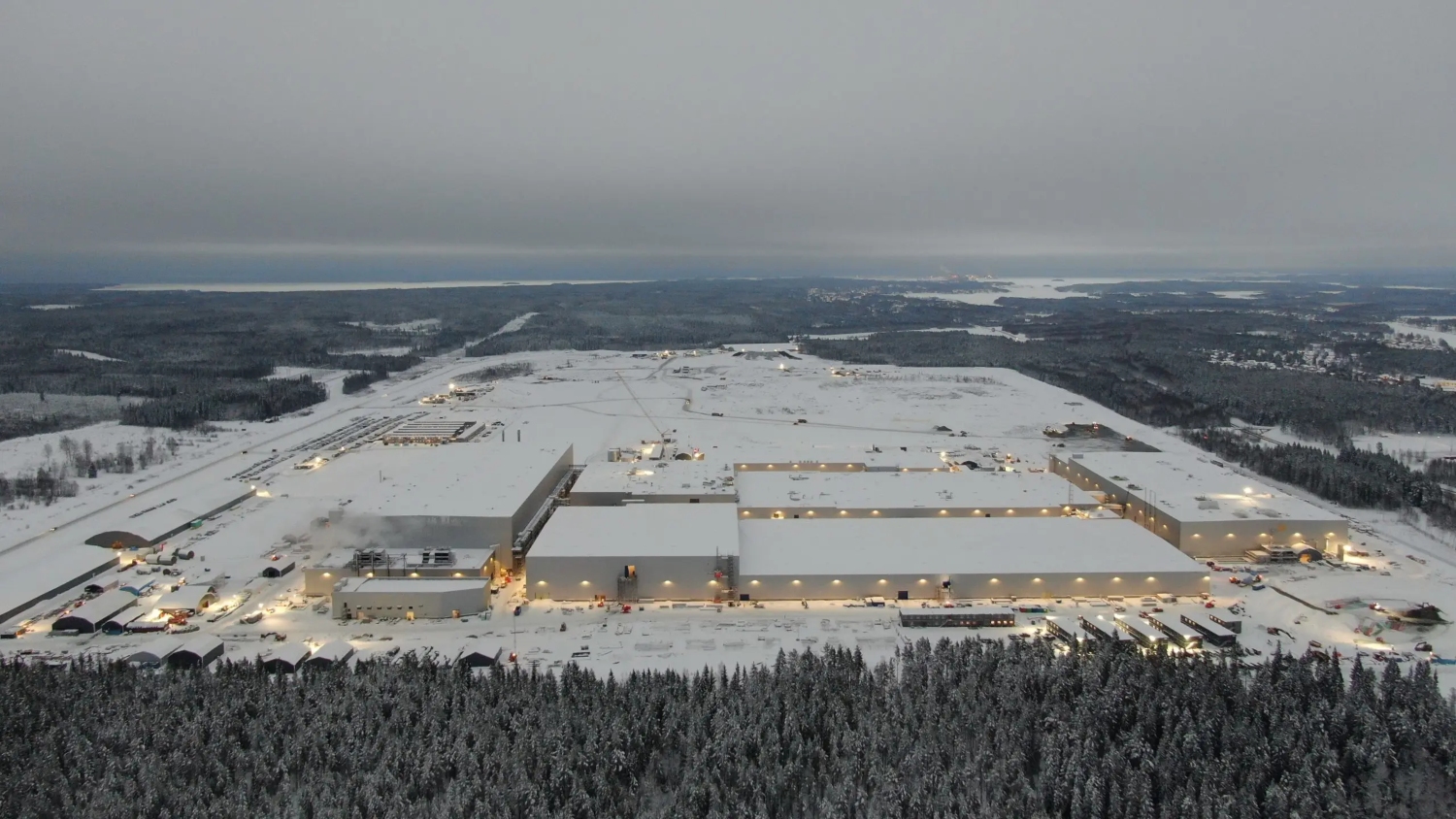
What’s emerging instead: new investment models
For Europe to capitalise on deep tech, change must happen — and happen fast. New funding models and structures are required to meet the sector’s needs. Alternative solutions could be the final leg of the journey to overcome issues like the “valley of death” for deep tech. Which funding initiatives will get us there?
- Government-backed & hybrid schemes. We need to replicate the EIC’s investment strategy of grants, equity, and hybrid investments. The EIC Accelerators, for example, offer up to €17.5mn per company, and the new STEP Scale-up Scheme targets growth rounds of €10-30 million. Government-backed funds, such as Bpifrance and the German Zukunftsfonds, meanwhile, can help de-risk early innovation and fill funding gaps for deep tech.
- Public-private partnerships. Pooling resources is an important way to fund deep tech. When state, corporate, and private investors work together, they naturally expand the usable timeline of a development group, boosting financial support for proofs of concept and market launches.
- Corporate Venture Capital (CVC). The strategic investment arms of companies like Volkswagen, Airbus, Siemens, and Bosch help fund deep tech. Not only do they offer financial support, but they also tend to have technical expertise and access to advanced equipment that can bring the technology to life. Lilium is a good example. The German eVTOL startup secured funding from grants and private players, having received €200mn from the Mobile Uplift Consortium.
- Family offices and alternative private investors. Private wealth has also entered the deep tech space. Family offices like Strüngmann Brothers (BioNTech) can back companies from inception to scale. These entities are less constrained by traditional fund structures, allowing greater investment impact with stronger strategic alignment for the long term.
- Venture studios and university-linked funds. Deep tech venture studio ecosystems can ensure research from universities makes the leap to scalable businesses. Initiatives such as Fraunhofer Ventures in Germany, CERN Venture Connect in Switzerland, and Creative Destruction Lab in Oxford illustrate this approach. Another good example is Evergreen Capital Vehicles, which helps nurture science spinouts before they transition into commercially focused entities.
It is important to note that these funding models alone are still not enough. They help create vibrant, regional successes, but the fragmentation of industries leaves infrastructure gaps in different European countries. The concentration of sectors like aerospace in Germany, batteries in Sweden, and EIT deep tech talent in Spain only widens such gaps. Progress is encouraging, but geographical coverage must be balanced to overcome Europe’s “patchwork” of financial inefficiencies.
The missing innovation: financial tools still not used
Despite all these progressive financial models, truly innovative financial solutions remain largely absent from the deep tech ecosystem in Europe. Many think tanks, EU policy papers, and founder forums highlight the need for longer time-to-revenue projects and solutions to high upfront costs, but the current tools are not quite up to the task.
As of 2022, no European deep tech startup has successfully used IP-backed loans, R&D pre-purchase agreements, revenue-based financing, or advance market commitments. Such models are helpful, but have yet to tackle the challenges around scaling a business, time to market, and elevated risk profiles.
The dominance of traditional financial models exists because grants, equity rounds, and hybrid public-private schemes cannot account for regulatory uncertainty, lack of institutional experience, and risk aversion.
As a result, Europe is falling behind and will continue to do so until financial innovation moves from theoretical idea to practical application. The good news is that such adaptation is already happening elsewhere, providing a framework for Europe to follow.
Global contrast: what works elsewhere
The US and Israel are turning deep tech into operational success using practical funding tools. Take Helion Energy in the US. The company has developed advanced fusion systems and recently raised $425mn to advance this technology over the next three years. Funding milestones were introduced to de-risk capital and support pre-purchase contracts.
Another example of adaptive funding fueling deep tech success is Climeworks. The company has benefited from revenue-based financing through corporate carbon offset agreements. Thanks to the predictable revenue streams, investors like Microsoft and Stripe have been able to provide funding crucial for scaling Climeworks’ direct air capture technology.
Innovative funding has also boosted Israel’s Phantom Energy. The company is using IP-backed loans to enable prototyping without dilution, leveraging patents as collateral. In every case, the funding tool is designed to “match” the technology. Europe can learn from these successes. With flexible funding that accommodates longer development cycles and eases failure risks, the continent will progress further in deep tech.
What Europe needs to change
If Europe wants a seat at the deep tech table, it needs to change. Incremental steps, like the examples listed above, won’t be enough. Insufficient patient capital with too many funds operating on short, exit-driven cycles must give way to new models. In their place, we need pan-European “evergreen” funds, growth-stage vehicles, and public-private platforms.
Fund sizes remain too small, and financial innovation is lacking. To address this, Europe needs well-publicised pilot projects involving creative investment models, such as IP-backed finance and non-dilutive hybrid modelling.
If Europe fosters greater collaboration and co-investment, we can reduce fragmentation and harmonise regulations. This could speed up grant distribution and create international “fast lanes” that shift the culture from fear of risk to celebrating experimentation.
Bold action is necessary to streamline bureaucracy and build technical investing talent that feeds both VCs and deep tech startups. We must change the culture. The deep tech investment ecosystem urgently needs to adapt to unlock the sector’s potential.
From paradox to progress
Europe has a world-class science community and a vibrant startup scene. To ensure success and stop promising projects from moving abroad, direct action is needed to scale deep tech ventures and address structural funding gaps.
The classic venture capital solution doesn’t fit the deep tech sector. While new models and regional initiatives are emerging and achieving some success, critical pieces are still missing, especially in late-stage capital and financial innovation.
Europe must seize this pivotal moment to reshape its capital stack into one of patience, scale, and flexibility. That will foster resilient, world-leading companies. But it will take the collective work of policymakers, investors, and founders to move beyond theory and into actionable success.