Categories
Science

This tremendous puffy planet hides its true nature behind thick haze

There are some strange types of exoplanets that have no counterpart in our solar system. One of these types are super puff planets. These special balls have larger radii than Neptune, but only a few Earth masses. This means that they have a large volume and a low density. How this particular type of exoplanet forms is unclear, and current models of gas giant formation cannot explain them.

Kepler-51 is a 500-million-year-old Sun-like star about 2,620 light-years away that hosts three super-puff planets. One of them, Kepler-51d, is the coolest and least dense of the three. It’s the subject of new research in the Astronomical Journal. In it, the researchers test the three hypotheses that attempt to explain Kepler-51d and super-puffs in general.

The research is “The James Webb Space Telescope NIRSpec-PRISM Transmission Spectrum of the Super-Puff, Kepler-51d,” and the lead author is Jessica Libby-Roberts. Libby-Roberts is from the Department of Astronomy and Astrophysics and the Center for Exoplanets and Habitable Worlds, both at Pennsylvania State University.

“We think the three inner planets orbiting Kepler-51 have tiny cores and huge atmospheres that give them a density similar to cotton candy,” lead author Libby-Roberts said in a press release. “These extremely low-density super-puff planets are rare and defy conventional understanding of how gas giants form. And if it wasn’t difficult enough to explain how one gas giant formed, there are three in this system!”

Maintaining a large, puffy atmosphere requires a massive core with enough gravity to prevent the atmosphere from being ripped away. Typically, these types of planets are also further away from their stars, which also makes it harder for the star to remove their atmosphere. But Kepler-51d is only as far from its star as Venus is from the Sun. And because Kepler-51 is young, only about 500 million years old, it is more active than older stars like the Sun.

“Kepler-51 is a relatively active star, and its stellar winds should easily blow gases away from this planet, although the extent of this mass loss over Kepler-51d’s lifetime remains unknown,” Libby-Roberts said. “It’s possible that the planet formed further away and moved inward, but we still have a lot of questions about how this planet – and the other planets in this system – formed. What is it about this system that created these three really strange planets, a combination of extremes we haven’t seen anywhere else?”

Kepler-51d is one of the least dense exoplanets of this type and is also the coolest in the system. Its planetary mass is about 5.6 Earth masses and its radius is about 9.3 Earth radii. That means it has almost ten times the radius of Earth, but just over five times the mass of Earth. A planet of this size, light and cold defies our understanding of planet formation. The authors write that “…the observed properties of this planet cannot be easily explained by most planet formation theories.”

The exoplanet’s properties make it a valuable scientific target to test the various hypotheses that attempt to explain super-puffs.

As the title of the study makes clear, this research is based on JWST’s NIRSpec instrument. When NIRSpec captured the transmission spectrum of Kepler-51d’s atmosphere, it was featureless. There were no strong signs of molecular absorption. The spectrum looks like an inconspicuous slope.

This is the transmission spectrum of Kepler-51d observed with JWST/NIRSpec-PRISM, covering a range of 0.6–5.3 μm. This wavelength range is typically rich in chemical fingerprints. If they were present and detectable, molecules such as H2O, CO2 and NH3 would be visible in the spectrum. The problem is that the haze can obscure all of these features, creating the slope in the spectrum. Photo credit: Libby-Roberts et al. 2026. AnJ.

“At 350 K, we expect to observe a rich range of molecular features (methane, water, carbon dioxide and ammonia) assuming an aerosol-free chemical equilibrium atmosphere for Kepler-51d – especially given its extreme scale altitude of about 1700 km. Instead, the lack of clearly identifiable features in an extended H/He-rich atmosphere between 0.6 and 5.3 μm is a first for JWST,” the researchers write. However, some molecules containing carbon, oxygen, nitrogen and other chemicals must be present to trigger the formation of the haze.

There are three working hypotheses that attempt to explain super-puffs like Kepler-51d.

The first is that the planet has a massive hydrogen/helium shell. Planets typically don’t maintain this atmosphere because they are too bright. The loss of these atmospheres explains the observed Fulton gap or radius gap in the exoplanet population. While the exoplanet’s atmospheric spectrum is featureless, forward modeling shows that it likely has low metallicity for several reasons, supporting the H/He envelope hypothesis. However, to maintain this atmosphere, scientists must assume that a planet must be massive and not too close to its star, which contradicts this hypothesis.

The second hypothesis is that Kepler-51d exhibits high-altitude photochemical opacities. This is consistent with submicron-sized haze particles in the exoplanet’s upper atmosphere. Spectra of other super puffs show the same thing. Because opacities block all molecular features in the spectrum, the JWST results support this.

The third is that the planet actually has a ring system that is tilted toward us. That would make the planet appear larger than it is. This would in turn make the density appear much lower. The researchers found that a ring system can fit the data, but it must be a very short-lived system. This is because the planet is so close to its star that any ring system would be unstable. Since the planet is only about 500 million years old and the ring system could only survive for about 100,000 years, that means we would be very lucky to be able to observe it at just the right time for a ring system to exist. This is a very low probability and that is why researchers do not support this explanation.

Rings are made of dust and also block light in a uniform pattern. “Instead, we see a linear trend where more light is blocked at longer wavelengths,” Libby-Roberts said.

*This artist’s illustration features a super puff planet. With low masses and large radii, they defy our models of planet formation. Image source: By Pablo Carlos Budassi – Own work, CC BY-SA 4.0, https://commons.wikimedia.org/w/index.php?curid=136006077*

The researchers conclude that the high-altitude photochemical haze hypothesis best fits the evidence.

“We think the planet has such a thick layer of haze that absorbs the wavelengths of the light we look at, so we can’t really see the features underneath,” said study co-author Suvrath Mahadevan. Mahadevan is a professor of astronomy and astrophysics at Penn State Eberly College of Science. “It appears to be very similar to the haze we see on Saturn’s largest moon Titan, which contains hydrocarbons such as methane, but on a much larger scale. Kepler-51d appears to have a huge amount of haze – almost as large as the radius of Earth – and would be one of the largest we have seen on a planet to date.”

Lead author Libby-Roberts echoed Mahadevan’s comments. “Rings would have to be short-lived, made of very specific materials and arranged at just the right angle, which seems unlikely, but we can’t rule it out completely. If we could observe the planet at even longer wavelengths, such as with JWST’s mid-infrared instrument, we might be able to detect the materials that would be in a ring or see the full extent of the haze layer.”

Missions like Kepler TESS have shown us how diverse the exoplanet population is. Our models of planet formation are largely based on what we see in the solar system. But they are being put to the test by the discovery of super-puff planets like Kepler-51d.

“Before astronomers found planets outside our solar system, we thought we had a pretty good understanding of how planets formed,” Libby-Roberts said. “But we started finding exoplanets that didn’t fit our solar system at all, and we have these alien worlds that really challenge our understanding of planet formation. We haven’t found a solar system like ours yet, and if we can explain how all these different planets formed, we can better understand how we fit into the bigger picture and what place we occupy in the universe.”

Without detailed knowledge of Kepler-51d’s composition and structure, researchers cannot explain how the super puff formed. However, JWST’s NIRSpec spectrum can help rule out certain scenarios and limit others. The next step is to examine the other super-puff planets in the system using both NIRSpec and MIRI.

“Future observations of other super-puff planets in the Kepler-51 system using JWST could provide additional insights into how these planets (including Kepler-51d) formed and whether they all have a significant haze layer,” the researchers write. “At the moment, Kepler-51d is the only known planet with a featureless, tilted JWST transmission spectrum of 0.6-5.3 μm,” they conclude.


Categories
Technology

BBLeap raises €5 million to allow crop-level precision spraying to arable farmers

The Rijen-based startup, which retrofits existing sprayers with nozzle-by-nozzle PWM control, will use the capital to commercialize its LeapEye camera system and scale LeapBox internationally from Europe to Canada.

The idea behind BBLeap is disarmingly simple: Most agricultural sprayers treat an entire field as a unit, applying the same dose of pesticide, herbicide or fertilizer regardless of what individual plants actually need.

BBLeap was designed under the premise that this is wasteful, inaccurate, and unnecessary, and that the technology to do something better has been around for so long that there’s no good excuse not to use it.

The Dutch startup based in Rijen in North Brabant has raised €5 million in a round led by Utrecht-based private equity firm ESquare Capital, with co-investment from Yield Lab Europe, an impact-focused agri-food venture capital fund backed by the European Investment Fund.

The 💜 of EU technology

The latest rumors from the EU tech scene, a story from our wise old founder Boris and questionable AI art. It’s free in your inbox every week. Register now!

Existing shareholders, including BOM (the Brabant Development Agency, one of the company’s early backers) and Beheermaatschappij Vriend also participated. BBLeap will use the capital to complete the commercial launch of LeapEye, its large-scale arable camera detection system, and expand LeapBox internationally, adding Canada to its existing presence in Europe and Australia.

BBLeap was founded in 2019 by Peter Millenaar, Rieks Kampman and Martijn van Alphen, three people with backgrounds in the agricultural machinery industry who previously worked together at a sprayer manufacturer. Millenaar, who serves as CEO, has described the company’s mission as “farming at plant level,” giving each individual plant exactly the dose it needs rather than spreading the average across a field.

The company’s core product, the LeapBox, is a modular pulse width modulation (PWM) system that can be retrofitted to any existing sprayer, regardless of brand or age, and independently controls each nozzle to maintain constant pressure, droplet size and precise volume.

A cloud-based platform, LeapSpace, processes high-resolution prescription maps generated from drone, satellite and sensor data.

The second product, LeapEye, expands the system’s capabilities with real-time detection: a large-area camera that scans crops as the sprayer moves across a field, detects what needs to be treated, and adjusts the performance of each nozzle accordingly.

According to the company, depending on the application, chemical savings of between 20 and 99 percent and an increase in capacity of up to 40 percent are possible. These figures are derived from proprietary materials and have not been independently verified.

What has received independent validation is the technology itself: BBLeap recently received approval from Germany’s Julius Kühn Institute (JKI), the Federal Research Center for Plant Protection, for its PWM spray approach, a significant regulatory endorsement in the European agricultural market.

The company says it already has more than 200 users operating BBLeap systems in Europe and Australia, with rollout currently underway in Canada. Both the number of users and the geographical information come from press materials and have not been independently confirmed.

What is independently documented is the breadth of the partnership: BBLeap has worked with precision farming data platform OneSoil in a global integration that allows farmers to convert satellite prescription cards into BBLeap spray orders in minutes, and has established relationships with sprayer manufacturers including Denmark’s Dammann.

“BBLeap offers 100 percent certainty of spraying exactly what is needed, delivering good applications, fewer diseases and fewer weeds, while using significantly fewer chemicals,” Peter Millenaar said in a statement accompanying the announcement.

The investment comes at a time when regulatory pressure on the use of agricultural chemicals is increasing in Europe. The EU’s “Farm to Fork” strategy aims to halve pesticide use by 2030. Precision spraying technologies are one of the cleaner routes farmers can take to achieve this goal without sacrificing yield.

For BBLeap, the challenge is to translate a technology proven in field trials and early adopters into a commercially repeatable product that can be sold, installed and supported at the scale investors are now betting on.

Categories
Entertainment

Latto debuts child bump in “Enterprise & Private” music video

The internet was looking Milk for a minute after seemingly taking a break from posting on social media, but now Big Mama is BACK! After teasing fans with a short clip, she finally released new music and IMPORTANT news.

RELATED: From Cheetah Print Suits to Low-key Baecations: Inside Latto & 21 Savage’s Relationship Timeline (PHOTOS + VIDEOS)

Latto drops a BIG bombshell as he releases NEW visuals

After much speculation on social media, Latto announced her pregnancy. Yes, roommates, Big Mama is about to be in full mommy mode and she’s letting fans know that this season of her life is personal – pun intended! The Atlanta rapper confirmed she is expecting her first child on Friday, March 20, while releasing the music video for her new single “Business & Personal” on YouTube. In an Instagram post, she also told fans that there is more music to come as she will be releasing her third album, Big Mama, on May 29th.

In the video, Latto raps in what appears to be a child’s room. She sits down and begins working on a painting, then seemingly begins decorating the room. She then finally gives fans a look at her growing baby bump as a man gently places his hands on her stomach. The mystery man doesn’t show his face, but fans were quick to suggest who it could be. From there, Latto goes back to her Big Mama era and raps in her lyrics. “Car seat, there’s a child on the way!”

The timeline explodes after Latto’s BIG announcement

Chile, the internet immediately reacted to Latto’s new song and pregnancy announcement. People ran straight to the comments section and said they KNOW because she was holding back too much. Meanwhile, others showed their love and said their bundle of joy will soon be the cutest baby ever.

Instagram user @realjuliamarie wrote:Now she’s the big mom of.”

Instagram user @fittyshadesofk wrote: As long as I’m not pregnant 🥳🥳🥳🌝 Congratulations!!”

While Instagram users @__yher__ wrote: If the internet tells you someone is pregnant, YOU BETTER BELIEVE IT 😂”

Then Instagram user @tharealkaaay wrote: “OMG Wow…who is the BD now?? 👀”

Another Instagram user @itsquooo wrote: We already knew, but I’m glad she was able to announce it herself 💚”

Instagram user @aria.lailonii wrote: I’m Alyssa, you really have PMO 🫩 I thought it was big mommy, no kids????”

While another Instagram user @enya.aa wrote: I’m starting to believe you all that you’re not wrong yet.”

Then another Instagram user @beepyt_ wrote,It’s scary, you all knew that, but congratulations Big Mama 😍❤️”

Finally, Instagram user @dailyteatalks_ wrote: You all swore it was a publicity stunt. My daughter hasn’t been to high school for a while, she was locked up at home pregnant 😢🤰🏽”

Fans have theories about the Mystery Man in Latto’s video

Fans were keeping an eye on Latto’s growing baby bump, but also had one BIG question: Who is the mystery man in her new video? At one point in her “Business & Personal” picture, an unknown man appears, places his hands on her stomach and shows off a tattooed arm. The internet wasted no time trying to identify him, with many saying they were putting together the clues and believe it was none other than 21 Wild. Fans have been linking the couple together for a minute now. In 2023 people looked that she had the real name of 21, “Sheya,” tattooed in red ink. Then a clip surfaced of 21 getting his hair braided, and when fans zoomed in, they claimed they spotted a tattoo that read: “Alyssa,” That’s Latto’s real name.

The couple kept the rumors going after photos and videos showed them vacationing together in St. Vincent in August 2025. A month later, in September, paparazzi caught Latto in NYC, and when TMZ asked if she ever got tired of hearing about “21,” she made it crystal clear, saying: “No! My man, my man, my man!”

Big Mama responds to all the love after confirming her pregnancy

Just minutes after releasing her new single, the “Georgia Peach” femcee hopped on an Instagram live stream to chat with fans. She took a closer look at her baby bump and urged people to keep an eye on her. “You’re all nosy bastards.” As more comments came in, Latto thanked fans for the love and support and said she had stopped crying. She said she may be on the path to motherhood, but she will always be a G!

“Thank you all! I was already crying.” She continued: “I don’t cry anymore, I’m a gangster.” I’m a mother first and a gangster second.”

RELATED: Is it? Some fans believe Latto fueled baby speculation with her return to social media (VIDEO)

What do you think, roommates?

Categories
Health

How CNBC Cures brings uncommon illness tales to a nationwide viewers

Last summer my sister Becky came to me with an idea.

She wanted my help building a platform at CNBC to shine a spotlight on the 30 million Americans living with a rare disease.

Becky hoped this would help give a voice to the millions of people often overlooked by the medical community…who suffer from illnesses most of us have never heard of.

Their vision was to create a space for this community – a space that would connect people to the incredible work already being done by rare disease advocacy groups, and build on that to reach CNBC’s unique audience – an audience with the power and influence to help create change for rare disease patients and their families.

I was intimidated by the challenge. Not just because of the amount of work I knew it would take to meet our start date, but also because of the level of empathy and responsibility I knew it would take to do it well. I wasn’t sure if I would be up to the task.

Luckily Becky and I weren’t alone.

Dozens of our colleagues have rallied behind CNBC Cures. They gave their time and talent to work on something that inspired everyone involved.

And thanks to their efforts, CNBC Cures found early success.

Since our launch on January 8th, we have aired well over a dozen stories focused on the rare disease community.

Over 20,000 subscribers have signed up for the CNBC Cures newsletter, making it one of the fastest-growing newsletters the network has ever launched.

We had thousands of listeners streaming episodes of The Path with Becky Quick, the Cures podcast series we launched in which Becky shares personal and emotional stories of people living with rare diseases.

We are also quite popular on social media: Cures videos have a combined one million views on Facebook, TikTok, Instagram and LinkedIn.

Our first annual CNBC Cures Summit, a live event where Warren Buffett shook hands with Boomer Esiason and Regeneron CEO Leonard Schleifer, sold out not long after registration opened. And the free livestream of the event had more than 8,000 views.

On Thursday we aired our hour-long documentary, CNBC Cures: Defying Rare Disease. In the special, Becky stepped out from behind the anchor desk to share her family’s private battle with rare diseases and talk about her daughter Kaylie’s SYNGAP-1 diagnosis. Through her stories and others like them, Becky revealed the harsh reality of patients caught between groundbreaking scientific advances and the persistent gaps in funding, access and support.

In the two months since Cures launched, we have spoken more consistently about the issues affecting the rare disease community than in the previous two years.

It didn’t feel forced and it wasn’t rushed. Because the message is important to people.

This speaks to the importance and relevance of these stories.

Through this process, I learned that almost everyone knows someone affected by a rare disease. And the issues we discuss – from regulatory reform to scientific innovation to access to medicines – are not just important to the rare disease community, but issues that matter to all of us.

They are the themes that will remain the driving force behind CNBC Cures, and the themes we will use to shape the stories we bring you from this incredible community.

But most importantly, we’ve heard a lot from you, our viewers and readers, over the last two months. We’ve received hundreds of emails…more than we could respond to – even though we’re trying.

You shared your stories with us and brought us into your lives. They have made us smarter, more relevant and confirmed that we are on the right track.

This is the justification we need to know that this is an area worth investing in as a network.

Thank you for your continued support and for your inspiration.

And keep watching CNBC Cures, because we’re just getting started.

For more information about CNBC Cures, visit CNBC.com/cures. To sign up for the newsletter, click here. Click here to watch the latest episode of The Path with Becky Quick.

Categories
Sport

Switch Rumors, Information: Chelsea wish to lengthen Fernández as PSG and Madrid have an interest

March 20, 2026, 4:10 a.m. ET

Chelsea could do it Enzo Fernandez Their highest-earning club amid interest from Paris Saint-Germain, Real Madrid and others. In the meantime, Mohamed Salah He is still not sure whether he will join the Saudi Pro League this summer.

Stay with us for the latest transfer news and rumors from around the world.

Home page of transfers | Winter qualities for men | Women’s grades

TRENDING RUMORS

Enzo Fernández is attracting interest from some of Europe’s biggest clubs. Justin Setterfield/Getty Images

– Chelsea is ready for this Enzo Fernandez According to TEAMtalk, it is their highest-earning player to beat the interests of Real Madrid, Paris Saint-Germain, Bayern Munich and Manchester City. Chelsea have been aware of interest from top clubs for some time, with Madrid considering a transfer for Fernandez before he moved to Stamford Bridge from Benfica. PSG and Bayern are also long-term admirers and City are ready to enter the race to sign the 25-year-old if he shows his willingness to join another Premier League club. Fernandez would be attracted to the three European clubs but has no concerns about a move.

Editor’s Tips

2 relatives

– Liverpool winger Mohamed Salah has yet to make a decision on his future amid continued interest from the Saudi Pro League, The Daily Mail reports. The 33-year-old has been repeatedly linked with Saudi clubs in recent years and this summer would be Liverpool’s last chance to secure a transfer fee for the Egypt international before his contract expires in July 2027. However, Salah is not the only person at Liverpool that Saudi clubs have their eye on: Al Hilal is reportedly confident of winning over the sporting director Richard Hughes to join them.

– Manchester City are the frontrunners to sign the Nottingham Forest midfielder Elliot Anderson ahead of Manchester United, as the BBC reports. Despite United’s well-known interest in Brighton’s Carlos Baleba, Crystal Palace Adam Wharton and Newcastle United Sandro TonaliMany at Old Trafford feel Anderson is the midfielder they should prioritize. The 23-year-old will cost at least £80 million and there is also competition from Bayern Munich, but United will not give up their interest.

– According to the report from Reuters, Manchester United and Real Madrid want Bruno GuimaraesThe Sun have now suggested that Newcastle may have to try to stop a mass exodus of their key players in the summer. Manchester United, Manchester City, Arsenal and Real Madrid want midfielder Tonali, with Arsenal leading Liverpool in the race for the winger Anthony Gordon. There was also a lot of interest from City in a full-back Tino Livramento.

– Representatives from Arsenal and Chelsea were at the Tottenham Hotspur Stadium to watch Julian Alvarez according to TEAMtalk in Atlético Madrid’s 2-3 second leg defeat in the round of 16 of the Champions League. The 26-year-old scored Atlético’s first goal of the night and assisted on their second as the visitors progressed with a 7-5 aggregate win. Alvarez has already informed Atleti that he is open to a move and although Barcelona are still the Argentine star’s preferred option, uncertainty over Barça’s ability to complete a deal has made Arsenal and Chelsea viable alternatives.

OTHER RUMORS

play

1:58

Is Fulham a good move for USMNT’s Ricardo Pepi?

Gab and Juls discuss the possible transfer of Ricardo Pepi to Fulham.

– Manchester City striker Erling Haaland would consider a move to Real Madrid if he were to leave the Etihad, while Barcelona cannot afford to sign him. (Football Insider)

– Manchester United will reject Barcelona’s attempted signing Marcus Rashford on another loan and demanding the £26m from the option in the forward’s original deal. (The mirror)

– Clubs from Brighton, Newcastle United, Chelsea and Saudi Arabia are interested in the Cologne winger El Mala saidalthough offers under 40 million euros are not taken into account at all. (Sky Sports Germany)

– Juventus are also looking at the goalkeepers, with their attention focused on that of Toulouse Guillaume staysFiorentina David de GeaTottenham Hotspur William Vicar and Aston Villas Emiliano Martinezduring Atalanta Marco Carnesecchi and Liverpool Alisson Becker are considered, but are less likely. (Tuttosport)

Everything from ESPN. Everything in one place.

Watch your favorite events on the newly improved ESPN app. Learn more about which plan is right for you. Register now

– Inter Milan want Tottenham Hotspur goalkeeper William Vicar but also inquire about Real Madrid Andriy Lunin. (La Gazzetta dello Sport)

– Atalanta will check whether the €26 million clause comes into force Yunus Musa‘s will be on loan from AC Milan at the end of the season, but it is very unlikely that this will be the case. (La Gazzetta dello Sport)

– Inter Milan want Roma midfielder Manu Kone but will have difficulty reaching its value of 40 million euros. (Calciomercato)

– Al-Qadsiah striker Mateo Retegui has spoken to AC Milan and Juventus about his return to Serie A. (Tuttosport)

– A Juventus scout will monitor Genoa’s game against Udinese Brooke Norton Cuffy. (Nicolo Schira)

– Juventus have apparently been busy as they have also made an approach for the Napoli left-back Leonardo Spinazzola. (Sky Sports Italy)

– Inter Milan will invoke their €23 million clause to re-sign the midfielder Aleksandar Stankovic from Club Brugge. (Corriere dello Sport)

– Leeds United are planning to sign the 16-year-old winger from Manchester United Silva Mexes. (Football Insider)

– Leeds United, Brentford and Crystal Palace all want the 23-year-old Midtjylland winger Aral Simsir. (TEAMtalk)

– Six Premier League clubs are interested in the Brighton goalkeeper Carl Rushworthwho impressed on loan at Coventry City. (talkSPORT)

Categories
Science

The puzzling emissions from the Crab pulsar lastly defined.

Most objects that astronomers and astrophysicists study have existed for billions of years. Things like supermassive black holes, the Milky Way, and even the Sun and Earth predate humanity by billions of years.

But not the Crab Nebula. It is the supernova remnant (SNR) of a supernova that exploded about 6,500 years ago. Its light reached Earth in 1054 and the exploding star is named SN 1054. Ancient astronomers recorded its appearance in the night sky, particularly Chinese astronomers, who called it a “guest star.”

The Crab Nebula is one of the most studied objects in astronomy. Its distinctive appearance makes it recognizable to more than just astronomers, and it has been imaged in detail many times by various telescopes, including the Hubble. His Crab Nebula image is like the space telescope’s calling card.

There’s a lot going on in a complex object like the Crab Nebula, also known as M1 and NGC 1952. In addition to being classified as an SNR, it is also a pulsar wind nebula. A central pulsar generates the winds that push an expanding bubble of high-energy particles outward. It also drives the outward propagation of magnetic fields.

*This image is a combination of optical light from Hubble (red) and X-ray light from Chandra Observatory (blue). The red star in the center is the Crab Pulsar, and the middle part of the image shows the Pulsar Wind Nebula. Image credit: Optical: NASA/HST/ASU/J. Hester et al. X-ray: NASA/CXC/ASU/J. Hester et al. – https://hubblesite.org/contents/media/images/2002/24/1248-Image.html, Public Domain, https://commons.wikimedia.org/w/index.php?curid=238064*

A typical pulsar emits one radio pulse per revolution. Some have two. In most pulsars the two appear at different parts of the rotation.

But the Crab Nebula stands out from other pulsars. Its two radio pulses and its high energy pulses appear in the same phase. These pulses look like a zebra pattern in their spectrum, with noticeable gaps between them, and astrophysicists are struggling to explain why.

New research in the Journal of Plasma Physics explains why the crab has its unusual zebra-striped pattern. It is entitled “Theory of striped dynamic spectra of the high-frequency interpulse of the Crab pulsar” and the sole author is Mikhail Medvedev. Medvedev is from the Department of Physics and Astronomy at the University of Kansas. This is not Medvedev’s first published research on the Crab Nebula and he has been working to understand these unusual pulses for years.

“This peculiar spectral pattern was first reported in 2007 and subsequently studied in detail,” writes Medvedev. “Despite considerable theoretical effort over the subsequent fifteen years, no satisfactory mechanism has been proposed to resolve the…puzzle.”

It all boils down to the crab’s magnetosphere.

Pulsars are strongly magnetized neutron stars. Their magnetic fields are compressed just like the neutron star itself. This makes them extremely amplified. They can be a billion times stronger. These extreme magnetic fields dominate almost everything about pulsars. In fact, pulsars are considered natural laboratories for extreme physics due to their magnetic fields, extreme gravity, and extreme rotations.

Medvedev’s research shows that gravity is responsible for the unusual zebra pattern.

“Gravity changes the shape of space-time,” Medvedev said in a press release.

“Light does not travel in a straight line in a gravitational field because space itself is curved,” he said. “What would be straight in flat spacetime becomes curved when gravity is strong. In this sense, gravity acts as a lens in curved spacetime.”

We know this to be the case because of gravitational lensing. This lensing effect has been discussed and researched extensively, but not when it comes to neutron stars, said Medvedev.

“In images of black holes, gravity alone shapes the structure,” he said. “Gravity and plasma work together in the crab pulsar. This represents the first real application of this combined effect.”

This animation consists of different frequency observations of the Crab Pulsar from five different observatories: the VLA (Radio) in red; Spitzer Space Telescope (infrared) in yellow; Hubble Space Telescope (visible) in green; XMM-Newton (ultraviolet) in blue; and Chandra X-ray Observatory (X-ray) in purple.

But there’s more to the Crab Nebula’s emission pattern than just zebra-like gaps. There are also high-frequency intergap emissions, but they do not have a broad spectrum like other pulsars.

“There is a remarkable pattern in the pulsar spectrum,” Medvedev said. “Unlike ordinary broad spectra – such as sunlight, which contains a continuous range of colors – the crab’s high-frequency intermediate pulse shows discrete spectral bands. If it were a rainbow, it would be as if only certain ‘colors’ appeared, with nothing in between.”

“The stripes are absolutely clear, with complete darkness in between,” Medvedev said. “There is a bright band, then nothing, bright band, nothing. No other pulsar shows this type of band. This uniqueness made the crab pulsar particularly interesting – and challenging – to understand.”

In his previous work, the physicist was able to explain the clear streaks in the pulsar’s radio emissions. The neutron star’s plasma caused diffractions in its electromagnetic pulses. They were largely responsible for the patrols.

However, the high contrast was still unclear. That changed when he took gravity into account.

“The previous theoretical model was able to reproduce fringes, but not with the observed contrast. Incorporating gravity provides the missing piece,” Medvedev said. “The plasma in the pulsar’s magnetosphere can be thought of as a lens – but a defocusing lens. In contrast, gravity acts as a focusing lens. Plasma tends to spread light rays; gravity pulls them inward. When these two effects are superimposed, there are certain ways in which they compensate for each other.”

The defocusing lens of plasma and the focusing lens of gravity are in a kind of tug-of-war that neither can ever win. The different forces create both in-phase and out-of-phase interference bands in the radio waves, creating the zebra pattern.

“For reasons of symmetry, there are at least two such paths for light,” he said. “When two nearly identical paths bring light to the observer, they form an interferometer. The signals are combined. At some frequencies they reinforce each other (in phase) and produce bright bands. At others they cancel each other (out of phase) and produce darkness. This is the essence of the interference pattern.”

There is still a lot of work to be done, even if the model explains the impulses of the Crab pulsar.

“It appears that little additional physics is required to qualitatively explain the streaks,” Medvedev said. “Quantitatively there may be refinements.”

“The pulsar rotates, and the inclusion of rotation effects could lead to quantitative, although not qualitative, changes,” Medvedev said.

Medvedev’s work could also lead to a better understanding of other rotating and gravitational objects. Pulsars themselves are difficult to study, and Medvedev’s work could advance the study of pulsars in general. For example, the exact source of a neutron star’s impulses is unknown, although the polar regions are strongly considered. In this case, scientists are not yet sure how far above the poles the impulses arise.

“Our model also imposes constraints on the source of the pulsar radio emission,” Medvedev writes.

Categories
Technology

Hydrogen-powered vehicles have by no means caught on, however might doubtlessly spawn the following technology of long-range drones

Hydrogen power has never found a home in your car, but it could finally come into its own in a drone. Researchers in Norway have built a heavy-lift drone that runs on hydrogen and replaced batteries with a fuel cell to solve the range problem that keeps most commercial drones grounded.

The prototype from SINTEF, a Scandinavian research institute, is aimed at tasks where battery-powered drones are not sufficient. Think about inspecting remote power lines after a storm or searching for missing hikers in bad weather. Lead research scientist Federico Zenith says the goal isn’t to replace your weekend flyer. It’s about tackling missions that today’s drones simply can’t accomplish.

Why fuel cells beat batteries and gas

Instead of building from scratch, the SINTEF team started with a heavy battery-powered model and swapped in a fuel cell and hydrogen tank. Zenith describes the transition as straightforward, a path that could allow operators to upgrade existing equipment rather than buying everything new.

Testing the drone SINTEF

At the moment, their prototype is a rare sight. According to Zenith, it is the only hydrogen drone flying in Norway and, as far as the team knows, the only one in all of Scandinavia. This makes the institute a rare test case for what hydrogen can actually do for flight times.

The fuel cell also outperforms the gas-powered alternative. Conventional engines require frequent replacement and extensive maintenance. According to Zenith, a fuel cell runs for at least a thousand hours and is easier to replace when it eventually wears out.

Where hydrogen drones actually make sense

Longer flight times enable high-stakes work. The SINTEF team sees the hydrogen prototype inspecting power lines after storms, a task that now often requires a helicopter. If a tree falls on a line in bad weather, sending a crew up is risky. A hydrogen drone could take off immediately and help restore power more quickly.

SINTEF

Search and rescue services are also a clear solution. The same range that allows a drone to follow power lines from transformer to transformer allows it to search vast areas for a lost hiker. The researchers also mention mapping, snowpack monitoring for flood forecasting and landslide monitoring.

Here too, the financial mathematics is changing. A fuel cell is still expensive, admits Zenith. But compared to manning a helicopter for the same mission, the drone becomes a cost-effective option. This bill could finally give hydrogen the breakthrough it never had in passenger cars.

What’s next for hydrogen flight?

The hydrogen drone has flown, but cannot yet cope with a real Norwegian winter. The fuel cell in the prototype is only designed for use above freezing and in dry conditions, which means, as Zenith points out, there are not many flyable days in Tröndelag County at the moment.

Weather protection is the next big task. The SINTEF team is actively seeking funding and partners to undertake this work. The goal is to find out how many hours they can keep a drone in the air under real northern conditions, not just in a lab.

The potential here is obvious. If they can solve the weather problem, hydrogen drones could quietly take over the tasks that are too distant, too dangerous or too expensive for helicopters and battery packs. Technology that has stalled on the highway may finally find its purpose in the sky.

Categories
Health

Stopping GLP-1 will increase cardiovascular danger: examine

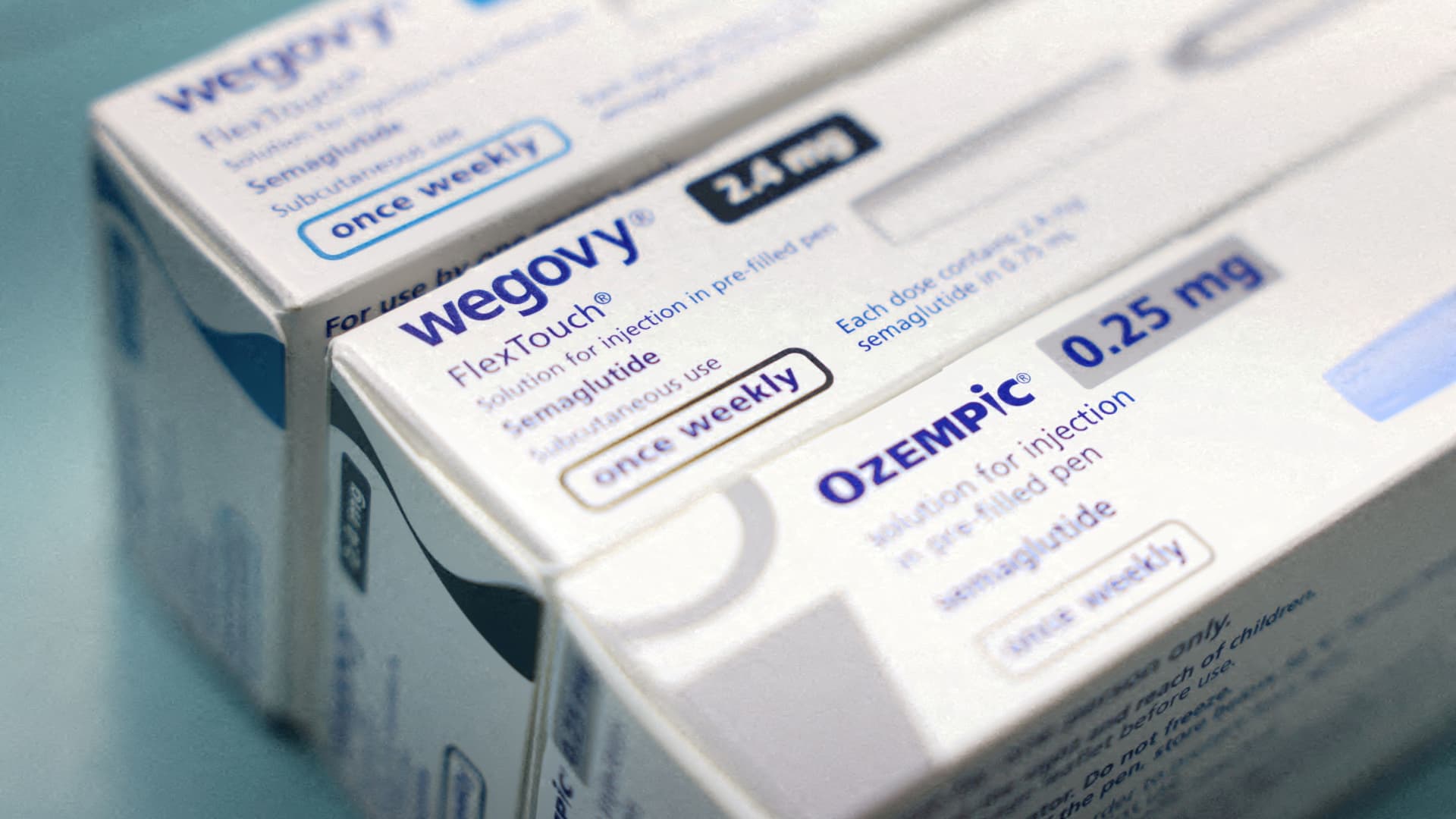
Boxes of Ozempic and Wegovy from Novo Nordisk can be seen in a pharmacy.

Hollie Adams | Reuters

A version of this article first appeared in CNBC’s Healthy Returns newsletter, which brings the latest health news straight to your inbox. Subscribe here to receive future editions.

GLP-1 is available virtually everywhere—about one in eight adults in the U.S. takes one.

However, stopping these medications may come at a cost.

That’s according to a new study from Washington University School of Medicine published Wednesday in BMJ Medicine.

The research found that even short gaps in treatment with a GLP-1 can increase the risk Heart attack, stroke and death in patients with type 2 diabetes, and the effects may not be completely reversible. Using electronic health records, researchers tracked more than 333,000 adults with diabetes over a three-year period, and the lion’s share of them had diabetes Novo Nordisk‘s diabetes injection Ozempic.

Here are the key data points:

  • In patients who received GLP-1 for three years, cardiovascular risk fell by 18%.
  • Stopping GLP-1 for just six months eliminated much of this protection and increased the risk by 4% compared to continued use.
  • A two-year break from treatment increased this risk to 22% compared to long-term use.

GLP-1 does “much, much more than just weight loss,” said study author Dr. Ziyad Al-Aly, an epidemiologist from WashU Medicine, in an interview. “They reduce all those back problems, lower cholesterol, lower blood pressure, reduce insulin resistance, reduce inflammation and provide real cardiovascular protection.”

“When people stop GLP-1, this cardiovascular protection ceases to exist, and also there is some asymmetry here,” he added. “It takes years to build cardiovascular protection and half as much to reverse it.”

Al-Aly called it a “metabolic whiplash” where any improvements “go in the wrong direction” once treatment ends.

The results are not a complete surprise.

GLP-1 are known for their cardiovascular benefits. In 2024, the Food and Drug Administration approved semaglutide, the active ingredient in Novo Nordisk’s Wegovy and Ozempic, to reduce the risk of major cardiovascular events in adults with existing heart disease and obesity.

But the new study provides some of the first large-scale evidence of what happens to patients’ hearts when they stop these medications, particularly in diabetics.

The research also underscores an ongoing problem — high dropout rates due to difficulty accessing them and side effects such as nausea and vomiting — that the health system has not yet fully addressed. According to several studies, discontinuation rates for GLP-1 range from 36 to 81%.

Al-Aly said providers and patients considering GLP-1 therapy should understand that patients need to stay on treatment “for the long term,” not just a few months or even years.

He also noted the need to address the root causes of abortion, such as proactively controlling side effects. The access problem is likely to improve in the US, especially as major players want Eli Lilly are continuing efforts to increase obesity drug coverage among employers, and the federal Medicare program is preparing to cover weight-loss treatments for the first time.

Maintaining treatment for patients “should not be an afterthought,” he said. “People need to realize that quitting comes at a cost.”

Drugmakers are also working to solve the discontinuation problem, with hopes of developing next-generation obesity and diabetes treatments that offer comparable effectiveness with fewer unwanted side effects.

Feel free to send tips, suggestions, story ideas and data to Annika at a new email address: annika.constantino@versantmedia.com.

Choose CNBC as your preferred source on Google and never miss a moment from the most trusted name in business news.

Categories
Entertainment

Duggar Household Tree, Josh Duggar Jail

Jessa Duggar (with Ben Seewald)

Jim Bob and Michelle’s fifth child, Jessa Duggarwas born on November 4, 1992.

Jessa met Ben through church and he began courting her in 2013 – the old-fashioned approach to romance was a completely new idea for many viewers. The kids never talked about their romance before the engagement, so Jim Bob explained to PEOPLE, “Courting means getting to know each other in a group setting, both families spending time together, and the couple setting goals together to decide whether to get married. When it comes to dating, a couple often goes it alone, and that sometimes leads to a more physical relationship.”

Ben asked for Jessa’s hand in marriage and then proposed to her in August 2014 – and sealed the deal by holding her hand for the first time. They married on November 1, 2014. Jessa was pregnant with her first child when 19 Kids and Counting was canceled and TLC subsequently aired a special on sexual abuse with Jill and Jessa to further educate viewers on the issue. The sisters would become the stars of their own show that winter, “Jill and Jessa: Counting On”; The show then evolved into Counting On, which also featured other Duggar siblings.

Meanwhile, Jessa and Ben welcomed their son Spurgeon on November 5, 2015, Sun Heinrich on February 6, 2017, daughter Ivy Jane on May 28, 2019 and daughter fern in July 2021. In February 2023, Jessa shared that she suffered a miscarriage during the 2022 holiday season. She gave birth to a son George in December 2023.

In August 2025, Jessa announced the birth of her son Edward.

Categories
Sport

Pushed from Anfield, Liverpool discovered the starvation they’d been lacking

Multiple authors

LIVERPOOL, England – It was less than two minutes at Anfield when Galatasaray’s Lucas Torreira found himself surrounded by three Liverpool players deep in his own half. By the four-minute mark, goalkeeper Ugurcan Çakir was pressured into denying a free kick straight out of play. After five minutes, the fans were on their feet and applauded Florian Wirtz for winning the throw-in near the halfway line.

Every moment seemed to be a sign of intent on Arne Slot’s part; a warning shot was fired to prepare their opponents for the difficult task ahead. As the Galatasaray players trudged through the tunnel during the final break – having lost the UEFA Champions League round of 16 4-0 that evening and 4-1 on aggregate – it looked as if they had got the message.

Meanwhile, those dressed in red enjoyed the applause of their enthusiastic audience. Captain Virgil van Dijk pumped his fist towards the Kop while Alisson Becker beamed as he hugged head coach Slot. The scenes were in stark contrast to the aftermath of Sunday’s dull 1-1 draw with Tottenham Hotspur, after which Slot and his players were booed off the pitch after conceding another costly late goal. Just three days after that sobering low point, this felt like a momentous night.

– Barça overwhelm Newcastle but poor defense could be their undoing
– The Champions League’s biggest comebacks: Barcelona, ​​Liverpool and more
– Report: Salah’s game-winning goal helps Liverpool reach UCL quarter-finals

By dismantling the Turkish Super Lig champions, Slot’s team secured the club’s place in the quarter-finals of the Champions League for the first time since the 2021/22 season, when Jürgen Klopp’s side narrowly lost to Real Madrid in the final.

More importantly, this was the night Anfield found its own voice and in doing so helped Liverpool find itself. In a season that largely oscillated between mediocrity and misery, no stone was left unturned to find out exactly what went wrong for the reigning Premier League champions.

The details of each tactical tweak were forensically analyzed, with changes in formation, personnel and even head coach suggested as possible solutions to address the Reds’ malaise. And yet on Wednesday evening it became clear that Liverpool are at their best when the shackles fall.

No matter who is in the dugout, Liverpool are at their most compelling when they are at their jugular and working in unison.

In Anfield’s eyes, there is no substitute for hard work, honest effort and the feeling that the collective is greater than the sum of its parts. Against Galatasaray, the synergy between the players on the pitch and those in the stands ensured that all of these goals were achieved with vigor.

Liverpool’s task ahead of the second leg was admittedly not as daunting as that faced by Chelsea, Manchester City and Tottenham, all of whom had to come from three goals down to reach the UCL last eight. Still, the Reds’ poor performance in the first leg in Istanbul last week, coupled with the apathy that reigned after Sunday’s Premier League setback, meant confidence was a precious commodity on Merseyside.

In Wednesday’s 4-0 debacle against Galatasaray, Liverpool looked like last season’s title-winning team. Liverpool FC via Getty Images

But after UEFA banned Galatasaray fans from entering for their misconduct during the playoffs against Juventus last month, the Anfield crowd relished the chance to take center stage.

And it was fitting that it was Dominik Szoboszlai, who implored fans to remain loyal to their team at the weekend, who gave Liverpool the lead within 25 minutes with a superb shot from the edge of the box. The goal – the product of a well-worked set piece – brings the Hungarian international to up to nine goals in the Champions League this season (five goals, four assists).

The only midfielder with more appearances in a single season in the competition for Liverpool is Steven Gerrard in the 2007/08 season (10 – six goals, four assists). Szoboszlai gave the hosts a chance to take the lead when he won a penalty just before half-time, but Mohamed Salah’s tame shot was confidently parried by Cakir.

Having faced so much adversity this season, it would have been easy for Liverpool to collapse before another stumbling block. But cheered on by a defiant home crowd, Slot’s team took to the pitch in the second half with renewed conviction.

Everything from ESPN. Everything in one place.

Watch your favorite events on the newly improved ESPN app. Learn more about which plan is right for you. Register now

Salah was central to their exuberant performance, playing past Hugo Ekitike to score Liverpool’s second goal and later rounding off the scoring with a sublime curling effort that made him the first African player to score 50 goals in the Champions League. Ryan Gravenberch – who had just signed a new contract at Anfield – had been there to force the third goal.

In truth, Liverpool could – and perhaps should – have had more. They finished the evening with an xG of 5.6 and recorded 16 shots on goal. The last time they had more shots on goal in a game was against Watford in November 2016 (17 shots on goal in a 6-1 win).

Liverpool’s reward for such a fine performance is a meeting with defending champions Paris Saint-Germain in the quarter-finals next month. In some circles, Luis Enrique’s side’s exit in the round of 16 last season is seen as the start of the Reds’ downturn in form. Slot hopes a showdown with the French champions this season will have the opposite effect.

“PSG have shown this season that they have not given in once and we showed tonight that we can still reach the level at which we played for large parts of last season,” the Dutchman said in his post-match press conference. “It gives us a lot of confidence that we can show this performance, but it is not the first one this season, especially in Europe. We have to try to find the consistency, although I can already disappoint people because it is hardly possible to copy this performance again. 5.0xG on a Champions League night, 0.18xG conceded, that will not be easy to copy.”

Of course, Slot is right when he urges caution. This season has been full of misjudgments for Liverpool and PSG will pose a much tougher challenge than Galatasaray.

But if they are able to play with the same commitment and intensity as Wednesday, Slot’s side will at least give themselves a chance of success. Liverpool’s recent win seemed to remind everyone associated with the club who they are.

Anfield must not let them be forgotten in the future either.