

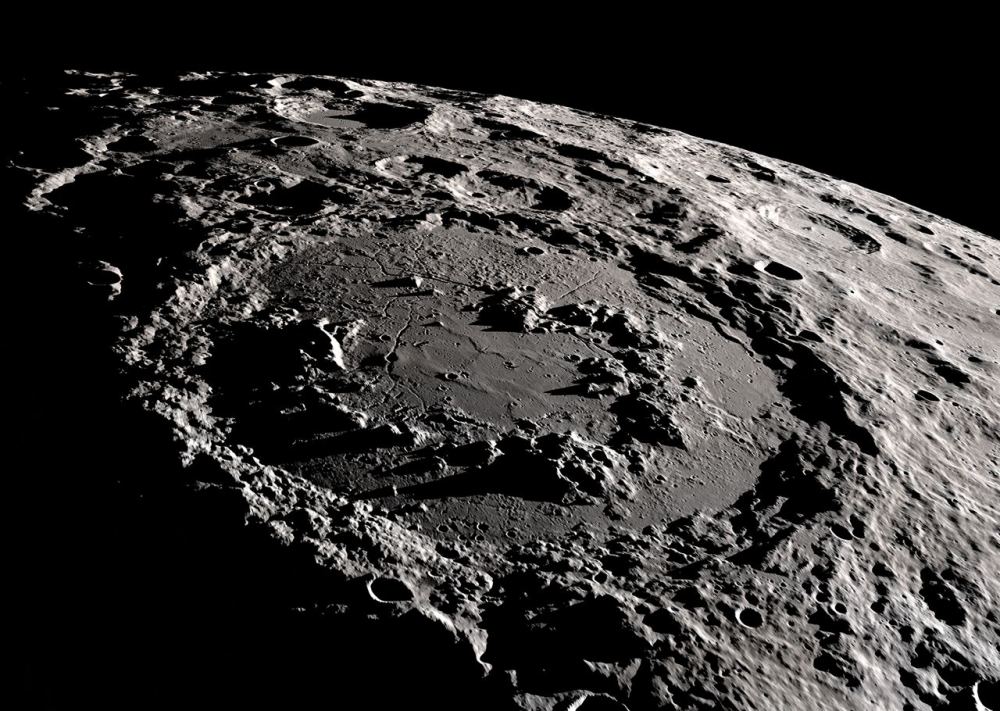
Our moon has been shrinking since it was formed about 4.5 billion years ago by a collision with the young Earth. This shrinkage, along with a constant rain of micrometeorites, is causing seismic activity on the moon. NASA plans to send two instruments to the moon to measure moonquakes. These twin seismometers will use technology first used on Mars by the InSight lander to measure more than a thousand marsquakes.
The seismometers are part of the Farside Seismic Suite (FSS). They will be transported to the Schrödinger Basin at the south pole of the Moon. This is the first instrument package of its kind, and was used for a short time since the Apollo program's seismic payload in 1971. This program transmitted the first lunar quake measurements. Subsequent Apollo missions deployed additional seismic instruments, which transmitted lunar data until the end of 1977.
JPL engineers and technicians are preparing NASA's Farside Seismic Suite for tests in simulated lunar gravity, which is about one-sixth that of Earth. The seismometers in the payload will collect the agency's first seismic data from moonquakes in nearly 50 years. Image credit: NASA/JPL-Caltech
The FSS will send back the first such measurements from the far side of the Moon since the Apollo days. Its two seismometers will record a “buzz” of background seismic vibrations emanating from micrometeorites hitting the surface. In addition, they will record moonquakes and send back data on their intensity and location.
What do moonquakes tell us?
Earthquakes provide a lot of information about more than just their location and intensity. The way seismic waves travel through the Moon's structure should provide insight into the density of its various parts. In addition, they help scientists understand the Moon's “shrinkage.”
On Earth, seismic waves move differently in liquid and solid layers. On the Moon, the Apollo 11 seismic experiment gave planetary researchers their first “look” into the interior of the Moon. For each moonquake, the instrument recorded the strength, duration and presumed direction of the event.
Apollo 15's Lunar Surface Experiments Package (ALSEP). It carried a number of scientific instruments, including a seismic experiment to detect moonquakes. Image courtesy of NASA.
Interestingly, this and other experiments have not found much seismic activity on the far side of the moon. Something inside the moon plays a role in absorbing the waves from earthquakes on the far side. Scientists want to know what structure this is and what properties prevent the transmission of earthquake waves. Of course, not as many quakes occur on the far side. Interestingly, the surface of the far side is very different from that of the far side. Do these two things have anything to do with each other? “FSS will provide answers to questions we've been asking about the moon for decades,” said Mark Panning, the FSS principal investigator at JPL and project scientist for InSight. “We can't wait to get this data.”
From Marsquakes to Moonquakes
In late 2018, the Mars InSight lander landed on the surface of the Red Planet. Its mission was to study the interior of Mars. Essentially, it used the Seismic Experiment for Interior Structure (SEIS) to feel the planet's pulse and measure its internal movements. It measured the strength, duration and direction of marsquakes. It also recorded tiny mini-quakes caused by meteorite impacts. Along with a number of other instruments measuring wind, temperature and magnetic field fluctuations, SEIS was able to detect vibrations from storms and other atmospheric phenomena.
Engineers at NASA's Jet Propulsion Laboratory adapted InSight's seismometer technology for the FSS suite, but there were some key differences. For one, gravity on the Moon is much lower than on Mars, so they had to adjust the seismic suite's performance accordingly. Additionally, temperatures on the Moon are much colder, and of course there is no atmosphere to measure.
The FSS suite includes the Broadband Seismometer, which is sensitive enough to detect ground motions smaller than a hydrogen atom. The other seismometer is called the Short Period Sensor, which measures ground motion in three directions using tiny sensors etched onto chips.
The scientific objectives of the FSS
This payload, its power sources and its thermal controls are expected to operate for a long time, measuring earthquakes and background noise in the lunar structure. Although scientists know quite a lot about the interior of the Moon, the FSS's sensitive instruments should help them understand its structure in more detail. The Moon is a differentiated body, meaning it has layers beneath its crust.
The Apollo mission's instruments measured the thickness of the moon's crust, and the GRAIL mission provided more detailed data. The FSS measurements were designed to determine the thickness of the next layer – the deep mantle. This would be determined from data logs and measurements of deep moonquakes. The FSS landing site in Schrödinger Crater is an excellent place for earthquake measurements. It is an impact basin filled by rock melted in an impact about 3.8 billion years ago. There is ample evidence of other volcanic activity in the region, including vents and subsequent lava flows.
The inner cube of the Farside Seismic Suite, seen here during assembly in November 2023, houses the large NASA payload battery (rear) and its two seismometers. The gold, puck-shaped device contains the short-period sensor, while the silver case contains the broadband seismometer. These devices will detect moonquakes on the far side of the Moon. Image credit: NASA/JPL-Caltech
The FSS seismometer package is scheduled for launch in 2025, with landing planned for 2026. It is part of a NASA initiative to collaborate with companies to deliver lunar science and technology packages during the Artemis mission. Artemis astronauts will deploy a seismic network with distributed acoustic sensing capability to further study the interior of the moon.
For more informations
NASA measures moonquakes with the help of the InSight Mars mission
Apollo 11 seismic experiment
InSight Lander
Like this:
Is loading…

Comments are closed.