By David Wojick
The government of Maine has really big plans for floating wind turbines, a floating net-zero fantasy to be exact. Since floating wind is the next big green trend, it's worth taking a closer look at this ruinous vision.
Floating wind turbines are a fad, not an established technology. They have yet to be built on a large scale or tested in a hurricane. The world's largest grid-connected system is a tiny 50 MW system and has just been connected to the grid off Scotland.
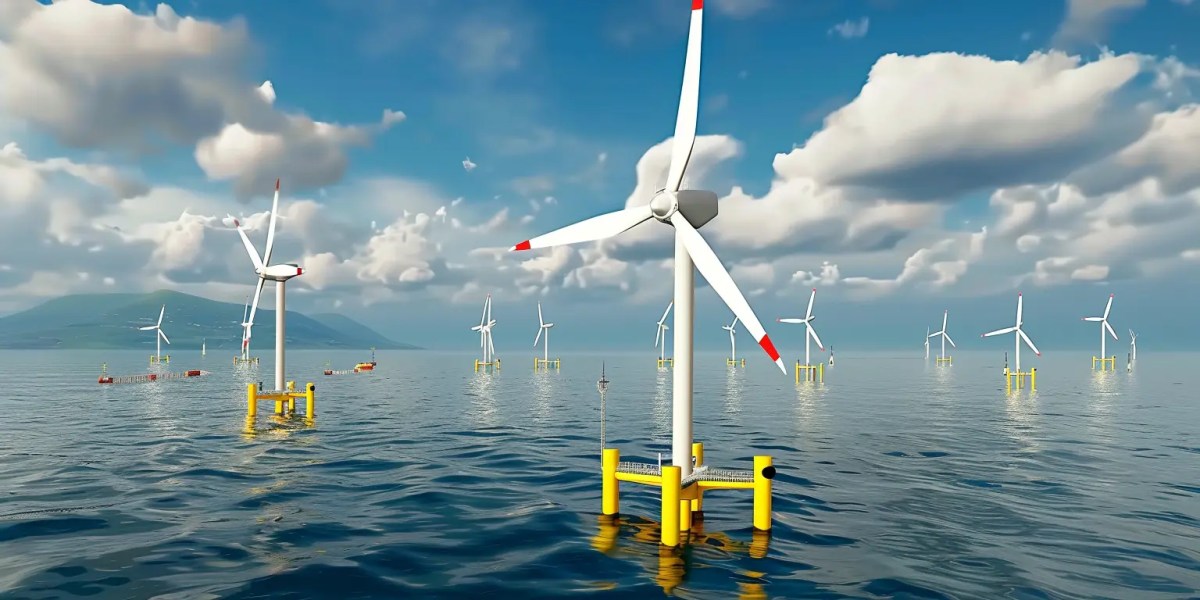
The cost of floating wind turbines is inevitably much higher than stationary wind turbines. A stationary wind tower sits on a simple monopile, while a floating tower sits on a huge, complex structure called a floater. We're talking massive 500-foot towers with 500-ton turbines on top and 300-foot rotor blades catching the wind.
The buoyancy device has to be large enough to prevent this huge tower from falling over. It has to be even larger to contain enough air to float. It also has to be anchored to the seabed in a way that requires many different mooring lines.
The small floating generator systems cost about three times the cost of fixed wind turbines per MW, but the large and hurricane-proof generators could cost even more. Over a hundred designs have been proposed, showing how immature floating wind technology is.
This brings us to Maine's floating green dream, a costly nightmare for its people. Maine is a small state in terms of electricity consumption, with an average power generation of just about 1,500 MW. But in an act of madness, they passed a law saying they will buy 3,000 MW of floating wind power. Fixed wind power is not an option because the Gulf of Maine is too deep.
How do they justify buying so many floating wind turbines? Simple: It's a net-zero fantasy. They have a 115-page “Maine Offshore Wind Roadmap” that explains it.
First, they shut down all existing combustion generators, which burn primarily gas or wood. Maine is 90% forest, so there's a lot of wood. Then they electrified all other forms of combustion. For example, 60% of homes are heated with heating oil, so they switched to heat pumps or something else that works in really cold weather. Of course, all cars and trucks are electric.
The projected cost of the 3,000 MW of floating wind turbines is enormous. If I estimate the reported figure to be three times that of the fixed wind turbines, I arrive at a rough estimate of $50 billion for construction and an equal amount for financing and profit, for a total cost of around $100 billion. It could be much more once large-scale and hurricane-proof technologies are developed, if that ever happens.
Apparently the astronomical costs do not play a role, because they are never mentioned. Neither in the law, nor in the roadmap, nor in various accompanying technical documents. Although jobs are often mentioned, they are part of the costs. But then there are the much higher costs of the energy transition, without which wind energy simply cannot be used.
It's clear that the floating wind turbine development may never come to fruition, which brings us back to the present day where things really get crazy. The state of Maine has begun construction on a massive new port specifically for this floating wind power fantasy. I'm not making this up.
With constant wind power, the onshore plant is merely a shunting yard where the individual parts are stored until they are transported by ship to the sea for assembly. There are only four major parts: monopile, tower, turbine and rotor blade set.
Floating wind turbines are completely different, as the huge floating structure is built in the harbor. The tower, turbines and rotor blades are also mounted on the floating structure there. The entire assembly is then towed to the site and anchored to the seabed with eight or more mooring lines.
So it's a highly specialised shipyard, a floater factory, not a port. It requires one or more dry docks in which to build the huge floaters, as well as lots of specialist equipment, particularly cranes. Reports say steel floats for a 15 MW turbine could typically weigh 3500 to 4500 tonnes, while concrete floats would weigh between 17,000 and 22,000 tonnes.
The final configuration is completely unknown until the design of the float is completed. Also, keep in mind that this shipyard may only be in operation for the few years needed to build 3,000 MW of floating wind generators.
The current estimated cost for this yard/port is just under a billion dollars, but could easily be higher depending on the complexity of the design. The cost of a unique new system usually increases significantly once construction is actually completed.
Starting this multi-billion dollar port project now is just stupid. It is very likely that the required energy transition will not happen. Electricity will be very expensive, perhaps four to five times as much as it is today. And we have no idea what the technology will look like, assuming it can work in the stormy waters off Maine.
The people of Maine are unlikely to accept these onerous conditions, nor should they. This whole crazy project needs to be reconsidered.
4.5
10
Voices
Article rating
Like this:
Is loading…
