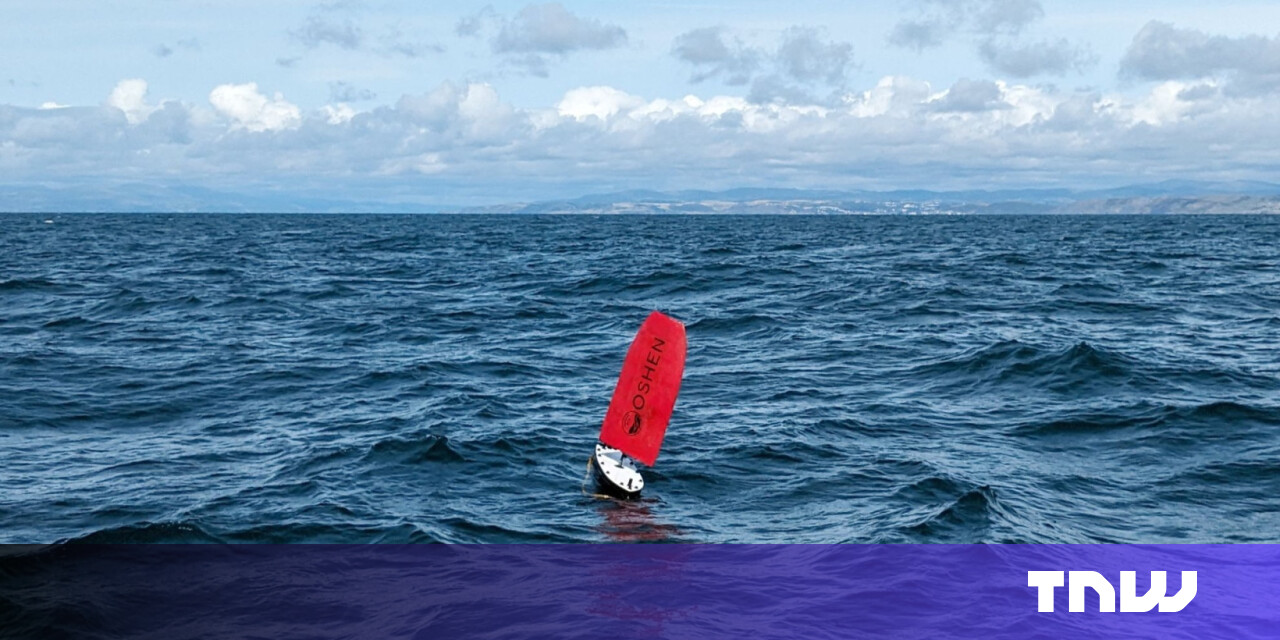
Amar Shar, co-founder of British AI unicorn Wayvehas backed Oshen, an up-and-coming startup that builds miniature autonomous sailboats. The tiny robots could change the way scientists monitor everything from ocean temperatures and waves to biodiversity.
The Plymouth, UK-based startup was founded last year by Anahita Laverack and Ciaran Dowds, two young engineering graduates from Imperial College London.
The startup is building small solar-powered “marine satellites” that sail through the oceans and collect data. The small robots could make data collection over the sea more accessible than ever before.
“We want to do for the oceans what small satellites have done for space: revolutionize access by providing a reliable, low-cost platform that everyone can use – from scientific researchers to clean energy providers to weather forecasters,” said Laverack.
Oshen founders Anahita Laverack (left) and Ciaran Dowds. Earlier this year, the startup won the National Award for Innovation from Innovate UK, the country's leading innovation agency. Image credit: Oshen/UKRI 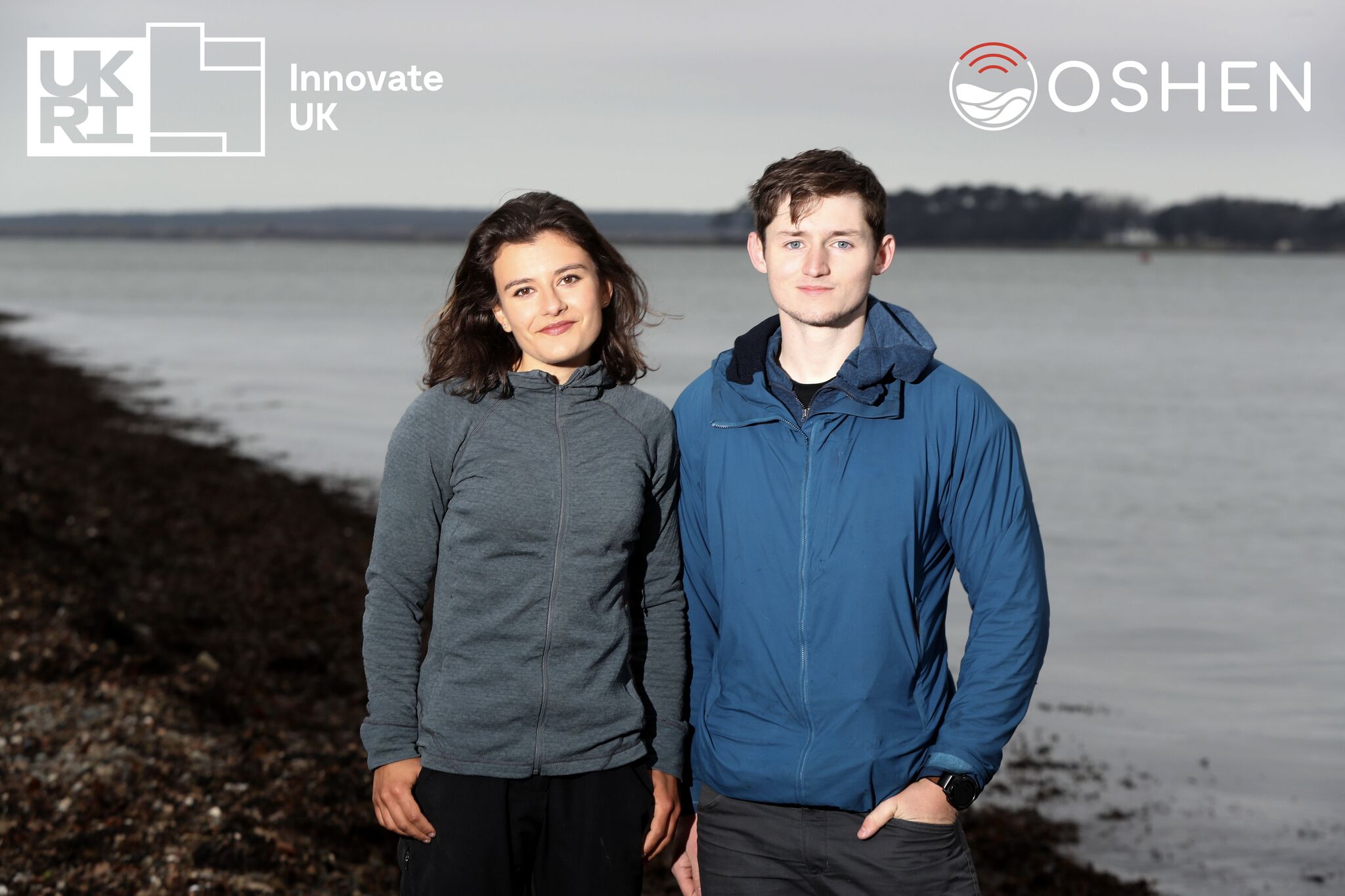
TNW Conference 2025 – Back to NDSM on June 19-20, 2025 – Save the date!
Having concluded our incredible 2024 edition, we are delighted to announce our return to Amsterdam NDSM in 2025. Register now!
Currently, scientists typically collect data about the world's oceans by attaching sensors to floating buoys, but these devices must be deployed manually and tend to drift around, making precise measurements difficult.
“Research at sea is prohibitively expensive,” says Laverack. “As a result, biodiversity surveys are short and rare, and weather data at sea are patchy.”
Autonomous sailing ships offer a solution. According to Oshen, however, the ships that are already on the market are “typically custom designs that are much larger than our technology and have much higher energy consumption.”
Democratization of marine research
Oshen builds its small boats from off-the-shelf components to keep costs low and reliability high. The fully autonomous, 1-meter-long, 25-kg boats can be deployed from any location, including a beach or jetty, eliminating the need for costly trips out to sea.
The small probes use wind and solar power for navigation, while onboard batteries provide backup power. In a recent test, one of the sea-based satellites managed to sail 100km through the waters off the British coast. However, developers ultimately intend to run the bots for months or even years at a time.
Oshen has developed its own autonomous software to help the drones navigate. This aspect of the technology caught the attention of Amar Shah, an expert in machine learning and autonomous systems.
“As we move into an AI-dominated world, machine learning models and hardware will become commodities,” Shah said. “Conversely, novel and precise data collection will be an attractive field for startups to build competitive business moats, especially in areas where 'Big Tech' does not venture.”
“Oshen’s vision for ocean and weather data is essentially this.”
Shah's private investment, the amount of which was not disclosed, will help Oshen get to market, the startup said. The company is currently refining its design at its new headquarters in Plymouth. It says it is in talks with energy and weather data providers in the UK and US.
Oshen is not the only one using technology to protect our oceans. As the world’s oceans are increasingly threatened by climate change, overfishing and pollution, startups are developing clever ways to protect them – from Underwater satellites to 3D-printed reefs.
