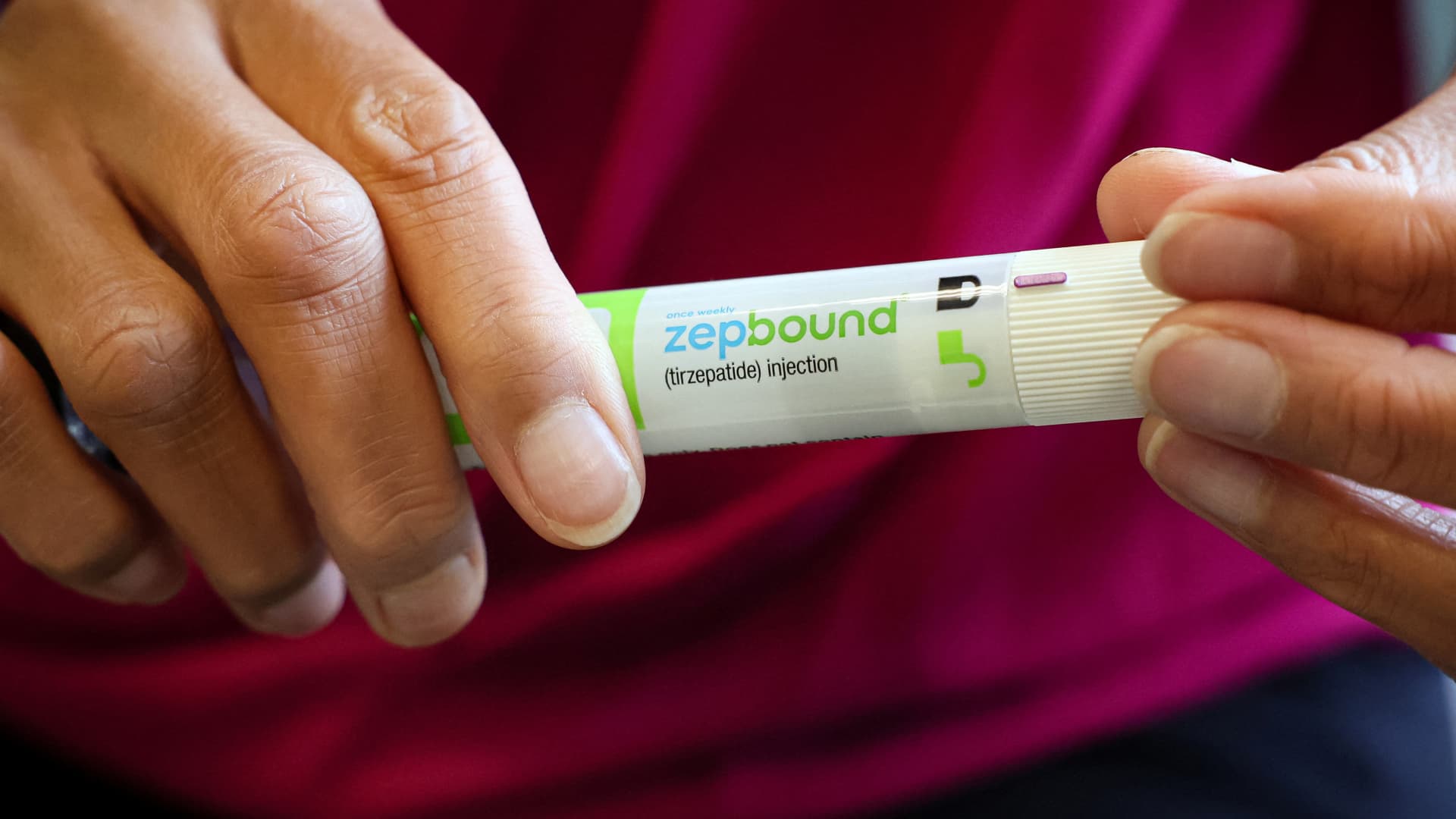
An injection pen of Zepbound, Eli Lilly's weight loss drug, is displayed in New York City on December 11, 2023.
Brendan McDermid | Reuters
Do you think a friend or colleague should receive this newsletter? Share this link with them so they can subscribe.
Good morning! Eli Lilly, Novo Nordisk and other pharmaceutical companies presented encouraging data on weight-loss and diabetes drugs last week.
The companies presented their findings at the American Diabetes Association's annual meeting in Orlando, Florida, the world's largest scientific conference focusing on diabetes research, prevention and treatment.
The drug developments come against the backdrop of growing investor interest in the treatment of metabolic diseases and in particular in a much-discussed class of drugs called GLP-1
But drug companies have presented treatments that use different approaches than traditional GLP-1 drugs, such as Novo Nordisk's popular weight-loss injectable Wegovy and its diabetes counterpart Ozempic. The two drugs mimic a hormone produced in the gut that suppresses a person's appetite.
Companies are also no longer focusing their trials solely on weight loss. Some pharmaceutical companies are studying whether their drugs can be used to treat other diseases, while others are studying whether a drug can preserve patients' muscle mass while promoting weight loss.
Here are some of the highlights of the conference:
- Eli Lilly has released additional data from two late-stage clinical trials showing that its weight-loss injection Zepbound helped resolve a common sleep disorder called obstructive sleep apnea in nearly half of patients. The company said Zepbound could receive expanded U.S. approval for that use as early as the end of the year.
- Novo Nordisk presented results from key clinical trials of semaglutide, the active ingredient in Wegovy and Ozempic, in diabetes, obesity and chronic kidney disease. These include full results from a late-stage study of Ozempic in patients with diabetes and chronic kidney disease. The weekly injection significantly reduced the risk of kidney disease progression and death from kidney or cardiovascular complications in patients. New data also showed that these benefits are consistent regardless of whether patients are also treated with a class of diabetes drugs called sodium-glucose cotransporter-2 inhibitors. Novo Nordisk expects U.S. regulators to make a decision on expanded approval for this use in January 2025.
- Zealand Pharma presented positive results from an early-stage clinical trial of its experimental weekly injection petrelintide, which targets the amylin hormone. The drug resulted in 8.6% weight loss after 16 weeks, compared to 1.7% in patients taking a placebo. The Danish company sees the drug as an alternative to GLP-1 for weight loss.
- Altimmun has released full data from a mid-stage clinical trial of its experimental obesity drug pemvidutide. The treatment preserved muscle mass while promoting weight loss in adults with obesity, with most of the reduction coming from fat. A subgroup analysis of 50 patients found that only 21.9% of their weight loss was due to muscle mass.
- Viking Therapeutics has presented preclinical data on a “series” of experimental drugs called dual amylin and calcitonin receptor agonists, or DACRAs. The results show that the company's DACRAs reduced the amount of food rats consumed in the first three days after a single dose. Three days after the dose was administered, the rats' body weight was up to 8% lower than that of rats given Novo Nordisk's experimental weight-loss drug CagriSema.
- Gilead presented data from a preclinical study of its experimental oral GLP-1 called GS-4571. The study found that the treatment improved glucose tolerance in mice and led to a 5 to 6 percent weight loss within five days, according to a Sunday note from Jefferies analysts. The note, which referenced a poster at the conference, added that obese monkeys lost 8 percent of their weight after 30 days.
Feel free to send tips, suggestions, story ideas and data to Annika at annikakim.constantino@nbcuni.com.
Latest technology in healthcare
Oracle Announces General Availability of AI Documentation Assistant for Physicians
Oracle headquarters in Austin, Texas, on April 24, 2024.
Brandon Bell |
oracle on Monday expanded access to its artificial intelligence-based tool called Oracle Clinical Digital Assistant, which is designed to save doctors time by automating some of their documentation.
Administrative tasks like paperwork are often a burden for healthcare workers. According to a survey conducted by Athenahealth in February, nearly 65% of physicians believe they are a leading cause of burnout. Doctors spend an average of 15 hours a week outside of their normal work hours managing the workload, the survey found.
For example, Dr. Ryan McFarland, a primary care physician at Hudson Physicians in Wisconsin, sees an average of 25 patients a day. After each appointment, he must prepare a chart detailing what happened and what needs to be followed up. He says that means “several hours” of documentation per day.
“This is just documentation, not responding to lab results, patient questions or messages,” he said in an interview with CNBC. “It can be very tedious to take notes and documentation on top of the actual patient care.”
Oracle said Oracle's Clinical Digital Assistant can help reduce this administrative burden. Doctors can access the tool through an app on their phone and record their visits with patients at the touch of a button. Once they stop recording, Oracle's AI automatically creates a clinical note based on the appointment, allowing doctors You no longer have to write it yourself.
Only authorized representatives of the healthcare organizations have access to the records, Oracle said.
The assistant works with Oracle's electronic medical record, so doctors can also verbally ask it to pull up information about a patient's medical history, such as the latest blood test results, the company said. In other words, doctors have to spend less time searching through records for the relevant information they need.
Oracle has tested the tool with 13 healthcare organizations, including Hudson Physicians. Oracle said its assistant saved doctors an average of four and a half minutes per patient, as well as 20 to 40 percent of their daily documentation time. As of Monday, the tool is generally available in outpatient clinics or clinics that are not affiliated with hospitals.
“This is going to be a practice requirement in our business going forward,” McFarland said. “The accuracy of the notes is much better, you notice things you would otherwise have forgotten to document. It saves a lot of time.”
McFarland said he has worked with other dictation tools in the past, but the software frequently made errors and had problems with rapid speech. He has also worked with human scribes who are more accurate, but he said they can be time-consuming to train and difficult to employ. Oracle's assistant performs the same as a human scribe, McFarland said.
“I think from a grade generation standpoint, it's 90 to 100 percent where it needs to be,” he said.
McFarland said the tool handles complex medical terminology well and can even understand abbreviations. He said there is still room for improvement in some specialty-specific treatments, as well as other features, such as how the assistant can help with ordering imaging procedures and sending referrals and reminders to return to the clinic.
Some doctors at Hudson Physicians care more about the style of their notes than others, so some doctors still spend time editing, according to McFarland. Even so, the clinic has seen a 100% adoption rate for Oracle's assistant, something McFarland says it has never seen before.
“It has changed everything for us and we will continue to use it,” he said.
Feel free to send tips, suggestions, story ideas and data to Ashley at ashley.capoot@nbcuni.com.
