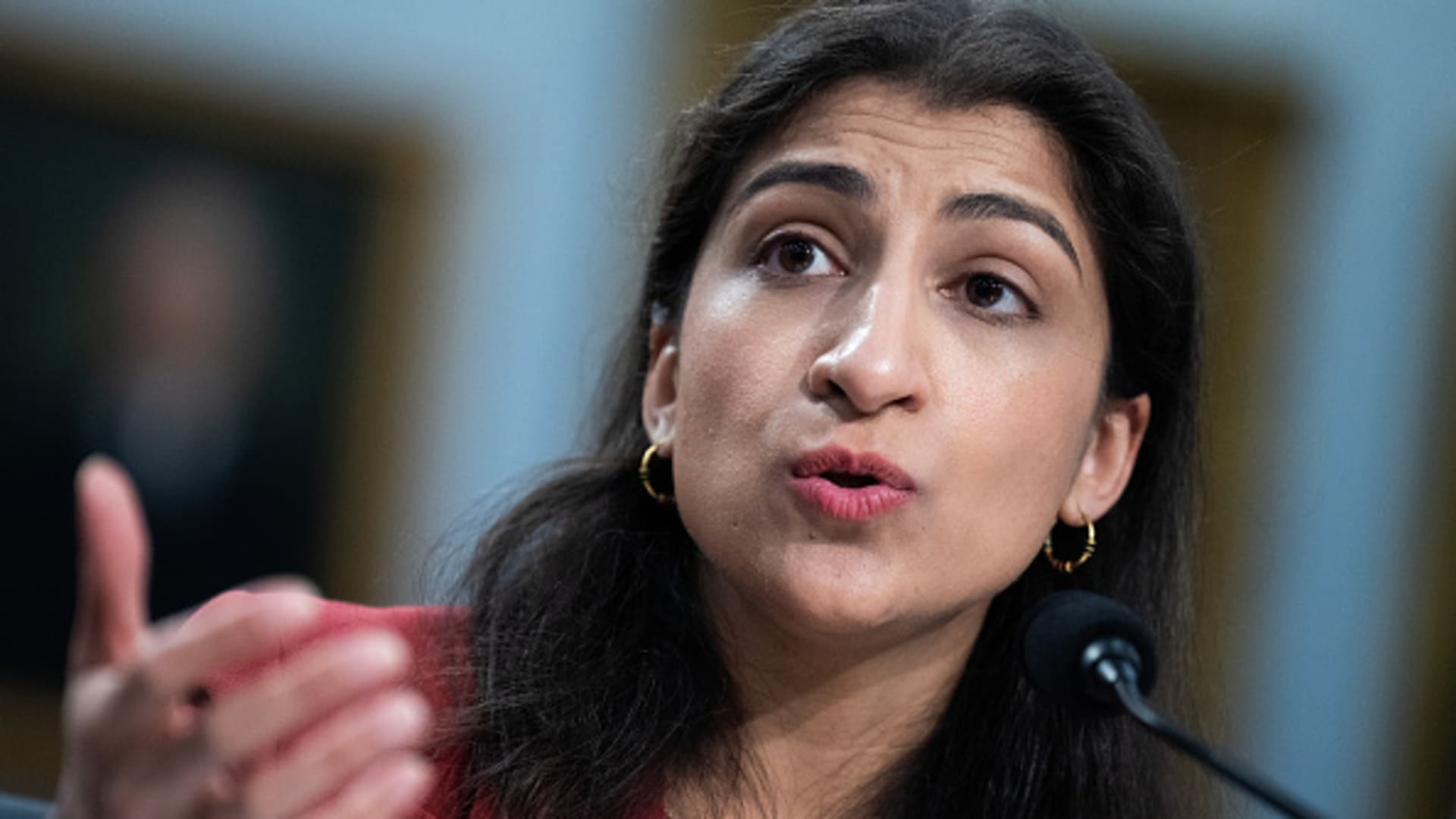
Federal Trade Commission Chairwoman Lina Khan testifies during a hearing of the House Budget Committee's Subcommittee on Financial Services and General Administration on May 15, 2024.
Tom Williams | CQ Roll Call, Inc. | Getty Images
The Federal Trade Commission (FTC) plans to sue three major U.S. health care companies over their practices as middlemen in negotiating prices for drugs such as insulin, arguing they drive up costs for patients, a person familiar with the matter told CNBC on Wednesday.
The lawsuits are expected to be directed against the three largest so-called pharmacy benefit managers, UnitedHealth Group's Optum Rx, CVS Health's Caremark and Cigna's Express Scripts, the person said, confirming an earlier Wall Street Journal report on Wednesday about the agency's plans. All three are owned by or affiliated with health insurers.
The lawsuits will focus specifically on business practices related to the rebates that pharmacy benefit managers (PBMs) broker to drugmakers, the Journal reported, citing people familiar with the matter.
A CVS Caremark spokesman said in a statement Wednesday that the company is “proud of the work we have done to make insulin more affordable for all Americans with diabetes, and we stand by our track record of protecting American businesses, unions and patients from rising prescription drug prices.”
A customer visits a CVS pharmacy in Miami on February 7, 2024.
Joe Raedle |
An Express Scripts spokesperson said “prices for insulin and other drugs are set by manufacturers, who have repeatedly raised list prices.” The spokesperson said Express Scripts is working to “combat the pharmaceutical industry's high prices and lower the cost of thousands of drugs for patients and their health insurers, and the data shows we are succeeding.”
A spokesperson for Optum Rx did not immediately respond to a request for comment.
The FTC declined to comment on the reported complaints.
PBMs are the heart of the drug supply chain in the United States. They negotiate rebates with drug manufacturers on behalf of insurers, large employers, and others. They also create drug lists (or drug schedules) that are covered by insurance and reimburse pharmacies for prescriptions.
The FTC has been investigating PBMs since 2022. The insulin pricing investigation also includes drugmakers, but it is unclear whether they will be named in the upcoming lawsuits, Politico reported, citing people familiar with the matter. Eli LillyFrench pharmaceutical manufacturer Sanofi and Danish pharmaceutical company Novo Nordisk control about 90% of the US insulin market.
Pharmacist Thomas Jensen looks at a prescription medication at Rock Canyon Pharmacy in Provo, Utah, May 9, 2019.
George Frey | Reuters
The FTC released a scathing interim report on Tuesday in its ongoing investigation into PBMs. The report accused the three largest PBMs of manipulating the drug supply chain to enrich themselves at the expense of smaller, independent pharmacies and U.S. patients.
Six of the largest PBMs handled nearly 95 percent of all prescriptions filled in the United States, the FTC report said.
PBMs claim that manufacturers are responsible for high drug prices, while drug companies say that rebates and fees collected by middlemen force them to raise the list prices of their products.
The Biden administration and Congress have increased pressure on PBMs to make their operations more transparent as many Americans struggle to afford prescription drugs. On average, Americans pay two to three times more for prescription drugs than patients in other developed countries, according to a White House fact sheet.
President Joe Biden's inflation-fighting bill capped insulin prices at $35 per month for Medicare beneficiaries. This rule does not currently apply to patients with private health insurance.
