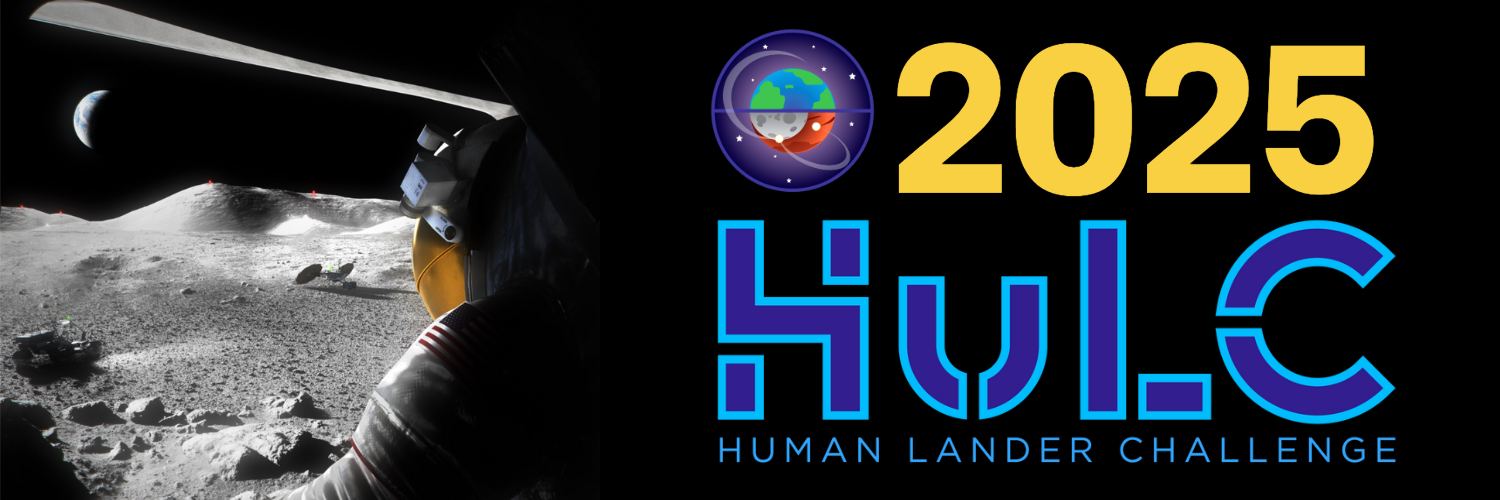
One of NASA's core goals, while not explicitly stated in its charter, is to educate Americans, especially students, about space exploration. As part of this mission, NASA hosts a series of competitions each year in which teams of students compete against each other and come up with innovative ideas to solve problems. The agency recently announced the next round of one of its standard annual competitions – the Human Lander Challenge.
The Human Lander Challenge takes place every year, and the goals vary depending on the specific problem NASA wants to solve related to manned landers. This year, the focus is on cryogenic liquid storage.
Currently, there is no technology to store cryogenic liquids in space for long periods of time, but any landing mission would need to store cryogenic fuel for months. Normally, cryogenics would evaporate in that time, but to supply fuel to landers or orbital stations, large quantities are needed. Particular problems could focus on low-leakage components, large-area insulation, or fuel transfer technologies.
Recruitment video for the Human Lander Challenge.
Source: Human Lander Challenge YouTube channel
To solve this problem, NASA is turning to teams of undergraduate and graduate students from some of the world's best universities. Because this competition is repeated every year, some universities already have experience competing in and winning the challenge. This year, the top three teams came from the University of Michigan, the University of Illinois-Urbana Champaign, and the University of Colorado-Boulder, all of which are potential participating teams this year.
Interested teams will compete in two rounds. The first round of evaluation will take place in March 2025, and twelve teams will be notified of their invitation to the final round in April. The final round will take place at a forum in Huntsville, Alabama, in late June next year.
Until then, however, teams can submit a letter of intent, have their questions answered by NASA experts, and submit a proposal. Finalists will receive a cash prize to continue their work, including a full technical paper and slide presentation to be presented at the forum.
Fraser discusses the options for the future Artemis lander.
Details of the challenge can be found on the website. It is run by the agency's Human Landing System Program Directorate and managed by the National Institute of Aerospace. If you're looking for inspiration, the challenge team has also posted a motivational video about the opportunities the challenge offers.
Any technology to be subjected to detailed evaluation would need to be about 3-5 years to maturity, which would align well with the Artemis mission schedule. However, it remains to be seen whether any solutions will be incorporated into the mission architecture. If so, some students will say they participated in the most challenging human space mission in nearly 60 years – that's a pretty good resume template, to say the least.
Learn more:
NASA – 2025 Human Lander Challenge
NASA – NASA announces winners of first Human Lander Challenge
UT – NASA wants heavy-duty landing gear for the moon
UT – NASA postpones its moon landings to 2026
Cover image:
Graphic of the Human Lander Challenge.
Photo credit: NASA/NIA
Like this:
Load…
