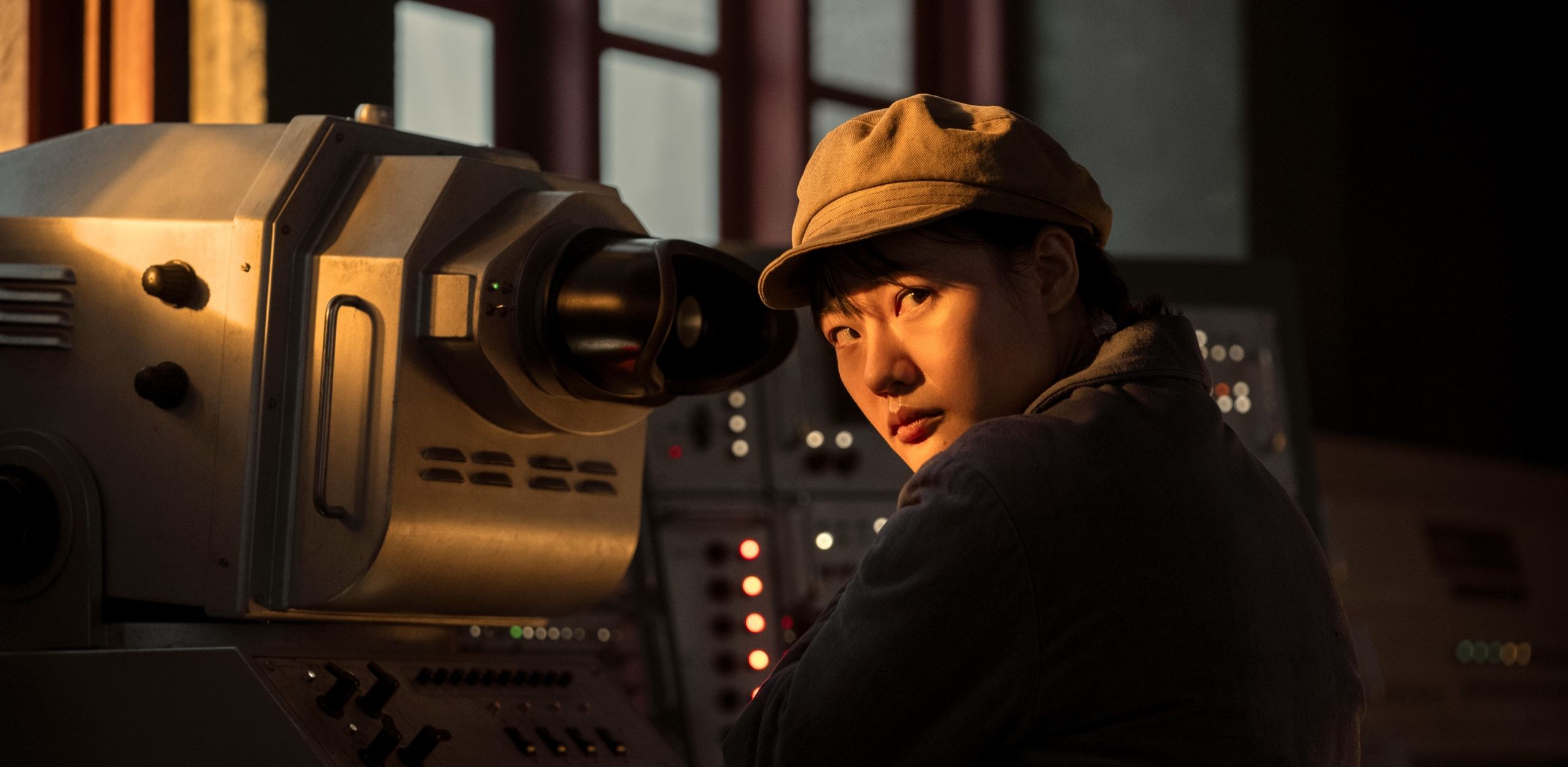
You may have heard of the popular Netflix show and the science fiction novel it is based on by Chinese science fiction author Liu Cixin. The story assumes a star system in which three stars orbit each other, causing periodic destruction on a planet orbiting one of them. As Isaac Newton described in his Philosophiæ Naturalis Principia Mathematica, the interaction of two massive bodies is easy to predict and calculate. However, the interaction of three bodies causes things to become unpredictable (even chaotic) over time.
This problem has always fascinated scientists and remains one of the most famous unsolved mysteries in mathematics and theoretical physics. The theory states that the interaction between three gravitationally bound objects will develop chaotically and completely detached from their original positions and velocities. However, in a recent study, an international team led by a researcher at the Niels Bohr Institute ran millions of simulations that showed “islands of regularity in a sea of chaos.” These results suggest that there may be a solution, or at least some predictability, to the three-body problem.
The study was led by Alessandro Alberto Trani, a postdoctoral researcher at the Niels Bohr Institute (NBI) at the University of Copenhagen, the Early Universe Research Center at the University of Tokyo and the Okinawa Institute of Science and Technology (OIST). He was joined by researchers from the Universidad de Concepción in Chile, the American Museum of Natural History, the Leiden Observatory and NASA's Ames Research Center. The paper detailing their findings was recently published in the journal Astronomy & Astrophysics.
Millions of simulations form a rough map of all the possible outcomes when three objects meet, where the islands of regularity arise. Photo credit: Alessandro Alberto Trani
To study this problem, Trani and his colleagues used a software program he developed called Tsunami. This program calculates the movements of astronomical objects based on well-known physical laws such as Newton's law of universal gravity and Einstein's general theory of relativity. They then set it to run millions of simulations of three-body encounters with specific parameters, including the positions of two co-orbiting objects (i.e. their phase along a 360-degree axis) and the approach angle of the third object – varying by 90°. As Trani explained in a recent NBI Research News article:
“The three-body problem is one of the most famous unsolvable problems in mathematics and theoretical physics. The theory states that when three objects meet, the interaction between three objects develops chaotically, without regularity and completely detached from the starting point. But our millions of simulations show that there are gaps in this chaos – “islands of regularity” – that depend directly on how the three objects are positioned relative to each other when they meet, as well as their speed and angle of approach.”
The millions of simulations they ran covered every possible combination of this framework. The results formed a rough map of all possible outcomes from the threads of the initial configurations when the islands of regularity appeared. This discovery could lead to a deeper understanding of an otherwise impossible problem and represents a new challenge for researchers. While it is possible to calculate our chaos using statistical methods, they become more complex when the chaos is interrupted by regularities. Trani said:
“If some regions in this map of possible outcomes suddenly become regular, statistical probability calculations will be thrown off, leading to inaccurate predictions. Our challenge now is to learn how to combine statistical methods with the so-called numerical calculations that provide high precision when the system behaves regularly. In that sense, my results took me back to square one, but at the same time gave me hope for a whole new level of understanding in the long term.”
This image shows the merger of two supermassive black holes and the gravitational waves propagating outward as the black holes spiral toward each other. Photo credit: LIGO/T. Pyle
Since the encounter of three objects occurs frequently in the universe, the three-body problem is more than just a theoretical challenge. Trani hopes that this discovery will lead to a deeper understanding that will pave the way for improved astrophysical models:
“If we want to understand gravitational waves emitted by black holes and other massive objects in motion, the interactions of black holes as they meet and merge are crucial. Powerful forces are at work, especially when three of them come together. Therefore, our understanding of such encounters could be a key to understanding phenomena such as gravitational waves, gravity itself, and many other fundamental mysteries of the universe.”
Further reading: Neils Bohr Institute
Like this:
Load…
