

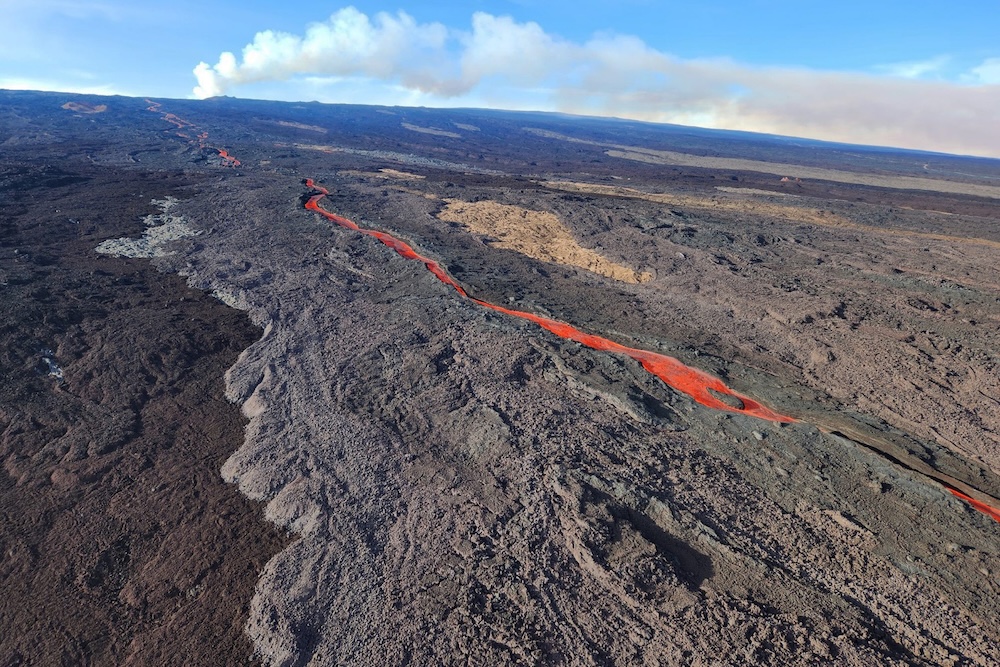
I don't know about you, but when I think about Earth, my thoughts are filled with the diversity of life and the rich flora and fauna. In reality, about 99% of the Earth is uninhabitable; deep underground places of high pressure and temperature where even the toughest bacteria cannot survive. However, there are places where life thrives from the smallest, most resilient bacteria to the largest elephant. Then there are places that are habitable but devoid of life; Lava flows are a good example and the space between microbes. A recent article looks at these uninhabited, habitable areas and asks what we can learn as we look for life in the universe.
Life on Earth has taken millions of years to evolve to the state we see today and has invaded almost every corner of the planet. That is, except in places where the environment is so extreme that even the most hardened extremophile cannot survive. These regions include places like the Atacama Desert in Chile, one of the driest places on earth, where rainfall is so rare that even microbial life struggles to survive. Likewise, parts of Antarctica's dry valleys experience subzero temperatures, little liquid water and high salinity in some soils, creating an environment hostile to most life forms. It raises interesting questions and potentially limits the viability of life.
The rocks seen here on the shores of Lake Salda in Turkey were formed over time by microbes that trap minerals and sediment in the water. These so-called microbialities were once an important life form on Earth and provide some of the oldest known fossilized records of life on our planet. NASA's Mars 2020 Perseverance mission will search for signs of ancient life on the surface of Mars. Studying these microbial fossils on Earth helped scientists prepare for the mission. Image source: NASA/JPL-Caltech
We can learn a lot from life on Earth by looking for life elsewhere in the universe. At the moment, there is only one place in the cosmos where we know life has evolved, and that is on Earth. A recent paper by Charles S. Cockell of the University of Edinburgh examines what we might learn from Earth's inhospitable places and how this might influence our search for extraterrestrial life. The article discusses places where active microorganisms are not found, particularly places where physical and chemical conditions are not far from areas where life is possible.
The physical spaces in which microbes cannot maintain essential metabolic activity or even reproduce can be divided into two groups: those with uninhabitable conditions and those with habitable but uninhabited spaces, also called uninhabited habitats. You may have to read this a few times, but it makes perfect sense! Uninhabitable conditions occur in environments where life cannot exist due to extreme factors such as intense heat, cold, salinity, or acidity. In contrast, uninhabited habitats are environments that are theoretically capable of supporting life but remain uninhabited, often due to barriers to settlement or the absence of necessary organisms. The paper makes a strong distinction between these “empty niches.”
Cooling of lava after an eruption. This rock has had a magnetic fingerprint since its formation. Photo credit: kalapanaculturaltours.com
These uninhabited habitats, which form through diverse processes at both macroscopic and microscopic levels, provide opportunities for scientific study. They can act as negative control environments, helping to reveal how living organisms influence geochemical processes and how they can provide a framework for studying processes such as microbial succession and community development. Despite their potential importance, the occurrence of these habitats in environments with extreme physical and chemical conditions for life is still poorly understood.
As we continue our search for life across the universe, we may find many more places like this. This will help expand our understanding of the distribution of habitable conditions and the potential for life in the universe. They may provide insights into the processes that make a place suitable for life, as well as the factors that have prevented life from emerging or continuing there.
Source: Where the microbes aren't
Like this:
Load…

Comments are closed.