

Many Americans are feeling the pinch financially following the expiration of expanded federal subsidies for health insurance under the Affordable Care Act.
About one in 10 people — 9% — who enrolled in an ACA Marketplace health plan last year are no longer insured after the elimination of expanded subsidies that reduced their monthly premiums, according to a new survey from KFF, a nonpartisan health policy research group.
According to the survey, many more people said they had downgraded their health insurance or were experiencing financial stress due to higher health care costs.
According to KFF, the loss of expanded premium tax credits caused health care premiums for the average ACA enrollee to more than double in 2026. About 22 million people – more than 90% of all ACA participants – received these subsidies last year.
“Returning participants are really struggling with costs,” said Lunna Lopes, senior survey manager at KFF.
KFF surveyed 1,117 U.S. adults enrolled in an ACA market health plan in 2025 to determine how they responded to market changes. They were interviewed between February 12 and March 2, 2026.
Health care could influence midterm elections
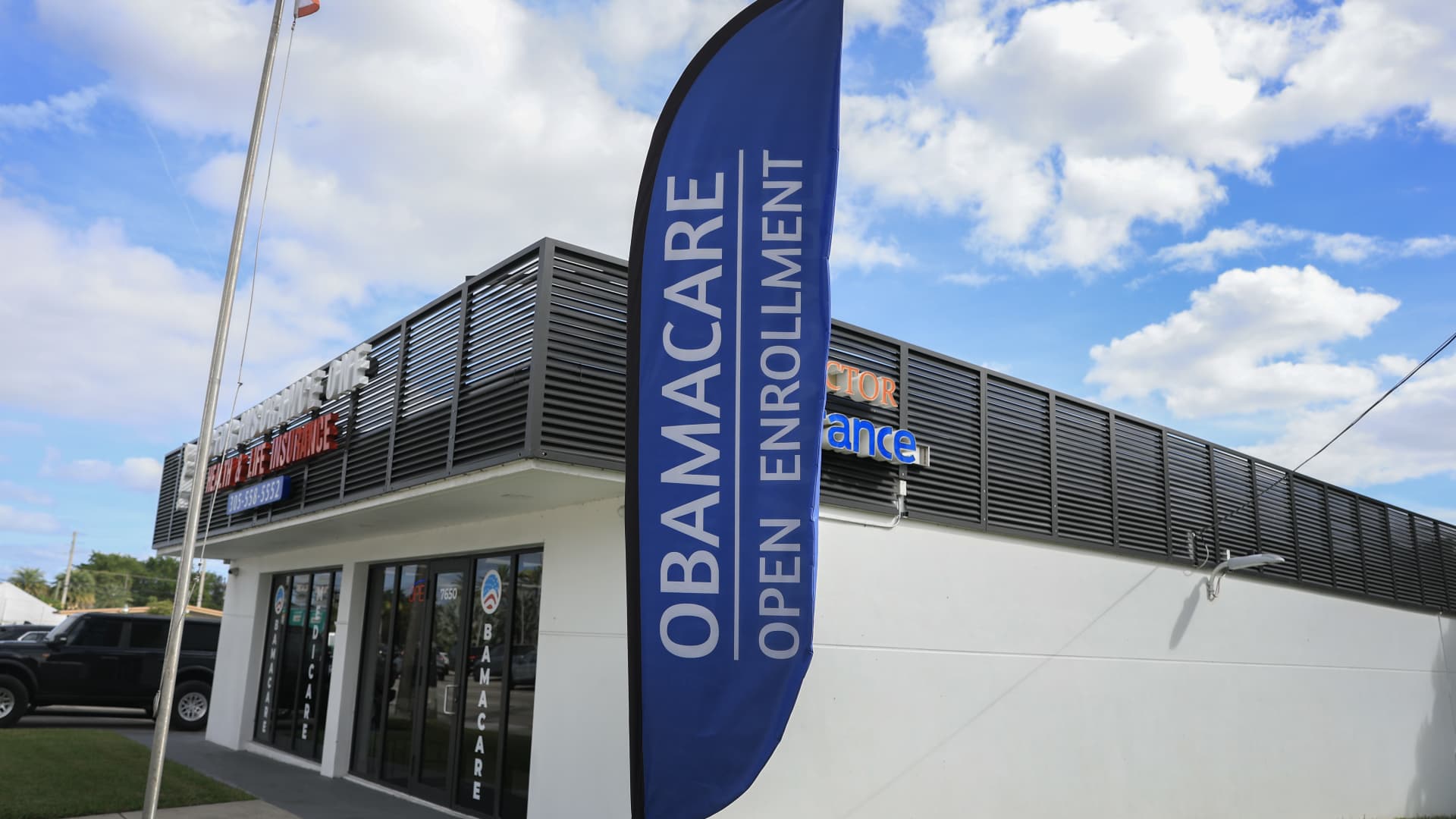
An Obamacare sign stands in front of an insurance agency in Miami on November 12, 2025.
Joe Raedle | Getty Images
The fear of higher health care costs comes as Americans grapple with affordability issues in other areas. The war in Iran, started by the United States and Israel on February 28, has driven up gasoline prices and threatens to drive up inflation on food and other areas of household budgets.
Health care costs — and affordability in general — are likely to be a powerful political force ahead of this year’s midterm elections in November, according to political analysts.
According to the KFF poll, more than half of returning participants in the ACA market place “a lot” of blame on Republicans in Congress and President Donald Trump — 54% and 53%, respectively — for higher health care costs.
Read more about CNBC’s personal finance coverage
While Democrats tended to blame Republicans and vice versa, independents were more likely to say congressional Republicans and Trump deserved “a lot” of blame than congressional Democrats (28%), at 56% and 58%, respectively, KFF found.
The expiration of expanded ACA subsidies was a central issue in the record-long government shutdown in the fall. Democrats pushed for an extension, but a majority of Republicans ultimately voted against it.
“We know how close some of these elections could be,” Lopes said. “Changes in health insurance and health care costs appear to be something that will impact how they approach the election and whether they decide to vote — and who they will vote for.”
Households make financial compromises
Households that have chosen to give up health insurance altogether because of rising costs are facing “a lot of anxiety and worry about what to do if they get sick,” Lopes said.
Even those who have retained their ACA health insurance coverage are not doing so painlessly.
According to KFF, about 17% of returning enrollees said they weren’t sure they could afford their premiums. They risk going without insurance this year, increasing the number of uninsured, Lopes said.
The Congressional Budget Office estimated in February that total enrollment in ACA market health plans will fall to 12.5 million by 2028. That would be about half of last year’s enrollments and would wipe out nearly all of the gains in marketplace enrollments since 2021, when the increased subsidies took effect.
This decline in enrollment is due to the elimination of increased subsidies and other changes, such as administrative measures in the Republicans’ Big Beautiful Bill, that make it harder for many people to sign up for and maintain insurance.
About 28% of KFF survey respondents said they chose to maintain coverage in the ACA marketplace but chose a different health insurance plan.
ACA Marketplace plans are divided into four tiers or “metal tiers”: Platinum, Gold, Silver and Bronze.
Health policy experts say many people have downgraded to bronze plans, which generally have lower upfront premiums but cost more out of pocket when people need to use their insurance.
Most people — 55% — who re-enrolled in an ACA Marketplace plan in 2026 said they have cut or plan to cut back on basic household expenses like food and clothing to help meet their health care costs, according to KFF.
About 43% said they are trying or planning to find an additional job or work more hours, 23% said they are skipping or delaying paying bills, and 21% said they are taking out a loan or increasing their credit card debt, KFF found.
Choose CNBC as your preferred source on Google and never miss a moment from the most trusted name in business news.

Comments are closed, but trackbacks and pingbacks are open.