Categories
Technology

In line with a world survey, electrical car drivers is not going to resort to gasoline automobiles

According to a survey by the Global EV Drivers Alliance, almost all current electric vehicle (EV) owners are either satisfied or very satisfied with the experience, and 92% of them plan to purchase another electric vehicle.

The survey of 23,000 electric car drivers worldwide found that only 1% would return to a petrol or diesel car, while 4% would choose a plug-in hybrid (PHEV) if they had to replace their car.

“These results confirm that electric vehicle drivers are very satisfied with their choice and that reports of a decline in the popularity of electric vehicles are greatly exaggerated,” says Petter Haugneland, deputy secretary general of the Norwegian EV Association.

Please enable JavaScript to view this content

According to research firm TrendForce, global sales of electric vehicles, including hybrids and PHEVs, are expected to reach 16.26 million in 2024, up 25% from 2023.

The survey also found that, apart from environmental concerns, the main motivation of electric vehicle buyers is that electric vehicles have lower operating costs.

“This should be an eye-opener for policymakers worldwide,” says Ellen Hiep, board member of the Dutch Electric Vehicle Drivers Association. “While a vibrant electric vehicle market is critical to reducing climate emissions from road transport, achieving this goal depends on making electric vehicles an even more affordable option for everyone.”

In the US, the new Trump administration plans to eliminate the current $7,500 federal tax credit for purchasing or leasing an electric vehicle.

According to a study by JD Powers, incentives have played a critical role in consumer decisions: 64% of premium electric vehicle owners said that incentives were a primary reason for their decision to purchase or lease their electric vehicle. Among mass-market electric vehicle owners, 49% chose their vehicles based on tax credits and incentives.

Incentive programs were cited as a top reason for purchase by 81% of Volkswagen buyers, 77% of Chevrolet buyers and 72% of Tesla buyers. In contrast, only 32% of Hyundai buyers, 24% of Kia buyers and 21% of Toyota buyers said incentives were a primary reason for choosing their vehicle.


Categories
Technology

Digital twins of cities are set to increase, based on plans from a brand new Dutch startup

A startup The company Scenexus has unveiled plans to build digital twins of cities around the world.

Scenexus, a spin-off from the Dutch research organization TNO, launched a new urban planning platform this week.

The software mixes multiple data sets to clone entire cities and regions.

Planners and engineers then use the replicas to closely analyze the impact of their ideas.

The 💜 of EU technology

The latest rumors from the EU tech scene, a story from our wise old founder Boris and questionable AI art. It's free in your inbox every week. Register now!

According to Scenexus, the platform can accelerate its reviews from days to just a few minutes. They can then predict the social, environmental and economic impacts of developments.

A variety of factors can be checked, from traffic and safety to financial growth and resident sentiment. The concepts can then be adapted to urgent challenges such as housing shortages and traffic jams.

The platform has already gained traction Customers in Amsterdam, San Diego and Singapore. More cities are expected to sign up soon.

Scenexus has also announced a new backer for the project. The Hague-based company has raised €1.6 million from the LUMO Rise Fund, a €100 million capital pot for impact-oriented technologies. Scenexus is the first investment from the fund, which is managed by Dutch VC firm LUMO Labs.

Andy Lürling, founding partner of LUMO Labs and member of the TNW advisory board, has great expectations for the startup.

“The spectrum of application areas is almost unlimited,” Lürling told TNW.

He highlighted ten particularly promising goals: smart mobility, air quality, noise, climate, spatial development, justice, well-being, quality of life, resilience and energy.

To support these applications, Scenexus will provide its digital twin platform as a software-as-a-service solution.

Building digital twins

Under the hood of the system Thousands of calculations are processed in parallel Algorithms are running on graphics processing units (GPUs).

According to Scenexus, results are up to 1,000 times faster than the leading planning software on the market. Thanks to this speed, developers can quickly develop new urban planning concepts.

scene will now focus on bringing more cities to its platform. The startup has also joined digital cities projects with Microsoft and a European consortium.

Lürling is optimistic about the company's plans.

“With Scenexus, cities immediately save time, money and effort and identify unforeseen challenges before they arise,” he said.

“At the same time, it enables a sustainable improvement in the quality of life and safety of the city as well as the well-being of residents and visitors.”

Categories
Technology

These distinctive sensible glasses circumvent the hype and resolve an actual medical drawback

Smart glasses are increasingly seen as the future of personal computing. But so far, an overwhelming majority has focused on aspects such as sharing on social media, turning on AI agents or media consumption. Soliddd wants to bring smart glasses to a challenging niche of medical science.

At CES 2025, the New York City-based company introduced SolidddVision data glasses. Soliddd claims this is “the first true vision correction for people living with vision loss due to macular degeneration.” Notably, these glasses do not require FDA approval and will hit the market later this year.

Macular degeneration is an age-related disease that prevents people from seeing what is directly in their line of sight and blocks their central vision due to degeneration of the macular region of the retina.

solidity

Millions of people around the world suffer from dry and wet macular degeneration. Unfortunately, there is no cure for this, but there are some medications that can sometimes improve vision or simply halt the damage.

“We can enable vision in areas of the visual field where patients cannot otherwise see,” Neal Weinstock, founding CEO of Soliddd, said in the announcement. The results of a clinical study with the SolidddVision glasses also provide a positive outlook.

Working design of SolidddVision smartglasses.solidity

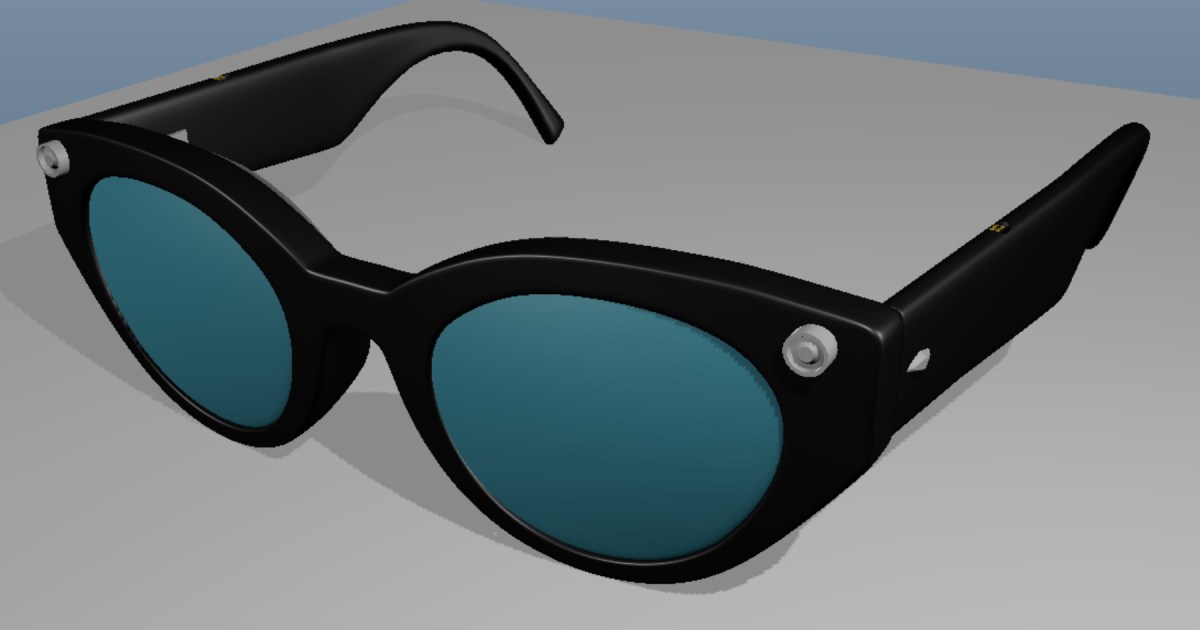
The SolidddVision smart glasses are based on the VR concept and enable the restoration of vision for people with macular degeneration. Inspired by a fly's eye, these smart glasses use a proprietary lens arrangement that transmits multiple images to the still healthy retinal zone.

The trick is to let the brain “create a single, full-field image with good sharpness that feels like normal, sharp vision.” The entire system is a combination of patented optical design and software and delivers sharp views thanks to a parallel beam light field.

Internal display unit of the SolidddVision data glasses.solidity

There are two front-facing cameras to capture the world outside and an equal number of inward-facing cameras to image the eyes and track the gaze. The software combines the input video with eye mapping data, makes spatial adjustments, applies the necessary color correction, and transmits the final view to the internal display units.

The SolidddVision glasses are currently in beta testing, but the company is targeting a 2025 launch. So far, the SolidddVision glasses seem to be the most practically viable implementation of this wearable form factor, and that would be interesting to see where the technology goes.


Categories
Technology

The TNW Convention 2025 might be reborn – with a brand new startup mission

The TNW Conference will be reborn this summer.

In 18 years of unforgettable events, countless future tech stars have used our stage as a springboard to success. We have driven enormous investments, introduced countless innovations and made friends along the way. We also learned from our mistakes. But don't worry, dear children – we're not getting old yet. We still mix serious business with festival vibes. However, we're shaking up the party a bit.

To celebrate our coming of age, we return to our roots. Today we are starting again TNW conference with a renewed focus on our founding mission: supporting the startups and scaleups that are shaping our future.

Since 2006, the TNW Conference has earned a reputation as a launching pad for world-changing ideas. Our mission is to introduce start-ups and scale-ups to the right audience so that big ideas can become big things and shake up the world.

Present your startup at the TNW conference

Draw attention to yourself. Build brand awareness. Connect with industry players who can help you turn your big idea into the next big thing.

People like Slack, Trello, Bolt and Vinted have graced our stages on their way to becoming world leaders. They were joined by a star-studded selection of speakers, from web inventor Sir Tim Berners Lee and Reddit CEO Steven Huffman to Hollywood star Zoe Saldana and NSA whistleblower Edward Snowden.

We have also supported 13 of the 15 Dutch unicorns in the early stages of their growth journey. This year we want to nurture a new generation of tech titans.

“At TNW we have always had a flair for recognizing the extraordinary before it becomes the norm,” said Boris Veldhuijzen van Zanten, the founder of TNW. “From young start-ups to transformative technologies, we are committed to supporting innovators as they take their first big step.”

Well, that all sounds nice, I hear you say, but is there any substance behind your grandiose ambitions? Thanks for asking – and mind your manners. Of course there is substance. Here's a taste of what to expect.

What's new at the TNW Conference 2025?

For our return to the legendary NDSM venue in Amsterdam on June 19th and 20th, the TNW Conference will be transformed into an exclusive, curated and higher quality platform. We enhance the experience for participants – and the element of surprise that has become the hallmark of the event.

Every change aims to maximize our impact. Let's look at a few details:

  • The number of tickets is limited to just 4,500 guests. By limiting our numbers we can create an intimate, tailored experience.
  • The The audience was curated. Over 2,000 Startups and Scaleups will feature more than 675 investors, more than 900 policymakers and more than 900 business innovators.
  • We have aligned our agenda with this in mind three key themes: Growth and risk, Next in technology, And Corporate innovation. By optimizing the program we can provide more relevant content. It also improves collaboration and actionable insights.
  • Tech5 returns. The network of the best Europeans founder has helped over 585 companies including Wise, Too Good To Go, Picnic and Revolut. At the TNW conference, there will be a competition for the best growth-stage startups as part of the program.
  • We have a new edition of The gathering – an invitation-only gathering of policymakers and business leaders. The themes of this year's edition include defense technology – a timely choice as the NATO summit takes place in Amsterdam a week later. Deep tech, AI, climate technology and other industries are also on the agenda.
  • The Introduction of the Corporate Innovator Ticket. Our new pass connects business leaders with technology pioneers in an exclusive corporate lounge.

Our vision was supported by our beautiful hometown. This year's TNW conference was selected as the flagship event of Amsterdam750 – a celebration of the Dutch capital's 750th birthday.

A hand-picked team of technology leaders also supported the updated plans. Among them is Victoria Slivkoff, head of ecosystem at VC fund Walden Catalyst Venture and executive managing director of the Extreme Tech Challenge.

“TNW’s renewed focus on empowering startups achieving global impact underscores the transformative power of scalable innovation to create a better world,” she said.

“By fostering collaboration, providing unparalleled resources and visibility, TNW is creating a launching pad for visionary entrepreneurs tackling the world’s most pressing challenges.”

A spotlight on stage at the TNW conference, which will feature AI and deeptech as a theme next year

Why attend the TNW Conference 2025?

We redesigned the TNW conference for one reason: to better serve European startups, scaleups and the surrounding ecosystem. Here you will find the offers for our community:

  • For startups and scaleups: Present your startup on the same platform that today's tech giant once stood on. Gain exposure, network with industry players, meet up investorsand find new customers.
  • For investors: Discover the hottest tech companies. Expand your deal pipeline, network with high-growth entrepreneurs and network with other investors.
  • For business innovators: Bring some startup thinking into your company to stay ahead and learn how to innovate quickly and at scale.
  • For ecosystem builders: Supporting national startups to develop into global companies. Connect key players, foster partnerships and discover breakthrough innovations.

Discover the next big thing with us – before it even happens.

The next steps

We will be announcing more details about the agenda shortly – including our exciting first group of speakers and an eye-catching selection of partners. In the meantime, Andy Lürling, founding partner of VC firm Lumo Labs and member of the TNW Advisory Board, has a few tips for the event.

“The better you prepare for your conference visit – by exploring the… TNW platform to find out who will be attending, who is relevant to you and which sessions will be most valuable to you – the higher the quality of your experience will be,” he said.

“Don’t hesitate to approach people, start spontaneous conversations, ask questions and share your own experiences, knowledge and network.”

You can visit Andy and us at the TNW conference in June. Just don't call it a comeback – but you can call it a rebirth.

Tickets for the TNW conference are now on offer. We will sell out – so don't delay in ordering your pass. Enter code TNWXMEDIA2025 at checkout to receive 30% off the price.

Categories
Technology

Ballot outcomes present that electrical car incentives are supported by 67% of People

While the new Trump administration is expected to end federal tax credits for electric vehicle (EV) purchases and leasing, another survey shows just how popular these EV rebates remain.

According to a survey by California-based nonprofit Veloz, 67% of Americans say the government, whether federal, state or local, should provide incentives to purchase electric vehicles.

And if the Trump administration ends federal incentives, 61% say they want state and local governments to step in and increase their support for electric vehicles.

Please enable JavaScript to view this content

That's largely what California has already announced: Gov. Gavin Newsom has said he will revive the state's electric vehicle tax rebates should the new administration end federal support.

Unsurprisingly, behind consumers' justification for supporting government incentives is the issue of cost: when Veloz survey participants were asked what might stop them from purchasing an electric vehicle, 48.4% of respondents said ” Cost of purchase” is the main concern.

On the other hand, cost savings on gasoline are the main reason for choosing an electric vehicle for 51.9% of survey respondents.

A recent study from JD Power also showed that federal tax credits have played a critical role in consumer decisions regarding electric vehicles: 64% of premium brand electric vehicle owners and 49% of mass market electric vehicle owners said that incentives were a primary reason Their decision was to buy or lease their electric vehicle. More specifically, the JD Power survey found that owners of Volkswagen, Chevrolet and Tesla were most influenced by the incentives.

If government incentives disappear, a key question for American consumers will be whether increasingly intense global competition among manufacturers will continue to put downward pressure on prices in the States.

Chinese manufacturers that make the world's cheapest electric vehicles have shelved plans to enter the U.S. market directly after the Biden administration imposed 100 percent tariffs on Chinese-made electric vehicles last September.

It remains to be seen how tariffs, combined with the end of government stimulus, will impact consumer demand.


Categories
Technology

Quantum Brilliance secures $20 million for transportable diamond-based accelerators

Australian-German startup Quantum Brilliance has raised $20 million in Series A funding to deploy small, portable quantum accelerators that promise to do just that Increase the computing power of data centers, robots and satellites.

A quantum accelerator is a special hardware unit that accelerates specific quantum algorithms or tasks. They act as co-processors of classical computers such as CPUs or GPUs and carry out certain quantum calculations.

Austrian deep-tech fund Main Sequence, In-Q-Tel (IQT) in the USA and Intervaley Ventures from Japan led the financing round. “It represents a significant advance as we advance the design, performance and manufacturability of diamond quantum devices,” said Mark Luo, CEO of Quantum Brilliance.

Founded in 2019, Quantum Brilliance uses diamonds in its accelerators, allowing them to operate at room temperature, unlike most quantum systems, which require supercooling. The result is quantum devices that are portable and energy efficient, making them particularly useful large-scale use in Edge devices.

“Diamond quantum technology holds great promise for the development of compact and robust quantum sensors and accelerators,” said Nat Puffer, Managing Director of IQT. “We believe this technology will play a critical role in addressing strategic challenges across industries and key national priorities.”

The 💜 of EU technology

The latest rumors from the EU tech scene, a story from our wise founder Boris and questionable AI art. It's free in your inbox every week. Register now!

Last year, Quantum Brilliance announced a strategic partnership with Oak Ridge National Laboratory in the United States, home of Frontier World first Exascale supercomputers. The startup will install its diamond accelerators alongside the lab's high-performance computing (HPC) systems to explore the potential of combining quantum computing and classical computing.

Additionally, in September, the German cybersecurity agency awarded Quantum Brilliance a $15 million contract to deliver the world's first mobile quantum computer by 2027. A mobile quantum computer could perform complex calculations on-site instead of relying on data centers or cloud access.

Quantum computers are rewriting the rules of computing and harnessing the amazing magic of quantum physics to solve problems that normal machines cannot. Powered by qubits that can juggle multiple states simultaneously, they are designed to crack optimization puzzles, simulate complex systems and revolutionize encryption – all at breakneck speed.

Since then, there has been great interest in quantum computing Google presented an experimental machine that was able to solve a mathematical equation in five minutes that a conventional supercomputer couldn't do in 10 septillion years. The breakthrough brought the dream of quantum computing one step closer to reality. Nevertheless, Nvidia's CEO Jensen Huang was quick to do so Pour cold water on the hypeand warned at CES 2025 that practical quantum applications are still 15 to 30 years away.

Categories
Technology

You requested: What was probably the most spectacular factor you noticed at CES?

Table of Contents Table of Contents Panasonic Z95B Belkin Stage Power Grip Honda Zero Series Saloon Concept Olight Ostation X Lenovo Legion Go S Roborock Saros Z70 SolidddVision Smart Glasses Hisense TriChroma Mini LED TV

In today's special edition of You Asked, we tracked down each of our editors and got them to find out what they thought was the most impressive thing they saw at CES 2025 in early January. Let's find out what they had to say.

Panasonic Z95B

Digital trends

There was some really cool TV technology at CES, but I'm most excited about the new Panasonic Z95B. Instead of the regular OLED display structure that we have seen with MLA technology in recent years, a four-layer panel structure is used here. It has individual red, green and blue layers (two of them) for the emitting light.

This new structure offers higher brightness without the MLA technology used in LG's G series, as well as higher color purity. It is a much more efficient way of producing light and color and represents the next step in OLED panel technology.

It's particularly exciting because we felt like we were reaching MLA's brightness limits. By changing the panel structure, we are now reaching new levels of brightness that can better compete with the QD-OLED technology we have seen in recent years.

– John Higgins

Belkin Stage Power Grip

Belkin Stage Power GripDigital trends

The coolest mobile thing I saw at CES 2025 is the Belkin Stage Power Grip. It looks like a DSLR camera grip that attaches to your iPhone via MagSafe. It has a physical camera capture button and is pleasant to use. Additionally, it has a 10,000 milliamp hour battery that wirelessly charges your iPhone while you use it. There's even a built-in USB-C cable for charging other devices.

It's a strange device, but it's practical, and Belkin says it will cost less than $80. I can't wait to get my hands on it again.

– Joe Maring

Honda Zero Series sedan concept

Honda Zero Series sedan conceptHonda

The coolest thing I've seen at CES so far is Honda's Zero Series Saloon Concept. I'm trying not to get too caught up in the concepts at CES, as many of them will never come to fruition, but Honda promises this one will launch in late 2026.

It's a sleek, wedge-shaped car that looks futuristic – like something out of Cyberpunk 2077 or Blade Runner. But the real standout feature is Level 3 autonomy, a step above the Level 2 self-driving level currently available in Tesla vehicles.

Level 3 autonomy means truly unattended driving. You can sit behind the wheel, turn around to talk to someone or watch a movie. This is made possible by advanced sensors and computing power, and I think it will eclipse Tesla's autonomous driving capabilities when it debuts in 2026.

—Nick Mokey

Olight Ostation X

Olight Ostation XDigital trends

One of the coolest things I saw at CES 2025 was the Olight Ostation X. It's a charging station for rechargeable AA batteries and it's incredibly smart. You can load a bank of AA batteries at the top, and the station charges four at a time before dropping the freshly charged batteries into the bottom bin, which holds up to 32 batteries.

It doesn't matter which direction the batteries are facing – the Ostation X automatically tests them and charges them to full capacity. If you accidentally insert a non-rechargeable battery, it will be detected and thrown back into a special compartment. It's powered via USB-C and even has a mobile app that shows charging status.

Since the device can become noisy in fast charging mode, you can schedule the charging time. The best part? You always have fully charged batteries ready and eliminate the need for disposable batteries. It's $120 and will ship in February.

– Simon Cohen

Lenovo Legion Go S

Lenovo Legion GoDigital trends

The most exciting technology I saw at CES is undoubtedly the Lenovo Legion Go S. It's essentially a streamlined version of the Lenovo Legion Go with a more traditional handheld form factor and no detachable controllers or anything like that.

Handhelds are great, but what really stands out to me is that they are officially licensed by Valve to use Steam OS. Previously, Steam OS was only available on the Steam Deck. I love Steam OS and play on my Steam Deck, so seeing it on other handhelds, especially those with more powerful chips, is a big deal.

More importantly, this is the first step towards wider adoption of Steam OS in PC gaming. There are currently many problems with Windows and some alternative operating systems. For me as a PC gamer, it's exciting to see Valve take this step to expand the availability of Steam OS, as it offers a far more convenient and seamless experience than what most PC gamers can currently get.

–Jacob Roach

Roborock Saros Z70

Roborock Saros Z70Digital trends

The coolest thing I saw at CES 2025 is the Roborock Saros Z70. It builds on previous generations of robot vacuums, but introduces something I've never seen before: an extendable arm that can pick up small obstacles.

This means you don't have to do as much preparation before using the vacuum cleaner. The arm, called Omni Grip, can move horizontally and vertically to pick up items weighing up to 300 grams, such as socks, small toys or towels, and place them in a predetermined location.

The Roborock Saros series is revolutionary in the world of robot vacuum cleaners. Pricing and availability are still unclear, but it is expected later in 2025.

–Patrick Hearn

SolidddVision smart glasses

SolidddVision smart glassesDigital trends

For me it is personal. I got to try out a pair of smart glasses called SolidddVision. They're a prototype, but that's what CES is all about. These glasses use cameras and a display to restore vision to people with severe vision impairment such as macular degeneration.

Visual impairment runs in my family, so I came to CES specifically to check it out. After trying them and seeing how they work, I'm amazed. They create a prism effect that corrects vision and I hope that this technology will soon become a real product.

—Luke Larsen

Hisense TriChroma Mini LED TV

Hisense TriChroma Mini LED TVDigital trends

Finally, my pick for the most exciting technology at CES: Hisense's TriChroma Mini LED TV. Instead of a white backlight with quantum dots and a color filter, it uses RGB mini-LEDs behind a lens to deliver pure colors.

The color brightness is out of this world, but what really impressed me is the processing power required to synchronize the RGB backlighting with the colors on the screen. It's a stunning achievement and a sign of what's possible in display technology.

—Caleb Denison


Categories
Technology

TNW strengthens startup mission with new position as ecosystem chief

TNW has strengthened its support for European technology by adding ecosystem expert Yeni Joseph to the management team. Yeni has also taken on a new role as Head of Ecosystem Strategy and Partnerships.

The appointment brings extensive expertise to TNW’s leadership – and fresh ideas.

“TNW has a long-standing track record of driving innovation,” says Yeni. “We now want to focus on moving from legacy to measurable impact.”

Yeni's work will do it shape TNW's influence in the world of technology. Your strategies will support the company's mission of nurturing high-potential startups.

The 💜 of EU technology

The latest rumors from the EU tech scene, a story from our wise founder Boris and questionable AI art. It's free in your inbox every week. Register now!

To achieve this goal, Yeni will foster industry communities, identify emerging trends and engage key stakeholders. It will also integrate the topics of the TNW Conference 2025 – Growth & Venture, The Next in Tech and Enterprise Innovation – in ecosystem initiatives.

Yeni wants her work to change the priorities of the industry. “It’s no longer just about business growth,” she says. “It’s about driving innovation, sustainability and inclusion across the ecosystem.”

To enhance TNW's contribution, Yeni will increase focus on the company's events and media. She will also oversee several major programs. Chief among them is the Gathering, an exclusive gathering of policymakers and business leaders at the TNW Conference. Event participants will discuss actionable solutions to important developments in technology policy.

Topics for the 2025 edition of the assembly include defense technology – a timely choice as the NATO summit arrives in Amsterdam a week later. European competitiveness is also on the agenda.

Another ongoing program is Tech5 – a ranking showcasing leading scaleups from across Europe. The awards will be announced during the 2025 TNW Conference. Past winners include: HopinToo Good To Go and Wolt.

Yenni brings a wealth of experience to her new position. She has spent a decade at the intersection of technology and government policy, achieving success in both the public and private sectors.

Her resume lists prominent roles with numerous industry leaders. It contains magic spells StartupAmsterdamThe NLdigital Trade Association and the Dutch Ministry of Economic Affairs, where she led the Dutch Taskforce on Diversity and Inclusion in the Digital Industry.

In 2020, Yeni joined TNW. Previously, she was head of the ecosystems and public policy department and the Dutch startup visa Moderator – a role that she will continue alongside her new position.

Yeni’s work at TNW revolves around one core goal. “We empower startups to shape the future, knowing that our success and relevance will be heavily influenced by their growth and achievements.”

Categories
Technology

Digital Developments’ Prime Tech of CES 2025 Awards

Table of Contents

Table of Contents

Computing

Audio/Video

Mobile

Gaming

Cars

Smart home

Las Vegas is overrun. Every billboard in town is shouting about AI, hotel bar tops now sport a sea of laptops, and after hours The Strip is elbow to elbow with engineers toting yard-long beers.

That means CES, the year’s biggest tech bacchanalia, has come to town, and Digital Trends editors have spent the last four days frolicking among next year’s crop of incredible TVs, computers, tablets, and EVs. We’re in heaven.

With 4,500 exhibitors, there’s no way for any one person to see it all, but our team of editors has done its best to explore every backwater and annex of the Las Vegas Convention Center. We’re confident we’ve dug up the best of the best for our Top Tech of CES 2025 awards. From monitors to smart gardens, desktop speakers to a really killer Steam Deck competitor, there’s something for everyone to get excited about here.

Computing

Lenovo Yoga Slim 9i

Wacky things have been done in the name of reducing bezels over the years. Ugly notches. Nosecams. Hidden or detachable cameras. Perhaps the worst solution is removing the webcam entirely. The latest version of the Lenovo Yoga Slim 9i, though, attempts an audacious technological leap to create an invisible webcam that can completely disappear from sight.

The solution is an incredible feat. When the camera is engaged, the OLED display turns off a small circle of pixels to allow the 32-megapixel camera located behind the screen to shoot through the panel and generate an image on the other side. Toss in a sprinkle of AI, and you have a half-decent camera feed for video calls. Is it a bit over-engineered? Maybe. But when you’re not bothering with your camera and you get to enjoy a bountiful sea of screen unencumbered by bezels and webcams, I don’t think you’ll mind.

– Luke Larsen

ASUS PG27AQNR Pulsar gaming monitor

Asus PG27AQNR Pulsar gaming monitor

In the era of refresh rates above 500Hz, you’d think that the motion clarity issue for competitive gamers have been solved, but Asus’ PG27AQNR proves otherwise. It’s 360Hz and 1440p, but that’s not what’s special about it. The monitor is among the first to debut Nvidia’s G-Sync Pulsar tech.

It’s a big deal if you’re into competitive games. Essentially, Pulsar enables dynamic backlight strobing in a display, blanking out the image between refreshes based on what’s actually happening in your game. The result? You see a static image on each refresh, locking the target that you’re tracking into place for motion clarity that even the best OLED gaming monitors can’t match.

Although Pulsar isn’t angled toward every PC gamer, it’s a massive step forward for competitive gamers, and Asus is putting that on full display with the PG27AQNR.

– Jacob Roach

Samsung Odyssey 3D Gaming Monitor

Samsung Odyssey 3D

You have every right in the world to be skeptical of a 3D gaming monitor. I know I was. But I’m telling you — as someone who’s tried out multiple generations of this technology over the years, the Samsung Odyssey 3D gaming monitor finally nails it.

The demo of The First Berserker I played feels like a huge advancement over the prototype technology we saw last year. Having your head in the “sweet spot” is no longer a factor, getting the full 3D effect in a much wider range of viewing angles and distances. Yes, there’s still a lot of work to be done to bring developers on board in time for release, or perhaps develop a 2D-to-3D conversion that actually works in games.

But the technology itself? It’s ready for showtime. Once gamers get a chance to see it for themselves, I have a feeling they won’t want to go back to the boring world of two dimensions.

– Luke Larsen

Asus Zenbook A14

Asus Zenbook A14

A can of soup. A small pineapple. A pair of heavy socks. Google says those are a few household items that weigh about as much as the Asus Zenbook A14. At just 2.18 pounds, it’s the lightest laptop in recent memory — at least for a device that doesn’t completely sacrifice a major feature along the way. After all, when it comes to laptops, no one wants to sacrifice features, durability, ports, or functionality for lightness. The Zenbook A14 proves you can have the best of both worlds. When I picked this laptop up for the first time, I couldn’t believe how light it felt in my hand.

The entire laptop is made from Asus’ “high-tech ceramic” material — otherwise known as Ceraluminum — which provides its unique texture and its incredible lightness. All that, as is common with Asus, starts at under $1,000. That’s a winning combination, and it just might make for the ultimate laptop to travel with.

– Luke Larsen

Audio/Video

HISENSE 116UX TriChroma
LED TV

Hisense 116UX TriChroma LED TV

The Hisense 116UX does mini-LED in a new way. Instead of blue or white LED backlights shining through a color filter, the TriChroma LED TV uses tens of thousands of RGB Local Dimming optical lenses that each contain individual red, green, and blue LEDs. The lenses are then controlled in clusters, with dimming done at both the cluster and lens levels.

The individual RGB LEDs — without a color filter — allow the 116UX to achieve, according to Hisense, 97% of the BT.2020 color space. The RGB clusters are also more efficient, reducing power consumption.

We’re continuing to learn the intricacies about how the technology works, but it’s an obvious dynamic change to LED TV technology.

– John Higgins

PANASONIC 
Z95B OLED TV

Panasonic Z95B OLED TV

It was great to see Panasonic return to the U.S. market in 2024, and CES 2025 has shown that it’s back in earnest. While it has three new TVs for 2025, the flagship Z95B OLED caught our eye the most thanks to its incredible boost in brightness over last year’s Z95A.

Panasonic revealed that it’s using Primary RGB Tandem Panel technology — a new four-layer panel structure consisting of red, green, and blue (actually two blue) layers that allows for a better separation and purity of color and higher brightness, all without MLA (Micro Lens Array) technology. In addition, Panasonic engineers designed the ThermalFlow cooling system, inspired by aerodynamic race car design, to improve heat dissipation.

It’s a step forward in OLED panel design that we’ve been speculating about, and Panasonic has delivered it and shown us what it’s all about.

– John Higgins

TCL QM7K
Mini-LED TV

TCL QM7K Mini-LED TV

There’s a lot of amazing TV tech at CES 2025, and the TCL QM7K definitely has its share. TCL has developed multiple improvements in its backlight technology, and the 2025 series of QM televisions (the QM7K included) are a part of the Precise Dimming Series. With a new chip, lens structure, decrease in the optical distance — from the backlight to the diffuser plate — and some processing improvements to virtually eliminate lag from input signal to backlight response, all aspects of the backlight performance on the QM7K looks to be improved over last year’s QM7.

Best of all, though, is that, unlike some of the other flashy TV tech on display, the QM7K will be a TV that fits within most people’s budgets. Even with all of the improvements, the QM7K is expected to be comparable in price to last year’s model (which started at $1,100) and we should see it sometime around midyear.

– John Higgins

Technics
 EAH-AZ100

Technics EAH-AZ100

If we were to give this award a sub-category, it might be “most improved wireless earbuds.” That’s because the Technics EAH-AZ100 are packed with improvements over their predecessors, the EAH-AZ80. Smaller, lighter, better ANC, better call quality, and way better battery life — all are strong reasons to recognize these new buds. They’ve even got spatial audio with head tracking and Auracast compatibility via Bluetooth LE Audio — two features the AZ80 lacked. But the kicker is their sound.

For the AZ100, Technics adapted its innovative Magnetic Fluid driver technology from its $1,100 wired IEMs, which gives the AZ100 ultra-low distortion and excellent sound quality.

Taken together, these changes make the Technics EAH-AZ100 the best wireless earbuds of CES 2025.

– Simon Cohen

Onkyo GX-30ARC desktop speakers

Onkyo GX-30ARC

On the surface, Onkyo’s $299 powered desktop GX-30ARC speakers look like, well, speakers. But this is a case of good things coming in small packages. Onkyo’s decades of amplification heritage shines through in these speakers — they’re bi-amped, which means each driver gets a discrete source of power — and we suspect that’s a big reason for their powerful sound, which impresses with both its clarity and low-end authority.

They’re also loaded with input options, including USB-C, Bluetooth (with LE Audio and Auracast), optical, stereo RCA (with selectable line-in and phono settings), and an HDMI-ARC port, which gives the GX-30ARC part of its name.

Add to this package a magnetically attached grille, your choice of two colors, an included set of angled woodgrain stands, and a remote, and you’ve got a compelling set of powered speakers whether you’re a creator or just an avid listener.

– Simon Cohen

Mobile

Belkin Stage PowerGrip

Belkin Stage PowerGrip

Belkin is always a strong force at CES, but at CES 2025, it announced one of its most unique iPhone accessories to date: the Stage PowerGrip. What exactly is the Stage PowerGrip? Well, it’s a lot of things.

Imagine a 10,000mAh battery pack that attaches to your iPhone via MagSafe. And it has an integrated USB-C cable to charge other devices. And it acts as a stand to prop up your phone on a table. And it has a camera grip. And it has a camera shutter button. And it comes in some really lovely colors. That’s the Belkin Stage PowerGrip.

It’s really exciting to see this level of creativity from Belkin, and I hope we see even more of it in the years to come.

– Joe Maring

Lenovo Legion Tab Gen 3

Lenovo Legion Tab Gen 3

The Lenovo Legion Tab Gen 3 isn’t an Android tablet I expected to see again in 2025. Virtually every manufacturer seemed to have given up on compact Android tablets with flagship-level specs, but that’s precisely what you get with the new Legion Tab.

The iPad mini monopolizes the compact tablet market. Google’s Nexus 7 tablets used to be excellent alternatives, but we haven’t had a new model since 2013 — and it didn’t seem like anyone had any interest in throwing their hat in the tiny-tablet ring.

But Lenovo has, and the Legion Tab Gen 3 looks like a legitimately great revitalization of the niche.

– Joe Maring

Amazfit Active 2

Amazfit Active 2

Smartwatches are everywhere in 2025. As such, standing out in the crowd is a big ask. But I think the Amazfit Active 2 has what it takes to do that.

Take one look at the Active 2’s spec sheet or feature list, and it’s got just about everything you could ask for — including activity and sleep tracking, blood oxygen monitoring, automatic workout detection, and more. What’s impressive is you get all of that with up to 10 days of battery life, a high-quality AMOLED display, and a compact body. What’s even more impressive is that the watch starts at just $100.

The value proposition here is one of the best I’ve seen in a while, and my early impressions of the Amazfit Active 2 are really promising. It feels unreal that a smartwatch of this quality exists at this price, but somehow, Amazfit pulled it off.

– Joe Maring

Anker 165W Power Bank

Anker 165W Power Bank

Once you’ve seen one power bank, you’ve seen them all — right? That’s what I thought until Anker announced its new 165W Power Bank. Unlike most power banks, which give you about a 10,000mAh battery capacity and call it a day, Anker’s latest one crams in a massive 25,000mAh capacity, plus a few additional features that are equally ridiculous and practical.

One of those features is integrated USB-C cables. The Anker Power Bank has two of them, meaning if you’re traveling with two devices, you can just bring the 165W Power Bank with you and not have to fuss with bringing cables.

Is the Anker 165W Power Bank overkill? Maybe. But does it also have the makings of one of the most complete power banks we’ve ever seen? Absolutely.

– Joe Maring

Gaming

Lenovo
 Legion Go S

Lenovo Legion Go S

On its surface, the Lenovo Legion Go S may look like yet another Steam Deck imitation that’s looking to re-create Valve’s success. It is that to some degree, but it’s a crucial development in the current handheld PC arms race. Rather than trying to outplay Valve by loading its Legion Go variant with extra bells and whistles, Lenovo finally understands that the best way to beat the competition is to join it.

And thus, we have our first portable PC not made by Valve to use SteamOS, the streamlined operating system that’s helped the Steam Deck maintain its dominance against experimental Windows-based rivals. With the Legion Go S, we finally have a viable alternative to the Steam Deck that still functions like an easy-to-use handheld. Not only that but it’s a powerful handheld that’s both more comfortable and less expensive than its predecessor. All of that creates a perfect recipe for success.

– Giovanni Colantonio

MSI Forge GK600 TKL Wireless

MSI Forge GK600 TKL Wireless

How many more ways can you innovate a gaming keyboard in 2025? MSI’s Forge GK600 TKL Wireless proves that there’s still plenty of room to perfect something that’s been done to death. This is a mechanical keyboard with a hot-swappable printed circuit board that comes with some solid KTT HiFi linear switches. It comes loaded with impressive features, from its dual connectivity to its 4,000mAh battery.

That might all sound a little par for the course, but what’s especially impressive is the price tag. All of this only costs $80, which is unheard of for a gaming keyboard as feature rich as this. While there’s a premium trade-off or two to accomplish that, like an all-plastic design, the GK600 TKL puts fierce rivals like ROG Azoth (a former Digital Trends Best of CES pick) to shame. Expect it to become the mechanical gaming keyboard to own.

– Giovanni Colantonio

Cars

Honda 0 Series Saloon

Honda 0 Series Saloon

We’d be tempted to give this futuristic EV a nod on its Blade Runner looks alone, but Honda packed it with so much tech that we don’t have to. Thanks to an army of sensors and some heavy-duty silicon from Renesas, the Saloon should be capable of level three autonomy when it launches in 2026 — that’s the true “eyes off” driving experience Tesla still can’t deliver.

Unlike a lot of the questionable AI uses we’ve seen at CES 2025, the Saloon will employ it to learn from human drivers and process changing environments on the fly, hence the need for all that computing power. Honda has even resurrected its beloved Asimo robot as the namesake for the Saloon’s Alexa-style Asimo OS. Just forgive the cringey marketing. “It comforts me when I’m sad,” says a doe-eyed driver, “with Saloon I can always be myself.” Stick to the chauffeuring, Asimo.

– Nick Mokey

BMW Panoramic iDrive

BMW Panoramic iDrive

For years, we’ve watched center console screens grow bigger and bigger, but with the Panoramic iDrive system, BMW moves away from bragging rights on screen size and focuses on practicality. The strip of screen nestled at the base of the windshield puts vital information like speed, directions, and charge state right in the driver’s eyeline, and it can even be augmented with an optional 3D heads-up display.

Haptic buttons on the steering wheel control everything, or you can speak commands that are processed via large language model (LLM). After seeing so much “tech for tech’s sake” shoveled into cars, we love how Panoramic iDrive seems squarely focused on drivers, and lets drivers focus on the road.

– Nick Mokey

Smart home

Roborock
Saros Z70

Roborock Saros Z70

Robot vacuums have been around for a long time, and I thought I’d seen basically all they had to offer. The Roborock Saros Z70 proved me wrong. This powerful robot vacuum is more than just a way to clean and mop your floors; it has a built-in, extendable arm that is able to pick up socks, small towels, and even lightweight sandals. It’s one step closer to Rosie from The Jetsons.

Imagine: a robot vacuum that can clear obstacles from its own path. Combined with an intelligent navigation system, the Saros Z70 (and the other entries in the Saros line) is the kind of innovation the robot vacuum industry has so sorely needed.

Roborock wasn’t firm with price or a release date, so the cost could be a bit hard to swallow — but it might just be worth it, if the arm works like I think it will.

— Patrick Hearn

Plantaform Indoor Smart Garden

Plantaform Smart Garden

Smart gardens have always felt like they came straight from science fiction, but the Plantaform takes it to a new level (especially because it uses NASA tech). This pod fully encloses the plant and helps it grow through fogponics, dispensing a fine mist throughout the interior that doesn’t overwhelm the crop and allows the roots to more easily access water.

The enclosure is one of my favorite aspects of this smart garden. Almost all smart gardens use artificial UV light to accelerate plant growth, but it’s incredibly bright. The tinted windows of the Plantaform pod block the majority of that light, making it much more plausible to keep indoors. Other units, like the Gardyn, are bright enough to light entire rooms on their own.

The Plantaform doesn’t use soil and is fully self-sufficient; once you put the plant in, your only job is to sit back and wait to harvest the crop. At $500, it’s a bit expensive, but competitively priced for the market.

— Patrick Hearn

Petkit Purobot Ultra Automatic Litter Box

Petkit Purobot Ultra Automatic Litter Box

A litter box might not seem that flashy, but as the owner of three cats, I appreciate anything that does the cleanup for me. The Purobot Ultra is particularly impressive not only for its cleaning capability but for the 180-degree tracking camera on the front. It can recognize each animal individually and takes a picture of the deposit before it sifts it.

A little gross? Sure — but cats are notorious for hiding health conditions, and this litter box makes it much easier to track your pet’s bathroom habits. It also has numerous safety sensors that keep your four-legged friend safe. The Purobot Ultra can connect to other Petkit products, like a water fountain and an automatic feeder, to give you a high-level overview of your cat’s behavior.

This gadget is a little niche, but any cat owner will instantly see the utility of only emptying the box once every 20 days.

— Patrick Hearn



Categories
Technology

Britain is forging new radiation-resistant metal in a step ahead for fusion power startups

Scientists in the UK have forged 5.5 tonnes of a new type of steel that can withstand the searing heat and intense neutron radiation of nuclear fusion. the same reaction that powers the sun and stars. The breakthrough is a further boost for the growing number of people in Europe Fusion energy startups.

A working group at the UK Atomic Energy Agency (UKAEA) called NEURONE produced the reduced activation ferritic-martensitic steel, or “RAFM” for short. It is the first time that RAFM will be manufactured on an industrial scale in the UK.

“This is really positive and potentially relevant for all fusion energy projects,” Ryan Ramsey, COO of British startup First Light Fusion, told TNW.

Fusion reactors superheat hydrogen atoms to extremely high temperatures, forming a charged gas called plasma. By compressing the plasma using magnetic fields or lasers, they force the atoms to fuse, releasing large amounts of energy that can be used to generate electricity.

Present your startup on the same platform that today's unicorns once stood at the TNW conference

Draw attention to yourself. Build brand awareness. Connect with industry players who can help you turn your big idea into the next big thing.

During operation, the plasma inside a fusion energy machine reaches temperatures of 150 million °C – temporarily making them the hottest points in our solar system. Huge magnets levitate this plasma in the air, preventing direct contact with the metal walls. The walls are also cooled to prevent overheating. However, no ordinary steel is up to the task.

“The biggest problem is“It's not the heat, it's the neutron damage,” Ramsey said. Neutron radiation can quickly damage the internal walls of a nuclear reactor.

“If you fail to do that, you will periodically shut down the fusion reactor to replace the walls, meaning you will not be producing electricity during that period,” he explained.

The interior walls of fusion reactors, like the decommissioned JET tokamak machine pictured here, must withstand searing heat and intense radiation. Photo credit: EUROfusionInterior of JET with superimposed plasma – Credit EUROfusion

NEURONE's new steel can withstand high neutron loads and temperatures of up to 650°C, potentially improving the operational efficiency of future fusion power plants.

For start-ups like the Oxford University spin-out First Light, the development represents a further step towards the lunar goal of building a commercially viable fusion reactor.

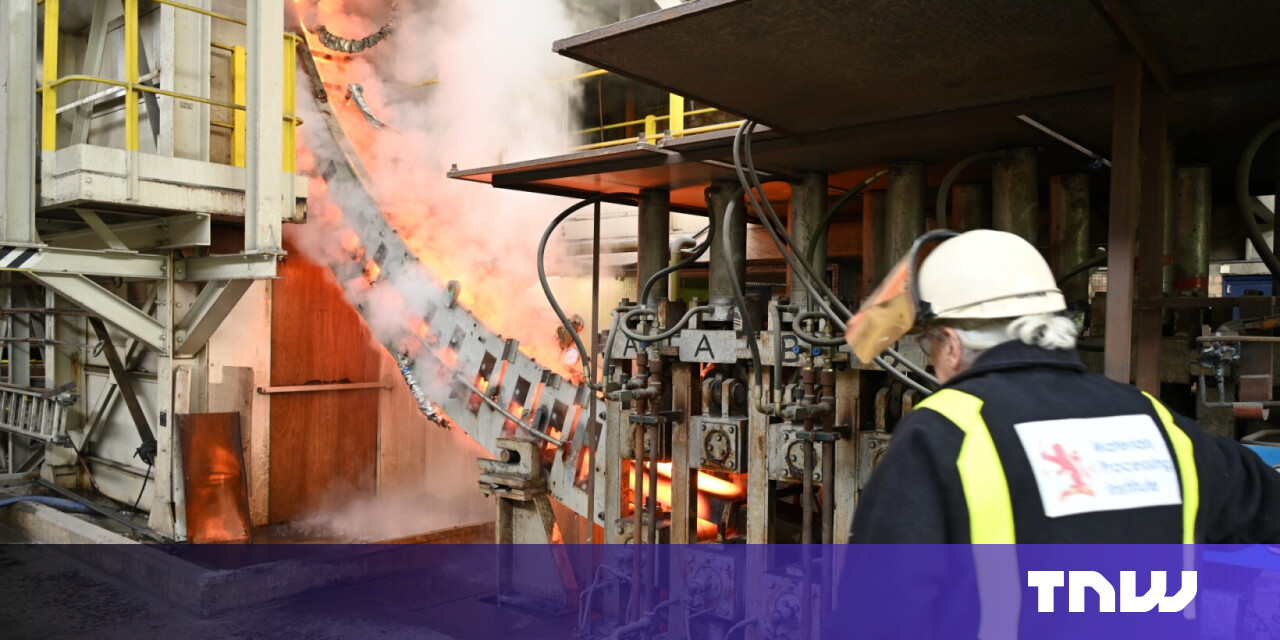
NEURONE forged the steel using an electric arc furnace powered by electricity rather than coal and housed at the Materials Processing Institute (MPI) in Middlesbrough. The UKAEA said its new forging method could make producing RAFM up to ten times cheaper than was previously possible.

“The production of 5.5 tons of RAFM fusion steel lays the foundation for cost-effective production of these types of fusion steel for future commercial fusion programs,” he said David Bowden, who leads the NEURONE program.

Despite enormous advances, fusion energy has always seemed like a technology that is “still 20 years away.” But the tides could be changing. According to a survey at the International Atomic Energy Agency (IAEA) forum in London last year, 65% of industry insiders think so Fusion will produce electricity for the network at a reasonable cost by 2035 and 90% by 2040.