

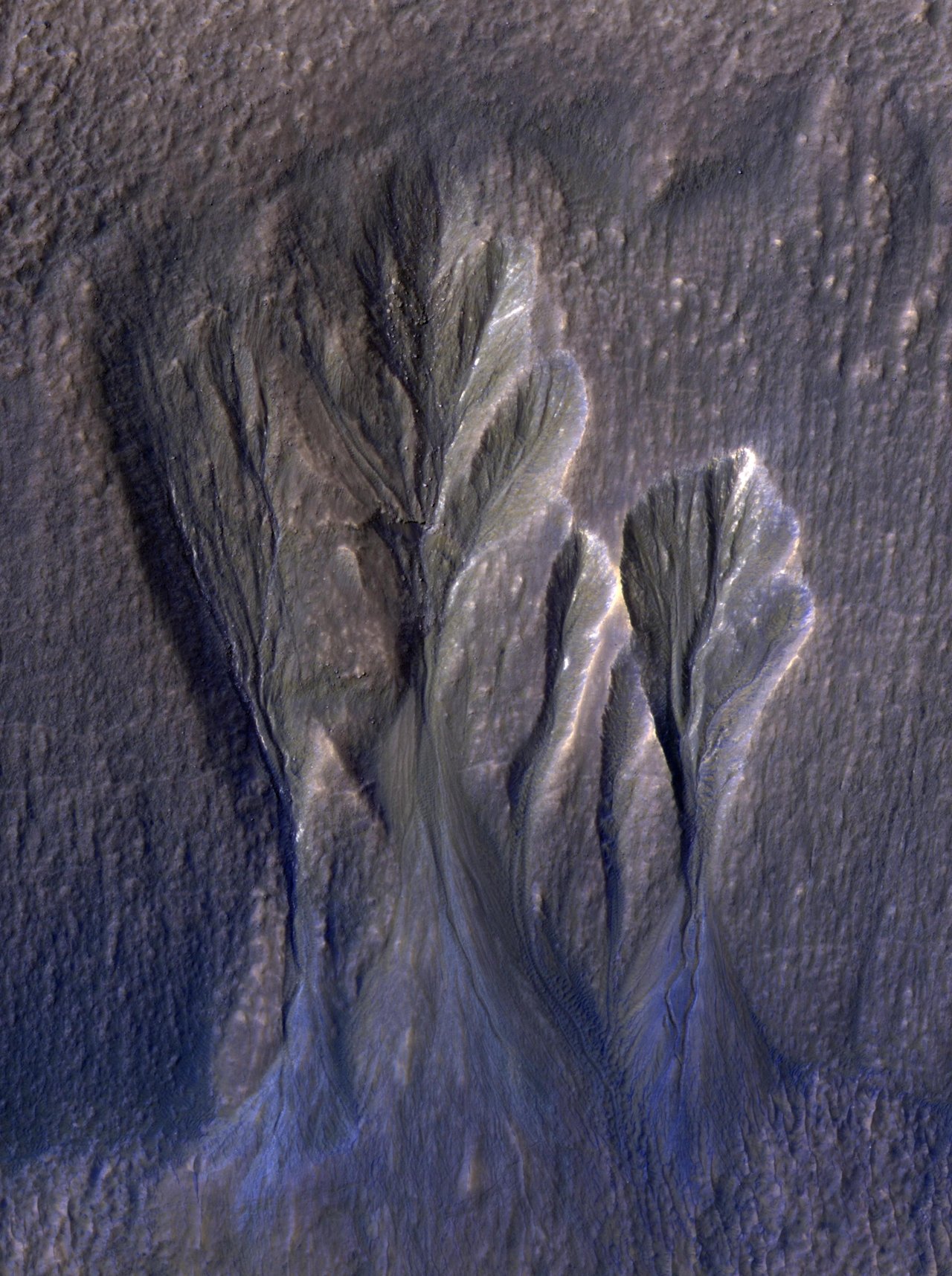
Mars has fascinated us for centuries. Early observations gave the false impression of an intelligent civilization, but early visiting probes revealed a barren, desolate world. There are several meters of water ice beneath the surface, and a recent NASA study suggests that sunlight could reach this layer. If this is the case, this could enable photosynthesis in meltwater. This actually happened on Earth, and biologists have found similar pools full of life.
Exploration of Mars by space probes began in the 1960s. It began with the Soviet Mars-1 mission and NASA's Mariner mission and was soon followed by the well-known Viking landers in 1976. These were the first missions to examine surface material for signs of life. The Mars Pathfinder mission took the Sojourner rover with it, and after the turn of the century the Spirit and Opportunity rovers followed. The Curiosity rover was among the newest visitors, along with Perseverance and China's Tianwen-1. The focus of later missions was to search for water and analyze the planet's climate and geology. This served not only to understand the conditions during the planet's evolution, but also to pave the way for human exploration.
The Viking 1 lander was the first to take a real selfie. This is a mosaic of high resolution images of Viking 1 at Chryse Planitia. Image source: NASA/JPL.
So far there is no evidence of life on Mars. However, the question has been bothering us for decades. Of all the planets in the solar system, Mars is the most likely place where primitive life once occurred, largely due to the discovery of liquid water in the distant past. Evidence of ancient dry riverbeds containing mineral deposits have been found across the planet, suggesting that Mars was once warmer, wetter and possibly far more habitable. Even organic molecules have been discovered by the Curiosity and Perseverance rovers, but researchers continue to search for evidence (past or present) of microbial life.
Mars, Credit NASA
A team of NASA researchers has published a paper outlining the use of computer models to aid the search. They have shown that sunlight can shine through Mars' water ice, perhaps even enough for photosynthesis to occur in shallow meltwater pools.
There are two types of ice on Mars: frozen water and frozen carbon dioxide. The study looked at water ice that was largely formed when snow fell on the surface during a Martian ice age millions of years ago. The team believes the key to the study is the dust particles that obscure the light reaching the deeper ice layers. They suggest that sunlight warms the dark dust more than the surrounding ice and then causes the ice to warm and melt. Some scientists believe that ice on the surface cannot melt due to the thin, dry atmosphere, causing it to turn directly into gas. This does not apply to the ice deeper in the surface layer.
Almost pure water ice can be seen in the ejecta surrounding this impact crater (8 meters in diameter), which was formed in 2008. The only reason we can see ice on the surface here is because this crater is so young. Over time, all of the ice sublimates and is no longer present on the surface. Image credit: High Resolution Imaging Science Experiment Camera, NASA/JPL-Caltech/University of Arizona.
Such a process has been observed on Earth, where dust heats ice, melting it and causing the dust to sink. Over time, the dust particles no longer sink through the ice, but still generate enough heat to melt the ice and create tiny cavities. Thriving ecosystems that harbor simple life forms have been found here.
The paper, published in Nature Communications Earth & Environment, suggests that the dusty ice at depths of up to 3 meters can produce enough light to enable photosynthesis. The underground meltwater pools are protected from evaporation by the ice above. It also provides some protection from radiation and represents a potentially habitable environment for simple life forms. The authors suggest that the areas would likely form in the Martian tropics between latitudes 30 and 60 degrees in both hemispheres.
Source: Could life exist under Mars ice? NASA study suggests possibilities
Like this:
Load…

Comments are closed.