

From DAILY SKEPTIC
by Chris Morrison
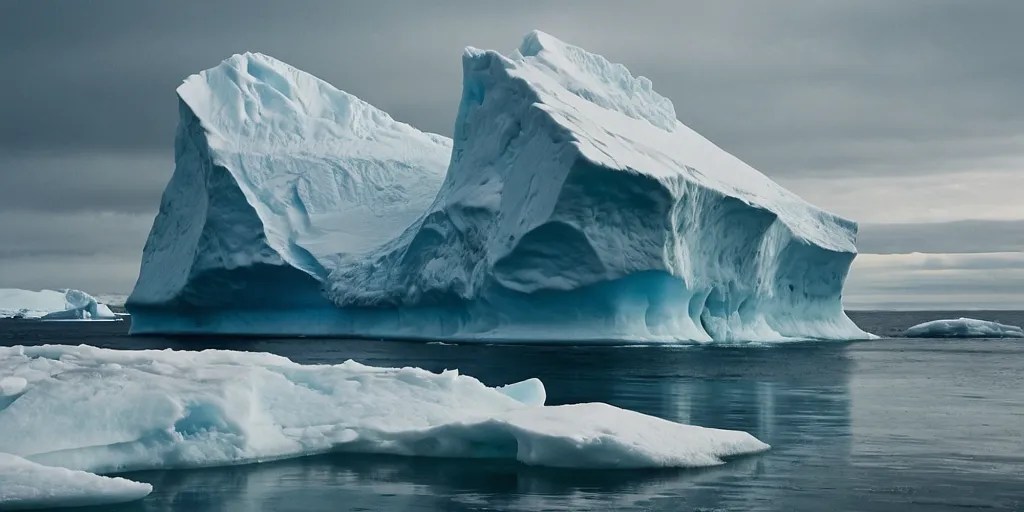
Sea ice around Antarctica has “slowly increased” since continuous satellite records began in 1979, with changes caused by natural climate fluctuations. In an article published earlier this year, four environmental scientists also say that any evidence that humans are responsible for change is “inconclusive.” Of course not for the mainstream media, which has been making fun of Antarctica's sea ice for decades to promote the net-zero fantasy. Last year there was a decline in sea ice over the winter, prompting Financial Times science editor Clive Cookson to say that the entire area faces “a catastrophic cascade of extreme environmental events… that will impact climate around the world “.
Looking at the satellite record, the scientists note that there was a “sustained and gradual” expansion of sea ice until around 2014, followed by a brief period of sudden decline from 2014 to 2019. Growth then resumed, but at around that time There will be a temporary decline in 2022. These fluctuations, which were also observed before 1979, were caused by a number of natural atmospheric and oceanic factors. This is all known, of course, with the EU weather service Copernicus recently admitting that overall sea ice extent “shows large annual fluctuations and has not shown a clear long-term trend since 1979.” On the other side of the world, Copernicus correctly notes that the cyclical decline of Arctic sea ice “has leveled off since 2007.”
For journalists following the narrative, this must all be very confusing. Undoubtedly, the greatest confusion reigned among their unquestioning ranks when they happened upon Dr. Walter Meier from the US National Snow and Ice Data Center came across. He was in full activist mode when he claimed that the sea ice decline in winter 2023 is “so far beyond anything we’ve seen before, it’s almost mind-boggling.” But maybe not as confused as Dr. Meier himself, who ten years earlier was part of a scientific team that unlocked the secrets of the early Nimbus photo data. These showed significant variability in Antarctic sea ice in the 1960s, including a high in 1964 that was not observed again until 2014, and a low in 1966 that was similar to the recent decline. At that time, Dr. Meier said that extreme ice highs and lows are “not that unusual”.
During the Great Antarctic Ice Storm of 2023, the BBC said it showed a worrying new benchmark for the region “that once seemed resistant to global warming.” Those who strive for accuracy may find that this is still the case. Antarctica has barely warmed in the last 70 years.
Little by little, the horrific fears used by Net Zero fanatics to promote mass climate psychosis among the human population are being revealed as wishful thinking. In recent decades, alarmists have taken their cue from the ozone hole scare that began in 1974. At the time, two scientists claimed that widespread industrial use of chlorofluorocarbons (CFCs) was destroying the protective ozone layer in the atmosphere. Subsequently, an ozone hole was discovered over Antarctica every year and CFCs were banned by an international agreement in 1995. The two scientists won the Nobel Prize for their work, and activists claimed it was all a great triumph that showed what could be achieved when people acted together to protect the planet. The Nobel Prize winners were accepted and activists turned to other bogeymen and proposed bans. What happened to the ozone hole, you ask? Well, as always, this has continued to expand and contract, and this year the hole is bigger than it has been in 30 years. Whisper it quietly – there seems to be a natural variation at work here.
As readers will no doubt be aware, excitement is growing over the prospect of another “Hottest Year Evah” for 2024. After a nearly nine-year break in temperatures, there has been a bit more warmth recently as scientists examine a range of natural fluctuations previously often seen.
Hottest year claims are based on woefully incomplete temperature records that are barely 100 years old. In the case of ocean temperatures, accurate and complete global records date back less than 20 years. The temperature data itself, as we have seen in many Daily Skeptic articles, has been almost constantly homogenized/reanalyzed/invented/adjusted. Most individual temperature records around the world have been distorted by urban heat, while the Met Office in the UK appears to be extremely proud of a national high in 2022 when three Typhoon jets landed at an RAF air base. If we take the proxy data into account, it is likely that temperatures were just as high in the Roman and Medieval periods, while 8,000 years ago the great northern ice sheets began to melt, favored by temperatures at least 3°C higher than today. Again, it is difficult not to conclude that natural fluctuations play the dominant role in controlling the climate thermostat.
Thoughts and prayers are also the order of the day for those who care about the disappearance of all corals. Three years of record growth on the huge Great Barrier Reef put an end to this headliner. Polar bears are just as bad and continue to breed to reach new Arctic highs. Satellites continue to discover massive penguin colonies in Antarctica, and the mainstream media seems shocked into silence to report that the eyes in the sky have recently discovered a vast plant cover on Earth. There is a growing trend to debunk any claim about “extreme” weather – the great citizen journalist Paul Homewood even writes a book every year about the BBC's more egregious climate howlers, and that's the extent of it that needs to be digested.
The Net Zero project is beginning to crumble around the world as citizens make their feelings known through votes and sometimes stones. Nobody can or wants to live in a world without hydrocarbons. Central to this trend is the emerging realization that the scientific process regarding climate has been destroyed for decades and replaced by an increasingly ridiculous, “fixed” scientific narrative.
Chris Morrison is the environmental editor of the Daily Sceptic.
Like this:
Load…

Comments are closed.