Categories
Technology

The EU invests Eight billion euros in state assist in chips and microelectronics

The EU has approved a €8.1 billion government aid package to boost chip development and strengthen the Union’s microelectronics and communications sectors.

Funding is provided as part of “Important Projects of Common European Interest” (IPCEI) – an initiative that facilitates access to public funds.

The IPCEI will implement 68 projects in 14 member states: Germany, France, the Netherlands, Austria, the Czech Republic, Finland, Greece, Ireland, Italy, Malta, Poland, Romania, Spain and Slovakia.

A total of 56 companies will be involved – from big players like Airbus and ASML to startups and SMEs – as well as over 30 associated partners in five other member states.

Tickets are officially 90% sold out

Don’t miss your chance to be part of Europe’s leading tech event

The projects aim to research and develop “resource efficient technologies and components” including chips, sensors and processors; new materials and tools; and chip design and manufacturing processes.

“Microchips are the backbone of Europe’s innovation and industrial competitiveness in a digital world,” said Margrethe Vestager, Vice-President in charge of competition policy. “We have to be pioneers and develop really innovative solutions and their first industrial use in Europe.”

The IPCEI aims to harness upcoming technologies for the advancement of multiple sectors, including 5G and 6G telecom, autonomous driving, AI and quantum computing.

The first products may come to market as early as 2025, but overall project completion is expected in 2032. By then, the IPCEI hopes to have unlocked another €13.7 billion in private investment, bringing the total impact to €22 billion.

Meanwhile, the EU is finalizing its chips law with the aim of boosting domestic semiconductor chip production and capturing at least 20% of the world market share by 2030.

Categories
Entertainment

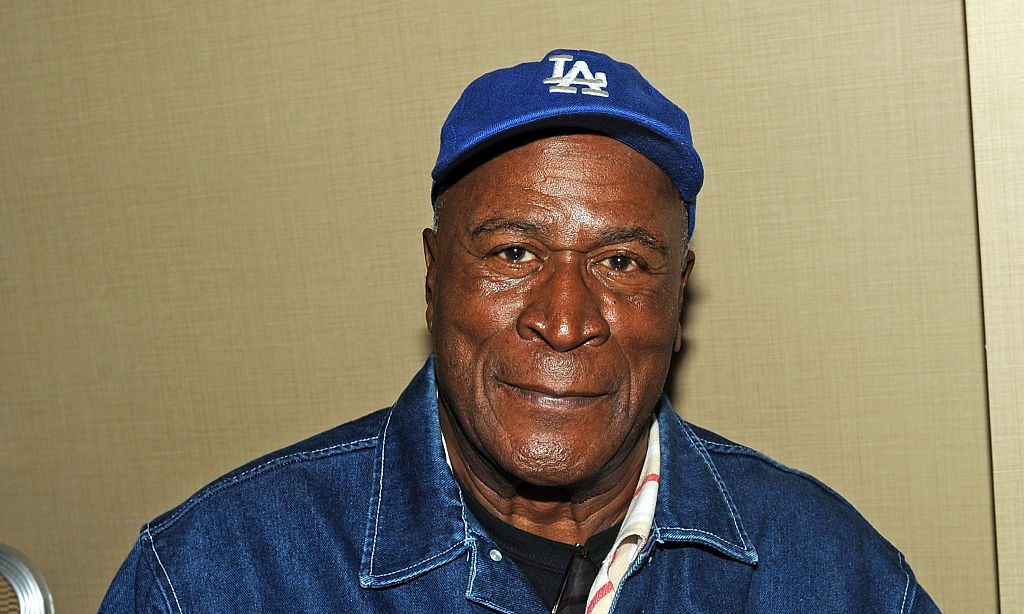
John Amos denies his daughter’s claims that she was abused

Legendary “Good Times” actor John Amos is reportedly being hospitalized in intensive care. But he denies his daughter’s claim that he is in critical condition after being a victim of elder abuse.

His daughter Shannon Amos claimed he was a victim of elder abuse and financial exploitation, according to a GoFundMe she arranged on his behalf.

John Amos and Esther star in “Good Times” (TV series 1974-1979). pic.twitter.com/lY76cBgyre

— Skip_Bolden 💙 🎬 🎞️ (@BoldenSkip) May 28, 2022

John Amos denies daughter’s claim he is a victim of elder abuse and confirms hospitalization

However, Amos himself told TMZ that no one is abusing him and that he is not currently fighting for his life. The TV star reportedly doesn’t know why his daughter started GoFundMe.

Amos’ representative Belinda Foster tells the outlet that he was taken to the hospital because of fluid buildup in his lower body and abdomen. TMZ reports that the health crisis has left him with heart problems, but he is reportedly not in life-threatening danger.

In fact, doctors have since drained all of the fluid, and Foster says Amos is almost back to 100 percent health.

RELATED: John Amos will reprise his role in the ‘Coming To America’ sequel

Initial reports from Amos’ daughter indicated that the ‘Coming to America’ actor was fighting for his life after suffering abuse at the hands of the elderly. Shannon also said her father was a victim of financial exploitation.

Daughter started GoFundMe with a goal of $500,000, ostensibly for father’s legal and healthcare costs

Last month, Shannon says she received a troubling phone call from her father. The 83-year-old reportedly told her he was in a Memphis hospital.

Shannon did not provide any specifics or reveal who she believes is abusing him. However, according to GoFundMe, she described the perpetrator as one of Amos’ handlers.

She reportedly started the fundraiser to help her father with legal expenses, care and aftercare while he tries to bring those allegedly responsible to justice.

As of Thursday (June 8), the fundraiser has raised $3,445 of the lofty goal of $500,000.

It’s unclear what impact this new revelation will have on GoFundMe.

Amos is best known for his roles as the adult Kunta Kinte in the groundbreaking miniseries Roots, Good Times, and Coming to America.

Categories
Science

A Historical past of Failed Predictions • Are You Completed?

The narrative surrounding Arctic sea ice has been one of consistent warning punctuated by a string of forecast errors spanning decades. Scientists have long been predicting the sinking of the Arctic summer ice, but their deadlines have kept coming up, leaving us with a track record of failed predictions. The latest claim is no different, suggesting it is now too late to save Arctic summer ice. But as we have seen, the timeline for these forecasts can shift significantly and unpredictably.

In the current study, led by Prof. Seung-Ki Min of Pohang University in South Korea and Prof. Dirk Notz of Universität Hamburg in Germany, they claim that the Arctic will be ice-free by September in the coming decades. However, it should be noted that forecasts of this type have been made before and subsequently revised. The once feared “first ice-free summer” was initially predicted for 2012, but then fluctuated back and forth for years. This kind of time jumping has generated considerable skepticism and undermined the credibility of such predictions.

Abstract

The IPCC Sixth Assessment Report found, based on the latest generation of simulations, that the Arctic should be practically ice-free on average in September under medium and high greenhouse gas emission scenarios, but not under low greenhouse gas emission scenarios Coupled Model Intercomparison Project Phase 6 (CMIP6) models. Here, using an attribution analysis approach, we show that a dominant impact of greenhouse gas increase on the Arctic sea ice cover is detectable in three observation datasets in all months of the year, but is underestimated by CMIP6 models on average. By scaling the models’ sea ice response to greenhouse gases to best match the observed trend with an approach validated in an incomplete model test, we predict an ice-free Arctic in September under all considered scenarios. These results underscore the profound impact of greenhouse gas emissions on the Arctic and underscore the importance of planning for and adapting to a seasonally ice-free Arctic in the near future.

https://www.nature.com/articles/s41467-023-38511-8

The most important finding here is that these are forecasts, i.e. models based on certain conditions and parameters. The crux of the matter lies in the unpredictability of natural phenomena and the multitude of factors that influence them.

The new study claims that 90% of the melting is due to human-caused global warming, but the remaining 10% is due to natural factors such as fluctuations in the sun’s intensity and emissions from volcanoes. Because of this natural variability in the climate system, researchers cannot pinpoint a specific year for the first ice-free summer.

Even Prof. Mark Serreze, the director of the National Snow and Ice Data Center, who was not involved in the study, acknowledges the difficulty of making accurate predictions. He concedes that his earlier prediction of an ice-free Arctic by 2030 may have been too aggressive. This sort of retraction only reinforces the reality of the situation: Arctic sea ice forecasts have been notoriously inaccurate over time.

The inherent complexity of the Earth’s climate system and the inability to account for every single variable affecting Arctic ice melting put these predictions on shaky ground. As has been shown time and time again over the years, alarming deadlines for an ice-free Arctic have come and gone, leaving us to question the credibility of these predictions. In the field of science, it is crucial to distinguish between what we know and what we assume.

Decades of failed predictions about the end of Arctic sea ice should prompt us to take a critical look at these new findings. As we continue to explore and learn about Earth’s complex climate system, it is important to strike a balance between caution, skepticism, and a willingness to reconsider our models and predictions.

HT/Hans Erren and strativarius

Like this:

How Loading…

Categories
Health

The Allen Institute companions with AWS to create the primary map of the mind

Amazon Web Services logo at the Web Summit in Lisbon.

Henrique Casinhas | Sopa Pictures | flare | Getty Images

Just as the periodic table is fundamental to chemistry and the Human Genome Project revolutionized modern genetics, researchers at the Allen Institute for Brain Science have joined forces with it Amazon Web Services to create what could become a “transformative” new resource for the field of neuroscience.

AWS announced Wednesday that its technology will help the Allen Institute create a map of the human brain called the Brain Knowledge Platform. This platform, the first of its kind, is designed to be a complete reference of individual cells in the brain and will eventually serve as the world’s largest open-source brain cell database.

The Allen Institute uses single-cell genomics technology to build the new platform. Researchers measure the genes used by individual brain cells to create a ‘cell fingerprint’, and cells with similar fingerprints are grouped into ‘cell types’, resulting in a high-resolution map of the entire brain.

Once the reference is complete, scientists should better understand the connections between genetics and various cognitive functions. Researchers believe the platform could provide insights into why diseases like Alzheimer’s and Parkinson’s occur.

“This is really like the brain’s periodic table,” said Dr. Ed Lein, senior researcher at the Allen Institute for Brain Science, on Wednesday during a presentation about the platform in Washington, DC “It’s being revealed in a much greater complexity than we’ve ever had access to before.”

The Allen Institute is a non-profit research institute based in Seattle, Washington. Comprised of a number of different institutes, including one that focuses on neuroscience, it is perhaps best known for producing a number of different extensive data resources.

But while the Allen Institute is no stranger to data, there are hundreds of billions of cells in the brain, so creating a reference like the Brain Knowledge Platform means researchers are grappling with vast amounts of data.

“We’re running into these huge, huge data size issues right now,” Lein said during a briefing with reporters on Wednesday. “The amount of data is getting bigger and bigger.”

Therefore, the Allen Institute uses cloud computing and machine learning from AWS to standardize and consolidate complex brain data in one place.

When researching genetics and imaging, scientists often work with petabytes and even exabytes of data. dr Rowland Illing, director of international health in the public sector at AWS, said at the briefing that consuming 40 petabytes of data would require someone to watch 4K video 24 hours a day, seven days a week for 100 years.

The amount of data available to researchers is expected to continue to grow in the coming years, but Lein said there is plenty of brain data in the field of neuroscience as well. The problem, he said, is that much of it is disorganized and decentralized, making it difficult for researchers to access it.

The Allen Institute plans to use AWS technology to successfully interpret this disparate data, even if it’s stored in different formats and in different locations. Lein said hopefully this will further democratize access to knowledge and bring parts of the neuroscientific community together.

“While this is still in its infancy, the goal of the Brain Knowledge Platform is to transform this fragmented landscape of neuroscience information into a unified ecosystem,” he said.

The Allen Institute will work to build the Brain Knowledge Platform over the next five years. Lein said it’s still in the early stages, but the potential of the technology is immense.

“If we can do that, imagine the impact on the field,” he said. “We can unite the different parts of the discipline that currently cannot communicate with each other. We can accelerate our understanding of brain function as well as new approaches to treat disease.”

Categories
Sport

The Reds’ Elly De La Cruz hits her first MLB residence run from 458 toes

CINCINNATI — Elly De La Cruz blasted a 458-foot drive for his first major league home run, and Will Benson hit a game-winning home run in the ninth inning that gave the Cincinnati Reds an 8-6 win over Los Angeles on Wednesday night and extended Die The Dodgers’ losing streak has risen to four season highs.

De La Cruz, a 21-year-old switch hitter who was named Baseball’s Top Young Talent by ESPN’s Kiley McDaniel in his updated rankings last month, hit a 0-1 fastball by Noah Syndergaard in the first inning. The ball left its racquet at 114.8 mph and landed in the back rows of the right stand at Great American Ball Park for a two-barrel home run that took the score to 2.

A day after making his big league debut, De La Cruz had the second-hardest hit home run by a player 21 or younger since Statcast began keeping a record in 2015, behind only Vladimir Guerrero Jr. of the Toronto Blue Jays at 115, 9 miles per hour on August 21st 2020.

“The first thing I thought was the ball was gone,” De La Cruz said through a translator. “I didn’t know where it ended up. I looked at my teammates. They told me it almost left the building.”

Editors Favorites

2 relatives

De La Cruz played as shortstop a day after third place and finished the game 2-4 at plate. In the third round he managed a triple with a curveball, which hit the wall with four jumps right in the middle. According to Statcast, he finished third in 10.83 seconds, the fastest time in the major leagues this season. It was the second-fastest time since the start of the 2020 season, behind 10.75 seconds for the Arizona Diamondbacks’ Corbin Carroll on Oct. 3.

Cincinnati overcame a 6-2 deficit in a four-run third through Jonathan India’s sacrificial flight, Spencer Steer’s RBI single and Tyler Stephenson’s two-run home run.

TJ Hopkins hit an infield single in the ninth run, and Benson hit a home run against Evan Phillips (1-2), giving Cincinnati its second straight walkoff win and a three-game winning streak. Benson became the third Cincinnati player with a walk-off for his first home run of his career, after Jay Bruce on May 31, 2008 and Drew Stubbs on August 20, 2009.

“Honestly, it’s a dream come true,” Benson said. “I tried to prepare myself. I knew my time to bat was near. I knew it.

The Associated Press contributed to this report.

Categories
Entertainment

Raquel Leviss wished an actual battle with Tom Sandoval and Ariana Madix

In an interview filmed six days after the reunion, Leviss dropped a big bombshell, declaring it was “important” that she finally told the truth.

“I think I’ve lied all along and cheated to the point where I don’t want to lie anymore,” Leviss said. “But it’s all out there. The worst is out there, but I still have to lie about certain timing things.”

When asked by a producer why she lied, Leviss said Sandoval felt “it would be less hurtful to say that this isn’t going to continue for long.”

When did your affair actually start? Leviss revealed they first met when the cast were in Mexico for Shay’s wedding and it became a regular occurrence thereafter. “It definitely picked up speed after filming,” she said.

Leviss then confirmed that she met Sandoval’s family and traveled to his hometown of St. Louis.

Finally, Leviss revealed that she and Sandoval slept together when Madix was out of town for her grandmother’s funeral.

“That’s the only story we agreed to clarify and I know Tom wanted to lie about it because getting involved with someone’s boyfriend in their own house after they’ve moved out looks really bad.” I went into town for a funeral of all things,” said a crying Leviss. “Well I don’t know, that killed my soul. I’m so sick of lying I hate it. I hate being cheating. It’s terrible.”

Leviss admitted why she originally agreed to lie about the schedule and that Sandoval asked her not to reveal the information. “Right now that I’m so isolated,” she explained, “I feel like Tom is the only person I have and if I had just betrayed him, I really wouldn’t have anyone.”

Categories
Technology

DeepMind’s new AI makes use of video games to enhance basic algorithms

DeepMind has applied its mastery of games to a more serious area: the fundamentals of computer science.

Google subsidiary today unveiled AlphaDev, an AI system that discovers new fundamental algorithms. According to DeepMind, the algorithms it discovered outperform those refined by human experts over decades.

The London-based lab has big ambitions for the project. As the demand for computing power grows and silicon chips reach their limits, fundamental algorithms become increasingly important will have to become exponentially more efficient. By improving these processes, DeepMind wants to change the infrastructure of the digital world.

The first objective of this mission is Sorting algorithms used to order data. Under the guise of our devices, they drive everything from search rankings to movie recommendations.

To improve their performance, AlphaDev studied assembly language instructions used to create binary code for computers. After an extensive search, the system discovered a sorting algorithm that outperformed previous benchmarks.

To find the winning combination, DeepMind had to revisit the feat that made it famous: winning board games.

Play the system

DeepMind has made a name for itself in games. In 2016, the company made headlines with its AI program defeated a world champion at Go, an incredibly complicated Chinese board game.

After the win, DeepMind built a more general system: AlphaZero. Using a so-called trial-and-error process reinforcement learning, The program not only mastered Go, but also chess and shogi (also known as “Japanese chess”).

AlphaDev – the new algorithm builder – is based on AlphaZero. However, the influence of gaming goes beyond the underlying model.

“We punish it for mistakes.

DeepMind formulated AlphaDev’s task as a single player game. In order to win the game, the system had to do it Create a new and improved sorting algorithm.

The system played its moves by choosing assembly instructions that were added to the algorithm. In order to find the optimal instructions, the system had to examine a large number of command combinations. According to DeepMind, the number was similar to the number of particles in the universe. And just one bad choice could invalidate the entire algorithm.

After each movement, AlphaDev compared the algorithm’s output with the expected results. If the output was correct and the performance efficient, the system received a “reward” – a signal that it was performing well.

“We punish it for mistakes and reward it for finding more and more of these sequences that are sorted correctly,” Daniel Mankowitz, the lead researcher, told TNW.

As you probably guessed, AlphaDev won the game. But the system not only found a correct and faster program. Novel solutions to the task were also discovered.

The sorting algorithm resulted in improvements that were up to 70% faster than benchmarks for shorter sequences and about 1.7% faster for sequences longer than 250,000 items. Image credit: Google DeepMind

The new algorithms included sequences of commands that stored a single instruction each time it was used. Dubbed “swap and copy moves,” they served as shortcuts to further algorithmic efficiencies.

DeepMind compares the approach to another moment in games: the legendary “Train 37”, what an AI System played against Go champion Lee Sedol.

The strange movement shocked human experts who thought the machine had made a mistake. But they soon discovered that the program had a plan.

“In the end, not only did it win the game, but it also influenced the strategies that professional Go players started using,” Mankowitz said.

The win marked the first time AI had defeated a top-ranked Go pro – a milestone that experts had predicted was still a decade away.

Three years later, Lee retired from professional Go competition. He attributed the decision to the capabilities of his AI rivals.

“Even if I become number one, there is one unit that cannot be defeated,” he said.

fix computers

AlphaDev’s sorting algorithms are now available as an open source solution Main C++ library, where it is available to millions of developers and companies. According to DeepMind, it’s the first change to this part of the sorting library in over a decade — and the first algorithm developed through reinforcement learning to join the library.

After the sorting game, AlphaDev started playing with hashing, which is used to retrieve, store, and compress data. The result was another improved algorithm that is now available been released in the open source rappel library. DeepMind estimates that it is used trillions of times a day.

Finally, the laboratory introduces itself AlphaDev as a step towards transforming the entire computing ecosystem. And it all started with playing board games.

Categories
Science

JWST exhibits how the early universe frantically shaped stars

We can peer into regions in our vicinity to the Milky Way and witness orgies of star formation. The closest region is in the Orion Nebula, where astronomers have identified more than 700 young stars. They range from just 100,000 years – still in its infancy for a star – to over a million years.

But we are now more than 13 billion years after the Big Bang. What did star formation look like back when the conditions in the universe were still so different?

The JWST was conceived, designed and launched to answer questions about the early Universe. The JWST Advanced Deep Extragalactic Survey (JADES) program is a deep-field imaging and spectroscopic survey of galaxies from about z~12 to z~2, about 370 million to 3.3 billion years after the Big Bang. His goal is to understand the formation and evolution of these galaxies and their stars in the early days of the universe, one of the great questions in astronomy.

Remove all ads on Universe today

Join our Patreon for just $3!

Get the ad-free experience for life

“In the past, the earliest galaxies we could see just looked like little blobs. And yet these spots represent millions or even billions of stars at the beginning of the universe.”

Kevin Hainline, University of Arizona at Tucson

JADES revisits a region of the sky familiar to astronomy fans: the Hubble Ultra Deep Field (HUDF). The HUDF is a low-field image of a small region of sky taken over 11 observing days over months by the Hubble Space Telescope capture. It contains about 10,000 galaxies, and the smallest and reddest are from when the Universe was only about 800 million years old.

https://www.youtube.com/watch?v=le3ASDvZy_s

The JADES program uses two of the JWST’s instruments together – NIRSpec (Near-Infrared Spectrograph) and NIRCam (Near-Infrared Camera) – to study the region in and around the HUDF in more detail and detail. The experiment required 770 hours of observation time. The JADES team has already identified hundreds of galaxies from when the Universe was less than 600 million years old. Some of them are full of hot young stars.

Marcia Rieke from the University of Arizona in Tucson is co-director of the JADES program. “With JADES we want to answer many questions, such as: How did the earliest galaxies form? How fast did they form stars? Why do some galaxies stop forming stars?” said Rieke.

The background to these questions concerns the epoch of reionization (EOR) of the universe.

The EOR occurred within a billion years of the Big Bang. Previously, the universe was filled with neutral hydrogen, an opaque gas that was impervious to light for hundreds of millions of years. Only when stars formed and the hydrogen reionized did the universe become transparent.

This diagram of the evolution of the universe from the Big Bang to the present shows the epoch of reionization. Image credits: NASA, ESA and A. Feild (STScI)

Part of JADES focuses on galaxies that existed 500 to 850 million years after the Big Bang and during the EOR. Ryan Endsley of the University of Texas at Austin led this research. Endsley and his colleagues used JWST’s NIRSpec instrument to look for signs of star formation in these galaxies. They found it in abundance.

“Almost every single galaxy we find has these unusually strong emission line signatures, which indicate intense recent star formation. “These early galaxies were very good at making hot, massive stars,” Endsley said.

Massive stars burn hot and emit intense UV radiation. The radiation ionized the hydrogen atoms, removing the electron and leading to the EOR. The Universe today consists mostly of low-density ionized hydrogen and remains transparent and open to observation with our telescopes. Because the early galaxies of the Universe contained large numbers of hot, massive stars, they likely drove the reionization process.

The JADES team created an interactive tool to explore the imagery of the JWST. Lose yourself in it and marvel at some of the first galaxies ever to form in the universe. Photo credit: JADES

Endsley also found that these galaxies had periods of intense star formation and periods of weak star formation. Star formation may have increased dramatically as galaxies consumed clouds of star-forming gas. And the periods of low star formation may have been the result of the massive stars themselves. Massive stars quickly use up their fuel and explode as supernovae, which can drive energy into the surrounding gas, heating it and preventing it from condensing and forming new stars.

To understand the early Universe, astronomers must observe it. This is the strength of the JWST. Part of JADES focuses on galaxies that existed when the Universe was less than 400 million years old. These galaxies can help answer the question of how different star formation was then compared to now. The light from these galaxies is redshifted due to the expansion of the universe, and astronomers measure redshift to determine a galaxy’s age and distance. A redshift of 8 indicates that a galaxy existed when the universe was less than 650 million years old, only about a few hundred million years after the first stars and galaxies formed.

This slide from an AAS presentation highlights the survey region of the JWST Advanced Deep Extragalactic Survey (JADES). This area is in and around the Ultra Deep Field of the Hubble Space Telescope. The JWST images are both larger and deeper. Scientists used Webb’s NIRCam instrument to observe the field in nine different infrared wavelength ranges. Using these images, the team searched for faint galaxies that are visible in the infrared but whose spectra cut off abruptly at a critical wavelength. Credit: Kevin Hainline/JADES

Before JADES, astronomers had only identified a few dozen galaxies from this period, but the JWST has now found almost a thousand of them. This came as a surprise to astronomers who had no idea there were so many early galaxies. In fact, JADES has found 717 galaxies from when the Universe was between 370 million and 650 years old, although many of them require further confirmation. Also found was the furthest human-observed galaxy to date, JADES-GS-z13-0, which has a redshift of 13.2 and a light travel time of 13.395 billion years. Not only did it find them, but JWST’s view of them is far more detailed than any previous observations.

“Over 93% of the sources in this study have never been seen before.”

Kevin Hainline, JADES, University of Arizona at Tucson

“In the past, the earliest galaxies we could see just looked like little splotches. And yet these spots represent millions or even billions of stars at the beginning of the Universe,” said Kevin Hainline, part of the team that used JWST’s NIRCam to measure the redshifts of galaxies. “Now we can see that some of them are actually extended objects with visible structure. We can see clusters of stars forming just a few hundred million years after time began.”

Kevin Hainline presented some of the findings from JADES at this week’s AAS 242 meeting. His lecture begins at 5:00 p.m. He talks about the first 600 million years after the Big Bang. “It’s amazing that we can even talk about this thanks to JWST,” Hainline said. “Over 93% of the sources in this study have never been seen before.”

What view does the JWST share with astronomers about these early stars? “We find that star formation in the early universe is much more complicated than we thought,” added Rieke.

One of the surprising results from JADES is a galaxy at rest just 730 million years after the Big Bang. Dormant galaxies stop forming stars when they run out of gas. How could that happen so quickly?

What about black holes? What effect did they have on early galaxies? JADES will help find active galactic nuclei (AGN) that glow brightly as a galaxy’s black hole accumulates material. What role did black hole feedback play in the early universe? “Finding the link between galaxy growth and black hole growth is an important factor that we hope to elucidate as our samples become more complete,” the JADES team writes.

The universe’s first stars and galaxies made it what it is today. By reionizing hydrogen, the first stars triggered the transition from opaque to transparent during the epoch of reionization, ending the Dark Ages of the Universe. But there are things we don’t know.

When exactly did the first stars form? Why were there so many massive, hot stars compared to today? The first galaxies may have consisted mostly of dark matter, but not halos around modern galaxies. Instead, it was mixed with normal matter. What role did it play?

The early universe consisted of hydrogen, helium and light. Somehow these three things combined created the complexity we see around us today. We have a long list of questions about what happened and how things got where they are today.

Astronomers don’t have the answers to all of these questions, and for a long time observational results were scarce, leaving mostly theory to figure it all out. The venerable Hubble Space Telescope helped, but now we have the JWST, our most powerful instrument yet for studying the early Universe. Whether JADES can generate answers to these questions is not yet certain. But don’t bet against it.

The JADES team is publishing 14 new articles, and these articles are helping astronomers find answers.

More:

Like this:

How Loading…

Categories
Health

Lawmakers are pushing for extra info on Medicare protection

Rep. Nanette Barragan (D-CA) speaks alongside U.S. Secretary of Transportation Pete Buttigieg after touring the Ports of Los Angeles and Long Beach during a press conference at the Port of Long Beach January 11, 2022 in Long Beach, California .

Patrick T Fallon | AFP | Getty Images

Two Democratic lawmakers are asking Medicare to provide more information about how the program will deliver on its promise to cover Alzheimer’s treatments for seniors.

Rep. Anna Eshoo, the senior Democrat on the House Health Subcommittee, and Rep. Nanette Barragan said Medicare has failed to answer basic questions about how its insurance plan works.

Lawmakers told Chiquita Brooks-LaSure, director of the Centers for Medicare and Medicaid Services (CMS), in a letter Monday that it’s still “very unclear” how seniors will gain access to the new treatments.

Medicare has promised to cover the cost of Alzheimer’s antibody treatments the same day the drugs receive full Food and Drug Administration approval.

The federal health program will cover the treatments under Part B of the program for seniors. Part B typically covers treatments that seniors cannot perform at home on their own, such as IV fluids.

Under this policy, seniors could get coverage for Leqembi antibody infusion treatment from Eisai and Biogen as early as this summer. The FDA is expected to make a decision on Leqembi on July 6.

Leqembi slowed cognitive decline by 27% in a clinical trial, although the treatment also carries the risk of brain swelling and bleeding.

But Medicare will require patients to see a doctor who participates in what’s called a registry, which collects real-world data on how the drug works.

Eshoo and Barragan told Brooks-LaSure that they are concerned the registry could become a barrier to care.

CNBC Health and Science

Read the latest health coverage from CNBC:

Brooks-LaSure said last week that CMS will help set up a national registry to make it easier for doctors and clinicians to enter the necessary data about patients taking the drug.

However, lawmakers said CMS has not released details of how the required registry will actually work. The agency has not said when the registry will go live, what data will need to be collected and how patients can find doctors who participate in the system, Eshoo and Barragan said.

“Congress, physicians and patients at least deserve immediate answers to the above questions,” they said.

Medicare must clearly define how the registry will work and ensure the system is not a burden on patients and doctors, they added.

Legislators asked CMS to ensure that the registry does not create disparities in access for Black, Hispanic, Native American, and people living in rural areas.

In addition, Eshoo and Barragan said that Medicare should consider eliminating registration altogether.

“There must be clarity and transparency about the standards for coverage of FDA-approved treatments for fatal diseases with unmet medical needs,” lawmakers said. “Please do not allow CMS’s request for additional evidence generation to be an impediment to patient care.”

Categories
Sport

Roundtable zum NBA-Finale – Unsere Insider analysieren die größten Fragen vor Spiel 3

Wir haben zwei Spiele der NBA-Finals hinter uns und es ist ein totes Rennen (kein Wortspiel beabsichtigt).

Mit einem 1:1-Unentschieden vor Spiel 3 am Mittwoch (20:30 Uhr ET, ABC) behalten die Miami Heat dank eines 111:108-Sieges in Denver den Heimvorteil und haben die Chance, aus eigener Kraft die Führung zu übernehmen Rasen.

Eine der größten verbleibenden Fragen für die Heat ist die bevorstehende Rückkehr von Tyler Herro und wie er nach einer Handverletzung, die er sich in der ersten Runde gegen die Milwaukee Bucks zugezogen hat, wieder in die Aufstellung zurückkehren kann.

Nikola Jokic stellt mit 41 Punkten und 11 Rebounds in Spiel 2 weiterhin große Zahlen für die Nuggets auf, aber diese auffälligen Statistiken reichen nicht immer aus. Laut einer Studie von ESPN Stats & Information erzielte Jokic in den vier Nachsaison-Niederlagen der Nuggets durchschnittlich 41,8 Punkte, 10,8 Rebounds und 9,5 Assists pro Spiel.

Eine weitere interessante Tatsache: Wenn es im NBA-Finale 1:1 steht, gewinnt das Team, das Spiel 3 gewinnt, laut ESPN Stats & Info in 80 % der Fälle den Titel (32:8-Serienrekord). Dieser Trend hat sich jedoch in letzter Zeit nicht gehalten, da die Gewinner von Spiel 3 seit den Finals 2010 eine Bilanz von 4-4-Serien vorweisen können.

In welche Richtung wird sich diese Serie in Spiel 3 entwickeln? Unsere Insider diskutieren die wichtigsten Fragen, Trends und Handlungsstränge, während sich die NBA-Finals nach Miami wenden.

Der Heat, der die Meisterschaft gewinnt, wäre ___.

Ramona Shelburne: Eine der großartigsten Underdog-Geschichten in der NBA-Geschichte. Ja, letztes Jahr waren sie die Nummer 1 und erreichten erst vor drei Jahren das Finale, aber dieses Jahr waren sie im Grunde schon drei Minuten vor Ende des Play-in-Spiels gegen die Chicago Bulls am Ende. Wenn die Heat gewinnen, haben sie die Topgesetzten beider Konferenzen und drei der vier besten MVP-Kandidaten (Jokic, Joel Embiid, Giannis Antetokounmpo und Jayson Tatum) verdrängt.

Redakteurfavoriten

2 Verwandte

Ohm Youngmisuk: Erik Spoelstras größter Trainerjob in einer Karriere, die bereits zu den größten aller Zeiten zählt. Wenn er diese Meisterschaft gewinnt – mit diesem Kader, der im ersten Play-in-Spiel von den Atlanta Hawks in Brand gesteckt wurde, mit einem Kader, der mit Jimmy Butler so ziemlich einen echten Star und mit Bam einen großen Mann hat, der ein Star werden kann Adebayo, mit einer unterstützenden Besetzung aus ruppigen Rollenspielern – Spo verdient es, nicht nur zu den besten, sondern auch zu den legendärsten Trainern aller Zeiten gezählt zu werden.

Tim MacMahon: Der überraschendste Titellauf in der NBA-Geschichte. Ich glaube nicht einmal, dass Butler, so zuversichtlich er auch ist, behaupten kann, dass er das kommen sah. Dies ist eine Mannschaft, die das erste Play-in-Heimspiel zweistellig verloren hat und im Win-or-Go-Heimspiel nur drei Minuten vor Schluss in Rückstand geraten ist. Bei allem Respekt vor den Heat ist es erstaunlich, dass sie die beiden Teams mit der besten Bilanz eliminiert haben und mit der Nummer 1 des Westens 1:1 stehen.

Nick Friedell: Der größte Turnaround – in kürzester Zeit – in der jüngeren NBA-Geschichte. Die Heat wurden im ersten Play-in-Spiel von den Hawks dominiert. Im zweiten Durchgang hätten sie fast gegen die Bulls verloren. Sie haben den größten Teil der Nachsaison ohne die verletzten Herro und Victor Oladipo gespielt – aber sie finden immer wieder Möglichkeiten, zu gewinnen. Anfangs war es Butler, der die Gruppe anführte, aber jetzt steigert sich Spieler nach Spieler weiter und spielt auf einem höheren Niveau. Ich habe noch nie gesehen, dass ein Team in so kurzer Zeit das geschafft hat, was die Heat machen.

Marc Spears: Einem Disney-Film würdig. Wer würde Butler spielen? Wer würde Pat Riley spielen? Die Geschichte vom Play-in bis zur NBA-Meisterschaft wäre absolut unglaublich. So etwas hat es in den 76 Jahren der NBA noch nie gegeben. Und die unangekündigten, aber erfahrenen Heat haben genau die Banditentruppe, um diese junge und gefeierte Nuggets-Truppe zu besiegen.

Richtig oder falsch: Michael Malone hätte vor dem letzten Spielzug in Spiel 2 eine Auszeit nehmen sollen.

Youngmisuk: FALSCH. FALSCH. FALSCH. Normalerweise gehe ich davon aus, mir eine Auszeit zu nehmen und einen Spielzug vorzubereiten. Aber in diesem Fall habe ich kein Problem damit, dass Malone kein Timeout anruft. Wie Malone erklärte, hätte Spo, wenn er eine Auszeit genommen hätte, nur die Chance gehabt, sich aufzustellen und seine Verteidigung aufzubauen, was es für Jamal Murray wahrscheinlich noch schwieriger gemacht hätte, einen 3-Punkte-Wurf abzuwehren. Obwohl er Butler im Visier hatte, sah Murray gut aus, der Schuss war auf der Linie und er hat diesen Schuss schon einmal getroffen.

Mittwoch
Spiel 3: Nuggets at Heat, 20:30 Uhr

Freitag
Spiel 4: Nuggets at Heat, 20:30 Uhr

Montag, 12. Juni
Spiel 5: Heat at Nuggets, 20:30 Uhr

Donnerstag, 15. Juni
Spiel 6: Nuggets at Heat, 20:30 Uhr (falls erforderlich)

Sonntag, 18. Juni
Spiel 7: Heat bei Nuggets, 20 Uhr (falls erforderlich)

*Alle Zeiten Ost

Mehr: Playoff-Zeitplan, Neuigkeiten, mehr

Speere: FALSCH. Es hielt Miami auf Trab. Es hat einfach nicht funktioniert. „Murray ohne Drehbuch“ ist für mich eine gute Wahl. Es ist einfach nicht gefallen.

Friedell: FALSCH. Er vertraut seinen Spielern. Murray hat es gut hinbekommen – warum sollte man es nicht einfach hinfliegen lassen? Die Nuggets hatten den Schwung und sie glauben an Murray. Es gibt überhaupt kein Problem.

Shelburne: FALSCH. Ich denke, Murray hat eine gute Chance und er ist sowieso der Typ, den man haben möchte. Ich bin mir nicht sicher, ob eine Auszeit Murray oder irgendjemandem anderen ein besseres Aussehen verschafft. Es ermöglicht Miami lediglich, seine Verteidigung festzulegen.

MacMahon: FALSCH. Wie kann man sich darüber beschweren, dass einer der Elite-Clutch-Scorer der NBA ein anständiges Aussehen bekommt, das das Spiel in die Verlängerung geführt hätte? Murray hatte einen ziemlich guten Schuss, der einfach nicht reinkam.

Welches Team gewinnt Spiel 3 und warum?

MacMahon: Ich habe die Nuggets zu sechst ausgewählt und bleibe dabei, also werde ich mit Denver gehen, um auswärts zu gewinnen und den Heimvorteil zurückzugewinnen. Ich glaube nicht, dass die Heat die offensive Feuerkraft haben, um die Nuggets zu übertreffen, aber Miami wartet weiterhin mit 3-Punkte-Schießleistungen auf, die die erwarteten Ergebnisse in Bezug auf die Schussqualität deutlich übertreffen.

Mark J. Terrill/Getty Images

Speere: Die Heat haben in Spiel 2 einen großartigen Gegenzug hingelegt und ich gehe davon aus, dass Denver in Spiel 3 das Gleiche tun wird. Ich erwarte auch, dass Denver endlich lernt, im Laufe des Spiels Vollgas zu geben. Sicher, Malone predigt dies seinem Team energisch. Miami spielt in eine Richtung: alles raus. Denver scheint zeitweise inspiriert zu spielen und geht manchmal den Bewegungen nach. Da die Nuggets mit zwei Finalspielen unterwegs sind, werden sie endlich aufwachen und die nötige Energie mitbringen.

Friedell: Die Nuggets haben Jokic – und man muss davon überzeugt sein, dass sie zurückkommen und mit mehr Einsatz spielen werden, nachdem Malone sie nach Spiel 2 noch einmal herausgefordert hat. Die Heat sind so verdammt hart, aber Jokic und Murray sollten in der Lage sein, Dinge zu erreichen wieder auf Kurs. Wenn Michael Porter Jr. besser spielt und Kentavious Caldwell-Pope aufhört, schlechte Fouls zu begehen, werden die Nuggets in guter Verfassung sein.

Shelburne: Ich denke, die Nuggets reagieren und gewinnen das nächste Spiel. Sie sind kein großartiges Auswärtsteam, aber sie wurden in Spiel 2 nur ins Gesicht getroffen und von ihrem Trainer wegen mangelnder Anstrengung und Disziplin kritisiert. Ich denke, dass sie nach ein paar Tagen eine bessere Antwort finden werden, um sich neu zu gruppieren.

Youngmisuk: Ich mag die Chancen der Nuggets in Spiel 3. Ich denke, Spiel 2 dient als Weckruf für sie. Abgesehen davon, dass Malone im vierten Viertel ihren Einsatz und ihre Konzentration hervorhob, waren die Nuggets auf Erfolgskurs. Dies war ihre erste Niederlage seit fast einem Monat seit der Niederlage in Spiel 4 bei Phoenix in der zweiten Runde. Das war schmerzhaft, und Malone sorgte dafür, dass sein Team wusste, dass die Defensivfehler und mangelnde Anstrengung im vierten Viertel inakzeptabel waren. Die Nuggets waren in dieser Nachsaison sehr gut darin, sich von so schweren Niederlagen zu erholen. Miami muss das Spiel verlangsamen und hässlich machen, um es knapp zu halten.

Herro, der in Spiel 3 spielt, wäre ____.

Shelburne: Ein emotionaler Auftrieb. Offensichtlich haben die Heat in diesem Playoff-Lauf ohne ihn gewonnen, daher wird es in der Diskussion darum gehen, ob er irgendetwas stört – insbesondere für Leute wie Duncan Robinson, der wirklich von konstanten Minuten profitiert hat. Aber ich denke wirklich, dass die Heat gegen ein so starkes Team wie Denver eine weitere offensive Bedrohung gebrauchen könnten. Butler war bisher gut, nicht großartig.

Spiel 3: Nuggets in Miami
Mittwoch, 20:30 Uhr ET (ABC)

• Die größten Fragen vor Spiel 3

Spiel 2: Heat 111, Nuggets 108
• The Heat hat es herausgefunden… schon wieder
• Der Sieg in Spiel 2 bietet Heat Optionen

Spiel 1: Nuggets 104, Heat 93
• So hat Nikola Jokic eine Klinik aufgebaut
• Der Trend, den die Hitze durchbrechen muss

Serienvorschau
Shelburne: Jokics beruflicher Wendepunkt
Lowe: Was wird die Champions bestimmen?
• Mehr: Zeitplan, Neuigkeiten | Tipps von Experten

Youngmisuk: Ein Bonus für die Hitze. Ich denke, Miamis Sieg in Spiel 2 gibt den Heat mehr Polster, um Herro zurückzuholen. Wenn Miami warten möchte, bis Herro vollständig bereit ist, können die Heat ein weiteres Spiel warten, da die Serie 1:1 gegen Miami ausgeht. Die Rückkehr von Herro würde der Offensive allerdings einen großen Schub geben. Das Risiko besteht natürlich in einer erneuten Verletzung.

Friedell: Ein netter Offensivspieler, den man auch abseits der Bank haben kann. Was auch immer Herro der Gruppe geben kann, wäre ein Pluspunkt, insbesondere angesichts seiner Fähigkeit, den Boden zu dehnen, aber erwarten Sie nicht, dass er schwere Minuten spielt. Spoelstra weiß, dass der junge Guard seit sieben Wochen nicht gespielt hat, und er versteht, dass er bei seiner Rückkehr keine großen Erwartungen an Herro haben sollte. Wenn er nicht früh punktet, wissen die Heat, dass sie Leute haben, die den Job machen werden.

MacMahon: Interessant. Ich bin mir nicht sicher, ob es der Hitze helfen oder schaden würde. Es besteht ein gewisses Risiko, die Rotation nach solch einem großartigen Lauf zu stören, unabhängig davon, ob Herro startet oder von der Bank kommt. Er wäre ein Verteidiger, den Denver ins Visier nehmen könnte, aber Herros Fähigkeit, Tore zu erzielen und zu kreieren, könnte Miami sicherlich einen Schub geben.

Speere: Herro erzählte Ros Gold-Unwude von ESPN, dass er immer noch Schmerzen beim Schießen verspüre. Aber das sind die NBA-Finals. Jeder hat mit etwas zu tun. Auch wenn Herro dem Heat nur 10 bis 15 Minuten Zeit geben kann, ist sein Schuss ein großer Erfolg. Ich würde erwarten, dass er von der Bank kommt. Spoelstra müsste mit seinen Wachen einige schwierige Entscheidungen treffen, aber das ist ein gutes Problem.

Welcher Spieler außer Jokic hat den größten Einfluss auf diese Serie?

Speere: Adebayo. Mit durchschnittlich 23,5 Punkten, 11 Rebounds und 4,5 Assists war er bislang sensationell. Ich bin mir sicher, dass ihn all diese Joker-Gerede inspiriert haben. Die Finals sind für Bam ein Moment, der NBA daran zu erinnern, wozu er fähig ist.

Holen Sie sich Ihre Lieblings-Live-Sportarten, Geschichten und Originale mit ESPN+, Disney+ und Hulu. Upgraden Sie auf einen Disney-Bundle-Plan und beginnen Sie noch heute, für jeden etwas zu streamen!

Shelburne: Murray. Eine der wichtigsten Anpassungen, die Miami am Sonntag vorgenommen hat, war, Butler auf Murray zu setzen, weil er in Spiel 1 so effektiv war. Das sagt etwas über den Respekt aus, den die Heat ihm entgegenbringen.

MacMahon: Adebayo. Fragen Sie einfach Spoelstra: „Wir können gar nicht genug betonen, wie schwierig seine Aufgaben in dieser Serie sind. Aus den unzähligen Gründen, auf die ich nicht näher eingehen muss, die wohl härteste Deckung der Liga zu übernehmen, und dann er.“ muss auch für uns eine große Offensivrolle übernehmen.“

Youngmisuk: Murray. Alles, was er tut, wird Einfluss darauf haben, ob die Nuggets gewinnen oder verlieren. Wie in Spiel 2 gezeigt, kann Jokic 41 Punkte haben, aber die Nuggets verlieren trotzdem. Jokic schafft es nicht alleine. Die Nuggets stehen in dieser Nachsaison 0-3, wenn Jokic 40 oder mehr Punkte erzielt. Damit Denver einen Titel gewinnt, muss Murray die Hitze länger dominieren. Und selbst bei Miamis Sieg in Spiel 2 war es für die Heat notwendig, dass Murray einen guten Blick auf eine 3 verpasste, die das Spiel in die Verlängerung geführt hätte. Wenn Murray das Spiel wie in Spiel 1 mit seinem Scoring und seiner Spielgestaltung kontrolliert, wird Miami erneut in Schwierigkeiten geraten.

Friedell: Adebayo. Er war in Spiel 1 eine offensive Kraft und ist weiterhin der Anker für ein Heat-Team, das immer wieder Wege zum Sieg findet. Wenn Sie glauben, dass die Heat diese Serie gewinnen können, müssen Sie davon ausgehen, dass Adebayo das Spielniveau halten kann, das er in den ersten beiden Spielen gezeigt hat.