Categories
Science

The 65th anniversary of “The Day the Music Died” and the climate performed a serious position…February third, 1959 – Watts Up With That?

Paul Dorian

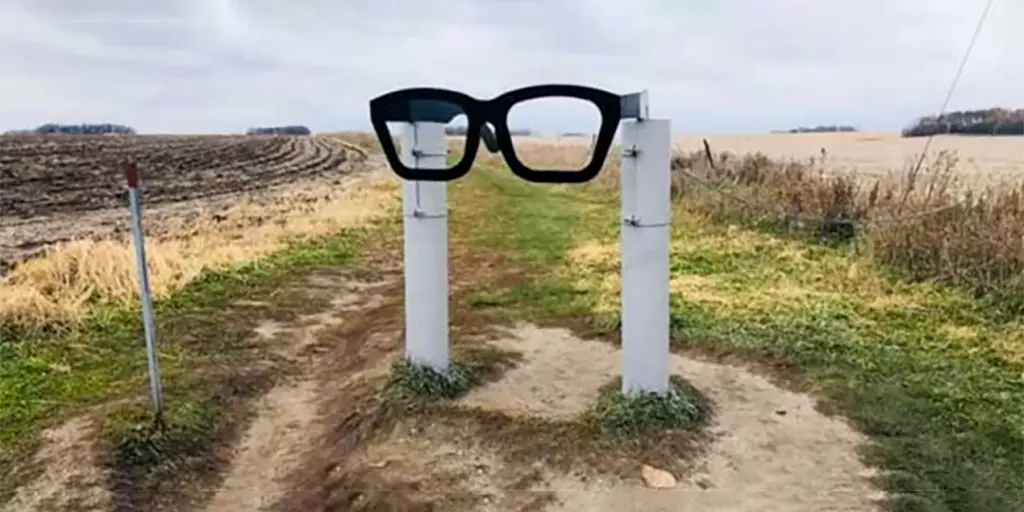
A large steel structure of Wayfarer-style glasses similar to those worn by Buddy Holly can be seen at the access point to the crash site in Iowa.  The original Mexican-made heavy plastic Faiosa-framed glasses were thrown yards away from the crash site and buried in the snow only to re-appear in the spring when the snow melted along with a watch of “The Big Bopper”.   Though the glasses were handed in immediately to the Cerro Gordo County Sherriff’s office, they sat filed away for the next 21 years in a sealed manila envelope marked “rec’d April 7, 1959”. The glasses were eventually returned to Holly’s widow and can now be seen in the exhibit at the Buddy Holly Center in Lubbock, Texas. Photo courtesy Roadside America.

Overview

It was a little past 1 AM on February 3rd, 1959 when American musicians Buddy Holly, Ritchie Valens and J.P. “The Big Bopper” Richardson were killed in a plane crash near Clear Lake, Iowa along with pilot Roger Peterson.  Weather conditions were certainly contributing factors in the plane crash as there was poor visibility on that cold night with snow blowing across the runway. Hours before, Holly and his tour mates were on the eleventh night of their “Winter Dance Party” tour through the snow-covered Midwest.  It was a Monday and a school night, but 1,100 teenagers crammed into the Surf Ballroom in Clear Lake, Iowa for two sold out shows with the second one ending around midnight.  The event later became known as “The Day the Music Died” after singer-songwriter Don McLean referred to it as such in his 1971 song “American Pie”. 

An ambitious tour referred to as the “Winter Dance Party” included 24 stops in 24 days across the Upper Midwest during January and February of 1959.

Background/”Winter Dance Party” Tour

Buddy Holly terminated his association with his band the Crickets in November 1958 and started a tour called the “Winter Dance Party” in January of 1959 with his new band consisting of Waylon Jennings, Tommy Allsup and Carl Bunch.  In addition to Buddy Holly and his new band, rising stars Richie Valens, J.P. “The Big Bopper” Richardson and Dion and the Belmonts had joined the tour as well.  The tour began in Milwaukee, Wisconsin and was scheduled to hit 24 Midwestern towns in twenty-four days. The performance at Clear Lake, Iowa on Monday, February 2nd was the 11th of the 24 scheduled locations.  Travel between destinations was an issue as the venues were randomly separated in a “zig-zag” fashion and the winter weather was more or less just an after-thought in the original planning of the tour. The long journeys between venues on board the cold, uncomfortable tour buses adversely affected the performers, with cases of flu and even frostbite.

For the first part of the tour the musicians traveled together in one bus, but the buses began to break down and had to be replaced frequently.  One estimate had five separate buses required for the first eleven days of the tour and the musicians had no road crew to assist them in the loading and unloading of equipment at each stop. The weather was often a major factor in the travel problems as temperatures varied from 20 degrees (F) to as low as 36 degrees (F) below zero and there was waist-deep snow in several areas.  

By the time the Buddy Holly band arrived in Clear Lake, Iowa they were very frustrated with the ongoing bus problems and did not want to take another chance for the next tour destination in Moorhead, Minnesota – some 365 miles away.  As a result, Holly decided to charter a plane for himself and his band to fly to Fargo, North Dakota which is adjacent to Moorhead, Minnesota.  The plane was a red and white single-engine Beechcraft Bonanza and only able to carry three passengers plus the pilot, Roger Peterson who was a local boy and just 21-one years old. Peterson had agreed to the flight despite being fatigued from a 17-hour workday because he would be flying Buddy Holly.  The rest of the musicians on the tour were expected to take the bus to the next venue.

There are some disputes as to how the final arrangements were made for the flight from Clear Lake to Fargo. The most widely accepted version of events was that J.P. Richardson had contracted the flu during the tour and asked band member Waylon Jennings for his seat on the plane. When Holly learned that Jennings was not going to fly, he said in jest: “Well, I hope your ol’ bus freezes up.” Jennings responded: “Well, I hope your ol’ plane crashes”, a humorous but ill-fated response that haunted him for the rest of his life (Source: Jennings, Waylon; Kaye, Lenny (1996). Waylon: An Autobiography. Warner Books. ISBN 978-0-446-51865-9). Valens, who once had a fear of flying, asked band member Tommy Allsup for his seat on the plane. The two agreed to toss a coin to decide (source: Everitt, Rich (2004). Falling Stars: Air Crashes That Filled Rock and Roll Heaven. Harbor House. ISBN 978-1-891799-04-4). Bob Hale, a disc jockey with Mason City’s KRIB-AM, was working the concert that night and flipped the coin in the ballroom’s side-stage room shortly before the musicians departed for the airport. Valens won the coin toss for the seat on the flight.

Low-level relative humidity climbed noticeably across Iowa between February 2nd (left) and the 3rd (right) as southerly winds ahead of an advancing cold front intensified and pumped moisture northward from the southern US into the Upper Midwest. Map courtesy NOAA/NCAR reanalysis

Weather conditions

A cold front was moving quickly from the Rockies into the Plains on Monday, February 2nd and an area of high pressure that had been over the Plains for several days prior left plenty of cold air over the region.  On the back side of the departing high pressure and ahead of the advancing cold front, southerly winds were on the increase across Iowa and Minnesota and these winds were pumping more humid air into the region.  In addition, the bitter cold was beginning to ease in the region; however, it was still plenty cold enough for snow to form in the increasingly humid air.  Temperatures on the evening of the 2nd were in the teens and 20s as far south as Texas and numerous bands of heavy snow formed late in the evening from southern Minnesota to northern Texas.

Temperatures climbed across Iowa between February 2nd (left) and the 3rd (right) as southerly winds ahead of an advancing cold front pumped in milder air; however, it was still well below freezing and plenty cold enough for snow to form in the increasingly humid air mass; Map courtesy NOAA/NCAR reanalysis

Although deteriorating weather was reported along the planned route, the weather briefings that pilot Roger Peterson received failed to relay the information. Specifically, he was never told of two weather advisories that warned of an incoming snowstorm.  One flash report that failed to reach the pilot came from Minneapolis, Minnesota and warned of areas of snow with visibilities less than 2 miles, which would be marginal Visual Flight Rules (VFR) conditions. A second report came from Kansas City, Missouri and warned of freezing drizzle and icing over much of Iowa. Peterson had over four years of flying experience; however, he was not qualified to operate in weather that required flying solely by reference to instruments. He and the Dwyer Flying Service that was used for the plane that night were certified to operate only under visual flight rules, which required the pilot to be able to see where he is going. However, on the night of the accident, visibility was very poor with low clouds, light snow falling and blowing snow on the runway, and there were no ground lights. 

The plane took off around 1AM on Tuesday, February 3rd from the Mason City Municipal Airport in northern Iowa with a planned destination of Fargo, North Dakota. Map courtesy Google

The take-off and crash

The weather conditions at the time of departure from the Mason City Municipal Airport in Iowa were reported as poor visibility due to light snow/blowing snow and winds from 20 to 30 mph. The plane took off normally from runway 17 (today’s runway 18) at 12:55 AM (CT) on Tuesday, February 3rd. The owner of the flying service, Hubert Dwyer, witnessed the take-off from a platform outside the control tower. He was able to see clearly the aircraft’s tail light for most of the brief flight, which started with an initial left turn onto a northwesterly heading and a climb to 800 feet. The tail light was then observed gradually descending until it disappeared out of view. Around 1:00 AM, when Peterson failed to make the expected radio contact, repeated attempts to establish communication were made, at Dwyer’s request, by the radio operator, but they were all unsuccessful (source Wikipedia).

Low-level winds intensified across Iowa between February 2nd (left) and the 3rd (right) as high pressure departed to the east and a cold front approached from the west. Map courtesy NOAA/NCAR reanalysis

Later that morning, Dwyer, having heard no word from pilot Peterson since his departure, took off in another airplane to retrace his planned route. Within minutes, at around 9:35 AM, he spotted the wreckage less than 8 miles northwest of the airport (Source: Durfee, James R.; Gurney, Chan; Denny, Harmar D.; Minetti, G. Joseph; Hector, Louis J. (September 23, 1959). Aircraft Accident Report (PDF) (Report). Civil Aeronautics Board. Archived from the original (PDF) on February 26, 2009. Retrieved February 4, 2009.). The sheriff’s office, alerted by Dwyer, dispatched Deputy Bill McGill, who drove to the crash site, a cornfield belonging to Albert Juhl. No one is quite sure as to what went wrong, but the best guess is that snow quickly picked up in intensity after departure, the plane took a nosedive at over 170 mph and flipped over on itself on the ground with no survivors. The snow had continued through that night and 7 inches of snow was recorded near the crash site by the next morning.

The wreckage of the plane crash discovered the next morning was scattered across nearly 300 yards in an Iowa cornfield just miles away from the airport.

Aftermath

Holly’s pregnant wife, María Elena, learned of his death via a television news report. A widow after only six months of marriage, she suffered a miscarriage the following day, reportedly due to “psychological trauma”. Holly’s mother, on hearing the news on the radio at home in Lubbock, Texas, screamed and collapsed.  In the months following the crash, authorities would adopt a policy against releasing victims’ names until after the families had been notified.

Despite the tragedy, the “Winter Dance Party” tour did not stop. Fifteen year old Bobby Vee was given the task of filling in for Holly at the next scheduled performance in Moorhead, Minnesota in part because he “knew all the words to all the songs” (Source: “Bobby Vee Biography”. bobbyvee.net. Paragraph 3. Retrieved February 3, 2019). Jennings and Allsup carried on for two more weeks, with Jennings taking Holly’s place as lead singer (Source: Carr, Joseph; Munde, Alan (1997). Prairie Nights to Neon Lights: The Story of Country Music in West Texas. Texas Tech University Press. ISBN 978-0-89672-365-8). Other teen sensations were added to the tour including 18-year-old Frankie Avalon. 

Meanwhile, funerals for the victims were held individually. Holly and Richardson were buried in Texas, Valens in California, and Peterson in Iowa.  Holly’s widow, María Elena, did not attend the funeral and has reportedly never visited his gravesite. She later said in an interview: “In a way, I blame myself. I was not feeling well when he left. I was two weeks pregnant, and I wanted Buddy to stay with me, but he had scheduled that tour. It was the only time I wasn’t with him. And I blame myself because I know that, if only I had gone along, Buddy never would have gotten into that airplane” (Source: Kerns, William (August 15, 2008). “Buddy and Maria Elena Holly married 50 years ago”. Lubbock Avalanche-Journal. Archived from the original on March 23, 2016. Retrieved April 29, 2015).

Final Notes

Charles Hardin Holley, known professionally as Buddy Holly, was 22 years old when he died in the plane crash and was a main pioneer of rock and roll in the 1950’s despite a career which lasted just a year and a half.  Along with his band The Crickets, he had many hits including ‘Peggy Sue’, ‘That’ll Be the Day’ and ‘Everyday’. Despite the short career, Holly’s influence on early rock ‘n’ roll was almost unmatched.  He was barely out of high school when he opened for Elvis Presley in 1955 and influenced such big artists as The Beatles and Bob Dylan. Additionally, the first Rolling Stones single released in the U.S. was cover of Buddy Holly’s ‘Not Fade Away’.  Buddy Holly was posthumously inducted into the Rock and Roll Hall of Fame in 1986.

Jiles Perry “J.P.” Richardson who became better known as “The Big Bopper” was notorious for his “rockabilly” style.  His 1958 song ‘Chantilly Lace’ went to number six on the pop charts and he wrote the song called ‘White Lightning” recorded by singer George Jones and it climbed to number one on the country charts in early 1959. He was 28 years old at the time of the crash. In 2007, the body of Richardson was exhumed for reburial in a different part of the cemetery.  This was due to the State of Texas Historical Sign being awarded to the “The Big Bopper”, and a bronze statue would subsequently be erected at his grave. The Forest Lawn cemetery (Beaumont, TX) did not allow above-ground monuments at that specific site; therefore, his body was to be moved to another area that was better suited. Richardson’s son, Jay Perry, took this opportunity to have his father’s body re-examined to verify the original coroner’s findings.  There were rumors surrounding the accident that there had been an accidental gunshot on board the aircraft, causing the crash, after a farmer discovered a .22 caliber pistol at the crash site which allegedly belonged to Buddy Holly.  Another rumor claimed Richardson survived the initial impact of the crash, and crawled out in search for help, as his body was found a greater distance from the wreckage. Several X-rays of Richardson’s body concluded that the musician died instantly, no traces of lead were found from any bullet, nor any indication that any shot was fired.

Richard Steven Valenzuela, known professionally as Ritchie Valens, was a Mexican American singer and guitarist and despite a very short career of only eight months had several big hits including ‘Donna’ and most notably “La Bamba’ which he had adapted from a Mexican folk song. Valens was just 17 years old when he died on that fateful February 3rd of 1959 and was posthumously inducted into the Rock and Roll Hall of Fame in 2001.

The song “American Pie” written by American singer and songwriter Don McLean was released on the “American” Pie album in 1971.  It reached number one on the charts in the US during 1972 and stayed there at number one for four weeks.  Ultimately, it would be listed as the number 5 song on the Recording Industry Association of America (RIAA)’s “Song of the Century” project. In 2017, McLean’s original recording was selected for preservation in the National Recording Registry by the Library of Congress as being “culturally, historically, or artistically significant”. The repeatedly mentioned phrase “the day the music died” refers to the plane crash on February 3rd, 1959 that killed Buddy Holly, “The Big Bopper”, Ritchie Valens and pilot Roger Peterson. The crash was not known by that name until after McLean’s song became a hit, but, from here on out, February 3rd, 1959 will be remembered as “The Day the Music Died”. 

Video (courtesy YouTube) of “American Pie” by Don McLean (with lyrics).

Meteorologist Paul Dorian
Arcfield
arcfieldweather.com

Follow us on Facebook, Twitter, YouTube

Like this:

Like Loading…

Categories
Technology

EU member states approve world-first AI regulation

The European Union’s member states have finally approved the world’s first comprehensive AI regulation.

Ambassadors from all 27 countries reached a deal on the landmark AI Act today. The final text on the harmonised rules was agreed after lengthy negotiations between representations of the European Council, European Parliament, and European Commission.

France, Germany, and Italy had all expressed late reservations about the plans. The trio had called for limited regulation of foundation models, a general-purpose AI technology that supports a diverse range of applications. The GPT foundation models, for instance, underpin OpenAI’s ChatGPT.

France had been the last holdout on the deal, but finally dropped its objections today after securing additional conditions. That paved the way for the final agreement.

The <3 of EU tech

The latest rumblings from the EU tech scene, a story from our wise ol’ founder Boris, and some questionable AI art. It’s free, every week, in your inbox. Sign up now!

Lawmakers will hope the pact gives the bloc an edge over its international competitors.

The US has been slower to regulate AI, preferring to let the tech sector push the developments. China, meanwhile, put into effect new rules for generative AI in August, but is yet to approve a comprehensive law for the tech. The EU’s sweeping AI Act is therefore the first of its kind to be adopted.

📝 Signed!

Coreper I Ambassadors confirmed the final compromise text found on the proposal on harmonised rules on artificial intelligence (#AIAct).

The AI Act is a milestone, marking the 1st rules for AI in the 🌍, aiming to make it safe & in respect of 🇪🇺 fundamental rights. pic.twitter.com/QUe2Sr89A5

— Belgian Presidency of the Council of the EU 2024 (@EU2024BE) February 2, 2024

The bloc will now move to the implementation stage, where lobbying will continue.

Some critics remain concerned about potential changes to the law, while others fear the current rules will inhibit innovation.

“We must stay vigilant in this process to prevent dilution of the EU AI Act’s original intent,” said Bruna de Castro e Silva, AI Governance Specialist at Saidot. “It’s vital to make sure that corporate stakeholders are able to understand the reason for the EU’s policies and what they can do to follow them.

“What we need is transparent guidelines, interweaving governance with the development, deployment, and scaling of AI systems, taking the kind of multidisciplinary and cross-sectorial approach it takes to make real change.”

Categories
Health

This autumn earnings shaping as much as be the most effective of 2023

Traders work on the floor at the New York Stock Exchange on Feb. 1, 2024.

Brendan McDermid | Reuters

Here’s how big of a surprise corporate profits have been this earnings season: The fourth quarter is now shaping up to be the best of 2023.

Despite ongoing macroeconomic concerns that have hampered demand and weighed on consumer sentiment, almost halfway into earnings season, profits are clearly coming in far better than anybody expected.

Helping companies’ bottom lines this round: easing input costs, more emphasis on cost controls and efficiencies and significantly reduced expectations.

A plethora of significant earnings beats among some very important S&P 500 companies such as Amazon, Meta, Apple, Chevron, ExxonMobil, Merck and Bristol Myers Squibb have moved the Q4 growth rate notably higher late this week.

LSEG, formerly Refinitiv, is now seeing a nearly 8% rise in earnings growth this season. That’s far better than the 4.7% expected just three weeks ago, right before the big banks reported results.

Stronger-than-expected results from three sectors are particularly notable:

  • Energy – 90% of the companies have beat earnings estimates, with profits coming in almost 14% above expectations.
  • Health care – 85% have beat on the bottom line, with earnings coming in nearly 11% above expectations.
  • Tech – 84% have posted earnings beats, with earnings more than 5% above expectations.

As for the S&P 500 as a whole, Q4’s current earnings per share growth rate of 7.8% exceeds the 7.5% growth seen in all of Q3 — and is now tops for the year.

Currently, 80% of S&P 500 earnings results have beat estimates, slightly higher than normal trends, and earnings have come in more than 6% above expectations — not quite the 7% to 8% upside seen in the previous two quarters, but still a very strong number.

One very important caveat: These strong figures come after earnings expectations tumbled going into the reporting season. Back on Oct. 1, S&P 500 fourth-quarter earnings were expected to grow 11% year over year, according to LSEG.

Although the earnings picture has significantly improved since the start of 2024, results are still far below what Wall Street had hoped for a mere four months ago.

As good as fourth-quarter results have been, there’s still no positive momentum looking forward. Both first-quarter and full-year 2024 earnings estimates have come down since Jan. 1 as many companies have issued cautious guidance this earnings season.

— Charts by CNBC’s Gabriel Cortes.

Don’t miss these stories from CNBC PRO:

Categories
Science

How Harmful are Kilonovae?

When we look up at the sky on a particularly dark night, there is a sense of timelessness. We might see the flash of a meteor, and occasionally a comet is visible to the naked eye, but the cold and distant stars are unchanging. Or so it seems. There can also be a sense of calm, that despite all the uncertainty of the world, the stars will always watch over us. So it’s hard to imagine that light years away there could be a lurking event that poses an existential threat to humanity. That threat is extremely tiny, but not zero, and it is the focus of a recent paper published in The Astrophysical Journal.

The study focuses on kilonovae, which can occur when either two neutron stars collide, or a neutron star collides with a stellar-mass black hole. Kilonovae are similar to supernovae, but much more intense. In the paper, the authors look at a particular kilonova known as GW170817. It was detected by the LIGO and Virgo gravitational wave observatories in 2017, and seen as a gamma-ray burst by the Fermi and INTEGRAL space telescopes. Since we have both optical and gravitational observations, the energy of the kilonova can be calculated quite well.

The team took this data and combined it with computer simulations on kilonovae. They wanted to estimate the minimum safe distance of a kilonova. In other words, how close to us could one go off and still be a harmless light show? What they found was that there are several safe distances, depending on which aspect of the supernova poses a threat.

Diagrams of emissions from a binary neutron star merger. Credit: Perkins, et al

One threat would be the X-ray afterglow. When neutron stars collide, a jet of high-energy gamma rays can stream from their common polar region. These jets collide with interstellar gas and create an afterglow of intense X-rays. The intensity of this glow could ionize Earth’s atmosphere, leaving us exposed to things like solar flares and ultraviolet radiation. But only if the kilonova occurred within about 16 light-years of Earth. The gamma rays themselves could pose a similar threat, but only to within about 13 light-years.

But as the team found, the greater threat wouldn’t reach us at the speed of light. After the explosion, a shockwave from the collision would expand away from the kilonova over the span of about a thousand years. When the shockwave collides with interstellar gas and dust, it creates intense cosmic rays. If such a stream of cosmic rays reached us it could vaporize our atmosphere, killing almost all life on Earth. But this would only pose a threat to a distance of about 40 light-years.

GW170817 occurred about 130 million light-years away, so it poses absolutely no threat to us. Even if one were to occur in our stellar neighborhood, it would likely be too distant to pose any harm. As far as we know, there are no binary neutron stars within 40 light-years that will merge any time soon. So there is nothing for us to worry about. Mostly what this study shows is that throughout the cosmos kilonovae can pose a threat to life from time to time, but that threat is not large enough to wipe out a large fraction of worlds. We can face cosmic dangers, but thankfully a kilonova isn’t one of them.

Reference: Perkins, Haille ML, et al. “Could a Kilonova Kill: A Threat Assessment.” The Astrophysical Journal 961.2 (2024): 170.

The post How Dangerous are Kilonovae? appeared first on Universe Today.

Categories
Entertainment

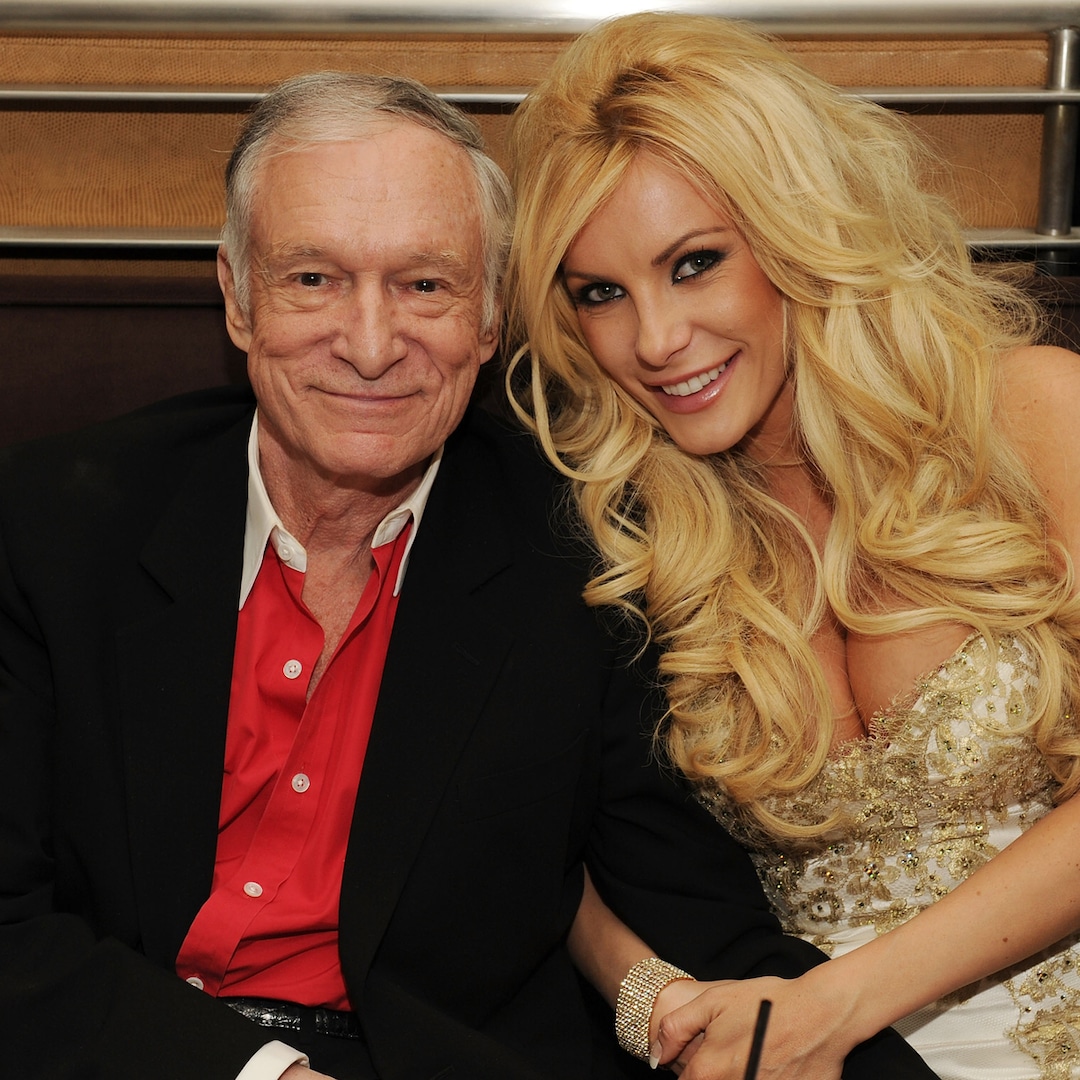
Crystal Hefner Says Hugh Wished Her to Be Skinny With Massive Pretend Boobs

Crystal Wasn’t By Hef’s Side When He Died

When she and Hef finally did marry on New Year’s Eve 2012, Crystal wore pink, writing, “I told myself that when I got married for real someday, I would wear a white dress.” 

Playing Hef’s wife was still a job, she confesses, “but it felt like a promotion.” Still, it was work. In addition to kicking off a DJ and real estate career, growing her social media platform and studying crypto currency, Crystal found herself adopting the role of caretaker.

“I was there at his elbow holding his arm to support him so when we were out in public, nobody would know he was starting to get frail or confused,” she writes. “I wasn’t going to let him down.” 

Though she faced her own health battles—Lyme disease, breast implant illness and toxic mold exposure—she became “hyper-vigilant about protecting his image.” 

When she returned from a week away in late 2017, Crystal learned that Hef had developed a UTI with “a strain of E. coli that was considered a ‘super bug.'” Though they turned his bedroom into a makeshift hospital room complete with the necessary antibiotics, he began to slip in and out of consciousness.

While out in the hallway debating the next steps, recalls Crystal, “one of the nurses came out of the bedroom and said simply, quietly, ‘He’s gone.'”

Categories
Sport

WNBA free company and commerce tracker 2024: Offers, information, extra

A trio of former WNBA MVPs signed with or were traded to new teams last season in free agency. More might be on the move in 2024.

The free agency negotiation period officially began Jan. 21. Contracts can be made official starting Feb. 1. But we already know Nneka Ogwumike will be wearing a different uniform this season. The 2016 WNBA MVP informed the Los Angeles Sparks she intends to leave.

Other free agents such as Breanna Stewart and Jonquel Jones, both with the New York Liberty, are expected to stay put.

But all eyes are on Ogwumike as well as two-time MVP Elena Delle Donne, who was core-designated by the Washington Mystics. Rumblings of Delle Donne’s discontent with some Mystics decisions and the franchise’s direction have existed for a while, and the team is reportedly seeking draft picks in return for the star. And there’s still a big question mark surrounding Candace Parker’s health and whether we’ve seen the last of her on the court.

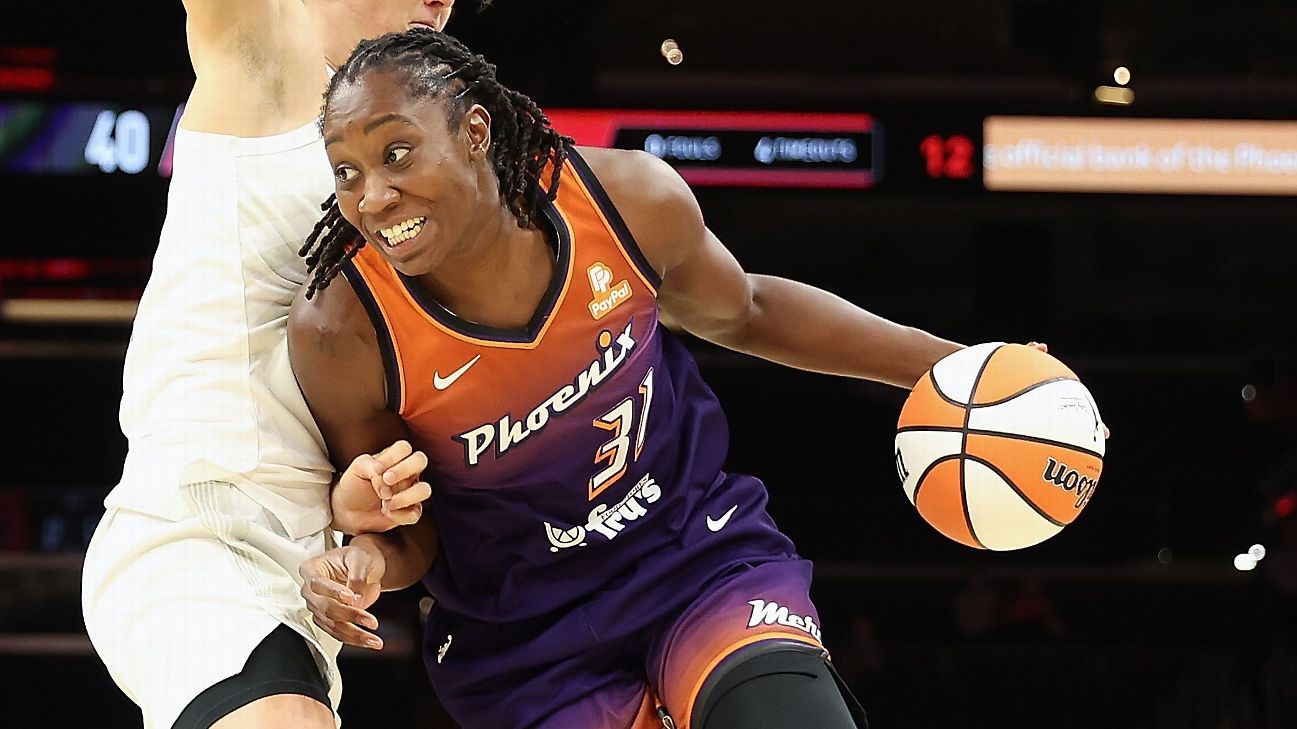
And 2012 MVP Tina Charles will return to the league, signing with the Atlanta Dream on Wednesday after sitting out the 2023 season.

Keep it here all offseason long for the latest buzz, news and reports surrounding the WNBA. The 2024 season — the league’s 28th — will tip off May 14.

Ranking the 15 best free agents | Free agency predictions, top storylines

Feb. 1 updates

4:32 p.m. ET: The Chicago Sky, New York Liberty and Seattle Storm are on the short list for free agent Nneka Ogwumike, her sister, Chiney Ogwumike, reported on ESPN’s WNBA Free Agency Special.

4:08 p.m. ET: Natasha Cloud will sign with the Phoenix Mercury, the guard told ESPN’s Holly Rowe on ESPN’s WNBA Free Agency Special.

Cloud played for the Washington Mystics the past eight seasons, including back-to-back WNBA Finals appearances in 2018 and 2019 and the team’s championship run in 2019. She averaged a career-high 12.7 points and 3.7 rebounds, as well as 6.2 assists and 1.1 steals last season in Washington and shot a career-high 90.0% from the free throw line. Cloud is a two-time WNBA All-Defensive Team selection (2019, 2022).

“Natasha is an elite playmaker, one of the best defenders in the league and is coming off a career year as a scorer,” Mercury general manager Nick U’Ren said. “The tenacity and energy Natasha plays with, on both ends of the court, will help make our team more dynamic, versatile and competitive.”

3:04 p.m. ET: The Atlanta Dream have signed former MVP Tina Charles and guard Aerial Powers, and re-signed forward Nia Coffey. Charles ranks fourth in the WNBA in career scoring and second in rebounds, averaging 18.2 points and 9.3 rebounds over 12 seasons. The forward was the 2012 MVP and is an eight-time All-Star and three-time Olympic gold medalist.

“Tina’s ability to score and rebound the basketball at an elite level immediately helps,” Dream general manager and executive vice president Dan Padover said.

2 p.m. ET: The Los Angeles Sparks have acquired guard Aari McDonald and the Atlanta Dream’s No. 8 overall pick in the 2024 draft for guard Jordin Canada and the Sparks’ 12th overall pick. Los Angeles now holds pick numbers 2, 4, 8 and 24 in this year’s draft.

1:32 p.m. ET: The Indiana Fever have signed forward Damiris Dantas to a multiyear contract. She last played in 2022 with the Minnesota Lynx, averaging 5.1 points, 3.8 rebounds and 1.9 assists, appearing in 15 games.

Noon ET: The Chicago Sky have signed Lindsay Allen. The guard started 20 games for the Minnesota Lynx last season and averaged 6.2 points, 2.4 rebounds and a career-high 4.5 assists in 24.1 minutes.

Noon ET: Rachel Banham has signed a two-year deal with the Connecticut Sun. The fourth overall pick by Connecticut in 2016, the guard played for the Minnesota Lynx the past four seasons. She averaged 5.5 points, 1.0 rebound and 1.7 assists, while shooting 40.2% from behind the arc last season.

11:44 a.m. ET: Skylar Diggins-Smith has signed with the Seattle Storm. The nine-year WNBA veteran point guard is a six-time all-WNBA selection and six-time All-Star. Terms of the deal weren’t disclosed.

“Skylar is an ultimate competitor, elite playmaker and excellent defender,” Storm coach Noelle Quinn said. “Adding Skylar to our dynamic backcourt will immediately elevate our roster as we continue this next chapter of Storm basketball.”

Diggins-Smith, who posted a video of her shooting in a Seattle Storm T-shirt, has averaged 16.7 points, 4.9 assists, 2.9 rebounds and 1.3 steals over her career.

“Joining the Seattle Storm is the ideal next step in my basketball journey. The organization’s dedication to its players and the progression of the league is commendable,” Diggins-Smith said. “I’m laser-focused for the upcoming season. Stepping onto the court alongside Jewell [Loyd], benefiting from the leadership of Noelle Quinn and feeling the energy of the Seattle Storm fans is a combination that I am confident will lead to success.”

11:43 a.m. ET: The Las Vegas Aces announced they’ve re-signed 5-8 guard Sydney Colson, who came off the bench during the Aces’ back-to-back championship runs in 2022 and 2023.

11:26 a.m. ET: Jordin Canada is finalizing a contract with the Atlanta Dream via sign-and-trade deal with the Los Angeles Sparks, sources told ESPN’s Andraya Carter.

10:07 a.m. ET: Karlie Samuelson has signed with the Washington Mystics. The guard/forward heads to D.C. after career-best averages of 7.7 points, 3.0 rebounds and 2.0 assists in 34 games (23 starts) for the Los Angeles Sparks in 2023. She ranked sixth in the WNBA in 3-point percentage (.426) last season and shot a career-high 46.3% from the field.

Jan. 31 updates

7:56 p.m. ET: Courtney Williams, an unrestricted free agent, is set to sign a two-year deal with the Minnesota Lynx, a source confirmed to ESPN’s Alexa Philippou. The 5-foot-8 point guard averaged 10.4 points, 6.0 rebounds and a career-high 6.3 assists last year for the Chicago Sky. She also had two triple-doubles on the season and shot 44.3% from the 3-point arc on 2.7 attempts per game.

7:28 p.m. ET: Nneka Ogwumike still hasn’t made a decision on her free agency destination, sources told ESPN’s Alexa Philippou. The Seattle Storm, who made a trade Wednesday that cleared cap space — remains among her finalists. She also met with the New York Liberty on Wednesday, as previously reported by ESPN’s Ramona Shelburne.

6:19 p.m. ET: Unrestricted free agent Aerial Powers is expected to sign a one-year deal with the Atlanta Dream, sources confirmed to ESPN’s Alexa Philippou. Powers spent the past three seasons with the Minnesota Lynx, averaging 14.4 points in 2022 before her playing time and production dipped in 2023 (5.2 points in 9.7 minutes per game across 20 contests).

3 p.m. ET: The Los Angeles Sparks have acquired All-Star guard Kia Nurse and the No. 4 pick in the 2024 WNBA draft from the Seattle Storm, who received the Sparks’ 2026 first-round pick. Nurse was drafted by the New York Liberty 10th overall in 2018, and has averaged 9.7 points, 2.7 rebounds and 1.8 assists in five seasons in the league with the Liberty from 2018 to 2020, Phoenix Mercury in 2021 and the Storm in 2023.

1 p.m. ET: Guard Layshia Clarendon is expected to sign a two-year deal with the Los Angeles Sparks, ESPN’s Alexa Philippou confirmed.

12:36 p.m. ET: Jonquel Jones, who on Jan. 23 told ESPN she was returning to the New York Liberty, is expected to sign a two-year deal with the team, ESPN’s Alexa Philippou confirmed.

Noon ET: The Connecticut Sun have acquired eight-year veteran guard Tiffany Mitchell and the No. 19 pick in the 2024 WNBA draft from the Minnesota Lynx, in exchange for Natisha Hiedeman.

Hiedeman has averaged 7.4 points, 1.9 rebounds, 2.4 assists and 0.8 steals in 150 career games with Connecticut. Originally drafted ninth overall in the 2016 WNBA draft by the Indiana Fever, Mitchell averaged 7.3 points, 2.3 rebounds and 2.3 assists over 33 regular-season contests for the Lynx in 2023.

11:58 a.m. ET: Bridget Carleton is returning to the Minnesota Lynx on a two-year deal, ESPN’s Alexa Philippou reports.

11:48 a.m. ET: Kiah Stokes will return to the Las Vegas Aces on a two-year contract, she told ESPN’s Alexa Philippou, while Megan Gustafson will sign with Las Vegas on a two-year deal as well, sources confirmed to Philippou. Both players were unrestricted free agents and can sign contracts starting Thursday.

10:29 a.m. ET: Unrestricted free agent Kalani Brown is returning to the Dallas Wings on a multiyear deal, sources confirmed to ESPN’s Alexa Philippou. A 2019 first-round pick out of Baylor, Brown is coming off a career season with Dallas, where she averaged 7.8 points per game and 4.5 rebounds per game in 2023.

play

2:07

The best of Satou Sabally as she returns to the Wings

Check out the best plays from Satou Sabally as she announces her return to the Dallas Wings.

Jan. 30 updates

8:30 p.m. ET: Restricted free agent Satou Sabally will return to the Dallas Wings, she told ESPN’s Alexa Philippou on Tuesday. The 25-year-old was the 2023 WNBA Most Improved Player and finished fifth in MVP voting last season.

Sabally’s one-year deal is fully protected and worth $195,000, a source told Philippou, below the regular max she could have earned ($208,219). But she was willing to take a bit of a discount to allow Dallas to bolster the talent around her.

Sabally said she kept an open mind throughout free agency but was drawn to the goal of winning a championship with Dallas, where she has played her entire WNBA career since the Wings drafted her No. 2 overall in 2020.

“Just engaging in those basketball conversations really made us realize that we want to work together and we want to bring a championship to Dallas,” Sabally said. “It could really be termed as unfinished business.”

Free agent & #WNBA All-Star @satou_sabally joined Tuesday’s late-night @SportsCenter to discuss her new deal to stay with the @DallasWings

cc @stanverrett pic.twitter.com/LD19BdjaJj

— ESPN PR (@ESPNPR) January 31, 2024

Jan. 29 updates

8:03 p.m. ET: Nneka Ogwumike, in New York to promote “Shattered Glass: A WNBPA Story,” a documentary on the lives and careers of Ogwumike, Jonquel Jones, Breanna Stewart and Sheryl Swoopes, was expected to meet with the New York Liberty on Tuesday, sources told ESPN’s Ramona Shelburne.

Tonight in NYC @nnekaogwumike @breannastewart and @jus242 are at the premiere of Shattered Glass: A WNBPA story. Tomorrow, according to sources, @nnekaogwumike will have a free agent meeting with the @nyliberty pic.twitter.com/XXLdR2Pyhn

— Ramona Shelburne (@ramonashelburne) January 30, 2024

Jan. 26 updates

3:13 p.m. ET: Unrestricted free agent Alanna Smith will sign with the Minnesota Lynx on a two-year deal, her agent, Sammy Wloszczowski of SIG Sports, told ESPN’s Alexa Philippou.

The 6-foot-4 forward from Australia and former Stanford star is coming off a career season with the Chicago Sky in which she averaged 9.2 points, 6.6 rebounds and 1.3 blocks with a league-best 63% shooting on 2-pointers.

play

1:54

Nneka Ogwumike’s best highlights from the 2023 season

Check out some of Nneka Ogwumike’s top highlights with the Sparks during the 2023 WNBA season.

Jan. 24 updates

6 p.m. ET: Former WNBA MVP Nneka Ogwumike informed the Los Angeles Sparks that she intends to leave in free agency, the team told ESPN’s Ramona Shelburne. Ogwumike has played her entire 12-year WNBA career with the Sparks since being drafted No. 1 overall in 2012. She was the 2016 MVP and led the Sparks to the title that season.

Ogwumike has taken meetings with the Sparks, Atlanta Dream, Phoenix Mercury and Chicago Sky. She intends to meet with the Seattle Storm and New York Liberty before deciding on her next team.

LA, I hope it’s not goodbye, but ‘see you later’. pic.twitter.com/kalKHp4k3o

— Nneka Ogwumike (@nnekaogwumike) January 25, 2024

Jan. 23 updates

5:41 p.m. ET: Jonquel Jones intends to return to the New York Liberty, her agent, Boris Lelchitski, told ESPN’s Alexa Philippou. Jones, who was the 2021 WNBA MVP while competing with the Connecticut Sun, was a key player in the Liberty’s run to last season’s WNBA Finals.

Jan. 20 updates

Top stories of the week from

Get exclusive access to thousands of premium articles a year from top writers.
• Lowe’s All-Star picks: LeBron a reserve »
• Barnwell: Will Bears trade the top pick? »
• Senior Bowl: Standouts, risers and buzz »
More ESPN+ content »

5:36 p.m. ET: Two-time WNBA champion Jordin Canada will most likely seek a sign-and-trade from the Los Angeles Sparks, who designated her a core player, sources told ESPN’s Andraya Carter.

Canada was part of the Seattle Storm’s 2018 and 2020 championship squads, and is a two-time All-Defensive first-team selection. She spent the past two seasons playing in Los Angeles, her hometown team and near her college of UCLA.

Categories
Health

Merck (MRK) This autumn earnings report 2023

The logo for Merck & Co. is displayed on a screen at the New York Stock Exchange (NYSE) in New York City, New York, U.S., November 17, 2021. 

Andrew Kelly | Reuters

Merck on Thursday reported fourth-quarter revenue and adjusted earnings that topped estimates as it saw strong demand for its blockbuster cancer drug Keytruda and HPV vaccine Gardasil. 

The pharmaceutical giant posted a net quarterly loss, however, due to previously announced charges associated with a deal the company struck in October with the Japanese drugmaker Daiichi Sankyo to co-develop three highly sought-after cancer treatments.

Here’s what Merck reported for the fourth quarter compared with what Wall Street was expecting, based on a survey of analysts by LSEG, formerly known as Refinitiv:

  • Earnings per share: 3 cents adjusted vs. a loss of 11 cents per share expected
  • Revenue: $14.63 billion vs. $14.50 billion expected

Shares of Merck closed almost 5% higher on Thursday.

The company posted a net loss of $1.23 billion, or 48 cents per share, for the quarter. That compares with net income of $3.02 billion, or $1.18 per share, during the year-earlier period. 

Excluding acquisition and restructuring costs, Merck earned 3 cents per share for the fourth quarter. The company’s results include a charge of $1.69 per share related to the Daiichi Sankyo deal. 

Merck raked in $14.63 billion in revenue for the quarter, up 6% from the same period a year ago. 

Those results come as Merck shows significant progress in preparing for Keytruda’s patent expiration in 2028, with a handful of new deals under its belt and key drug launches ahead. The loss of exclusive rights to the drug will likely mean its sales will fall, forcing the company to draw revenue from elsewhere.

More CNBC health coverage

Merck CEO Robert Davis said on an earnings call Thursday that the company “feels very good” about the progress it has made to grow its drug portfolio. But he said “we need more” products, adding that the company remains interested in signing acquisitions or collaboration deals.

Merck also issued its full-year 2024 guidance, which was generally in line with expectations. The company expects revenue to come in between $62.7 billion and $64.2 billion and adjusted earnings to be $8.44 to $8.59 per share this year. 

Analysts surveyed by LSEG expected Merck to forecast full-year sales of $63.52 billion and adjusted earnings of $8.42 per share. 

That adjusted earnings outlook includes a one-time charge of roughly 26 cents per share related to Merck’s acquisition of Harpoon Therapeutics, which develops immune-based cancer drugs, earlier this month.

Merck also announced a new restructuring program for 2024, which aims to improve the manufacturing network of both its pharmaceutical division and animal health business. Merck recorded charges of $190 million related to the program in the fourth quarter, which is excluded from its adjusted results.

That brings Merck’s total restructuring charges for the period to $401 million. That number also includes charges from a restructuring program the company launched in 2019.

Pharmaceutical business posts growth

Merck’s pharmaceutical business, which develops a wide range of drugs for several disease areas, booked $13.14 billion in revenue during the quarter. That’s up 8% from the same period a year ago. 

Merck’s immunotherapy Keytruda, which is used to treat several types of cancer, largely fueled the growth.

The drug booked $6.61 billion in revenue, up 21% from the year-earlier quarter. Analysts had been expecting $6.41 billion in Keytruda sales, according to estimates from FactSet. 

The treatment saw growth from increased use in earlier stage cancers and strong demand among patients with metastatic disease, or cancer that spreads to different part of the body, Merck CFO Caroline Litchfield said during an earnings call Thursday. Merck also saw a jump in sales of Gardasil, a vaccine that prevents cancer from HPV, the most common sexually transmitted infection in the U.S.

Gardasil raked in $1.87 billion in sales, up 27% from the fourth quarter of 2022. That’s slightly below the $1.92 billion that analysts were expecting, according to FactSet estimates. 

Merck’s experimental Covid-19 treatment pill, called molnupiravir

MERCK & CO INC | via Reuters

Meanwhile, sales of its Covid antiviral pill Lagevrio fell to $193 million during the period, down 77% from the $825 million reported for the fourth quarter of 2022. Still, the drug blew past analysts’ expectations of $69 million in sales, according to FactSet. 

That’s no surprise: Demand has plummeted for Lagevrio and other Covid products from companies such as Pfizer and Moderna over the last year, as cases and concern about the virus dwindled from their pandemic peaks.

Merck’s Type 2 diabetes treatment, Januvia, also saw sales fall to $787 million during the quarter, down 14% from the same period a year ago. The company said competition from cheaper generic drugs outside of the U.S., particularly in Europe, and lower demand in the U.S. cut into the sales.

That total still came in higher than analysts’ estimate of $732.3 million for the period, according to FactSet. 

Januvia is one of 10 drugs that will be subject to Medicare drug price negotiations, a policy under the Inflation Reduction Act that aims to make costly medications more affordable for seniors. Also on Thursday, Medicare is making initial price offers for each of those drugs. 

Merck’s animal health division, which develops vaccines and medicines for dogs, cats and cattle, posted $1.28 billion in sales, up 4% from the same period a year ago.

The company said higher demand for companion animal products, such as the flea and tick treatment Bravecto, drove the increase.

Don’t miss these stories from CNBC PRO:

Categories
Technology

Taylor Swift deepfake porn deluge a ‘wake-up name’ for lawmakers

Last week, explicit, non-consensual deepfake images of Taylor Swift flooded X, formerly Twitter — one of the videos racked up 47 million views before it was removed 17 hours later. 

In an attempt to stop the distribution of the images, X banned searches like “Taylor Swift” or “Taylor Swift AI”. However, simply rearranging the search from “Taylor Swift AI” to “Taylor AI Swift” yielded results. 

The social media platform has come under fire for its sluggish response, which many blame on Elon Musk, who has cut 80% of the company’s content moderation team since taking over in 2022.     

The deluge has sparked outrage from fans and politicians, who are rallying for stricter laws to prevent the production and spread of non-consensual AI-generated pornography and empower victims of these attacks to seek justice.  

TNW Conference 2024 – Speakers announced!

Meet the powerhouse experts that will take the stage on June 20 & 21 in Amsterdam and save your seat today.

The US introduced a bill Tuesday that would criminalise the spread of non-consensual, sexualised images generated by AI. In the UK, the sharing of deepfake pornography became illegal as part of the Online Safety Act in 2023. 

However, in the EU, despite a number of incoming regulations targeting AI and social media, there are no specific laws protecting victims of non-consensual deepfake pornography. 

“Not enough is being done to crack down on the spread of harmful misinformation like deepfakes,” Marcel Wendt, CTO and founder of Dutch online identity verification company Digidentity, told TNW. “High-profile cases like these should serve as a wake-up call to lawmakers — we need to make people more secure online.”

What’s the problem with deepfakes?

Deepfakes are false images or videos generated by deep learning AI algorithms (hence the name). While some are innocent, the vast majority are decidedly not. 

Deepfake pornography makes up 98% of all deepfake videos online. The bulk of these are of female celebrities whose images are being turned into porn without their consent, according to the State of Deepfakes report published last year. 

Many of the tools to create deepfake porn are free and easy to use, which has fueled a 550% increase in the volume of deepfakes online from 2019 to 2023. Sometimes perpetrators share these deepfakes for purely lewd purposes, while other times the intent is to harass, extort, offend, defame, or embarrass the specific individuals. 

While the first wave of deepfake porn targeted high-profile women, these days Swift’s fans are as likely to be targeted as she is. Schools across the world are grappling with the rise of AI nudes of, and sometimes created by, children

Are these deepfakes illegal?

Last year, more than 20 teenage girls in Spain received AI-generated naked images of themselves with pictures, in which they were fully clothed, taken from their Instagram accounts. While circulating pornographic content with minors is illegal, putting the face of a minor into a pornographic image or video made by consenting adults is a legal grey area. 

“Since it is generated by deepfake, the actual privacy of the person in question is not affected in the eyes of the law,” Manuel Cancio, professor of criminal law at the Autonomous University of Madrid, told Euronews following the case in Spain. 

The only EU law directly addressing the problem is the Dutch Criminal Code. A provision in the law covers both real, as well as non-real child pornography. But this regulation is the exception rather than the rule. 

But what about the suite of new EU laws designed to tackle everything from misinformation to AI misuse online? 

According to the Centre for Data Innovation, while the Digital Services Act, for instance, requires social media platforms to better flag and remove illegal content, it fails to classify non-consensual deepfakes as illegal. 

The EU also controversially dropped a proposal in the DSA during last-minute negotiations which would have required porn sites hosting user-generated content to swiftly remove material flagged by victims as depicting them without permission.

Other laws, such as the upcoming AI Act, require creators to disclose deepfake content. But whether people know a deepfake is one or not is not exactly the point — the image itself is what does the harm. 

“The effect it has (on the victim) can be very similar to a real nude picture, but the law is one step behind,” Cancio stated. 

Holding tech platforms to account

Manipulating imagery to deceive people is nothing new — even the ancient Egyptian pharaoh Hatshepsut portrayed herself in statues and paintings as a man in order to win favour with her constituents. 

But the explosion of AI tools to create images and videos at the touch of the button over the past few years is changing the game, and they are being used for far more nefarious purposes than fighting patriarchal preconceptions. 

Just take the ClothOff app for instance. It allows users to take the clothes off from anyone who appears in their phone’s picture gallery. It costs €10 to create 25 naked images, and is believed to be the tool used in the Spanish deepfake scandal mentioned previously. 

The software used for the Taylor Swift images was likely Microsoft Designer. In a loophole the tech giant has since patched, users could generate images of celebrities on the platform by writing prompts like “taylor ‘singer’ swift” or “jennifer ‘actor’ aniston.”  

The most popular generative AI generators have guardrails in place to prevent the production of harmful deepfakes — although users are always finding new ways to deceive them. Perpetrators also use lesser known, open-source generative AI tools that are harder to control.  

“While it’s difficult to prevent the creation of deepfakes, it is a lot easier to prevent their spread,” said Wendt from Digidentity. “Social media platforms like X need to do a lot more to flag and remove harmful content before it spreads.”

Wendt advocates for a digital identifier for all social media accounts, so that when you create an account on platforms like X, Facebook, or Instagram it can be linked to your government-issued ID. Given big tech’s track record on trust and safety though, forcing users to sign in with their real ID seems like a pie in the sky at present. 

What we can do now

While this all might seem like doom and gloom, there are glimmers of hope. 

One thing the DSA will do is put pressure on big tech to improve online safety on their platforms. If they don’t, they could be in for a fine worth 6% of their global revenue or be banned from the union entirely. 

And while not perfect, the incoming AI Act sets a global precedent where digital ethics and safety are paramount and gives a legislative springboard for future measures to counter the ever-evolving world of deepfakes.

In the UK, the Online Safety Act gives new powers to take action where deepfake pornography is concerned and the offence carries a maximum two-year jail sentence. There are also criminal offences for platforms who host such content. 

Technology will also play an important role in tackling and tracing deepfakes, through better authentication systems, the implementation of digital watermarking, and blockchain. These technologies will help certify content authenticity and ensure secure record of digital transactions, benefits that will make us all more secure online. 

“What we need is a comprehensive, multi-dimensional global collaboration strategy emphasising regulation, technology, and security,” Mark Minevich, author of Our Planet Powered by AI and a UN advisor on AI technology, told TNW.  

“This will not only confront the immediate challenges of non-consensual deepfakes but also sets a foundation for a digital environment characterised by trust, transparency, and enduring security,” he said.

Categories
Science

Additional Investigations on Errors in Climate Station Knowledge Evaluations – Watts Up With That?

Moritz Büsing

In a previous article on WUWT I described how I found and corrected an error in the way weather station data is processed in order to calculate the temperature anomalies of the past 140 years.

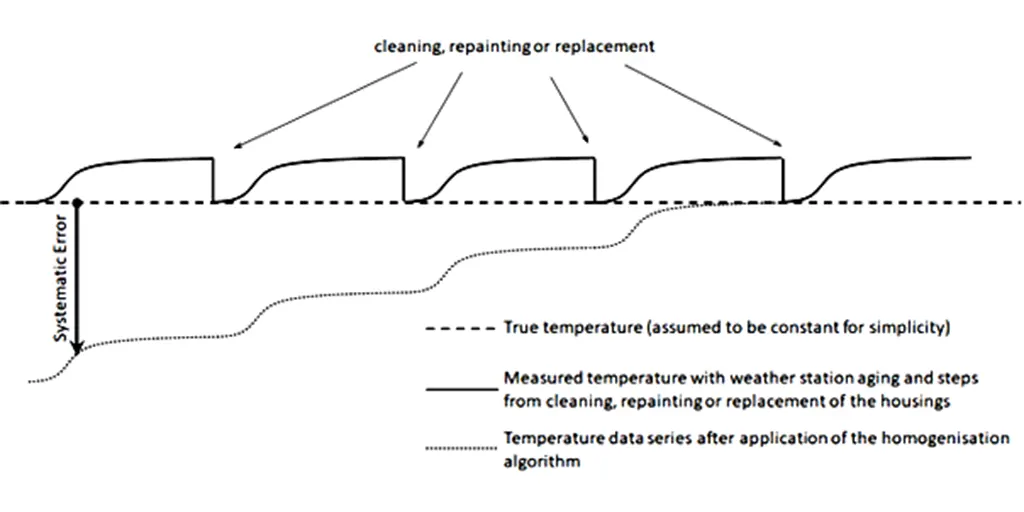
The error was that warming of the weather station housings due to ageing of the paint by 0.1°C to 0.2°C (0.18°F to 0.36°F) was compounded multiple times by the so-called homogenization algorithms used by NOAA and other organizations. This happens, because the homogenization algorithm assumes a permanent change in temperature when the station housing is repainted, replaced, or even cleaned. But these changes are temporary, because the new paint starts ageing and accumulating dirt again.

In this first investigation I analyzed two sets of data provided by NOAA: The temperature data from thousands of weather stations around the world before and after homogenization. I determined how much the weather stations warmed on average after each homogenization step. Then I removed this warming from ageing.

The result was a reduction of the temperature change between the decades 1880-1890 and 2010-2020 from 1.43°C to 0.83°C CI(95%) [0.46°C; 1.19°C]. I wrote a paper on this analysis, in which I describe the methods in detail:

https://osf.io/preprints/osf/huxge

One might question, if the methods that I used were the right ones, and if I applied them correctly. Therefore, I tried second simpler analysis:

I compared three simple analysis results:

  1. The temperature anomaly by simply averaging all weather station anomalies after homogenization. (Just as a reference; averaging is dubious in the best of cases, but having non-area weighted average is even more dubious)
  2. The temperature anomaly by simply averaging all weather station anomalies before homogenization.
  3. The temperature anomaly by simply averaging all weather station anomalies, but removing the data from those years, where the ageing has the largest effect. The data from the years 13 to 30 after each homogenization step remains.

By simply deleting the data that may be affected by the homogenization and that is probably most affected by the ageing of the weather stations, I avoid making any methodological or statistical assumptions that might create a bias in the analysis.

This simple average of the anomalies shows a larger warming trend than the area-averaged data from GISTEMP:

  1. Full data set homogenized: 1.94°C warming (3.49°F).
  2. Full data set non-homogenized: 1.67°C warming (3.01 °F).
  3. Data from years 13-30: 1.43°C warming (2.57°F).

The anomaly from the years 13-30 after each homogenization step shows 0.51°C (0.92°F) less warming than the homogenized full data set.

However, the ageing during the interval between 13 years and 30 years remains as an error. Furthermore, what I described as “self-harmonization” in my paper remains in the data set. Because of these problems with my second analysis approach, I tried a third analysis approach:

I considered that analyzing anomalies “bakes in” any trend error due to ageing or any other cause. One should rather use absolute temperatures, because the thermometers are precision instruments that are calibrated on a regular basis. However simply averaging the absolute worldwide temperature measurements would introduce a new bias: The changes in numbers and distributions of weather station locations around the world.

First most weather stations were located in Europe and Northern America, which are comparatively cool and moderate regions. Then many more weather stations were introduced in the rest of the world, especially in warmer countries in the beginning of the 20th century. The numbers increased in the comparatively cold Soviet Union and its allies in the middle of the 20th century. Towards the end of the 20th century the numbers of weather stations in Northern America and western Europe increased, but the numbers in the former Soviet Union and its allies decreased drastically. All these non-climate related trends have a large impact on the averaging of the absolute weather station data. I tried a few variations in averaging, and got massively different results:

These huge variations in the temperature trends due to small changes in the way the data is averaged is quite suspicious. Therefore, I tried to eliminate the effect of different trends in weather station densities in different regions, by averaging the absolute temperatures and the temperature anomalies in each region and comparing the results. Luckily the weather station data is tagged by a letter code for the countries in which they are located.

I calculated the absolute temperatures and temperature anomalies for the following 29 countries, which were selected for having the most complete data sets for the past 140 years:

Netherlands, Portugal, South Korea, New Zealand, South Africa, Uruguay, Uzbekistan, USA, Iceland, Germany, China, Brazil, Egypt, Turkey, India, Australia, United Kingdom, France, Spain, Italy, Austria, Ireland, Hungary, Japan, Morocco, Poland, Sweden, Tunesia, Ukraine.

Then I calculated the difference between the temperature anomaly and the absolute temperature of each country. Finally, I calculated the trends of these differences:

Difference in trends per year
Netherlands 0.0064
Portugal 0.0168
South Korea 0.0062
New Zealand -0.0064
South Africa 0.0042
Uruguay 0.0030
Uzbekistan 0.0144
USA 0.0137
Iceland 0.0242
Germany 0.0087
China 0.0477
Brazil -0.0064
Egypt -0.0023
Turkey 0.0137
India -0.0051
Australia 0.0035
United Kingdom 0.0007
France 0.0122
Spain -0.0011
Italy -0.0064
Austria -0.0047
Ireland 0.0109
Hungary 0.0015
Japan -0.0042
Morocco -0.0036
Poland -0.0107
Sweden 0.0055
Tunesia 0.0048
Ukraine 0.0174

I analyzed this data statistically:

  • Lower bound 95% confidence interval:   0.00137°C/a
  • Mean:                                                            0.00568°C/a
  • Upper bound 95% confidence interval:   0.00999°C/a

For 140 years this leads to the following differences between the warming trends of the absolute temperatures and the temperature anomalies:

  • Lower bound 95% confidence interval:   0.19°C
  • Mean:                                                            0.80°C
  • Upper bound 95% confidence interval:   1.41°C

This means that analyzing the anomalies overestimates the warming by a statistically significant amount.

This analysis still includes a bias for the trends in weather station locations within each country, but there is no reason to assume, that all of these 29 countries have the same bias.

In conclusion, all three analysis approaches had similar results that point towards substantially less global warming within the last 140 years than previously thought.

Like this:

Like Loading…

Categories
Entertainment

Dad and mom Of Courtney Clenney Arrested For ‘Proof Tampering’

Police have arrested the parents of  Courtney Clenney, the model who stands accused of fatally stabbing her boyfriend, Christian Obumseli, in 2022.

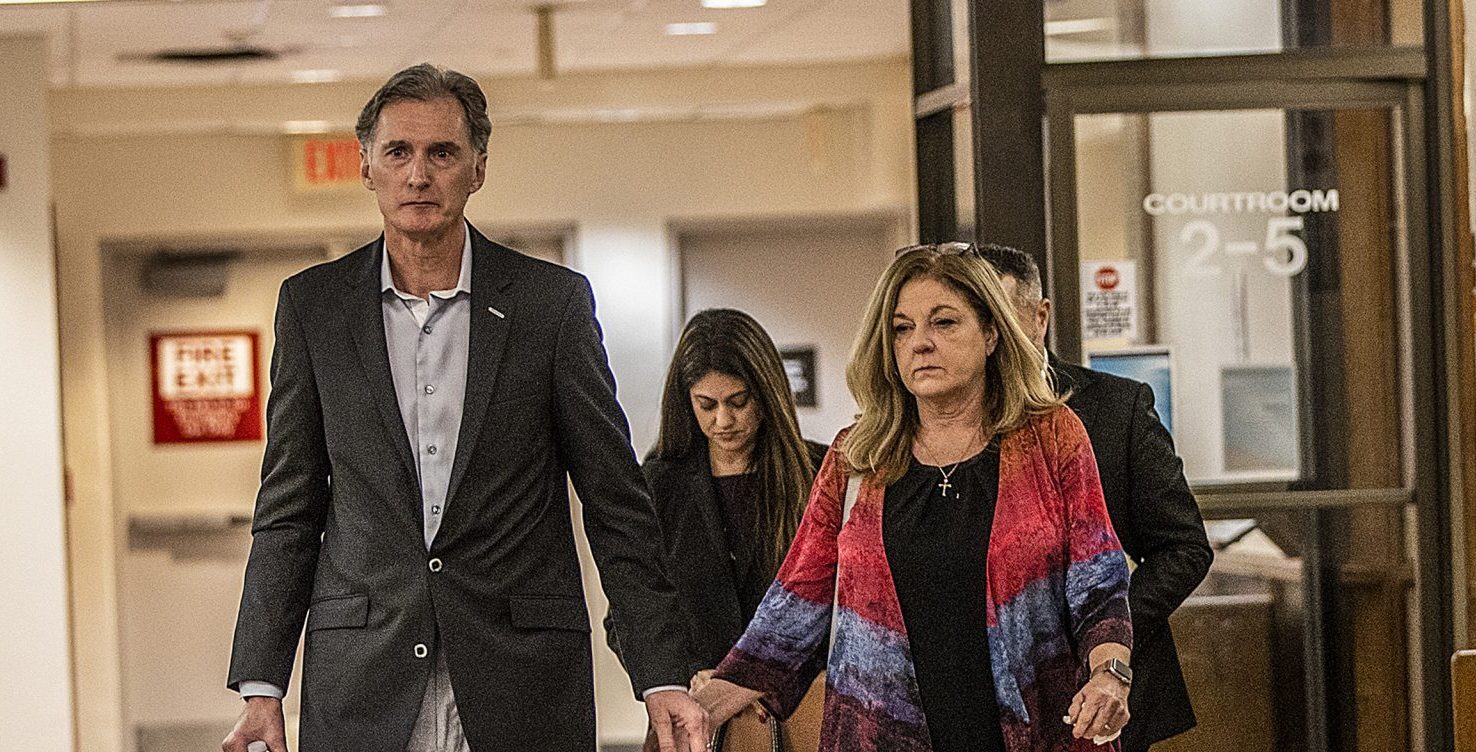
USA Today reports that authorities booked Deborah Clenney and Kim Clenney into Texas’ Travis County Jail on Tuesday (January 30) in connection to the case.

Courtney’s Parents Accused Of Accessing Unauthorized Evidence

The arrest warrant states that authorities had charged the pair with unauthorized access to a laptop belonging to Obumseli.

Kim reportedly found the gadget in the apartment Courtney formerly shared with her partner before retrieving it.

Upon receiving a warrant to access the Clenneys’ iCloud accounts, investigators discovered a group chat discussing ways in which they would gain access to the tech device.

“Will be sending the laptop PIN ideas so we can try them before you see her again?” Kim allegedly wrote in a message sent on Sept 22, 2022, per NBC News.

Cleeney’s lawyer, Frank Prieto, who was also added to the chat, responded with a series of different suggestions.

“These were possible … was not sure about capitalization or spacing but there are the ones she could come up with,” Prieto wrote. “I would try all together and mix some of the capitalization and see if we get lucky.”

“The Pin Worked”

Eight days after first requesting for a pin code, Kim responded, “Hell yeah! That PIN worked!”

Prieto warned Kim not to go through the laptop’s contents and to be mindful of what he was clicking on.

The conversation then shifted over to how Prieto would acquire the device as the pair discussed plans to meet.

On October 6, they decided that Prieto would collect the laptop by making a drive to Dallas, to which Kim responded, “Ok. Sounds good. The earlier the better.”

Courtney’s legal team responds to their arrest by claiming that someone has targeted Kim and Deborah with charges to discredit them and make them face more scrutiny from the media.

“It appears excessive in that the family is now confined in jail awaiting an extradition hearing on what may be an attempt to manipulate media headlines and discredit them before Thursday’s scheduled hearing on a gag order in the case,” an attorney told NBC South Florida.

Courtney’s Volatile Relationship With Christian

In April 2022, Courtney, a former OnlyFans model, was accused of stabbing Obumseli to death in their Miami apartment, which first brought the Clenney case into the headlines.

Courtney’s defense team has argued that she acted out of self-defense during a domestic dispute that subsequently turned deadly.

However, a new video capturing Courtney physically assaulting Christian multiple times during a trip to Aspen, Colorado, indicated she, too, had been abusive in the relationship.

Watch the NSFW footage by clicking here.

According to TMZ, who obtained the clip, the altercation occurred in February 2022, just two months before Christian’s death.

Courtney allegedly lost her cool upon learning that Christian had been “flirting” with other women during their vacation.

She retaliates by pushing and hitting him while Christian remains self-restrained, telling her to stop touching him.

It is now one of over a hundred pieces of evidence handed over to the Obsumseli family’s civil attorney as part of the investigation.

In August 2022, authorities arrested Courtney and charged her with second-degree murder with a deadly weapon.

RELATED: Lawyer Reacts To Audio Of Courtney Clenney Hurling N-Word Slurs At Christian Obumseli In Argument